
What Is the Standard Carry on Size for International Flights Guide
You should plan for a carry-on around 22 x 14 x 9 inches (56 x 36 x 23 cm) for most international flights, though sizes and weight limits vary by airline, route, and fare class. Measure your packed bag including wheels and handles, and watch for stricter rules on European and low-cost carriers. Weight limits often run 7–12 kg and may trump size at the gate. Check your carrier’s policy before you leave and keep scrolling to learn practical measurement and packing tips.
Why Carry-On Rules Feel Inconsistent : And What This Guide Fixes
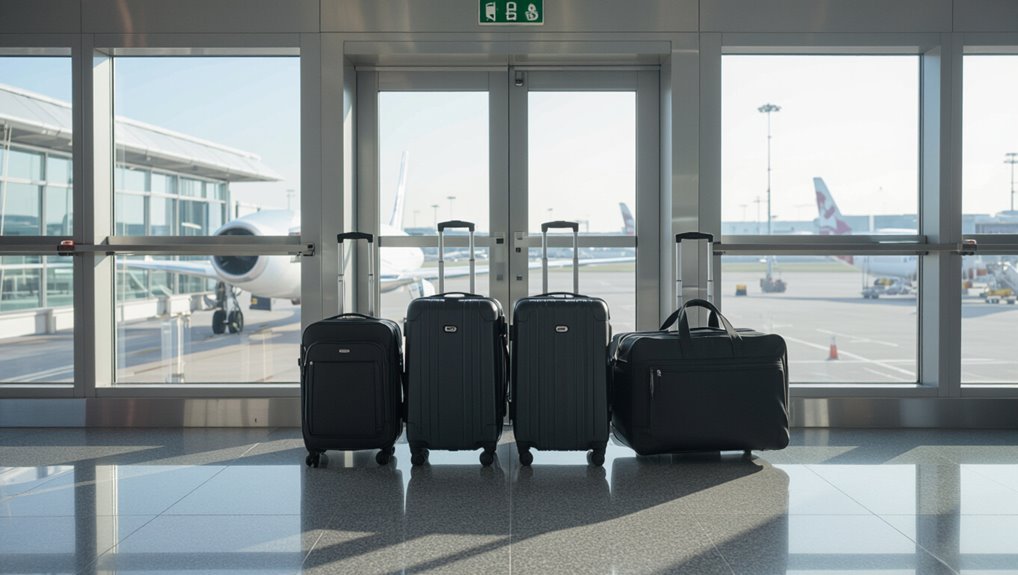
Because airlines, airports, and international regulations all play a role, carry-on rules often look inconsistent even when they’re not.
You’ll see varied size limits, weight policies, and gate-check practices because carriers optimize for aircraft type, route, and hub constraints.
This guide clarifies standard expectations, highlights common exceptions, and gives practical tips so you can pack confidently and avoid surprises at check-in or boarding.
Quick Answer: Typical International Carry-On Dimensions
Most international airlines set carry-on limits around 22 x 14 x 9 inches (56 x 36 x 23 cm), which fits in most overhead bins.
You should still check your carrier’s rules because size limits and weight allowances can vary by airline and fare class.
If you’re tight on dimensions, measure your bag before you fly to avoid surprises at the gate.
Standard Size Limits
A common international carry-on size you’ll see listed is about 22 x 14 x 9 inches (56 x 36 x 23 cm), including handles and wheels, which fits in the overhead bin on many airlines; however, limits can vary by carrier and aircraft.
You should measure your bag externally, count pockets and attachments, and verify it meets linear or volumetric restrictions to avoid gate check fees.
Airline Variation Notes
While many international carriers advertise a carry-on close to 22 x 14 x 9 inches (56 x 36 x 23 cm), you’ll find noticeable variation between airlines and routes.
Carry-On vs. Personal Item: What’s the Difference
Anyone who’s flown internationally knows you’ll need both a carry-on and a personal item, but they serve different purposes: a carry-on is your larger, stow-in-the-overhead-bin bag for clothing and bulkier items, while a personal item fits under the seat and holds essentials like documents, electronics, and valuables.
| Carry-On | Personal Item |
|---|---|
| Bulkier gear | Essentials |
| Overhead bin | Under seat |
How to Measure Your Carry-On Correctly at Home
To make sure your bag meets airline limits, measure the exterior dimensions—height, width, and depth—while it’s packed and upright.
Don’t forget to include wheels and the extended handle in your measurements, since those add extra inches.
Use a tape measure and record the numbers to compare with your airline’s carry-on size.
Measure Exterior Dimensions
When you’re at home, measuring your carry-on’s exterior dimensions is quick and simple: place the bag on a flat surface, extend any wheels, handles, or external pockets to their fullest, and use a tape measure to record height, width, and depth at the bag’s outermost points.
Note each measurement in centimeters and inches, checking corners and bulges so the numbers reflect true packed size.
Check Wheel And Handle
Flip your bag upright and extend every wheel and handle so you can measure the absolute outermost points; airlines count those parts in your carry-on’s dimensions.
Check retractable handles at full length, wheel housings, and any protruding feet or bumpers.
Note where parts sit when packed versus extended, then record maximum height, width, and depth to compare with airline limits before travel.
Use A Tape Measure
Although measuring seems simple, you’ll get the most accurate results by using a sturdy tape measure and taking each dimension precisely—height, width, and depth—while the bag sits as it will during travel. Measure from rigid points, include wheels and handle position, and record clearly.
| Dimension | What to measure |
|---|---|
| Height | Top to bottom including wheels |
| Width | Side to side at widest point |
| Depth | Front to back compressed as packed |
Carry-On Measuring Tools & Hacks
Because airlines vary and gate agents can be strict, you’ll want a few quick tools and simple hacks to confirm your bag meets international carry-on limits.
Carry a collapsible luggage sizer or printable cardboard template, use a luggage scale to avoid overweight fees, and mark your suitcase edges with tape for quick visual checks.
Practice zipping with packed weight.
Typical Regional Standards: North America, Europe, Asia, Oceania
You’ll want to know how carry-on limits differ by region, since North America, Europe, Asia, and Oceania each use slightly different size and weight rules.
In North America, airlines often allow larger bags by inches, while many European carriers enforce stricter dimensions and low-cost carriers further limit size.
Asian and Oceanian airlines vary widely, so check both the carrier and country rules before you pack.
North America Size Limits
In North America, most airlines set carry-on size limits around 22 x 14 x 9 inches (56 x 36 x 23 cm), though exact allowances vary by carrier and ticket class.
You should check your airline’s website before packing, since regional carriers and low-cost airlines often enforce stricter dimensions or weight limits.
Know gate-check policies and personal item rules to avoid surprises at boarding.
Europe, Asia, Oceania Rules
Although rules vary by carrier, Europe, Asia, and Oceania generally cap carry-ons at roughly 21–22 x 14–9 inches (55–56 x 35–23 cm) for full-service airlines.
Low-cost carriers and regional routes often enforce smaller size or strict weight limits.
You should check airline websites before travel, pack to meet both size and weight limits, and use soft-sided bags to squeeze into tight overhead bins.
Major Airlines’ Carry-On Size Limits (Short Summary)
When planning international travel, check each airline’s carry-on limits because size and weight rules vary enough to affect whether your bag fits in the cabin or gets gate-checked.
You’ll see small differences across carriers, so measure your bag before flying and confirm policies online.
- Major U.S. carriers: typically 22x14x9 inches
- European airlines: often slightly smaller
- Asian carriers: varying dimensions
- Low-cost: stricter limits
Major Airlines’ Carry-On Weight Rules (Short Summary)
You’ll find carry-on weight limits vary widely between international carriers, from no strict weight on some U.S. airlines to 7–10 kg caps on many European and Asian carriers.
Check each airline’s exceptions and notes—frequent flyer status, fare class, and connecting partners can change your allowance.
Always confirm the specific rule for your itinerary to avoid surprises at the gate.
Carry-On Weight Limits
Wondering how much your carry-on can weigh on international flights? You’ll usually see limits to prevent overloading cabins.
Check rules before packing, as allowances vary by airline, class, and route.
- Typical range: 7–12 kg (15–26 lbs)
- Some carriers allow 8–10 kg for economy
- Business/first often permit heavier bags
- Weigh before boarding to avoid fees
Airline Exceptions & Notes
Although most airlines follow similar carry-on guidelines, each carrier adds exceptions you should note before packing.
You’ll see different weight limits, complimentary personal items, and strict size enforcement on low-cost carriers. Some airlines exempt infants’ bags, medical equipment, or duty‑free purchases.
Check your airline’s website for precise allowances, fees, and gate-check policies to avoid surprises and extra charges.
Low-Cost Carriers vs. Legacy Airlines: What Changes
When comparing low-cost carriers to legacy airlines, you’ll notice several practical shifts that affect how much carry-on baggage you can bring and what you’ll pay for it.
You’ll often face stricter size rules, separate fees, and bundled perks on legacy carriers. Consider these differences:
- stricter free-bag policies on low-cost carriers
- fee-for-cabin-bag practices
- tighter enforcement at gates
- legacy complimentary allowances and priority boarding
When Weight Limits Override Size Limits on International Routes
On some international routes you’ll find airlines enforce weight-first boarding rules that matter more than exact dimensions.
Pay attention to airline-specific weight caps, because they can force you to check a bag even if it fits the size gauge.
Check the carrier’s policy before you pack so you’re not surprised at the gate.
Weight-First Boarding Rules
If your carry-on meets the size limits but exceeds the airline’s weight allowance, staff will often require you to gate-check or re-check it.
On many international routes, weight rules take precedence over dimensions to protect cabin safety and balance. You should expect inspection and follow staff directions promptly.
- Prepare a lighter bag
- Redistribute items to checked luggage
- Pack essential valuables in a smaller personal item
- Ask staff about alternatives
Airline-Specific Weight Caps
Many airlines set explicit carry-on weight caps that override size allowances on international routes, so you’ll have to follow the lower of the two limits at boarding.
Check your carrier’s published weight limit before packing—often 7–10 kg for economy.
Weigh your bag, distribute heavier items to checked luggage if needed, and expect gate checks or fees if you exceed the limit.
Exceptions: Business Class, Elite Status, and Families With Infants
Because airlines compete to attract high-value travelers, you’ll often see relaxed carry-on rules for business-class passengers, elites, and families with infants.
You can usually bring extra personal items, priority boarding, and flexible size/weight allowances, but policies vary by carrier and route.
- extra personal bag or briefcase
- priority boarding benefits
- lenient size/weight limits
- allowance for infant essentials
When Gate Checks Happen : And How to Avoid Them
When the cabin fills and overhead bins get tight, airlines may gate-check carry-ons to make sure everyone can stow essentials and board quickly.
To avoid this, arrive early, board with your group, and use compact bags that clearly fit bin space.
Place fragile items in a personal item, remove bulky jackets, and listen for gate announcements so you can act before agents ask for checks.
How to Choose a Carry-On That Fits Most International Airlines
Pick a carry-on that meets the strictest common dimensions—roughly 22 x 14 x 9 inches (56 x 36 x 23 cm)—and you’ll avoid surprises at most international gates.
Pick a carry-on sized about 22 x 14 x 9 inches (56 x 36 x 23 cm) to breeze past most international gates.
Choose a durable, lightweight hard-shell or fabric case with smooth wheels and a comfortable handle. Check airline size policies before travel and prefer slightly smaller external pockets for easy compliance.
- durable, lightweight construction
- smooth-rolling wheels
- comfortable telescoping handle
- confirmed airline dimensions
Packing Tips to Stay Within Carry-On Size and Weight Limits
Now that you’ve chosen a carry-on that fits the strictest common dimensions, focus on packing smart to stay within both size and weight limits.
Roll clothes, use compression bags, and wear bulky items.
Pack heavy items low and near wheels, limit liquids to a single clear bag under allowed volume, weigh your bag before travel, and keep essential documents and electronics accessible.
Smart Carry-On Features That Prevent Gate Checks
Several carry-ons come with features that help you avoid gate checks by keeping size, weight, and accessibility under control.
You’ll benefit from modular packing, built-in scales, compression panels, and quick-access pockets so you meet airline limits and retrieve essentials fast.
- Modular compartments for balanced packing
- Integrated digital scale for exact weight
- Compression straps/panels to reduce bulk
- External quick-access pockets for documents
What to Do at Check-In if Your Carry-On Is Flagged
If an agent flags your carry-on at check-in, stay calm and act quickly: ask which dimension or weight limit it exceeds and whether a brief repacking will resolve the issue. Follow instructions, move heavy items to personal bag, and accept gate check if needed. Know fees and appeal politely if measurement seems wrong.
| Action | Quick Fix | Outcome |
|---|---|---|
| Ask | Clarify limit | Info |
| Repack | Shift items | Pass |
| Weigh | Remove items | Comply |
| Gate check | Accept | Stored |
| Appeal | Request remeasure | Resolve |
Avoid Surprise Fees: Booking and Baggage Strategies
Because baggage rules and fees vary wildly by carrier and fare class, you should check policies before you book and again before you head to the airport.
Compare carry-on allowances, weigh luggage, and consider prepaid bags or credit-card perks to avoid surprises.
- Confirm size and weight limits
- Check fare-included baggage
- Prepay checked bags online
- Use airline or card benefits
Country-Specific Carry-On Quirks (Security, Size, and Access Rules)
Policies and perks differ not just by airline but by country, so double-check local rules before you pack.
Some nations restrict liquids or electronics more strictly, require transparent bags, or enforce size limits that differ from carriers.
You’ll encounter priority boarding with cabin access, gate-check mandates, or security tray rules.
Know transit country regulations to avoid delays, confiscations, or unexpected gate checks.
Quick Carry-On Compliance Checklist Before You Travel
Before you head to the airport, run through this short carry-on checklist to avoid last-minute surprises.
Before you head to the airport, run this quick carry-on checklist to avoid last-minute surprises.
Check dimensions against your airline’s limit, weigh the bag, confirm liquid rules and secure electronics for screening.
Verify battery and prohibited item rules, and make sure essentials are accessible.
- Measure and weigh
- Pack liquids in compliant containers
- Secure batteries and electronics
- Keep documents and meds handy
How to Stay Updated on Changing International Carry-On Policies
When rules shift at short notice, you’ll avoid delays by checking official airline and government sources before you pack: bookmark carrier baggage pages, register for airline alerts, and follow aviation authorities or airport social accounts for real-time updates. Monitor emails, use airline apps, and confirm at check-in. Track changes, adjust packing, and call your carrier if unsure.
| Source | Action |
|---|---|
| Airline site | Bookmark/alerts |
| Airport social | Follow/monitor |
Frequently Asked Questions
Can I Bring a Musical Instrument as a Carry-On Internationally?
Yes — you can usually bring a musical instrument as a carry-on internationally, but you’ll need to fit airline size limits or buy a seat, gate-check oversized cases, and call ahead to confirm policies and any fees for your specific carrier.
Are Medical Devices or Mobility Aids Exempt From Size/Weight Limits?
Yes — airlines generally exempt essential medical devices and mobility aids from carry-on size/weight limits, but you should notify the airline in advance, bring documentation, and confirm handling, boarding assistance, or stowage procedures before travel.
How Do Open-Jaw or Multi-City Tickets Affect Carry-On Allowances?
They generally don’t change allowances; each airline’s rule on the specific flight segment applies, so you’ll need to check each carrier and segment. If carriers differ, the most restrictive segment’s rules usually govern your carry-on.
Will Duty-Free Purchases Count Toward My Carry-On Limits?
Yes — duty-free purchases usually count toward your carry-on limits; airlines and security treat them as cabin items, so you’ll need to fit them within size/weight rules or declare and check them if they exceed allowances or security restrictions.
Can I Bring Multiple Personal Electronic Devices Without Extra Fees?
Yes — you can usually bring multiple personal electronic devices without extra fees; airlines typically allow laptops, tablets, phones, and cameras as carry-ons or personal items, but check specific carrier rules and security screening requirements before flying.
Conclusion
Now you know the typical international carry-on size and how to measure yours, plus the difference between carry-ons and personal items. Use simple tools, pack smart, and check airline rules before you fly to avoid fees or gate-checked bags. Remember country-specific quirks and keep a quick compliance checklist handy. Stay flexible and confirm policies when booking and before departure so your bag meets changing rules and your trip stays smooth.
