What Is Not Allowed on a Plane Carry on
You can’t bring knives, box cutters, large scissors, most sporting gear (bats, clubs), fireworks, or firearms in your carry-on, and liquids over 3.4 oz (100 ml) must be in a single quart-sized clear bag. Spare lithium batteries and power banks belong in the cabin with protected terminals, while medications, baby items, and duty-free purchases have special rules—follow airline guidelines to avoid confiscation and keep moving through security if you want more details.
Most Commonly Confiscated Carry-On Items (Quick List)
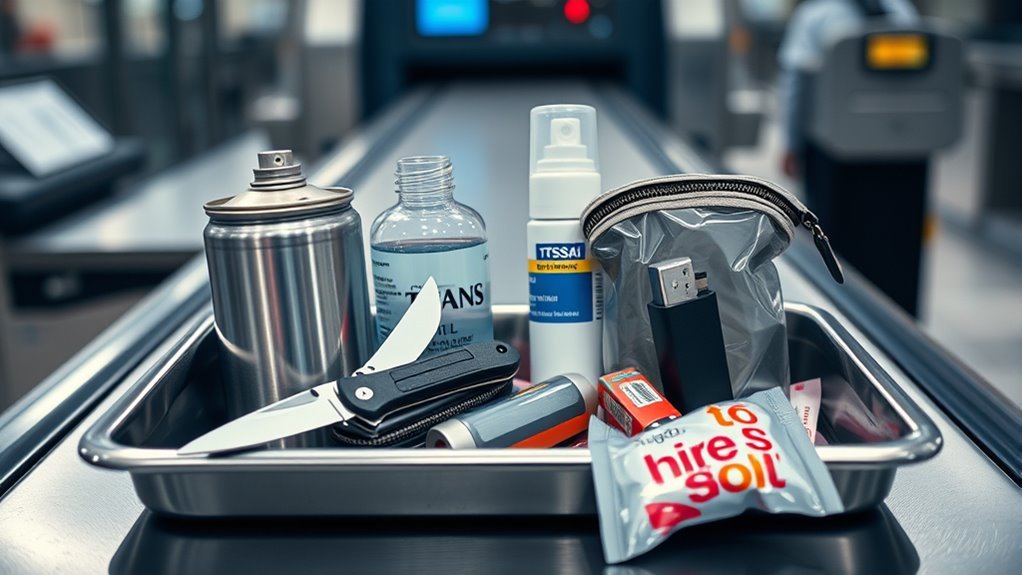
When you head to security, officers commonly confiscate items that break TSA rules or look risky—so expect laptops, liquids over 3.4 ounces, oversized batteries, pocketknives, and certain tools to be flagged.
You’ll also lose aerosols like spray paint, sharp scissors, full-sized camping knives, and box cutters. Sporting goods such as baseball bats and golf clubs won’t pass.
Aerosols, sharp scissors, full-size knives and box cutters — plus sporting goods like bats and clubs are not allowed.
Firearms, realistic replicas, and certain firearm parts are prohibited. Flammable solids, lighter fluid, and most fireworks get taken.
Chemical irritants like pepper spray are restricted or banned. If you’re unsure, declare the item or check TSA guidance before packing.
Liquid Limits and Exceptions (The 3-1-1 Rule)
You’ll often lose liquids at security unless they meet the TSA’s 3-1-1 rule: each passenger may carry liquids, gels, and aerosols only in containers of 3.4 ounces (100 milliliters) or less, all containers must fit in a single clear quart-sized bag, and each traveler is limited to one bag. Pack travel-size toiletries, consolidate when possible, and place the bag where screeners can easily remove it. Noncompliant items will be confiscated or discarded. Know the rule to avoid delays.
| Item | Limit |
|---|---|
| Shampoo | 3.4 oz |
| Lotion | 3.4 oz |
| Spray | 3.4 oz |
| Gel | 3.4 oz |
Medications, Baby Supplies, and Duty‑Free Rules
You can bring essential medications and baby supplies in your carry-on, but there are specific packing and documentation rules you should follow.
Prescription liquids and gels may be exempt from the 3-1-1 rule if you declare them at security.
Duty-free liquids bought after security often have their own sealed-bag requirements.
Check airline and airport policies ahead of time so you don’t get caught off guard.
Medications: Packing Rules
Although security lets most prescription and over‑the‑counter meds go through, you should pack them accessibly and clearly labeled. Keep liquids within TSA rules or declare larger quantities for medical need. Carry a doctor’s note or prescription when possible to avoid delays.
Pack pills in original containers when you can, and place daily doses in a small, labeled pill organizer for quick screening.
Store injectables and devices in insulated pouches with extra needles or syringes. Bring documentation for temperature‑sensitive medicines.
Keep meds in your carry‑on, not checked luggage, so you can address spills, delays, or loss immediately.
Duty‑Free And Liquids
Carry-on rules for liquids get trickier when meds, baby supplies, or duty‑free purchases are involved, so keep prescriptions and documentation handy. Separate required baby items for easy inspection, and know the TSA and airline procedures for sealed duty‑free bags—declare anything over the 3.4‑ounce limit at security and keep receipts to prove it was bought airside.
You can carry prescribed medications in larger quantities; notify security and present labels. Bring expressed breast milk, formula, and baby food as needed, clearly separated for inspection.
Duty‑free liquids sold after security usually travel in tamper‑evident bags—don’t open them before connecting flights unless rules allow.
Sharp and Blunt Objects Banned From Carry‑Ons
When packing, remember that airlines and TSA strictly forbid many sharp and heavy blunt items in your carry-on because they pose clear risks to cabin safety. You can’t bring knives, box cutters, razors with exposed blades, or metal nail files.
When packing, avoid sharp or heavy blunt items in carry-ons—knives, box cutters, exposed razors, and metal nail files are prohibited.
Scissors with blades longer than allowed and ice picks are barred. Even heavy objects like hammers, crowbars, and certain multitools are prohibited.
Some blunt items that could be used as weapons—baseball bats, clubs—must go in checked baggage.
If an item’s purpose or size is questionable, check TSA guidelines or contact your airline before you fly to avoid confiscation and delays.
Sporting Goods and Outdoor Gear Restricted in Carry‑Ons
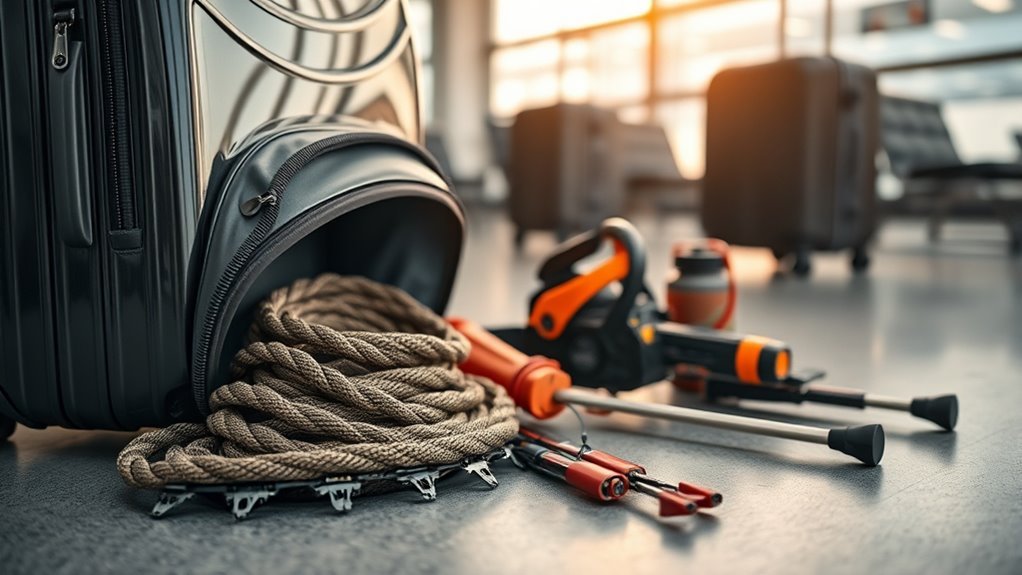
You’ll need to check rules for sporting equipment like bats, clubs, and ski poles because many are restricted in carry-ons.
Some outdoor items—like collapsible trekking poles or certain camping tools—may be allowed if they meet specific size or sheath requirements.
Be aware that items that could be used as improvised weapons are often prohibited regardless of sport or outdoor use.
Sporting Equipment Restrictions
Because sporting gear can be hard and potentially dangerous, airlines and TSA generally ban or restrict many items in your carry-on. You can’t bring bats, clubs, pool cues, ski poles, lacrosse sticks, or cricket gear as cabin carry because they’re considered blunt instruments.
Fishing rods, ice axes, and hiking poles are usually checked or disallowed in the cabin. Inflatable items and soft gear may be okay if deflated and packed safely, but rigid components often trigger prohibition.
Always check your airline’s policy before travel; failure to comply can result in confiscation, denied boarding, or fines.
Outdoor Gear Exceptions
Although small, soft items usually fly without issue, many outdoor and sporting goods are singled out for restriction because they can be used as weapons or damage cabin interiors.
You’ll need to check rules for items like trekking poles, ski poles, baseball bats, and hockey sticks—these are typically banned from carry‑ons and must go in checked baggage.
Inflatable kayaks, surfboard fins, and rigid tent stakes may also be restricted or require special packing.
Soft items such as collapsible poles or foam paddles might be allowed if they fit and don’t pose a safety risk.
Always verify with your airline before travel.
Improvised Weapon Concerns
Many outdoor items are barred from carry‑ons not just for size but because they can be repurposed as improvised weapons, so you should understand how screeners assess sporting goods and gear.
You need to *take into account* shape, rigidity, and potential to cause harm: bats, clubs, hiking poles, and certain tripods look like blunt instruments and are usually barred.
Even tools like ice axes or long tent stakes raise concerns.
If an item could be used to strike or puncture, pack it in checked baggage or buy a compliant alternative.
When in doubt, check airline and TSA guidance before traveling to avoid confiscation.
Rules for Batteries and Power Banks : How to Pack Them
Wondering how to pack batteries and power banks for your carry-on? You should carry spare lithium batteries and power banks in your cabin baggage only, not checked luggage.
Keep terminals protected — use original packaging, terminal covers, or tape to prevent short circuits.
Know capacity limits: most airlines allow devices and power banks under 100 Wh without approval; 100–160 Wh often need airline permission.
Keep batteries installed in devices when possible, and pack devices to prevent accidental activation.
Declare oversized units at check-in.
Store batteries where staff can access them in case of an incident, and follow airline-specific rules.
Why Some Electronics and Oversized Items Aren’t Allowed in Carry‑Ons
You’ve just learned how to handle batteries and power banks, but other electronics and oversized items pose different risks that affect whether they can ride in the cabin. You’ll feel frustrated when a bulky gadget or oddly shaped case is flagged, but safety and space matter.
Heavier items can injure during turbulence, large items block aisles and exits, and sensitive gear may conceal prohibited materials. Also, screening limits mean some tech needs checked inspection.
Heavy, bulky, or sensitive electronics can injure, obstruct exits, or require checked screening for safety.
- Shock from damaged devices
- Panic during evacuation
- Anger over lost accessibility
- Anxiety about damaged gear
- Embarrassment at gate checks
10 Practical Steps to Avoid Confiscation and Speed Through Security
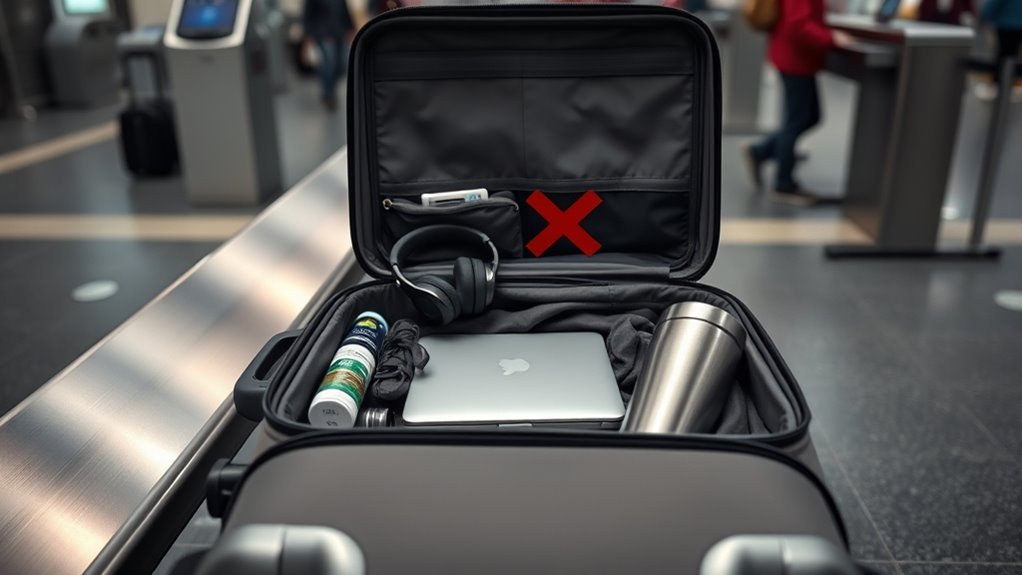
If you want to skip gate checks and keep your items with you, start by knowing the rules for size, weight, and restricted items for your airline and airport, then pack and prep accordingly.
Double-check liquid limits, battery rules, and prohibited item lists before packing.
Place electronics and liquids in easily accessible compartments and carry receipts for unusual items.
Wear shoes and minimal metal to speed screening, and have boarding pass and ID ready.
If an item might raise questions, declare it proactively to security.
Remove banned or oversized items before arriving at the checkpoint to avoid delays or confiscation.
Frequently Asked Questions
Can I Bring Perishable Food Items in My Carry‑On Internationally?
Yes — you can usually bring perishable food in your carry‑on, but you’ll need to follow airline rules, pack it securely, and comply with destination and transit country customs and quarantine regulations to avoid restrictions or confiscation.
Are E-Cigarettes Allowed in Checked Baggage Instead of Carry‑On?
No, you can’t put e-cigarettes in checked baggage; airlines and regulators require you to carry them in the cabin with spare batteries packed in carry‑on, since checked baggage risks fire and battery safety concerns.
What Happens to Confiscated Items—Can I Retrieve Them Later?
Usually you can’t reclaim most confiscated items at the airport; they’re either destroyed or disposed of for security reasons. In rare cases, items released by TSA might be picked up later from a designated office—call ahead.
Do Airline Loyalty Status or Upgrades Affect Carry‑On Allowances?
Yes — your status or upgrades often increase carry-on allowances, letting you bring extra bags or larger items; check your airline’s rules since perks vary by carrier and fare class, and don’t assume uniform benefits.
Are Medical Marijuana Products Permitted in Carry‑Ons Across States/Countries?
You generally can’t carry medical marijuana across state or international lines; you’ll face federal and foreign laws, so don’t assume it’s allowed. Check local and airline regulations, and keep documentation if travel within a compliant state.
Conclusion
You’ll get through security faster if you follow the rules: pack liquids in 3-1-1 bags, keep meds and baby supplies accessible with prescriptions, and stow prohibited sharp, sporting, and oversized items in checked baggage. Protect batteries and power banks in carry‑on only, and check airline rules for weird-shaped gear or duty‑free purchases. When in doubt, ask TSA or your airline before you leave—better to rearrange at home than lose something at the checkpoint.