
What Is Not Allowed in Checked Baggage for International Flights
You can’t pack flammables, explosives, or pressurized aerosols in checked baggage — think fuel, fireworks, most lighter fluids, and spray paints. Don’t check spare lithium batteries, large quantities of alcohol, corrosive cleaners, infectious samples, or undeclared firearms and ammunition. Valuable items, cash over regulatory limits, and fragile electronics are safer in carry-on. Rules vary by airline and country, so declare regulated goods or ship them; continue for practical packing, declaration, and battery-handling tips.
Quick Checklist: Banned in Checked Baggage
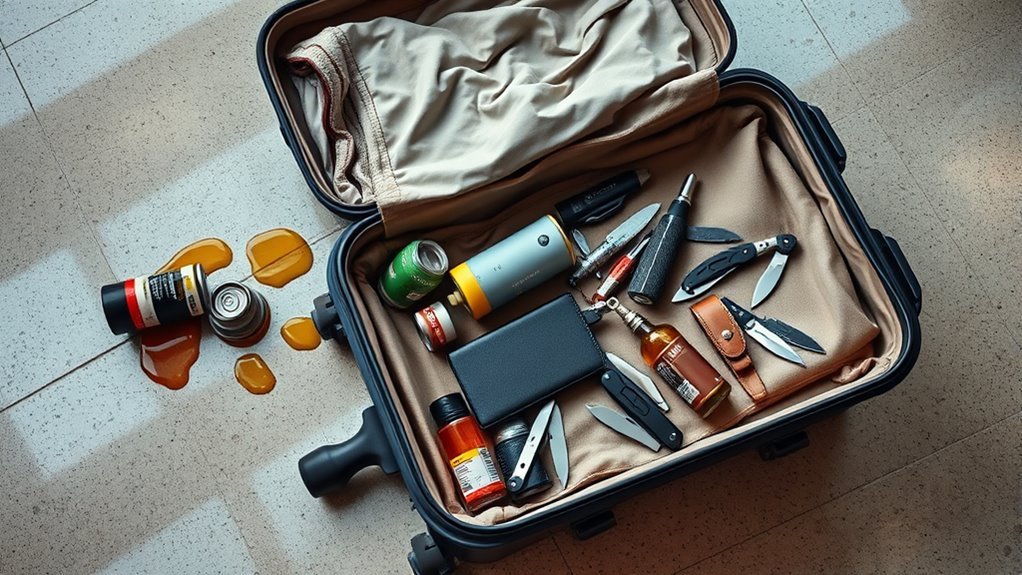
If you’re packing for an international flight, remember that many common items are strictly prohibited in checked baggage; these include flammable materials, pressurized containers like aerosol cans, lithium batteries not installed in devices, and certain chemicals and explosives.
You should also exclude sharp objects (unfolding knives, box cutters), firearms and ammunition, and large quantities of alcohol above permitted limits. Percussive tools, certain sporting goods, and self-defense sprays are typically barred.
Fragile valuables, important documents, and medication belong in carry-on, and peroxide-based items or bleach should never go in checked bags.
Check your airline and country rules before travel.
Why Items Are Banned in Checked Bags
Why are certain items banned in checked bags? You pack for convenience, but airlines and security ban things that risk safety, damage, or legal trouble. Items that can ignite, explode, leak corrosives, or cause fires threaten aircraft and baggage handlers.
Concealed weapons or illicit substances create security and criminal concerns. Fragile valuables and perishable goods are barred because checked compartments aren’t secure or climate-controlled. Some materials interfere with emergency systems or pose environmental hazards.
How Airlines and Countries Differ
Rules that keep flights safe can still vary widely depending on the airline and the country you’re flying to or from. You’ll find airlines set stricter rules than national regulators, and some countries ban items outright that others allow with limits.
Before packing, check both your carrier’s checked-baggage policy and the destination’s aviation authority guidance. Look for differences in lithium battery rules, prescription medication limits, and agricultural restrictions.
If rules conflict, follow the stricter one or contact the airline for clarification. Carry documentation for exceptions, and expect inspections or fines if you ignore local or carrier-specific prohibitions.
Hazardous Materials You Can’t Check
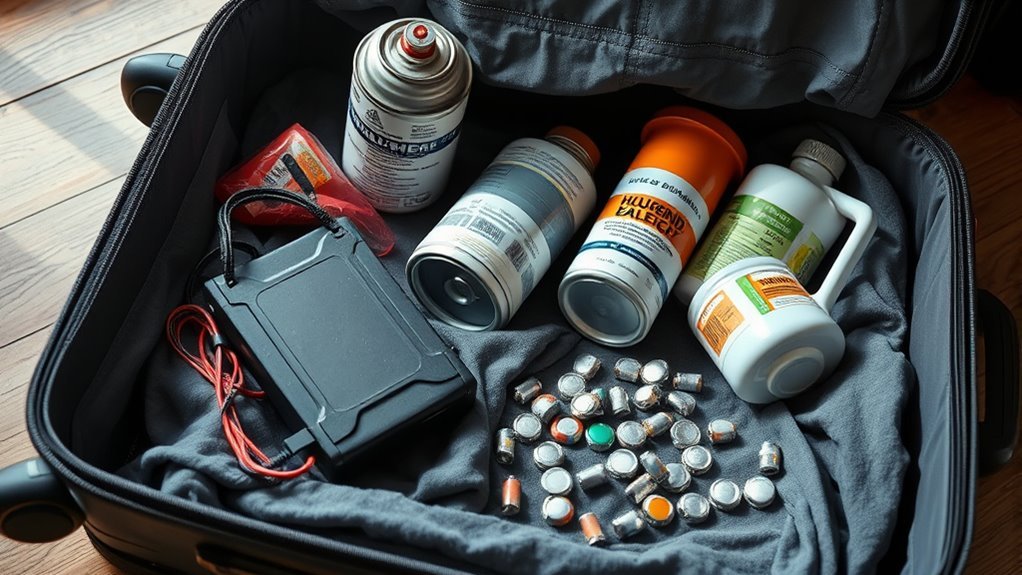
You can’t pack flammable liquids or gases in checked baggage because they can ignite or explode under pressure.
You also can’t check compressed gas cylinders like camping tanks or certain aerosols for the same safety reasons.
Check airline and country rules for permitted exceptions and safe alternatives.
Flammable Liquids And Gases
Because they’re highly volatile and dangerous, airlines and international safety agencies ban most flammable liquids and gases from checked baggage. You can’t pack fuel, lighter fluid, aerosol sprays labeled flammable, paint thinners, or solvent-based products in your hold luggage. Even small quantities can pose fire and explosion risks under pressure and temperature changes.
Pack permitted toiletries and nonflammable aerosols in carry-on within limits, and dispose of or ship regulated liquids via specialized carriers. If in doubt, check your airline’s hazardous materials page or contact customer service.
Violations can lead to confiscation, fines, or travel delays.
Compressed Gas Cylinders
Flammable liquids aren’t the only items that create fire and pressure hazards in the hold—compressed gas cylinders pose similar and often greater risks, so airlines prohibit them in checked baggage.
You can’t pack oxygen tanks, propane canisters, CO2 cartridges for paintball, or refillable scuba cylinders in checked bags because leaks, ruptures, or temperature changes can cause explosions or feed fires.
Some small disposable cartridges may be allowed in carry-on with carrier approval, but you should always check airline and international rules before travel.
Declare any medical oxygen needs; airlines will provide approved alternatives and procedures to keep you compliant and safe.
Lithium Battery Rules for Checked Baggage
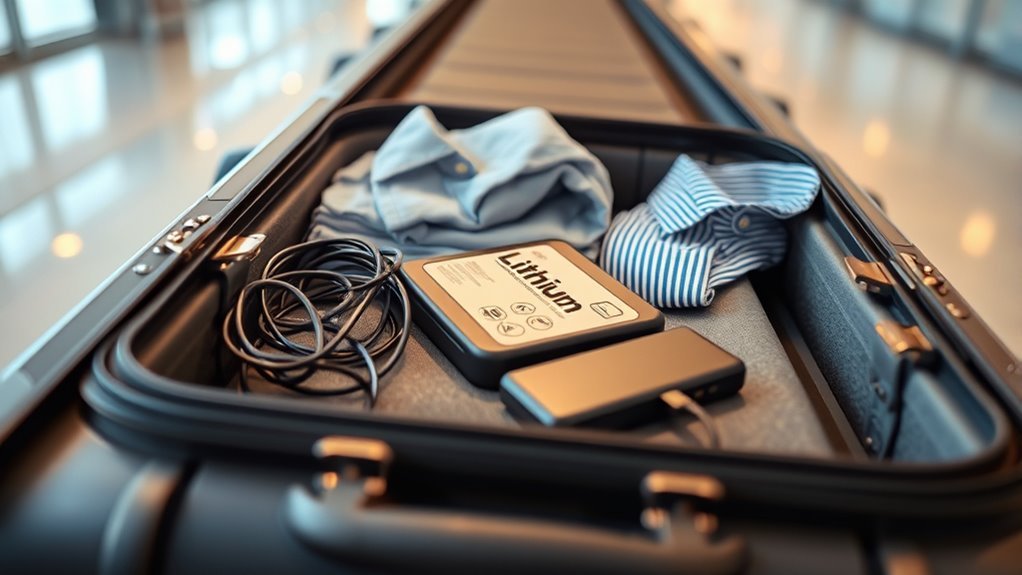
Although airlines and regulators vary, lithium batteries are tightly restricted in checked baggage because they pose fire and thermal-runaway risks in the cargo hold. You must stow devices with installed lithium-ion batteries in carry-on when possible.
Some airlines still allow equipment with non-removable batteries to be checked, but you should verify rules before travel. Confirm devices are powered off, protected from accidental activation, and insulated from metal objects.
Large lithium batteries used for mobility aids may need airline approval and special handling. Declare any battery-powered medical devices at check-in.
Always check airline and destination regulations to avoid confiscation or fines.
Spare Batteries and Power Banks
When you travel internationally, keep spare batteries and power banks in your carry-on, not checked baggage, because they can ignite and are easier to manage in the cabin. You should carry spare lithium batteries and power banks inside your cabin bag, protect terminals, and follow airline watt-hour and quantity limits. If a device is damaged or recalled, check airline rules before flying. Security may require them to be inspected or removed from checked luggage. Pack them so contacts can’t short and declare high-capacity units at check-in when requested.
| Item | Tip | Limit |
|---|---|---|
| AA/AAA | Cover terminals | Varies |
| 18650 | Use case | Usually banned checked |
| Power bank | Carry-on only | <100Wh common |
| Phone | In device | Allowed |
Flammable Liquids and Aerosols (Checked Bags)
Because they can ignite under pressure or from a spark, you shouldn’t pack flammable liquids or aerosol cans in checked baggage; airlines and international rules generally require you to put them in your carry-on or leave them at home.
You can carry small personal aerosol items (like deodorant or hairspray) in cabin baggage if they meet size and quantity limits and are declared when required.
Flammable liquids—solvents, certain perfumes, fuel additives, and alcohol over limits—are often prohibited or restricted.
Always check airline and destination regulations, pack items securely to prevent leaks, and declare anything potentially hazardous at check-in.
Compressed Gas and Pressurized Containers
You shouldn’t pack compressed gas or pressurized containers in checked baggage because they can rupture or explode under pressure changes.
That includes aerosols and spray cans, fuel and flammable cartridges, and scuba or other diving cylinders.
Check airline and IATA rules—some items may be allowed only if emptied, rendered inert, or declared and packed to specific standards.
Aerosols And Spray Cans
Although they seem harmless, aerosols and spray cans are tightly regulated on international flights because their pressurized contents can pose fire and explosion risks. You should verify rules before packing; limits vary by airline and country. Don’t assume all personal care sprays are allowed.
Follow these key points:
- Non-flammable personal aerosols (deodorant, hairspray) may be permitted in checked baggage within quantity limits.
- Flammable aerosols (paint, solvent-based sprays) are prohibited.
- Ensure caps are secure and containers are undamaged to prevent accidental discharge.
- Declare any medical or special-use aerosols to your carrier in advance.
Fuel And Flammable Cartridges
Moving from personal aerosols, you should treat fuel and flammable cartridges—like butane canisters, lighter refills, and other compressed-gas containers—much more restrictively because they present greater fire and explosion hazards in cargo holds. You can’t pack them in checked baggage; airlines and regulators prohibit pressurized fuel cartridges, gas canisters, and refillable lighters unless expressly allowed in carry-on under strict rules. Always remove fuel, empty devices, or ship via approved hazmat channels. Check airline and country-specific rules before travel to avoid fines, delays, or confiscation.
| Item | Status | Note |
|---|---|---|
| Butane canisters | Prohibited | High pressure |
| Lighter refills | Prohibited | Flammable liquid |
| Refillable fuel cells | Prohibited | Explosion risk |
Scuba And Diving Cylinders
How should you handle scuba and diving cylinders when packing for an international flight? You can’t pack pressurized cylinders in checked baggage because they’re hazardous.
Follow these steps before travel:
- Check airline and country rules; some prohibit cylinders entirely.
- Arrange professional discharging or shipment via a certified hazardous-goods carrier.
- If allowed, carry cylinders as manifest cargo only after inspection, valve protection, and documentation.
- Never attempt to transport partially filled or high-pressure cylinders in personal luggage.
Always confirm regulations well before departure to avoid fines, delays, or safety risks when dealing with compressed gas and pressurized containers.
Explosives, Fireworks, and Ammunition Rules
Because explosives, fireworks, and ammunition pose serious safety risks on aircraft, airlines and aviation authorities strictly prohibit them from checked baggage and often ban them entirely from passenger travel. You mustn’t pack fireworks, flares, gunpowder, or explosive components in checked bags.
Ammunition rules vary: some carriers allow limited amounts in checked luggage if unloaded, properly packaged, and declared; others forbid it. Always check your airline and departure/destination country regulations before travel.
If you’re unsure, ship items via approved cargo services or leave them behind. Failure to comply can result in fines, confiscation, or criminal charges.
Corrosives and Household Chemicals to Avoid
You can’t pack corrosive substances like acids, batteries with damaged casings, or oxidizers in checked baggage because they’ll eat through containers and pose serious hazards.
Household chemicals such as bleach, drain cleaner, and aerosol solvents are often restricted or must meet strict quantity and packaging rules.
Check airline and country regulations before you travel so you don’t get fined or have items confiscated.
Corrosive Substances Prohibited
When packing for an international flight, don’t include corrosive substances in your checked baggage since they can eat through containers, damage other luggage, and pose serious risks to handlers and the aircraft. You must remove acids, bases, and oxidizers from checked bags and instead ship them via approved hazardous carriers or leave them behind.
Follow airline and country rules, declare anything questionable, and use manufacturer guidance for disposal. Handle residues carefully and wear gloves when cleaning. Inspect containers for leaks before travel.
- Strong acids (battery acid, muriatic)
- Strong bases (lye, drain cleaner)
- Oxidizers (peroxides)
- Corrosive aerosols
Household Chemicals Restrictions
Corrosive household chemicals often overlap with other banned items, so take a close look at common cleaners and maintenance products before packing.
You shouldn’t pack bleach, drain cleaners, oven cleaners, concentrated acids, alkalis, or rust removers in checked baggage.
Aerosol disinfectants and spray cleaners with flammable propellants are also risky and often prohibited.
Small sealed containers of typical household detergents may be allowed, but check airline and destination rules and keep them well sealed and insulated.
When in doubt, leave household chemicals at home or ship them via approved hazardous-goods services to avoid fines, delays, or confiscation.
Toxic or Infectious Substances Banned
Because toxic and infectious materials can endanger baggage handlers, passengers, and aircraft systems, they’re strictly prohibited in checked baggage on international flights. You mustn’t pack items that pose contamination or poisoning risks. Follow carrier and international rules; declare anything questionable.
Toxic or infectious materials endanger people and aircraft — never pack them in checked international baggage; declare doubts.
Examples include:
- Corrosive or toxic industrial chemicals like cyanides or strong acids.
- Infectious agents, cultures, or patient specimens capable of spreading disease.
- Poisonous gases, volatile toxic liquids, or substances that release harmful vapors.
- Contaminated medical waste or sharp infectious items without approved containment.
When in doubt, contact your airline or local authority before packing.
Perishables and Biological Sample Limits
You should avoid packing highly perishable foods in checked baggage unless they’re properly refrigerated and allowed by your destination’s import rules.
If you need to transport biological samples, check airline and country limits, use approved containment, and label them clearly.
Preserve and package items to prevent leaks, odors, and spoilage that could contaminate other luggage or violate regulations.
Perishable Food Items
Wondering what perishable foods you can pack for an international flight? You can bring commercially sealed, shelf-stable items, but fresh or temperature-sensitive foods often get restricted or confiscated. Check destination rules and airline policies before packing. Consider refrigeration limits and customs inspections.
- Fresh fruit and vegetables: often prohibited or limited by country.
- Dairy and meats: usually banned unless commercially processed and declared.
- Homemade meals: discouraged due to spoilage risk and inspection delays.
- Seafood and sushi: typically not allowed in checked baggage without special permits.
Declare perishables and plan alternatives to avoid surprises.
Transporting Biological Samples
When shipping biological samples in checked baggage, know that airlines and countries treat them differently and set strict limits on types, quantities, and packaging. You can’t assume all specimens are allowed: infectious materials, diagnostic cultures, and human blood products are commonly prohibited or require permits.
Even noninfectious samples like dried plant matter or animal tissues may face bans under agricultural or wildlife regulations. You’ll need to declare samples during booking and at customs, follow carrier guidance, and obtain required permits or certificates.
Failure to comply can lead to seizure, fines, or criminal charges, so check rules before you travel.
Preservation And Packaging
If you’re carrying perishables or biological samples in checked baggage, plan packaging and preservation to protect the items, comply with carrier rules, and prevent leaks or contamination. You should check airline and destination regulations, use sturdy, leakproof containers, and include absorbent material and secondary containment. Keep perishables cool with approved ice packs or dry ice per carrier limits, and label biological samples clearly.
Follow these steps:
- Verify transport allowances and documentation.
- Use triple packaging and absorbents for fluids.
- Limit dry ice to the airline’s permitted weight and ventilation rules.
- Pack perishable timelines and temperature controls.
Live Animals and Animal Product Rules
Because live animals and many animal products can pose health, safety, and quarantine risks, airlines and countries strictly limit what you can pack in checked baggage. You generally can’t check live animals except via approved cargo services.
Small pets usually must travel in-cabin with carrier size and health certificate rules. Animal products like raw meat, dairy, fresh eggs, hides, and certain seafood are often prohibited or need import permits and inspection.
Check destination country rules and airline policies before packing any animal-derived items. Declare permitted items, carry required paperwork, and use approved shipping channels to avoid fines, confiscation, or quarantine.
Weapons, Replicas, and Blunt Instruments
You can’t pack firearms or ammunition in checked baggage unless you follow strict airline and international rules, and even then they’re often subject to declaration and secure packaging.
Knives, bats, and other blunt instruments are usually prohibited or heavily restricted because they pose safety risks.
Check your airline and destination laws before traveling so you don’t face confiscation or penalties.
Firearms And Ammunition
When traveling internationally, airlines and security agencies strictly prohibit most firearms, ammunition, realistic weapon replicas, and heavy blunt instruments in checked baggage to prevent accidental discharge, misuse, and security threats.
You must declare and follow carrier and country-specific rules if you need to transport firearms legally. Failure to comply can result in fines, confiscation, or arrest.
Note that some exceptions exist for properly declared, packaged firearms and ammunition with airline approval and documentation.
- Declare firearms and ammo to the airline before check-in.
- Use approved locked hard cases.
- Follow quantity and packaging limits for ammunition.
- Carry all required permits and paperwork.
Knives And Blunt Objects
Wondering what kinds of knives and blunt objects you can pack? You can usually place durable kitchen knives, pocketknives with blades sheathed, and sports equipment like baseball bats in checked baggage, but you must secure them to prevent injury and meet airline rules.
Folding knives with locking blades, large fixed blades, tactical knives, and replicas that look like weapons are often prohibited or restricted—declare them and check local laws.
Blunt instruments used as weapons (crowbars, brass knuckles, clubs) are typically banned.
Always review your airline and destination regulations, pack items safely, and declare anything doubtful at check-in.
Electronics Restricted in Checked Baggage
Why are electronics treated differently in checked baggage? You need to protect batteries and sensitive devices from pressure, temperature changes, and rough handling.
Airlines and regulators limit lithium batteries and require devices with them to be carried in the cabin when possible. Follow airline rules and pack smartly.
Airlines restrict lithium batteries—carry devices with them in the cabin when possible and follow airline rules.
- Remove spare lithium batteries and carry them in your cabin baggage, protected from short circuits.
- Power off large devices and disable quick-start features to prevent accidental activation.
- Use original or approved battery cases and insulate terminals.
- Check airline and destination rules for device-specific restrictions before you travel.
Valuable Items to Never Check
You should never check jewelry or precious metals because they’re easy to lose, steal, or get damaged in transit.
Keep cash, traveler’s checks, bonds, and other financial instruments on your person or in carry-on luggage for security and quick access.
If an item is valuable or hard to replace, assume it belongs with you in the cabin.
Jewelry And Precious Metals
How would you feel if your heirloom ring or gold necklace vanished from checked luggage? You shouldn’t risk it. Jewelry and precious metals are small, high-value, and easily lost or stolen in transit. Always keep them in your carry-on or on your person. Follow airline and customs rules for declarations, but don’t rely on checked baggage for irreplaceable pieces.
- Pack jewelry in a padded case inside your carry-on.
- Wear valuable items through security and during travel.
- Photograph pieces and note serial numbers before flying.
- Declare high-value items if required by destination regulations.
Cash And Financial Instruments
Ever wondered what could ruin a trip faster than lost luggage? You shouldn’t check cash, traveler’s checks, bonds, stock certificates, or bearer instruments. Those items are high-value, portable, and often unreplaceable; airlines and insurers typically won’t cover them if bags go missing.
Keep currency and financial documents on your person or in a secure carry-on. Use hotel safes, digital banking, and traceable transfers instead of stuffing wallets into checked suitcases.
If you must travel with significant funds, split them among trusted companions and notify your bank. Treat financial instruments as valuables you never entrust to airline hold.
Large Cash and Negotiable Instrument Limits
Because many countries treat large sums of cash and negotiable instruments as potential indicators of undeclared income or criminal activity, airlines and border authorities strictly limit what you can carry in checked baggage and often require declaration at arrival or departure.
You should keep cash and negotiable items in carry-on luggage, declare amounts above thresholds, and expect inspection.
Common practices include:
- Declare amounts over set limits (often $10,000 or equivalent).
- Avoid hiding cash or instruments in checked bags.
- Carry documentation proving lawful source when possible.
- Expect seizure, fines, or delays if you fail to declare.
Destination-Specific Legal Restrictions
When you travel internationally, each country has its own rules about what you can bring in checked baggage—some items that are fine at home may be illegal or require permits at your destination. You need to research prohibitions and permit requirements for food, plants, soil, animal products, cultural artifacts, medicines, and weapons.
Check customs websites and embassy guidance, and confirm prescription dosages and documentation. Declare items honestly to avoid fines, seizure, or arrest. If you’re unsure, contact the destination’s customs office or a consulate before packing.
Follow their instructions to prevent trouble on arrival and on your return.
Airline-Specific Rules : How to Check
Although airlines follow broad safety standards, each carrier sets its own limits on size, weight, and prohibited items, so you should check their specific policies before you pack. Start by visiting the airline’s website and locating baggage rules. Then confirm rules for your fare class and route. Finally, document any special approvals.
- Check baggage allowance pages for size/weight limits.
- Search prohibited items lists and exceptions.
- Review special items (batteries, sports gear, instruments).
- Contact customer service or use chat for unclear cases.
Keep screenshots or saved pages to avoid disputes at the airport.
How Security Detects Banned Items
If you’re wondering how banned items get spotted, airport security uses a mix of X-ray imaging, explosive-detection systems, metal detectors, and trained staff to identify threats in checked bags. You’ll see automated scanners highlight densities, algorithms flag anomalies, and handlers pull suspicious bags for manual inspection. Canine units and chemical swabs add layers. You should pack transparently and label electronics; opaque packing can prompt checks. If an item’s prohibited, staff will remove or confiscate it and notify you per procedure. Cooperation speeds resolution and reduces delays, keeping flights safer for everyone.
| Tool | Purpose |
|---|---|
| X-ray | Visualize contents |
| Canine | Detect explosives |
Packaging Tips to Avoid Confiscation
After security identifies items that might cause concern, you can reduce the chance of confiscation by packing with clear, consistent labeling and smart containment. Use sturdy containers, original packaging when possible, and transparent bags for small parts. Follow these steps:
After security flags items, pack with clear labels, sturdy cases, transparent bags, and documented permits to speed screening
- Seal liquids in leakproof, labeled pouches and note volumes clearly.
- Isolate sharp or dense objects in hard cases with padding and visible tags.
- Group related items together and add an inventory card on top of the bag.
- Avoid improvised wraps; use tamper-evident tape and document any prescriptions or permits.
These measures help screeners assess contents quickly and accurately.
Alternatives: Ship, Carry-On, or Declare
When an item isn’t suitable for checked baggage, you can usually choose to ship it ahead, carry it on, or declare it to authorities at the airport; each option has different rules, costs, and risks, so pick the one that matches the item’s size, value, and regulatory status.
You’ll ship bulky or restricted items via courier when time allows and customs paperwork is required.
Carry on small valuables, electronics, medications, and lithium batteries to keep them safe and accessible.
Declare firearms, large sums of cash, or controlled goods at check-in or customs to avoid fines or seizure and follow destination rules.
Frequently Asked Questions
Can I Pack Prescription Medications in Checked Baggage?
Yes, you can pack prescription medications in checked baggage, but you shouldn’t. Carry essential meds in your carry-on, keep prescriptions and originals, and check destination rules; lost or delayed checked bags could leave you without critical treatment.
Are Checked Bags Searched Without My Presence?
Yes — your checked bags can be searched without you present; security or customs agents may open and inspect them. You’ll usually be notified if damage occurs, and you should follow any local procedures for disputes.
What Happens if Prohibited Items Are Found at the Gate?
If prohibited items are found at the gate, security will remove them, you’ll be questioned, and you might face fines, delayed travel, or arrest; airlines can deny boarding and report the incident to authorities, so don’t bring them.
Can I Check Items Bought at Duty-Free Stores?
Yes, you can check duty-free items, but you’ll need to follow limits on liquids, alcohol, and local customs rules; keep receipts and original packaging, and declare purchases if required to avoid confiscation or fines at your destination.
Do Airline Liability Limits Cover Lost Checked Valuables?
No, airline liability limits usually won’t fully cover lost checked valuables; you should assume limited reimbursement, check your carrier’s contract, declare high-value items, and buy travel insurance or ship valuables separately to guarantee protection.
Conclusion
Now you know what not to pack in checked baggage and why it matters. Before you zip up, double-check airline and country rules, especially for lithium batteries, flammables, and other hazardous materials. If something’s restricted, don’t gamble—declare it, move it to carry-on if allowed, or ship it separately. Pack smart, label properly, and follow security guidance to avoid delays, fines, or confiscation so your trip stays smooth and stress-free.
