What If My Luggage Is 1 Kg Overweight: What to Expect
If your checked bag is 1 kg over, expect staff to weigh it, ask you to shift items to carry‑on, or charge a small excess fee depending on the airline and route. You can politely request a reweigh, repack at the counter, or move dense items into your cabin bag. Keep payment ready in case of a charge and check elite or fare benefits for waivers. Keep going to find quick repacking tips and fee‑avoidance tricks.
Quick Answer: What Happens If Your Bag Is 1 Kg Overweight?
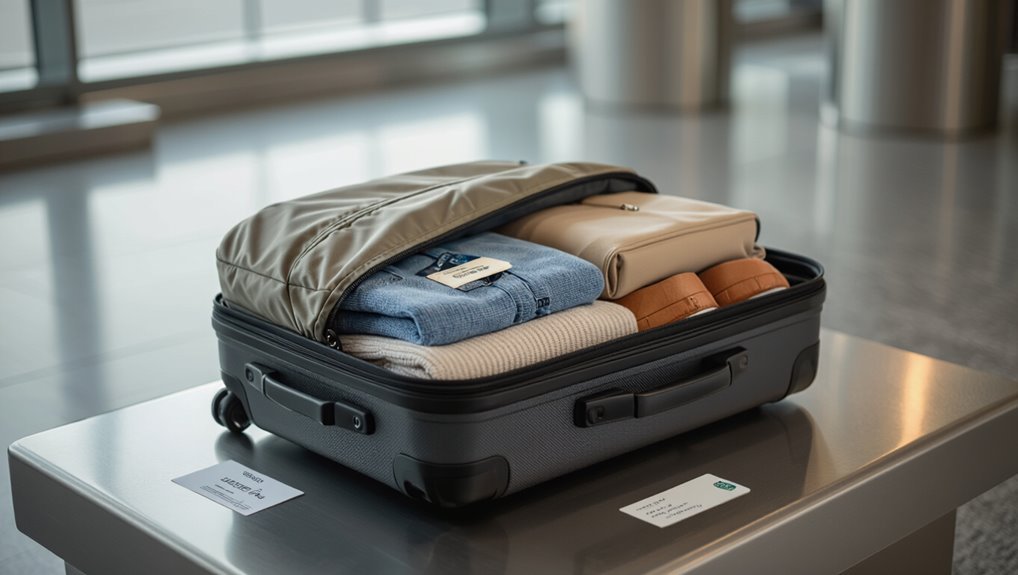
If your bag is 1 kg overweight, you’ll probably face a small fee or be asked to move items into your carry-on—most airlines tolerate slight overages but enforce limits at the counter.
You’ll usually either pay a modest surcharge, shift items, or have staff reweigh and adjust.
Policies vary by carrier and route, so check allowances before you arrive to avoid surprises.
Immediate Steps at Check‑In for a 1 Kg Overage
If your bag shows 1 kg over at check‑in, ask to reweigh it and you can usually repack at the counter or a nearby bench.
Move nonessentials into your carry‑on or remove a few items to meet the limit.
If you can’t, be prepared to pay the airline’s overweight fee and choose the cheapest payment option they offer.
Weighing And Repacking
When the scale shows you’re just 1 kg over, act quickly: open your bag, shift dense items toward your carry‑on, and remove anything nonessential like extra shoes or bulky toiletries.
Repack methodically: redistribute weight evenly, compress soft items, and zip pockets to avoid spills.
Ask staff to reweigh after adjustments. Keep essentials accessible so you can repeat the process if needed.
Paying Overweight Fees
After you’ve tried shifting and repacking, accept that you might still be a kilo over and prepare to pay the fee.
Approach the check‑in counter calmly, tell the agent you need to pay for one kilogram over, and have a card ready.
Ask the agent the exact charge and whether joining the airline’s frequent‑flyer program or upgrading allows a waived or reduced fee.
Quick Repacking Checklist to Avoid Fees
Weigh your bag again on the check‑in scale to confirm how much you need to shed.
Redistribute heavy items into a carry‑on or pockets and shift dense things like shoes toward the center to balance weight.
If you’re still over, pull out nonessentials fast and decide what can be left behind or mailed.
Weigh Your Bag Again
Want to skip surprise fees at the counter? Weigh your bag again after any quick adjustments.
Use a portable scale or the bathroom scale method—lift then subtract your weight.
Check handles, wheels and pockets for forgotten items.
If it’s still over, remove nonessentials or move them to carry-on.
Reweigh to confirm you meet the airline limit before heading to check-in.
Redistribute Items Smartly
If you find your bag still too heavy, quickly redistribute items between checked luggage, carry-on, and your personal item to hit the limit without ditching essentials.
Move dense items (shoes, books) into checked baggage, shift bulky clothing into your carry-on, and tuck small valuables or documents into your personal item.
Balance weight evenly, zip, and reweigh so you avoid fees at the counter.
Remove Nonessentials Fast
Start by stripping out anything you can live without for the flight: extra shoes, duplicate chargers, bulky toiletries, and nonessential books or souvenirs.
Then act fast: weigh, sort, and stash. Remove items into carry-on or discard.
Quick checklist:
- Electronics: leave one charger, bulky adapters.
- Toiletries: decant liquids, skip full bottles.
- Clothing: wear heavier items, pare down layers.
When Agents Will Ask You to Move Items to Carry‑On
When your checked bag tips the airline’s weight limit, gate or check‑in agents will often ask you to move heavy items into your carry‑on to avoid excess baggage fees and speed boarding. You should cooperate, prioritize dense items, and keep travel essentials accessible.
| Item to move | Why |
|---|---|
| Shoes | Heavy, compact |
| Liquids | Weighty, restricted |
| Electronics | Valuable, bulky |
| Souvenirs | Dense, optional |
What to Do If Your Carry‑On Is Already Full
If your carry-on’s already full, quickly repack and prioritize the items you truly need in the cabin, like medications, electronics, and travel documents.
Move less essential things into checked bags or consolidate clothing by rolling and using compression.
If you still need extras, ask about gate‑checking bulky items so your essentials stay with you.
Repack And Prioritize
Although your carry-on’s packed to the brim, you can still make room by repacking with purpose: pull everything out, group essentials (electronics, documents, medications), and strip out noncritical items like extra shoes or bulky sweaters.
- Move toiletries and duty-free into a clear pouch.
- Wear the bulkiest layer through security.
- Shift heavy small items (chargers, books) into personal item pockets or outer compartments.
Gate-Checked Essentials
Because you’ve hit the gate with a full carry-on, you’ll need to think fast about what to gate-check and what to keep with you: prioritize valuables (passport, wallet, meds, electronics) and fragile items.
Move bulky or heavy nonessentials into the gate-checked bag, and secure anything you’re checking with a tag or a tamper-evident pouch.
Ask staff about damage claims, keep essentials in a clear pouch, and note bag ID.
Fast Negotiation Lines That Work at the Counter
When you step up to the counter with an overweight bag, quick, confident lines can turn the situation in your favor; say them calmly and stick to a friendly tone.
- “Could you help me redistribute a kilo? I’ll rearrange quickly.”
- “Is there a lighter option like gate check or carting this onboard?”
- “I travel light—any small flexibility would help me today?”
When You’ll Usually Have to Pay an Overweight Fee
Different airlines set their own weight limits and fee schedules, so you’ll want to check your carrier’s policy before you pack.
Pay attention to when you check in—some airlines enforce weight limits at curbside, others at the gate or bag drop, and timing can affect whether you can repack or must pay.
Knowing both the policy and the check-in rules helps you avoid surprise charges.
Airline Policy Differences
Although airlines all charge for overweight bags, their rules and fee structures vary widely, so you’ll want to check your carrier before you pack.
Different carriers enforce limits, charge per kilo, or set flat fees. Consider these variations:
- Weight tiers and cutoffs.
- Per‑kg versus flat overage fees.
- Exceptions for status, routes, or baggage type.
Check-In Timing Rules
If you check your bag at the counter or gate with extra weight, you’ll usually pay the overweight fee then—many airlines only assess overage charges at the point they accept checked luggage. Plan to weigh before arrival, adjust contents, or repack to carry on. Below is a quick guide:
| When | Where | Action |
|---|---|---|
| At home | Scale | Repack |
| At curb | Staff | Redistribute |
| Counter | Agent | Pay or repack |
| Gate | Gate agent | Small fees |
| Boarding | Final | Rarely waived |
Typical Fees for Being 1 Kg Overweight
Most airlines charge a small fixed fee or a per-kilogram rate when your bag is 1 kg over the limit.
Most airlines will charge a modest fixed fee or a per‑kg surcharge if your bag is just 1 kg over.
You’ll usually pay a modest surcharge at check-in or the counter.
Typical scenarios:
- Fixed fee (e.g., $20–$50) for up to 1–2 kg over.
- Per-kg rate (e.g., $10–$30/kg).
- Higher fees if overweight moves into next luggage category.
When Airlines Commonly Waive a 1 Kg Overage
When you’re only a kilo over, airlines will sometimes let it slide—especially if the flight isn’t full, the check-in queue is calm, or you’re a frequent flyer with status. You can ask politely, redistribute items, or request a supervisor; timing and staff discretion matter.
| Situation | Likelihood | Tip |
|---|---|---|
| Off-peak | High | Ask nicely |
| Busy | Low | Redistribute items |
| Empty flight | High | Request waiver |
| Tight connection | Medium | Move weight to carry-on |
How Elite Status or Flexible Fares Change Outcomes
If you have elite status, you’ll often get extra baggage allowance or fee waivers that can turn an overweight bag into a nonissue.
Likewise, flexible or refundable fares frequently include more generous baggage rules or let you change your ticket without a penalty.
Check your specific elite benefits and fare terms before you travel so you know what protections apply.
Elite Status Perks
Elite status or a flexible fare can make a big difference: you’ll often get higher free baggage allowances, waived overweight fees, or at least reduced charges compared with standard tickets.
- You get priority check‑in and extra kilos, so a 1 kg overage often slips by.
- Agents may waive or discount fees as a loyalty benefit.
- Confirm allowances before travel to avoid surprises.
Flexible Fare Protections
Having loyalty status or a flexible fare doesn’t just buy you extra kilos — it changes how an airline handles overweight baggage altogether. You’ll often get waived fees, priority handling, or options to adjust your booking; agents are more accommodating. Check policy details and carry proof of status to avoid surprises.
| Perk | Typical Benefit | Action |
|---|---|---|
| Elite | Fee waiver | Show card |
| Flexible fare | Rebook baggage | Call agent |
| Credit card | Extra allowance | Present card |
| Gate agent | Compassion | Ask nicely |
| Loyalty phone line | Faster help | Use number |
Who Enforces Baggage Weight at the Airport
When you check in, airline staff and ground agents are the ones who enforce baggage weight limits, using scales at kiosks or bag drop counters to weigh your luggage and apply fees or require repacking if it exceeds the allowance.
You’ll also encounter:
- Gate agents confirming carry‑on limits.
- Baggage handlers tagging overweight hold bags.
- Security staff observing obvious oversized pieces.
How Airlines Measure Baggage Weight at Check‑In
When you check in, airlines use certified scales that are regularly calibrated to guarantee official accuracy.
The agent will usually place your bag on the scale, note the weight, and record it in the system or on your boarding pass.
If you question the reading, ask the agent to reweigh the item or show calibration evidence.
Official Scale Accuracy
Because airlines rely on calibrated scales at check‑in, the weight you see on the display is treated as the official measurement for fees and compliance, so don’t expect to argue about a few ounces once your bag’s on the belt.
You should:
- Trust the display as final.
- Pack with a margin for scale variance.
- Accept fees or repack before leaving the counter.
Agent Weighing Procedure
Although agents follow standard steps, the exact procedure can vary by airline and airport — and you’ll notice they’re quick and methodical.
They’ll place your bag on a calibrated scale, record the weight, and compare it to the allowance. If it’s over, they’ll ask you to repack, pay a fee, or redistribute items.
You can request a second weighing if you doubt the result.
How Strictness Varies: Low‑Cost vs Legacy Carriers
If you’ve flown on both low‑cost and legacy carriers, you’ve probably noticed they police baggage differently — low‑cost airlines tend to enforce strict weight limits and charge hefty fees, while legacy carriers often give a bit more leeway or include higher allowances in your fare.
- Low‑cost: expect fines, no wiggle room.
- Legacy: small overages sometimes tolerated.
- Tip: weigh and repack to avoid surprises.
How Airport Size and Busiest Routes Affect Enforcement
When you fly through a major hub or during peak times, airlines and airport staff tighten enforcement on overweight luggage, since a single delay can ripple across many flights and gates.
You’ll face stricter weigh-ins on busy routes and at crowded terminals; staff enforce limits to keep schedules.
At smaller airports or off-peak flights, you’ll usually see more leniency and faster solutions.
Domestic vs International Checked Baggage Rules
When you check baggage on domestic flights, allowances and weight limits are often more generous and simpler to understand.
International routes usually have stricter kilogram-based limits and different rules depending on the carrier and destination.
If your bag is over the limit, expect higher excess baggage charges on international trips than you might domestically.
Domestic Airline Allowances
Domestic and international checked-baggage rules often differ considerably, so you’ll want to know the specifics before you pack.
For domestic flights, carriers usually let you:
- Check weight limits per bag (commonly 20–23 kg) and charge for excess.
- Pay a predictable flat fee online or at counter if overweight.
- Use loyalty status or credit cards to get higher allowances or waived fees.
International Weight Limits
Although domestic airlines often stick to simple per-bag weight limits, international carriers usually set stricter rules tied to route, ticket class, and alliance agreements.
Excess Baggage Charges
Because airlines set penalties differently across routes and ticket types, you’ll often pay much more for overweight bags on international flights than on domestic ones.
You should check rules, weigh before flying, and decide whether to repack, pay, or ship.
Consider:
- Compare per-kg fees.
- Note flat overweight surcharges.
- Verify carry-on allowances and waived charges.
Country Quirks: EU, US, UAE and Other Differences
When you travel internationally, baggage rules can feel unpredictable: airlines, airports, and countries each set their own weight limits, fees, and enforcement practices.
What’s acceptable in the EU might get you a hefty fine in the US or UAE. Check carrier policies and airport guidance ahead: EU airlines often tolerate small overages, US carriers charge per kilo or tier, and Gulf carriers vary widely.
When a 1 Kg Overage Can Lead to Denied Checked Boarding
Even a 1 kg overage can get you stopped if the airline’s policy is strict and they’re enforcing limits that day.
Gate agents have discretion to deny checked boarding when weight rules, safety, or aircraft balance are at stake, and you mightn’t get leniency.
Know the rules for your carrier and be prepared to repack or pay a fee to avoid being turned away.
Airline Policy Strictness
If your bag tips the scale even a kilogram over the limit, you could still be refused checked boarding at the gate—airlines set strict boundaries and staff enforce them to keep weight limits and load balances safe.
- Know published weight rules and extra-fee thresholds.
- Expect automated scales and spot checks.
- Prepare to repack, pay, or ship items to comply quickly.
Gate Agent Discretion
Airport staff have the final say about whether that extra kilogram gets you on board—gate agents assess safety, weight distribution, and flight-specific constraints, and they can refuse checked boarding on the spot.
You might be asked to repack, pay an overage fee, or gate-check carry-on instead.
Be polite, show your boarding pass, and ask if a supervisor can review the decision if you disagree.
Safety And Balance Concerns
Because weight affects how a plane handles and where cargo goes, that extra kilo can sometimes be more than a minor nuisance—you may be denied checked boarding if loading limits, balance, or emergency weight calculations are impacted.
- Cabin balance: you might be asked to redistribute or remove items.
- Weight+fuel math: tiny excess can alter load sheets.
- Safety priority: crews can refuse overweight bags to protect flight operations.
How to Document a Disputed Weight or Charge
When you dispute an overweight baggage charge, act quickly and collect evidence that backs your claim: take clear photos of the bag and its tags, note the scale reading shown by airline staff, keep boarding passes and baggage receipts, and get a written or emailed statement from the agent handling the weighing.
Then email customer service with timestamps, attach photos and receipts, and request a formal review and written response.
Using Airline Apps and Kiosks to Avoid Surprises
Before you pack, check your carry-on and checked baggage allowances in the airline app so you know limits and fees.
Use self-service kiosks at the airport to weigh bags and adjust contents before you get to the counter.
If a bag is over the limit, prepaying the overweight fee in the app or kiosk usually saves time and stress.
Check Allowance Before Packing
If you want to avoid last-minute fees, check your airline’s baggage rules through its app or a self-service kiosk before you pack.
You’ll confirm weight limits, dimensions, and fees so you can plan. Do this early to adjust contents or buy extra allowance online, which is usually cheaper than at the airport.
- Verify allowance per ticket
- Note size vs. weight rules
- Prepay extra baggage if needed
Weigh Bags At Kiosks
Heading to the airport, weigh your bags at a self-service kiosk or use the airline’s app to check weight and dimensions so you don’t get hit with surprise fees.
At kiosks you’ll get immediate, official readings and can adjust packing on the spot. Apps sometimes estimate based on declared size; use both when available to confirm limits and avoid last-minute hassles at the counter.
Prepay Overweight Fees
Weighing your bags at a kiosk or in the app is a great first step, but you can go further by prepaying overweight fees so you don’t face surprises at the counter.
Use the app or kiosk to:
- Check exact fee tiers and totals.
- Pay instantly to lock in rates.
- Print or save confirmation for smooth check‑in.
When to Expect to Pay vs When to Negotiate
When an airline flags your bag as overweight, you’ll usually owe the posted fee—especially at busy counters or on low-cost carriers that enforce rules strictly—yet there are clear moments when negotiation can work in your favor.
Pay when staff seem firm, queues are long, or rules are inflexible.
Try negotiating when agents are calm, flights aren’t full, or you’ve got elite status, a valid reason, or sympathy.
Exact Phrases to Use When Negotiating With Staff
If you decide to try negotiating instead of paying straight away, having a few concise, polite phrases ready will make a big difference.
Use calm, friendly language and stay brief.
- “Is there any flexibility? I’m just 1 kg over.”
- “Could I redistribute items into a carry‑on, please?”
- “I travel often with this airline; can you waive or reduce the fee?”
Step‑By‑Step Checklist to Handle a 1 Kg Overage at Check‑In
Although a single kilogram over the limit sounds minor, acting quickly and calmly will usually save you time and money.
Act quickly and stay calm—handling a small overweight bag promptly can save you time and money.
Step 1: weigh and confirm.
Step 2: offer to move an item to carry‑on or a companion’s bag.
Step 3: ask politely about a waiver or discounted fee.
Step 4: if fee applies, request a receipt and note agent name before proceeding.
Preventive Packing Checklist to Avoid Baggage Surprises
After you’ve handled a one‑kilogram overage at check‑in, you can prevent future surprises by packing with purpose.
Follow this quick checklist to stay light and compliant:
- Weigh your bag at home and remove nonessentials.
- Use packing cubes and compressible toiletry bottles.
- Wear heavy items on the plane and keep fragile things in carry‑on for balance and security.
Smart Packing: Distribute Weight Across Multiple Bags
When you split heavier items across two or more bags, you reduce the risk of a single piece exceeding airline limits and make each bag easier to lift and stow.
Balance weight by moving dense items—shoes, chargers, toiletries—into carry-ons or a second checked bag.
Use packing cubes and a luggage scale to allocate evenly, avoiding last-minute reshuffles or excess fees.
Family Travel: Redistributing Weight Between Passengers
If you’re traveling as a family, spread the load so no single bag tips the scales—shift heavier items like shoes, books, and snacks among members to keep each suitcase within limits.
Use these steps:
Use these simple steps to evenly distribute luggage and avoid surprise fees at check-in.
- Weigh and swap bulky items at check-in.
- Put shared electronics in one carry-on.
- Balance children’s bags with adult items to avoid fees and last-minute repacking.
What to Weigh at Home: Best Scales and Accuracy Tips
Because airport scales can vary, you’ll save time and fees by weighing your bags at home with a reliable scale before you leave. Use a digital luggage or bathroom scale, check calibration, and weigh packed bags several times. Note maximums and tare.
| Scale Type | Accuracy | Tip |
|---|---|---|
| Digital luggage | ±0.1–0.2 kg | Hang steady |
| Bathroom | ±0.1–0.5 kg | Use tare |
| Portable | ±0.2–0.5 kg | Calibrate often |
How to Compress Clothing Safely Without Damage
Although it’s tempting to cram everything in, you can compress clothes without harming fabrics by choosing the right method for each item and handling them gently.
Use these tips:
- Roll tees and knits to minimize creases and save space.
- Fold structured items and layer with tissue to protect shape.
- Use lightweight compression bags for bulk items, not delicate silk or sequins.
When to Wear Heavy Items to the Airport
After you’ve packed smartly and used gentle compression for bulky items, decide which heavy pieces to wear to the airport to save suitcase weight and avoid gate-check fees.
Choose layers that are comfortable for the flight, like a jacket, boots, or a sweater.
Wear the heaviest single item and keep pockets emptyable for small essentials to comply with security rules.
Options for Shipping Items Instead of Paying Fees
If your bag still tips the scales, consider shipping bulky or heavy items ahead to your destination instead of paying airline overweight fees; shipping can be cheaper and less stressful for things you’ll need after arrival.
Compare options and timelines, then pick what suits you:
- Courier door-to-door for speed.
- Postal service for low cost.
- Luggage-forward services for convenience.
How Duty‑Free and Airport Purchases Affect Weight
When you buy duty‑free or pick up items at the airport, remember those purchases add to your checked baggage weight and can push you into overweight fees.
So factor them into your packing or bring receipts and a carryable bag to move purchases onboard if needed.
Weigh purchases mentally, prioritize dense or heavy items for hand luggage, and ask counter staff about exemptions for sealed duty‑free.
Planning for Multi‑Leg or Codeshare Baggage Rules
Because multiple airlines can each apply different rules on the same trip, you’ll need to check baggage allowances and fees for every carrier on your itinerary before you pack.
You should:
- Confirm which airline’s rules govern checked bags on each flight.
- Note transfer/short‑haul exceptions and carry‑on limitations.
- Prepay or reallocate items to avoid surprise overweight charges at connections.
Travel Insurance and Credit‑Card Reimbursement for Fees?
How can travel insurance or your credit card help cover overweight-baggage charges? You should check policy exclusions and receipt requirements; some plans or premium cards reimburse unexpected fees if you file promptly. Keep paperwork, rule citations, and photos. Compare claim limits before travel to decide whether buying extra allowance is wiser than relying on reimbursement.
| Item | Tip |
|---|---|
| Policy check | Read exclusions |
| Receipts | Save originals |
| Photos | Document weight |
| Limits | Know max payout |
| Timing | File quickly |
Common Myths About Tiny Overweight Amounts, Debunked
Think you can sneak an extra pound onto your scale and get away with it? You shouldn’t assume leniency; policies vary and gate agents enforce limits.
Common myths debunked:
- Airlines always waive 0.5–1 kg — false.
- Small overstows never incur fees — false.
- Claiming “just toiletries” guarantees forgiveness — false.
Pack smart, check limits, and expect enforcement.
Portable Tools and Apps to Avoid That Extra Kilo
If you’re tired of risking a fee over a single kilo, a few compact tools and smart apps can keep you under the limit without guesswork.
Use a portable luggage scale to weigh bags before you leave home.
Try packing cubes and a digital tape for organization and measurement.
Install airline apps for real-time allowance checks and weight alerts to avoid surprises at the gate.
Frequently Asked Questions
Can Gate Agents Reweigh My Checked Bag After Check‑In for a 1 Kg Overage?
Yes — gate agents can reweigh your checked bag after check-in, and they’ll usually do so if they spot an overage. You’ll likely be asked to repack, remove items, or pay an overweight fee at the gate.
Will Overweight Charges Appear on My Final Ticket Receipt or a Separate Payment Slip?
They’ll usually give you a separate receipt for the overweight fee at the counter or gate, not on the original ticket; sometimes airlines will itemize it on your final itinerary or payment record, so check both documents.
Are Pet Carriers or Mobility Aids Counted Toward Checked Baggage Weight?
Yes, pet carriers and mobility aids usually count toward checked baggage weight unless the airline explicitly exempts them; check your carrier’s policy, declare items at check-in, and keep documentation for medical aids to avoid fees.
Can I Prepay for a Higher Allowance Online to Avoid Airport Fees?
Yes—you can usually prepay online for a higher allowance to avoid airport fees. Check your airline’s website, select extra baggage or upgraded fare, pay in advance, and you’ll often save compared to airport rates.
Do Duty‑Free Liquids Packed in Checked Luggage Count Toward the Weight Limit?
Yes — duty‑free liquids packed in checked luggage count toward your weight limit. You’ll need to include them when weighing your bag, so pack strategically or prepay extra allowance if you’re approaching the airline’s limit.
Conclusion
If your bag’s 1 kg overweight, don’t panic — you’ll usually be asked to repack, pay a small fee, or shift items to your carry‑on. Act quickly at check‑in: use a luggage scale, remove heavy nonessentials, and redistribute weight. If your carry‑on’s full, prioritize valuables and urgent items, or consider buying excess-baggage online to save. Know airline and codeshare rules and check travel insurance/credit‑card benefits. Small prep prevents big stress.