What Does Tsa Stand for
TSA stands for the Transportation Security Administration, the federal agency that screens passengers and baggage at U.S. airports and protects transportation systems. When you fly, you’ll interact with TSA officers, checkpoints, and screening technologies like X‑rays and body scanners. You’ll need ID, follow the 3‑1‑1 liquids rule, and may use PreCheck for faster lines. TSA was created after 9/11 to standardize security nationwide, and if you keep going you’ll find practical tips and rules to help you prepare.
What Does TSA Stand For?
You’ll see TSA officers, agents, and screeners working at airports to inspect passengers, luggage, and cargo, enforce security rules, and operate screening technology.
You’ll interact with TSA protocols like ID checks, carry-on screening, and security lines.
You’ll also encounter programs run by TSA, such as PreCheck for expedited screening and TSA Cares for assistance.
You’ll understand that TSA focuses on preventing threats to transportation systems while balancing efficiency and traveler rights.
Why the TSA Matters to Travelers
You’ll notice TSA rules shape how you move through the airport, from security lines to what you can bring on board.
Knowing passenger screening rules helps you pack and plan efficiently, so you won’t get held up at checkpoints.
Following those procedures keeps you and everyone else safer while speeding up the travel process.
Airport Security Procedures
Wondering how airport security affects your trip? You’ll move through checkpoints, show ID and boarding pass, and place carry-ons on conveyors for X-ray screening.
TSA staff guide flow, check for prohibited items, and may request bag inspections. You’ll follow instructions for electronics and liquids; removing shoes or jackets happens at some airports.
Security lines impact arrival time, so you’ll plan accordingly, use trusted traveler programs if eligible, and pack smart to avoid delays.
Procedures balance safety and efficiency, aiming to keep flights secure while minimizing disruption to your schedule and travel experience.
Passenger Screening Rules
Why does the TSA’s screening matter to your trip? You’ll clear security faster when you follow passenger screening rules: have ID and boarding pass ready, place liquids in a clear quart-sized bag, and remove laptops and large electronics for separate screening.
Wear shoes you can slip off, empty pockets, and avoid prohibited items. If you have medical devices or baby supplies, declare them.
TSA PreCheck speeds you through if you’re enrolled. Cooperate with officers and respond calmly to questions or secondary screening.
Following these simple steps reduces delays, lowers stress, and helps guarantee a smoother travel experience for you and others.
How the TSA Started After 9/11
After 9/11 you saw the government create the Transportation Security Administration to take over and standardize airport security. Congress moved quickly with the Aviation and Transportation Security Act, setting a clear timeline for the agency’s formation and powers.
That led to rapid expansion of screening procedures and checkpoints you now encounter at airports.
Origins Of Agency
How did the Transportation Security Administration come into being so quickly after the 9/11 attacks? You watched airports transform as the government centralized security, shifting screening from private contractors to federal control. You saw rapid hiring, new procedures, and visible checkpoints replacing ad hoc measures. The agency’s origins reflect urgent risk management, operational standardization, and public reassurance.
- Centralization: You observed federal takeover of screening to unify protocols.
- Rapid deployment: You experienced quick staffing, training, and equipment rollouts.
- Visibility: You noticed enhanced presence to restore traveler confidence and deter threats.
Legislative Response Timeline
When did Congress move from crisis to codified policy? You watched lawmakers act fast after 9/11: Congress passed the Aviation and Transportation Security Act in November 2001, creating the Transportation Security Administration.
You see immediate shifts—federalizing airport screening, setting national standards, and placing security under the Department of Transportation initially. The Act established federal hiring, training, and oversight, replacing private screeners with government employees.
You notice Congress tied funding and legal authority to these changes, aiming for uniformity and accountability. That legislative timeline turned emergency response into permanent infrastructure, reshaping how you experience air travel security.
Security Screening Expansion
Why did screening sweep across airports so quickly in the months after 9/11? You saw federal control expand as security became urgent. The Aviation and Transportation Security Act created the TSA, shifting checkpoint duties from private contractors to federal employees and standardizing procedures.
You experienced new rules, screening technologies, and uniformed officers focused on preventing attacks rather than merely inspecting luggage.
- Standardization: unified protocols reduced inconsistent practices.
- Staffing: federal hires increased training and accountability.
- Technology: rapid deployment of metal detectors, explosive trace, and imaging.
You adapted to stricter screening meant to restore public confidence in travel safety.
TSA’s Legal Authority and Mandate
Although rooted in post-9/11 legislation, the Transportation Security Administration (TSA) now exercises broad authority to develop and enforce aviation security measures, inspect passengers and baggage, and set screening standards across U.S. transportation modes.
You should know TSA derives statutory powers from federal law and Homeland Security directives, giving it regulatory rulemaking, inspection, and penalty authority.
You must follow its screening protocols and identification requirements when traveling.
TSA coordinates with carriers, airports, and law enforcement, issues security directives, and implements risk-based programs.
Its mandate balances statutory responsibilities, civil liberties, and operational needs within legally prescribed limits and oversight.
TSA’s Core Mission: Protecting Transportation
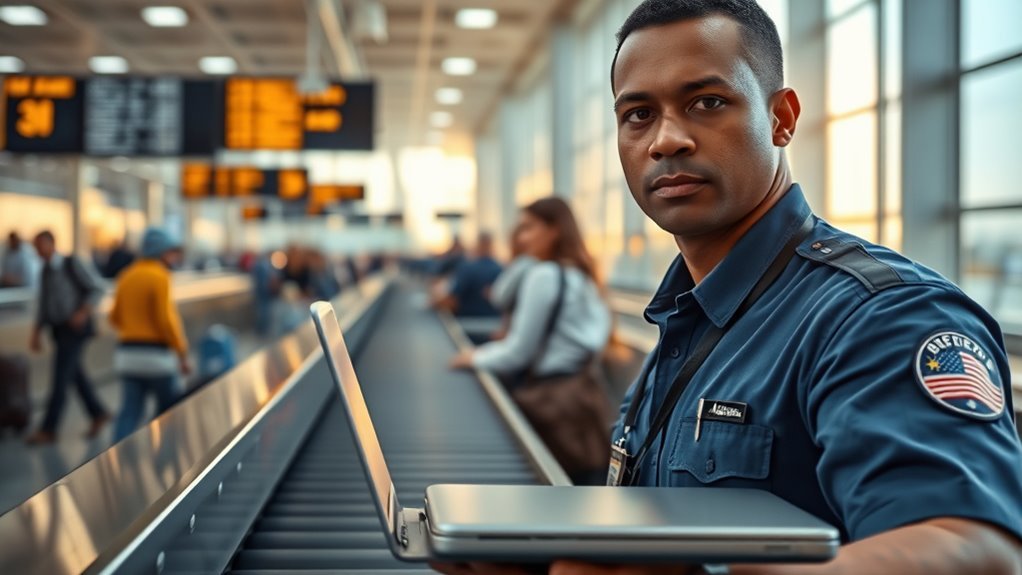
Because threats to travel can come from many directions, the TSA focuses on preventing attacks, reducing vulnerabilities, and keeping passengers and cargo moving safely across air, rail, and transit systems. You rely on officers and technology to detect prohibited items, screen for suspicious behavior, and secure critical infrastructure.
Their mission balances security with efficient movement so your trips stay predictable and timely. You’ll see layered defenses—physical screening, intelligence-sharing, and risk-based processes—working together to manage threats.
- Screening passengers and baggage to intercept hazards.
- Protecting cargo and supply chains.
- Coordinating with operators and law enforcement.
TSA Inside the Department of Homeland Security
How does the Transportation Security Administration fit inside the Department of Homeland Security? You’ll find TSA as a component agency under DHS, created to centralize federal transportation security after 2001.
You rely on DHS’s policy framework and intelligence-sharing to guide TSA priorities. DHS provides oversight, budget authority, and interagency coordination so TSA can align with national security goals.
When threats emerge, DHS connects TSA with law enforcement, intelligence, and emergency response partners. You see DHS influence in rulemaking, audits, and leadership appointments, ensuring TSA operations support broader homeland security objectives while remaining focused on transportation security.
Major TSA Programs Overview
Now that you know where TSA sits in DHS, let’s look at its major programs and how they affect your travel. You’ll learn about Transportation Security Administration programs that cover passenger, cargo, and infrastructure security.
We’ll also explain TSA PreCheck enrollment and how it can speed up your airport experience.
Transportation Security Administration Programs
What programs keep you and the traveling public safe at airports, on public transit, and across the nation’s transportation networks? You rely on TSA’s layered approach: visible officers, technology, and partnerships that detect threats, screen passengers and baggage, and secure infrastructure.
These programs adapt to emerging risks while balancing efficiency and civil liberties. You see checkpoints, behavioral detection, and intelligence-driven operations working together. They also coordinate with local agencies and transit providers to respond to incidents and share information quickly.
- Passenger and baggage screening
- Transportation infrastructure security and inspections
- Intelligence, training, and emergency response
TSA PreCheck Enrollment
Alongside visible checkpoints and intelligence operations, TSA PreCheck gives frequent travelers a faster, more predictable screening experience while maintaining security standards. You apply online, provide basic ID details, and schedule a brief in-person appointment for fingerprinting and identity verification.
Once approved, you receive a Known Traveler Number to add to reservations, granting access to dedicated lanes where you keep shoes, belts, and light jackets on and leave laptops in bags.
Enrollment lasts five years and can be renewed. Fees and eligibility rules apply, but the streamlined process often saves time and reduces stress during airport screening.
What TSA Does at Airport Checkpoints
Ever wondered what happens as you approach a security checkpoint? You’ll show ID and boarding pass, place items in bins, and follow officer instructions. TSA officers guide flow, check documents, and observe behavior while you move through screening lanes. They help guarantee safety, resolve alarms, and manage carry-on rules.
- Verify identity and travel documents quickly and politely.
- Direct you to remove shoes, belts, and electronics when required.
- Inspect bags, perform pat-downs if needed, and clear alarms.
You’ll cooperate, answer questions, and follow signage—this keeps everyone efficient and safe.
How TSA Screening Technology Works
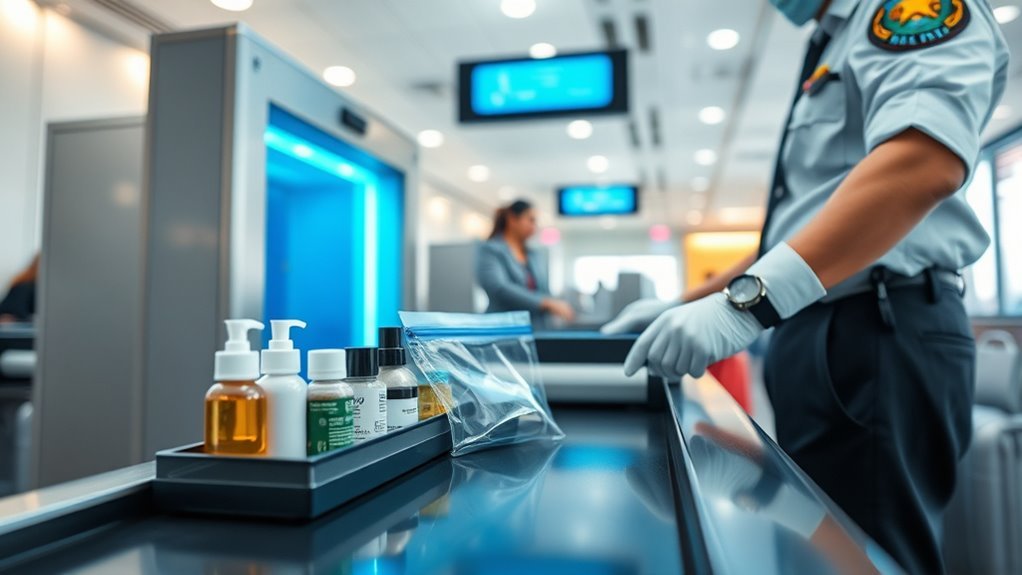
When you approach screening, machines and officers work together to spot threats quickly and keep passengers moving. You’ll pass through X-ray and millimeter-wave scanners that detect prohibited items and anomalies on carry-ons and bodies.
Advanced imaging highlights areas needing review while computed tomography gives 3D views of bags so officers can rotate and inspect images without opening them.
Explosive trace detectors sample surfaces for residue, and metal detectors sense metallic objects.
Automated systems filter routine alarms so officers focus on real concerns.
You cooperate by following instructions, removing specified items, and placing belongings where scanners can image them clearly.
What Triggers Secondary Screening?
If a scanner flags an item or an officer sees something unusual, you may be directed to secondary screening for a closer look. You’ll be asked to step aside so officers can inspect your belongings, re-scan items, or perform a pat-down if needed.
This isn’t punitive; it’s a security step to resolve alarms or unclear images. Cooperate, answer questions briefly, and follow instructions to speed the process.
Secondary checks vary by situation and risk assessment, focusing on safety while minimizing delays.
Know your rights: you can request a private screening or a supervisor if you prefer.
- Random selection
- Alarmed screening image
- Prohibited item detection
TSA PreCheck: How It Works
If you fly often, you’ll want to know how TSA PreCheck enrollment works and who’s eligible. After you apply and complete a quick background check and appointment, approved travelers get access to expedited screening lanes and keep shoes and laptops in their bags on most flights.
Remember that PreCheck has limits—it’s not guaranteed on every carrier or international itinerary and can be revoked for security reasons.
Eligibility And Enrollment
Who can enroll in TSA PreCheck and how do you get started? You’re eligible if you’re a U.S. citizen, U.S. national, or lawful permanent resident. You’ll apply online, schedule an in-person appointment, and provide ID plus fingerprints. Background checks confirm eligibility; approval gives you a Known Traveler Number.
- Complete the online application, then pay the nonrefundable fee.
- Attend the enrollment center for identity verification and fingerprints.
- Wait for approval, receive your Known Traveler Number, and add it to reservations.
Follow instructions carefully; disqualifying criminal history or incomplete info can halt enrollment.
Benefits And Limitations
Now that you’ve got your Known Traveler Number, you’ll notice TSA PreCheck speeds up many airport procedures while still imposing some limits. You’ll keep shoes, light jackets, belts, and laptops in bags at most checkpoints, which saves time and reduces stress. Enrollment gives predictable screening but doesn’t guarantee expedited lanes every time. Rules, random exclusions, and participating airlines/airports affect access. Keep your credentials handy and check status before travel.
| Benefit | Limitation |
|---|---|
| Faster security lines | Not guaranteed for every flight |
| Less removal of items | Limited to participating airports |
| Predictable process | Can be revoked for violations |
Global Entry vs. TSA PreCheck: Which to Pick?
Wondering whether to get Global Entry or TSA PreCheck? You’ll weigh speed, cost, and travel habits. PreCheck speeds domestic security with simpler lines; Global Entry includes that plus expedited international re-entry via customs. Choose based on where you fly most and how often.
- Cost and eligibility: PreCheck is cheaper and easier; Global Entry costs more but often includes PreCheck.
- Travel patterns: If you mostly fly domestically, PreCheck may suffice; if you travel internationally, Global Entry saves time returning home.
- Application process: Both require an application and interview; Global Entry’s interview may be slightly more involved.
TSA Rules for Carry-On Baggage
When packing your carry-on, know what’s allowed—clothing, electronics, and most solid foods are fine, but size and weight limits still apply.
Remember the 3-1-1 liquids rule: containers 3.4 ounces (100 ml) or less, all fitting in a single clear quart bag, one bag per passenger.
Check prohibited items lists before you go so you won’t be stopped at security.
Allowed Carry-On Items
Curious what you can bring in a carry-on? You’ll find most everyday items are allowed if they meet size and safety guidelines. Pack essentials thoughtfully, keep valuables with you, and know some items need screening or declaration.
- Electronics: laptops, tablets, cameras — remove them for screening if required.
- Medications and medical devices: carry prescriptions and notify security about implants or pumps.
- Food and baby supplies: solid snacks, formula, and sealed baby foods are permitted; disposable utensils are fine.
You’ll still follow airline size limits and cooperate with officers during inspection to avoid delays.
Prohibited Liquids Rule
Although you can bring many liquids in carry-ons, the TSA’s prohibited liquids rule limits quantities and packaging to keep flights safe. Most liquids, gels, creams, and aerosols must fit into containers of 3.4 ounces (100 milliliters) or less and be placed in a single clear, quart‑size bag for screening.
You should consolidate items, pack larger amounts in checked baggage, and declare exceptions like medications, baby formula, and breast milk at security. Remove the quart bag for X-ray screening.
If an item exceeds limits and can’t be checked, expect it to be denied. Follow staff instructions to avoid delays and confiscations.
TSA Rules for Checked Baggage
Because checked baggage goes through separate screening and handling, you need to follow specific TSA rules to avoid delays, fines, or having items confiscated.
You should pack prohibited or restricted items properly, declare valuables or batteries, and secure fragile goods.
Know weight and size limits to prevent extra fees. Label your bags and remove old tags to ease identification.
- Remove or properly pack spare lithium batteries, power banks, and loose cells.
- Store liquids over 3.4 ounces in checked bags only when allowed and well sealed.
- Follow airline weight limits and declare high-value items to the carrier.
Why Some Items Are Restricted
You’ll notice the TSA restricts items mainly to protect safety and security for everyone on the plane. They also consider how objects could be misused to cause harm or disrupt operations.
Understanding these reasons helps you pack smarter and avoid surprises at the checkpoint.
Safety And Security
Why do some items get barred from your carry-on or checked baggage? You need safe cabins, secure airports, and efficient screening, so rules ban things that could harm people, damage systems, or bypass detection.
You’ll find prohibitions target objects that can cause fires, create structural damage, or conceal threats. You should also expect limits on items that interfere with screening technology.
- Flammables: fuels, aerosols, or batteries that can spark fires.
- Sharp objects: blades or tools that can breach aircraft structures.
- Explosive precursors: chemicals or devices that could be assembled into weapons.
Risk Of Misuse
How could everyday items be misused to cause harm onboard? You might not see danger in common objects, but the TSA restricts items because they can be repurposed as weapons, concealment tools, or sabotage implements. You’ll be asked to remove, declare, or stow items to prevent those risks.
| Item | Potential Misuse | Restriction |
|---|---|---|
| Lighters | Ignition | Prohibited in carry-on |
| Tools | Blunt/pointed force | Checked baggage only |
How TSA Updates Prohibited Items
Curious about how the TSA decides which items are off-limits? You’ll learn that they monitor threats, review incidents, and update rules to keep you safe. They balance security, practicality, and evolving techniques used to evade screening.
Curious how TSA decides banned items? They monitor threats, review incidents, and update rules to keep travelers safe.
You’ll see frequent coordination with intelligence agencies, airlines, and international partners to refine lists quickly. Changes are communicated through official notices, airport signage, and online resources so you can adapt.
- Threat assessment and intelligence analysis
- Operational testing and feedback from screeners
- Public guidance updates and regulatory notices
You should check TSA resources before travel to avoid surprises.
Common Traveler Mistakes at Checkpoints
Although checkpoint procedures seem straightforward, travelers often trip up on a few predictable errors that slow lines and can lead to delays or confiscations. You’ll want to empty pockets, place liquids correctly, remove shoes when asked, and have ID and boarding pass ready. Don’t stuff electronics in bags or ignore officer instructions. Stay calm, follow signage, and ask questions if unsure to avoid losing items or missing flights.
| Mistake | Feeling |
|---|---|
| Forgotten ID | Panic |
| Liquids in bag | Frustration |
| Hidden sharp items | Embarrassment |
| Packed electronics | Anxiety |
| Ignoring rules | Regret |
What to Expect During a Full-Body Scan
When you step into a full-body scanner, the process is quick and routine. You’ll be asked to remove items and stand with arms raised; the machine uses harmless radio-frequency waves to produce an image. If something shows, an agent may perform a targeted pat-down or secondary screening. You should cooperate, stay calm, and ask questions if unsure.
- Preparation: empty pockets, remove belts, and show boarding pass.
- Procedure: brief scan takes seconds; you’ll hear or see minimal cues.
- Follow-up: targeted checks focus on specific areas, not full searches, unless needed.
TSA Policies for Disabled Travelers and Devices
Need help steering TSA rules for disabilities? You’ll find clear accommodations: accessible lanes, privacy screenings, and assistance requests. Ask for a passenger support specialist or use TSA Cares before travel. Keep documentation handy but know it’s not required for most aids. Service animals get special handling; notify airlines too. Mobility aids and assistive devices are allowed; you’ll be guided through screening without unnecessary disassembly. Expect respectful communication and options if screening raises concerns. Refer to TSA guidance for specifics and contact TSA Cares for individualized support.
| Topic | Tip | Contact |
|---|---|---|
| Assistance | Request ahead | TSA Cares |
| Animals | Notify airline | Airport staff |
| Devices | Bring ID | Specialist |
| Privacy | Ask screeners | Supervisor |
| Rights | Ask questions | TSA website |
TSA Procedures for Medical Devices
If you rely on medical devices, TSA has specific screening procedures to keep you and your equipment safe while moving through security.
You’ll tell officers about implants, prosthetics, portable oxygen, pumps, or monitors before screening. They may inspect devices visually, swab them for explosives, or use a hand inspection instead of X-ray.
Keep documentation handy and request a private screening if you prefer. You can also contact TSA Cares before travel for assistance.
- Declare devices and present medical ID or documentation.
- Request alternative screening or private screening if needed.
- Protect batteries and carry spares in your carry-on.
TSA Policies for Children and Infants
Traveling with children or infants raises specific TSA rules, so know what to expect and what you can carry. You’ll screen strollers and car seats; gate check is often available. Bring formula, breast milk, and baby food—these exceed liquid limits but need declaration and separate screening. You can carry medication; inform officers and keep prescriptions handy. Consider child identity documents and patience during checks.
| Item | Rule | Tip |
|---|---|---|
| Strollers | Screened | Gate check if bulky |
| Liquids | Allowed over 3.4oz | Declare at checkpoint |
| Car seats | Inspected | Bring labels |
TSA’s Role in Cargo and Freight Security
How does the TSA help keep the goods you rely on moving safely across the country and around the world? You’ll see TSA set standards, inspect cargo, and work with industry to reduce risks. They screen air freight, certify secure supply chains, and respond to threats so shipments stay reliable.
- Establishes cargo screening requirements and approves technologies to detect contraband.
- Audits carriers, shippers, and freight forwarders to enforce compliance and best practices.
- Partners internationally to share intelligence, harmonize procedures, and facilitate secure cross-border shipments.
You benefit from fewer disruptions and stronger protections for commerce and safety.
How TSA Secures Rail, Bus, and Other Modes
You’ll learn how TSA works with rail and transit agencies to spot threats, harden stations, and train personnel. You’ll also see how TSA supports bus and motorcoach operators with security assessments, best practices, and incident response planning.
This section explains concrete measures TSA uses across these modes to keep passengers moving safely.
Rail And Transit Security
Curious how TSA works beyond airports? You’ll see officers partner with transit agencies to assess risks, deploy visible security, and run intelligence-driven patrols that deter threats on trains, subways, and stations. They don’t screen every passenger like at airports; they focus on layered, scalable measures you’ll notice.
- Risk assessments and planning: You get targeted inspections, vulnerability fixes, and advisory support for infrastructure and operations.
- Canine teams and explosives detection: You benefit from mobile K9 teams and portable detection tech at hubs.
- Training and exercises: Staff, first responders, and operators participate in drills so you’re better prepared.
Bus And Motorcoach Protection
Wondering what keeps buses and motorcoaches secure on the road? You rely on TSA coordination with operators, local law enforcement, and transit agencies to reduce threats. TSA provides risk assessments, vulnerability mitigation guidance, and training for drivers and staff so they can spot suspicious behavior.
You benefit from security inspections, information sharing through alerts, and exercises that test response plans. TSA also supports physical measures like baggage screening pilots and technology deployment where feasible.
Career Paths at TSA: Overview
How do you pick a path at the Transportation Security Administration? You’ll weigh interests, skills, and goals to find roles beyond frontline screening. TSA offers varied careers in management, intelligence, technology, and federal law enforcement.
Assess training requirements, advancement opportunities, and work environments to match your priorities.
- Management and leadership — oversee operations, staffing, and policy implementation.
- Security intelligence and risk analysis — evaluate threats, craft strategies, and coordinate with partners.
- Technology and cybersecurity — develop systems, analyze data, and protect infrastructure.
Explore vacancies, detail job descriptions, and network with current employees to decide your best fit.
Transportation Security Officer (TSO): Daily Duties
As a Transportation Security Officer, you’ll screen passengers and inspect luggage and cargo to keep travel safe.
You’ll also patrol terminals and respond to security incidents when they arise.
You’ll document findings and complete reports to maintain accurate records and support investigations.
Screening And Inspection Tasks
Curious what you’ll do on a typical shift? You’ll screen people and items, operate X‑ray machines, and inspect flagged bags. You’ll stay vigilant, follow procedures, and document irregularities. You’ll communicate calmly with travelers, explain screening steps, and resolve minor issues.
- Operate screening equipment accurately, adjust settings, and identify threats quickly.
- Perform physical bag checks, trace items, and use inspection tools while preserving property.
- Record findings, complete reports, and hand off suspicious items to supervisors or law enforcement.
You’ll balance speed with thoroughness, maintain chain of custody, and prioritize safety for everyone.
Patrol And Security Duties
After screening lanes and inspecting bags, you’ll also spend part of your shift on patrol, watching terminals, checkpoints, and perimeter areas for suspicious activity or safety hazards. You stay visible, deterring misconduct, assist travelers, and coordinate with law enforcement when needed. You check doors, inspect suspicious items at a safe distance, and guarantee signage and barriers are intact. You monitor CCTV feeds and respond quickly to alarms or disturbances, prioritizing passenger safety and operational flow. Clear communication and situational awareness keep operations smooth.
| Area | Task | Priority |
|---|---|---|
| Terminal | Observe | High |
| Perimeter | Inspect | Medium |
| Checkpoint | Assist | High |
Report And Documentation Duties
When you’re wrapping up shifts and responding to incidents, accurate reports and clear documentation keep the entire operation accountable and safe. You record incident narratives, log security breaches, and note passenger screening anomalies.
You’ll complete standardized forms, attach evidence photos, and timestamp actions so supervisors can reconstruct events. Clear writing reduces confusion during follow-ups and investigations.
You maintain chain-of-custody records for confiscated items and submit daily activity reports. Precise documentation also supports training and process improvements.
- Complete incident reports promptly with objective details.
- Preserve and log evidence with timestamps.
- Submit daily activity summaries to supervisors.
TSA Training, Development, and Advancement
You’ll complete structured classroom and on-the-job training, earn credentials tied to specific duties, and refresh competencies through mandated recurrent courses.
Mentoring, leadership workshops, and cross-training let you broaden responsibilities without changing agencies.
Performance-based promotions and detail assignments reward demonstrated competence.
Continuous learning focuses on adapting to evolving threats, new technologies, and procedural updates so you stay effective and ready.
TSA Hiring: Process and Application Tips
Because hiring at the agency balances strict security standards with the need for reliable screeners and specialists, you’ll want to prepare a focused application and know each step of the process before you apply.
Hiring requires a focused application and knowing each step to meet strict security and reliability standards.
You’ll complete an online USAJOBS profile, pass background checks, drug tests, and a medical exam, and attend site-specific onboarding.
Tailor your resume to keywords, document relevant experience, and be honest about availability and eligibility.
During interviews, demonstrate situational judgment and customer-service skills.
Maintain records to speed clearances.
Follow up professionally after interviews to show continued interest.
- Prepare: targeted resume and documents
- Pass: checks and assessments
- Follow-up: timely, professional communication
Controversies and Civil Liberties Debates
As you consider TSA policies, you’ll weigh privacy versus security and how far screening should go.
You’ll also confront concerns about profiling and discrimination in targeting and procedures.
Finally, you’ll need to look at legal challenges and oversight mechanisms that hold the agency accountable.
Privacy Versus Security
How much privacy are you willing to exchange for a sense of safety at the airport? You face scanners, pat-downs, and data collection that promise protection but probe intimate details. You should question whether oversight, transparency, and limits keep rights intact while threats get reduced.
Consider trade-offs, legal safeguards, and accountability when agencies expand powers.
- Require clear limits on data retention and access to safeguard personal information.
- Mandate independent audits and public reporting to ensure procedures respect civil liberties.
- Demand legal recourse and prompt redress for abuses to maintain public trust.
Profiling And Discrimination
When you’re stopped for extra screening based on appearance, ethnicity, religion, or travel history, it feels less like precaution and more like prejudice; profiling raises real concerns about discrimination, unequal treatment, and erosion of trust in security agencies.
You may feel singled out, humiliated, or unsafe, and those experiences deter travel and civic participation.
Profiling can miss real threats by focusing on stereotypes instead of behavior, skewing resources and intelligence.
You deserve fair, consistent procedures that protect everyone without targeting groups.
Open dialogue, training on bias, and transparent policies help restore confidence while maintaining effective security.
Legal Challenges And Oversight
Because oversight mechanisms shape how TSA powers affect your rights, legal challenges over screening, no-fly lists, and data collection have become central to debates about civil liberties. You should know court cases push the agency to justify policies, limit overreach, and increase transparency. Lawsuits and oversight hearings force policy changes and safeguard due process. You can engage through advocacy, litigation, or public comment to influence reforms.
- Judicial review: challenges to constitutionality of searches and listings.
- Congressional oversight: hearings, budget controls, statutory reforms.
- Privacy suits: limits on data retention, biometric use, and information sharing.
How TSA Measures Security: Key Metrics
Although you won’t see a single number that captures everything, the TSA evaluates security through a set of focused metrics that quantify detection rates, screening throughput, compliance levels, and threat response times.
The TSA measures security with targeted metrics—detection, throughput, compliance, and response—to guide improvements.
You’ll look at checkpoint detection rates from tests using mock threats, percent of passengers screened within target times, and alarm resolution speed. Audit scores and covert testing report compliance with procedures.
Passenger wait-time averages and throughput per lane measure efficiency. Incident response timelines track how quickly threats are investigated.
Together, these metrics help you assess risk reduction, operational effectiveness, and where training or process changes are needed.
Recent Screening Technology Innovations
You’ll see how advanced imaging systems give clearer, non-invasive views of carry-ons and passengers to speed screening.
Automated threat detection is being paired with those images so the machines flag risks faster and reduce human error.
Biometric screening enhancements are tying identity verification to the process, making checkpoints both quicker and more secure.
Advanced Imaging Systems
How do modern Advanced Imaging Systems change what you see at the checkpoint? You notice faster, clearer scans that reveal concealed items without physical searches. The machines use millimeter-wave technology to map surfaces, reducing invasive pat-downs and speeding lines.
Operators interpret abstract images, focusing on anomalies rather than bodies, and you benefit from enhanced privacy features.
- Faster throughput: shorter queues and quicker screening.
- Improved resolution: better detection of non-metallic threats on clothing.
- Privacy modes: automated, generic outlines protect personal identity.
You’ll experience more efficient, less intrusive screening while maintaining safety standards.
Automated Threat Detection
Building on the clearer, faster scans of advanced imaging, automated threat detection adds layers of real-time analysis that flag suspicious items without constant human review. You’ll see software prioritize anomalies, reduce false alarms, and speed throughput while operators focus on nuanced decisions. Machine learning refines patterns from diverse data, boosting consistency. You’ll still intervene for unclear cases, but routine detections become automated. The tech integrates with baggage and checkpoint workflows, improving risk-based screening.
| Feature | Benefit | Impact |
|---|---|---|
| Anomaly detection | Faster flags | Less delay |
| ML models | Fewer false positives | Better accuracy |
| Workflow integration | Seamless alerts | Higher throughput |
Biometric Screening Enhancements
Many airports now pair biometric screening—like facial recognition and fingerprint matching—with passenger flows to speed identity verification and tighten security. You’ll move through checkpoints faster as systems match live biometrics against secure databases, reducing manual ID checks and human error.
These tools also flag anomalies for officers, so you’re less likely to be delayed by irrelevant alerts. Privacy safeguards and consent processes are expanding, but you should still ask about data use and retention.
Consider how these systems affect accessibility and bias, and request alternatives if you’re uncomfortable.
- Faster verification
- Automated anomaly detection
- Privacy and consent options
How COVID-19 Changed TSA Procedures
When the pandemic hit, TSA quickly revised screening protocols to reduce touchpoints and keep travelers safer, introducing measures like expanded use of contactless ID checks, plexiglass barriers at checkpoints, and enhanced cleaning of high-touch areas.
When the pandemic hit, TSA revamped screening—adding contactless ID, plexiglass barriers, and more rigorous cleaning.
You adapted to new procedures: mask requirements, health screenings in some locations, and clearer social distancing markers.
TSA accelerated touchless technology trials and encouraged mobile boarding passes to limit handling.
Checkpoint staff followed revised PPE and cleaning schedules, and passenger flow changed to reduce crowding.
These shifts emphasized hygiene and minimal contact, reshaping routine travel practices you still see at many airports today.
How TSA Handles Passenger Privacy and Data
Because the TSA collects traveler information to secure flights, you should know how that data’s handled, shared, and protected. You’ll encounter screening records, watchlist checks, and travel-document scans; TSA limits access, logs use, and applies policies to minimize retention. You can expect basic privacy notices and redress options when errors occur, and TSA coordinates with airlines and law enforcement under legal frameworks.
- Data collection: minimal necessary info, purpose-limited, logged.
- Sharing: controlled disclosures to vetted partners or per legal request.
- Protection: encryption, access controls, retention schedules, audits to reduce misuse.
Filing Complaints and Reporting Misconduct
Need to report a problem with TSA screening or an agent’s conduct? You can file a complaint online, by phone, or by mail. Be concise: include date, location, names (if known), and a clear description. TSA reviews complaints and may investigate; you’ll get acknowledgment and outcome details. Keep records and follow up if needed. Don’t confuse this with requesting screening accommodations.
| Method | How to Start | What to Include |
|---|---|---|
| Online | Visit TSA website | Date, time, location, description |
| Phone | Call TSA Contact Center | Agent name, incident details |
| Send written complaint | Copies of documents, contact info |
How to Request Screening Accommodations
If you require changes to the screening process due to a disability, medical condition, or other covered need, request accommodations before you travel so the TSA can coordinate appropriate procedures and minimize delays.
You’ll contact the TSA Cares helpline or use the online form at least 72 hours before departure, provide flight details and accommodation needs, and note any mobility aids or medical devices.
Staff will confirm instructions with the checkpoint. Bring documentation if available, arrive early, and communicate calmly with officers.
Follow up after travel if issues arise to improve future assistance.
- Call TSA Cares.
- Submit online form.
- Bring documentation.
Traveler Rights and Responsibilities at Checkpoints
When you approach a TSA checkpoint, you have clear rights—like being treated respectfully, notified about screening procedures, and requesting assistance.
You also have responsibilities, such as following instructions, presenting ID and boarding documents, and removing items required for screening.
You can ask questions about the process, request private screening or an escort if needed, and decline invasive searches beyond policy, though refusal may delay travel.
You must comply with lawful orders, declare prohibited or restricted items, and follow masking or health directives when in effect.
Keeping documents accessible and cooperating speeds resolution while protecting your rights.
Practical Packing Tips to Breeze Through TSA
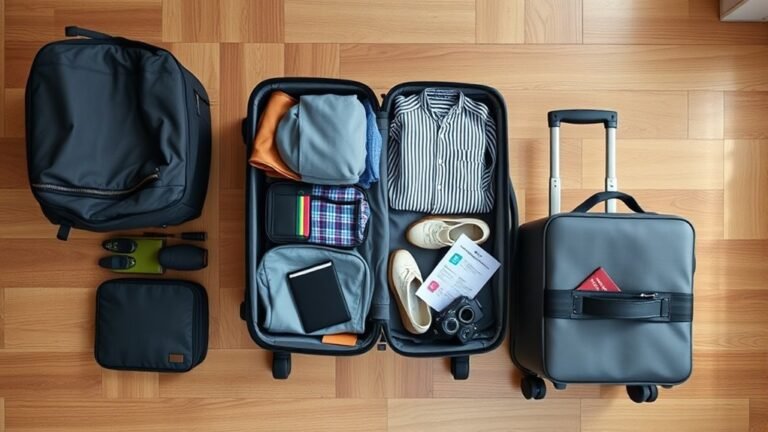
Knowing your rights and responsibilities at the checkpoint makes packing smarter: small choices in how you organize your carry-on can save time, reduce stress, and prevent unnecessary searches. You should group liquids in a clear quart bag, keep electronics accessible, and wear shoes that slip on. Label fragile items and avoid sealed bags that look suspicious.
Pack smart for the checkpoint: group liquids, keep electronics accessible, wear easy shoes, and avoid suspicious sealed bags.
- Consolidate toiletries and place them at the top of your bag for quick removal.
- Use a dedicated pouch for cords and chargers to avoid rummaging.
- Keep medications and travel documents in an easy-to-reach pocket for screening.
How to Prepare for Unexpected Security Delays
Although delays are frustrating, you can minimize their impact by planning ahead. Arrive earlier than usual, build buffer time into connections, and keep necessary documents accessible.
Pack a compact kit: phone charger, snacks, water, medications, and a pen for forms. Use carry-on organization to retrieve items quickly.
Monitor airport and flight updates on your phone, and enroll in alerts from your airline. If lines grow, request assistance or ask about alternate screening lanes.
Stay calm and polite—staff can’t speed everything, but cooperation often helps. Adjust expectations and have a backup plan for meetings or pickups.
Official TSA Guidance and Resources
Because airport procedures change, you should rely on the Transportation Security Administration’s official guidance and tools to stay current. You can check policies, enroll in programs, and find contact information directly from TSA to avoid surprises. Use their site and apps for verified updates, not social posts.
- Visit tsa.gov for rules on items, ID requirements, and travel alerts.
- Use myTSA app for wait times, TSA PreCheck status, and real-time notifications.
- Contact TSA Cares for assistance if you need extra help during screening.
Following official resources keeps your trip smoother and reduces risk of last-minute issues.
Frequently Asked Questions
Can TSA Officers Detain Me for Questioning After Screening?
Yes — TSA officers can detain you briefly for questioning after screening if they suspect a security risk. You’ll be held for inspection, questioned, and possibly referred to law enforcement; you should comply and stay cooperative throughout.
How Does TSA Coordinate With Foreign Security Agencies Internationally?
They coordinate through information-sharing, joint training, and liaison officers; you’ll see coordinated security protocols, mutual threat assessments, and collaborative responses during incidents, with the TSA working alongside foreign agencies to harmonize standards and protect international aviation.
Are TSA Screening Procedures Different on Military Bases?
Yes, they’re different: you’ll follow base-specific procedures with added military ID checks, controlled entry points, and sometimes stricter screening or escorted access; TSA may coordinate with base security, but operators and rules vary by installation.
What Happens to Items Confiscated by Tsa—Are They Destroyed or Sold?
Confiscated items are usually destroyed or disposed; valuables may be turned over to law enforcement, retained as evidence, or surrendered to agencies that can auction them under specific rules. You won’t get most prohibited items back.
Does TSA Monitor Social Media or Passenger Communications for Threats?
Yes, TSA monitors publicly available social media and tips for threats and suspicious activity, but they don’t routinely intercept private passenger communications; they’ll coordinate with other agencies when investigations or legal processes require deeper access.
Conclusion
Now that you know what TSA stands for and why it exists, you’ll be better prepared when you travel. Remember the agency’s core mission to protect transportation, your rights and responsibilities at checkpoints, and the legal framework that guides screening. Pack smart, follow official guidance, and build a time buffer for unexpected delays. Doing so keeps you moving smoothly through security and helps guarantee safer travel for everyone—so plan ahead and stay informed.