What Does Hand Luggage Only Mean Travel Rules Explained
“Hand luggage only” means you’ll travel without checked bags, so everything you need must fit your airline’s carry-on and personal-item size and weight limits. You’ll need to measure external dimensions, include wheels and handles, and follow liquid, battery, and medication rules to avoid confiscation or gate-checks. Budget carriers often enforce stricter sizes and fees, so pack strategically—wear bulky items and use compression cubes—to dodge surprises, and keep going to learn practical packing and airline-specific tips.
What “Hand Luggage Only” Means (Short Answer)
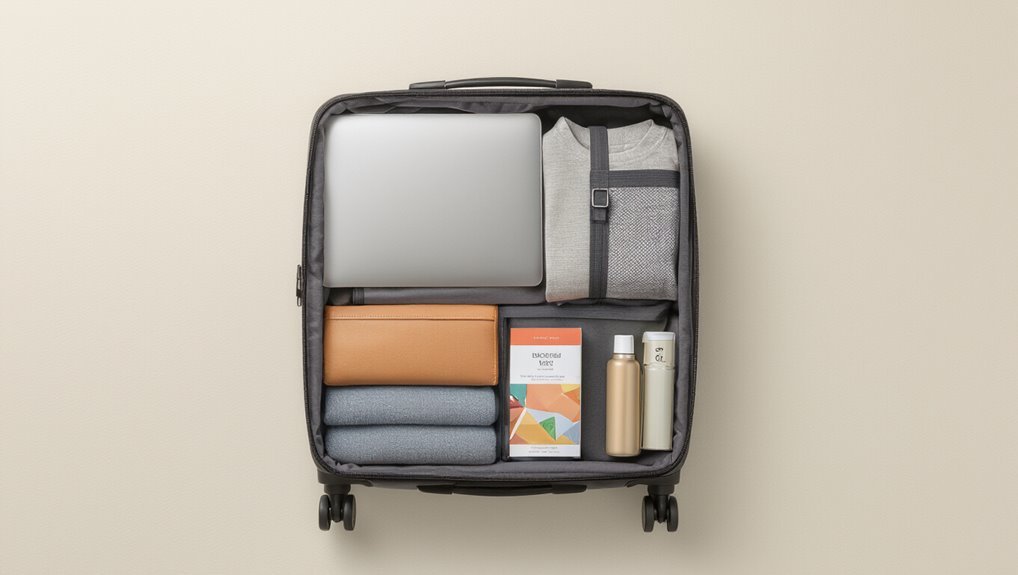
“Hand luggage only” means you travel with just the items you can carry into the cabin—no checked bags.
You pack essentials, wearables and valuables you’ll keep close, fit them within airline size and weight limits, and handle boarding without gate-checked suitcases.
You accept stricter space constraints and plan carry-on choices to avoid surprises at security or boarding.
Items Included in a Hand-Luggage Allowance
You’ll need to check cabin bag dimensions to make sure your main carry-on fits the airline’s size limits.
Also note the rules for a personal item—what counts and how it must fit under the seat.
Finally, review the list of prohibited and allowed items so you don’t pack anything that’ll be confiscated at security.
Cabin Bag Dimensions
Airlines generally set strict cabin bag dimensions to limit what items count as your single hand-luggage allowance.
So it’s important to know which types of bags fit those limits—typically a small suitcase, backpack, or briefcase plus one personal item like a handbag or laptop sleeve.
Check your carrier’s exact size and weight limits before packing.
Measure external dimensions, include wheels/handles, and avoid oversized items to prevent gate checks.
Personal Item Rules
Beyond size limits for your cabin bag, carriers also let you bring a separate personal item—typically a small handbag, laptop sleeve, or briefcase—that fits under the seat in front of you.
Check airline rules for maximum dimensions and weight, since some count it toward total allowance.
Use it for essentials: travel documents, medication, electronics, chargers, and a small coat.
Pack smart to avoid gate checks.
Prohibited And Allowed Items
When packing your hand luggage, remember that security and airline policies split items into clear allowed and prohibited categories—so check both before you board.
You can bring essentials: electronics, medication, documents, and small toiletries within liquid limits.
Prohibited items include sharp objects, most liquids over 100ml, flammable goods, and weapons.
Always verify airline-specific lists to avoid confiscation and delays.
Typical Carry-On Sizes and Weights
Most carriers let you bring one carry-on bag plus a personal item, and each has clear size and weight limits you should check before packing.
Typical dimensions are about 22 x 14 x 9 inches (56 x 36 x 23 cm) for carry-ons, with personal items smaller.
Weight limits vary from 7 to 10 kg on some airlines, while others have no strict weight rule.
How Low-Cost Carriers Treat Carry-On
When you fly with a low-cost carrier, size limits for carry-ons are often stricter than on legacy airlines, so check the exact dimensions before you pack.
Many budget airlines charge fees for larger bags or even for boarding with a standard carry-on, and weight limits can be enforced at the gate.
Knowing the size limits, potential fees, and any extra restrictions helps you avoid surprises and extra charges.
Carry-On Size Limits
Low-cost carriers often treat carry-ons differently than full-service airlines, charging for larger bags and strictly enforcing size limits.
You either fit a compact cabin bag or pay extra at the gate. Check dimensions (including wheels and handles), weigh your bag if required, and use a soft-sided case to squeeze into overhead bins.
Measure before travel to avoid surprises.
Fees And Restrictions
If you’re flying on a budget airline, expect stricter rules—and extra fees—around carry-ons: carriers often distinguish between a small personal item included in the fare and a larger cabin bag that triggers a charge, enforce exact size/weight limits at the gate, and may require you to prepay for overhead bin space or check oversize bags at a hefty price.
| Item | Typical Fee |
|---|---|
| Personal item | Free |
| Small cabin bag | $10–$40 |
| Larger cabin bag | $30–$80 |
| Gate-checked bag | $50–$100 |
| Overweight/oversize | $75–$200 |
Personal Items: What Counts and Limits
Most airlines let you bring one personal item in addition to your carry-on, and knowing exactly what counts can save you time and fees at the gate.
You can usually bring a small backpack, laptop bag, purse, or briefcase that fits under the seat.
Check airline size and weight limits, keep essentials accessible, and avoid bulky items that might exceed dimensions or block access.
Gate Outcomes for Oversized Carry-Ons
Even if your carry-on and personal item looked fine at check-in, gate agents will still inspect bags and enforce size rules before boarding.
You should be prepared for several possible outcomes. You’ll face quick choices: pay a fee, gate-check, or repack.
Decide fast to avoid delays and keep essentials handy.
- Pay overweight/oversize fee
- Gate-check bag to hold
- Repack to meet limits
Prohibited and Restricted Carry-On Items
You need to know what you can’t bring in your carry-on, because liquids and gels are strictly limited by volume and packaging.
You also can’t board with sharp objects or many kinds of sporting equipment without special checks or packing.
Check airline and TSA rules before you pack so you won’t be stopped at the gate.
Liquids And Gels
When packing your carry-on, remember that liquids and gels are tightly regulated for safety, so you’ll need to follow size limits and packaging rules to avoid delays or having items confiscated.
Pack travel‑size containers (usually 100ml/3.4oz), place them in a clear resealable bag, and present them separately at security.
- Limit containers to approved volumes.
- Use a single clear bag.
- Declare exceptions (medicines, baby food).
Sharp And Sporting Items
Although some small tools and sports accessories seem harmless, most sharp or sporting items are either banned or tightly restricted in carry-on baggage for safety reasons.
You can’t bring knives, scissors over allowable blade lengths, baseball bats, ski poles, or firearm replicas in cabin bags.
Pack these in checked luggage when possible, declare sporting ammunition or components, and check airline rules before travel.
Liquids, Batteries, and Medication Rules
Because security screens liquids, batteries, and medications more strictly than other items, you’ll want to pack them thoughtfully to avoid delays or confiscations.
Follow rules: keep liquids in 100ml containers inside a clear bag, carry spare batteries separately, and bring prescriptions with labels.
Present meds at security if needed and check airline rules for lithium limits.
- Liquids in 100ml clear bag
- Batteries separated
- Prescriptions labeled
Checked-Bag Fees vs. Fare Upgrades
Compare checked-bag fees against the cost of a fare upgrade so you can see which saves you money.
Consider when an upgrade makes sense—long trips, tight connections, or if you need guaranteed overhead space.
Use packing strategy tips to avoid fees or justify the upgrade when it adds real convenience.
Fee Comparison Snapshot
When you weigh the cost of shipping a checked bag against upgrading to a higher fare class, look beyond the sticker price to see which option actually saves you money and hassle.
Compare airline fees, baggage limits, and refund flexibility. Choose by needs: timing, carry-on allowance, and loyalty perks.
- Fee total vs upgrade delta
- Baggage limits
- Refunds/changes
When To Upgrade
1 key decision you’ll face is whether paying for a checked bag each trip or upgrading your fare makes more sense for your travel pattern.
Compare total costs over multiple trips, consider convenience, ticket flexibility, priority boarding, and baggage rules.
If you travel often or need flexibility, upgrade. For occasional trips, pay per checked bag.
Recalculate when routes or fares change.
Packing Strategy Tips
If you often face checked-bag fees, prioritize a packing strategy that minimizes costs without sacrificing essentials: streamline outfits, use compression packing cubes, and move bulky items into carry-on or wear them on the plane so you avoid that extra charge—or decide an upgrade is cheaper in the long run.
Pack smart, compare costs, and pick the best value.
- Compare upgrade vs. fee
- Maximize carry-on space
- Prioritize essentials only
How to Measure and Weigh Carry-On
Measuring and weighing your carry-on guarantees it meets airline limits and avoids last-minute gate checks; grab a tape measure and a reliable scale, then check the airline’s published size and weight allowances before you pack.
Measure height, width, depth including wheels and handles. Weigh packed and empty bags to compare.
Note cabin bag and personal item limits, and reweigh after adding souvenirs.
Smart Packing Techniques for Carry-On
A few simple packing strategies will help you fit more, stay organized, and avoid gate-check stress.
Roll clothes to save space, use compression cubes for bulky items, and place heavy objects near the bag’s base to balance weight.
Prioritize versatile outfits and limit pairs of shoes.
Empty pockets, secure liquids, and keep essentials reachable for security and boarding.
- Roll clothes
- Use cubes
- Pack heavy items low
What to Pack in Personal Item vs. Carry-On
When you divide items between your personal item and carry-on, think accessibility and security first: stash valuables, documents, medications, and anything you’ll need during the flight in your personal item, and reserve the larger carry-on for spare clothes, bulkier toiletries that fit regulations, shoes, and items you don’t need mid-flight.
Keep chargers, headphones, snacks, and a compact toiletry bag in your personal item; pack bulkier gear and souvenirs in the carry-on.
Airline-Specific Tips (Ryanair, easyJet, Wizz, BA, Delta)
Because airlines set different size, weight, and boarding policies, you’ll save time and fees by checking each carrier’s rules before you pack:
- Ryanair/easyJet/Wizz favor strict dimensions and often charge for larger bags—measure carefully.
- BA lets you bring a slightly larger cabin bag if booked in certain classes—verify allowance.
- Delta uses weight limits on some fares and offers clear online tools—weigh and confirm before travel.
Common Mistakes That Trigger Gate Fees
Carry-on rules trip up even seasoned travelers, and those slip-ups often cost you at the gate. You’ll get charged for oversized bags, excess weight, undeclared carry-ons, non-compliant liquids, and boarding last with extra items. Check dimensions, weigh your bag, consolidate items, follow liquid rules, and stash purchases in checked luggage.
| Mistake | Fee trigger |
|---|---|
| Oversize | Measured |
| Overweight | Weighed |
| Extra bag | Counted |
| Liquids | Seized |
| Late boarding | Charged |
When to Check a Bag : How to Save
If you’re trying to avoid surprise fees, check a bag when the cost and convenience tip in your favor — for longer trips, bulky items, or strict airline size/weight limits.
Pack smart, weigh luggage, and compare fees versus curbside or delayed baggage risk. Decide ahead to save time and money.
- Calculate fees vs. carry-on limits
- Consolidate bulky items
- Verify weight and size limits
Frequently Asked Questions
Can Hand Luggage Rules Differ for International vs. Domestic Flights?
Yes — they can. You’ll face different size, weight, and liquid limits depending on airlines and countries; security rules vary internationally, and some carriers enforce stricter carry-on policies or fees on domestic versus international routes.
Will Transit/Connecting Flights Affect My Hand Luggage Allowance?
Yes — connecting flights can affect your hand luggage allowance. You’ll need to follow the carrier with the most restrictive rules or the one issuing your ticket; check size, weight and transit security limits before you travel.
Do Airport Lounges Have Different Carry-On Policies?
Yes — lounges can have different carry-on policies, and you’ll need to follow the lounge’s rules (and the airline’s). Check size, security, and prohibited items; some lounges offer storage, but limits still apply.
How Do Disability or Medical Exemptions Change Carry-On Limits?
You’ll get exemptions: airlines usually let you carry extra medical items, mobility aids, or medication without counting them against limits, but you’ll need documentation or advance notice, and policies vary so you should confirm with the airline.
Are Duty-Free Purchases Counted as Part of Hand Luggage?
Yes — duty-free purchases usually count toward your hand luggage allowance, so you’ll need to fit them within size and weight limits; exceptions (like sealed liquids through security) depend on airline and departure/arrival regulations.
Conclusion
When you see “hand luggage only,” think small and smart: you’ll bring a carry-on plus maybe a personal item, but size and weight limits vary by airline and fare. Pack essentials—documents, meds, electronics—in your personal item and heavier or bulky things in the carry-on. Check low-cost carrier rules to avoid gate fees for oversized bags. If you need more space, check a bag in advance; it’s usually cheaper than paying at the gate.