
What Are the 3 Sizes of Luggage Explained for Beginners
You’ll usually choose between three luggage sizes: carry-on for essentials (about 22 x 14 x 9 inches, light weight, documents and meds), checked for most belongings (up to 62 linear inches and typically 50 lb to avoid fees), and oversize for bulky or heavy items that need special handling and extra charges. Measure and weigh bags before travel, redistribute items to avoid fees, and check airline rules — keep going and you’ll find practical packing and fee-saving tips.
Quick Rules: Carry-On, Checked, and Oversize
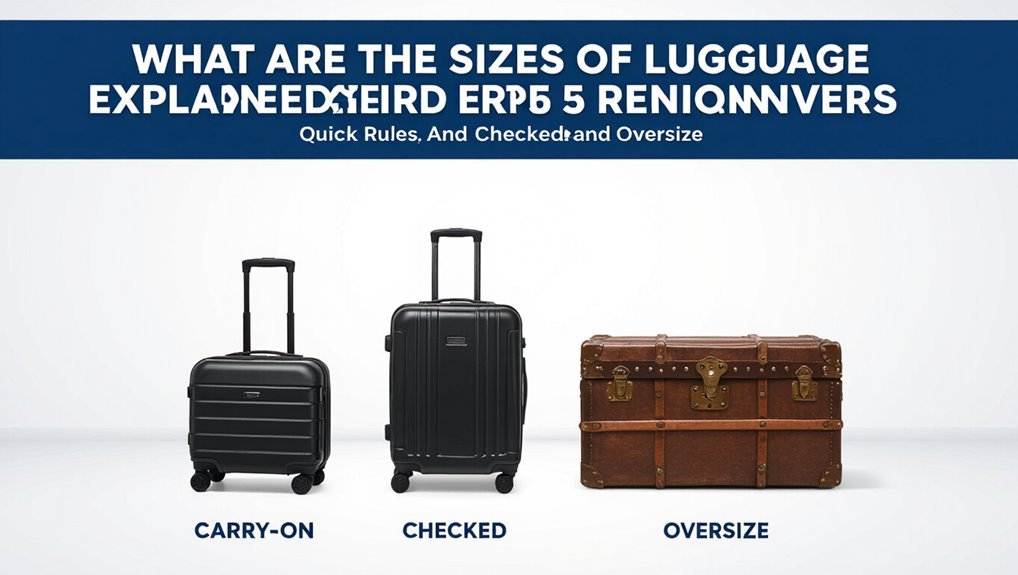
Know the basic size thresholds so you don’t get surprised at the gate: carry-ons must fit airline cabin limits (usually about 22 x 14 x 9 inches including wheels).
You’ll aim for checked bags under about 62 linear inches and 50 pounds to avoid fees.
Oversize items exceed those dimensions or weight, trigger special charges, and often require advance notice or separate handling arrangements.
Carry-On: Size & Weight Limits, What to Pack
After you’ve sized up what counts as carry-on vs checked or oversize, focus on what airlines actually allow in the cabin: most carriers limit dimensions to about 22 x 14 x 9 inches (wheels included) and set weight caps that commonly range from 15–22 pounds for international flights and are often more generous domestically.
Pack essentials: documents, electronics, a change of clothes, medications, valuables, and compact toiletries.
Checked & Oversize Baggage: Sizes, Fees, and How to Avoid Surprises
When you’re planning to check bags, expect airlines to charge by size, weight and number rather than by item.
So measure both linear dimensions (length + width + height) and claimed weight before you arrive at the airport.
Know typical checked limits (23–32 kg, 62–80 linear inches), check airline rules for oversize/overweight fees, pack smart, redistribute weight, and consider shipping bulky items.
Frequently Asked Questions
Can Luggage Be Measured at the Gate for Free?
Yes — airlines can measure your luggage at the gate, and they sometimes will for free. You’ll usually be asked to fit carry-on into a sizer; if it’s oversized, you’ll pay checked baggage fees.
How Do Airlines Handle Damaged Luggage Claims?
Airlines handle damaged luggage claims by inspecting damage, logging a report, and offering repair, replacement, or reimbursement; you’ll need to file a claim promptly, provide receipts/photos, and follow their timelines and baggage liability limits.
Are Soft-Sided Bags More Likely to Be Overweight?
Yes, soft-sided bags can be more likely to be overweight because you’ll cram flexible fabric, pockets, and soft items without structure, letting you exceed limits; but careful packing, weighing, and using compression organizers will help you avoid fees.
Do Ride-Share Drivers Charge Extra for Large Suitcases?
Usually no, but some drivers will charge extra for large suitcases if space is tight or they use a larger vehicle; you should ask before piling bags in, tip for help, or choose an XL car option to avoid disputes.
What Luggage Tags Are Recommended for International Travel?
You should pick durable, TSA‑approved tags with clear privacy flaps, sturdy straps or riveted loops, and readable info cards; smart Bluetooth trackers like AirTag or Tile help locate lost bags internationally, and bright colors boost visibility.
Conclusion
Now that you know the three luggage sizes—carry-on for essentials, checked for larger items, and oversize for extra-big or heavy gear—you can pick the right bag and avoid surprises at the airport. Always check your airline’s size and weight limits before packing, weigh your bags at home, and pack smart: heavy items low, liquids sealed, and essentials in your carry-on. Do this, and you’ll save time, money, and travel stress on your next trip.
