
St Mary’s Day
St Mary’s Day, celebrated on August 15, honors the Feast of the Assumption of the Virgin Mary into heaven. This special day draws Christians from around the world to engage in prayer, participate in processions, and embrace local traditions that highlight their faith. The day beautifully balances solemnity with communal celebration, inviting individuals to attend liturgies reflecting on Mary’s pivotal role in salvation history and to partake in rituals expressing local culture. Whether you find yourself attending Mass, watching a vibrant procession, or taking time for private reflection, St Mary’s Day encourages you to contemplate themes of hope, service, and surrender.
Quick Facts
When is it?: 15 August
Tagged as: Catholic Church
What’s the hashtag?: #StMarysDay #FeastOfTheAssumption #VirginMary
When was it founded?: Not clearly documented; the feast has been celebrated since at least the 5th century, though its formalization in the Western Church occurred in 1950 when Pope Pius XII defined the Assumption as dogma.
Who founded it?: Catholic Church
History of St Mary’s Day
The celebration of St Mary’s Day, or the Feast of the Assumption, has deep roots in Christian tradition. It is believed that the feast originated in the Eastern Orthodox Church in the 5th century, where it was known as the Dormition of the Theotokos. This day commemorates the belief that Mary, the mother of Jesus, passed away and was taken up into heaven, reflecting her unique role in the Christian faith.
In the Western Church, the feast began to gain prominence during the Middle Ages, and it was officially recognized by Pope Pius XII in 1950 when he declared the dogma of the Assumption. This declaration affirmed the belief among Catholics that Mary was assumed body and soul into heaven, an event celebrated with solemnity and joy on August 15.
Timeline
- 1950: Pope Pius XII defines the Assumption as a dogma.
- 1965: The Second Vatican Council emphasizes the importance of Mary in the Church.
- 1988: The feast is celebrated with renewed vigor in many parishes.
- 2000: The Catholic Church emphasizes the significance of Marian feasts.
- 2010: Global celebrations see an increase in processions and local customs.
- 2020: Virtual celebrations emerge due to global pandemic restrictions.
- 2021: Increased participation in communal prayer and social actions.
- 2022: Return to traditional processions in many regions.
Past and Future Date
| Year | Month | Date | Day |
|---|---|---|---|
| 2026 | August | 15 | Saturday |
| 2027 | August | 15 | Sunday |
| 2028 | August | 15 | Tuesday |
| 2029 | August | 15 | Wednesday |
| 2030 | August | 15 | Thursday |
| 2031 | August | 15 | Friday |
| 2032 | August | 15 | Sunday |
| 2033 | August | 15 | Monday |
Observed
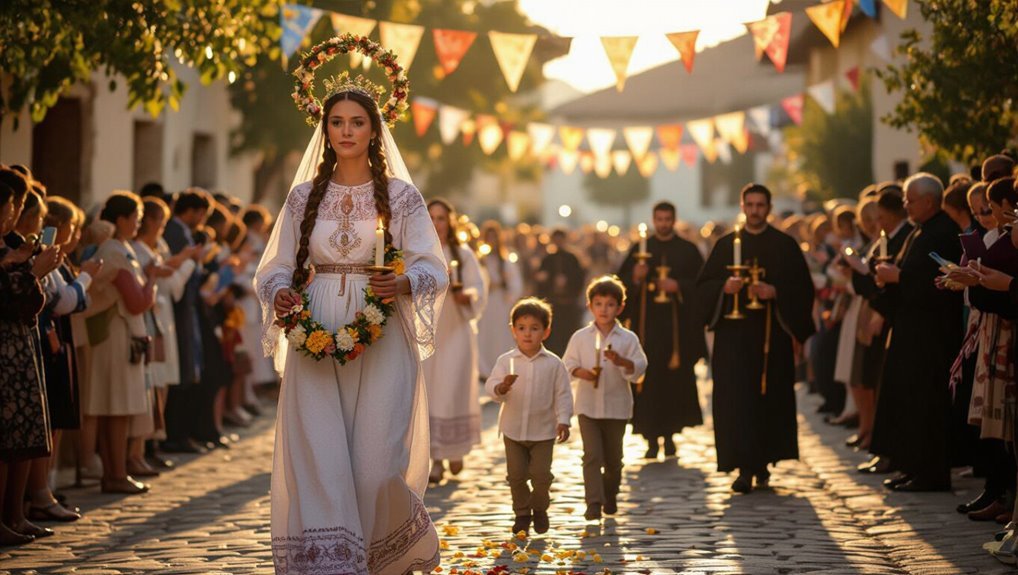
St Mary’s Day is observed with a variety of customs and traditions depending on the local culture. Many Christian communities participate in Mass, and the day is often accompanied by processions featuring statues or icons of Mary. In some coastal towns, fishing fleets are blessed, while mountain villages may light bonfires or create floral arches. Family gatherings often include special meals, visits to graves, and the offering of flowers at churches, all of which connect the theological meaning of the Assumption to everyday life.
Activities for This Day
1. Attend Mass
Many communities hold special liturgies to celebrate the Assumption of Mary.
2. Participate in Processions
Join local processions where participants carry icons or statues of Mary.
3. Prepare Special Meals
Families often gather to prepare and share traditional meals in honor of the day.
4. Reflect and Meditate
Take time for personal reflection or meditation on Mary’s example of obedience and trust.
5. Engage in Charity
Participate in charity drives or community service to help those in need, embodying the spirit of compassion.
How to Celebrate St Mary’s Day
- Attend a local Mass or liturgy.
- Join a procession in your community.
- Prepare a special meal with family and friends.
- Take a moment for prayer or meditation focused on Mary’s life.
- Volunteer for a charitable cause or support those in need.
Why St Mary’s Day is Important
St Mary’s Day is significant as it honors the life and virtues of the Virgin Mary, recognizing her essential role in Christian faith and salvation history. The day serves as a reminder of hope and surrender, inspiring individuals to reflect on their own lives in light of Mary’s example. It fosters a sense of community and shared faith among believers, bridging cultural and geographical divides.
FAQ
1. What is the significance of St Mary’s Day?
It honors the Assumption of the Virgin Mary, celebrating her role in Christianity.
2. Why is the Assumption considered a dogma?
The Assumption is a dogma because it is a core belief affirmed by the Catholic Church, formally declared in 1950.
3. How do different Christian denominations observe this day?
Catholics attend Mass, Orthodox Christians observe with fasting and vigils, while Anglicans and Lutherans may include prayers and hymns.
4. Are there any specific local traditions?
Yes, traditions vary widely; some towns bless fishing fleets, while others hold bonfires or floral displays.
5. Can non-Christians celebrate St Mary’s Day?
While it is primarily a Christian feast, anyone can participate in the cultural aspects of the day.
6. Is St Mary’s Day a public holiday?
Yes, in several countries, St Mary’s Day is recognized as a public holiday.
7. What are some common symbols associated with Mary?
Common symbols include the rose, the moon, and the stars, which represent her purity and connection to heaven.
Related
- Assumption of Mary
- Dormition of the Theotokos
- Feast of the Annunciation
- Nativity of Mary
- Our Lady of Guadalupe