Should Jeans Be Hung or Folded
You should hang jeans you wear often, tailored or heavy pairs to prevent creases and preserve shape, and fold lightweight, stretchy, relaxed or seasonal jeans to save space and avoid hanger marks. Use wide or padded hangers, clip at the waistband or hang by the inseam, and leave room between pairs. Fold or roll for drawers, stack or store flat for long-term. Keep your routine and closet size in mind — continue and you’ll find practical methods and tips.
Quick Answer: When to Hang Jeans vs. Fold Them
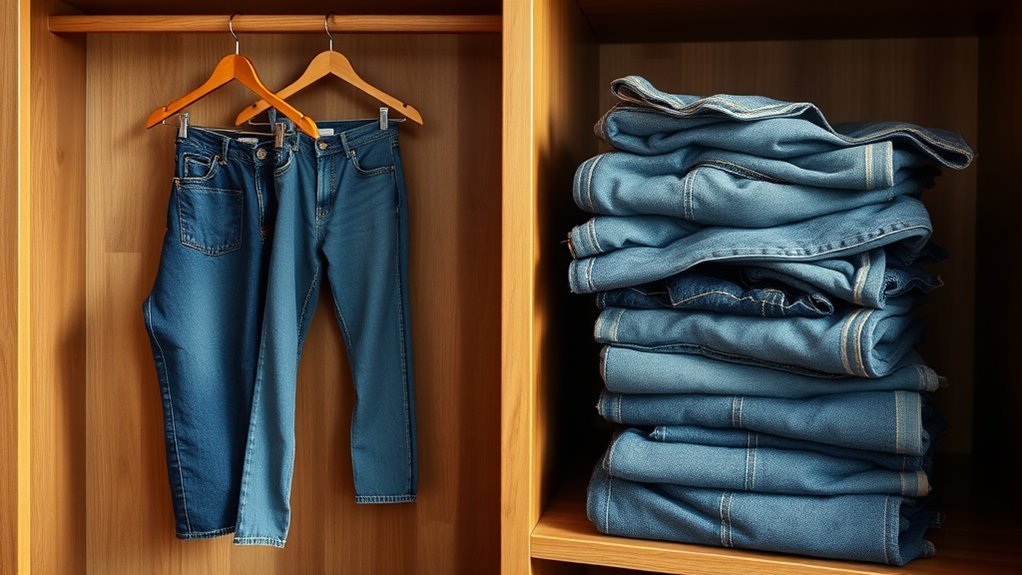
If you want jeans to keep their shape and avoid creases, hang the ones you wear most often or styles with a fitted waist and straight legs. You’ll also hang jeans that dry quickly after washing or that you want ready to grab.
Fold jeans you store long-term, stack in drawers, or won’t wear for a season. Folded pairs take less hanging space and avoid stretching at the waistband.
Use hangers with clips or a bar to prevent marks, and fold along natural creases to minimize wrinkles. Choose the method that fits your closet, routine, and how fast you’ll wear them again.
Which Jeans to Hang and Which to Fold (Weight, Fit, and Fabric)
Because weight, fit, and fabric directly affect how jeans hold their shape and wear over time, you’ll choose to hang or fold based on those three factors.
Heavy selvedge or rigid denim benefits from hanging to avoid deep creases and to preserve their structure, while lightweight, stretchy jeans can be folded since they recover shape easily.
Rigid or heavy selvedge should be hung to prevent creases; lightweight, stretchy jeans fold and bounce back easily.
Slim or tapered fits that show creasing should be hung to maintain silhouette; relaxed or baggy styles tolerate folding.
Delicate finishes, embellishments, or coated fabrics are safer folded to prevent hanger marks, whereas untreated, sturdy pairs do better hung for longevity.
Hanging Methods That Prevent Creases and Stress
Now that you know which jeans to hang versus fold, the way you hang them makes a big difference in preventing creases and stress. You’ll want techniques that support weight, avoid sharp folds, and keep fabric breathable. Pay attention to clip placement, hanger type, and how jeans drape.
Rotate heavy pairs occasionally to relieve stress points and don’t overcrowd the rod.
- Use wide, padded hangers to distribute weight evenly.
- Clip at the waistband, not the fabric body, to prevent marks.
- Hang by the inseam with clips facing inward to avoid creasing.
- Leave space between pairs for airflow and shape retention.
Folding Techniques to Save Space and Keep Shape
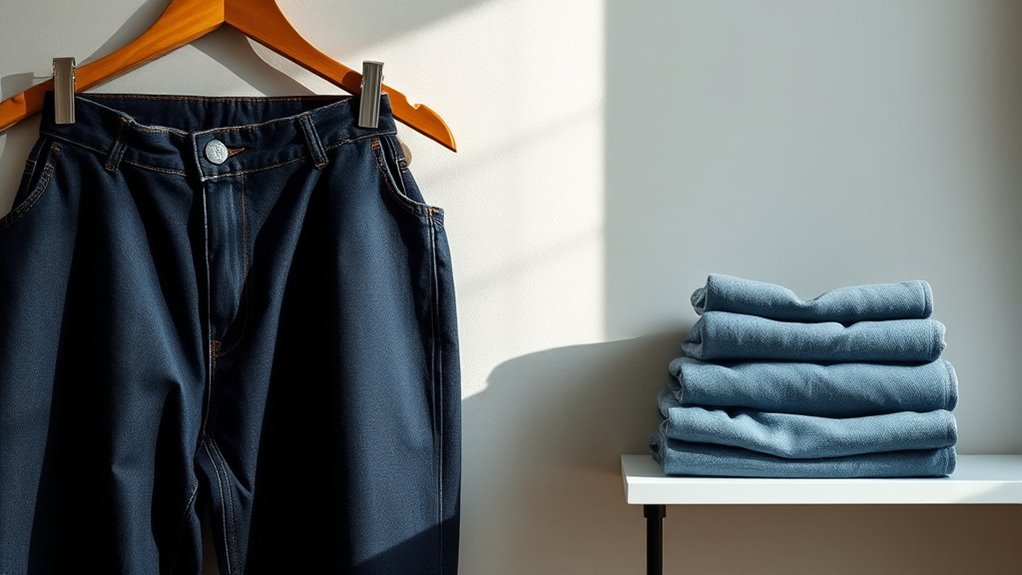
Fold your jeans by the legs to keep seams aligned and reduce bulk.
If you need to save space, roll them tightly for drawers or travel.
For long-term storage, lay pairs flat so they hold their shape.
Fold Jeans By Legs
If you want to save drawer space and keep your jeans’ legs from getting misshapen, folding them by the legs is a quick, reliable method you can use every time. Lay jeans flat, smooth wrinkles, then fold one leg over the other aligning seams.
Fold at the knee so the waistband meets the cuffs, keeping creases minimal. Tuck bulky hems inward for a sleeker stack. Use breathable dividers to separate pairs and avoid shifting.
- Align seams precisely
- Fold at the knee for structure
- Tuck hems to reduce bulk
- Stack vertically for visibility
Roll To Save Space
When you roll your jeans, you’ll save drawer space and keep legs from creasing while maintaining a tidy stack. Lay each pair flat, smooth out wrinkles, fold one leg over the other, then roll tightly from the waistband toward the cuffs.
Tighter rolls use less room and prevent shifting, but don’t compress denim excessively—leave slight loft to preserve fibers. Arrange rolls upright or side-by-side so you can see colors and sizes at a glance.
This method works well for casual storage, travel packing, and small closets. Rotate jeans periodically to avoid permanent folds and guarantee even wear.
Store Flat To Maintain Shape
Rolling saves space and prevents creases, but storing jeans flat preserves their shape best—especially for heavier denim or favored pairs you want to keep looking new. Lay each pair flat, smooth seams and pockets, then fold once at the waistband so the legs align. You’ll avoid pressure points and stretched belt loops, keeping waistlines and crotches intact.
Use breathable shelves or shallow drawers to stack without crushing. Rotate pairs occasionally to prevent permanent folds and moisture buildup. Treat special washes gently, placing tissue between layers if needed.
- Smooth seams before folding
- Fold once at the waistband
- Stack without overloading
- Rotate periodically
Wear Frequency and Seasonal Storage: Everyday vs. Long-Term
Because you wear some jeans almost every day and others only a few times a season, how you store them should match their use.
For everyday pairs you reach for, hang them by the waistband or fold over a wide bar so creases stay minimal and they air between wears. Rotate those often to prevent wear hotspots.
For seasonal or rare jeans, fold them gently and store in breathable bags or on a high shelf to save hanging space and protect shape. Include acid-free tissue for delicate finishes.
Label boxes or shelves so you can retrieve seasonal jeans without disrupting daily rotation.
Closet Checklist: How to Store Jeans in Any Space
If you’ve only got a cramped closet, a walk-in, or just a single shelf, you can store jeans efficiently with a few simple strategies that fit any space. You’ll keep pairs accessible, wrinkle-free, and visible by choosing methods that match your routine and room.
Whether you have a tiny closet or a single shelf, simple storage tricks keep jeans accessible, wrinkle-free, and visible.
- Hang by the waistband on sturdy clips to save shelf space and prevent creases.
- Fold into thirds and stack vertically in drawers so you see every pair.
- Use slim hangers for multiple pairs on one rod without crowding.
- Label bins or shelves for quick grabs and seasonal rotation.
Frequently Asked Questions
Do Jeans Need to Be Washed Before Storing Long-Term?
Yes — you should wash jeans before long-term storage to remove dirt, oils, and stains that attract pests or cause discoloration. Let them fully air-dry, then fold or hang in a cool, dry, breathable spot to prevent mildew.
Can Hanging Jeans Cause Stretching Over Months?
Yes — hanging jeans can cause stretching over months, especially at the waistband and knees. If you want to avoid distortion, you’ll fold them or use padded hangers, clip carefully, or rotate storage positions regularly.
How Do You Prevent Color Transfer Between Jeans?
You prevent color transfer by washing jeans inside out, using cold water and vinegar or salt fixatives, washing with like colors, avoiding overloading, air-drying away from light, and treating stains promptly so dyes don’t bleed onto other garments.
Are Moths Attracted to Denim Fabric?
No, moths aren’t generally attracted to denim because they prefer natural fibers like wool and silk; you’ll rarely have denim targeted, though dirt, sweat, or blended fibers can make jeans slightly more appealing, so store them clean and dry.
Is It Okay to Store Jeans in Plastic Bags?
Yes, it’s okay short-term; you’ll protect jeans from dust and pests. But don’t seal them long-term—plastic traps moisture and can cause mildew or odors. Use breathable bags or add silica packs for safer storage.
Conclusion
You’ve now got the basics: hang heavier, tailored, or easily-creased jeans to keep lines crisp, and fold softer, casual, or space-saving pairs. Use clip or padded hangers and fold at the waistband or along the legs to avoid stress and creases. Rotate based on wear frequency—hang everyday favorites, fold seasonal or seldom-worn denim. Adapt to your closet: prioritize breathability and neatness, and you’ll preserve fit, color, and fabric no matter how you store them.