
Obon in Japan
Obon is a significant Japanese festival that takes place in mid-August, honoring ancestors and deceased relatives. This Buddhist-rooted celebration is marked by family gatherings, ceremonial practices, and community activities that reflect both solemn remembrance and joyous reunion. As you explore the festivities, you’ll find a blend of cultural traditions that highlight the importance of family ties and respect for those who came before us.
Quick Facts
When is it?: 13–15 August
Tagged as: Japanese Buddhist Association
What’s the hashtag?: #Obon #BonFestival #JapanTraditions #HonoringAncestors
When was it founded?: Not clearly documented, but rooted in Buddhist traditions dating back to the 7th century.
Who founded it?: Commonly attributed to Buddhist monks spreading teachings in Japan.
History of Obon
Obon, or the Bon Festival, has a rich history that intertwines with Japanese Buddhism. The festival is believed to have originated from the Ullambana Sutra, which tells the story of a disciple of Buddha, Mokuren, who sought to relieve the suffering of his deceased mother. His efforts to offer food and comfort to her spirit led to the practice of Obon, where families honor their ancestors by making offerings at household altars.
Over the centuries, Obon evolved into a broader cultural event, incorporating regional customs and practices. Today, it serves not only as a time for remembrance but also as a way for families to come together, participate in traditional dances, and celebrate their heritage.
Timeline
- 2026: Obon celebrated from 13–15 August
- 2027: Obon celebrated from 13–15 August
- 2028: Obon celebrated from 13–15 August
- 2029: Obon celebrated from 13–15 August
- 2030: Obon celebrated from 13–15 August
- 2031: Obon celebrated from 13–15 August
- 2032: Obon celebrated from 13–15 August
- 2033: Obon celebrated from 13–15 August
Past and Future date
| Year | Month | Date | Day |
|---|---|---|---|
| 2026 | August | 13 | Friday |
| 2026 | August | 14 | Saturday |
| 2026 | August | 15 | Sunday |
| 2027 | August | 13 | Friday |
| 2027 | August | 14 | Saturday |
| 2027 | August | 15 | Sunday |
| 2028 | August | 13 | Sunday |
| 2028 | August | 14 | Monday |
Observed
During Obon, families engage in various rituals to honor their ancestors. These include cleaning and decorating graves, offering food and incense at home altars, and participating in community events. Traditional dances, known as Bon Odori, take place across Japan, where people gather to dance and celebrate. The atmosphere is a blend of reverence and festivity, fostering a sense of connection among participants.
Activities for This Day
1. Visit Ancestral Graves
Families often take time to clean and decorate their ancestors’ graves with flowers and offerings.
2. Prepare Seasonal Foods
Cooking and sharing traditional dishes is a way to honor ancestors and bring families together.
3. Participate in Bon Odori
Join community dances, where people of all ages come together to celebrate and honor their ancestors through movement.
4. Light Lanterns
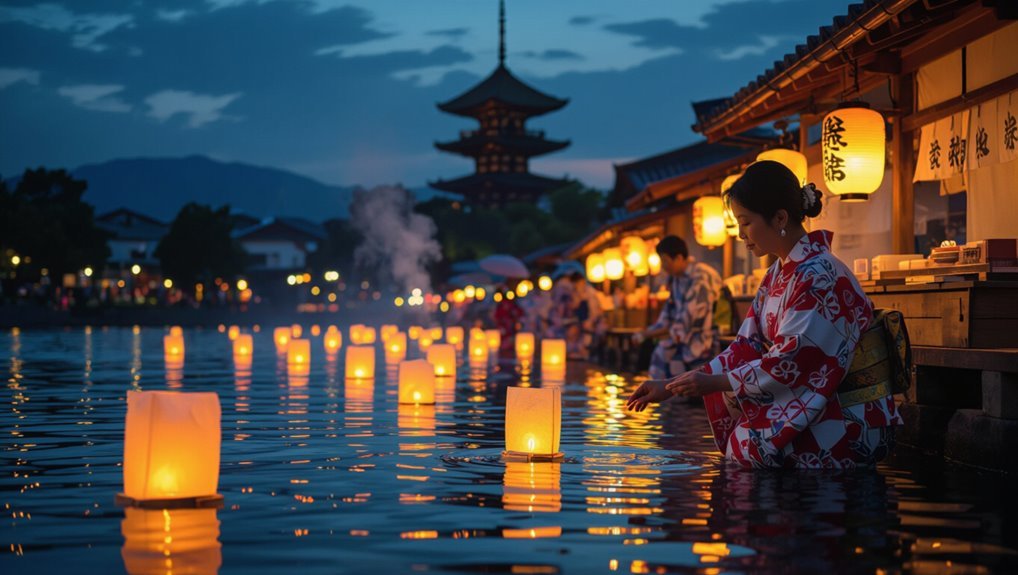
Floating lanterns on rivers or seas symbolize guiding spirits back to their resting places, a common practice at the end of Obon.
5. Attend Fireworks Displays
Many communities conclude the festival with fireworks, creating a festive atmosphere while marking the farewell to spirits.
How to Celebrate Obon
- Join family gatherings to share meals and stories about ancestors.
- Visit local temples or shrines to participate in rituals and services.
- Engage in community dances, learning the steps and enjoying the festive spirit.
- Create and release floating lanterns as a symbolic gesture of guiding spirits home.
- Offer seasonal flowers and food at household altars to honor your ancestors.
Why Obon is Important
Obon is a vital cultural event in Japan that emphasizes the significance of family, memory, and respect for ancestors. It serves as a reminder of the connections across generations, reinforcing the values of gratitude and remembrance. By participating in Obon, individuals cultivate a sense of belonging and continuity, celebrating both life and death in a way that enriches community bonds.
FAQ
1. What is the origin of Obon?
Obon is rooted in Buddhist traditions and is commonly attributed to the Ullambana Sutra.
2. When is Obon celebrated?
Obon is typically observed from 13 to 15 August, although some regions may celebrate it at different times.
3. What activities are common during Obon?
Common activities include visiting graves, making offerings, and participating in Bon Odori dances.
4. Are there any specific foods associated with Obon?
Yes, families often prepare seasonal foods and dishes that their ancestors enjoyed.
5. How do people honor their ancestors during Obon?
People honor their ancestors by visiting graves, making offerings at altars, and lighting lanterns.
6. Is Obon celebrated only in Japan?
While it is most commonly celebrated in Japan, similar observances can be found in other cultures, particularly in East Asia.
7. What is the significance of the lanterns during Obon?
Lanterns symbolize the guiding of spirits back home and are a central part of the Obon festivities.
Related
- All Souls‘ Day
- Chuseok
- Día de Muertos
- Ancestors’ Day
- Qingming Festival


