Is United Strict on Carry on Size
You’ll usually be fine if your bag meets United’s 22 x 14 x 9-inch limit, but enforcement varies a lot by airport, aircraft, and how full the flight is. Agents may eyeball or measure borderline bags, and packed overhead bins or busy hubs mean stricter checks. Personal items must fit under the seat. Be prepared to gate-check oversized items without drama. Keep dimensions and proof handy — more practical tips and exceptions follow.
Who This Guide Is For and How to Use It
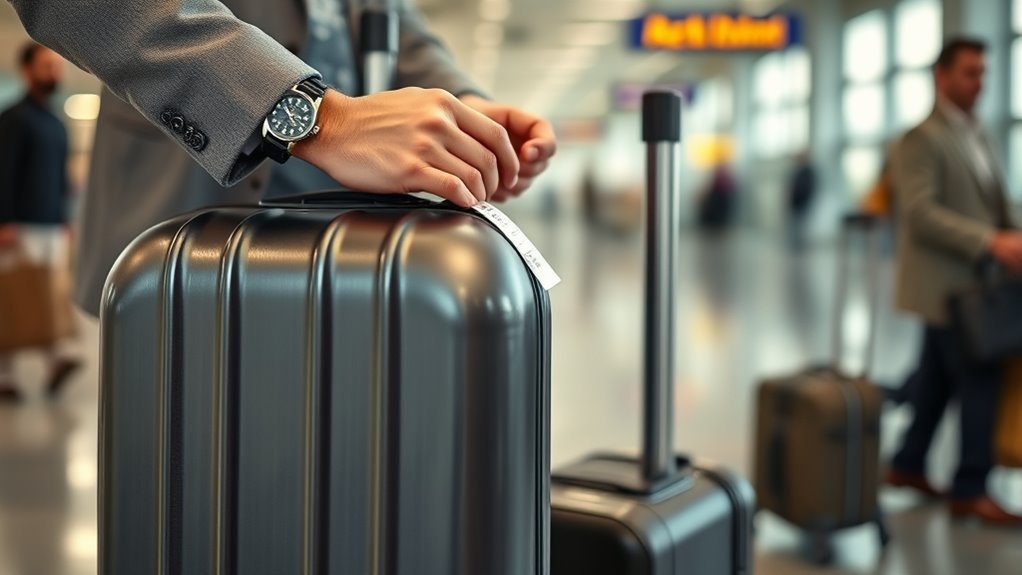
If you fly United or plan to, this guide is for you—whether you’re a frequent traveler who needs quick reminders, an occasional flyer prepping for a trip, or a family packing carry-ons for everyone.
You’ll find clear, practical tips on measuring bags, spotting common enforcement situations, and preparing backups if an item gets gate-checked.
Use the quick-read sections when you’re short on time and the detailed parts when planning a trip with special items or multiple bags.
You’ll learn which items usually pass, when staff might enforce rules, and how to reduce surprises at boarding.
Quick Answer: Is United Strict About Carry-On Size?
Want a straight answer? You should expect United to enforce carry-on size reasonably—staff will check if your bag clearly exceeds limits or blocks aisles, but minor variances often pass unnoticed.
Expect United to reasonably enforce carry-on sizes—clearly oversized bags get checked, small deviations often go unnoticed.
Your chance of having to gate-check depends on aircraft, load, and gate agent discretion. To minimize problems, carry a compliant bag and be ready to gate-check if asked.
- Be visible: gate agents spot oversized bags quickly.
- Be flexible: peak flights mean stricter enforcement.
- Be polite: agents often accommodate cooperative passengers.
- Be prepared: have essentials in a personal item you can keep.
United Carry-On Dimensions and Weight Limits
You’ll want to know United’s carry-on size limits so your bag fits the overhead bin without issue. The airline typically allows one carry-on plus a personal item, and each has specific dimension rules you should follow.
Check the exact measurements and any weight guidance before packing to avoid gate check fees.
Carry-On Size Limits
Although United lets most travelers bring one carry-on and one personal item, strictness about exact dimensions can vary by gate agent and aircraft, so you should know the allowed limits: 9 x 14 x 22 inches (including handles and wheels) for the standard overhead-cabin carry-on, with no published weight limit for domestic flights.
While international routes or partner-checks may impose different rules, you should measure luggage before travel, choose soft-sided bags to squeeze into bins, and pack strategically to avoid gate checks.
Follow these practical tips:
- Verify size with a tape measure before departure
- Use expandable or compressible luggage
- Keep heavy items low and centered
- Check partner or international weight rules
Personal Item Rules
When packing, remember United lets you bring one personal item in addition to your carry-on, and it must fit under the seat in front of you—maximum dimensions are 9 x 10 x 17 inches (though agents can be strict about fitting).
You should choose a slim bag—like a laptop sleeve, small backpack, or briefcase—that stows easily.
Heavier items go in your checked luggage to avoid gate checks.
If your personal item bulges or exceeds dimensions, staff may require it to be gate-checked, possibly with a fee.
Measure before you travel, pack smartly, and keep essentials accessible for security and boarding.
What Qualifies as a United Personal Item vs. Carry-On
If you’re packing for a United flight, know that a personal item and a carry-on serve different purposes and must meet separate size rules. You should choose one small item that fits under the seat and one larger bag for the overhead bin. Personal items are for essentials; carry-ons hold bulkier luggage.
Pack one small personal item for under the seat and a larger carry-on for the overhead bin.
- Personal item: purse, small backpack, laptop bag sized to fit under the seat.
- Carry-on: rolling suitcase or larger backpack that fits in the overhead compartment.
You can bring both but they must meet size limits. Gate agents may enforce space and weight constraints.
Where to Find United’s Official Carry-On Policy
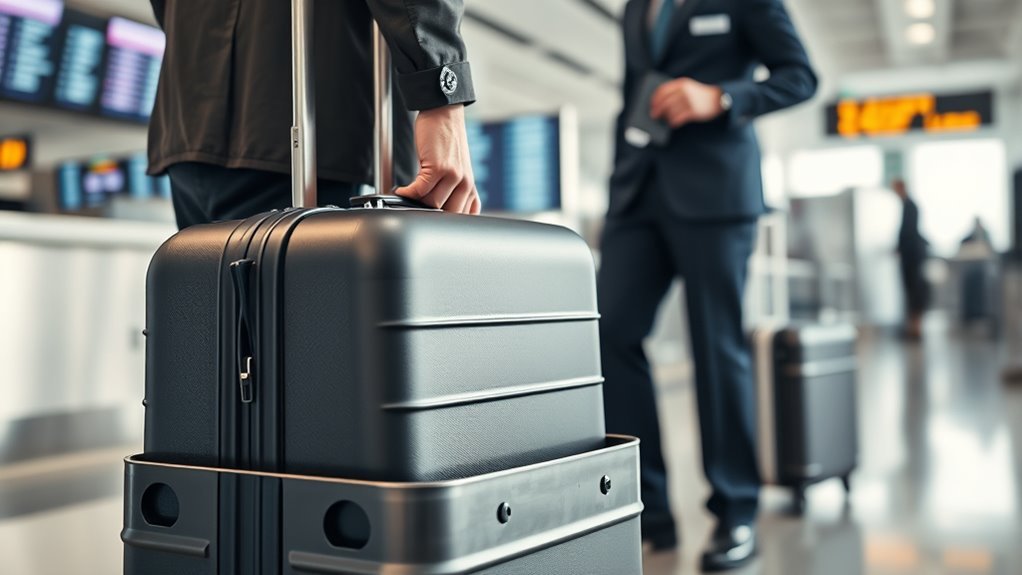
To confirm United carry-on dimensions, check United’s official baggage policy page so you’re looking at the most up-to-date rules.
The policy lists maximum carry-on and personal item sizes and any exceptions by fare or aircraft.
Bookmark the official webpage or screenshot the dimensions before you travel so you won’t be surprised at the gate.
United Carry-On Dimensions
Although United publishes its official carry-on dimensions on its website, you’ll want to check a few specific places to be sure you’re looking at the latest policy. You should know the standard maximum size, how personal items differ, and exceptions for certain routes or aircraft.
Measure your bag including wheels and handles to avoid surprises. If you fly frequently, save measurements for quick checks.
- Standard carry-on maximum dimensions
- Personal item size and placement
- International or regional variations
- Exceptions for upgraded cabins or small aircraft
Confirm dimensions before travel so you’re never caught off guard.
Official Policy Webpage
Now that you know the measurements to check, the next step is finding United’s official carry-on policy so you can confirm those numbers. Go to united.com and scroll to the “Travel Information” or “Baggage” section; the site lists size, weight, and item exceptions.
You can also search “United carry-on dimensions” to land on their policy page directly. Save or bookmark the page and check it before travel since rules can change.
For specific routes or fares, visit your reservation details or contact United customer service for clarification. Rely on the official page for authoritative, up-to-date guidance.
How Enforcement Varies by Airport and Route
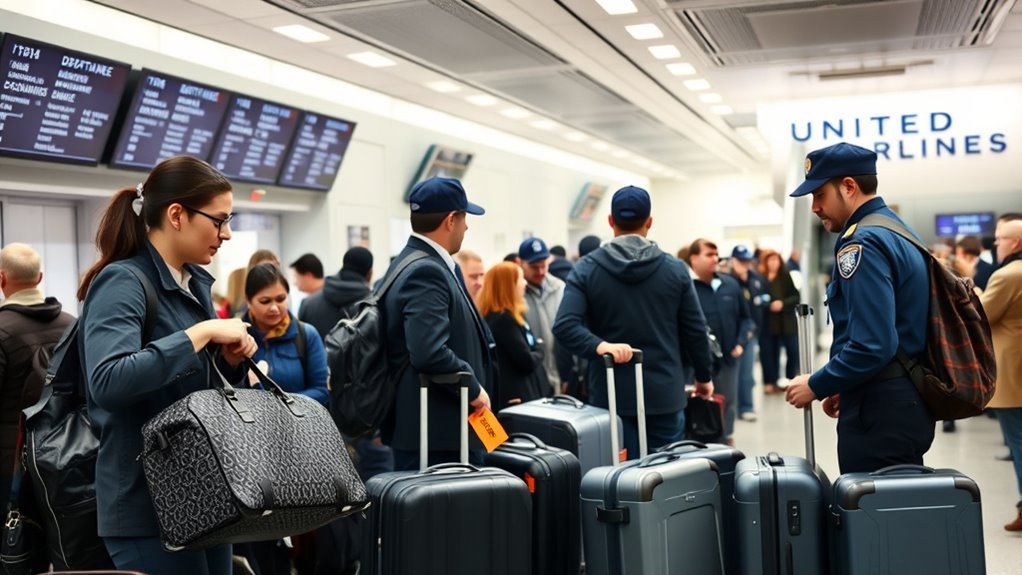
Because airports and routes bring different operational pressures, you’ll find United’s carry-on enforcement varies noticeably from place to place. You’ll notice stricter checks at busy international hubs, looser practices on regional flights, and occasional leniency during off-peak times. Staff follow local procedures and gate staffing levels, not a single universal approach.
Carry-on enforcement varies by airport and route — stricter at busy hubs, looser on regional and off-peak flights.
- High-traffic hubs: more measurements and stricter overhead limits.
- Regional/smaller airports: fewer checks, more flexibility.
- Long-haul/international: tighter enforcement for weight and space.
- Peak travel days: stricter boarding due to limited overhead capacity.
When Gate Agents Will Measure Your Bag
When you’ve got a bag that looks borderline, gate agents will often pull it out for a quick measure to keep boarding moving and overhead space clear. You’ll see this at boarding if agents spot oversized shapes, crowded jetways, or repeated overhead pileups.
They’ll measure when clarity’s needed—before gate checks are called or fees applied. If your bag fits the sizer, you’ll carry on; if not, they’ll tag it for gate check or ask you to check at the counter.
Stay calm, cooperate, and know measurements are about flow and space, not personal judgment.
How Full Flights Change Enforcement
If a flight’s full, expect stricter size checks and more gate checks as agents try to free up overhead space quickly. You’ll see quicker measuring, firmer “carry-on” rulings, and more requests to gate-check bags to speed boarding. Be ready to cooperate and avoid delays.
If the flight’s full, expect quicker size checks, firmer carry-on rulings, and more gate-check requests—pack slim and cooperate.
- Pack a slim bag to reduce hassle.
- Place personal items under the seat to keep overhead room.
- Have essentials easily accessible if you must gate-check.
- Know United’s stated dimensions to argue politely if measured.
When space’s tight, being prepared lets you board smoothly and keeps your travel stress low.
Domestic vs. International Enforcement Differences
When you fly domestically, gate agents often follow United’s standard carry-on guidelines more predictably, but enforcement can still vary by airport.
International gates may apply host-country rules or stricter aircraft limits, so you’ll want to check both United’s policy and local signage.
If you’re crossing borders, be aware that size standards and how strictly they’re enforced can change from one airport to another.
Domestic Enforcement Practices
Although United enforces its carry-on size rules across all routes, you’ll notice stricter, more consistent checks on domestic flights where gate agents and ramp crews follow uniform company procedures. You’ll find staff use standard sizers, enforce overhead space limits, and prompt early gate checks to keep boarding timely.
If your bag’s borderline, expect clear options: gate-checking, paying for a checked bag, or consolidating items. Staff prioritize on-time departures and equal treatment, so you’ll rarely see ad hoc exceptions. Follow posted dimensions, arrive early, and be ready to comply to avoid delays or last-minute fees.
- Standard sizers used
- Clear gate options
- Emphasis on on-time boarding
- Uniform staff procedures
International Gate Variations
Because international flights often involve different airports, partner airlines, and security rules, you’ll see more variation in how gate agents enforce carry-on size abroad than on domestic routes. You might encounter stricter checks at smaller overseas airports or when connecting with carriers that have tighter limits.
Conversely, some international gates are more relaxed, focusing on weight over dimensions. You’ll benefit from confirming rules for each segment, packing with measured margins, and keeping receipts or tags for checked items.
If a gate agent flags your bag, stay polite, ask about alternatives, and be ready to gate-check to avoid boarding delays.
Cross-Border Size Standards
If you’ve noticed varying gate practices abroad, you’ll also see that the underlying size standards themselves can differ across borders. You should check both United’s published limits and the destination country’s rules, since enforcement can hinge on local regulations and airport staff discretion.
International flights sometimes follow stricter cabin dimensions or count personal items differently, so prepare for surprises.
- Measure your bag before travel to match both airline and country rules.
- Review United’s policy plus destination airport guidance.
- Expect stricter checks on full flights or secondary carriers.
- Pack flexibly to avoid gate hassles and fees.
Does Elite Status or Fare Class Affect Leniency?
When you have elite status or buy a higher fare class, United’s gate agents often give you more flexibility with carry-on enforcement—though that leniency isn’t guaranteed. You’ll usually find Premier members, MileagePlus cardholders, and passengers in premium cabins treated more favorably; agents prioritize service and minimizing hassles.
That can mean fewer size checks, more willingness to let marginal bags ride in the overhead, or suggestions to gate-check without fees. Still, exceptions occur—full flights, safety concerns, or strict local staff can override goodwill.
Always pack within limits and be prepared to gate-check if necessary despite elite perks.
Boarding Groups, Gate Crowding, and Bag Checks
How do boarding groups and gate crowding affect whether your carry-on gets checked? You’ll find boarding groups matter: earlier groups board before overhead bins fill, so your bag stays with you.
Board earlier: boarding groups and gate crowding determine whether overhead bins fill and if your carry-on gets checked.
When the gate’s crowded, agents may enforce size rules quicker to speed boarding, and you might be asked to gate-check even compliant bags. You can reduce risk by arriving early and prepping a slim bag.
- Board with your assigned group; don’t jump.
- Watch bin space; consolidate if needed.
- Be ready to gate-check; have essentials accessible.
- Ask politely if unsure about bin availability.
If Your Carry-On Is Oversized: Typical Outcomes
If your carry-on is oversized, you’ll usually be asked to gate-check it and retrieve it at baggage claim on arrival.
In some cases you might be charged a carry-on fee if the bag exceeds allowed limits or you try to bring an extra bag.
Rarely, repeated noncompliance or a full flight could result in denied boarding access for that item or be asked to check a bag at the ticket counter.
Gate Check Procedure
Should your carry-on exceed United’s size limits at the gate, agents will usually ask you to gate-check it and tag it for the aircraft’s cargo hold. You’ll hand the bag to staff who attach a tag, note any fragile contents, and place it just outside the jet bridge.
Expect retrieval at the jet bridge or baggage claim depending on aircraft and airport procedures. Keep essentials with you. Photograph the bag and tag number in case of mishandling.
If you’re traveling with valuables or needed items, say so and request instructions.
- Tagging and handoff
- Fragile labeling
- Jet bridge retrieval
- Photograph tag and bag
Carry-On Fees
Wondering what happens when your bag’s just a bit too big? You’ll usually get a quick measurement at the gate or check-in. If it exceeds United’s dimensions, agents often gate-check it free, tagging and storing it in the hold.
Sometimes you’ll be asked to check it at the counter and pay a standard checked-bag fee; fees vary by route, fare class, and MileagePlus status.
Rarely, you may be offered to repack items into a personal item to avoid charges.
Keep carry-on within limits to skip delays, potential fees, and the hassle of reclaiming gate-checked luggage.
Denied Boarding Access
Sometimes oversized carry-ons lead to more than a gate-check or a fee — they can affect whether you board at all. If staff determines your bag won’t fit, you’ll face choices that can delay or deny your travel. You’ll want to act calmly and quickly to avoid missing the flight.
- Accept gate-checking if available and get a claim tag.
- Pay an oversized fee when offered to retain boarding rights.
- Transfer items to a compliant bag; ask staff for assistance.
- If refusal persists, request supervisor review and document the interaction for later claims.
Gate-Check Fees and How Much They Cost
If your carry-on won’t fit in the overhead bin or you choose to check it at the gate, you’ll usually avoid a checked-bag fee but may face gate-check charges depending on your fare and the airline’s policy.
You’ll often see gate-checking free for families with infants, basic economy exceptions, or when aircraft size forces gate checks.
Fees vary: some fares absorb the cost, others tack on a modest flat fee—typically $25–$75 domestic, higher on international routes.
Always confirm with United before boarding; agents can waive fees in tight situations, but policies and prices change, so check current terms.
Why Overhead-Bin Space Changes Enforcement
When the cabin’s overhead bins start filling up, you’ll notice staff tighten carry-on checks and ask more passengers to gate-check bags.
Gate checks become more common on crowded flights because agents need to free up space quickly and keep boarding on schedule. That shifting enforcement is largely driven by how full a flight is and how many gate-checked items are already being handled.
Gate Checks Increase Enforcement
Because overhead-bin space often runs out on full flights, gate agents are more likely to ask you to gate-check your carry-on to speed boarding and guarantee everyone’s bags fit. You’ll find this enforcement increases when agents need faster, predictable loading; gate-checking reduces conversations and measurements at the jet bridge.
If you want to avoid surprises, pack essentials in a personal item you can keep, know United’s size guidelines, and be ready to accept a gate check without argument. Agents act pragmatically to keep schedules, so cooperating often gets your bag priority tagging and smoother retrieval.
- Pack critical items in your personal item
- Know United’s size limits
- Be ready to gate-check calmly
- Expect priority tagging for gate-checked bags
Flight Load Affects Policy
How full is the flight matters: higher passenger loads squeeze overhead-bin space and push agents to enforce carry-on size rules more strictly. You’ll notice stricter checks on packed flights because gate agents aim to fit every bag and board on time. If bins fill fast, expect more gate checks and size measurements; lighter flights let you be laxer. To avoid surprises, arrive early, know dimensions, and consider a smaller bag when load factors are high. Below is a quick reference to visualize how load impacts enforcement and your options.
| Load level | Likely enforcement |
|---|---|
| Low | Lenient |
| Moderate | Cautious |
| High | Strict |
| Full | Gate checks |
Passenger Stories: Measured, Allowed, or Turned Away
If you’ve ever watched gate agents wheel out a measuring box, you know the moment can feel like a test: some passengers sail through with a shrug, others get told to gate-check or repack, and a few are turned away for oversized bags.
You might hear quick explanations, see calm adjustments, or witness tense exchanges when space is tight. Your experience can hinge on timing, carry-on design, and how politely you handle requests.
Here are common outcomes travelers report:
- Measured and allowed after a brief check
- Asked to gate-check without fuss
- Told to repack at the gate
- Denied boarding with oversized bag
Common Carry-On Disputes and Their Resolutions
You’ll often run into two common disputes: gate agent measurements and enforcement of the overhead bin.
If an agent measures your bag and it’s over the limit, they’ll usually ask you to gate-check it or pay a fee.
Knowing the size rules and packing smart can help you avoid that confrontation.
Gate Agent Measurements
When a gate agent measures your carry-on, they’re enforcing policy and managing limited overhead space, so it helps to stay calm and cooperative.
You should show dimensions, receipts, or bag tags if you have them, and ask concise questions about measurements and alternatives.
If they say it’s too large, request a clear measurement and a brief explanation of options.
- Politely ask to re-measure or for the ruler/frame to verify.
- Offer to gate-check if that resolves timing and cost concerns.
- Request supervisor review if you believe rules were misapplied.
- Note agent name and decision for follow-up after travel.
Overhead Bin Enforcement
After a gate agent measures your bag, the next common issue is contention over overhead bin space during boarding. You’ll face tight bins on full flights, and passengers often try to squeeze extra items onboard. Be proactive: gate-check bulky items or consolidate to fit.
If crew asks you to gate-check, comply politely—refusal can delay boarding and risk denied boarding. You can request assistance from flight attendants for fragile or valuable items; they’ll advise where to store them.
Know United’s carry-on limits and board early if you must secure bin space to avoid disputes.
When Agents Measure vs. Just Eyeballing
If an agent looks uncertain, don’t assume they’ll measure your bag—airline staff often eyeball carry-ons and only pull out a sizer when the flight’s full or the bag clearly exceeds limits.
You should still pack and present your bag as if it will be checked: keep dimensions reasonable, avoid bulging items, and place heavy items low.
If asked to measure, comply calmly; agents are checking policy and gate space, not judging you.
- Carry a compact bag and know its dimensions.
- Avoid last-minute shoving to make it fit.
- Gate agents prioritize safety and space.
- Be ready to gate-check politely.
Overhead-Bin Differences by Aircraft Type
Because bin size and shape vary by aircraft model, you should check what plane you’re flying and pack accordingly.
Regional jets (CRJs, Embraer 145s) have shallower, narrower bins that often force you to gate-check larger roller bags.
Mainline narrowbodies (A320s, 737s) usually offer standard overhead space accessible to most carry-ons, but older frames may have tighter contours.
Widebodies (787, 777, A330) provide deep, generous bins allowing multiple bags per passenger in many rows.
If you want consistency, choose seats in rows with standard bins; aisle or forward areas sometimes differ from mid-cabin storage availability.
Enforcement in Big Hubs vs. Small Airports
When you fly through a major hub, gate agents face heavier passenger loads and tighter turns, so they enforce carry-on size rules more consistently to keep boarding on schedule. You’ll notice stricter checks at busy gates; agents won’t risk delays.
At smaller airports, enforcement is often more relaxed since boards are lighter and buffers are bigger, but that’s not guaranteed. You should always prepare for either scenario to avoid surprises.
At smaller airports enforcement can be looser, but never assume—always bring a compliant bag to avoid surprises.
- Expect measured enforcement at hubs during peak times
- Bring a compliant bag regardless of airport size
- Gate agents prioritize on-time departure over convenience
- Policies can vary by crew and day
Flights Operated by Partner or Low-Cost Carriers
If your United-marketed flight is operated by a partner or a low-cost carrier, you’ll want to check that carrier’s carry-on rules since they can differ from United’s.
You may face different gate check procedures and size allowances, especially on regional or budget-operated segments.
Confirm limits before you board to avoid surprises or last-minute gate checks.
Partner Airline Policies
Although United sets its own carry-on rules, flights operated by partner or low-cost carriers may follow different size and baggage policies, so you’ll want to double-check before you pack. You’ll often face stricter limits, extra fees, or different definitions of personal items when a partner operates your flight.
Check the operating carrier’s website or your reservation details, and be ready to adjust bag dimensions or pay at the gate.
- Verify the operating carrier listed on your itinerary.
- Compare carry-on size and weight allowances.
- Note personal item definitions and limits.
- Confirm fee policies for cabin and checked bags.
Gate Check Procedures
Because partner and low-cost carriers often operate different aircraft and gate procedures, you’ll usually need to follow the operating carrier’s gate-check rules rather than United’s.
When boarding, gate agents decide if your carry-on fits overhead or must be gate-checked; they’ll tag items and give a claim ticket. If your bag is gate-checked, keep valuables and essentials with you.
You should collapse strollers and remove loose items as instructed. Expect variations in handling, liability, and retrieval timing, so ask agents about fees, where to collect checked bags on arrival, and any limits before you board to avoid surprises.
Carry-On Allowance Variations
When your itinerary includes a partner or low-cost carrier leg, expect different carry-on allowances than United’s published rules—those operating carriers set their own size, weight, and item-count limits. You’ll need to check each carrier on multi-leg trips, because gate agents and check-in staff follow the operating airline’s policy. Don’t assume United will enforce its dimensions for partner flights.
Confirm rules before packing to avoid fees or gate checks. If policies conflict, follow the operating carrier. Keep receipts and photos if charged unfairly so you can dispute.
- Verify carry-on dimensions per operating carrier
- Note weight restrictions
- Count allowed personal items
- Check baggage fees
Practical Packing Tips for United Carry-On Rules
To make the most of United’s carry-on limits, pack intentionally and prioritize items you’ll actually use in flight. Choose a soft-sided bag so you can compress it into overhead space, and place heavier items at the bottom for balance.
Use packing cubes to separate clothing, toiletries, and electronics; roll clothes to save room. Keep liquids in a clear quart bag and stow medications and travel documents in an easily reachable pocket.
Wear bulkier shoes and jacket to save space. If you expect gate-checking, pack essentials in a smaller personal item so you’re not left without necessities.
Best Carry-On Sizes That Reliably Fit United Limits
You’ll want a bag that matches United’s carry-on dimensions (22 x 14 x 9 inches) to avoid surprises at the gate.
Choose a softside case if you need a bit of give for tight overhead bins, or a hardshell if you prefer rigidity and protection.
I’ll also share quick tips for fitting your bag in the overhead compartment smoothly.
United Carry-On Dimensions
Although United’s official carry-on limit is 22 x 14 x 9 inches (including wheels and handles), actual gate agents vary in strictness, so pick a suitcase that measures a bit under those dimensions to be safe. You’ll want to measure fully assembled bags and aim for 21.5 x 13.5 x 8.5 to avoid hassles.
Consider weight too; some flights enforce weight limits. Use compression packing and check your airline’s aircraft type if possible.
If you must gate-check, tag valuables separately.
- Measure with wheels and handle extended
- Choose rigid internal dimensions
- Keep essentials in a personal item
- Verify before travel
Softside Versus Hardshell
When choosing between softside and hardshell carry-ons for United’s limits, think about flexibility vs. protection: softside bags can compress into tight overhead bins and squeeze under strict measurement checks, while hardshell cases keep fragile items safer and hold their shape for consistent measuring.
You’ll prefer softside if you need a bit of give when gate agents measure or when overhead space is tight; they often expand with external pockets and lighter weight.
Choose hardshell when electronics or breakables matter and you want predictable compliance with dimensions.
Pick the style that matches your packing priorities and typical trip gear.
Tips For Overhead Fit
If you want a carry-on that reliably fits United’s overhead bins, aim for bags no larger than about 22 x 14 x 9 inches (including wheels and handles) and choose a slim profile that won’t catch on surrounding luggage.
You’ll want a lightweight bag so you can lift it without help, and rigid corners can make stowing easier.
Measure before you fly, including external pockets.
Prioritize organization to avoid rummaging when bins are tight.
Consider soft sides that compress slightly if needed.
- Measure with wheels and handles
- Choose slim, vertical shape
- Prefer compressible materials
- Keep weight under control
How to Test Your Bag at Home Before Travel
Before you pack, measure and test your carry-on at home so you won’t face surprises at the gate. Use a tape measure to confirm length, width, and height including wheels and handles.
Place the bag into a rectangle you mark on the floor with tape or string matching airline dimensions; it should sit comfortably.
Zip and lock it, then lift and swing to check weight distribution and ease of stowage.
If you remove items, note what you took out.
Re-test after repacking.
Practice placing it into a closet shelf or car trunk to guarantee it fits how you’ll store it onboard.
Smart Packing Hacks to Avoid Gate Checking
You’ve already verified size and fit at home, so now focus on packing techniques that keep your bag within limits and easy to lift into the overhead. Pack heaviest items near the wheels to stabilize weight, use compression cubes to shave bulk, and limit shoes to one extra pair. Keep essential documents and a light layer in an external pocket for quick access without rummaging.
- Roll clothes tightly to save space and reduce wrinkles.
- Use travel-sized toiletries and a clear bag for security.
- Wear bulky items on the plane to free carry-on space.
- Distribute chargers and electronics in pockets for balance.
When to Volunteer to Check a Bag to Save Time
If the boarding area has long lines, you might volunteer to check your carry-on to speed things up and get through boarding faster.
You’ll also consider gate-checking if agents are asking for bags to be stowed in the hold to keep boarding moving.
When overhead bin space looks tight, handing your bag to the gate agent can save you the scramble and avoid repeated re-stows.
When Lines Are Long
When lines snake through the terminal and your boarding time’s inching closer, consider volunteering to check your carry-on to speed things up; it can shave minutes off security and boarding and save you the stress of juggling luggage.
You’ll move faster through checkpoints, skip cabin overhead scrambles, and lower the chance of gate delays. Choose to check when overhead space looks scarce, when you’ve got tight connections, or when bulky items slow you down.
Communicate clearly with agents, keep valuables and essentials in a personal item, and accept that checked bags may arrive slightly later.
- Assess overhead capacity
- Prioritize essentials
- Tell the agent quickly
- Stay flexible
Gate-Checked For Speed
Although handing your bag to gate agents might feel like surrendering control, volunteering to gate-check can be the quickest way to get on board when time’s tight. You’ll avoid waiting for overhead space, move through the jet bridge faster, and often deplane sooner.
Gate-check when your bag fits size/weight rules, contains nothing fragile or urgently needed, and gate agents offer the option for free. Attach the provided tag, keep essentials with you, and note where the bag will be returned—at the jet bridge or baggage claim.
It’s a smart trade-off when boarding is crowded and you prioritize speed over immediate access.
Tight Overhead Bin Space
Wondering whether to gate-check because overhead bins are jammed? You should volunteer when boarding delays loom or you’re near the door and your bag won’t fit. Checking at the gate speeds everyone up, reduces stress, and often gets bags on the same flight.
Keep decisions pragmatic: if you’re on a tight connection or traveling with bulky items, don’t insist on overhead space.
- Volunteer when boarding is stalled and bins are full.
- Check if you need a quick exit on arrival.
- Consider family members needing space for essentials.
- Prioritize boarding order and timing over convenience.
How to Politely Handle a Gate Agent Insisting Your Bag Is Too Big
If a gate agent says your carry-on is too big, stay calm and polite while you sort it out—raising your voice or arguing rarely helps.
Explain briefly that you measured it to airline limits, then ask what dimension or policy they’re applying.
Offer to gate-check the bag, remove items to make it fit, or repack essentials into a personal item.
If they allow a quick recheck, act promptly and cooperative.
Keep receipts and boarding pass handy but don’t demand proofs loudly.
Thank the agent for their help whether you comply or choose to check the bag to avoid further delay.
Proof or Documentation That Can Help in Disputes
When you expect a size dispute, bring clear, verifiable proof: a printed copy or screenshot of United’s carry-on dimensions from their official site, photos of your bag with a measuring tape showing length/width/height, and your boarding pass or confirmation email.
You’ll show these calmly, state facts, and ask for a supervisor if needed. Keep files accessible on your phone and printed backup if possible.
- Screenshot of United’s official carry-on policy page
- Close-up photos with visible measuring tape
- Purchase/brand page proving model dimensions
- Boarding pass or reservation confirmation
Do Mobile Boarding Passes or Tags Affect Checks?
Do mobile boarding passes or printed bag tags change how agents check your carry-on? They usually don’t. Whether you show a phone pass, paper tag, or nothing, gate agents follow the same size and weight standards.
What matters is your bag’s actual dimensions and whether it fits in the sizer or under the seat. Mobile passes speed boarding and reduce paper, while printed tags can help baggage handlers identify checked items. But neither grants leniency for oversized carry-ons.
If an agent measures your bag, they’ll enforce policy regardless of pass format, though polite cooperation can make the process smoother.
Managing Carry-Ons for Families and Groups
While juggling kids, strollers, and diaper bags, you’ll want a clear plan for who carries what and where each item goes, so you avoid gate-side repacking or last-minute check-ins. Assign one personal item per adult and prioritize essentials—meds, passports, snacks—into easy-access bags.
Use compact packing cubes and collapsible totes to maximize space and fit United’s overhead limits. Communicate carry-on sizes before leaving home and weigh bags if you expect tight connections.
Pack smart with compact cubes and collapsible totes, check United carry-on sizes, and weigh bags for tight connections.
At boarding, consolidate smaller items under seats and overhead to keep pathways clear and reduce the chance an agent asks you to gate-check.
- Assign roles
- Prioritize essentials
- Use space savers
- Communicate sizes
Traveling With Bulky Items (Strollers, Instruments)
After you’ve assigned bags and compacted items for the cabin, plan how you’ll handle bulky gear like strollers and instruments so they don’t slow you down at the gate.
Know United’s policies: most strollers gate-check free, and small musical instruments may fit as carry-ons if within size limits. Larger instruments often require a purchased seat or checked handling.
Protect gear with proper cases, label everything, and arrive early to request gate-check tags.
Ask gate agents about storage in overhead bins; be prepared to gate-check if bins are full.
Keep receipts and document damage for claims if needed.
Carry-On Compression Accessories and Straps That Help
Looking for ways to squeeze a bit more into your overhead or keep a packed carry-on tidy? You can use compression cubes, packing straps, and luggage belts to reduce volume and stabilize contents so your bag fits United’s sizers more reliably.
Choose low-profile, durable straps and compressible cubes that won’t trigger extra scrutiny. Use external luggage straps sparingly; they can bulge beyond dimensions.
Keep heavier items low and secure fragile gear with internal straps. Check zippers and elastic for stress before flight so nothing pops out at the gate.
- Compression packing cubes
- Internal luggage straps
- External luggage belt
- Elastic garment folders
How Recent Policy or COVID-Era Changes Affected Enforcement
Because airlines tightened procedures during the pandemic, you may have noticed stricter gate checks and clearer size rules on United flights. You saw staff enforce overhead limits more consistently, using sizers and asking gateside if bags fit.
Cleaning and boarding changes reduced lingering debates; crews prioritized swift, contactless decisions to keep schedules and health protocols.
Temporary leniency for personal items faded as operations normalized, so enforcement focused on safety and boarding efficiency rather than punitive measures.
You’ll still find occasional judgment calls, but overall the pandemic prompted clearer guidance and steadier, predictable enforcement of United’s carry-on size rules.
How United Compares to Other Major U.S. Airlines
The pandemic-era tightening set a baseline for how airlines enforce carry-on rules, and if you want to know where United stands now, it’s broadly in line with other major U.S. carriers. You’ll find United enforces size and gate-checking similarly to Delta, American, Southwest, and Alaska, with staff prioritizing boarding space and safety.
Enforcement varies by aircraft and airport crowding, so you should expect occasional strictness during peak times and leniency on emptier flights.
- United follows standard dimensional limits and gate-check practices.
- Delta and American mirror United’s approach.
- Southwest enforces by bag count rather than size.
- Alaska aligns closely with United.
When to Contact United Customer Service Before Flying
If you have special requests or unusual travel circumstances, contact United before you fly so you don’t risk last-minute hassles at the airport. Call or use the app if you’re bringing oversized carry-ons, medical equipment, or multiple bags that might exceed allowance.
Reach out when your itinerary changes, if you need gate-check guarantees, or when traveling with service animals or an infant. Ask about waivers, early boarding, or priority overhead space for essential items.
Get written confirmation of any exceptions. Doing this ahead of time guarantees staff awareness, and helps you board and travel with confidence.
Quick Checklist to Avoid Last-Minute Carry-On Surprises
When you’re packing for a United flight, run through a quick checklist to avoid surprises at the gate. Check your bag dimensions and weight, confirm your fare includes a carry-on, and stash prohibited items.
Measure handles and wheels—those push you over size limits. Keep valuables and essentials accessible in a personal item. If your bag’s borderline, be ready to gate-check it.
- Measure packed bag including wheels and handles
- Verify fare rules for carry-on allowance
- Remove prohibited items and liquids over limits
- Pack valuables in your personal item, not checked luggage
Where to Track Policy Updates and Traveler Reports
Because airline policies can change quickly, you should monitor a few reliable sources to stay informed about United’s carry-on rules and real traveler experiences.
Keep tabs on reliable sources—United’s site, social accounts, and traveler forums—to avoid carry-on surprises.
Check United’s official website and mobile app for the latest size limits, fee changes, and boarding updates.
Follow United’s verified social accounts for announcements and ask customer service for clarification when needed.
Scan travel forums like FlyerTalk and Reddit for recent passenger encounters and gate-check trends.
Use flight-tracking apps with alerts and set Google Alerts for policy keywords.
Bookmark these resources so you can confirm rules before packing and avoid surprises at the gate.
Frequently Asked Questions
Can Fragile Items in My Carry-On Trigger Stricter Measurements?
Yes — fragile items in your carry-on can prompt staff to check dimensions or request gate stowage; they’ll ask if items fit overhead or underseat, and you’ll need to comply to guarantee safety and boarding flow.
Are Duty-Free or Airport Purchases Exempt From Carry-On Size Rules?
No, duty-free or airport purchases usually aren’t exempt; you’ll still need to fit them within carry-on size and weight limits, though security or gate-check exceptions sometimes apply, so plan purchases accordingly and ask staff if unsure.
Do TSA or Security Officers Ever Influence United’s Carry-On Checks?
Yes — TSA or security officers can influence United’s carry-on checks because they manage screening and may flag items or request size/contents inspection; you’ll usually comply with their directions even if United enforces its own size policy.
How Are Carry-On Allowances Handled on Codeshare Flights?
On codeshare flights, you follow the operating carrier’s carry-on rules; United’ll usually defer to that carrier, but check both airlines’ policies before travel so you’re prepared if gate staff enforces the stricter allowance.
Will Carry-On Rules Differ When Flying With Pets In-Cabin?
Yes — carry-on rules can differ when you’re flying with a pet in-cabin: you’ll need an airline-approved pet carrier that fits under the seat, counts as your personal item, and may affect allowance, fees, and boarding procedures.
Conclusion
In short, yes — United enforces carry-on size rules, and you’ll want to follow them to avoid gate checks or fees. Measure your bags, know the 9x14x22-inch carry-on guideline (and what counts as a personal item), and check weight rules for specific fares. If you’re unsure, contact United before you fly. Use the quick checklist and keep an eye on policy updates so your boarding goes smoothly and you don’t face surprises at the gate.