Is Makeup Allowed in Carry On Luggage? TSA Rules
Yes — you can bring most makeup in your carry-on, but liquids, gels, creams, serums and aerosols must follow TSA’s 3-1-1 rule: containers 3.4 oz (100 ml) or less, all fitting in one clear quart-sized bag you present at screening. Solid items like pressed powders, lipstick sticks, and solid deodorant aren’t limited by size. Declare medications or large medical creams. Keep products organized and accessible, and if you keep going you’ll find practical packing tips and common pitfalls to avoid.
Who This Guide Is For And Why It Matters
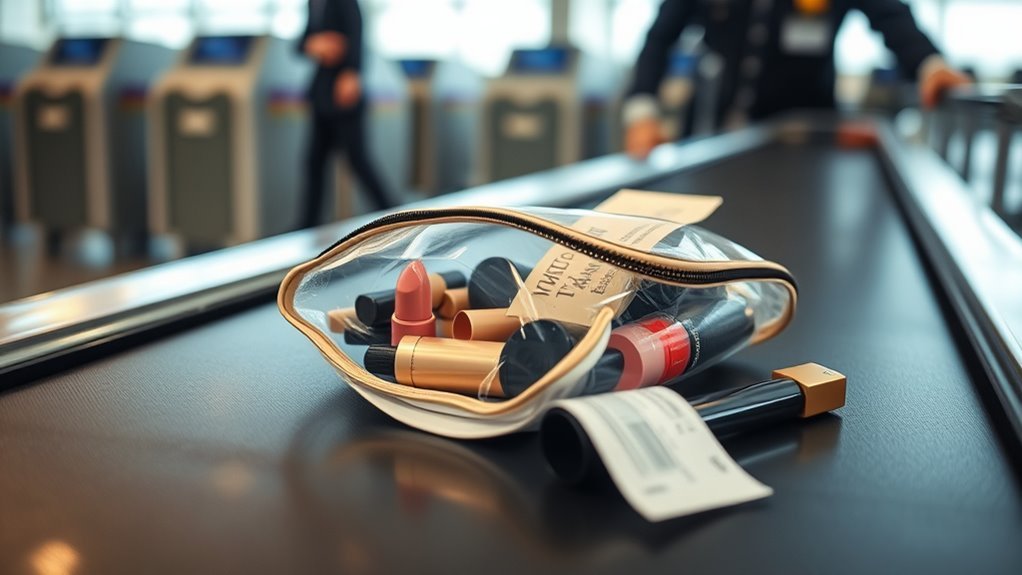
Whether you’re a frequent flyer packing your everyday essentials or an occasional traveler trying to squeeze makeup into limited space, this guide is for you. You’ll learn practical tips tailored to different travel styles: business commuters who need quick touch-ups, vacationers aiming to streamline toiletries, and anyone managing security checkpoints.
You’ll find clear advice on packing efficiently, selecting travel-sized containers, and organizing items for easy access during screening. This helps prevent delays, lost products, or gate-side improvisation.
Quick Answer: Is Makeup Allowed In Carry-On Luggage? (TSA Rules)
Now that you know who benefits from these packing tips, let’s answer the most common question: yes—most makeup is allowed in carry-on luggage, but how you pack it matters. You can bring powders, solid sticks, and tools freely. Liquid foundations, mascaras, and sprays are permitted if they meet carry-on restrictions and are accessible for inspection. Pack fragile compacts securely and keep tinted moisturizers visible. Declare items if asked and be ready to remove them during screening. Use travel-sized containers and organize for quick checks so you won’t be delayed.
| Item type | Allowed? | Tip |
|---|---|---|
| Powders | Yes | Secure lids |
| Solids | Yes | Pack in cases |
| Liquids | Conditional | Have accessible |
| Tools | Yes | Keep sharp safety |
| Sprays | Conditional | Keep in bag |
Which TSA Rule Controls Liquids, Gels, And Aerosols (The 3-1-1 Rule)
Because liquids, gels, and aerosols can pose security risks, the TSA enforces the 3-1-1 rule to limit how much of these items you can carry through the checkpoint.
Because liquids, gels, and aerosols pose risks, TSA limits them with the 3-1-1 rule at checkpoints.
You’re allowed one quart-sized, clear plastic bag containing containers of 3.4 ounces (100 milliliters) or less each. That bag must fit comfortably in your carry-on and be presented separately at screening.
Medications, baby formula, and breast milk get exceptions but may require inspection. If you need larger cosmetics, pack them in checked baggage or buy replacements after security.
Follow this rule to speed screening and avoid confiscation.
How TSA Defines “Liquid” For Cosmetics (What Counts)
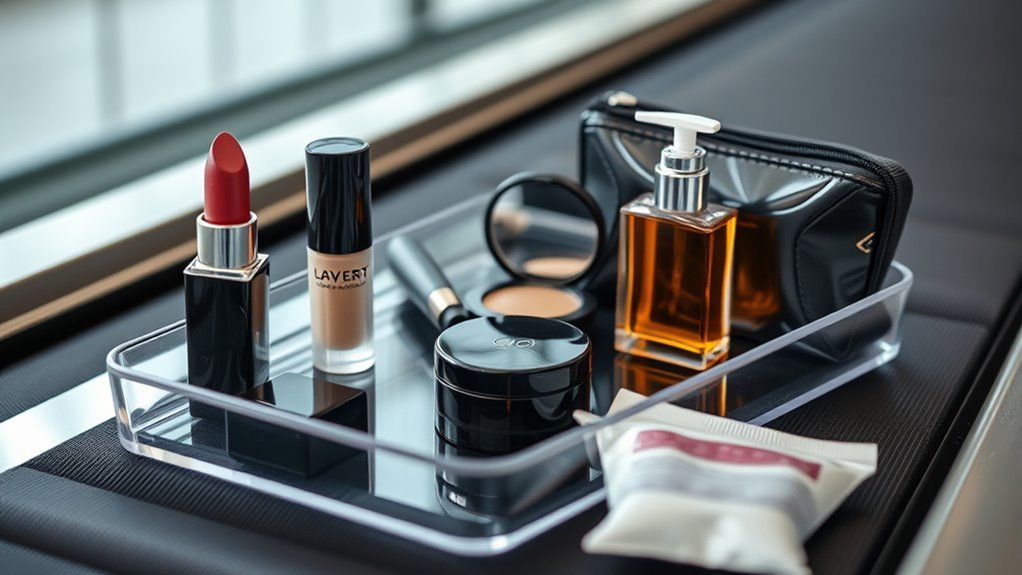
You’ll want to know what the TSA actually considers a “liquid” so you can pack makeup correctly. They treat gels, creams, lotions, pastes, and aerosols as liquids.
While true solids like pressed powders and lipstick bars usually aren’t. There are also exceptions and special cases—think medically necessary liquids, solid stick sunscreen, and items that may be reclassified by TSA officers.
What TSA Calls Liquids
TSA groups a wide range of cosmetic items under its “liquids” rule, and that definition matters when you pack your carry-on. You should treat liquids, gels, creams, pastes, lotions, mascara, liquid eyeliner, foundation, and aerosol-deodorants as subject to the 3-1-1 rule.
Powders and solid sticks may be different (covered later), but if your product flows, squeezes, or comes in a tube or pump, expect it to count as a liquid.
Travel-size bottles must be 3.4 ounces (100 milliliters) or less and fit in a single clear quart bag.
Declare unusual items to TSA officers to avoid delays.
Solid Versus Liquid Makeup
When packing makeup, think in terms of shape and motion: anything that pours, squeezes, pumps, or spreads—like foundations, liquid eyeliners, creams, and gel mascaras—counts as a “liquid” under the 3-1-1 rule.
While solid sticks, compact powders, and solid deodorants generally don’t, you’ll need to place liquid cosmetics in a quart-sized bag and keep each container 3.4 ounces (100 ml) or less.
Solids usually go anywhere in your carry-on without limits, but they can still trigger checks if they look unusual. Be practical, minimize spills, and arrange items for quick inspection.
- Relief
- Confidence
- Ease
- Safety
Exceptions And Special Cases
Although the 3-1-1 rule covers most items, some cosmetics blur the line between liquid and solid, so you should know how the agency defines “liquid” for screening purposes.
TSA treats anything that can flow, be pumped, spread, or squeezed as a liquid — gels, creams, pastes, lotions, serums, mascaras, and most foundations qualify.
Solid sticks, powder compacts, and dry makeup generally don’t.
Aerosols follow liquid rules.
Medically necessary liquids and baby formula get exceptions but must be declared and screened.
When in doubt, keep questionable products in checked baggage or bring small, clearly labeled samples for carry-on.
Which Makeup Counts As A Liquid, Gel, Or Cream
You’ll want to know which products are treated as liquids, gels, or creams so you can pack them correctly. Think liquid foundations, mascara, lip gloss, aerosols and spray products, and creamy products like concealer or balm.
While solid items such as powder compacts and solid deodorant are usually exempt. Knowing the difference between solid versus liquid makeup will help you avoid problems at security.
Liquids, Gels, Creams
Because airport security treats many cosmetics the same as other toiletries, you’ll need to know which products count as liquids, gels, or creams before packing your carry-on. You’ll face limits: containers over 3.4 ounces (100 ml) and unbagged items can be stopped. Think texture and packaging when deciding if something’s regulated.
- Liquid foundations and tinted moisturizers — pourable, squeeze bottles, often detectable as liquids.
- Lip glosses and balms with liquid shine — viscous but treated like gels.
- Cream blushes, concealers, and stick highlighters — creamy texture triggers rules.
- Liquid eyeliners and mascaras — liquid formulations count as liquids.
Solid Versus Liquid Makeup
When packing, think texture not label: solids like powder eyeshadows, pressed bronzers, lipstick bullets, and solid deodorants generally fly free of the 3.4-ounce rule.
While anything that’s spreadable, pourable, or squeezable — liquid foundations, cream concealers, gel eyeliners, and glossy lip products — counts as a liquid/gel/cream and must follow TSA liquid limits.
You should test textures: poke with a fingernail, squeeze a bit, or tap to see if product deforms or transfers.
Transferable, meltable, or soft items belong in your quart-sized bag.
Keep solid sticks, pans, and pressed powders separate for easy screening.
Aerosols And Spray Products
Many spray and aerosol makeup items count as liquids, gels, or creams for TSA purposes, so you’ll need to pack them in your quart-sized bag if they’re over the carry-on limits.
You’ll find aerosols like hairspray, setting spray, and spray foundation are treated as liquids; pump mists and pressurized deodorant-style cosmetics qualify too.
Travel-size cans under 3.4 ounces/100 milliliters fit in your clear bag. If something’s larger, you’ll have to check it or transfer product into compliant containers.
Be mindful of caps and leaks to avoid ruined clothes and anxious moments at security.
- Hairspray
- Setting spray
- Spray foundation
- Pressurized mist
Which Makeup Is Considered A Solid And Exempt
If you’re packing makeup in your carry-on, know that solid forms like lipstick, compact powder, solid deodorant, and stick concealer are treated differently from liquids and gels and are generally exempt from the 100‑ml/3‑1‑1 liquids rule. You can bring solid bars, pressed powders, cream-to-powder sticks and solid balms without placing them in a quart-sized bag. Check product packaging: if it’s a solid you’ll be fine. Below is a quick guide to common solid items.
| Product Type | Example |
|---|---|
| Lip | Lipstick |
| Powder | Compact powder |
| Stick | Stick concealer |
| Balm | Solid balm |
How To Tell If A Product Is An Aerosol Under TSA Rules
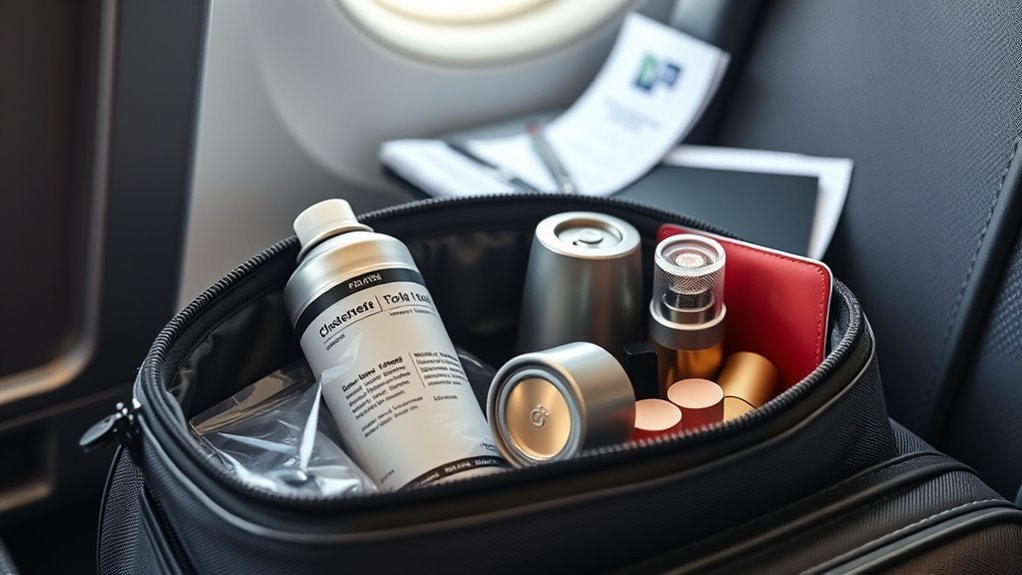
You can usually tell an aerosol by its spray-style nozzle and the need to press a button or pump to release product.
Check the label for words like “aerosol,” “spray,” or warnings about pressurized contents, and look for symbols such as a pressurized can icon or flammable gas pictogram.
If it has a metal can with a fitted actuator and those markings, treat it as an aerosol under TSA rules.
Container Spray Characteristics
Because TSA rules hinge on how a product dispenses, you’ll want to identify whether a makeup item releases a fine mist or relies on pressure-driven ejection—those are the hallmarks of an aerosol. Check feel and sound: a soft continuous spray versus short bursts tells you a lot. Test distance and pattern: aerosols atomize broadly, pump sprays stream.
Weight and valve action matter; pressurized cans resist squeezing. If unsure, don’t assume—bring alternatives.
- Fear: realizing a banned item at security.
- Relief: spotting a compliant pump bottle.
- Frustration: losing a favorite aerosol.
- Confidence: packing wisely and calmly.
Labeling And Symbols
When reading a product label, look for clear words and icons that indicate it’s pressurized—terms like “aerosol,” “spray,” “propellant,” or pictograms of a spray nozzle or a gas cylinder signal aerosol contents. You’ll also spot warnings like “do not puncture” or “flammable” that confirm aerosol. If labeling is vague, check the ingredient list for hydrocarbons or dimethyl ether. When in doubt, treat the item as an aerosol for TSA limits and pack accordingly.
| Label Word | Icon | What It Means |
|---|---|---|
| Aerosol | 🚿 | Pressurized spray |
| Propellant | ⛽ | Gas-driven content |
| Spray | 💨 | Dispenses mist |
| Flammable | 🔥 | Hazardous aerosol |
Allowed Sizes: The 3-1-1 Bag And Per-Container Limits
Although the rules can feel picky, the TSA’s 3-1-1 guideline gives you a simple way to pack liquids and gels in carry-on bags. You’re limited to containers of 3.4 ounces (100 milliliters) or less each, and all must fit inside a single clear quart-sized bag per passenger.
TSA’s 3-1-1 rule keeps liquids under 3.4 oz each, all in one clear quart bag.
That means your foundation, mascara (if liquid), and liquid lipstick must follow size limits, or they’ll be removed. Be mindful: solid cosmetics like pressed powder aren’t counted. Stick to these limits to avoid delays and stress at security.
- Relief — no surprises at the checkpoint.
- Control — one clear bag simplifies screening.
- Confidence — your essentials stay with you.
- Simplicity — clear rules, easy packing.
Packing Travel-Size Liquid Cosmetics The Right Way
When you pack travel-size liquid cosmetics, put them in a clear, sealable bag so they’re easy to inspect.
Stick to containers of 3.4 ounces (100 ml) or less and keep everything within the single quart-sized 3-1-1 bag.
That way you’ll move through security faster and avoid confiscations.
Store Liquids In Clear Bags
Ever wondered how to breeze through airport security with all your favorite travel-size cosmetics? You’ll feel calm when you stash liquids in a clear, resealable bag so agents can scan quickly and you won’t fumble under pressure.
Use a single quart-sized bag and arrange bottles upright with labels facing up. Keep creams, serums, and sprays visible and avoid overpacking.
Seal the bag fully before you reach the checkpoint to prevent spills and awkward moments. These simple steps protect your products and reduce stress, letting you focus on the trip instead of juggling toiletries.
- Visibility
- Order
- Security
- Peace
Follow 3-1-1 Rule
Now that your liquids are organized in a clear quart bag, apply the TSA 3-1-1 rule to keep everything compliant and moving through security fast. You’ll limit each liquid cosmetic to 3.4 ounces (100 ml) or less, place all containers in one quart-size, resealable bag, and carry only one bag per passenger.
That means travel-size foundations, creams, serums, and sprays must fit the limit. If something exceeds 3.4 ounces, check it or transfer contents to a smaller container.
Keep the bag accessible for screening, and don’t forget solid makeup and powders aren’t subject to the liquid limit.
Lipstick, Solid Perfume, And Balms: Why Solids Travel Freely
Because solid cosmetics don’t count as liquids, you can pack items like lipstick, solid perfume, and balm in your carry-on without worrying about the 3.4-ounce/100-milliliter liquid rule. You’ll appreciate the freedom: solids sit neatly in a pocket, won’t spill, and pass through screening without the 3-1-1 fuss.
Choose sturdy tins or tubes, label if needed, and keep delicate finishes wrapped. Solid options also soothe travel skin and boost confidence midflight. Pack them where you can reach them for touch-ups or comfort.
- Confidence restored
- No leaks
- Easy access
- Travel-friendly routine
Mascara, Liquid Eyeliner, And Brow Gel: 3-1-1 Requirements
Remember the TSA’s 3-1-1 liquid rule when packing mascara, liquid eyeliner, and brow gel—each must fit in a 3.4 oz (100 ml) container and go in your single quart-sized clear bag.
Keep containers clearly labeled and consider travel-size tubes to save space and avoid spills.
You’ll also want to stand tubes upright or tuck them between soft items to prevent leakage during transit.
3-1-1 Liquid Rule
If you’re packing mascara, liquid eyeliner, or brow gel in your carry-on, they must follow the TSA 3-1-1 liquid rule: each item needs to be in a container of 3.4 ounces (100 ml) or less. All containers must fit into a single clear quart-sized bag, and you’re limited to one such bag per passenger.
Pack thoughtfully: squeeze excess air from tubes, seal caps tightly, and place the quart bag where security will easily access it. You’ll avoid delays and potential disposal of favorites.
Consider travel-sized backups to ease stress.
- Relief
- Confidence
- Preparedness
- Calm
Allowed Container Sizes
When packing mascara, liquid eyeliner, or brow gel in your carry-on, keep each tube or bottle at 3.4 ounces (100 ml) or less so it fits the TSA 3-1-1 liquid rule; place all containers in a single quart-sized, clear, resealable bag and present it separately at screening. You’ll guarantee compliance and speed up security checks. Below is a quick reference:
| Product | Max Size | Notes |
|---|---|---|
| Mascara | 3.4 oz / 100 ml | Tube counts as liquid |
| Liquid Eyeliner | 3.4 oz / 100 ml | Includes pen-style liquid |
| Brow Gel | 3.4 oz / 100 ml | Gel/cream considered liquid |
Packing Tips For Mascara
Because mascara and similar eye products count as liquids under the 3-1-1 rule, pack each tube (and any liquid eyeliner or brow gel) in containers of 3.4 oz/100 ml or less, and place them in a clear quart-sized bag. Seal caps tightly to prevent leaks, wipe applicators dry, and keep originals or travel-sized versions.
Put the bag within easy reach for screening, and consider spare sealed units in checked luggage. Don’t risk sticky messes—replace old tubes before you go.
- Relief: no last-minute panics
- Confidence: eyes stay sharp
- Ease: smooth security checks
- Pride: you packed smart
Liquid Foundation And BB/CC Creams: What You Must Do
Although you can bring liquid foundation and BB/CC creams in your carry-on, you must follow the TSA 3-1-1 rule: containers 3.4 ounces (100 ml) or less, all fit inside a single clear quart-sized bag, and one bag per passenger.
Pack travel-size bottles or transfer product into leakproof sample containers and label them so security and you can identify contents quickly. Squeeze-tube primers and cushion compacts that leak count as liquids, so include them in the quart bag.
If you need more product, place full-size items in checked luggage. Keep the bag accessible for screening to speed inspection.
Powder Cosmetics And When They Trigger Extra Screening
If you pack loose powders, setting sprays, or powdered bronzers in your carry-on, know that TSA may pull them for additional screening—especially containers larger than 12 ounces (350 ml) or loose product that could mask prohibited items.
You’ll be asked to remove large powder containers and place them in a bin, and loose powders may be swabbed or inspected.
To speed things up, keep powders in original, labeled packaging or small clear bags.
Expect delays if a substance looks suspicious; officers will test or open it.
Stay calm and cooperative to minimize stress.
- Frustration
- Relief
- Embarrassment
- Reassurance
Cream Blushes And Stick Foundations: Borderline Cases
Cream blushes and stick foundations sit in a gray area between solid and liquid, so you’ll want to check how they’re labeled and packaged. If they’re in a solid stick or compact, they usually pass as solids.
However, creamy tubs or pot textures can attract extra screening. To avoid delays, keep them accessible in a clear pouch and be ready to remove them for inspection if an agent asks.
Solid Vs. Liquid Classification
When you’re deciding whether a cream blush or stick foundation counts as a solid or a liquid for carry-on rules, think about how it behaves at room temperature and how it’s packaged. You want clarity: solids that stay put and come in stick form usually pass as non-liquids, but soft creams in tubs can be treated as liquids. Check labels, texture, and whether it smears when pressed.
If it melts or flows, expect TSA to apply the 3-1-1 rule. Keep emotional stakes in mind—packing right avoids stress and delays.
- Relief
- Confidence
- Frustration avoided
- Smooth travel
TSA Screening Tips
Now that you’ve sorted solids from liquids, you’ll want to handle borderline cream blushes and stick foundations with a few screening-focused steps to avoid surprises at the checkpoint. Keep products accessible, label them if possible, and be ready to separate doubtful items for inspection. If a stick’s texture looks creamy, expect questioning; offer to open it or show a swab. Consider transferring small amounts into clear travel jars under 3.4 oz to be safe. Be polite and brief with officers; cooperation speeds screening.
| Item | Action | Tip |
|---|---|---|
| Cream blush | Separate | Clear jar |
| Stick foundation | Offer demo | Swipe test |
| Uncertain | Declare | Stay calm |
Nail Polish And Remover: Flammability And Aerosol Considerations
Because nail polish and remover often contain flammable solvents, you’ll need to pack them thoughtfully to meet airline and TSA rules. Keep polish and non-aerosol remover in containers 3.4 ounces (100 ml) or less and place them inside your quart-sized liquids bag. Larger bottles belong in checked baggage.
Pack nail polish and non‑aerosol remover in 3.4 oz (100 ml) bottles inside your quart-sized liquids bag.
Aerosolized removers or pressurized polish removers may be restricted—check airline policies before flying. Seal caps and double-bag to prevent leaks. At security, declare anything that looks hazardous if asked.
- Panic-reducing: follow size rules.
- Relief: double-bag spills.
- Annoyance-avoiding: check airline limits.
- Confidence: pack smart.
Spray Sunscreen, Setting Spray, And Hairspray: Aerosol Rules
If you’re packing spray sunscreen, setting spray, or hairspray, note that aerosols face stricter limits than liquids: most airlines and TSA treat them as restricted, with size caps (often 3.4 oz/100 ml in carry-on) and total quantity or propellant rules that can vary by carrier.
You should check container labeling, carry only travel-size aerosols in your quart bag, and avoid items marked “flammable” beyond allowed limits.
Consider solid or pump alternatives to reduce risk.
At security, declare aerosols if asked; oversized cans may need to go in checked baggage or be left behind per airline or international rules.
Perfume And Cologne: Carry-On Strategies For Liquids
Wondering how to bring your favorite scent through security? You’ll need to follow liquid rules: containers must be 3.4 oz (100 ml) or less and fit inside a single clear quart bag. Pack full bottles carefully to avoid leaks and keep them accessible for screening. Consider travel-sized purchases to save space.
- Choose small, sturdy bottles to prevent spills and anxiety.
- Seal lids with tape or place bottles in zip bags for reassurance.
- Store the quart bag near the top of your carry-on for easy access.
- Keep sentimental scents with you to stay calm on travel days.
Reusable Perfume Atomizers And Safe Decanting Practices
Once you’ve sorted your perfumes into travel-size bottles for security, reusable perfume atomizers offer a neat, leak-proof way to carry multiple scents without hauling full bottles. You’ll decant carefully: sanitize equipment, use a funnel or syringe, avoid overfilling, and test sprays. Label each atomizer with name and concentration so you grab the right scent. Pack atomizers in a clear quart-sized bag with other liquids, and place them atop your carry-on for quick screening.
| Item | Action | Tip |
|---|---|---|
| Atomizer | Sanitize first | Use glass-lined sprayer |
| Filling | Use syringe/funnel | Fill under 100ml |
| Labeling | Name & % | Permanent marker |
| Packing | Clear bag | Keep accessible |
Makeup Remover Wipes, Solid Cleansers, And Pack-If-Tips
When you’re traveling, makeup remover wipes and solid cleansers give you quick, mess-free options for cleansing without carrying liquid bottles: wipes handle on-the-go touch-ups and solids cut down on TSA liquids while lasting longer per ounce.
Makeup-removing wipes and solid cleansers offer mess-free, TSA-friendly cleansing for quick refreshes on the go.
You’ll appreciate wipes for late-night flights and quick refreshes; keep them sealed to avoid leaks and scent transfer. Solid cleansers belong in a small tin or travel case to stay dry and compliant.
Pack-if tips: choose biodegradable wipes, dry solids before storing, stash wipes in outer pockets for easy access, and replace after long trips to avoid bacteria.
- Pick comforting scents.
- Prioritize convenience.
- Think sustainability.
- Protect your skin.
How To Pack Glass Cosmetic Bottles To Avoid Breakage And Spills
When you’re packing glass cosmetic bottles, wrap each one in a soft cloth or bubble wrap to cushion it from bumps.
Place wrapped bottles upright in a sturdy, leak-proof plastic bag to contain any spills.
That way you’ll protect the bottle and your other items if something breaks.
Wrap Bottles Individually
If you’re carrying glass cosmetic bottles, wrap each one separately to prevent cracks and leaks during transit. Use soft materials—microfiber cloth, bubble wrap, or thick socks—and secure with tape or rubber bands. Cushion caps and pumps, and orient bottles upright inside your bag.
Place fragile items in the center, surrounded by clothing for extra shock absorption.
- Imagine a shattered favorite: protect it now.
- Think about the stain on your clothes: avoid that mess.
- Consider lost product and wasted money: prevent it.
- Picture smooth airport arrival: pack with care.
Secure In Leak-Proof Bags
Because glass can shatter and liquids can seep, seal each bottle in a leak-proof bag before it goes into your carry-on. Use clear, resealable plastic bags designed for travel—quart-size for TSA liquids—and squeeze out excess air to limit movement.
Place each wrapped bottle upright, grouped by fragility, and add a layer of absorbent material like a folded travel towel or paper towel inside the bag to catch minor leaks.
Double-bag high-value or creamy products. Label bags if you’ll need quick access at security.
Inspect seals before packing and periodically during travel to prevent messy surprises and lost products.
Organizing Your Clear Quart Bag For Faster Security Screening
Though security lines can feel hectic, arranging your clear quart bag thoughtfully speeds screening and cuts stress. You’ll want essentials visible and grouped so agents can scan quickly.
Place flat, frequently used items on top and heavier containers at the bottom to prevent crushing. Roll up small brushes in a sleeve, tuck lids tightly, and face labels outward for instant ID.
- Lip balm, mascara, and travel-size foundation — comforting and ready.
- Moisturizer and cleanser — soothing reassurance.
- Small tools (tweezers, clippers) — calm preparedness.
- Medication or sensitive items — prioritized peace of mind.
If TSA Asks To Open Or Test A Cosmetic: What To Expect
If TSA asks to open or test a cosmetic, they’re usually checking for prohibited liquids, powders, or suspicious residues that can’t be cleared on the X-ray.
You’ll be asked to open the container or allow a swab test, which is noninvasive and usually done in front of you; officers may use a handheld device or send the swab for analysis.
If the item fails inspection it may be removed, discarded, or returned to checked baggage if available, so be prepared to comply.
Why TSA May Inspect
When TSA asks to open or test a cosmetic, they’re trying to confirm it’s safe and not a prohibited liquid, gel, or powder disguised in packaging, so stay calm and cooperate. You might get inspected because items look suspicious on X-ray, exceed liquid limits, are unlabeled, or resemble restricted substances.
Officers prioritize safety, but you’ll want to protect fragile or valuable makeup by explaining contents clearly. Be polite, answer questions, and accept screening to avoid delays or confiscation.
Inspections aren’t personal—just routine security checks to keep everyone safe.
- Anxiety at checkpoints
- Frustration over delays
- Relief after clearance
- Annoyance if confiscated
How Testing Is Done
Because TSA agents need to confirm a cosmetic is safe and allowed, they’ll usually ask you to open the item and may swab it for testing; stay calm and follow their instructions so the process goes quickly.
You’ll be asked to remove lids or caps and show contents; solid items generally need minimal handling, while creams, gels, and liquids may be squeezed or tilted.
An agent may wipe the surface with a test swab, which goes into a handheld detector or sent to a lab.
You can watch but shouldn’t touch testing equipment.
Answer questions briefly and provide purchase or ingredient info if asked.
Handling Results And Restrictions
After the agent tests your cosmetic, they’ll tell you the result and what that means for carrying the item on the plane. If it passes, you’ll usually keep it in your bag. If it fails, they’ll explain why and offer options: disposal, placement in checked baggage if available, or surrender. You can ask brief questions. Stay calm and cooperative to speed the process. If you disagree, request a supervisor politely. Keep receipts for valuable items when possible.
- Relief — you kept a favorite product.
- Frustration — losing a costly item.
- Annoyance — delayed through screening.
- Acceptance — safety first.
Common Items TSA Confiscates And Why
Although most toiletries are fine in your carry-on, the TSA often confiscates certain makeup items because they pose security, safety, or liquid-limit issues. You should expect removals when items exceed liquid limits, can be mistaken for weapons, or contain prohibited ingredients. Know what to pack, what to declare, and what to stash in checked baggage.
| Item | Why confiscated |
|---|---|
| Aerosol hairspray | Flammable, pressure concern |
| Large foundation bottles | Exceeds 3.4 oz liquid rule |
| Solid makeup with hidden compartments | Could conceal contraband |
| Nail polish remover | Flammable solvent, banned in cabin |
Exceptions For Medically Necessary Liquids And Cosmetics
If you need medications or certain cosmetics for a medical condition, tell the TSA officer and keep them accessible for inspection—items like prescription liquid meds, saline for contact lenses, and medicated creams often exceed the 3.4-ounce limit but are allowed when declared.
You’ll want clear labeling or a doctor’s note if possible, and be ready to demonstrate necessity. Declare items calmly to avoid delays. Pack extras in an organized pouch for quick screening.
Remember TSA may test substances.
- Relief when you show documentation
- Confidence during security checks
- Reassurance for travel anxiety
- Safety for your health
Traveling With Prescription Topical Medications And Gels
If you need prescription topical medications or gels, you can bring them in your carry-on. Keep them in their original labeled containers and be ready to show the prescription or a doctor’s note at security.
Note that while medically necessary meds are allowed beyond the usual 3.4 oz limit, gel consistency items may still be subject to quantity rules and screening.
Prescription Meds Allowed
Many travelers bring prescription topical medications and gels in their carry-on, so you should know the rules that make this easy. You can pack creams, ointments, and medicated gels, including sunscreen or steroid creams, in your carry-on even if they exceed typical liquid limits, but you should declare them at security.
Keep them in original containers when possible and bring your prescription or a doctor’s note to avoid delays. Store items in a clear bag for quick inspection. These steps protect your treatment and reduce stress:
- Keep prescriptions handy.
- Use original labeling.
- Declare at screening.
- Pack accessible.
Gel Quantities Rules
Now that you’ve handled labeling and documentation for prescription topicals, it’s important to understand how security screens treat gel quantities.
You can carry medically necessary gels, creams, and ointments in reasonable quantities exceeding 3.4 ounces (100 ml), but you should declare them at screening. Keep containers separate and accessible for inspection; TSA may test or X-ray them.
Nonprescription gels must follow the 3-1-1 rule: each container 3.4 ounces or less, all fit in one clear quart-sized bag. Pack a doctor’s note or prescription when possible to smooth screening and avoid delays.
International Differences: Foreign Airport Liquid Rules To Watch
When you travel abroad, liquid rules can change dramatically from one country to another, so check local airport regulations before packing. You’ll face varied limits, different container rules, and unique security interpretations that can surprise you. Research the specific airport and country to avoid losing pricey cosmetics or facing delays.
- Some countries ban aerosols you thought were fine — frustrating at the counter.
- Certain airports require clear, resealable bags — pack one or risk dumping.
- Duty-free rules may let you carry sealed liquids, but connections can spoil that.
- Security officers’ discretion varies — expect inconsistency and stay calm.
Airline Carry-On Size Limits Versus TSA Liquid Rules
Check your airline’s carry-on size limits before packing, because a bag that fits TSA liquid rules might still be too big for the cabin.
You’ll need to balance the 3.4-ounce/100-milliliter container rule and quart-sized bag requirement with space constraints and carry-on dimensions.
That means prioritizing which liquid cosmetics you bring and where they’ll go in your allowed carry-on.
Carry-On Size Limits
Because airlines set different size and weight limits for carry-ons, you’ll need to plan how your makeup and liquids fit alongside other items—while the TSA regulates what liquids you can bring through security, it doesn’t control bag dimensions, so a compliant 3-1-1 toiletry bag could still be rejected if your carry-on is oversized.
Check your airline’s dimensions before packing, prioritize essentials, and use compact cases to avoid gate checks. You’ll feel less stressed if you measure and weigh bags at home.
Consider these quick priorities to keep control and calm:
- Measure your bag precisely
- Choose slim makeup palettes
- Limit duplicates
- Weigh before leaving
Liquid Rule Interaction
Juggling TSA’s 3-1-1 liquid rule with airline carry-on size limits means you’ll need to think about both volume and physical space, since compliance with one doesn’t guarantee compliance with the other.
You can pack multiple 3.4-ounce makeup bottles, but bulky palettes, jars, or oversized travel cases may exceed airline cabin dimensions or weight limits. Measure your bag and arrange items to avoid deformation or spills.
Use clear quart-sized bags for screening and consolidate products—solid sticks, samples, or transfer into compliant containers—to maximize space.
When in doubt, check both TSA guidance and your airline’s carry-on policy before you travel.
Checked Baggage Rules For Cosmetics And When To Use It
When you’re packing for a flight, it’s smart to move most liquids, gels, and aerosol cosmetics into checked baggage to avoid the TSA’s 3-1-1 limit for carry-ons. Checked bags let you bring full-size foundations, hairsprays, and perfume bottles without juggling quart bags.
You should, however, pack securely to prevent leaks and follow airline hazardous materials rules for aerosols and flammables. Consider fragile palettes and cream products in the center, cushioned by clothes.
Use locked or sealed containers if needed, and keep essential touch-up items in your carry-on in case baggage is delayed.
- Relief at avoiding restrictions
- Confidence in full-size products
- Worry-free packing
- Calm if delays occur
Carrying Makeup On Domestic Versus International Flights
Packing most cosmetics in checked baggage makes domestic travel straightforward, but international flights can change the rules you need to follow.
For domestic trips, you’ll stick to TSA’s 3-1-1 liquid limits for carry-on creams, gels, and aerosols, and solid makeup generally moves freely.
International travel forces you to check both departing and destination country security rules—some countries enforce stricter liquid limits, prohibit specific ingredients, or require declarations.
You should research the airline and airport guidelines, separate liquids in a clear bag, and consider carrying essential solid items and travel-size containers.
When in doubt, pack restricted items in checked luggage.
Packing Makeup For Long Trips Versus Short Layovers
Because your time in transit changes what you need, prioritize differently for long trips versus short layovers. For long trips, pack full-size essentials in checked luggage and keep a trusted emergency kit in carry-on: a face wipe, tinted moisturizer, mascara, and a small concealer.
For short layovers, streamline to quick fixes that refresh you between gates without unpacking a routine. Think multi-use items and spill-proof containers that won’t slow you at security.
- Carry an emergency kit to feel confident.
- Choose multi-use items to save space.
- Pack spill-proof pieces to avoid stress.
- Keep essentials accessible for quick touch-ups.
Best Travel Makeup Formats To Avoid Checkpoint Issues
If you want to sail through security and still look put-together, pick makeup formats that meet TSA liquid rules and resist leaks. Choose solid sticks for foundation, concealer, and blush—they’re leakproof and quick to stow.
Powder compacts for bronzer, setting powder, and eyeshadow clear screening faster than creams.
Pencil liners and solid brow gels stay compliant and won’t trigger extra checks.
Pressed cream-to-powder formulas in compact pans combine coverage with spill resistance.
If you need liquids, keep them under 3.4 ounces inside your quart-sized bag and avoid bulky tubes that can burst under pressure.
Top Travel-Sized Cosmetic Brands And Containers
Now that you’ve picked formats that clear security with less fuss, it helps to know which brands and containers make travel-friendly products. You’ll want reliable names and sturdy packaging so your essentials survive transit and feel effortless to use on the go.
Choose compact palettes, leakproof pumps, and TSA-sized tubes from brands known for travel lines. Think durable materials and clear labeling so checkpoint and gate moments stay calm.
- Glossier: minimalist, sturdy, emotional comfort.
- Sephora Collection: variety, trusted, reassuring.
- Clinique: durable, hypoallergenic, dependable.
- Tarte: long-wear, cheerful, confidence-boosting.
DIY Decanting: Safe Bottles, Labeling, And Hygiene Tips
When you decant makeup for carry-on, pick leakproof bottles and sturdy jars so products survive being jostled in transit. Use soft silicone or PET travel bottles for liquids and small screw-top jars for creams and balms.
Fill leaving slight headspace to accommodate pressure changes, and tighten caps securely. Label each container with product name and date using waterproof tape or a printed sticker so you can identify contents quickly.
Clean tools and hands before transferring to prevent contamination, sanitize containers between refills, and store items in a clear, resealable bag to contain any accidental spills.
Security Screening Hacks To Speed Up Your Checkpoint Experience
Because airports move fastest when travelers prepare, take a few simple steps to breeze through security. You’ll feel calmer and faster if you organize your cosmetics and documents before you reach the line.
Keep liquids under 3.4 ounces in a clear quart bag, stow brushes and palettes where they’re visible, and wear shoes you can slip off quickly. Have ID and boarding pass ready on top.
- Consolidate liquids to reduce fumbling.
- Use a clear pouch for instant visibility.
- Wear easy shoes to save time.
- Place makeup in an accessible spot to avoid delays.
What To Expect During TSA PreCheck: Makeup Screening Differences
If you’ve streamlined your carry-on for standard security, you’ll notice a few differences with TSA PreCheck that can make makeup screening quicker and less fussy.
With PreCheck, you’ll usually keep shoes, belts and laptops on, and you often won’t need to remove most toiletries from your bag. Small cosmetics—powders, palettes, tubes—typically pass through X-ray without extra handling.
Expect fewer bag checks and shorter lines, though agents may still swab items or ask you to open a container if something looks unclear on the scanner.
PreCheck speeds things up, but stay ready to comply with an agent’s brief request.
How Airport Security Handles Cosmetics After A Liquid Spill
Although spills happen, security teams have clear steps to keep you and your fellow travelers safe and moving: officers may pause the screening line, isolate the affected items, and inspect or swab the residue to identify the substance. You’ll be asked brief questions, and you should cooperate calmly; that helps speed things up and reduces stress for everyone.
If a spill occurs, officers may pause screening, isolate items, and inspect residues—cooperate calmly to speed resolution.
Depending on results, staff may dispose of contaminated items or let you keep them after cleaning. Expect a short delay and possible secondary screening of your bag.
- Frustration — it’s normal, but stay calm.
- Relief — quick resolution often follows.
- Embarrassment — staff deal with it routinely.
- Gratitude — clear instructions ease recovery.
Replacing Confiscated Or Lost Makeup At The Airport
After security disposes of or holds onto a beloved product, you’ll want quick options to replace what you lost or left behind. Head to airport shops or vending machines for basics like mascara, lip balm, and travel-size foundations.
Duty-free stores often carry higher-end items without immediate security restrictions, and convenience stores near gates stock essentials. If you need shade matching, ask sales staff for swatches or samples before buying.
Consider compact, multiuse products to cover eyes, lips, and cheeks. Keep receipts for reimbursement claims through your airline or travel insurance, and pack replacements in a clear, compliant bag.
How To Contact TSA And Options For Confiscated Items
When TSA takes an item or you think something went missing, contact the TSA Contact Center promptly so you can file a report and learn your options for recovery or reimbursement. You’ll need the screening location, date, flight number, and descriptions or photos of the items.
File a Property Loss/Recovery Report online or ask an officer for forms before you leave the airport. Keep receipts and packing photos for claims. If items were prohibited, reimbursement isn’t guaranteed, but documented losses may be considered.
File a Property Loss/Recovery Report online or get forms before leaving; keep receipts and photos—prohibited items may not be reimbursed.
- Frustration — document everything immediately.
- Urgency — act before evidence fades.
- Relief — a clear report helps.
- Resolve — follow up persistently.
Top Mistakes That Cause Makeup Confiscation (Real Examples)
If you want to avoid losing your makeup at security, know the common mistakes that trigger confiscation—overfilled liquids, unlabeled aerosols, and hidden sharp tools top the list.
You’ll get caught if you pack oversized liquid foundations or sprays that exceed the 3.4-ounce rule, or stash aerosol cans without clear labels. Forgetting to separate gels and creams into a clear quart bag invites extra scrutiny.
Packing scissors, metal tweezers, or sharp eyelash curlers in carry-on without declaring them risks removal. Also, disguised containers and unreported battery-powered devices can slow you down and lead to confiscation.
Checklist: How To Pack Makeup For Carry-On Before You Leave
Now that you know what gets flagged or confiscated, use this neat checklist to pack your makeup so security checks go smoothly and you keep the items you need. You’ll feel calmer and travel-ready when you sort, secure, and simplify your kit before you leave.
- Choose essentials only — toss duplicates and travel-size liquids into a clear quart bag.
- Put creams, gels, and liquids in leak-proof containers and seal with tape or cling wrap.
- Cushion fragile compacts and palettes with cotton pads or clothing to prevent breaks.
- Keep your quart bag accessible at the top of your carry-on for quick display.
Quick Reference: Which Common Cosmetics Follow 3-1-1 And Which Don’t
Because travel security treats liquids, gels, and creams differently than solids, you’ll want a quick, clear list of which cosmetics fall under the 3-1-1 rule and which don’t.
Liquids/gels/creams that must follow 3-1-1: foundation (liquid/cream), concealer tubes, liquid highlighter, mascara, lip gloss, cream blush, liquid eyeliner, sunscreen, liquid primer, micellar water.
Items that don’t: solid bar soap, powder eyeshadow, pressed powder, solid perfume, lipstick bullets, solid deodorant, dry shampoo in powder form, false lashes, compact bronzer.
When in doubt, transfer creams to travel-size clear bottles and label them.
Frequently Asked Questions
Can I Bring Makeup Brushes With Liquid Residue Through Security?
Yes — you can bring makeup brushes with liquid residue, but you’ll need to clean or pack them so pooled liquids fit the 3.4-ounce rule; otherwise TSA may seize them, so wipe brushes and use sealed containers.
Are Solid Stick Sunscreens Treated Like Cosmetics or Toiletries?
Solid stick sunscreens are treated like toiletries, not cosmetics, so you’ll need to follow TSA liquid/gel rules if they’re soft or pasty; fully solid sticks usually aren’t limited, but pack them accessibly for screening.
Do Travel-Size Refills Count Toward Airline Carry-On Weight Limits?
Yes — travel-size refills count toward your carry-on weight limits; airlines weigh the bag as a whole, so every refill adds weight. You should pack strategically, check your carrier’s limit, and remove items if you exceed it.
Can I Carry Aerosol Dry Shampoo in Checked Luggage Instead?
Yes — you can pack aerosol dry shampoo in checked luggage, but airlines and countries limit size and quantity, so check carrier rules and hazardous materials policies; damaged or leaking cans might be prohibited, so pack them securely.
Will Duty-Free Cosmetic Purchases Bypass 3-1-1 on Connecting Flights?
Yes — duty-free liquids in sealed, tamper-evident bags usually bypass 3-1-1 on international-to-international connections, but if you re-clear security domestically or the bag’s seal is broken, you’ll need to comply with carry-on limits.
Conclusion
You can bring most makeup in your carry-on, but you’ve got to follow TSA’s 3-1-1 liquid rule for creams, gels, aerosols and anything that behaves like a liquid. Solid sticks and powders are usually fine, while lotions, mascaras, liquid foundations and spray perfumes need container limits and a quart bag. Pack thoughtfully, label items if needed, and know how to contact TSA if something’s taken. With a quick checklist, you’ll sail through security.