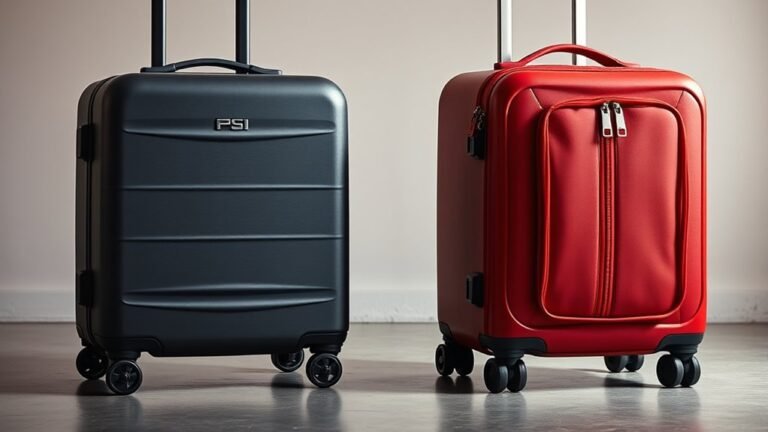
Is It Better to Roll or Fold Clothes in a Suitcase?
You should mix rolling and folding based on fabric and garment type to save space and limit wrinkles. Roll casual, stretchy, and lightweight items like tees, leggings, and knits to compress volume and keep creases soft. Fold structured or delicate pieces—suits, dress shirts, silk, linen, and heavy wool—along natural seams with tissue or padding to preserve shape. Use packing cubes or folders to organize. Keep going and you’ll pick up quick packing plans and fabric-specific tips.
Quick Answer: When to Roll vs Fold
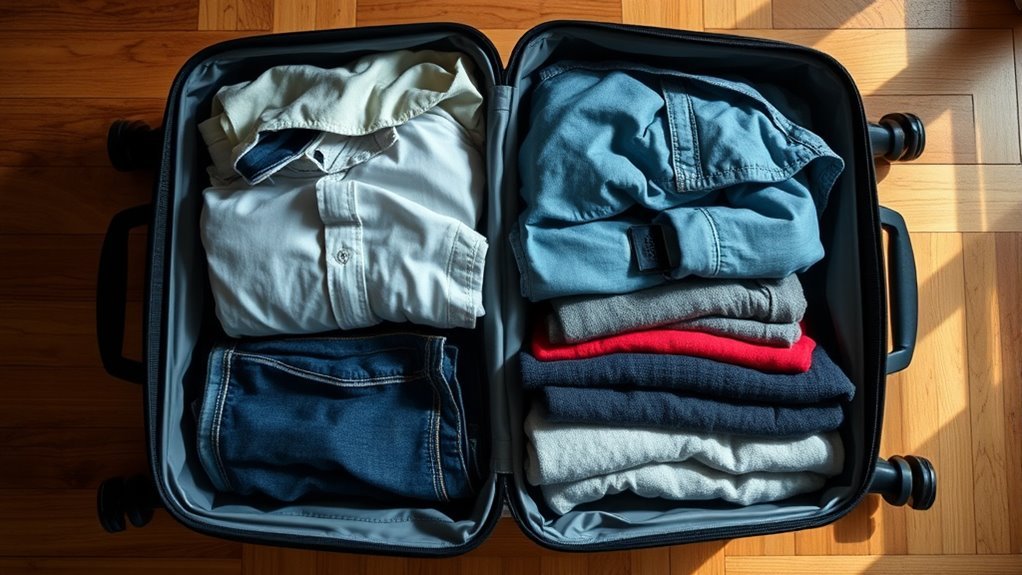
While rolling usually saves space and reduces wrinkles for casual items like T-shirts and jeans, you should fold structured garments—suits, dress shirts, and tailored jackets—to keep their shape.
You’ll roll soft items: underwear, socks, tees, and lightweight pants to maximize space and limit creases.
Fold bulky or structured pieces flat, using tissue or packing folders for support.
Reserve rolling for durable fabrics and layering pieces; fold delicate fabrics and anything with shoulder shaping.
For mixed packing, combine methods: roll casual essentials into gaps and lay folded items on top to preserve appearance and optimize suitcase layout.
How to Choose: Space, Wrinkles, Accessibility
Because you’re balancing three priorities—space, wrinkles, and accessibility—you’ll pick rolling or folding depending on which matters most for the trip.
Balance space, wrinkles, and access—roll for space, fold for creases, and mix methods to suit your trip.
If space is critical—long trips or small bags—roll to compress items and fit extras.
If wrinkle prevention tops your list—business meetings or formal events—fold and layer garments flat or use packing folders to protect creases.
If you need quick access—frequent outfit changes—fold bulky items and place them where you can reach them, or roll small pieces into cubes for visible organization.
Mix methods: roll casual wear, fold dressier pieces, and prioritize based on daily needs.
Which Fabrics Roll Best
Synthetic blends—polyester, nylon, and spandex mixes—roll compactly and dry fast, making them travel-friendly. Thin wool or merino layers also roll nicely and control odor.
Avoid heavy denim and thick sweaters when aiming to maximize space. Delicate silks can roll if you’re careful, but they require protective wrapping to prevent surface marks while packed.
Which Fabrics Need Folding
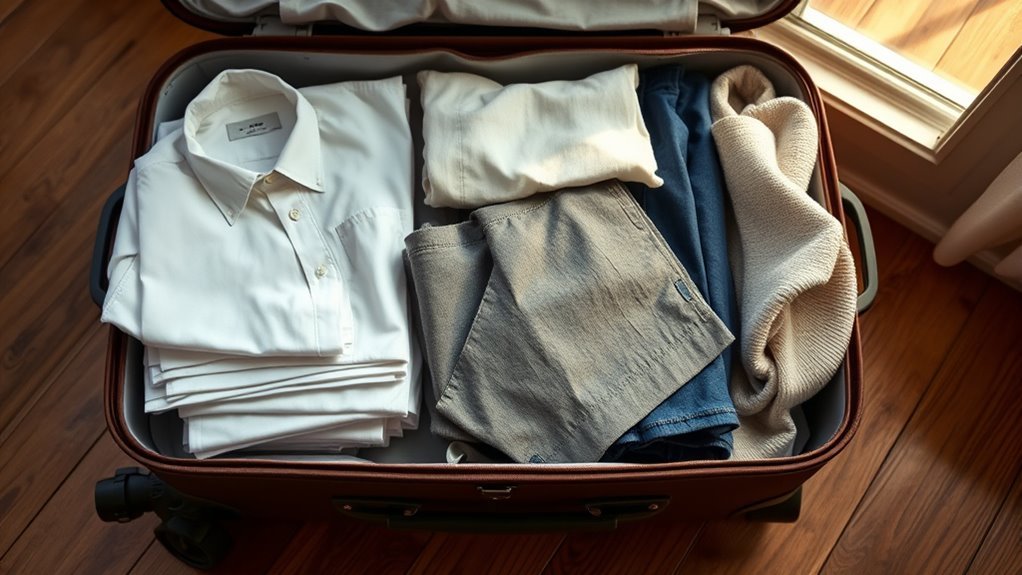
You’ll want to fold delicate natural fabrics like silk, linen, and cashmere to prevent stretching and snagging.
Likewise, structured heavy materials—blazers, wool coats, and denim—keep their shape better when folded and packed flat.
In the next part, we’ll cover folding techniques that minimize creases and protect these pieces.
Delicate Natural Fabrics
When packing delicate natural fabrics like silk, linen, cashmere, and fine cotton, treat them gently and fold rather than roll to prevent stretching, creasing, and surface damage. You’ll fold along natural seams, smoothing fibers as you go to avoid sharp creases.
Use acid-free tissue or a lightweight cotton layer between folds to reduce friction and prevent shine. For sweaters, fold flat to maintain shape and place in breathable pouches if possible.
Lay shirts face down, button or snap to hold form. Position these items on top of heavier pieces to minimize compression and check them upon arrival for quick airing.
Structured Heavy Materials
After you’ve handled delicate natural fabrics with gentle folds, turn your attention to structured, heavier materials that need folding to keep their shape. You’ll fold blazers, wool coats, dress shirts, denim, and tailored trousers to preserve lines and avoid creasing in wrong places. Use tissue or thin padding at shoulders, close buttons, and lay items flat; stack heavier pieces at the bottom. Rolling would distort collars and lapels and create bulky lumps. Pack these items where they won’t shift.
| Item | Why fold |
|---|---|
| Blazer | Preserve lapels |
| Wool coat | Maintain structure |
| Shirt | Protect collar |
| Denim | Avoid misshaping |
Tight Rolling for Casual Clothes
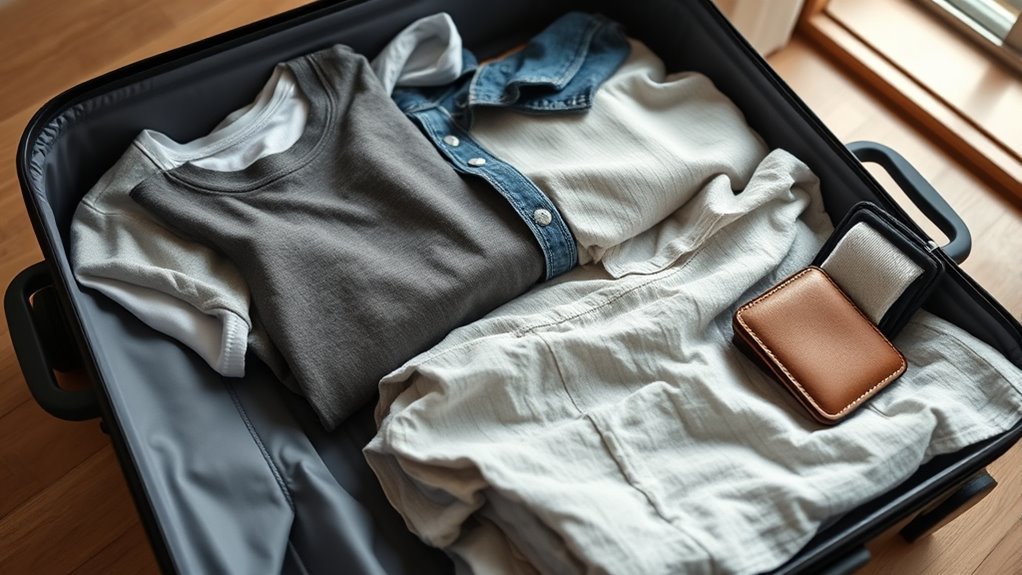
Wondering how tight rolling can change your casual-packing game? You’ll compress tees, jeans, and shorts into compact cylinders that save space and let you fit extra items.
Roll each piece smoothly, press out air, and keep seams aligned to avoid bulk. Use firm, consistent pressure so rolls stay slim and don’t unspool.
Pack rolls side-by-side to create a stable layer and maximize suitcase volume. Tight rolling minimizes shifting during transit, so your casual wardrobe stays organized and accessible.
You’ll save room for shoes or souvenirs, and speed up both packing and unpacking on the go.
Gentle Rolling for Delicates
When you’re packing delicate items, roll them gently to prevent fabric snags and protect lace or trim from catching.
Use tissue paper or a soft protective layer between folds to preserve embellishments.
Gentle rolling also helps minimize crease lines so your delicates come out ready to wear.
Preventing Fabric Snags
If you’re packing delicate items like silk blouses or lace camisoles, gently rolling them will cut down on friction and lower the chance of snags from zippers or rough seams. You’ll also protect sheer fabrics by creating smooth surfaces that don’t rub together.
Tuck thin items inside a soft pouch or tee to add a buffer, and place rolled delicates away from heavy hardware. Keep rolls snug but not tight to avoid stretching fibers.
- Shield with breathable pouches
- Position rolls away from metal
- Use tissue between layers
- Don’t overpack adjacent compartments
Preserving Lace And Trim
Keep the same gentle rolling approach to protect lace and trim: roll these items loosely so delicate motifs don’t get crushed or snagged by nearby seams. You’ll pad edges with tissue or small cotton squares, orient rolls so trims face inward, and separate pieces with soft layers. Handle straps and appliqués carefully, avoiding tight folding or heavy compression.
| Action | Reason |
|---|---|
| Loose roll | Prevents crushing |
| Tissue padding | Cushions motifs |
| Trim inward | Reduces snags |
| Separate layers | Stops abrasion |
Pack trimmed garments atop sturdier items to limit movement and check them mid-trip.
Minimizing Crease Lines
Although delicate fabrics resist sharp folds, you can minimize crease lines by rolling garments gently and consistently so fibers don’t lock into creases. You’ll keep silk, chiffon, and fine knits smoother by controlling tension and avoiding tight cylinders.
Use tissue paper or thin cotton between layers to reduce friction and imprinting. Pack rolled items snugly so they don’t shift, but don’t compress them so much that they form new lines.
When unpacking, unroll promptly and hang or lay flat to allow fibers to relax before steaming or ironing lightly if needed.
- Roll loosely from center outward
- Use tissue or muslin layers
- Pack snug, not crushed
- Unroll and relax immediately
Flat Folding for Dress Shirts
When you flat-fold a dress shirt, you preserve its shape and minimize creases by following a simple, structured sequence: button the shirt, lay it face down, fold the sleeves inward, then fold the sides toward the center before folding the bottom up. You’ll handle collars gently, smooth fabric as you go, and keep folds crisp to avoid bulk. Pack shirts atop other garments to protect them. This method’s predictability helps you feel organized and calm before travel.
| Calm | Confident |
|---|---|
| Orderly | Prepared |
| Neat | Assured |
Bundle Folding to Cut Creases
If you want to cut creases and keep dressier pieces smooth, bundle folding wraps garments around a central core so they don’t press flat at the edges. You’ll place a rolled core (towel or small pouch) and layer heavier items outward, finishing with shirts and delicate fabrics to minimize sharp folds. This method saves you from ironing on arrival and lets you pack varied shapes efficiently.
- Choose a soft core that won’t bulge.
- Lay garments flat, smooth wrinkles before wrapping.
- Wrap evenly to distribute pressure.
- Tuck sleeves and hems to avoid edge creasing.
Measured Space Test: Roll vs Fold
To compare rolling and folding objectively, measure how much usable space each method gives you by packing the same clothes into identical suitcases and noting volume, fit, and leftover room.
Start with a fixed set: shirts, pants, underwear, socks, and a light sweater. Roll one set tightly and fold the other neatly, arranging both to maximize packing efficiency.
Use a tape or suitcase with volume markings to record occupied space, and photograph layouts for reference.
Note how many extra items you can add before bulking or zipper strain. Repeat with varied fabric weights to validate consistency across typical travel wardrobes.
Real Wrinkle Comparisons: What to Expect
You’ll notice rolling usually gives fewer sharp creases while folding can leave more defined lines, but results depend on the garment.
Thin, synthetic fabrics resist wrinkles better than linen or cotton, which show creases more easily.
Packing tightly increases pressure and wrinkles for either method, so you’ll want to balance compactness with garment type.
Roll Vs. Fold Wrinkle Results
When you compare rolled and folded clothes side-by-side after travel, the wrinkle patterns are predictably different. You’ll notice rolls tend to produce fewer sharp creases across large surfaces, while folds create straight, pronounced lines at the edges.
Rolls compress fabric uniformly; folds concentrate stress along seams. Packing density and movement change outcomes, so you’ll see more localized crumpling in crowded areas.
For quick recovery, rolled items often smooth out faster with light steaming or hanging.
- Roll: softer, dispersed wrinkles
- Fold: crisp, linear creases
- Movement: increases random creases
- Unpacking: hanging helps both
Fabric Type Effects
Although fabrics behave differently in a suitcase, you’ll quickly spot patterns: natural fibers like cotton and linen crease more and hold sharp lines, while synthetics such as polyester and nylon resist wrinkles and bounce back faster.
You’ll notice silk and rayon wrinkle easily but often show softer, less severe creases. Wool tolerates folding well and recovers with light steaming.
Blends inherit mixed traits; a cotton-poly mix wrinkles less than pure cotton. When you choose garments, consider fiber behavior—pick wrinkle-prone items for top-layer placement or quick-access wear.
You’ll save ironing time by selecting fabrics suited to your packing style.
Packing Density Impact
If you pack tightly, clothes press against each other and crease where seams and folds meet, so expect sharper wrinkles in dense stacks than in loosely arranged garments. You’ll notice that packed items hold fold lines longer, while airy packing lets fabrics relax and recover.
Rolling reduces contact points but can create tight spiral creases if overstuffed. Leave small gaps, use layering, and compress selectively to balance space with fabric recovery.
- Dense folding: sharper, permanent creases.
- Tight rolling: spiral lines along edges.
- Loose packing: fewer pressure points, easier smoothing.
- Compression bags: save space but lock wrinkles in.
Finding Items Mid-Trip Easily
Looking for that sweater at midnight? You want quick access without unpacking everything. Rolling lets you scan layers and pull one piece without disturbing others; garments settle visibly and you can unroll just the top.
Folding stacks create neat piles, but items hide beneath and you’ll reshuffle more. Use a consistent system: reserve the top or a side pocket for frequently worn items, and place outfits together so you grab a complete set.
If you’re in tight spaces, tuck delicate or urgent pieces into outer compartments. These small habits save time and keep the rest of your suitcase intact.
Packing Cubes With Rolls and Folds
When you pair packing cubes with rolling, you get compact, visible bundles that slide into place and stay put. Folding in cubes keeps garments wrinkle-free and makes precise stacking easier.
Choose rolls for casual wear and flexible fabrics, and folds for shirts, blouses, or structured pieces. Use cubes to separate outfit types, control compression, and speed unpacking. Label or use clear mesh to see contents.
Roll flexible pieces, fold structured garments; use cubes to separate outfits, control compression, and speed unpacking.
- Roll soft items to maximize space and reduce shifting.
- Fold structured garments to preserve shape and minimize creases.
- Mix methods by cube by garment type.
- Pack strategically for quick outfit grabs.
Layering to Protect Fragile Items
Because fragile items can shift and bump during transit, layer them thoughtfully to absorb shock and keep them separate from heavier things. Place soft rolled clothing or towels beneath and around breakables, creating a cushioned cradle.
Put the most delicate pieces in the center of your suitcase, surrounded by medium-weight garments so impacts dissipate outward. Use small pouches or socks for individual protection and to prevent scratches.
Avoid stacking heavy shoes or toiletries above fragile zones. Check balance so nothing slides when you turn the bag.
With intentional layering, you’ll reduce jostling and arrive with items intact.
Weekend Packing: Minimalist Plan
Want to travel light for a weekend and still have everything you need? You’ll pick versatile pieces, prioritize comfort, and pack smartly so your suitcase stays compact. Choose items that mix and match, limit shoes to one pair plus sandals, and use packing cubes or simple rolls to save space. Keep toiletries minimal and transferable into travel bottles. Don’t overpack extras you won’t wear.
Travel light for a weekend: choose versatile mix-and-match pieces, pack smart, and keep toiletries minimal.
- Neutral top and bottom that pair multiple ways
- One lightweight jacket that dresses up or down
- Two underwear sets and two socks
- One multipurpose pair of shoes
Long-Trip Packing: Rotating Outfits
How can you stay stylish and comfortable for weeks without hauling a closet? Pack a capsule wardrobe: neutral basics, two statement pieces, mix-and-match tops, and versatile bottoms.
Choose quick-dry fabrics and wrinkle-resistant items so you can launder nightly. Rotate outfits by wearing each piece multiple times, layering to vary looks, and scheduling washes every few days.
Use packing cubes to separate worn clothes from clean ones and keep a small laundry bag.
Plan outfits around activities and weather, limiting footwear to two pairs. You’ll travel lighter, simplify decisions, and maintain fresh, varied looks throughout a long trip.
Business Travel: Keeping Suits Crisp
When you’re traveling for business, keeping your suit looking sharp starts before you zip the suitcase: pick a structured carry-on or use a garment bag.
Lay the jacket flat with tissue paper in the shoulders, and fold trousers along the creases to minimize wrinkles.
Lay jackets flat with tissue-padded shoulders and fold trousers on their creases to keep everything wrinkle-free.
You’ll want to protect fabrics, limit movement, and plan for quick touch-ups on arrival.
Pack a small sewing kit and fabric brush, keep dress shirts buttoned and folded with collar supports, and place shoes in shoe bags away from suits.
Use a lightweight steamer or hang garments in the bathroom during a hot shower.
- Use a garment bag
- Pad shoulders with tissue
- Fold trousers on creases
- Steam on arrival
Casual Travel: Maximize Outfit Variety
For casual trips, you’ll get the most outfits by packing mix-and-match basics that combine easily.
Add a few lightweight layers to adapt to changing weather and save space by rolling them.
Bring a couple of accessories to refresh looks without taking much room.
Mix-and-Match Basics
If you want to stretch a small wardrobe into plenty of looks, focus on a neutral base, a few accent pieces, and versatile layers you can mix and match. You’ll pick items that pair easily, cut bulk, and keep choices intentional. Think balance: two bottoms, three tops, and pieces that shift day-to-night.
- Neutral base: one pair of dark jeans and one pair of lightweight trousers.
- Accent pieces: two scarves or belts to shift color and texture.
- Shoes: one casual pair and one dressier option.
- Multi-use top: a shirt that layers or stands alone.
Layering For Flexibility
Now that you’ve chosen a neutral base and a few accents, layering will multiply your outfit options without adding bulk. You pick lightweight pieces—thin long-sleeves, a cardigan, a packable jacket—and combine them for warmth and style. Roll thin layers to save space and keep folds tidy; fold chunkier items. Think contrasts: texture, length, and color pops. Swap a tee for a turtleneck or add a vest to change a look mid-trip. Pack layers that mix easily so you won’t overpack. They’ll help you adapt to weather, plans, and mood without extra baggage.
| Cozy | Sharp | Playful |
|---|---|---|
| Cardigan | Blazer | Scarf |
| Tee | Shirt | Beanie |
Accessorize To Refresh
Although you’ve packed a compact, neutral wardrobe, accessories let you reinvent outfits without extra clothing—think belts, jewelry, hats, and scarves that introduce color, texture, and shape.
You’ll carry small, versatile pieces that transform looks: a statement necklace for evenings, a silk scarf for daytime polish, a woven belt to define silhouettes, and a packable hat for sun protection and style.
Store jewelry in a pillbox to avoid tangles, roll scarves to save space, and clip belts together.
Choose items that mix across outfits so you get maximum variety from minimal garments.
- Statement necklace
- Silk scarf
- Woven belt
- Packable hat
Carry-On Only: Rolling Strategies
When you’re limited to carry-on only, rolling becomes a practical way to maximize space and keep outfits accessible. Roll similar fabrics together—lighter tees, then wrinkle-prone shirts—so you can grab what you need without unrolling everything.
Use compression cubes to compress rolls and separate outfits by day or activity. Tuck socks and underwear into shoe cavities or roll ends to stabilize stacks.
Place bulky items like a sweater along the suitcase perimeter to cushion and preserve shape. Keep a slim garment bag for one dress or jacket when necessary.
Re-roll after each use to maintain order and save space.
Checked Luggage: Folding Strategies
If you’re checking a bag instead of squeezing everything into a carry-on, folding often works better for structure and wrinkle control. You’ll lay garments flat, stack heavier items at the bottom, and preserve suits or shirts with minimal creasing.
Use tissue or plastic between layers for delicate fabrics, and consider folding along natural seams. Keep a thin garment bag for formalwear.
Slip tissue or plastic between delicate layers, fold along seams, and tuck formalwear into a thin garment bag.
- Fold shirts neatly along seams to reduce wrinkles.
- Stack pants flat, crease along natural lines.
- Place sweaters folded to avoid stretching.
- Use packing cubes to organize folded stacks and compress subtly.
Packing Shoes and Bulky Items
When you pack shoes, tuck socks or soft items inside them and use shoe bags to protect your clothes.
Place bulky items like jackets or boots along the suitcase edges or in the bottom to keep the center flatter and your bag balanced.
Distribute weight so heavier pieces sit near the wheels and close to your back for easier carrying.
Shoe Protection Techniques
Wondering how to keep shoes from scuffing clothes or getting crushed in your suitcase? You can protect footwear efficiently without wasting space. Use barriers, structured packing, and simple coverings to keep shoes tidy and clothes pristine.
- Stuff each shoe with socks or underwear to retain shape and absorb moisture.
- Slip shoes into individual dust bags, shower caps, or plastic bags to block dirt.
- Place sturdy shoes heel-first against a suitcase wall to avoid crushing softer items.
- Use a removable shoe compartment or a rigid organizer to separate soles from garments and contain odor.
These tactics save space and prevent damage.
Bulky Item Placement
Because bulky items set the tone for how the rest of your suitcase packs, give shoes, jackets, and other heavy pieces a planned spot before you add anything else.
Place shoes in toe-to-heel pairs along the suitcase edges or in a shoe compartment to protect fabrics and save space. Lay folded jackets flat against the suitcase back to create a stable base, or stuff collars with small items to retain shape.
Bulky sweaters and jeans can fill gaps around shoes.
Keep items you’ll need first near the top.
Secure loose straps or buckles to prevent snagging during transit.
Weight Distribution Strategy
Now that you’ve positioned shoes, jackets, and heavy pieces, think about balancing weight so your suitcase stays stable and easy to carry. Place the bulkiest items along the spine or near wheels to lower the center of gravity and prevent tipping.
Distribute similar weights on both sides and fill gaps with soft items to lock things in place. Use compression bags to reduce volume without shifting mass.
- Put shoes in shoe bags and line them at the base.
- Nest heavier items centrally, near the suitcase frame.
- Balance left and right weight equally.
- Fill voids with rolled garments to stabilize.
Compression Bags: When They Help
If you’ve got bulky items—think winter coats, thick sweaters, or spare blankets—compression bags can seriously increase usable space in your suitcase. You’ll benefit when soft, compressible items would otherwise dominate volume; vacuum or roll-style bags crush air, letting you fit more without extra weight.
Use them for off-season gear, laundry separation, or to protect items from spills. Don’t compress fragile pieces or things that crease badly.
Remember airline baggage limits: saved space won’t reduce weight. Pack compressed items low and center for stability.
Use quality bags to avoid leaks and check clothing after unpacking to restore loft.
Quick Wrinkle Fixes on the Road
When your shirt or dress comes out of the suitcase looking wrinkled, don’t panic—small fixes will usually make it presentable in minutes. You can smooth fabrics with body heat, a damp towel, or a hotel iron alternative. Target creases quickly so you avoid prolonged wrinkling.
Don’t panic—quick fixes like steam, damp cloths, or heat can smooth suitcase wrinkles fast.
- Hang damp in the bathroom during a hot shower to steam out lines.
- Use a portable wrinkle-release spray or make a DIY mix of water and fabric softener.
- Lay garments flat, cover with a damp cloth, press with hands for 30–60 seconds.
- Use a travel iron or flat iron on low for collars and hems.
Mid-Trip Laundry and Re-Packing Tips
Those quick wrinkle fixes will keep you looking sharp for an evening, but mid-trip laundry and smart re-packing will keep your whole wardrobe manageable on longer journeys.
When you wash, separate delicates and heavy items; use hotel sinks or laundromats to avoid overfilling machines. Dry essentials first—underwear, socks, a tee—on a portable line or hangers.
Repack by grouping clean items together and isolating worn pieces in a laundry bag to prevent odors. Re-roll garments that compress well and fold structured pieces to preserve shape.
Refresh with a travel steamer or sachet, and reassess outfit needs before each repack.
Packing Checklist by Garment Type
Start by sorting shirts and blouses by fabric and wrinkle risk so you can choose whether to roll or fold each one.
Treat pants and other bottoms similarly—heavy trousers can be folded sharply while lighter, wrinkle-prone fabrics often roll better.
As you pack, stack like items together to save space and keep outfits accessible.
Shirts And Blouses
Packing shirts and blouses well saves space and keeps you looking fresh on arrival. You’ll roll casual tees to cut bulk and minimize creases. For dress shirts and delicate blouses, fold carefully with tissue between layers or use a packing folder to preserve structure.
Choose breathable fabrics and place wrinkle-prone pieces near the top for easy access. Use small plastic bags for stubborn stains or windy weather.
- Roll lightweight tees tightly.
- Fold structured shirts with support.
- Protect silks with tissue or pouches.
- Pack tops where you can access them first.
Pants And Bottoms
When you pack pants and bottoms, prioritize shape and fabric. Fold tailored trousers along the crease and lay them flat to avoid wrinkles; place heavier denim at the suitcase bottom.
Roll casual pants, leggings, and shorts tightly to save space and prevent shifting. Use dry-cleaning or packing paper between delicate fabrics to maintain form.
Stack skirts flat or roll soft ones, depending on structure. Secure belts by threading them through pant loops or coiling them in a shoe.
For quick access, reserve an outer compartment for one outfit. Balance weight to keep the case stable and garments orderly.
How Habits (Laundry, Style, Timing) Change Choice
Because your habits shape what you bring and how long it stays clean, they’ll change whether you roll or fold clothes for travel. You pick methods based on laundry access, outfit formality, and timing. If you wash frequently, compact rolls save space; if you need crisp shirts, folding preserves creases.
Your habits—laundry, style needs, and schedule—decide whether you roll for space or fold for crispness.
Tight schedules push you to pack simpler pieces you can roll and rewear; slow trips let you layer folded items. Consider routines before deciding.
- Laundry frequency: more washes → roll for space.
- Style needs: formal → fold to reduce wrinkles.
- Trip timing: rushed → roll for speed.
- Rewear plan: repeat outfits → prioritize compactness.
Gear That Makes Rolling Easier
If you want rolling to be truly efficient, pick up compression packing cubes to shave bulk and keep rolls tight.
You’ll also appreciate travel-specific garment bags for shirts and dresses that won’t tolerate tight rolling.
Both tools make packing quicker and help clothes stay neater on arrival.
Compression Packing Cubes
Although you can roll clothes without extra tools, compression packing cubes make the job faster and neater by both organizing garments and squeezing out air so rolled items stay compact. You’ll find packing quicker, wrinkles reduced, and outfit groups separated.
Choose cubes with sturdy zippers and breathable panels so fabrics don’t trap moisture. Use different sizes for shirts, underwear, and bulky layers to maximize space.
- Pick durable materials and strong seams.
- Match cube size to clothing type.
- Don’t overfill—compress gradually to avoid stress.
- Label or color-code cubes for easy access.
Travel-Specific Garment Bags
When you want wrinkle-free rolls and easier packing, travel-specific garment bags streamline the process by giving shirts, dresses, and suits a structured space to fold and roll tightly without bulging. You’ll use them to keep delicate or tailored pieces flat before rolling surrounding items, or unzip one section to roll a dress into a compact tube that resists creasing.
Look for lightweight, breathable fabric with interior straps or clips to secure garments. Some have compression panels or removable boards that help you flatten seams. They slot into suitcases neatly, protect fabrics, and let you unpack fewer wrinkles on arrival.
Gear That Makes Folding Neater
You can make rolling or folding clothes much neater with a few simple tools: packing cubes to keep items compressed and organized, a travel clothes folder for crisp, uniform folds, and compression bags to squeeze out excess air. You’ll also want a lint roller, folding board, small travel iron or steamer, and elastic bands to secure stacks.
These items cut bulk, prevent shifting, and speed packing so your suitcase stays tidy. Use cubes by category, the folder for shirts, compression bags for bulky coats, and elastics for scarves. Maintenance is simple: refold or re-compress at layovers.
- Packing cubes
- Travel clothes folder
- Compression bags
- Lint roller
Common Packing Mistakes to Avoid
Don’t overpack just because you “might need” everything; you’ll end up with a heavy bag and wrinkled clothes. Focus on essentials and leave room for a small laundry or outfit changes.
Use simple wrinkle-prevention tricks—packing cubes, tissue between layers, or rolling delicate items—to keep garments ready to wear.
Overpacking Versus Essentials
Although it’s tempting to pack everything “just in case,” overpacking weighs you down, creates decision fatigue, and leaves little room for essentials you’ll actually use. Prioritize versatile pieces, plan outfits, and limit duplicates so your suitcase stays manageable.
Decide what you’ll truly wear based on activities and weather; reserve space for souvenirs or last-minute needs. Use packing cubes to separate essentials and extras, making choices visible.
Before zipping, remove one item per day of travel—if you hesitate, you don’t need it.
- Pack multipurpose garments
- Schedule outfits by day
- Limit shoes to two pairs
- Keep toiletries minimal
Ignoring Wrinkle-Prevention Techniques
When you toss garments in without thought, wrinkles multiply and fresh-looking outfits vanish before you unpack. You can prevent that by using simple techniques: roll soft items, fold structured pieces, layer tissue or plastic between delicate fabrics, and place heavier items beneath. Skipping these steps means you’ll spend time ironing or re-wearing rumpled clothes. Plan packing order, use compression sparingly, and consider a portable steamer or wrinkle-release spray. Below is a quick reference to keep outfits ready.
| Technique | Benefit |
|---|---|
| Rolling | Minimizes creases |
| Folding with tissue | Protects fabric |
| Layering | Reduces pressure |
| Steam/spray | Quick refresh |
Fast Minute-By-Minute Packing Plan
If you only have a few minutes, follow a tight minute-by-minute plan so you won’t forget essentials or waste time deciding what to pack. Start by laying out outfits for each day, then prioritize versatile pieces and shoes. Use rolling for casual items and flat-folding for structured garments. Pack travel-sized toiletries and docs in an easy-access pocket.
- 0–2 min: grab documents, wallet, chargers.
- 2–6 min: select outfits; stick to neutral mix-and-match pieces.
- 6–9 min: roll clothes and place shoes/fragile items.
- 9–10 min: final check and zip.
Three Packing Case Studies
To show how rolling and folding work in real travel situations, we’ll walk through three different packing case studies you can adapt: a weekend city break, a weeklong business trip, and a backpacking adventure.
For a weekend city break, roll casual items and tuck socks into shoes to save space and avoid wrinkles.
For a weeklong business trip, fold suits and shirts in dry-cleaner bags to reduce creasing, roll tees and underwear, and use packing cubes for organization.
For a backpacking adventure, roll everything tightly, compress with straps, keep frequently used items accessible, and limit bulky fabrics to stay light and mobile.
Decision Chart: Roll, Fold, or Mix
Because every trip and suitcase is different, a simple decision chart helps you pick whether to roll, fold, or mix based on fabric, garment type, space needs, and wrinkle tolerance. Use this quick guide to decide fast: roll soft, casual items; fold structured pieces; or mix to balance space and neatness. Consider outfits, length of stay, and access to ironing.
- Delicate or wrinkle-prone (silk, linen): fold with tissue or flat packing.
- T-shirts, leggings, casual wear: roll tightly to save space.
- Jackets, blazers, dresses: fold to preserve shape.
- Long trips or heavy layers: mix methods for flexibility.
Final Packing Routine to Save Space and Wrinkles
When you’re ready to pack, follow a simple routine that layers rolled and folded items for maximum space and minimal wrinkles.
Start by placing heavier, folded items like jeans and sweaters flat against the suitcase base to create a stable layer.
Roll lighter garments—t-shirts, casual dresses, and workout clothes—and nest them tightly beside and atop the folded base.
Use packing cubes to separate outfits and compress rolls.
Protect dress shirts and blouses by folding them and placing them on top, or use a plastic dry-cleaner bag to reduce friction.
Fill gaps with socks and undergarments to prevent shifting.
Frequently Asked Questions
Can Rolling Clothes Damage Delicate Embellishments or Beads?
Yes — rolling can damage delicate embellishments or beads if they rub, snag, or get crushed. You should wrap embellished items in tissue, place them flat, use padded pouches, or pack them separately to prevent abrasion and pressure.
How Does Humidity Affect Rolled Versus Folded Garments?
Humidity affects rolled garments by trapping moisture between layers, which can hold odors or encourage mildew if you don’t ventilate; folded clothes expose larger surfaces so they dry faster, but both can suffer in damp conditions.
Is Rolling Better for Passport and Document Organization?
Yes — rolling’s not ideal for passports and documents; you’ll want flat, rigid protection. Use a document holder or slim folder, keep items flat in an inner pocket, and secure with a travel wallet to prevent bending.
Do Airline Weight Limits Change Rolling Vs Folding Strategy?
No — airline weight limits don’t change whether you roll or fold; you’ll still need to manage overall weight. Choose rolling for space and wrinkle reduction, folding for rigid items, but always weigh your bag before heading to check-in.
Can Kids’ Clothing Be Rolled Differently Than Adults’?
Yes — you can roll kids’ clothing differently than adults’. You’ll want to roll smaller items tighter, bundle tiny pieces together, and use compression cubes for sets; that saves space, keeps outfits organized, and resists unrolling.
Conclusion
You’ll usually get more space by rolling casual items—t-shirts, knits, activewear—while folding suits, dress shirts, and delicate fabrics to protect shape and reduce creases. Choose rolling when you need compression and quick access; fold when structure and fewer wrinkles matter. Mix methods: roll what’s soft, fold what’s tailored, and use packing cubes. With a tight roll for everyday clothes and careful folding for formal pieces, you’ll save space and keep things travel-ready.