
Is Dry Shampoo a Liquid TSA? Carry On Rules
You can bring dry shampoo through TSA, but whether it’s treated as a liquid depends on the format: aerosol sprays and foams count under the 3-1-1 rule so each container must be ≤3.4 oz (100 ml) and fit in your quart bag; powders and solid bars usually aren’t classed as liquids, though large powder containers may be inspected or best packed checked; pack aerosols in clear bags, keep powders accessible, and read on to learn tips for avoiding checkpoint hassles.
Is Dry Shampoo a Liquid Under TSA Rules?
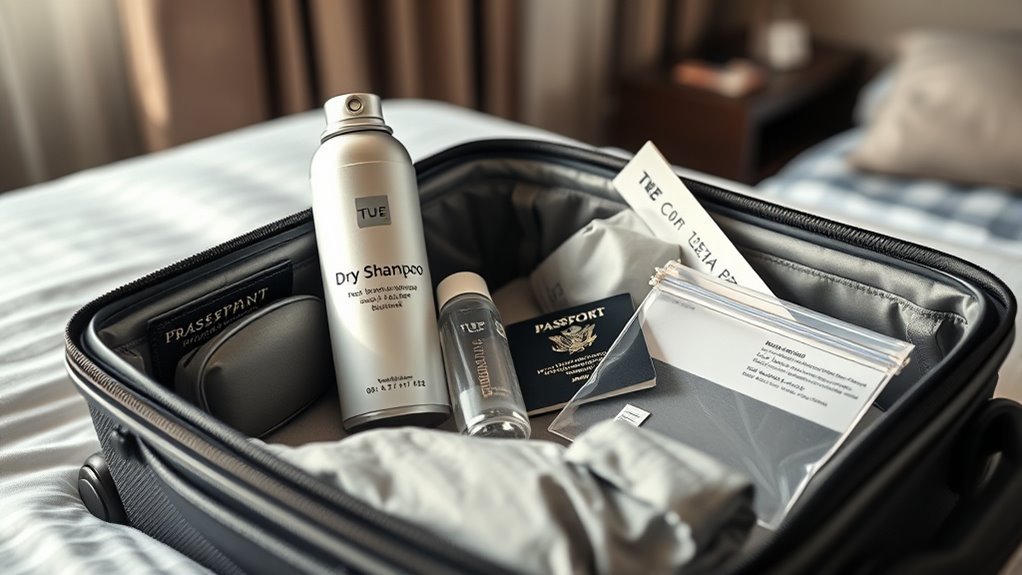
Wondering whether dry shampoo counts as a liquid for TSA purposes? You’ll find TSA treats products by form and packaging.
Aerosol dry shampoos are considered aerosols and fall under the 3-1-1 liquids rule: containers must be 3.4 ounces (100 ml) or less and fit in a single quart-sized bag.
Powdered or solid formulations aren’t liquids but may be subject to additional screening; large quantities might draw extra inspection.
If the product’s label or nozzle indicates spray or aerosol, pack it with other liquids.
When in doubt, check TSA guidance or carry it in checked baggage to avoid delays.
How to Tell Spray, Foam, Powder, and Solid Dry Shampoos Apart
When you’re deciding what to pack, look at the product’s texture, dispensing method, and label to tell spray, foam, powder, and solid dry shampoos apart.
Spray comes in an aerosol or pump bottle and releases a fine mist.
Foam dispenses as a light, expandable mousse from a pressurized container or pump.
Powder appears as loose starchy dust or in a shake-top bottle, and often feels dry between fingers.
Solid bars resemble a waxy or soap-like puck you rub between hands or hair.
Check ingredient lists and packaging icons to confirm format before stowing it in your bag.
Rules by Format: Aerosols, Foams, Powders, and Solids
Because each dry-shampoo format behaves differently at security checkpoints, you’ll need to follow separate carriage rules for aerosols, foams, powders, and solids.
For aerosols, treat them as liquids: containers over 3.4 ounces (100 ml) generally aren’t allowed in carry-on, and they must fit in your single quart-sized bag if smaller.
Foams and mousses count as liquids too, so apply the same size and bagging limits.
Powders have their own scrutiny: large quantities (over 12 ounces/350 ml) may prompt additional inspection and should go in checked baggage when possible.
Solid bars or sticks are usually unrestricted in carry-on.
How TSA Will Screen Your Dry Shampoo at Security?
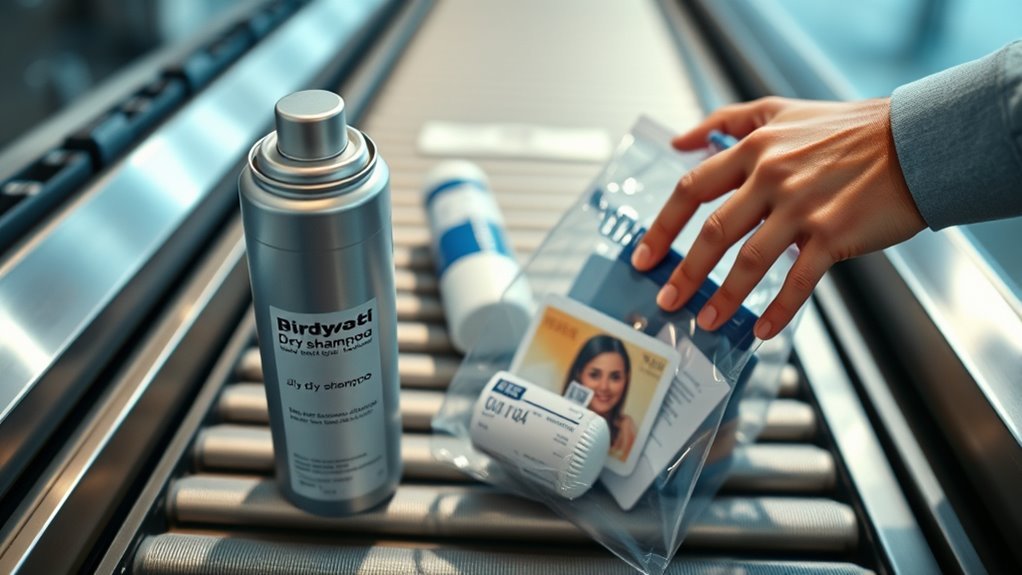
After you sort your dry shampoo by format, expect TSA officers and X-ray machines to inspect it based on how it looks and where you packed it.
After sorting dry shampoo by format, expect TSA checkpoints and X-rays to check items by appearance and packing.
You’ll place aerosols and liquids in the clear bag for 3-1-1 screening; agents may pull them out for separate X-ray or hand inspection.
Powders above the threshold might be opened or tested; small containers usually stay in your carry-on but can be swabbed.
Solid bars and sealed packets typically pass with minimal attention.
If an item looks unusual or triggers an alert, officers will ask questions or remove it for secondary screening before you proceed.
Packing Dry Shampoo to Avoid Checkpoint Problems
If you want to breeze through security, pack your dry shampoo so it matches TSA rules and avoids surprises. Choose aerosol cans under 100 milliliters (3.4 ounces) or solid powders in sealed containers.
Put aerosols in a clear quart-sized bag with other liquids and gels; leave powders accessible in case an officer needs to inspect them separately.
Label unlabeled products or keep receipts to prove contents.
Don’t overpack multiple large cans; distribute them between checked and carry-on bags if needed.
Secure caps and cushion items to prevent leaks or breakage, and you’ll cut delays at the checkpoint.
What to Do If TSA or an Airline Denies Your Dry Shampoo
If an agent or airline staff tells you your dry shampoo isn’t allowed, stay calm and ask to speak with a supervisor.
You can politely assert your rights and ask for clarification of the specific rule being applied.
If the issue isn’t resolved, document the interaction and inquire about the airline’s or TSA’s official complaint process.
Ask For A Supervisor
When an agent says your dry shampoo isn’t allowed, stay calm and politely ask to speak with a supervisor so you can explain the product, show its packaging or Safety Data Sheet, and try to resolve the issue without having to discard it.
A supervisor can clarify rules, confirm whether the item is aerosol or liquid, and authorize its carriage if compliant. Keep documentation ready and remain cooperative; escalation often just takes a moment.
If the supervisor still denies it, ask for written reasons or options for checked baggage.
- Show label and SDS
- Describe intended use
- Request clear denial reason
- Ask about alternatives
Know Your Rights
Because you’ve already tried to resolve the issue calmly, know that you have specific rights and practical steps to pursue if TSA or an airline still refuses your dry shampoo.
First, ask for the written reason for denial and note names, badge numbers, time, and location. Request inspection of the agency’s policy or cite the 3-1-1 rule if you’re within limits.
If denied without clear justification, file a complaint with TSA at tsa.gov/contact or use the airline’s customer service channel.
Keep receipts and photos, and consider social media or a credit card dispute only after formal complaints are filed.
Quick Checklist: Bring-On vs Checked Dry Shampoo
Although dry shampoo can straddle the line between liquid and aerosol, you’ll want a quick checklist to decide whether to pack it in your carry-on or checked bag. Use this to avoid delays and confiscation.
- Check container type: aerosol cans may be restricted; powders usually travel fine.
- Verify size: carry-on liquids/aerosols must meet the 3.4 oz (100 ml) rule and fit in a quart bag.
- Consider quantity: more than the carry-on limit goes in checked luggage to be safe.
- Know airline rules: some carriers ban aerosols or limit pressurized cans in checked baggage.
Follow these points and pack confidently.
Frequently Asked Questions
Can I Mix Dry Shampoo With Regular Shampoo in Carry-On Luggage?
You can mix dry shampoo with regular shampoo in your carry-on if both are within TSA liquid limits and packed in containers under 3.4 ounces, placed inside a single clear quart bag; otherwise, checked baggage’s safer.
Will International Airports Follow the Same TSA Dry Shampoo Rules?
Generally, yes: most international airports follow similar liquid/pressurized aerosol rules, but you’ll want to check each country’s specific limits and airline policies before flying since enforcement and allowances can vary.
Can I Bring Dry Shampoo in a Carry-On for a Connecting Flight?
Yes — you can usually bring dry shampoo in a carry-on for a connecting flight if it’s an aerosol under 100ml/3.4oz and allowed by both airports and carriers; check local rules and transfer security limits to avoid confiscation.
Are Hotel-Provided Dry Shampoos Subject to TSA Liquid Rules?
Yes — you’re subject to TSA rules. If the hotel dry shampoo’s in a container over 3.4 ounces, you can’t carry it through security. Keep larger hotel bottles in checked luggage or transfer into travel-size containers.
Does Dry Shampoo Aerosol Count Toward Airline Lithium Battery Limits?
No — dry shampoo aerosol doesn’t count toward lithium battery limits; those limits apply to batteries themselves. You’ll still follow aerosol size and flammability rules, and pack spare lithium batteries according to airline and TSA guidelines.
Conclusion
In short, whether your dry shampoo counts as a liquid depends on its format: aerosols and foams are treated like liquids/aerosols and must follow the 3.4 oz/100 ml carry-on rule, powders and solids are generally fine in carry-on, and sprays may be restricted if oversized. Pack larger aerosols in checked baggage, keep carry-ons within TSA limits, and be ready to separate items for screening. If denied, ask about checked options or mail-it home.