Is a Backpack a Carry On: Airline Rules You Should Know
You can usually bring a backpack as your carry-on if it meets the airline’s size and weight limits, but rules vary by carrier and fare type. Measure height, width and depth including pockets, and check whether your bag must fit under the seat as a personal item or in the overhead bin as a full-size carry-on. Low-cost carriers and basic economy fares often restrict carry-ons. Keep it soft-sided for squeezing into bins, and continue for specific airline tips and checklists.
Quick Answer: Is a Backpack a Carry-On?
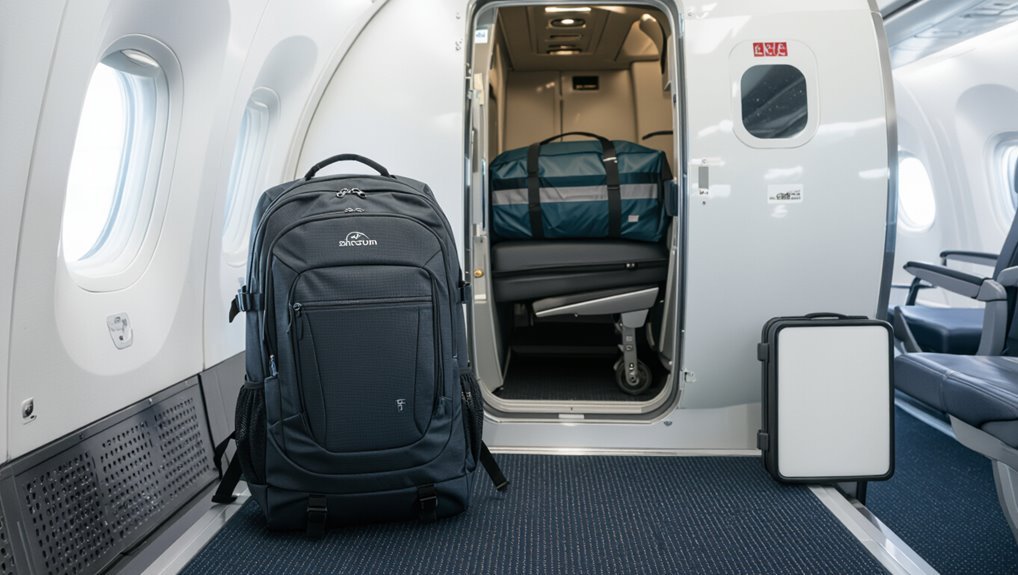
Wondering whether your backpack counts as a carry-on? Usually it can, if it meets airline size and weight limits and fits in the overhead bin.
Policies differ: some carriers treat small backpacks as personal items instead. Always check your specific airline’s rules before packing.
If unsure, measure your pack and compare dimensions to the carrier’s published carry-on allowances to avoid surprises.
Carry-On vs Personal Item: Official Definitions
You’ll want to know the official size limits for carry-ons so your backpack meets the airline’s carry-on dimensions.
Also check the smaller personal item size limits, since that’s where many backpacks qualify instead.
Remember policies vary by airline, so compare rules before you pack.
Carry-On Dimensions Defined
Airlines split your cabin luggage into two official categories—carry-on and personal item—because each has different size limits and placement rules. You should measure length×width×height including wheels and handles. Typical carry-on maxes hover around 22×14×9 inches, but always check your carrier. Visualize dimensions:
| Dimension | Example | Note |
|---|---|---|
| Length | 22 in | Includes handle |
| Width | 14 in | Side pockets |
| Height | 9 in | Wheels count |
Personal Item Size Limits
Now that you’ve got carry-on dimensions down, let’s clarify what counts as a personal item and how its size limit differs.
A personal item is smaller—think laptop bag, small backpack, or purse—and must fit under the seat.
Airlines often specify dimensions roughly 16x14x8 inches (varies), so measure before you pack.
It’s meant for essentials, not full luggage.
Airline Policy Variations
Because carriers set their own rules, what counts as a carry-on versus a personal item can vary widely between airlines and even ticket types; check the airline’s official definitions before you pack.
You should review size, weight, and placement rules online, note bundled allowances for fare classes, and confirm if backpacks qualify as either item.
When in doubt, call the carrier.
Quick Decision Checklist: Will Your Backpack Qualify?
Wonder if your backpack will pass muster at the gate? Check weight, external dimensions, and whether it fits under the seat or in an overhead bin.
Verify if it counts as your personal item or carry-on per the airline, confirm any front-pocket access rules, and guarantee prohibited items aren’t inside.
If unsure, measure and weigh it before heading to the airport.
Standard Carry-On Size Limits to Memorize
Before you pack, get familiar with the typical carry-on dimensions—most airlines expect something around 22 x 14 x 9 inches (56 x 36 x 23 cm).
You should also check weight limits, since some carriers cap carry-ons or enforce strict gate checks. Knowing both size and weight rules will save you time and fees at the airport.
Typical Dimension Limits
Airlines typically set carry-on size limits around 22 x 14 x 9 inches (56 x 36 x 23 cm), and it’s smart to know these common dimensions so you can pack with confidence and avoid gate check fees.
Measure your backpack fully—height, width, depth including pockets and wheels. If it fits a sizer at the gate, you’re good; otherwise expect to gate check.
Weight Restrictions Overview
Although size usually gets the most attention, weight limits matter too—most carriers cap carry-on weight between about 7 kg (15 lb) and 10 kg (22 lb), so check your airline’s rule and weigh your packed backpack before you go. You’ll feel calmer packing light, avoid gate fights, and keep essentials reachable.
| Calm | Chaos |
|---|---|
| Measured | Overloaded |
| Confident | Struggling |
| Compliant | Fined |
Common Carry-On Weight Limits for Backpacks
Most carriers let backpacks ride as carry-ons, but weight limits can vary widely from about 7 kg (15 lb) on budget airlines to 10–12 kg (22–26 lb) or more on full-service carriers.
You’ll want to check your airline’s specific rule so you don’t get hit with gate-checking or baggage fees.
Weigh your packed bag before travel, prioritize essentials, and redistribute items to avoid surprises at the gate.
Under-Seat vs Overhead: Why Placement Matters
Where you stow your backpack—under the seat in front of you or in the overhead bin—can change how quickly you get off the plane, how accessible your essentials are during the flight, and whether gate agents flag your bag for check; choose under-seat for immediate access and quicker deplaning, or go overhead if you need to maximize legroom and meet stricter under-seat size rules.
- Easy access
- Faster deplaning
- Legroom gain
- Gate checks
- Overhead crowding
How Aircraft Type Affects Carry-On Space
Because aircraft cabins vary so much, the plane you’re flying on directly shapes how much carry-on space you’ll actually have and where you can stash your backpack.
Regional jets often have smaller overhead bins and tighter boarding, so you might need to gate-check.
Widebodies offer larger bins but may limit under-seat space.
Check your aircraft model and pack accordingly to avoid surprises and delays.
How Connecting Flights Change Carry-On Rules
When you have connecting flights, each carrier’s carry-on size and count can apply, so check limits for both airlines.
You’ll also want to know gate-transfer baggage rules in case your hand luggage needs rechecking between flights.
Confirming these details before you travel lets you avoid surprises at the connection.
Connecting Flight Carry-On Limits
If your itinerary includes connections, don’t assume the carry-on rules from your first carrier still apply—each airline can set its own size, weight, and allowance limits, and stricter policies on a later leg will govern what you can actually bring on board.
- Check each airline’s dimensions
- Confirm weight limits per segment
- Note personal item definitions
- Watch low-cost carrier fees
- Pack to the strictest rule
Gate-Transfer Baggage Rules
Although you’ll usually check in with one airline, connecting flights can change what you’re allowed to carry through a gate.
So always verify each carrier’s gate-transfer rules before packing.
Check size, weight, and personal-item allowances for every carrier on your itinerary.
Note prohibited items, transfer desk procedures, and whether gate agents enforce the stricter airline’s policy during boarding.
Pack accordingly.
Low-Cost Carriers: Backpack Rules to Expect
Because low-cost carriers prioritize seat and cabin space to squeeze in more passengers, you’ll usually face stricter backpack rules than on legacy airlines.
Because budget airlines cram more seats, expect tighter backpack rules and stricter size, weight, and boarding limits.
You should expect limits and fees; pack strategically. Check size, weight, and boarding group rules, and consider gate-checking.
- smaller size limits
- strict weight caps
- carry-on fees
- boarding-group enforcement
- gate-check mandatory for oversized packs
Legacy Carriers: Typical Backpack Allowances
With legacy carriers, you’ll usually see stricter carry-on size limits than budget airlines, so measure your backpack before you pack.
They also have clear personal item policies that determine whether your backpack can go under the seat or must be counted as your carry-on.
Check each airline’s dimensions and wording so you won’t be surprised at the gate.
Carry-On Size Limits
When you fly a legacy carrier, you’ll usually find backpack carry-on limits tighter and more standardized than low-cost airlines, typically capped around 22 x 14 x 9 inches (56 x 36 x 23 cm) including handles and wheels; some carriers let slightly smaller dimensions for personal items.
- Measure your packed backpack before heading to the airport
- Include wheels and handles in measurements
- Expect gate checks if oversized
- Use soft-sided bags to compress
- Check your airline’s specific policy online
Personal Item Policies
Curious how your backpack fits into a legacy carrier’s personal item rules? You’ll usually get one small bag under the seat plus a carry-on; backpacks often qualify as the personal item if compact. Check dimensions and packing rules—laptops count. Airlines may enforce soft-sided limits and weight. Compare allowances before you pack to avoid gate fees.
| Airline | Max Size | Notes |
|---|---|---|
| AA | 18x14x8 in | Laptop ok |
| UA | 17x13x8 in | Soft-sided preferable |
| DL | 18x14x9 in | Weight varies |
International Airlines: Key Size and Weight Differences
Because international carriers set carry-on limits differently, you’ll need to check each airline before packing to avoid surprises at the gate.
Airlines set carry-on rules differently—always check your carrier’s size and weight limits before you pack.
You should note size, weight, and enforcement vary by carrier.
Quick checklist:
- Dimensions allowed
- Weight limits
- Included personal item rules
- Boarding priority impact
- Fees for oversize/overweight
Confirm specs on the airline site before travel.
Regional/Commuter Airlines: Stricter Carry-On Rules
On regional and commuter flights you’ll often find much smaller overhead bins that won’t fit a full-size backpack.
Be prepared that agents may gate-check bags at the jetbridge rather than let them stow in the cabin.
Check the carrier’s strict size limits in advance so you don’t get caught off guard.
Smaller Overhead Bins
Regional and commuter airlines often use smaller overhead bins, so you’ll need to be more selective about what you bring on board; many bags that fit on mainline jets won’t on these planes.
- Measure your backpack before travel
- Choose soft-sided, compressible bags
- Pack essential items in a personal item
- Board early when possible
- Be prepared to gate-check if space’s limited
Gate-Checked Bags
If your flight’s operated by a commuter or regional carrier, expect stricter carry-on limits and a higher chance you’ll be asked to gate-check your backpack.
These planes typically have smaller overhead bins and fewer stowable spots.
Gate-checking means you hand your bag at the jetway, it’s tagged, and returned at the jet bridge or baggage claim.
Remove valuables and essentials before handing it over.
Strict Size Limits
Because commuter jets often force gate-checks, you’ll also face tougher size limits before you even board. Measure your backpack, know airline slot rules, and pack essentials.
Smaller overhead bins mean stricter enforcement.
- Check dimensions on the carrier’s site
- Use a compact, structured pack
- Remove bulky items
- Weigh your bag
- Be ready to gate-check if needed
How Fare Class Affects Carry-On Eligibility
While airlines generally set size and weight limits for carry-ons, your fare class often determines whether you’re allowed to bring a bag into the cabin at all—basic economy tickets frequently restrict carry-on privileges to a personal item only, while standard and premium fares usually include a full-size carry-on. You should check fare rules before packing.
| Fare | Carry-on | Personal item |
|---|---|---|
| Basic | No | Yes |
| Std | Yes | Yes |
| Prem | Yes | Yes |
| Biz | Yes | Yes |
| First | Yes | Yes |
When Your Backpack Counts as a Personal Item
When your backpack fits under the seat in front of you and meets the airline’s dimensions and item count, it’ll usually qualify as your personal item rather than a full-size carry-on.
If your backpack fits under the seat and meets airline limits, it typically counts as a personal item, not a carry-on.
You should check specs, pack essentials, and avoid oversized gear. Quick tips:
- Check airline size limits
- Pack a laptop if allowed
- Keep toiletries compact
- Place important documents easy-access
- Avoid bulky souvenirs
When Your Backpack Counts as Your Carry-On Bag
If your backpack exceeds the airline’s personal-item dimensions or you need to gate-check bulky gear, it’ll be treated as your carry-on bag and must meet the carrier’s size and weight limits for overhead bins.
You’ll need to verify it fits published measurements, remove prohibited items, and be prepared to check it if gate staff determine it’s oversize.
Pack efficiently and weigh it beforehand.
How Gate Agents Decide If a Backpack Fits
When you board, gate agents may physically measure your backpack against an airline’s size frame or bin to see if it counts as a carry-on.
They’ll also do a quick visual inspection for bulging compartments or items that make it unlikely to fit under the seat or in the overhead.
Remember that some carriers make exceptions for certain bags or flyers, so policies can vary by airline and situation.
Gate Agent Measurement
Because gate agents work under tight space and time constraints, they’ll use quick visual cues and a simple sizer to decide whether your backpack counts as a carry-on or personal item.
You’ll face fast measurement checks and firm decisions. Pay attention to:
- External dimensions
- Rigid frames
- Pocket bulk
- Compression straps
- Handle/stowage position
Visual Inspection Criteria
Although gate agents often work fast, they’ll still judge your backpack primarily by what they can see: overall shape, external pockets, protruding frames, and how much bulge comes from packed items.
You should present a compact, streamlined pack: zip pockets closed, straps tucked, and no rigid extras. If it looks bulky or awkward, expect a closer look or a request to gate-check it.
Airline Policy Exceptions
If an agent hesitates at the gate, they’ll weigh more than dimensions — your bag’s purpose, occupancy levels, and written policy all factor into the call.
You can influence the decision by being clear, cooperative, and prepared. Consider these factors:
- Flight load and overhead space
- Boarding group priority
- Bag appearance and shape
- Stated carry-on allowance
- Agent discretion and company exceptions
What to Do If Agents Ask You to Gate‑Check It
When agents ask you to gate‑check your backpack, stay calm and decide quickly: you can accept, request clarification, or politely contest the decision.
If you accept, remove valuables and secure straps.
If you request clarification, ask why and confirm retrieval procedure.
If you contest, explain size or carry‑on status calmly and ask to speak with a supervisor before surrendering the bag.
American Airlines: Backpack Rules at a Glance
Because American limits carry‑on and personal items by size and placement, you’ll want to know exactly where your backpack fits: a standard personal‑item backpack should tuck under the seat, while larger daypacks may need to go in the overhead bin or be gate‑checked if the flight’s full.
- Measure before packing
- Keep essentials accessible
- Expect overhead space limits
- Remove bulky outerwear
- Consider gate‑check options
Delta Air Lines: Backpack Policy Highlights
When you fly Delta, you’ll need to follow their carry-on size limits to make sure your backpack fits in the overhead bin.
You can also bring a personal item, like a smaller backpack or briefcase, that must fit under the seat in front of you.
Check Delta’s exact dimensions and rules before you pack so you won’t be surprised at the gate.
Carry-On Size Rules
If you’re packing a backpack as your carry-on with Delta, make sure it fits their size limits and stows comfortably in the overhead bin or under the seat.
Delta’s standard carry-on allowance is designed to keep boarding smooth and compliance straightforward.
- Verify dimensions: 22 x 14 x 9 inches (including handles/wheels)
- Weigh reasonably for lifting
- Use soft-sided for flexible fit
- Keep essentials accessible
- Check gate agent guidance
Personal Item Allowance
Most travelers can bring one personal item in addition to their carry-on, and a backpack often fits this allowance as long as it meets Delta’s size requirements and stows under the seat in front of you.
You should measure your backpack before travel, pack essentials only, and avoid oversized bags.
Gate agents will require checked handling if it won’t fit under the seat.
United Airlines: Size and Placement Rules
Although United allows a personal item and a carry-on, you need to follow strict size and placement rules to avoid gate checks or fees.
You should check dimensions, pack smart, and position items properly in overhead bins or under the seat.
Tips:
- Personal item fits under seat
- Carry-on max dimensions apply
- Heavier items go overhead
- Gate agents may check
- Measure before travel
Southwest Airlines: What Makes It Different
With Southwest, you can bring two personal items on board, so you’ll want to plan what fits under the seat.
They don’t enforce seat-size limits for bags, which gives you more flexibility than some carriers.
If the flight’s full, you can also choose to gate-check a bag at the jet bridge.
Two-Item Policy
Unlike many carriers that strictly separate “personal items” and “carry-ons,” Southwest lets you bring both at no extra charge, and that policy shapes how you pack and board.
You can maximize space and avoid gate-checking by choosing wisely:
- Bring a backpack plus a small personal item
- Place essentials in the personal item
- Use the backpack for bulk
- Fit under-seat when possible
- Avoid oversized bags
No Seat-Size Limits
Because Southwest doesn’t enforce seat-size limits for carry-ons, you won’t be judged by the bag you bring aboard, only by whether it fits in the overhead or under the seat.
That means your backpack’s shape or brand won’t matter—just its ability to stow properly.
Pack smartly, organize essentials for quick access, and expect staff to focus on space, not arbitrary dimensions.
Bag Gate Check Option
If your backpack won’t fit overhead or under the seat, Southwest gives you a straightforward gate-check option that keeps things simple.
You can gate-check bulky bags free, retrieve them at the jet bridge, and avoid fees common elsewhere. Pack valuables separately and tag your bag. Staff handle gate-checked items carefully, but expect a slight delay at arrival.
- Free gate check
- Jet bridge pickup
- No extra fee
- Tag valuables
- Possible delay
JetBlue & Alaska: What to Watch For
When you fly JetBlue or Alaska, watch for differences in how they define personal items and enforce size limits—JetBlue tends to be more lenient with small backpacks tucked under the seat, while Alaska enforces firm measurements at boarding. You should measure your bag, pack smart, and expect checks.
| Airline | Tip |
|---|---|
| JetBlue | Lenient tuck-under |
| Alaska | Measure strictly |
| Both | Pack essentials only |
Ryanair, easyJet, British Airways: Europe Compared
When you fly Ryanair, easyJet, or British Airways, you’ll notice their carry-on size limits and free bag allowances vary a lot.
Check each airline’s exact dimensions and whether a personal item counts as complimentary.
That way you won’t be surprised at the gate or hit with unexpected fees.
Carry-On Size Limits
Comparing Ryanair, easyJet, and British Airways’ carry-on size limits helps you avoid surprises at the gate; each airline sets distinct maximum dimensions and bag allowances for European flights, so knowing the specifics lets you pack smart and skip extra fees.
- Ryanair: strict small bag first, larger with priority
- easyJet: main cabin bag size varies by fare
- British Airways: cabin bag plus personal item
- Measure before you travel
- Check airline site for updates
Free Bag Allowances
Understanding free bag allowances helps you avoid unexpected fees and speed your way through boarding, since Ryanair, easyJet, and British Airways each include different complimentary items and restrictions on European routes.
You should check each carrier: Ryanair often limits free personal items, easyJet includes a small cabin bag with certain fares, and British Airways usually allows one cabin bag plus a personal item—fare class matters.
Emirates, Qatar, Singapore: Long‑Haul Differences
Although all three airlines let you bring a backpack as a carry‑on on long‑haul flights, Emirates, Qatar Airways, and Singapore Airlines each set distinct size, weight, and allowance rules that you should check before you pack.
You’ll find subtle differences in permitted dimensions, combined cabin bags, and weight limits. Check your ticket class and frequent‑flyer benefits.
- Emirates: one cabin bag + personal item
- Qatar: weight limit varies by fare
- Singapore: strict dimension limits
- Combine items counts on some fares
- Always verify before boarding
How Airport Security and TSA View Backpacks
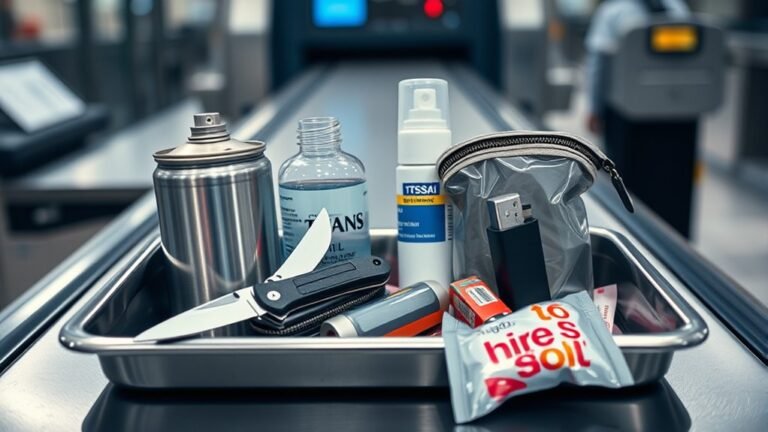
When you go through airport security, TSA officers treat backpacks like any other carry‑on but expect you to follow the same screening rules—remove laptops, liquids, and any electronics that go in separate bins unless directed otherwise—and be ready to open compartments if asked.
You’ll also follow size and prohibited item rules, cooperate with inspectors, and pack to speed screening; flags trigger additional inspection or checked baggage.
How to Measure Your Backpack Quickly and Accurately
Now that you know how TSA treats backpacks, you’ll want a quick, consistent way to confirm yours meets your airline’s size limits before you get to the airport.
Measure length, width, depth with a tape; include wheels and handles; compress soft packs.
Use this checklist:
- Lay flat and empty
- Measure deepest points
- Add protrusions
- Compare airline limits
- Re-measure after packing
Pack to Fit Under‑Seat Carry-On: Techniques
To get your backpack under the seat, pick a slim, structured bag that keeps its shape and slides in easily.
Roll clothes tightly to save space and keep items compact.
Use compression packing cubes to squeeze more in without creating a messy pile.
Choose Slim, Structured Bags
Although slim backpacks can seem limiting, choosing a structured, low-profile bag makes packing to fit under the seat simple and reliable.
You’ll maximize space, protect items, and slide the pack under with ease.
Look for:
- Firm panels for shape
- Low-profile dimensions
- Minimal external pockets
- Stiff base for stability
- Slim laptop sleeve for organization
Roll Clothes Tightly
Roll your clothes tightly to save space and keep everything compact enough to slide under the seat.
Roll shirts, pants, and soft layers into consistent cylinders, then nest smaller items inside larger rolls to maximize volume.
Place fragile or wrinkle‑prone pieces flat on top.
Pack rolls upright to fit more, fill gaps with socks and belts, and zip the compartment tightly before boarding.
Use Compression Packing Cubes
1 simple tool can cut your packing bulk dramatically: compression packing cubes squeeze air out of clothes so more fits under the seat.
You’ll pack smarter, keep items organized, and access essentials quickly. Use cubes to compress layers, separate shoes, protect electronics, and stash dirty laundry.
- maximize space
- protect garments
- organize outfits
- speed unpacking
- fit stricter airlines
What to Pack to Avoid Weight and Size Checks
If you want your backpack to pass through gate checks without a fuss, pack smartly: prioritize lightweight, compressible items, keep bulky or heavy gear in your checked luggage, and distribute weight so the bag doesn’t look overstuffed.
Put essentials like a light jacket, toiletries, electronics, and a spare shirt near the top. Use soft items to fill gaps and avoid rigid, dense objects.
Best Backpacks for Carry-On Compliance
Now that you know how to pack to avoid gate checks, choosing the right backpack makes staying within size and weight limits much easier.
Pick models that fit airline dimensions, are lightweight, and offer efficient organization.
Consider these reliable options:
- Slim commuter backpack
- Compact roller-friendly pack
- Foldable packable daypack
- Minimalist laptop backpack
- Soft-sided duffel-backpack combo
Top Travel Backpack Features to Look For
Choose a travel backpack that balances capacity, weight, and access so you can move through airports and security without hassle.
Pick a durable, lightweight shell with padded straps and a ventilated back. Look for organized compartments, quick-access pockets, and a TSA-friendly main compartment.
Water-resistant fabric, lockable zippers, and removable hip belt enhance security and comfort for streamlined travel.
Layering: Using a Laptop or Camera Bag With a Backpack
You can layer a slim laptop or camera bag inside or clipped to your backpack for quick access during screening or in-flight.
That extra bag protects fragile gear with dedicated padding and keeps cords organized.
Smart layering also helps you fit within airline carry-on limits by distributing weight and space efficiently.
Layering For Easy Access
When you need quick access to a laptop or camera, layer a slim tech pouch or dedicated bag inside or on top of your backpack so you can grab it without unpacking everything.
You’ll streamline security and in-flight use by organizing items for fast reach.
- Place tech pouch near top
- Use external quick-access pocket
- Keep cables tidy
- Separate chargers from accessories
- Secure with a strap
Protecting Electronics Inside
If you want electronics to survive bumps and jostles, nest your laptop or camera bag inside the backpack with padding-facing-out and snug straps to prevent shifting.
Place fragile gear in the middle, away from zippers and external pockets.
Use cable organizers, remove detachable batteries, and lock compartments if desired.
Check TSA rules for easy removal and keep a slim rain cover handy.
Maximizing Airline Space
Layer a slim laptop or camera bag inside your backpack to squeeze more usable space from overhead bins and under-seat areas, keeping the smaller bag’s profile tight against your back so it doesn’t create bulk.
You’ll move faster boarding, protect gear, and fit more.
Consider:
- Pack soft items around electronics
- Use compression pockets
- Place heavy items low
- Keep essentials accessible
- Lock zippers
When to Travel With Only a Backpack
Why choose to travel with only a backpack? You’ll move faster through airports, avoid gate-check stress, and save on baggage fees.
Pick this option for short trips, minimalist itineraries, or destinations with reliable laundry options. Bring versatile clothing, compact toiletries, and essential documents.
You’ll appreciate the freedom, quicker transit, and less to manage between flights, trains, and taxis.
When You Should Check Your Backpack Instead
- Over the airline’s size/weight limit
- Long layovers with heavy loads
- Prohibited items require screening
- Fragile or bulky gear
- You need extra space in the cabin
How to Avoid Gate-Check Fees and Surprises
If you decide to gate-check your backpack instead of carrying it on, you’ll want to avoid surprises and extra fees by planning ahead.
Check your airline’s gate-check policy, size and weight limits, and whether fees apply for gate-checked items.
Tag fragile or valuable contents, remove essentials you need during flight, and arrive early so staff can handle gate-checking calmly and clearly.
How Frequent Flyers Avoid Gate‑Check Surprises
You know your airline’s carry-on size and weight limits before you pack, so you won’t be surprised at the gate.
Pack essentials and valuables near the top or in an easy‑access pocket so you can hand them over quickly if an agent asks. That small prep keeps you moving and avoids last‑minute fees.
Know Your Carry‑On Limits
When airlines squeeze aisles and cabin bins, gate agents start enforcing strict carry-on limits. That’s why knowing your bag’s exact size and weight saves you from last-minute gate-check surprises.
You should measure, weigh, and review airline rules before travel to avoid delays.
- Measure dimensions
- Weigh packed bag
- Check airline policy
- Compare personal item rules
- Prepare for spot checks
Pack For Quick Gate Checks
1 simple habit can cut the stress of a surprise gate check: pack so you can hand over your bag without a second thought. Keep essentials accessible, remove fragile items, and stash valuables in a front pocket. Practice fast folding and use a lightweight tote for overflow.
| Action | Tip |
|---|---|
| Essentials | Keep handy |
| Fragile | Remove first |
| Valuables | Front pocket |
| Overflow | Tote |
| Practice | Fast folding |
Travel Hacks for Strict Carry‑On Size Rules
Even if airlines tighten dimensions, you can still pack smart and board stress-free by prioritizing compact, multiuse items and strategic folding.
Even with tighter carry-on limits, prioritize compact, multiuse items and smart folding to pack efficiently and board stress-free.
Use these quick hacks to meet strict carry-on size rules and avoid gate checks:
- Roll clothes tightly to save space
- Wear bulky layers on board
- Use compression cubes
- Choose toiletry sizes under limits
- Pack tech in slim organizers
How Seat Choice Affects Overhead Space
Packing smart helps, but your seat choice can make or break overhead space on boarding. Pick window or bulkhead to stash your backpack nearby; middle seats limit access and aisle seats face more gate competition. Choose early boarding if you need overhead security.
| Seat | Access | Tip |
|---|---|---|
| Window | High | Early board |
| Aisle | Moderate | Gate claim |
| Middle | Low | Minimal space |
Family Travel: Managing Multiple Backpacks
When you’re traveling with kids, juggling multiple backpacks means you need a clear plan for who carries what and where each bag will go during boarding.
Assign roles, limit bags, and prioritize essentials. Use compact packs and keep one readily accessible. Communicate boarding order.
- Assign one bag per child
- Keep valuables with you
- Use lightweight backpacks
- Stow shared items together
- Pre-board if needed
How to Document Damage or Loss If Gate‑Checked
If a kid’s backpack ends up gate-checked, you’ll want to document any damage or loss right away so claims go smoothly.
Inspect bag immediately, photograph all damage from multiple angles, and note time and flight details.
Locate the gate agent or baggage office, file a report, get a reference number, and keep receipts for repairs or replacements.
Follow up promptly.
Compare Costs: Gate‑Check vs Checked Bag vs Carry‑On
Think of costs in three buckets: gate‑checking, checked baggage, and bringing a carry‑on — each affects your wallet and travel ease differently.
Think in three buckets—gate‑check, checked bag, carry‑on—each with different costs, risks, and convenience trade‑offs.
- Gate‑check: often free but risk damage
- Checked bag: predictable fee, slower delivery
- Carry‑on: saves fees, may incur boarding restrictions
- Weight/size: overweight fees can spike costs
- Loyalty/status: may waive fees, factor it in
Airline Apps and Websites: Verify Backpack Rules
Before you pack, check the airline’s app or website for backpack rules so you know exactly what’s allowed on board.
Look for size, weight, and carry‑on limits, plus personal item definitions. Apps often show updated policies, fee info, and boarding group impacts.
Save screenshots of relevant pages and policy dates so you can reference them at check‑in or if an agent questions your bag.
How to Read Your Ticket Fine Print for Baggage
When you open your ticket’s fine print, scan for baggage sections that list carry‑on and personal‑item allowances, size and weight limits, and any fees or restrictions tied to your fare class — these details determine whether your backpack qualifies as a free personal item, a carry‑on that might incur a fee, or a checked bag.
- allowance type
- size limits
- weight limits
- fare-based fees
- boarding group rules
Common Myths About Backpacks as Carry‑Ons
Although backpacks often look simple, plenty of myths about their carry‑on status can get you delayed or charged unexpected fees, so it helps to separate fact from fiction. You should check size, airline definitions, and gate policies. Don’t assume all backpacks fit under seats or count as personal items.
| Myth | Reality |
|---|---|
| Any backpack fits | Size rules matter |
| Personal vs carry‑on | Varies by airline |
| Always free | Fees possible |
Trends: How Carry‑On Policies Are Changing
As airlines rethink fees and boarding efficiency, you’ll see clearer size definitions, more strict gate checks, and tiered luggage rules that favor priority passengers; these shifts mean your backpack choices and packing habits can directly affect costs and boarding speed.
- Expect stricter size enforcement
- Priority boarding limits others’ carry-ons
- Smaller personal item allowances
- More gate checks for oversized bags
- Dynamic fee structures for carry-on upgrades
Carry‑On Compliance Checklist Before You Leave
Before you head to the airport, run through a quick checklist to confirm your backpack meets size, weight, and content rules so you won’t get surprised at the gate.
Measure dimensions, weigh it, and compare to your airline’s limits.
Check pockets for liquids over 100ml, prohibited items, and loose batteries.
Secure straps and guarantee easy access to documents and electronics.
Action Plan: Decide If Your Backpack Is Your Carry‑On
Now that you’ve checked sizes, weight, and contents, decide whether to use your backpack as your carry-on or gate-check it.
Choose based on space, access, and rules. Consider these quick checks:
Choose based on space, access, and rules — run these quick checks before deciding carry-on or gate-check.
- Fits airline size limits
- Essential items inside
- Security ease
- Comfort carrying onboard
- Risk of gate-check loss
Make a clear choice and pack accordingly.
Frequently Asked Questions
Can Backpacks With Wheels Count as Carry-Ons or Personal Items?
Yes — wheeled backpacks can count as carry-ons or personal items depending on size and airline limits; you’ll need to check dimensions and weight, and you’ll usually gate-check oversized wheeled bags if they don’t fit.
Are Toiletry Bags Inside Backpacks Subject to Separate Restrictions?
Yes — toiletry bags inside backpacks must follow the same TSA liquid rules: you’ll put liquids, gels, aerosols in a single quart-sized, clear bag (100ml/3.4oz items), and any prohibited items remain banned.
Do Airline Loyalty Tiers Ever Allow Oversized Backpacks on Board?
Yes, elite status sometimes lets you bring oversized backpacks; airlines often grant extra carry-on allowance or priority boarding, so check your carrier’s tier benefits and size exemptions before travel to avoid gate-check surprises.
Will Compression Straps or External Pockets Affect Gate Agent Rulings?
Yes — gate agents can consider compression straps or external pockets when deciding if your bag fits carry-on limits; you should cinch or remove protrusions and be ready to check it if they deem it oversized or noncompliant.
Are Backpacks Containing Medical Equipment Treated Differently?
Yes — if your backpack holds medical equipment, airlines and TSA usually treat it as a necessary carry-on; you’ll need documentation, declare items at security, and they’ll screen or inspect devices rather than enforce strict size limits.
Conclusion
In most cases, you can use a backpack as your carry-on, but you should check the airline’s size and weight rules before you pack. If it fits cabin-size limits and sits under or in the overhead bin without blocking others, you’re good. When in doubt, pick the larger bag as your carry-on and use a smaller one as your personal item. Double-check dimensions, weigh it if needed, and adjust to avoid gate hassles and extra fees.