Is 21 Inch a Carry On? Airline Luggage Rules
Yes — a 21‑inch suitcase will usually qualify as a carry‑on, but it depends on your airline and aircraft. Measure height, width and depth including wheels and handles, and check the carrier’s linear‑inch and weight rules. Legacy U.S. airlines commonly accept 21‑inch bags; some international and low‑cost carriers enforce stricter limits or gate checks. Overpacking and protruding straps can push you over limits. Keep it compact and light, and if you want specifics for carriers and tactics, continue for more.
Is a 21-Inch Bag a Carry-On? Quick Answer & Key Factors
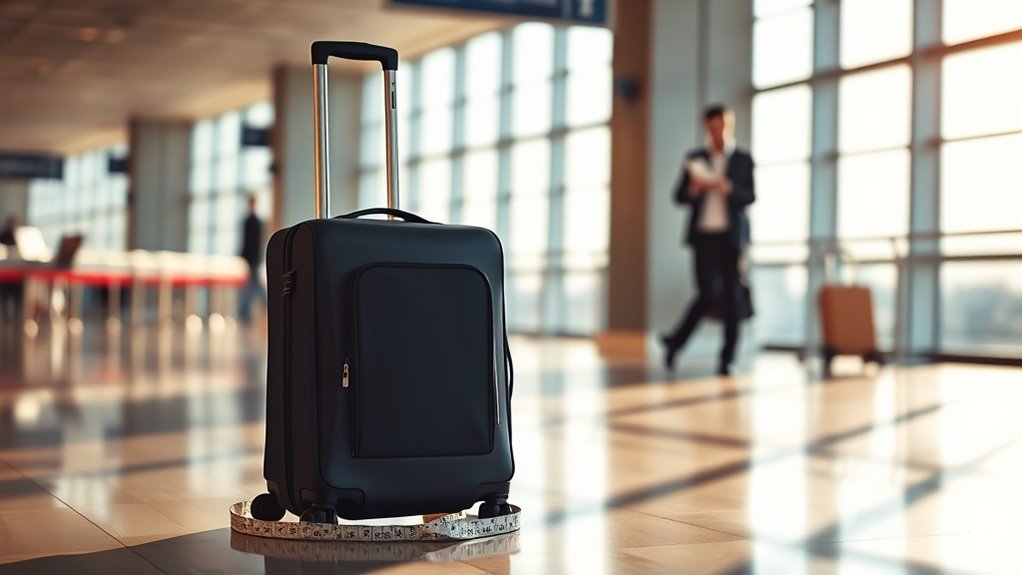
Because airlines set different size limits, whether a 21-inch bag qualifies as a carry-on depends on the carrier and how you measure it. Generally, a 21-inch suitcase often fits many U.S. domestic carry-on policies, but international and low-cost carriers may have stricter limits.
You’ll also need to take into account depth and handle extension; some airlines enforce total dimensions rather than length alone. Weight limits and gate checks matter too — even compliant bags can be gate-checked if overhead space is limited.
Always check your specific airline’s rules before packing to avoid surprises at the airport.
How Airlines Define Carry-On Size (Measuring and Linear Inches)
You’ll need to measure your bag by height, width, and depth to know if it counts as a carry-on.
Airlines often use “linear inches” (the sum of those three dimensions) to set size limits, and those limits can vary by carrier.
Check your airline’s specific measurement rules before you pack.
Measuring Carry-On Dimensions
When airlines set carry-on limits, they usually define size by three dimensions—height, width, and depth—and sometimes by linear inches, which is just the sum of those three measurements.
To measure, stand your bag upright on a flat surface. Measure height from base to highest point (handle collapsed), width at the widest side, and depth from front to back including pockets.
Use a flexible tape for curved surfaces and round up to the nearest inch. If a wheel or external pocket protrudes, include it.
Record measurements and compare them to airline limits before travel to avoid surprises at the gate.
Understanding Linear Inches
Measuring height, width, and depth gives you the raw numbers, but airlines often simplify limits by using “linear inches”—the single figure you get by adding those three measurements.
When you measure your bag, include wheels and handles if they won’t be removed, since carriers count the total external size. Compare that sum to the airline’s allowed linear inches to see if your bag qualifies as carry-on.
Linear inches remove guessing about shape and let you quickly check compliance. If your total exceeds the limit, you’ll need a smaller bag or to check it to avoid gate hassles and extra fees.
Airline Size Variations
Although many carriers quote a single linear-inch limit, each airline actually defines carry-on size differently—some specify separate height/width/depth limits, others use a total linear-inch cap, and a few add weight restrictions or drawerlike shape rules.
You’ll measure height + width + depth or check individual dimensions depending on the carrier, and you’ll find allowances vary by aircraft, fare class, and loyalty status. To avoid surprises, verify the airline’s published method before packing.
- Check linear inches (H+W+D) or individual max dimensions.
- Note weight caps and permitted shapes.
- Confirm rules for overhead vs. gate-checked bags.
Airline Examples: How Top Carriers Treat 21-Inch Bags
Because airlines set their own size limits, a 21-inch bag can be treated differently depending on the carrier, your fare type, and whether you’re flying domestically or internationally. You’ll often find it accepted as a standard carry-on on many legacy carriers, while some low-cost airlines count it as a larger cabin bag or charge extra. Check dimensions and weight before you pack, and verify overhead bin space on regional jets.
| Carrier | Typical Treatment | Tip |
|---|---|---|
| Delta | Carry-on if within limits | Check online |
| United | Usually accepted | Watch weight |
| Spirit | Often fee applies | Measure carefully |
Wheels, Handles & Packing: How Measured Size Changes
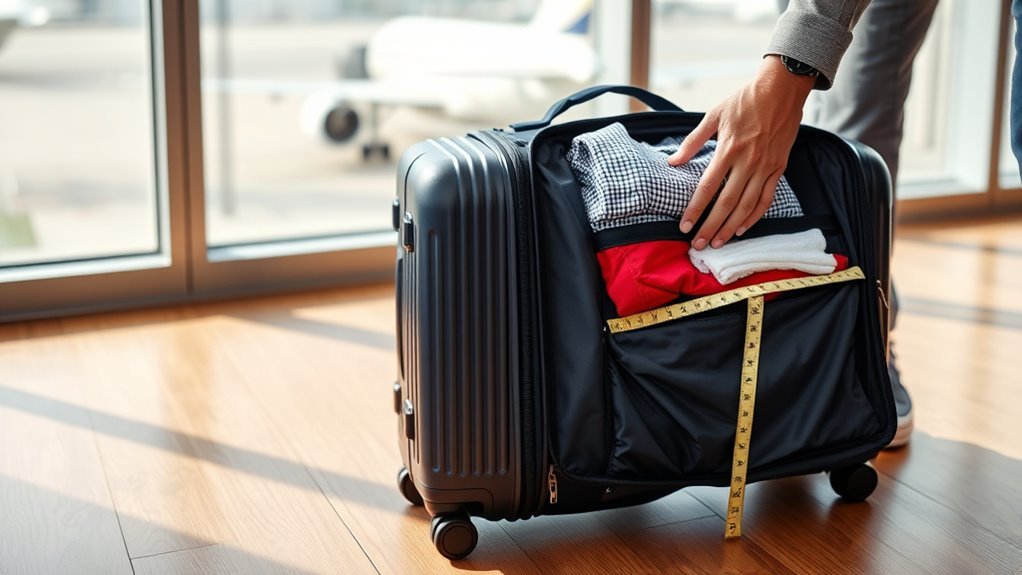
Those carrier rules matter, but your bag’s listed size rarely matches what airline staff will actually measure at the gate—wheels, handles and how you pack can add inches. You’ll want to check external features and packing choices before you fly.
Measure with wheels and the handle extended so you see the real footprint. Compress soft items, avoid rigid protrusions, and use straps to reduce depth.
Consider these quick checks:
- Measure height including wheels and pull-handle fully extended to mirror gate checks.
- Test overpacking by zipping and pressing to confirm it fits the limit.
- Remove extras like attached tags or straps that stick out.
Avoiding Gate Check: What to Do With a 21-Inch Bag at the Gate
If your 21-inch bag looks borderline at the gate, act fast to keep it with you: check dimensions with wheels and handle extended, lighten the load by moving bulky items into a personal item, and compress or remove anything that sticks out. Politely ask gate agents how strict they are; offer to stow the bag in overhead yourself to demonstrate it fits. If they insist, request a tag and gate-check receipt. Know airline size limits and be ready to rearrange items into pockets or your personal item to avoid delay.
| Action | Purpose |
|---|---|
| Measure | Prove fit |
| Redistribute | Reduce size |
| Ask agent | Clarify decision |
Buy & Pack Smart: Choosing the Best 21-Inch Carry-On
When you’re choosing a 21-inch carry-on, check each airline’s size and weight limits so your bag actually qualifies at the gate.
Pack smart with compression cubes, versatile clothing, and a strict essentials-only mindset to maximize space and avoid surprises.
Pick a bag made from durable materials and reliable zippers so it stands up to frequent handling.
Size Vs Airline Limits
Because airlines set different size caps, choosing a 21‑inch carry‑on means you need to match the bag’s dimensions to each carrier’s limits before you buy or pack. Check length, width, and height including wheels and handles so the suitcase truly fits. Measure often and compare to airline sites; policies change.
- Know domestic versus international allowances.
- Confirm gate-check thresholds and fees.
- Prioritize external measurements over labeled sizes.
If a bag’s advertised 21 inches pushes limits once wheels are added, pick a slimmer model or verify flexibility with your airline. That prevents surprises and extra charges at the airport.
Packing Strategies Efficiently
Now that you’ve matched a 21‑inch bag to your airline’s measurements, focus on buying and packing to make every inch count. Choose versatile pieces, roll clothes to save space, and use packing cubes to separate outfits. Put heavy items near wheels, keep liquids accessible, and limit shoes to one pair plus sandals. Prioritize multitasking items and a compact travel kit so you won’t overpack.
| Feeling | Item | Purpose |
|---|---|---|
| Relief | Packing cubes | Organization |
| Confidence | Folded blazer | Polished look |
| Calm | Toiletry kit | Security-ready |
| Joy | Lightweight shoes | Comfort on arrival |
Choosing Durable Materials
While size gets you through the gate, material determines how long your 21‑inch carry‑on will last and how well it protects your gear. You’ll want a balance of weight, toughness, and weather resistance so your bag survives trips without weighing you down.
Consider these material traits when choosing:
- Ballistic nylon or Cordura for abrasion resistance and repairability.
- Polycarbonate hardshell for impact protection and lightweight rigidity.
- Water‑resistant coatings or sealed zippers to protect electronics and documents.
Inspect seams, handles, and wheel housings; weak points fail first.
Pick a material that matches your travel style, and you’ll avoid replacements and protect your essentials.
Frequently Asked Questions
Can a 21-Inch Bag Fit in Overhead Bins on Regional Jets?
Yes — a 21-inch bag often fits overhead bins on regional jets, but you’ll sometimes need to gate-check it. Check your airline’s specific dimensions and bin space, arrive early, and stow smaller items under the seat.
Will 21-Inch Bags Incur Fees on Basic Economy Fares?
Usually not—you’ll likely avoid a carry-on fee if your 21-inch bag meets the airline’s size limits and fits in overhead bins, but some basic-economy fares restrict carry-ons, so check your carrier’s specific policy before traveling.
Can International Airlines Have Different 21-Inch Rules?
Yes — you’ll find international airlines set different 21-inch rules based on cabin class, route, and aircraft; you’ll need to check each carrier’s size and weight limits, plus carry-on allowances, before you pack and travel.
Do Airlines Measure With Items Packed Inside the Bag?
Yes, airlines usually measure carry-ons fully packed, including contents, straps, and wheels, since they check external dimensions; you should compress or remove items if needed, because gate staff won’t make exceptions for overstuffed bags.
Are Soft-Sided 21-Inch Bags More Likely to Be Accepted?
Yes — you’re more likely to get a soft-sided 21-inch bag accepted because it compresses and flexes into overhead spaces, but check specific airline size limits and gate agents’ discretion since allowances and enforcement vary between carriers.
Conclusion
In most cases, a 21-inch bag will work as a carry-on, but it depends on the airline’s size rules and how you measure wheels and handles. Check your carrier’s maximum linear inches and compare packed dimensions. If it’s close, be ready to gate-check or slightly edit your packing. Choose a lightweight, compressible 21-inch bag with stowable handles and slim wheels to maximize cabin fit and avoid surprises at boarding.