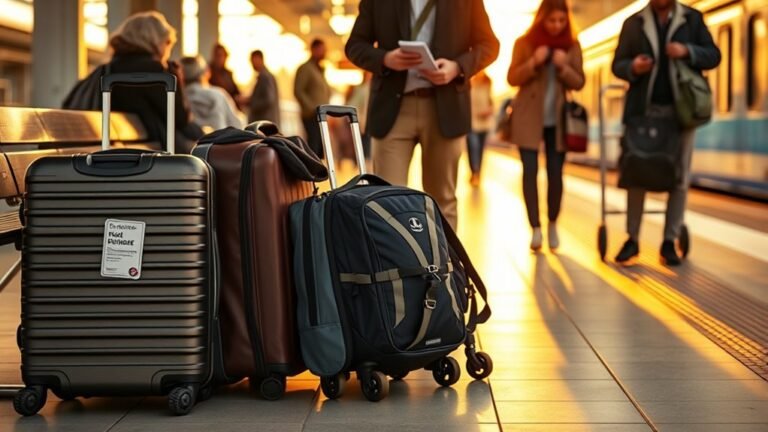
How to Use Luggage Strap for Extra Security
Use a bright, adjustable luggage strap threaded over zippers and through the suitcase handles to stop accidental openings and deter casual tampering. Cross it shortwise on soft bags to prevent bulging, or run it lengthwise to stabilize tall contents. Add a second strap for heavy loads and pair with a TSA‑accepted lock or cable for layered security. Test buckles and tension before check‑in, and keep a spare in your carry‑on if you want more tips.
Quick Answer: When and Why to Use a Luggage Strap
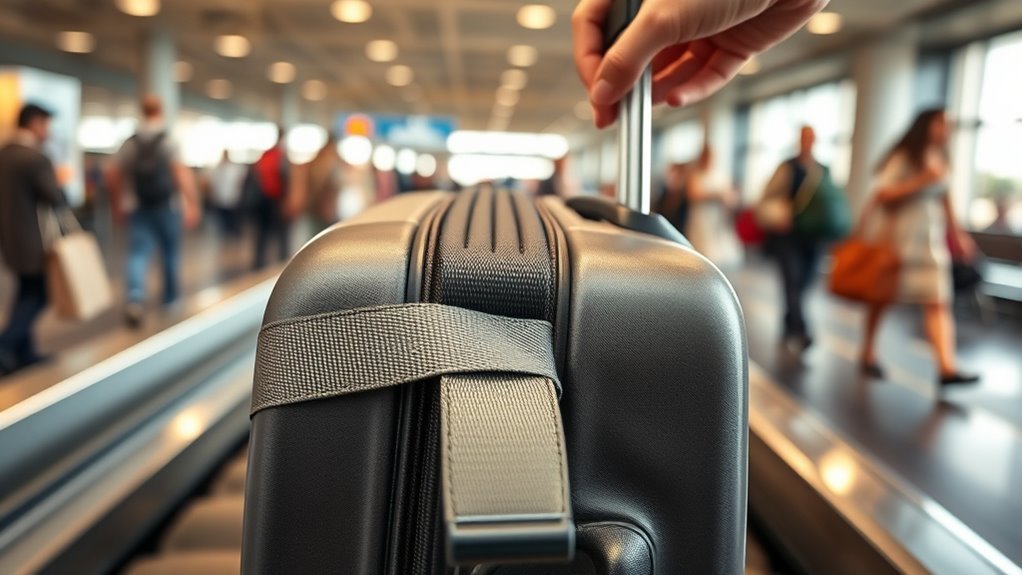
When you’re packing for travel, use a luggage strap whenever you want added theft deterrence, stronger closure, or quick visual ID. You’ll grab one when your zipper looks weak, when flights change planes, or when checked bags face rough handling.
Choose a bright color or unique pattern so you spot your case fast on a busy carousel. Adjust the length snugly to prevent shifting but not so tight it stresses seams. Clip or lock according to airline rules.
For multi-bag trips, strap bundles together to avoid misplacement. A strap’s simple presence reduces risk and speeds identification.
How a Luggage Strap Boosts Security and Prevents Spills
Want extra peace of mind that your bag will stay shut and upright? A luggage strap tightens around your suitcase, keeping zippers from popping and preventing accidental openings during jostling. You’ll reduce strain on zipper seams and locks, lowering the chance of splits that spill contents.
Straps also stabilize soft-sided bags, keeping items from shifting and toppling delicate toiletries or packed boxes. When you fasten a strap, you create a visible deterrent to casual tampering—someone has to undo it to access your things.
When to Use a Luggage Strap : and When You Can Skip It
For short flights or quick transfers you can usually skip a strap if your bag’s sturdy and you’re carrying it on.
Use a strap on high-risk routes or when your luggage will be checked to deter tampering and keep zippers closed.
If your bag is lightweight or already secured, a strap may be unnecessary, but it’s an easy precaution when you’re unsure.
Short Flights, Quick Transfers
If you’re hopping a short flight with a tight connection, you can often skip a luggage strap—airlines handle quick transfers efficiently and the bag spends minimal time out of your sight. Still, assess factors: is your bag fragile, overpacked, or similar to many others? If so, a strap helps identification and prevents accidental opening.
For nonstop short hops or tight same-airline connections, skip it to save time and avoid added bulk. For itineraries with self-transfer or lengthy ground handling even on short flights, choose a slim strap for quick attachment—balance convenience with the small extra security it provides.
High-Risk Routes
When you’re traveling routes with high theft risk, frequent transfers, or airlines with spotty baggage handling, use a luggage strap to deter tampering and make your bag easy to spot. You’ll secure zippers, discourage opportunistic theft, and speed identification during chaotic transfers.
Choose a bright, unique strap and lockable buckles if you expect rough handling or many hands. Fasten it snugly around vulnerable seams and external pockets, and check it after each connection.
Skip heavy-duty straps only if you’re on a trusted, direct itinerary with minimal handling. Otherwise, a strap’s low cost and easy use add meaningful protection.
Lightweight Or Carry-On
Even on lighter trips or with carry-on only, you’ll want to think about whether a strap adds value or just extra bulk. You’ll skip it when minimal needs outweigh convenience, but choose one when protection, organization, or airline rules matter. Consider these quick guidelines:
- Use a strap if your bag’s zipper feels weak or overstuffed.
- Add one for short hops with multiple connections to prevent accidental openings.
- Skip it for ultralight, single-pocket packs where weight and space are critical.
- Keep a slim, removable strap if you sometimes need extra security without permanent bulk.
Decide based on risk, convenience, and space.
Luggage Strap Types: Fixed, Adjustable, Wrap-Around
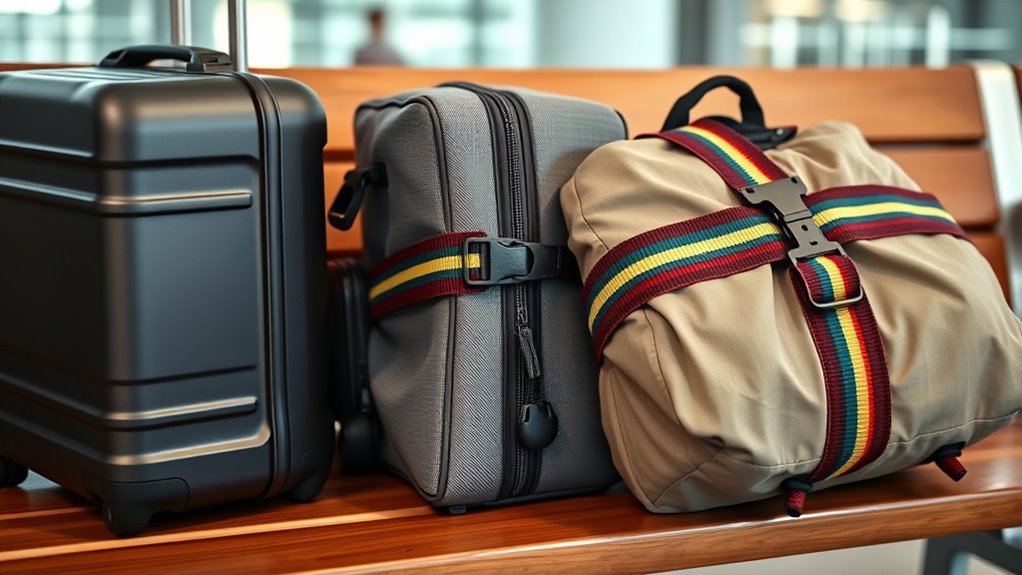
Because travel needs vary, choosing the right luggage strap comes down to how you want it to fit and secure your bag. You’ll pick fixed straps when you want a simple, low-profile option that stays in place; they’re quick to use but offer limited sizing.
Choosing the right luggage strap depends on fit and security—fixed straps are low-profile, quick, but limited in sizing.
Adjustable straps give you flexibility for different bags and added compression; tighten them to reduce shifting.
Wrap-around straps cover more surface and help keep zippers closed while holding irregular loads; they’re ideal for duffels or soft-sided cases.
Match strap type to baggage shape and packing habits, and you’ll get better control and peace of mind.
Why Strap Material Matters for Strength and Durability
Why does the material of a luggage strap matter so much? You rely on straps to hold, absorb shock, and resist wear, so material choice directly affects security and longevity. Consider properties that change performance and fit your travel habits:
- Tensile strength: how much load the strap can bear before failing.
- Abrasion resistance: how well it withstands rubbing, scuffs, and edges.
- UV and moisture stability: whether sun or water weaken the fibers over time.
- Flexibility and memory: how the strap conforms, tightens, or returns after bending.
Pick materials that match the demands you’ll place on the strap for dependable protection.
Nylon vs. Polyester vs. Rubber vs. Leather Straps
You’ll want to compare nylon, polyester, rubber, and leather by how they hold up to abrasion and weather.
Consider weight and flexibility, since heavier or stiffer straps change how you pack and carry.
Also check grip and built-in security features so your strap actually reduces slippage and tampering.
Durability And Wear Resistance
When choosing a luggage strap, think about how each material handles abrasion, stretching, and exposure to sun, salt, and water. You want a strap that resists fraying, UV fading, and mold so it protects seams and buckles on long trips. Compare abrasion tests and care needs before buying. Consider maintenance, repairability, and longevity in real conditions.
- Nylon: highly abrasion-resistant, tolerates moisture, may yellow with UV over years.
- Polyester: less stretch, strong UV resistance, sheds water well.
- Rubber: resists water and salt, can crack with age.
- Leather: stylish and durable but needs conditioning.
Weight And Flexibility
Although materials vary, weight and flexibility directly affect how a strap handles and packs, so you should match them to your travel style.
Nylon is lightweight, flexible, and compresses easily into pockets or luggage, ideal for backpackers and frequent flyers.
Polyester feels stiffer, resists stretching, and keeps shape—good if you want a tidy, predictable wrap.
Rubber straps add stretch and shock absorption but can bulk up when coiled; they suit rough handling or shock-prone transit.
Leather offers structure and a premium feel but adds weight and takes space.
Choose based on packability, comfort carrying, and how much bulk you’ll tolerate.
Grip And Security Features
How secure does your luggage need to be? You choose material based on grip and theft resistance. Nylon resists abrasion and holds tight under tension, while polyester sheds moisture and keeps buckles stable. Rubber straps grip smooth shells, reducing slippage, and leather adds durability with a firm hold and classic look.
Consider features like non-slip backing, reinforced stitching, and tamper-evident closures to boost security. Match strap choice to travel style and surface.
Key comparisons:
- Nylon: high tensile strength, low stretch
- Polyester: UV resistant, stable under load
- Rubber: superior grip, cushions impact
- Leather: durable, luxurious, less water-friendly
Compare Strap Widths and Buckle Types for Strength
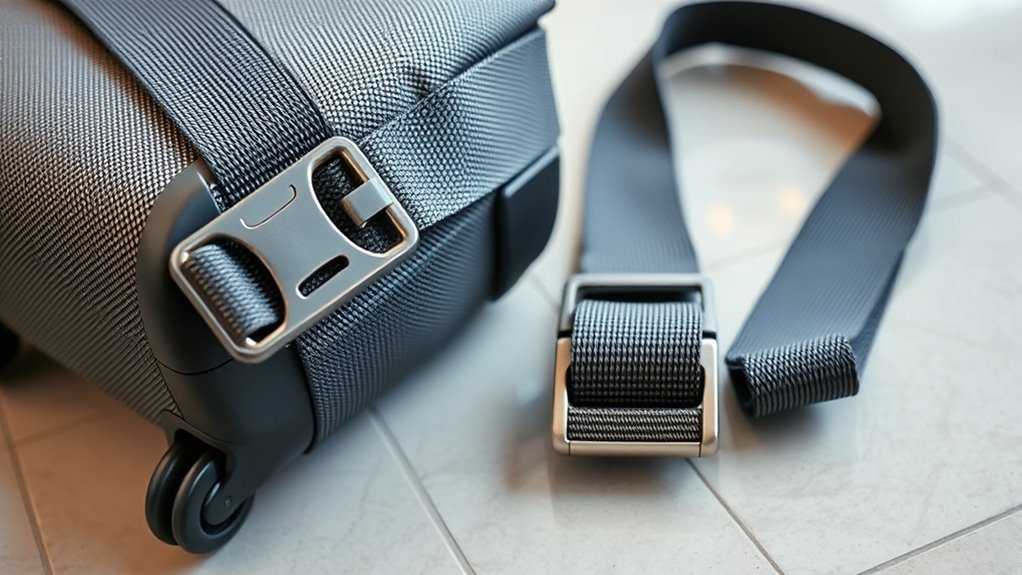
Curious which strap will actually hold up under abuse? You’ll want wider webbing—typically 1.5 to 2 inches—for better load distribution and less stretch. Narrower straps can bite into buckles and fray faster.
Check tensile ratings when available: higher numbers mean stronger material. For buckles, metal cam or ladder buckles outlast plastic side-release types; choose stainless or zinc alloy for corrosion resistance.
Ratchet-style buckles give adjustable tension and secure locking, but add weight. Simple solid-frame buckles offer reliability with minimal snagging.
Match width to buckle slot size for proper engagement, and prioritize tested materials over aesthetics.
Measuring Your Suitcase for the Right Strap Length
Before you buy a strap, measure your suitcase so the fit is secure and the buckle sits where you want it. Measure around the suitcase at the points you’ll strap — horizontally, vertically, or both — and add slack for adjustment and overlap.
Note handle placement and external pockets so the strap won’t block access. Use a flexible tape measure or a piece of cord you can lay flat and then measure.
- Measure circumference where strap will sit
- Add 6–12 inches for overlap and buckle
- Check handle and pocket clearance
- Record measurements for future straps
Choosing Fixed-Length, Adjustable, or Wrap Styles
When picking a strap, you’ll choose between fixed-length, adjustable, and wrap styles based on how you travel.
Fixed-length straps give simple reliability if you use the same suitcase, while adjustable and wrap options let you get a versatile fit for different bags and odd shapes.
Think about how many suitcases you carry and how often their sizes change to decide which style suits you best.
Fixed-Length: Simple Reliability
If you want a no-nonsense option that’s easy to use, fixed-length straps deliver dependable security with minimal fuss. You’ll clip or loop them quickly, and they stay put without adjustments.
Pick one that matches your suitcase size and buckles firmly; it’s ideal when you want consistent compression and visible deterrence.
Benefits are straightforward and practical:
- Quick application: slip it on and go.
- Low maintenance: no sliders or loose ends.
- Strong visibility: obvious extra security for handlers.
- Cost-effective: simpler design usually means lower price.
Use fixed-length straps when consistency and speed matter most.
Adjustable & Wrap: Versatile Fit
Although fixed-length straps are straightforward, adjustable and wrap styles give you flexibility for different bag sizes and odd shapes. You’ll prefer adjustable straps when you need a snug fit across varying luggage heights; they tighten or loosen quickly, keeping contents compressed and preventing zipper gaps.
Wrap-style straps loop around bulges, irregular gear, or multiple pieces, so you can secure duffels, boxes, or oddly packed suitcases.
Choose quick-release buckles for easy access or locking clips for added security.
Test fit before travel to guarantee tension and buckle placement don’t stress fabric or interfere with airport scanners.
How to Thread and Fasten an Adjustable Luggage Strap
Start by laying the strap flat and locating the buckle and loose end. You’ll thread the loose end through the buckle’s entry slot, pull it across the center bar, then feed it back through the exit slot so the buckle locks the webbing.
Now adjust tension and secure:
- Pull snugly, not overly tight, to avoid stressing the case.
- Feed any excess through the keeper loop to prevent flapping.
- Test the lock by tugging the strap; it should hold without slipping.
- If the buckle has teeth or a cam, ensure webbing sits flat for proper grip.
Finish by trimming or tucking excess and rechecking tightness.
Fasten Crosswise vs. Lengthwise: Which to Use When?
When should you fasten a strap crosswise versus lengthwise? You’ll choose based on suitcase shape, contents, and handling.
Fasten crosswise (wrap short way) when you want to keep zippers from opening and prevent bulging at the middle; it’s ideal for soft-sided bags or when items sit near the center.
Fasten lengthwise (wrap long way) to secure handles, compress tall contents, and stabilize rolling suitcases during transit.
For uneven loads, combine orientations by layering one method over the other.
Always check buckles and tension after fastening so the strap’s snug but not straining seams or zippers.
Use Dual Straps for Heavy or Overstuffed Suitcases
If your suitcase is heavy or stuffed to the seams, use two straps—one across the body and one lengthwise—to distribute pressure and keep seams and zippers from pulling apart. You’ll reduce strain on any single fastener and make the bag easier to handle.
Place the cross strap near the middle and the lengthwise one centered from handle to base. Tighten both snugly, not excessively, so contents settle without bulging.
- Balance weight evenly before strapping.
- Check buckles for wear and secure connections.
- Use contrasting colors to spot straps quickly.
- Re-tighten after transit bumps.
Secure Soft-Sided Luggage With Supportive Straps
When you strap soft-sided luggage, you reinforce vulnerable zippers and seams to reduce tear risk during transit.
Supportive straps also compress the bag to prevent bulging and keep items from shifting around. Use adjustable, snug straps so the load stays compact without stressing the fabric.
Reinforce Zippers And Seams
Though soft-sided luggage gives you flexibility, it also leaves zippers and seams more exposed to strain and tampering. You can use a strap to reduce stress and deter snags: cinch it around zipper heads, keep closures aligned, and lower pull tension so teeth don’t separate.
Check and reinforce vulnerable seams with stitching or fabric tape before travel. Fasten straps so they sit over seam lines to share load.
- Position strap over zipper sliders to limit movement
- Use a narrow strap through zipper pulls for added restraint
- Tighten strap until fabric is snug, not distorted
- Inspect seams after each trip for wear
Prevent Bulging And Shifting
Because soft-sided bags can balloon and shift as you add or remove items, using supportive straps keeps contents compact and stable during transit. You’ll wrap straps around the bag’s width and length, tighten to remove slack, and lock or tuck ends to prevent loosening. Place padding near fragile items, then cinch straps to immobilize them. Check tension after handling and adjust for changes in load. Straps reduce stress on seams and make stacking easier. Use bright straps to spot misalignment quickly.
| Action | Benefit |
|---|---|
| Cinch straps | Prevents bulging |
| Cross-strap | Limits shifting |
| Recheck | Maintains tension |
Strap Placement to Block Zipper Access
If you want to stop someone from slipping a finger under your zipper, position the luggage strap so it runs across the zipper sliders and anchors to fixed points on the bag. You’ll create a physical barrier that keeps sliders from separating and makes covert access obvious.
Tighten the strap snugly without stressing fabric. Check alignment after handling or transit.
- Run the strap over both sliders, not beside them.
- Anchor to loops or rigid handles to prevent slide.
- Use a crosswise placement for soft-shell bags.
- Keep excess strap short and secured to avoid catching.
Inspect placement at each checkpoint.
Pairing a Luggage Strap With a Tsa-Accepted Lock
When you pair a luggage strap with a TSA-accepted lock, you’re adding a visible deterrent while still allowing agents to inspect your bag without damage.
Secure the strap so its buckle sits near the lockable zipper pulls. Thread the lock through the zipper pulls, then clip the strap so it compresses but doesn’t stress fabric or seams.
Position the buckle by the zipper pulls, thread the TSA lock through them, and clip the strap snugly—avoid stressing seams.
Choose a lock labeled TSA-recognized with a key or combination, and keep the key or code accessible in case you need to reopen quickly.
Inspect the strap and lock for wear before travel. This combo discourages opportunistic tampering while preserving TSA access.
Loop a Lock Through the Buckle vs. the Zipper Pull
You can loop a lock through the strap buckle for stronger tamper resistance or through the zipper pull for quicker access—each has pros and trade-offs.
Looping the lock through the buckle tends to prevent prying and zipper slips, while using the zipper pull is faster but slightly less secure.
For most trips, lock the buckle for security and the zipper pull only when you need frequent access.
Buckle Versus Zipper Pros
Many travelers prefer looping a lock through a buckle rather than a zipper pull because buckles sit on the strap’s body and resist tampering better, while zipper pulls can be more exposed and easier to pry open. You’ll notice clear differences when choosing which to secure.
- Buckles distribute force across the strap, reducing zipper damage.
- Zipper pulls allow quicker access but expose teeth and stitching.
- Buckles often hide the lock link, deterring casual interference.
- Zipper locks can be convenient for short stops but aren’t as robust.
Weigh visibility, convenience, and durability to pick the best fit for your trip.
Locking Method Recommendations
Although both methods aim to deter tampering, looping a lock through the strap buckle generally gives you stronger, more discreet protection than locking zipper pulls. So choose the buckle if you prioritize durability and theft resistance.
You’ll find buckle locks conceal the locking point, reduce leverage against zippers, and stay secure if the zipper track weakens. Use a small TSA-approved padlock or integrated buckle lock for travel; confirm the strap thread and buckle material are robust.
Reserve zipper locks for quick visual deterrence or when straps aren’t available. Always test the lock before travel and avoid obvious, flimsy hardware.
Using Cable Locks With Straps for Layered Security
When you pair a flexible cable lock with a sturdy luggage strap, you create layered security that deters casual tampering and opportunistic theft.
You thread the cable through strap buckles and zipper pulls, then loop it around a fixed handle or frame before locking. This prevents quick snips or zipper access and keeps straps aligned under tension.
Use TSA-approved cables where required and test tension to avoid damage.
Balance convenience with protection so you can still access items when needed.
- Thread cable through strap and zippers
- Loop to fixed anchor point
- Use TSA-compliant locks if flying
- Test tension and accessibility
Visual ID: Bright Colors and Patterns to Spot Baggage
Pairing locks and straps helps keep your bag secure, but bright colors and bold patterns make it easy to spot on a crowded carousel or overhead bin.
Choose straps with high-contrast hues or unique motifs so you can quickly identify luggage without opening it. Bright straps also deter casual mix-ups by signaling ownership at a glance.
Place one across the suitcase and another looped through handles for visibility from multiple angles. Pick colors that stand out in airport photos and low light.
Keep a spare strap in your carry-on so you can swap if one gets dirty or damaged.
Personalizing Straps for Quick Identification and Deterrence
Personalizing your luggage straps makes them easier to spot and adds a layer of deterrence—use name tags, custom embroidery, or distinctive charms so your bag stands out and thieves think twice. You’ll want practical options that are visible and durable. Combine ID and style so you can identify quickly while signaling a unique, handled item.
- Attach a weatherproof name tag with bold lettering.
- Add bright woven embroidery or monogram for instant recognition.
- Clip a distinctive charm or keychain that’s hard to replicate.
- Use reflective patches for low-light visibility.
Keep choices simple, secure, and easy to replace when worn.
Test Strap Tension and Buckle Reliability Before Check-In
Adding ID and flair helps you spot your bag, but you also need to make certain the strap itself will hold up.
Before check-in, fasten the strap snugly around packed luggage, then lift and shake the bag gently to test tension—strap should stay taut without cutting into fabric.
Snap and unclip the buckle several times to verify smooth engagement and secure locking; listen for a firm click.
Inspect for cracks, fraying, or loose stitching at stress points.
If adjustable, tug the tail to ensure the slider locks.
Replace any strap or buckle that feels brittle or unreliable before travel.
Fix Common Strap Problems at the Airport
If a buckle feels loose, you can usually tighten it on the spot to keep your strap secure.
Patch or tape frayed straps temporarily, and look for a replacement at a shop if the damage’s worse.
If the lock’s sticking, try cleaning the mechanism and relocking it gently to avoid jams.
Tighten Loose Buckles
When a luggage strap’s buckle feels loose, don’t wait until it’s flapping in transit—you can secure it quickly with a few simple adjustments.
Check the buckle teeth and housing for debris, then tighten the strap by feeding slack through the adjuster while holding the buckle closed.
If the cam-style lock slips, press it firmly while pulling the strap to set teeth engagement.
Test by giving the bag a sharp tug.
- Clean buckle teeth with a toothpick or cloth.
- Reseat webbing to avoid twists.
- Use a small screwdriver to bend a weak tooth slightly.
- Replace the buckle if slipping persists.
Repair Frayed Straps
Loose or damaged buckles are annoying, but a frayed strap can leave your bag vulnerable—so you’ll want quick fixes you can do right at the airport. Inspect the tear, trim loose threads with scissors, and melt synthetic fibers carefully with a lighter to fuse ends. Use strong tape or a zip tie as a temporary clamp. If the buckle splits, loop the strap through a metal carabiner or replace with a compact spare strap from your carry-on.
| Problem | Quick Fix |
|---|---|
| Minor fraying | Trim + melt ends |
| Large tear | Tape or zip tie |
| Buckle crack | Carabiner workaround |
| Complete failure | Swap spare strap |
| Urgent hold | Ask airline staff |
Prevent Locking Issues
Because locking struggles can turn a simple trip into a stressful scramble, you’ll want quick checks and fixes before you reach the gate. Inspect the buckle, zipper pulls, and combination dials for dirt, misalignment, or stiffness. Test the strap under tension to verify teeth engage and release smoothly. If a combo sticks, spin each wheel gently while applying pressure to reset digits.
- Clear grit with a soft brush or compressed air.
- Lubricate metal parts sparingly with a dry silicone spray.
- Replace broken buckles at a luggage repair kiosk.
- Keep a backup strap in your carry-on.
Prevent Strap Damage to Spinner Wheels and Handles
If you loop a luggage strap carelessly, it can press against spinner wheels and handles and cause scratches, bends, or impaired movement. Instead, position the strap so it avoids contact points and use padding or strap guides to distribute pressure away from fragile parts.
Check wheel housings and telescoping handle channels before fastening, routing the strap around the body of the case rather than across rotating components. Use soft fabric or foam inserts at any crossing to cushion pressure.
Tighten gradually and test wheel spin and handle extension. Inspect straps regularly for wear and replace any that fray to prevent abrasive damage.
Airline Policies That Affect Strap Use
You’ve taken care to route and pad your strap to protect wheels and handles, but you also need to contemplate airline rules that can affect whether you can use a strap at all. Before you fly, check carrier baggage policies and size limits, since some airlines restrict external attachments that change dimensions.
Also confirm whether straps might trigger additional fees for oversized luggage. If you’re flying internationally, review destination rules for declared or sealed items.
Finally, note airline security advisories about materials that could obstruct X-ray imaging.
- size and external attachments
- oversized baggage fees
- international declarations
- security imaging restrictions
Make Straps Inspection-Friendly for Customs and TSA
When you buy a luggage strap, pick one with a quick-release buckle so agents can open it without cutting.
Look for straps that include a clear inspection window or a removable ID panel to show contents or tags. Those features speed up checks and help you avoid damaged straps or delayed bags.
Quick Release Options
Want a strap that keeps your bag secure but still lets officials inspect it fast? You can choose quick-release options that balance security and ease. Pick designs that open without tools yet resist accidental release. Consider tamper-evident features and TSA-accepted locks when needed.
Evaluate materials and mechanisms so inspections are swift and compliant.
- Push-button buckles for one-handed opening
- Breakaway clips that show clear tampering
- Integrated TSA-accepted locks for controlled access
- Slide-release straps that adjust and detach quickly
Test your chosen option before travel so inspections stay smooth and security stays intact.
Clear Inspection Windows
Because inspections are faster when agents can see contents at a glance, pick straps with clear inspection windows so customs and TSA can verify items without cutting or unbuckling your gear.
Choose durable, transparent PVC or mesh pockets sized to display packing lists, fragile tags, or permit documents. Slide paperwork into the window before travel so agents confirm contents quickly and return your bag intact.
Make certain the window doesn’t obscure logos or tamper-evident seals. If you cross borders, check country-specific rules about visible documents.
Clear windows save time, reduce damage risk, and keep your strap practical while complying with inspection protocols.
Packing Strategies That Reduce Excess Strapping
If you pack thoughtfully, you’ll minimize awkward overhangs and wasted strap length that make luggage straps less effective. Position dense items along the spine, compress softer garments, and keep bulky shoes near corners so the bag sits flat and straps sit snugly.
Use packing cubes to limit shifting; that reduces needed strap tension. Aim for uniform thickness across the bag face so one strap can secure more area.
- Group like items to avoid bulges
- Fill gaps with soft items, not loose straps
- Lay flat items parallel to strap direction
- Zip compartments fully before applying straps
DIY Strap Fixes and Quick Airport Repairs
If a strap snaps, you can swap in a spare or use a strong cord for a quick replacement.
For broken buckles, you’ll want to secure the strap with a zip tie or loop a carabiner through the webbing until you can get a proper fix.
These simple airport repairs keep your bag closed and give you time to find a durable solution.
Quick Strap Replacements
When a luggage strap breaks or its buckle jams right before a flight, you can usually fix it quickly with a few common items from your bag or the airport shop. You’ll want to replace the strap or bypass the damaged section so your bag stays closed and manageable.
Keep replacements compact and simple: strips of webbing, a spare adjustable strap, or even a sturdy cord will do. Use basic knots and clips to secure everything firmly.
Consider these quick options:
- Cut-to-length webbing with a lighter-sealed end
- Nylon cord tied with a bowline
- Small carabiner and loop
- Elastic luggage band
Temporary Buckle Repairs
Those quick fixes get your bag closed, but a busted buckle needs a sturdier, temporary repair before you board. You can loop the strap through itself and knot tightly, or thread it through a carabiner, D-ring, or zipper pull to recreate a secure closure.
Use strong tape (gaff or duct) wrapped several times around the connection, then cover with a rubber band for friction. If you have zip ties, cinch them snugly and trim ends.
Keep the repair visible for inspection and avoid forcing overloaded zippers. Replace the buckle or strap ASAP once you reach your destination.
Strap Strategies for Short Trips vs. Long-Haul Travel
Because short trips let you travel light, you’ll typically need a simpler strap strategy than for long-haul journeys. For quick weekends, use one strap to keep zippers closed and prevent bursts.
For extended travel, layer straps to guard against rough handling and shifting contents. Adjust tension and placement based on load and airline rules, and always check buckles before departure.
Consider these quick rules:
- Use a single cross strap for light, soft-sided bags.
- Add a second strap for checked luggage on longer trips.
- Tighten but avoid over-compressing fragile items.
- Mark straps with a tag for easy ID and security checks.
Best Straps for Adventure, Ski, and Outdoor Trips
If you’re heading into the backcountry or loading skis for a multi-day trek, pick straps built for dirt, moisture, and heavy loads—look for durable nylon or polyester webbing, corrosion-resistant metal or reinforced plastic buckles, and weatherproof coatings that won’t stiffen in cold.
Choose cam-buckle or ratchet styles with high tensile ratings for secure, adjustable tension; quick-release buckles help when gloves are on.
Reflective accents improve visibility; padded sections protect gear contact points.
Test straps under load before departure and carry spares or repair tape.
Prefer modular designs that let you lash skis, boots, or bundles without specialized gear.
Using Straps on Backpacks, Duffels, and Garment Bags
When you travel light or carry heavy gear, you’ll want to secure straps on backpacks to stop zippers from splitting and keep pockets closed.
Use compression straps or wrap a luggage strap around duffels to reinforce seams and prevent bulging.
For garment bags, fasten a strap around the folded bag to keep suits and dresses flat and protected.
Secure Straps For Backpacks
Although backpack straps are built for comfort, adding a luggage strap can considerably boost security and organization on duffels, garment bags, and packs. This way, you’ll keep zippers closed, gear compressed, and valuables less accessible to opportunistic thieves.
Use a strap across main compartments, loop one around external pockets, or thread a slim strap under shoulder pads to deter quick snatch attempts. Choose durable, lockable straps and adjust tension for balance.
Quick-release buckles speed access while keeping things tight. Consider color-coding straps for contents so you’ll locate items fast.
- Cross main zipper
- Secure external pockets
- Thread under padding
- Use lockable buckle
Reinforcing Duffels And Garments
Want extra reinforcement for your duffel or garment bag? Use a luggage strap to compress and protect contents. Wrap it around the middle or crosswise to stabilize bulky items, and tighten until the fabric sits snug without stressing seams.
For garment bags, run the strap horizontally near the hanger area to prevent shifting and keep wrinkles down. Clip a small TSA-approved lock through the buckle for theft deterrence.
For duffels with external pockets, loop the strap under pockets to keep them closed. Check tension periodically and avoid over-tightening; straps should secure, not strain, your gear.
Anti-Theft Features to Pair With a Luggage Strap
If you’re using a luggage strap, add a few anti-theft features to make your bag even harder to tamper with. Pair the strap with lockable buckles and a TSA-approved padlock so zippers and strap closures stay secured.
Use tamper-evident cable ties for extra signaling if someone fiddles.
Consider a small GPS tracker tucked into a lining to locate lost bags, and attach a discreet ID tag with contact info.
- Lockable strap buckle or combination lock
- Tamper-evident cable ties
- Slim GPS tracker
- Discreet, durable ID tag
Eco-Friendly Strap Materials and Sustainable Options
Alongside security features, you can choose luggage straps that lessen environmental impact without sacrificing durability or function. Look for straps made from recycled PET, organic cotton, hemp, or upcycled materials; they lower waste and use fewer virgin resources.
Biodegradable buckles and non-toxic dyes reduce pollution, while modular designs let you replace parts instead of the whole strap. Certification labels like GRS or OEKO-TEX help verify claims.
You’ll still want strong stitching and tested hardware, so prioritize verified eco-options. Choosing sustainably made straps supports circular practices and gives you reliable security with a smaller footprint.
Caring for and Cleaning Your Luggage Strap
Because your luggage strap sees rough handling and exposure to dirt, grime, and weather, you should clean and inspect it regularly to keep it reliable. Wipe woven or nylon straps with mild soap and water; avoid bleach and harsh solvents. Dry fully to prevent mildew and metal corrosion.
Check buckles, stitching, and tensioning for wear; replace if frayed or bent. Store straps flat in a dry place away from UV light.
- Rinse salt or sand promptly after beach trips
- Lubricate moving metal parts sparingly with silicone spray
- Spot-treat stains with gentle detergent
- Inspect before every trip
Recommended Luggage Strap Brands by Budget and Need
When you’re choosing a luggage strap, match the brand to your budget and travel habits so you get the right balance of durability, security, and features.
Below are solid options for budget, midrange, and premium needs that consistently earn good reviews.
For budget, look at AmazonBasics or Zombee for affordable, functional straps with basic buckles and bright colors.
Midrange choices like Away and Samsonite give sturdier materials, TSA locks, and cleaner designs.
For premium, consider Tumi or Rimowa for heavy-duty construction, integrated locking systems, and warranty support.
Pick what fits your trip frequency and desired features.
Price vs. Performance: What to Expect at Each Price Point
Now that you’ve matched brands to budget and needs, it helps to understand what each price tier actually buys you. You’ll see trade-offs: cheap straps protect against simple snags, mid-range options add durability and better buckles, while premium straps bring reinforced webbing and integrated locks. Choose based on trip type and luggage value.
- Budget: basic webbing, plastic buckle, light use.
- Mid-range: stronger nylon, metal-reinforced buckles, weather resistance.
- Premium: heavy-duty webbing, TSA-approved locks, lifetime warranty.
- Specialty: compression or anti-theft designs for frequent travelers.
Match performance to risk and frequency of travel.
Pre-Flight Checklist: Using a Luggage Strap Correctly Before Check-In
Before you head to the check-in desk, give your luggage strap a quick, systematic inspection so you’re not caught out by a failed buckle or loose fit.
Check buckle function: clip and unclip it several times to ensure it latches securely and releases without sticking.
Clip and unclip the buckle several times to ensure it latches securely and releases smoothly.
Tighten the strap so it’s snug but won’t stress seams or zippers.
Inspect webbing for frays, cuts, or weak spots.
Verify any TSA lock opens with a travel key or code.
Confirm strap placement won’t block tags or handles.
Finally, tuck excess strap to avoid snags during handling and transit.
Frequently Asked Questions
Can a Luggage Strap Damage Fragile Items Inside My Suitcase?
Yes — a tight luggage strap can crush or shift fragile items if you don’t pad them. You should cushion breakables, distribute pressure, avoid overtightening, and consider internal packing cubes or bubble wrap so your items stay protected.
Are There Restrictions for Straps on International Flights Beyond TSA?
Yes — some countries or airlines restrict visible straps if they obscure tags, require tamper-evident seals, or forbid external locks; you should check your carrier and destination rules, and avoid straps that prevent baggage inspection or damage sensors.
Can a Strap Interfere With Airline Baggage Scanners or X-Rays?
No, a luggage strap usually won’t interfere with airline X-ray scanners; they’re designed to image through fabrics and plastics. You should avoid bulky metal buckles, though, since they might trigger inspectors or require manual checks.
How Do I Remove Odors or Mildew From Old Fabric Straps?
You can remove odors and mildew by scrubbing straps with warm water, mild detergent, and white vinegar, rinsing thoroughly, sun-drying, and repeating if needed; don’t machine-dry leather or weakened fibers, and deodorize with baking soda.
Will Travel Insurance Deny Claims if I Use a Strap Instead of a Lock?
No, travel insurance generally won’t deny claims simply because you used a strap instead of a lock, but you’ll want to check your policy—some require reasonable precautions—and document damage or theft promptly to support any claim.
Conclusion
You now know when a luggage strap helps—added security, spill prevention and extra ID—and when you can skip it. Choose the right type and material for your trips, check and clean the strap regularly, and pick a trusted brand that fits your budget. Before check-in, fasten, tighten and inspect the buckle and seams so your bag stays closed and identifiable. Use the strap wisely and travel with greater confidence and peace of mind.