How to Store Luggage Smart Storage Ideas and Tips
Keep only functional or sentimental pieces and toss or recycle broken ones, then clean shells, wheels, zippers and let liners dry. Nest smaller bags inside larger ones and stuff them with pillows or blankets to save space and keep shape. Store upright on high shelves, under beds, or on wall racks; use covers, labels and silica packets to prevent dust and moisture. Rotate seasonally, inspect wheels and zippers, and follow simple maintenance — keep going for more practical tips and fixes.
Checklist: Keep or Discard Luggage
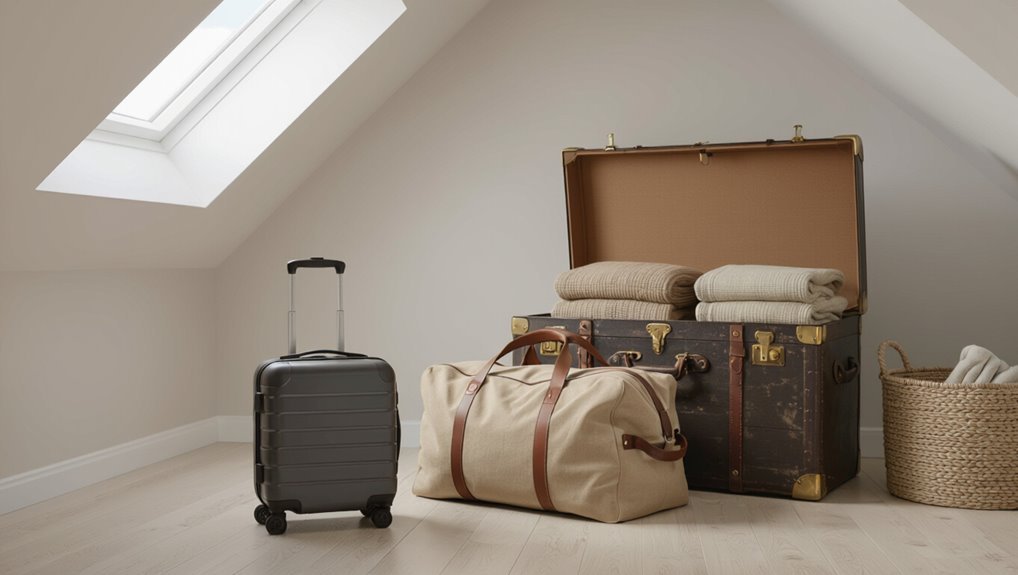
Start by laying out a simple checklist you can run through for each piece of luggage: inspect condition (wheels, handles, zippers), assess last use and frequency of future use, check storage cost or space needs, and note sentimental or replacement value.
Then decide: keep if functional and likely used, donate or sell if usable but unnecessary, recycle or discard if broken beyond practical repair.
Best Places to Store Luggage at Home
Choose storage spots that keep luggage accessible but out of the way: a high closet shelf for seldom-used suitcases, under-bed space for carry-ons, an entryway or garage rack for travel-ready bags, and built-in cabinets or attic space for seasonal pieces.
Use vertical shelving, clear bins, or labeled covers to protect cases.
Rotate bags periodically, keep wheels off the floor when possible, and avoid damp areas.
Clean and Prep Luggage Before Storage
After stashing your suitcases in their new spots, give them a quick once-over so they’ll stay in good shape while stored.
Wipe shells with a damp cloth, clean wheels and zippers, empty pockets, and remove loose debris.
Let liners air dry completely to prevent mildew.
Apply a light leather conditioner to straps if needed, then close and label each bag for easy retrieval.
Nesting and Stuffing: Save Space With Empty Suitcases
Nesting empty suitcases inside one another or stuffing them with soft items can cut your storage footprint dramatically. You’ll save space and protect shapes by filling small cases with scarves, pillows, or linens. Label stacks for easy access and avoid heavy items that deform shells.
| Tip | Action |
|---|---|
| Protect | Use linens |
| Label | Mark sizes |
| Stack | Nest securely |
Vertical and Wall Storage for Rolling Suitcases
Vertical storage makes rolling suitcases much easier to stash without wasting floor space: stand them on their ends in a closet, against a wall, or on custom racks so wheels and handles stay accessible and the cases don’t topple.
Use wall-mounted brackets, pegboard hooks, or slim shelving to secure each case. Label or color-code for quick access and keep straps tucked to prevent snags.
Under-Bed and Closet Hacks for Soft-Sided Bags
Think of your bed and closet as prime real estate for soft-sided bags—you can slide duffels and weekender totes into shallow bins or fabric drawers to free up floor space while keeping them dust-free and accessible.
Treat your bed and closet as prime real estate for soft-sided bags—slide duffels into shallow bins to save space.
- Use clear bins under bed for visibility and quick grabs.
- Hang canvas organizers on closet rods for folded totes.
- Label bins and compress lightly to preserve shape and fit.
Care for Fabric, Leather, and Hard-Shell Luggage
Before you store any bag, clean it thoroughly so dirt and stains don’t set in.
Treat leather with a conditioner and keep it wrapped or in a dust bag to prevent drying and scratches.
For hard-shell cases, check for cracks or loose hardware and store them upright to preserve shape and integrity.
Clean Before Storing
Give your luggage a quick once-over and a good clean before you tuck it away—dirt, oils, and trapped moisture can cause stains, odors, and material breakdown over time.
- For fabric, vacuum seams and spot-clean with mild detergent; air dry fully.
- For hard-shell, wipe with a damp cloth and mild soap; dry thoroughly.
- For leather, wipe with a damp cloth and let it dry before storing.
Protect Leather Surfaces
Leather needs gentle, regular care to stay supple and resist cracks while stored.
Wipe dust with a soft cloth, condition sparingly using a leather conditioner suited to the finish, and let it absorb fully before packing.
Stuff bags lightly to preserve shape, avoid plastic wraps that trap moisture, and store in breathable cotton covers in a cool, dry place away from direct sunlight.
Maintain Hard-Shell Integrity
While fabric and leather need gentle cleaning and conditioning, hard-shell cases demand impact checks, seal care, and proper handling to stay protective. You should inspect shells for cracks or deep scratches, tighten loose screws on handles and wheels, and wipe seals with a damp cloth to remove grit that can compromise zippers and closures.
- Check for cracks, deep scratches, and stress points.
- Tighten screws and lubricate wheel axles.
- Clean seals, test closures, and store upright to avoid pressure.
Moisture Control and Pest Prevention for Stored Luggage
Because stored luggage can trap humidity and invite pests, you should take proactive steps to keep both moisture and critters out of your bags.
Use silica gel packs or charcoal desiccants inside luggage, leave zippers slightly open for air circulation, store bags off the floor on shelves, and seal storage areas against insects.
Check periodically and replace desiccants to maintain dryness.
Labeling, Indexing, and a Quick-Grab System
A simple, consistent labeling and indexing system will save you time and prevent hunting through stacks of bags.
Use clear tags and a master inventory so you know what’s inside each case. Create a quick-grab zone near exits for frequent bags, and rotate items as needed.
- Label: tag, date, brief contents
- Index: spreadsheet or notebook
- Quick-grab: accessible shelf
Budget Organizers and Accessories for Luggage Storage
One or two inexpensive organizers can transform how you store luggage by keeping small items sorted, protecting bags from dust, and making retrieval faster.
Use clear zip pouches for chargers, straps, and toiletries; vacuum-seal bags for compressed packing inserts; shelf dividers to separate stacked suitcases; felt or foam pads to prevent scratches; and affordable luggage tags so you can spot each bag at a glance.
Seasonal Rotation and a Simple Maintenance Schedule
Plan a seasonal rotation checklist so you’re only storing what you won’t use for months.
Use off-season storage tips like vacuum bags, moisture absorbers, and a cool, dry spot to protect your bags.
Set a simple annual maintenance schedule to clean, inspect, and oil zippers before each season.
Seasonal Rotation Checklist
When the seasons shift, rotate your luggage contents so you can grab the right gear without digging through boxes: empty out each suitcase, check for damage, and swap in items suited to the coming weather.
- Inspect zippers, wheels, seams; repair or note replacements.
- Clean interiors, air out fabrics, add silica packets.
- Label packed bags with season and destination for quick grabs.
Off-Season Storage Tips
Anyone storing luggage for the season should set up a simple rotation and maintenance routine so bags stay ready and last longer. You’ll rotate used bags, wipe surfaces, air interiors, replace desiccants, and note repairs. Follow this quick table for cadence and actions:
| Period | Action | Why |
|---|---|---|
| Every 2 weeks | Air & desiccate | Prevent odors |
| Monthly | Wipe & inspect | Spot damage |
| Every 3 months | Rotate storage | Even wear |
| As needed | Record repairs | Track history |
Annual Maintenance Schedule
Because seasonal use changes how your bags wear, you should set a simple annual maintenance schedule that matches your travel rhythm and storage conditions.
Rotate luggage seasonally, clean and treat fabrics, and inspect wheels and zippers.
Follow this checklist:
- Clean, dry, and treat materials.
- Lubricate wheels, tighten screws, check handles.
- Store with silica packs, rotate fronts, note repairs needed.
Troubleshooting Common Storage Problems and Fixes
Although you might plan carefully, storage issues still pop up—warped wheels, musty odors, stuck zippers, or warped shells are common culprits—and you can fix most with a few simple steps.
Clean zippers with soapy water and lubricant, air out and sun-dry for odors, steam or reshape shells gently, replace or freewheel damaged wheels, and store upright with padding to prevent future damage.
Frequently Asked Questions
Can I Store Luggage in a Climate-Controlled Storage Unit Long-Term?
Yes — you can store luggage long-term in a climate-controlled unit; it protects fabrics, leather, and contents from humidity and temperature swings. You should clean, dry, and pad items, use breathable covers, and check periodically.
Will Mothballs or Cedar Blocks Damage Luggage Materials?
They won’t usually damage hard-shell luggage, but mothballs can stain, smell strongly, and leave chemical residues on fabrics and leather; cedar’s safer but can darken or oil natural leather, so you’ll want barriers and ventilation.
How Do I Transport Heavy Suitcases up Stairs Safely?
You should lift with your legs, keep the suitcase close to your body, use a shoulder strap or backpack-style carrier if possible, take one step at a time, ask someone to spot you, and rest between flights.
Can Luggage Locks Be Left on During Storage?
Yes, you can leave luggage locks on during storage, but you should open them occasionally, avoid over-tightening, use corrosion-resistant locks, and keep a record of combinations or keys so you won’t get shut out when you need your bags.
Are There Insurance Considerations for Stored Luggage?
Yes — you should check insurance: your renter’s or homeowner’s policy might cover stored luggage, but it may need explicit reporting, valuation, or extra endorsements; contact your insurer, document contents, and consider supplemental storage or transit insurance.
Conclusion
You’ve got a simple system now: decide what to keep, clean and prep each bag, then nest, stack, hang, or stash them where they won’t get crushed or dirty. Label contents and add a quick-grab list so you’ll find what you need fast. Use budget organizers, rotate seasonally, and run a twice-yearly check for pests, mildew, or broken wheels. With these small habits, your luggage stays usable and clutter stays out of your life.