How to Remove Musty Smell From Luggage Quickly
Empty your bag, check pockets and seams for damp or mold, then air it out in sun or by fans with zippers open. Wipe interiors with mild detergent, spot-treat stains, sprinkle baking soda or place activated charcoal to absorb odors, let sit overnight, then vacuum. For stubborn smells use a vinegar or rubbing-alcohol wipe and dry thoroughly with a dehumidifier. If it still smells, you’ll find tips on deep cleaning, mold signs, and when to repair or replace next.
Immediate Steps to Remove Musty Odor From Luggage
Start by emptying your luggage completely and taking it outside to air out for at least an hour; fresh air will loosen trapped moisture and help you identify where the smell is strongest.
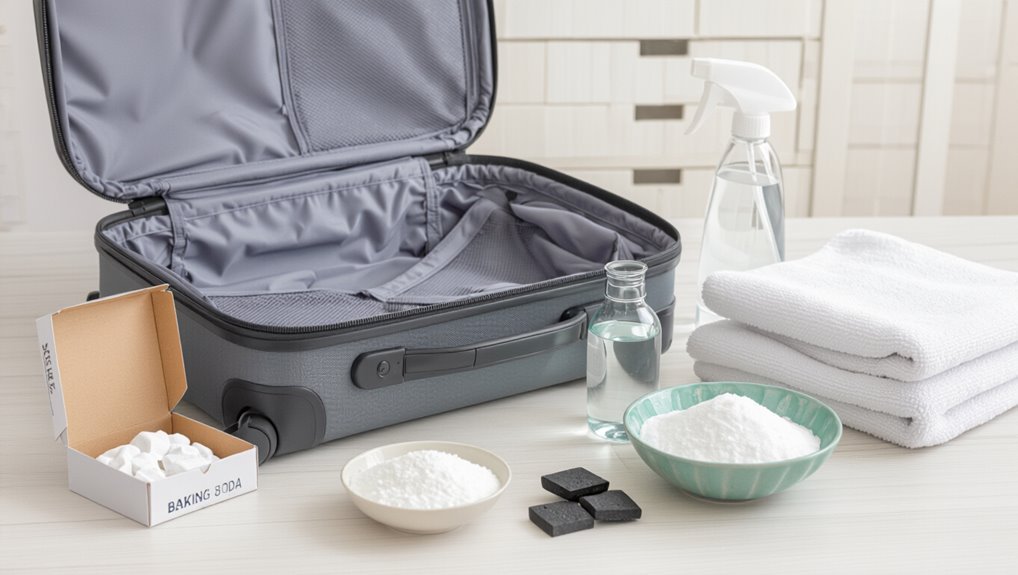
Wipe interiors with a mild detergent solution, spot-treat stains, sprinkle baking soda and let sit overnight, then vacuum.
Leave zippers and compartments open to dry fully before storing.
Empty and Inspect Your Suitcase for Hidden Damp
Start by emptying every compartment so nothing’s hiding moisture.
Check all hidden pockets and remove any damp items.
Then inspect seams and the lining for signs of mold or wetness.
Empty All Compartments
Unzip every pocket and flip out liners so you can see into every crevice—mold and damp often hide in seams, wheel wells, and zipped compartments.
Empty each section completely, remove removable organizers and trays, and pat interiors dry with a microfiber cloth.
Leave the suitcase open in sunlight or a well-ventilated area to air out thoroughly before storing or packing again.
Check Hidden Pockets
Hidden pockets are where moisture and musty odors often hide, so you should open every flap, liner, and seam to inspect them closely.
Check and empty each pocket; feel for dampness and smells. Use a flashlight, air them, and wipe interiors with a mild cleaner.
- Open all flaps
- Feel for damp
- Smell for mustiness
- Wipe and air
Inspect Seams And Lining
Turn the suitcase inside out where you can and run your fingers along every seam and the lining to feel for soft spots, dampness, or trapped debris.
If you find moisture, dry with a towel and a fan, then spray a light disinfectant or vinegar solution.
Brush out lint, repair torn seams, and leave the case open in sun or airflow until completely dry to prevent odor.
Fast-Drying Methods: Sun, Airflow, and Dehumidifiers
Set your suitcase in direct sunlight for a few hours to kill mildew spores and help fabrics dry faster.
Open zippers and pockets and use a fan or cross-breeze to maximize airflow through seams and lining.
If you’re short on time or it’s humid, run a dehumidifier nearby to pull moisture out quickly and prevent musty return.
Sunlight Exposure Benefits
Sunlight is one of the quickest, simplest ways to neutralize musty odors because UV rays kill mold and mildew while heat speeds evaporation.
You’ll get the best results by propping your luggage open in direct sun with good airflow and removing any liners or pads so damp pockets can dry fast.
- Check fabric for sun-safe labels.
- Flip and rotate every hour.
- Empty pockets and zippers.
- Finish with odor absorbers indoors.
Maximized Airflow Techniques
Although direct sun helps, combining strong airflow and dehumidification gets your luggage dry faster and prevents musty return; set the case open, unzip pockets, and place items where air circulates.
Use fans to push air through seams and corners, rotate and flip the bag periodically, and run a compact dehumidifier nearby.
Dry fully before storing to stop mildew and odors.
Dehumidifier Usage Tips
If you want the fastest, most reliable way to dry a damp suitcase, pair direct airflow with a small dehumidifier and keep the case open with pockets unzipped so moisture has a clear escape path.
Use these tips to speed drying and prevent odor:
- Set dehumidifier to low fan.
- Place unit near opening.
- Empty water frequently.
- Run for several hours.
Odor Absorbers: Baking Soda, Activated Charcoal, Coffee Grounds
One simple way to tackle musty luggage is to use everyday odor absorbers like baking soda, activated charcoal, or coffee grounds; they draw out damp smells without masking them.
Place a breathable pouch or open container inside the suitcase for 24–72 hours, then replace as needed.
Baking soda is cheap, charcoal is strongest, and coffee leaves a mild aroma but won’t fix mold.
Clean Fabric Lining and Removable Compartments
When you pull out the fabric lining and removable pockets, you can more effectively clean hidden dirt and mildew that cause musty odors.
Wash fabric parts per care label, scrub stains with mild detergent, and air dry fully. Reassemble only when dry.
- Shake out debris
- Spot-treat stains
- Use gentle brush
- Sun-dry or tumble low
Deodorize Hard-Shell Suitcases Safely
Because hard-shell suitcases trap odors in seams and vents, you’ll want to target both the exterior and small crevices without using harsh chemicals that could damage the finish.
Wipe with a mild dish soap solution, rinse, and dry thoroughly. Use a soft brush or cotton swabs for vents.
Finish by airing in sunlight or placing baking soda packets inside for 24–48 hours to absorb remaining smells.
Remove Mildew Smell From Leather and Faux-Leather Luggage
If mildew smells have settled into your leather or faux-leather luggage, act quickly to prevent staining and persistent odor; leather needs gentle, targeted cleaning to avoid drying or cracking.
Clean, dry, condition, and air promptly:
Clean, dry, condition, and air promptly to prevent mildew, odor, and drying—gentle care preserves leather and faux-leather.
- Wipe with a damp microfiber cloth.
- Use mild soap diluted in water sparingly.
- Dry immediately with a soft towel.
- Apply leather conditioner once fully dry.
Use White Vinegar or Rubbing Alcohol for Stubborn Odors
If odors stick after cleaning, try a solution of one part white vinegar to four parts water for general deodorizing.
Use undiluted rubbing alcohol for small spot treatments.
Apply vinegar sparingly with a cloth, blot alcohol on stained areas, then wipe away any residue.
Let the luggage dry completely in a well-ventilated spot to prevent new mustiness.
Vinegar Dilution Ratios
One simple yet effective mix for tackling stubborn musty odors is a 1:1 solution of white vinegar and water; you can also substitute rubbing alcohol at the same ratio for faster evaporation.
Use these ratios and steps:
- Test a hidden area first.
- Spray lightly, don’t soak.
- Let air dry fully.
- Repeat weekly until odor fades.
Alcohol Spot Treatment
When vinegar or rubbing alcohol won’t budge a stubborn spot, treat it directly with a concentrated dab—apply undiluted rubbing alcohol or a 1:1 vinegar-water mix to a clean cloth and blot the affected area, working from the outside in to avoid spreading the stain.
Test an inconspicuous area first, repeat gently until odor fades, then neutralize residues with a light baking soda sprinkle.
Drying And Ventilation
Start by airing your luggage thoroughly—leave it open in a well-ventilated spot or outdoors in indirect sunlight so moisture can evaporate and fresh air can circulate.
For stubborn odors, mist a vinegar or rubbing alcohol solution, then dry fully.
Follow these steps:
- Empty and shake out.
- Wipe with diluted white vinegar.
- Air in shade until dry.
- Repeat if needed.
Washable Pouches and Removable Bags: How and When
If your luggage has removable liners, packing cubes, or small pouches, take them out and wash them separately to cut down on musty odors before they spread to the main bag.
Clean per care labels—machine wash or hand wash with mild detergent, then air-dry fully.
Reinsert only dry pouches; replace stained or persistent-smelling liners to stop recontamination.
Prevent Musty Odor During Storage Between Trips
Because dampness and poor airflow are the usual culprits, you’ll prevent musty odors by storing clean, fully dry luggage in a cool, ventilated place and keeping moisture-absorbing aids inside.
Store clean, completely dry luggage in a cool, ventilated spot with moisture absorbers to prevent musty smells.
Follow these steps:
- Use silica packets or charcoal pouches.
- Leave zippers slightly open for airflow.
- Store off the floor on a rack.
- Rotate and air out every few months.
Quick Fixes Before Guests Arrive or a Last-Minute Flight
If you spot a musty whiff right before guests arrive or a flight, take the luggage outside and unzip it to air out for 15–30 minutes.
While it’s airing, toss in a few dryer sheets or a small pouch of baking soda to neutralize odors fast.
Those quick steps won’t cure deep smells but will make the bag presentable in minutes.
Quick Airing Trick
When time’s tight and you need luggage smelling fresh fast, grab some dryer sheets or crumpled newspaper and leave the bag open in a well-ventilated spot for an hour or two; the airflow and absorbent materials will lift stale odors enough for guests or a quick trip.
- Open zippers and pockets.
- Position near a fan or open window.
- Swap damp items out.
- Replace sheets/newspaper after an hour.
Speedy Odor Neutralizers
Short on time? Use fast neutralizers to freshen luggage before guests or a flight. Sprinkle baking soda, toss in dryer sheets, or use activated charcoal pouches. Leave items sealed an hour, then ventilate.
| Item | Use |
|---|---|
| Baking soda | Absorbs moisture/odor |
| Dryer sheet | Quick scent boost |
| Charcoal pouch | Long-lasting neutralizer |
Travel-Sized Products to Keep Luggage Fresh on the Go
Want to keep your luggage smelling fresh between trips? Pack small, effective items to prevent mustiness and refresh fabrics quickly.
- Fabric-safe spray (travel size) for instant deodorizing.
- Dryer sheets to absorb light odors and add scent.
- Mini activated charcoal pouches for continuous moisture and odor control.
- Scented sachets or cedar blocks to release gentle fragrance without chemicals.
Signs This Is Mold (Not Just Odor) and What to Do
If you notice a persistent, damp smell that won’t go away after airing and cleaning your bag, it’s likely mold rather than just ordinary odor.
Check for fuzzy spots, black or green stains, discoloration, or a musty, sour scent localized to seams or pockets.
Remove contents, vacuum, scrub with diluted vinegar, dry fully in sun, and discard irreparably damaged items.
Troubleshooting Persistent Luggage Odors
When odors keep coming back despite cleaning, don’t assume the problem’s gone—trace the source methodically.
Check hidden seams, pockets, and linings for dampness or spills. Smell test after each fix to isolate the spot.
- Empty and inspect every pocket.
- Dry interior fully in sun or with a fan.
- Clean zippers and seams with mild detergent.
- Use baking soda overnight, then vacuum.
When to Repair, Disinfect Professionally, or Discard Luggage
Because recurring smells can signal deeper damage or contamination, decide quickly whether you can fix the issue yourself, need professional disinfection, or should toss the bag.
Inspect for mold, structural damage, or persistent stains. Repair zippers, seams, or removable liners if salvageable.
Call a remediation service for heavy mold or bio-contamination. Discard if odor resists cleaning or poses health risks.
Checklist: Refresh Luggage in Under 30 Minutes
Set a quick 30-minute plan and you’ll have fresh, travel-ready luggage without fuss.
Set aside 30 minutes to refresh your luggage—fresh, deodorized, and ready to travel without any hassle.
Tackle odor fast with these steps:
- Empty and vacuum interior, including seams.
- Wipe with diluted vinegar or gentle cleaner; air dry.
- Sprinkle baking soda, wait 15 minutes, then shake out.
- Leave open with dryer sheets or activated charcoal for 10–15 minutes before packing.
Frequently Asked Questions
Can I Store Shoes Inside Luggage to Prevent Musty Smells?
Yes — you can store shoes inside luggage, but you should clean and dry them first, use shoe bags or wrap them, add a moisture absorber or dryer sheet, and keep ventilation to prevent lingering musty odors and mildew.
Are Scented Dryer Sheets Safe to Keep in Packed Suitcases?
Yes, you can use scented dryer sheets in packed suitcases, but they might stain delicate fabrics or transfer scent to sensitive items; keep them in sealed bags or use breathable pouches to avoid residue and strong fragrance buildup.
Will Mothballs Help With Musty Luggage Odor?
They won’t help much long-term; mothballs mask odors with toxic fumes and can leave harmful residue. You’d be better off airing, vacuuming, using baking soda or activated charcoal, and washing removable liners to remove musty smells.
Can Essential Oils Permanently Stain Suitcase Linings?
No, essential oils usually won’t permanently stain suitcase linings if you dilute them and test first, but concentrated oils can leave spots or bleed on delicate fabrics, so you’ll want to patch-test and wipe up spills promptly.
Is It Safe to Put Luggage in a Car Trunk for Long-Term Storage?
Yes, you can, but you shouldn’t leave luggage in a trunk long-term. Heat, humidity, pests, and condensation can damage contents and promote mold. Use climate-controlled storage, ventilate occasionally, and remove valuables or perishables beforehand.
Conclusion
You’ve just refreshed your luggage and avoided a musty disaster. Now, keep checking for damp, dry any wet spots fast, and stash a sachet of baking soda or charcoal inside between trips. If you spot mold, act quickly with disinfectant or get professional help. Rotate deep cleans every few months and store bags in a dry, ventilated place. Do that, and your suitcase will stay ready, smelling fresh whenever you need it.