How to Keep Clothes From Wrinkling in Luggage: 10 Smart Tips
Choose wrinkle-resistant fabrics like polyester, ponte, and cotton blends, and plan outfits that mix-and-match to cut bulk. Fold neatly, roll tops with even tension, and tuck delicates inside sturdier items. Use packing cubes, garment folders, and tissue or dry-cleaning bags for structure. Pack heavier items at the bottom, fill gaps with socks, and bring a travel steamer or use shower steam for quick fixes. Know when to seek professional pressing, and keep going to learn simple, specific tricks.
Choose Travel-Friendly Fabrics That Resist Wrinkles
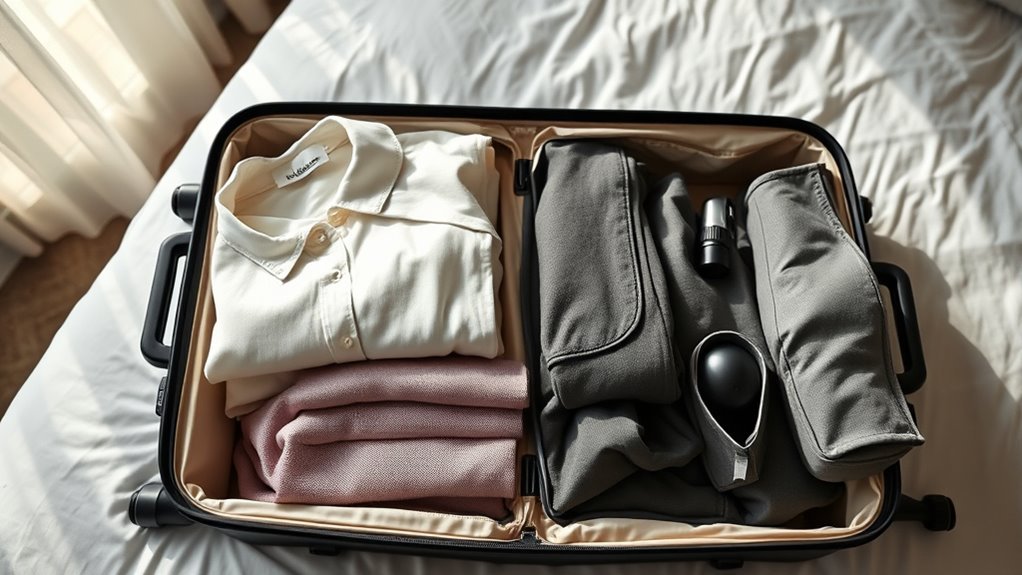
When packing, pick fabrics that hold their shape—synthetics like polyester, nylon, and blends with elastane resist creases and dry fast.
While wrinkle-resistant cotton blends and knit fabrics like jersey or ponte give a smoother look with minimal care.
Wrinkle-resistant cotton blends and knit fabrics like jersey or ponte offer a smooth, low-maintenance look for travel.
You’ll favor items that rebound after folding: ponte skirts, stretch dresses, and performance shirts.
Skip heavy linens and loosely woven fabrics that crush easily.
Look for “wrinkle-resistant” labels and fabric content before buying.
Lightweight jackets with structured weaves help protect softer pieces.
Pack fewer fragile garments and prioritize versatile, low-maintenance fabrics so you spend less time ironing and more time enjoying the trip.
Plan Outfits to Minimize Creases and Streamline Packing
Picking wrinkle-resistant fabrics is a great start, but how you combine and pack those pieces matters just as much. Lay out outfits by day or occasion so you only bring coordinated items, reducing excess shifting.
Choose tops that pair with multiple bottoms and limit delicate layers that crease. Place heavier items like jackets between soft garments to shelter them.
Pack accessories—scarves, belts, jewelry—in small pouches to prevent bunching. Plan versatile shoes that match several looks and wear the bulkiest pair during travel.
Create a simple checklist of outfits to avoid rummaging and unnecessary refolding on the road.
Fold and Roll to Reduce Wrinkles
Although rolling seems casual, it’s a deliberate technique that reduces creases and saves space: smooth each garment, fold sleeves inward for shirts, then roll from the bottom up, keeping tension even so fabrics don’t bunch. You’ll tuck delicate items inside sturdier rolls, place heavier pieces at the bottom, and fill gaps with socks to keep rolls stable. Check seams and collars after rolling so nothing’s twisted. Unpack promptly and hang or lay flat to release remaining creases. Use this quick routine to keep outfits ready without ironing.
| Item | Roll tip |
|---|---|
| Shirt | Smooth, fold sleeves |
| Dress | Roll with tissue |
Layer With Packing Cubes and Garment Folders for Protection
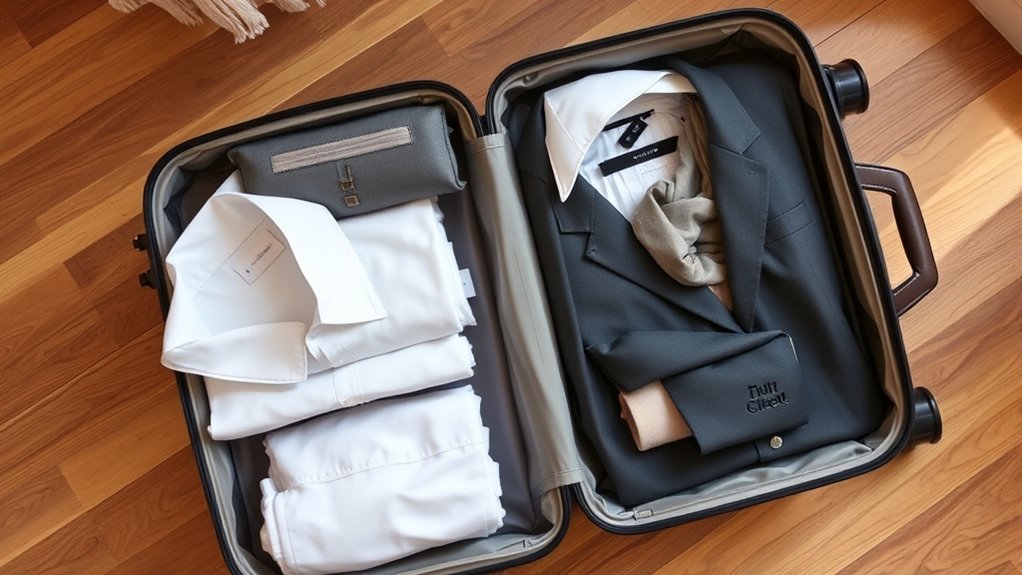
If you want extra structure and protection, layer your rolled or folded clothes inside packing cubes and garment folders to keep items compressed and separated. You’ll maintain order, reduce shifting, and minimize creases during transit.
Choose sizes by outfit and fabric weight, and place heavier cubes at the base. Use garment folders for shirts that need flat support without bulky folding.
Select cube sizes by outfit and fabric weight, stack heavier cubes below, and use garment folders for flat, crease-free shirts.
- Match cube size to clothing type
- Pack similar fabrics together
- Fill gaps with socks or scarves
- Use compression zippers sparingly
- Label cubes for quick access
This system saves space and keeps garments travel-ready.
Pack Delicate Items (Dresses, Suits) in Dry-Cleaning Bags or Tissue Paper
Once you’ve layered clothes in cubes and folders, give extra care to dresses and suits by enclosing them in dry-cleaning bags or tissue paper to reduce friction and surface wrinkles. You’ll slide garments flat, smoothing seams and aligning shoulders before sealing; the thin plastic or acid-free tissue prevents fabric-to-fabric abrasion and keeps lightweight layers from shifting. Use tissue between folds for structured pieces and a bag for flowing dresses. When unpacking, hang items immediately to let any minor creases relax. Quick steam or a damp towel and iron on low finishes the job.
| Item | Protection | Tip |
|---|---|---|
| Suit jacket | Bag | Smooth shoulders |
| Dress | Tissue | Wrap skirt |
| Blouse | Bag | Fold minimally |
| Trousers | Tissue | Align creases |
Optimize Suitcase Layout to Prevent Wrinkles
When you arrange items with intention, you’ll cut down on shifting and creasing during transit. Lay heavier pieces at the base, roll casual items, and stack folded garments flat. Create stable layers so fabric won’t move, and use compartments to separate textures. Follow these quick layout tips:
- Place shoes in corners, soles out, keeping weight balanced.
- Roll tees and knitwear to cushion structured items.
- Fold dress shirts with collars up, stacked together.
- Use packing cubes to compress without overstuffing.
- Reserve top layer for items you’ll unpack first.
Check and adjust before zipping to maintain a smooth, wrinkle-free load.
Use Small Accessories (Collar Stays, Shoe Bags, Dryer Sheets) to Keep Shape
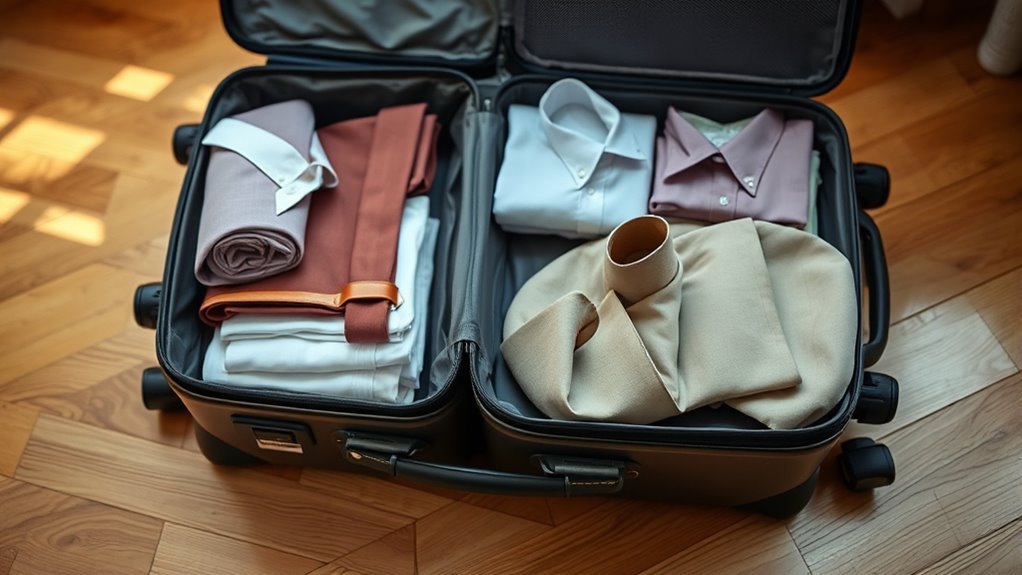
After you’ve laid out your suitcase to minimize shifting, add small accessories to protect shape and stop wrinkles before they start. Slide collar stays into dress shirt collars to keep points crisp, and tuck lightweight bras with molded cups inside each other to preserve form.
Use shoe bags or plastic grocery bags to separate shoes and stuff them with socks to maintain structure. Place rolled ties or belts in gaps to prevent creasing.
Toss a dryer sheet between layers to reduce static and keep garments smelling fresh. These small moves add almost no weight but make unpacking neater and clothes ready-to-wear.
Quick Arrival Fixes: Steaming, Shower Steam, and Emergency Ironing
If your clothes arrive a bit rumpled, you’ve got fast options to smooth them out—handheld steamer, shower steam, or a quick ironing setup can make outfits presentable in minutes.
You’ll assess fabric, choose the gentlest method, and act quickly to prevent set-in creases. Follow safety tips, protect delicate trims, and hang garments to finish cooling.
- Use a handheld steamer for suits and delicate blouses.
- Hang clothes in a hot shower for 10–15 minutes, away from direct water.
- Dampen a cloth and press with a travel iron.
- Smooth seams and hems by hand.
- Let garments fully dry before packing or wearing.
Pick Luggage and Travel Tools That Reduce Wrinkles (Soft vs. Hard Shell, Steamer)
Choose luggage and tools that actively protect your clothes: hard-shell cases keep garments flat while soft-sided bags let you tuck and compress items into corners.
Use packing aids like folding boards, garment bags, and tissue paper to limit shifting and creasing.
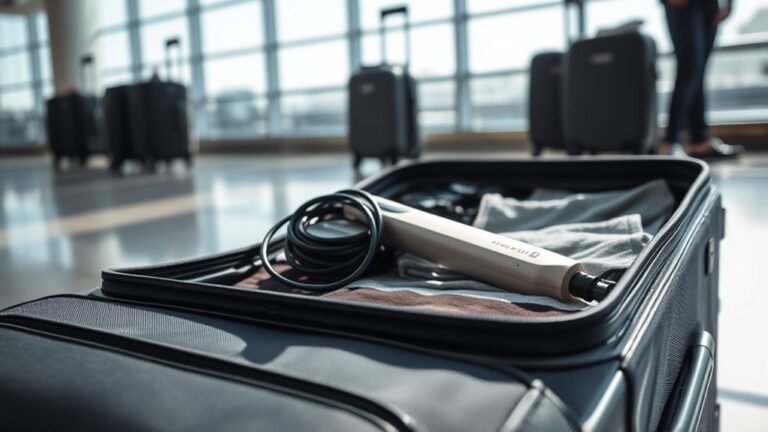
Bring a small portable fabric steamer for quick touch-ups on the go.
Hard Shell Vs. Soft
When you’re deciding between hard-shell and soft-sided luggage, think about how each protects garments and how you pack.
Hard shells shield clothes from crushing and moisture but can force you to compress items into tight spaces.
Soft bags let you mold layers around dresses and suits and often include exterior pockets for quick-access, lightly worn pieces.
Choose based on your packing style and fabric types. Consider these trade-offs:
- Hard shell: rigid protection, less external give
- Soft side: flexible packing, more pockets
- Weight differences affect handling
- Durability varies by material
- Consider carry-on size constraints
Packing Tools For Wrinkles
Now that you’ve weighed hard-shell versus soft-sided bags, think about the specific tools that actually prevent wrinkles inside your luggage.
Use packing cubes to compress and separate garments, keeping fabrics flat and organized.
Add tissue paper or plastic dry-cleaner sheets between delicate items to reduce friction.
Bring a foldable hanger or clip-on travel hook so you can hang outfits immediately at your destination.
Pack socks or soft fillers to support collars and prevent creasing.
Choose a luggage organizer with a padded garment section if you frequently carry suits or dresses.
These simple tools cut wrinkles without extra bulk.
Portable Fabric Steamer
Wondering whether a portable fabric steamer belongs in your travel kit? You’ll find it’s compact, fast, and kinder to fabrics than an iron. Toss one in your bag to refresh garments on arrival, smooth delicate materials, and reduce the need to re-wash.
Choose a model with good steam output, quick heat-up, and safety features.
- Lightweight and compact for carry-on
- Fast heat-up (under 60 seconds)
- Consistent steam output for wrinkles
- Dual-voltage for international use
- Safety auto-shutoff and leak protection
Use during unpacking, hang garments, and glide steam downward for best results.
Troubleshoot Stubborn Wrinkles and When to Get Professional Pressing
If certain fabrics keep wrinkling no matter how you pack them, check the fiber content and construction to spot persistent issues like loosely woven or high-cotton items.
You can try targeted fixes—steam, damp towel roll, or reshaping immediately after unpacking—but know when those won’t restore a crisp finish.
For delicate or structured garments, it’s worth getting professional pressing to avoid damage and guarantee a sharp look.
Identify Persistent Fabric Issues
When certain fabrics keep coming out of your suitcase creased despite careful packing, it’s time to pinpoint what’s causing the problem so you can choose the right fix. Check garments for fiber content and weave: some blends and tight weaves resist smoothing.
Inspect seams, interfacing, and embellishments that trap folds. Note how long garments stayed compressed and whether humidity changed.
Test small steam or ironing on an interior seam to see how the fabric responds before treating visible areas. Consider labeling persistent pieces for special handling.
- Fiber type (silk, linen, synthetics)
- Weave and weight
- Construction details
- Compression duration
- Humidity exposure
When to Seek Pressing
Because some creases won’t relax with travel tricks, you’ll need to decide whether to press them yourself or get a pro to do it. Inspect fabric type, crease depth, and garment value. If delicate fibers, heavy beading, or lifelong creases are involved, trust specialists. For simple cottons or quick touch-ups, use a travel iron or steamer carefully. Consider time, cost, and event importance: rushed meetings justify pro pressing; casual outings don’t. Pack a folding board or press cloth for emergencies. Choose pride over panic—professionals rescue heirlooms; DIY saves money and time when stakes are low.
| Fabric | Risk | Emotion |
|---|---|---|
| Silk | High | Anxiety |
| Cotton | Low | Relief |
| Wool | Medium | Confidence |
Frequently Asked Questions
Can Wrinkle-Resistant Shirts Still Crease After Long Flights?
Yes—you can still get creases after long flights, especially from tight packing or pressure. You’ll usually see milder wrinkles, but folding, compression, or sitting under luggage can leave noticeable lines that need steaming or smoothing.
Can Packing Heavier Items on Top Cause Wrinkles Underneath?
Yes — if you pack heavier items on top, they’ll press down and crease softer garments underneath. You should distribute weight evenly, layer with protective packing, and avoid concentrated pressure to keep clothes smoother during travel.
Do Fabric Sprays or Wrinkle Releasers Damage Clothing Finishes?
They usually won’t if you follow instructions, but you shouldn’t assume they’re harmless. Test sprays on a hidden seam, avoid delicate finishes like silk or suede, and use fabric-specific products to prevent discoloration or residue.
How Do Humid Destinations Affect Clothes Stored in Luggage?
Humid destinations increase moisture inside your luggage, causing fabrics to absorb humidity, swell, and wrinkle more easily; they’ll also encourage mildew and odors, so you’ll want breathable packing, moisture absorbers, and regular airing to prevent damage.
Can Vacuum-Seal Bags Permanently Crush Structured Garments?
Yes — they can permanently crush structured garments if you over-compress them or store them that way long-term. You’ll risk flattened shoulders, crushed padding, and distorted shapes; use gentle vacuuming, protective supports, or avoid for suits.
Conclusion
Packing smart keeps you looking sharp, so pick wrinkle-resistant fabrics, plan outfits, and use folding, rolling, packing cubes, and garment folders to protect clothes. Slip delicate items into dry-cleaning bags or tissue, and use collar stays, shoe bags, and dryer sheets to preserve shape. Bring a compact steamer or know shower-steam tricks for quick fixes, and choose luggage and tools that prevent creases. For stubborn wrinkles, don’t hesitate to seek professional pressing when needed.