How to Dispose of Luggage the Right Way (Recycling Tips)
You can responsibly dispose of luggage by first checking for reusable parts—wheels, handles, zippers—and removing electronics or batteries. If it’s clean and functional, donate, sell, or repair; for minor damage replace wheels or patch seams. For heavily stained, moldy, or broken cases, strip components for recycling (plastic shells, metal frames, fabric) and follow local bulky-waste rules for disposal. Proper prep reduces landfill waste and saves money, and the guide ahead shows practical step-by-step tips.
Choose: Donate, Sell, Repair, Recycle, or Trash
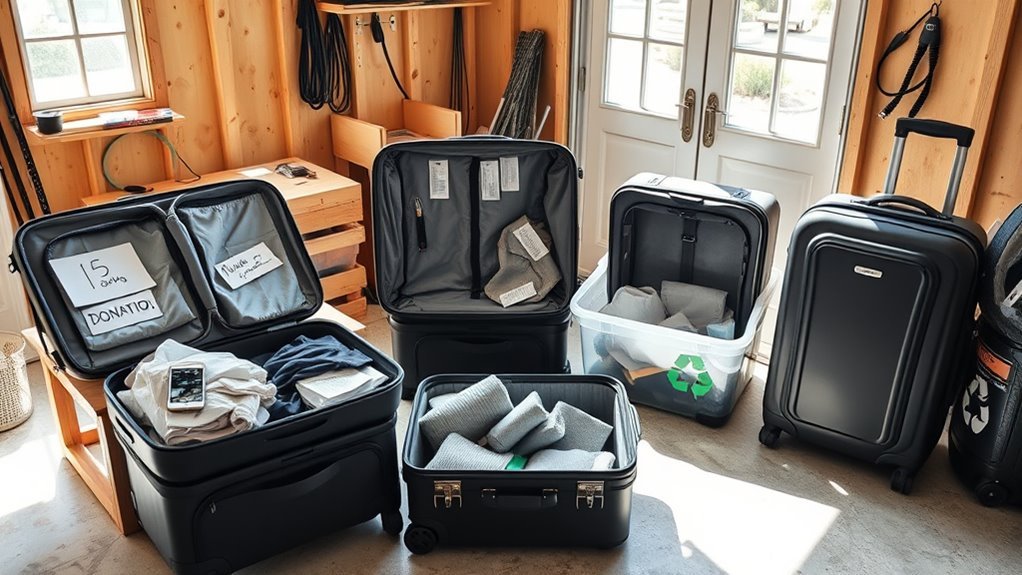
When it’s time to part with your luggage, decide whether to donate, sell, repair, recycle, or trash it based on its condition, value, and your timeline. Inspect zippers, wheels, handles, fabric, and frame to judge usefulness.
When parting with luggage, assess condition and value—donate, sell, repair, recycle, or responsibly discard.
If it’s clean and functional, donate to charities or community centers for immediate reuse. High-quality pieces can fetch money online or at consignment shops; photograph flaws, set fair prices, and list promptly.
Minor damage often pays to repair—replace wheels or fix seams—if cost is low.
For unusable materials, find textile recycling or municipal programs; otherwise dispose responsibly at waste facilities.
Check Luggage for Reusable Parts First
If repair or recycling isn’t practical for the whole bag, check it for reusable parts first — you might save money and keep useful components out of the trash. You can salvage handles, wheels, zippers, name tags, and internal frames for repairs or DIY projects.
Clean and test items before storing or selling them. Label parts and keep small hardware in sealed bags. Consider local repair shops or crafters who’ll buy components.
- Wheels and casters: inspect bearings and mounts
- Zippers and pulls: test glide and teeth alignment
- Handles and frames: check cracks or bends
Quick Checklist to Decide What to Do
Because you’ve already checked for reusable parts, use this quick checklist to decide whether to repair, recycle, donate, or discard the bag.
Inspect overall condition: small tears, functioning zippers, intact frame? If fixable with minor sewing or replacement parts, plan repair.
For heavy stains, mold, or structural collapse, lean toward recycling or discard.
Check materials—hard plastic, metal, and fabric may have different recycling paths. Confirm local recycling rules and drop-off options.
If it’s clean, safe, and usable but you won’t keep it, consider gifting or resale.
When in doubt, prioritize recycling to keep materials out of landfill.
When to Donate Suitcases and Bags
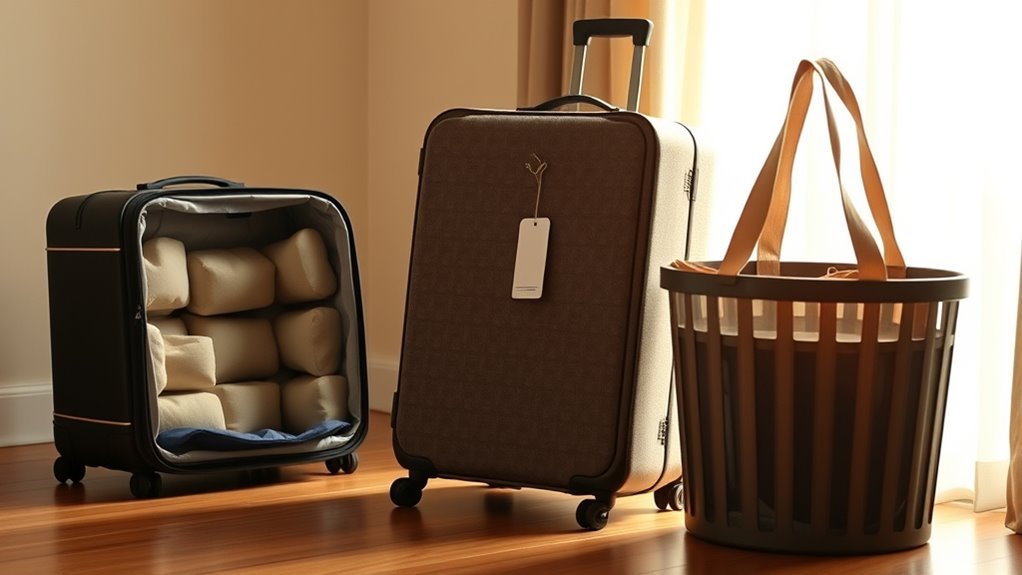
If your suitcase or bag is still in good condition—clean, functional, and with working zippers or handles—you can donate it and give it a second life.
If it shows significant wear or damage that makes it unusable, it’s better to recycle or responsibly dispose of it instead.
Check local charities’ guidelines before dropping items off so you don’t waste anyone’s time.
When Still In Good Condition
Wondering what to do with suitcases and bags you no longer need? If they’re clean, functional, and free of odors, consider donating them so someone else can reuse them. Check local charities, shelters, or thrift stores — many accept luggage in good condition. You’ll extend the item’s life and reduce waste.
- Confirm wheels, zippers, handles work
- Remove personal tags and clean interior
- Ask the charity about size or style preferences
Package items neatly and drop them off during pickup hours or schedule a donation pickup. You’ll give practical help while keeping usable luggage out of landfills.
After Significant Wear Or Damage
When your luggage has torn lining, broken wheels, or stubborn odors that won’t come out, you’ll need to reassess whether donation is appropriate. If structural damage compromises safety or usability—collapsed frames, exposed insulation, or irreparable zippers—don’t donate.
Small, fixable issues like missing handles or scuffed surfaces might be repairable; offering them to charities that accept items needing work can be okay if you disclose defects. Check donation guidelines and be honest about the condition.
For mold, heavy stains, or pests, dispose responsibly instead: recycle parts where possible, remove hardware for scrap, and choose landfill only when no safe recycling option exists.
How to Prepare Luggage for Donation

Before you donate a suitcase, give it a quick inspection and basic cleanup so it’s ready for its next owner. Check zippers, wheels, handles, and seams; make basic repairs or note flaws for the charity. Empty and vacuum the interior, wipe surfaces with mild cleaner, and air it out to remove odors. Remove personal tags and any loose items.
- Repair small issues or disclose defects.
- Clean interior and exterior thoroughly.
- Include straps or detachable parts if available.
Label the bag with size and condition, then contact the donation center to confirm they accept luggage and arrange drop-off or pick-up.
How to Sell or Consign Higher-Quality Luggage
If your suitcase is in good shape and worth more than a quick donation, you can often sell or consign it for a better return. Start by cleaning, photographing, and noting brand, model, dimensions, and any flaws so buyers know what they’re getting.
Get an honest appraisal—research similar listings and consider professional consignment shops that specialize in luggage or travel goods.
Set a realistic price: consignment takes a cut but reaches dedicated shoppers. Prepare paperwork, original tags, and receipts to boost value.
Stay responsive to inquiries and be ready to negotiate; clear communication speeds the sale and avoids returns.
Where to List Old Luggage for a Quick Sale
Because you want a quick sale, focus on high-traffic spots that match the luggage’s condition and price: local buy/sell apps (OfferUp, Facebook Marketplace), general marketplaces (eBay, Craigslist), and specialty resale groups or forums for travel gear.
List locally if you want same-day pickup; use broader sites to reach buyers farther away.
Photograph wear clearly, note dimensions and brand, and respond fast to inquiries.
Highlight convenience and any included accessories.
- Local pickup speeds transactions
- Clear photos reduce questions
- Mention flaws to build trust
Choose one or two platforms to avoid managing too many listings.
Pricing Tips for Secondhand Luggage
When pricing secondhand luggage, start by researching similar listings so you can set a competitive, realistic price that reflects brand, condition, age, and any included extras.
Factor in visible wear, functionality of wheels and zippers, stains, and odor—these lower value. Price name brands higher but be honest about defects.
Consider including shipping or local pick-up options; buyers often prefer clear total costs.
Offer modest negotiation room and list a slightly higher “buy it now” to leave flexibility.
Use clear photos and measurements to justify price, and update listings if interest is slow to avoid lingering inventory.
Repair Options vs. Replacement: A Decision Checklist
After you set a realistic price and note any defects, decide whether repairing the bag or replacing it makes more sense for you. Check repair cost versus current value, availability of parts, and sentimental or brand value.
If repairs cost more than half the bag’s worth, replacement usually wins. Consider time, warranty, and environmental impact too.
- Estimate repair cost and time.
- Evaluate parts availability and future reliability.
- Factor resale or donation potential if you don’t keep it.
Make a prompt choice: repair when affordable and durable; replace when costly, unsafe, or impractical.
Sell or Donate Replacement Parts Instead of Whole Bags
If you’re replacing a bag, consider selling or donating its usable parts instead of discarding the whole thing. Zippers, handles, wheels, and lining can fetch money or help others repair their luggage.
Check each component for wear, cleanliness, and compatibility, then clean and photograph parts clearly.
List items on resale sites or local marketplaces with dimensions and model fit notes, or contact repair shops and crafting groups that reuse materials.
For donation, bundle small parts and include descriptions so recipients know what they’re getting.
You’ll reduce waste, recoup value, and support a repair-friendly community.
Salvage Zippers, Handles, Wheels, and Frames
Beyond selling or donating parts, you can often reclaim key components yourself: zippers, handles, wheels, and frames are frequently reusable and worth harvesting. You’ll inspect each piece for damage, decide what’s salvageable, and keep hardware organized for repair or resale.
Use basic tools to detach components, label sizes and materials, and store items so they don’t degrade. Consider donating usable parts to repair shops or makers.
- Sort by condition: like-new, repairable, scrap
- Keep small fasteners and sliders in labeled bags
- Photograph items and note dimensions before listing
Salvaged parts extend product life and cut waste.
How to Safely Remove and Recycle Luggage Wheels
Start by checking how the wheel assembly is attached and gather basic tools like screwdrivers, pliers, and a wrench.
You’ll remove screws or rivets, separate bearings and casters, and keep metal, plastic, and rubber parts sorted.
Recycle metal and hard plastic at appropriate facilities and dispose of worn rubber or mixed materials according to local guidelines.
Wheel Removal Steps
When you’re ready to remove wheels from your luggage, gather a few basic tools—screwdriver, pliers, and a socket set—and clear a well-lit workspace so you can work safely and keep small parts organized.
Start by flipping the case so the wheel area faces up. Remove visible screws or caps, then detach the wheel assembly.
If wheels are riveted, cut the rivet head and push the shaft out. Keep fasteners in labeled containers.
Inspect brackets for damage and separate metal from plastics for later processing.
- Label parts as you remove them
- Work methodically, one wheel at a time
- Keep small parts secured
Recycling Wheel Components
If you want to recycle luggage wheels safely, first separate metal parts from plastics and rubber so each material can go to the proper stream. You’ll remove axles, bearings, and casings, clean contaminants, and sort by material. Metal cores and bearings usually go to scrap metal; plastic wheels may be accepted by hard-plastic recycling or specialty programs; rubber treads can go to tire or rubber recyclers. Label parts and check local guidelines. Reuse small components for repairs or crafts if recycling isn’t available.
| Part | Material | Destination |
|---|---|---|
| Axle | Steel | Scrap metal |
| Bearing | Metal | Metal recycler |
| Wheel shell | Plastic | Plastic recycling |
| Tread | Rubber | Rubber recycler |
Strip Hard-Shell Luggage for Plastic Recycling
Before you recycle a hard-shell suitcase, strip it down to its basic plastic components so recycling centers can process them properly. You’ll remove fabric linings, foam seals, and any glued trims, leaving the molded shells clean.
Detach plastic handles, zippers, and internal dividers; sort by plastic type when possible. Rinse away residue and let parts dry.
- Separate rigid ABS/PC shells from small flexible plastics
- Remove non-plastic bits and bag small pieces
- Label or note mixed plastics for the recycler
Doing this guarantees higher recycling yield and prevents contamination at processing facilities.
Recycle Metal Components From Luggage Properly
Once you’ve stripped the plastic shells, turn your attention to the metal parts—these often fetch better recycling value and are widely accepted by scrap facilities. Remove wheels, handles, zippers, locks, and frames with basic tools, separating ferrous (steel) from nonferrous (aluminum, brass) where possible.
Empty small fasteners into labeled containers to prevent loss. Clean greasy pieces so recyclers won’t reject them. Check local scrap yards for drop-off rules and any minimum weights or fees.
For locks or electronic components, remove batteries and dispose of them at hazardous-waste sites. Donate intact metal hardware if it’s reusable.
How to Prepare Fabric Luggage for Textile Recycling
When you’re ready to recycle fabric luggage, start by emptying pockets, removing liners, and detaching non-textile components like zippers, wheels, and metal frames so the textile recycler gets only fabric and padding.
Next, check labels for fiber content and washing instructions; clean stains and vacuum out debris so recyclers accept the material.
Check fabric labels for fiber content and care, then remove stains and vacuum debris so recyclers can accept it.
Cut or flatten large pieces for efficient transport.
Bag or bundle items securely and label them if required by the recycler.
Confirm drop-off locations or pickup rules before you go.
- Clean, dry, stain-free fabric
- Separated non-textiles removed
- Labeled and bundled as requested
How to Dispose of Foam and Padding Responsibly
Check your local recycling guidelines first, since some facilities accept certain foams while others don’t.
If the padding’s clean and usable, you can donate it or repurpose it for pet beds, packing, or craft projects.
For nonrecyclable foam, follow municipal waste rules for safe disposal to avoid contaminating recyclables.
Check Local Recycling Options
How can you responsibly get rid of foam and padding from old luggage? Check local recycling options first: rules vary, and some facilities accept specific foam types while others don’t. Call your municipal waste department or search their website to confirm categories, drop-off locations, and any preparation steps like cleaning or cutting.
Some recycling centers partner with specialized foam recyclers; others list curbside rules. If a center won’t take it, ask about hazardous-waste events or textile programs that handle mixed materials.
- Confirm foam type accepted
- Ask about preparation requirements
- Locate authorized drop-off points
Donate Or Repurpose Padding
Want to give your luggage foam and padding a second life? You can donate usable pieces to shelters, schools, or theater groups for cushions, props, or pet beds. Cut foam into sizes for packing or craft projects, and label non-toxic materials. If donating, wash and dry removable covers.
| Recipient | Use |
|---|---|
| Animal shelters | Bedding, nesting |
| Schools | Art, seating |
| Theaters | Props, soundproofing |
| Makerspaces | Prototyping, packaging |
Check material safety—avoid broken, moldy, or chemically treated foam. Small scraps work for stuffing; larger pieces suit cushioning and insulation projects.
Safely Dispose Nonrecyclables
Although you can often repurpose foam and padding, some pieces are nonrecyclable or unsafe to donate, so you’ll need to dispose of them carefully to avoid environmental harm.
Inspect materials: stained, moldy, or chemically treated foam shouldn’t go to donation centers. Check local rules; some areas accept foam blocks at designated drop-offs or require curbside trash.
If disposal’s the only option, cut items into smaller pieces to prevent wildlife entanglement and contain them in sealed bags to limit debris.
- Verify municipal guidelines first
- Use sealed bags for small pieces
- Avoid burning or illegal dumping
Electronic Tracking Tags and Batteries: Safe Removal
If your luggage has electronic tracking tags or small removable batteries, you’ll need to take them out before recycling or disposal to prevent fires and protect privacy. Remove batteries, SIMs, or SD cards and store them in a nonconductive container.
Check the tag for screw or clip access; use the right tools to avoid damage.
Inspect the tag for screws or clips and use proper tools to open it without causing damage.
Recycle lithium or alkaline batteries at designated drop-off points—never toss them in regular trash or curbside bins.
Wipe or reset any device to erase personal data.
Label removed items if required by your local facility, and follow municipal rules for electronic waste disposal.
Donate or Recycle Luggage With Mold, Stains, or Damage
When mold, stubborn stains, or structural damage has compromised your luggage, you’ll need to assess whether donation, recycling, or disposal is appropriate. Inspect odor, fabric degradation, and frame integrity. If mold is pervasive or fabric is irreparably stained, donating isn’t safe. Many charities and thrift stores reject contaminated items, but specialized recycling centers may accept mixed materials.
Before you act, remove nontextile parts like wheels and batteries. Consider:
- Contacting local textile recyclers for acceptance rules
- Cleaning minor stains and documenting condition for donors
- Separating recyclable components to increase salvage value and safety
Turn Old Luggage Into Storage or Shelving
After deciding that a bag isn’t fit for donation or recycling, you can repurpose it as practical home storage or shelving. Remove wheels, handles, or broken hardware to make a stable shell.
Mount a hard-shell suitcase on brackets as a shallow shelf for books or plants, securing with screws through reinforced areas.
Use interior compartments of soft bags for drawer organizers, or stack similar suitcases to create cubbies—add non-slip pads between layers.
Smaller carry-ons make attractive wall-mounted cubbies for entryway essentials.
Label compartments and seal fabric interiors if needed to protect stored items from dust and pests.
Turn Old Luggage Into Furniture or Décor
Though it might seem surprising, you can transform old suitcases and trunks into stylish furniture and décor with just a few simple tweaks. You’ll repurpose rather than toss, saving materials and adding character to your space.
Sand, paint, and add legs for a side table, or stack trunks for a vintage coffee table. Line interiors with fabric to create hidden storage benches. Seal surfaces to protect from wear.
- Choose sturdy pieces for load-bearing uses.
- Match hardware and finishes to your room.
- Use protective feet to prevent floor damage.
These changes are simple, sustainable, and stylish.
Upcycling Project Ideas for Backpacks and Duffels
Looking for simple ways to give worn backpacks and duffels new life? You can transform them into practical items: cut sturdy panels into tool rolls or zippered pouches, repurpose straps as camera or guitar slings, and convert compartments into planter liners or picnic carriers.
Patch visible tears with colorful fabric for tote bags or grocery carriers. Remove hardware to make keychains or zipper pulls. Use padded sections as laptop sleeves or pet bed inserts.
Label materials for donation if repairable. These projects extend usable life, reduce waste, and let you customize gear for everyday needs while keeping materials out of the landfill.
Mail-In Recycling Options for Small Luggage Parts
If you’ve salvaged small parts from old backpacks and duffels—buckles, zippers, foam padding, metal feet—you don’t have to toss them. You can mail in components to specialty recyclers or manufacturers’ take-back programs that accept mixed materials.
Prepare parts: clean, separate metals and plastics, and package securely. Check program guidelines for labels, weight limits, and accepted materials. Ship via standard carriers or prepaid labels provided by programs.
Benefits include diverted waste and material recovery.
- Separate plastics, metals, and textiles before mailing
- Label contents clearly to speed processing
- Use padded, recyclable packaging to protect parts
Specialized Luggage Recycling Services and Programs
When you need to recycle whole suitcases, hard-shell luggage, or travel gear that’s beyond DIY repair, specialized recycling services and manufacturer take-back programs offer structured options for responsible disposal.
You can contact brands with return or trade-in schemes; they often refurbish, donate, or recycle materials.
Look for certified e-waste-style processors that handle mixed materials—plastic shells, metals, fabrics—and request documentation of material recovery.
Some nonprofits and repair shops run collection drives or coordinate bulk pickups for hotels and airlines.
Compare fees, pickup logistics, and environmental standards, and ask for proof of responsible processing before committing to a service.
Find Local Recycling Centers That Accept Suitcases
Before you drop off a suitcase, check nearby recycling centers and municipal transfer stations to confirm they accept bulky travel gear. Many facilities take hard shells, metal frames, and fabric cases but have size or material restrictions.
Before dropping off a suitcase, call local recycling or transfer stations to confirm they accept bulky travel gear.
You’ll want to call or check websites for accepted materials, drop-off hours, and any prep rules like removing wheels or foam. Use local government recycling locators, Earth911, or community resource pages to find options.
Bring identification if required and ask about donation partners for repairable pieces. Remember to ask about fees before you go.
- Call ahead to confirm acceptance
- Ask about prep requirements
- Verify hours and ID rules
Local Bulky-Waste Pickup Rules and Costs
Although pickup policies vary by city, you’ll usually need to schedule bulky-waste collection in advance and follow specific prep rules—like bundling items, limiting piece counts, or removing non-fixed parts such as wheels and locks. Check your municipal website for appointment windows, fees, and size limits; some services are free for residents, others charge per item or pickup. You’ll need to note whether soft-sided luggage is accepted, if donations are preferred, or if drop-off is required. Compare costs and prepare documentation if proof of residency’s needed.
| Service | Typical Fee | Notes |
|---|---|---|
| Free curbside | $0 | Residency required |
| Per-item | $10–$50 | Varies by size |
| Per-pickup | $25–$100 | Up to set item limit |
| Drop-off | $5–$20 | Often at transfer station |
| Donation pickup | Free | Item condition matters |
How to Estimate Environmental Impact of Disposal Choices
If you want to compare environmental impacts of different disposal options for luggage, start by tracking the key variables: material type (hard-shell plastics, fabric, metal frames), whether components are reusable or recyclable, the distance and mode of transport to drop-off or pickup, and the expected lifespan avoided by repurposing or donating.
Estimate embodied carbon of materials, fuel used for transport, and landfill methane potential for unrecycled items. Factor in emissions avoided when someone else uses the bag.
Use simple math or online calculators to sum impacts, then compare per-kilogram or per-item.
- Materials and recyclability
- Transport distance and mode
- Avoided reuse emissions
Cost Comparison: Donate, Repair, Recycle, or Dispose
When you weigh the costs of donating, repairing, recycling, or tossing a suitcase, focus on the out‑of‑pocket price, time investment, and any secondary benefits or liabilities (tax deductions, resale value, or disposal fees).
Donating usually costs you nothing and saves disposal fees; you’ll invest time dropping it off, and you might get a tax receipt.
Donating typically costs nothing, avoids disposal fees, requires a drop‑off trip, and may earn a tax receipt.
Repairing can be cheap for minor fixes but adds time and possible repeated costs; compare repair estimates to resale value.
Recycling often has a small fee or drop‑off time but avoids landfill impact.
Throwing away is fastest but may incur municipal pickup fees and waste.
Preventive Habits to Extend Your Next Luggage’s Life
After each trip, wipe out dirt and spills so stains and odors don’t set in.
Don’t make overpacking a habit—keep weight within the case’s limits to prevent zipper and wheel damage.
Store your luggage in a cool, dry spot away from direct sunlight to preserve materials between uses.
Clean After Every Trip
Why not make a quick clean-up part of your routine before you stash your suitcase away? You’ll prevent stains, odors, and pest issues that shorten its life. Empty pockets, shake out debris, and wipe interiors with a gentle cleaner. Let fabric dry fully to stop mildew. Spot-treat stains promptly and oil zippers lightly to keep them moving.
- Shake out crumbs and dirt.
- Wipe surfaces and let them air dry.
- Lubricate zippers and check seams.
Do this after every trip and you’ll keep luggage functional longer, delaying replacement and reducing waste.
Avoid Overpacking Often
If you want your suitcase to last, resist the urge to cram it full every trip; overpacking stresses zippers, seams, and wheels and accelerates wear. Pack intentionally: make a checklist, choose versatile clothing, and limit shoes and bulky items.
Distribute weight evenly to prevent strain on handles and casters. Use compression cubes sparingly—compressing too much concentrates pressure points.
If you’re unsure, leave a small margin for souvenirs or last-minute buys rather than forcing everything inside. Traveling lighter reduces the need to replace luggage frequently, so cultivating restraint now saves money and waste later.
Store Properly Between Uses
When you’re not traveling, store your luggage in a cool, dry place with good airflow to prevent mold, mildew, and fabric degradation. Avoid basements and attics that swing between dampness and heat.
Clean interior and exterior, airing out liners, and wiping down wheels before storage keeps odors and grime from setting. Stuff bags lightly with acid-free tissue or clean towels to preserve shape, and use dust covers or breathable cotton bags to block dust while allowing ventilation.
Check periodically for pests or damage, and rotate stacked items to avoid permanent dents.
- Air out monthly
- Use breathable covers
- Lightly stuff to keep shape
Frequently Asked Questions
Can Luggage Fabric Be Composted if It’s Natural Fiber?
Yes — if the luggage fabric’s truly natural (like untreated cotton, linen, wool), you can compost it, but you’ll need to cut it into small pieces, remove nonfiber parts, and expect slow breakdown unless you shred and balance with greens.
How to Remove Bed Bugs From Luggage Before Donating?
You should thoroughly inspect, vacuum seams, wash removable liners, steam or heat-treat at 120°F+ for 90 minutes, seal in plastic for days, and only donate after confirming no live bugs remain or choose disposal if infestation persists.
Are There Legal Restrictions on Shipping Damaged Luggage Internationally?
Yes, you can ship damaged luggage internationally, but you’ll face restrictions: carriers’ policies, customs declarations, hazardous material rules, and destination import laws. Check carrier rules, disclose damage, and comply with customs to avoid fines or seizure.
Can Airline Lost-And-Found Unclaimed Bags Be Reclaimed by the Public?
Yes, you can often reclaim unclaimed airline lost-and-found bags, but policies vary by airline and jurisdiction; you’ll need ID, proof of ownership, and to follow storage auction rules if items were sold, so check specific procedures.
How to Safely Dispose of Luggage Locks With TSA Keyholes?
You should cut, destroy, or remove the lock cylinder before discarding so it’s unusable; recycle metal parts where accepted, drop electronic locks at e-waste centers, and shred or deface keyholes to prevent key misuse.
Conclusion
You’ve got options, and choosing right matters: donate, sell, repair, recycle, or trash only as last resort. Check for reusable parts, follow local bulky-waste rules, and prep donations so they’re useful. Weigh costs and environmental impact when deciding, and adopt preventive habits—quality luggage, proper storage, and simple repairs—to keep bags traveling longer. By making informed choices, you’ll save money, reduce waste, and help the planet one suitcase at a time.