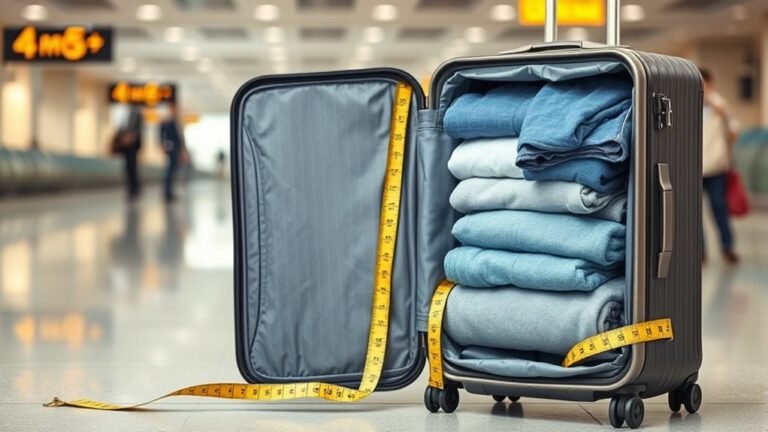
How Much Should a Carry on Weigh: Airline Limits
Aim to keep your carry‑on around 8–9 kg (17–20 lb), since most airlines set limits between 7–10 kg and some international carriers allow 12–14 kg. Low‑cost carriers often cap weight lower, and premium cabins or elite status can get you more leeway. Airlines may prioritize size but will weigh heavy bags on busy or small flights. Pack light, use a scale, and be ready to redistribute or gate‑check if needed — more tips follow below.
Quick Answer: Typical Carry-On Weight Ranges and a Safe Target
Most airlines let you bring a carry-on that weighs between about 7 kg (15 lb) and 10 kg (22 lb), though some international carriers allow up to 12–14 kg (26–30 lb) and low-cost airlines sometimes cap even lower.
Aim for about 8–9 kg (17–20 lb) to stay safe, fit essentials, and avoid gate checks. Weigh bags before travel and redistribute items if needed.
Why Some Airlines Enforce Carry-On Weight and Others Don’t
You’ll notice some airlines strictly weigh carry-ons while others barely check them, and it comes down to operational efficiency and aircraft weight limits.
When your bag is heavy it affects fuel calculations and balance, so carriers with tighter margins or smaller planes enforce rules more.
Airlines also weigh the cost of longer boarding times against the hassle of enforcement, so policies reflect those trade-offs.
Operational Efficiency Reasons
Because tight boarding windows and limited overhead bin space directly affect on-time performance, airlines have different incentives to enforce carry-on weight limits.
You’ll see stricter checks when faster turnarounds matter or when full flights risk delays. Enforcing weight and size reduces boarding time, minimizes gate holds, and lowers crew workload, so carriers prioritize enforcement based on schedules, aircraft layout, and operational goals.
Aircraft Weight Limits
When an aircraft’s certified maximum takeoff weight and cabin load limits get tight, airlines have to be strict about what you bring onboard; lighter carry-ons help keep the aircraft within structural and performance margins, especially on smaller regional jets or on flights with full fuel loads.
You’ll see stricter weight policies on short-runway airports, hot/high conditions, and smaller fleets where payload margins are minimal.
Boarding Time Impact
Tighter weight limits don’t just affect flight performance—they also change how quickly passengers can board. You’ll notice lighter carry-ons speed stowing, reduce aisle jams, and let crews keep on schedule. Airlines balance boarding time with revenue and customer satisfaction, so stricter rules can cut delays and claims.
| Benefit | Impact | Who wins |
|---|---|---|
| Faster boarding | Fewer delays | Passengers |
| Easier stowage | Safer aisles | Crew |
How Strict Are Airlines About Carry-On Weight?
How strictly airlines enforce carry-on weight depends a lot on where you’re flying—regional carriers and international airlines often have different rules and tolerances. At the gate, agents call the shots, so you’ll want to follow their instructions even if the published limit seems flexible. Keep in mind many airlines prioritize size over exact weight, but you can still get flagged if your bag’s clearly heavy.
Regional vs. International Rules
Although rules vary widely by region and carrier, you’ll usually find that domestic and regional flights enforce carry-on weight less strictly than many international routes.
You’ll often get away with heavier bags on short hops, while international carriers — especially in Europe, Asia, and Africa — stick to firm limits tied to overhead space and safety.
Check airline and route policies before packing.
Gate Agent Enforcement
When you arrive at the gate, agents usually focus on size and overhead space rather than exact weight, but enforcement can vary widely by airline, route, and how full the flight is. You’ll usually get a polite nod if your bag fits; strict checks happen on full flights or budget carriers.
| Situation | Likely action |
|---|---|
| Light load | Informal |
| Full flight | Measured |
Weight Vs. Size Priority
If your bag fits the sizer, most gate agents won’t bother with exact weight, but some airlines and routes do enforce limits strictly—especially low-cost carriers and international flights where weight affects balance.
You should check both size and weight rules before travel. If traveling on budget or long-haul carriers, weigh your bag at home and pack light to avoid fees or forced gate checks.
How Carry-On Weight Is Checked: Check‑In, Boarding, and Gate Practices
At check‑in, at boarding, and again at the gate, airlines use a mix of visual inspection, scale checks, and bin-fit tests to make sure carry‑ons meet weight and size rules.
You’ll usually find staff apply whichever method is quickest or most practical for that flight.
- Staff glance for obvious overloads.
- Some flights weigh bags on portable scales.
- Bin tests confirm fit before boarding.
Weight vs. Size: When Dimensions Matter More Than Pounds
You’ll notice that airlines often care more about whether your bag fits the overhead bin than its exact weight, because dimensions directly affect cabin space and boarding flow.
You should prioritize a compact, well-packed bag that meets length, width, and height limits. Even lightweight but oversized items can be gate-checked, so measure before travel and choose flexible, collapsible luggage to avoid hassles.
Carry-On Weight Exceptions: Class, Route, and Elite Status Effects
Depending on your cabin class, you may get a higher carry-on weight allowance than economy, so check your ticket before you pack.
Routes and international carriers sometimes have different limits, which can affect what you can bring aboard.
If you’re an elite member, you might get extra weight perks or relaxed enforcement, so confirm those benefits with your airline.
Class-Based Allowance Variations
Though airlines set base carry-on limits, your class of service, route, and elite status often change what you can bring aboard.
You’ll usually see class-based tweaks: premium cabins get more generous allowances, regional flights enforce stricter limits, and international long-haul routes may allow larger bags.
Examples:
- Economy: standard weight.
- Premium economy: modest increase.
- Business/first: expanded allowance.
Elite Status Weight Perks
When you’ve earned elite status, airlines often relax carry-on weight rules as a perk, letting you bring slightly heavier bags or add an extra personal item without penalty. You should still check specifics per carrier and route to avoid surprises.
| Airline | Perk | Note |
|---|---|---|
| Delta | Extra personal item | Domestic focus |
| United | Higher weight | Varies by tier |
| Emirates | Extra bag | Long-haul benefit |
Carry-On Weight by Airline: Major U.S., European, and Asian Examples
While many airlines let you bring a standard carry-on and personal item, weight rules vary widely between major U.S., European, and Asian carriers, so you should check each airline before packing.
You’ll find differences like:
- U.S.: generally no weight limit but size enforced on legacy carriers.
- Europe: low-cost often caps at 8–10 kg.
- Asia: strict 7–10 kg limits on many full‑service and budget airlines.
Practical Packing Checklist to Stay Under Carry‑On Weight Limits
Because airlines measure weight so differently, you’ll want a compact, repeatable packing routine that keeps your carry-on under limits without last‑minute stress.
Pack versatile clothing, roll to save space, and limit shoes to one pair.
Use travel‑size toiletries and weigh your bag before leaving.
Keep heavy items in personal item if allowed, and reserve a small spare space for last‑minute essentials.
Smart Gear Swaps That Save Pounds Without Losing Essentials
You can shave pounds without sacrificing what you need by swapping bulky items for lighter alternatives. Choose multipurpose pieces, ditch heavy toiletries, and pick compressible fabrics.
Try these swaps:
- Pack a lightweight down jacket instead of a bulky coat.
- Use solid shampoo bars and travel-size essential kits.
- Replace hardcover books with an e-reader and one paperback.
On-The-Spot Fixes: Redistribute, Gate‑Check, or Pay (What to Do Fast)
If your bag tips the scale at the gate, act quickly: redistribute items between carry-ons, send an extra bag to gate‑check, or be prepared to pay the fee for an overweight carry‑on.
Pull heavy shoes or liquids into worn-on jackets, shift tech into a personal item, and ask staff about complimentary gate‑check options.
Pay only if redistribution won’t meet the limit.
How to Weigh Your Bag Accurately at Home or on the Go
1 simple tool can save you unexpected fees: a reliable scale.
Weigh at home on a bathroom or luggage scale, zero tare with a tote, and confirm airline limits.
On the road, use a handheld hook scale or airport kiosk.
Check straps and wheels while lifting.
Pack lighter if you’re over by a few pounds to avoid last‑minute charges.
- Use a bathroom or luggage scale
- Try a handheld hook scale
- Zero/tare before weighing
Quick Checklist and Decision Guide: Upgrade, Check, or Accept Gate‑Check
Having confirmed your bag’s weight, run through a quick checklist to decide whether to upgrade your fare, rework your load, or accept gate‑check.
Check carry‑on size, essentials you need onboard, and upgrade cost versus checked baggage fees.
Redistribute heavy items into personal item or wear them.
If time’s tight or fees high, accept gate‑check and secure valuables in a smaller bag you keep with you.
Frequently Asked Questions
Can Carry-On Weight Include Personal Item Weight Limits?
Yes — airlines can count your personal item toward overall carry-on weight, depending on their policy; you should check each carrier’s rules, pack smartly, and avoid exceeding combined or separate weight limits to prevent extra fees.
Are Liquids in Carry-On Counted Toward Weight Limits?
Usually yes, liquids in your carry-on count toward weight limits if they’re packed in your bag. You’ll need to follow the airline’s size/quantity rules (like 100ml/3.4oz TSA limits) and any overall baggage weight restrictions.
Do International Flights Enforce Different Carry-On Weights at Transfer Airports?
Yes — you’ll often face different carry-on weight rules at transfer airports because each airline and country sets limits; you should check both carriers’ policies before travel, pack flexibly, and be ready to redistribute items if needed.
Can Medical Devices or Medications Exceed Carry-On Weight Limits?
Yes — you can usually carry medical devices and necessary medications even if they exceed standard carry-on weight limits; you’ll need documentation, notify the airline in advance, and cooperate with security inspections to avoid issues.
How Do Budget Airlines Calculate Weight With Items in Pockets?
Budget airlines count the bag’s total weight, including items in pockets if they weigh the bag during check; you’ll usually be asked to empty pockets only if your carry-on exceeds limits or staff suspects excess weight.
Conclusion
In short, aim for 15–22 lbs (7–10 kg) to be safe, but always check your airline’s rules before packing. You’ll avoid surprises by prioritizing size, using lightweight gear, and weighing your bag at home. If you’re over, redistribute, remove nonessentials, or be ready to gate‑check or pay a fee. With a quick preflight check and smart swaps, you’ll breeze through security and boarding without lugging unnecessary weight or risking delays.