How Many Bottles of Wine Can You Check in Your Luggage
You can usually check several bottles of wine, but the exact number depends on your airline, the bottle size, and the wine’s alcohol level. Wines under 24% ABV are generally allowed in checked luggage without strict limits, while 24–70% ABV is typically capped at 5 liters per passenger and needs retail packaging. Secure bottles with padding or hard cases to avoid breakage, declare purchases if required, and check airline and destination rules before you go — keep going to get specifics.
Quick Answer: How Many Wine Bottles Can You Check?
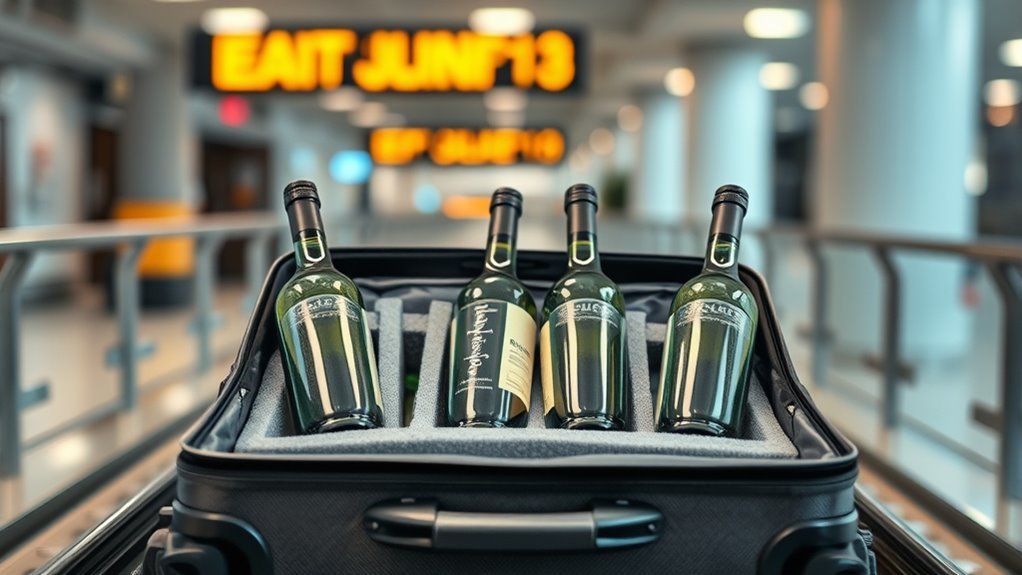
If you’re checking wine in your luggage, the quick answer is: it depends on airline and country rules, but most U.S. carriers let you pack wine in checked bags as long as each bottle is unopened, under 24% alcohol by volume (ABV) in unlimited quantities, or between 24% and 70% ABV limited to 5 liters (1.3 gallons) per passenger in a sealed retail package.
You’ll need to confirm your airline’s policy and destination rules, pack bottles securely to prevent breakage, and expect possible inspection.
Declare purchases when required by customs, and keep receipts to speed processing and avoid fines.
Airline Checked-Bag Basics for Wine
Now that you know the basic limits on alcohol content and quantity, let’s look at how airlines handle wine in checked bags. You’ll want sturdy packing, weight awareness, and policy checks before you arrive.
Most carriers treat wine as checked baggage, but rules vary on number of bottles, declared value, and liability for breakage. Pack in protective sleeves or a hard case, distribute weight to avoid fees, and note any carrier-specific restrictions on international routes.
Follow these tips to reduce risk and surprise charges:
- Use padded inserts or specialized wine shippers
- Weigh bags to avoid overweight fees
- Keep receipts and declare high-value bottles
How Alcohol by Volume (ABV) Changes Packing Rules
You’ll need to check the alcohol by volume (ABV) of each bottle because most airlines and countries cap what you can carry based on strength.
Higher-ABV wines may be restricted or counted toward hazardous materials limits and affect how many bottles you can stow in checked luggage.
I’ll also cover common exceptions and the packaging requirements that keep strong wines compliant and safe.
ABV Limits For Flights
Because alcohol strength directly affects airline rules, you’ll need to check a bottle’s ABV before packing it in checked luggage. Airlines and countries set limits: spirits over 70% are generally banned; 24–70% may be allowed in limited quantities; under 24% is usually unrestricted.
You should also consider packaging, declared quantities, and destination regulations.
- Check airline and destination rules for ABV thresholds.
- Keep bottles under 70% ABV and within quantity limits to avoid confiscation.
- Declare higher-strength alcohol and pack it in sealed, cushioned containers to meet carrier requirements.
Impact On Checked Luggage
A bottle’s ABV directly affects how you pack and declare alcohol in checked luggage: higher-strength spirits face stricter quantity limits, can trigger additional paperwork or fees, and may even be prohibited.
Wines and beers under about 24% are usually treated more leniently. You should check airline and country rules before packing since allowed volumes vary with ABV.
If you’re carrying mid-strength fortified wines, expect closer scrutiny and potential limits per passenger. Declarative requirements often hinge on ABV thresholds, so don’t assume uniform treatment.
Plan quantities accordingly, separate alcohol from fragile items, and be ready to remove noncompliant bottles.
Exceptions And Packaging Requirements
When packing alcohol, remember that ABV plays a key role in exceptions and how bottles must be packaged: lower-strength wines (generally under 24% ABV) usually fit standard checked-bag rules, while fortified wines and spirits face stricter limits, special packing, or outright bans.
You should check airline and country rules, declare bottles if required, and prep for spill prevention.
Use sturdy, leakproof packaging and consider commercial wine shipper cases or padded sleeves.
If traveling internationally, verify import limits and taxes to avoid confiscation.
- Confirm airline ABV thresholds
- Use sealed, padded containers
- Declare high-ABV items ahead of time
Do Carry-On Rules Differ for Wine?
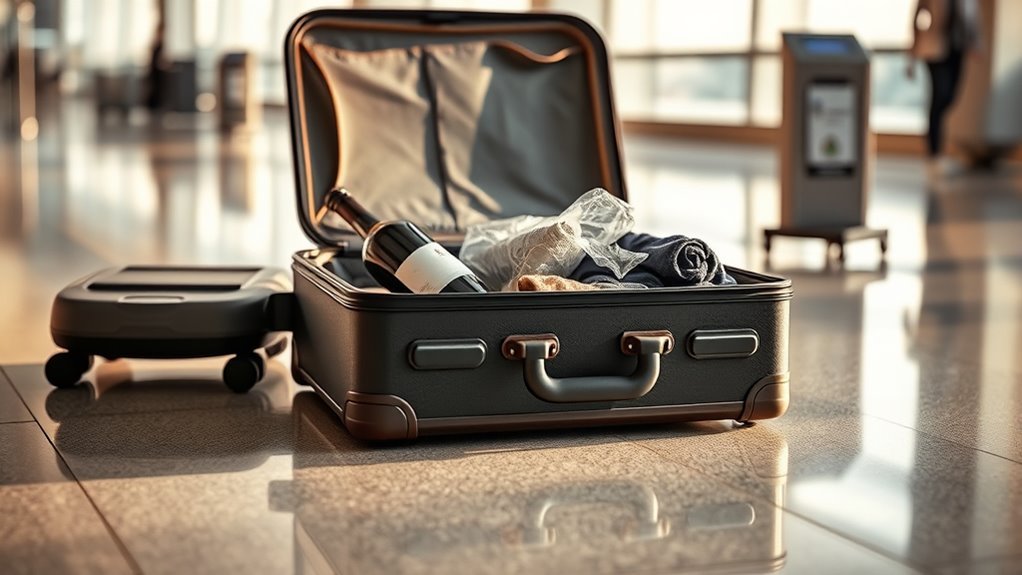
If you plan to bring wine through the security checkpoint, know that carry-on rules are stricter than checked-bag policies. Liquids in your carry-on must fit the TSA’s 3-1-1 rule (containers 3.4 ounces/100 milliliters or less, all fitting in one quart-size clear bag), so full bottles won’t be allowed.
You can, however, carry small liquor purchases bought after security or sample-size bottles that meet the limit. Duty-free purchases packed in a secure, tamper-evident bag with receipt may be permitted onboard.
Always check your departure and destination airport rules, since local regulations and airline carry-on allowances can vary.
How Many Bottles Do Major Airlines Allow in Checked Luggage?
When you check wine, airlines set alcohol limits that affect how many bottles you can bring and whether extra fees apply.
You’ll find each carrier has specific bottle-quantity rules and pack limits that often hinge on total alcohol percentage and container size.
Remember international flights can vary widely, so check both your airline and destination country’s rules before packing.
Airline Alcohol Limits
Airlines set different rules for how much alcohol you can pack in checked luggage, so it helps to know each carrier’s limits before you fly. You’ll find most major airlines follow safety and customs rules: alcohol under 24% ABV faces few restrictions, 24–70% ABV is limited by volume, and above 70% is usually prohibited.
Check carrier policies for size, packaging, and declared value. Pack securely and label bottles to avoid damage or seizure. Confirm rules for international flights, since destination countries impose their own import limits.
- Compare airline alcohol policies before booking
- Note ABV-based volume restrictions
- Declare and pack bottles safely
Bottle Quantity Rules
Beyond ABV and packaging limits, you’ll also need to know how many bottles each carrier actually allows in checked baggage. Major U.S. airlines generally permit wine in checked luggage within weight and size limits, but many cap quantity indirectly via baggage allowances.
You can usually pack several bottles if they fit within one or more checked bags and you pay for extra bags or overweight fees. Some low-cost carriers restrict the number of checked items, effectively limiting bottles.
Always check your airline’s specific policy before flying, declare if required, and pack bottles securely to avoid damage and loss.
International Variations
Curious how many bottles you can check on international flights? You’ll find limits vary by airline, country, and alcohol percentage. Some carriers follow a per-passenger weight rule, others set bottle counts. Customs rules also affect duty-free allowances and import limits, so check both airline and destination. Pack securely and declare purchases when required.
- Delta, American: typically follow baggage weight; expect 1–5 bottles depending on size and fee.
- European carriers (e.g., Lufthansa): often allow multiple bottles within weight limits; check specific policies.
- Asian airlines: stricter limits; verify alcohol % and quantity before travel.
Checked-Bag Bottle Counts by Airline (Sample Table)
When you’re planning how many bottles to pack, a compact table can quickly show each carrier’s checked-bag limits, alcohol-by-volume rules, and any special packing notes so you can compare at a glance.
Use columns for airline, checked-bag allowance (pieces/weight), max bottles per bag, alcohol ABV limits, and packing tips (bubble wrap, wine skins). Include major carriers and common low-cost airlines.
Use columns for airline, checked-bag allowance, max bottles, ABV limits, and packing tips for easy comparison.
Highlight exceptions like stricter low-cost policies or extra fees for overweight bags.
Keep the table printable and phone-friendly so you can verify limits before packing and avoid surprises at check-in or additional charges.
How Duty-Free Wine Fits Your Baggage Allowance
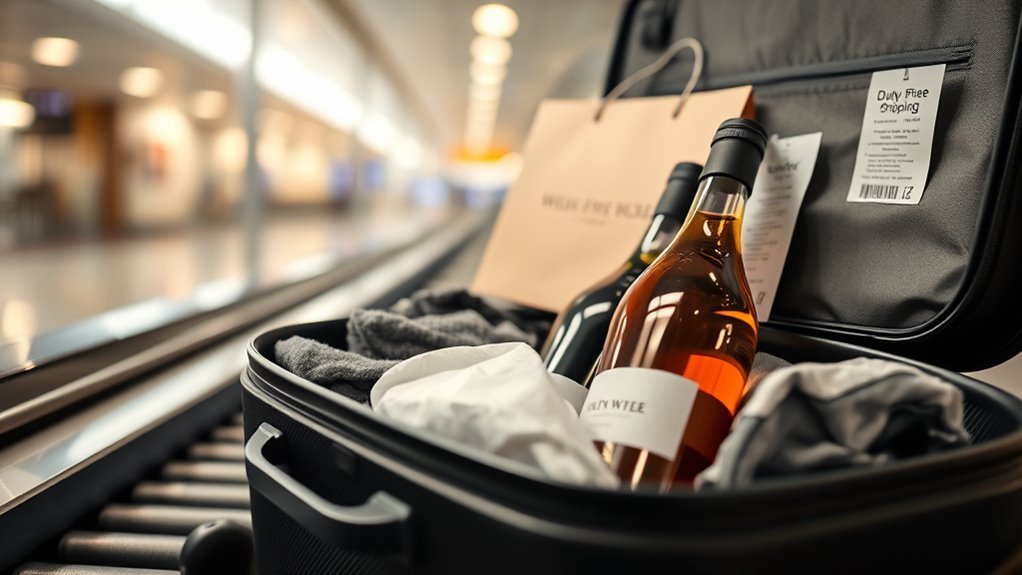
Remember that duty-free purchases still count toward your airline’s alcohol and baggage limits, so check the allowance before you buy.
You’ll need to follow packing and carry-on rules—sealed tamper-evident bags may be required for liquids in transit.
If your duty-free wine exceeds limits, you’ll either have to gate-check it or rearrange items to avoid extra fees.
Duty-Free Allowance Limits
How much duty-free wine you can bring depends on both the allowance for your destination and the baggage limits imposed by your airline. You’ll need to check customs limits (volume and alcohol percentage) and airline weight or piece rules before you buy.
Stick to destination duty-free thresholds to avoid taxes or seizure, and factor bottles into your checked allowance so you don’t incur overweight fees.
Consider transit rules too—some countries reset allowances.
- Verify the destination’s declared bottle/volume limit.
- Confirm your airline’s checked baggage weight and fee structure.
- Account for connecting countries’ duty rules during transfers.
Packing And Carry Rules
If you’re packing duty-free wine, you’ll need to fit the bottles into your checked allowance and meet airline and security rules so you don’t face overweight fees or confiscation. You should weigh bags before leaving, use padded bottle protectors, and place bottles centrally to avoid breakage. Note carry-on liquid limits—over 100ml bottles usually must be checked despite duty-free seals being accepted on some flights. Declare purchases when required to satisfy customs. Check airline weight/size rules and your fare’s baggage allowance to avoid surprise charges at the gate.
| Tip | Why it matters |
|---|---|
| Weigh bags | Avoid fees |
| Protect bottles | Prevent breakage |
International Customs Limits on Alcohol
When you travel across borders, each country sets its own customs limits on how much alcohol you can bring in duty-free, and those limits determine whether you’ll owe taxes or face seizure. You should check destination rules before packing, declare any amounts above allowances, and keep receipts handy to prove purchase price and origin.
Be aware some nations restrict strength or type. Failure to declare can mean fines or confiscation. Know transit rules too—connecting flights may trigger separate declarations.
- Check official customs websites for limits and documentation.
- Declare honestly to avoid penalties.
- Keep bottles accessible and receipted.
Liters Before Import Taxes Apply
After checking customs allowances, you’ll want to know the exact number of liters that trigger import taxes so you can pack appropriately and avoid unexpected fees.
Each country sets a tax threshold in liters of pure alcohol or total beverage volume; some apply a flat liter limit for spirits, wine, or beer, others convert by alcohol percentage.
Check your destination’s official customs site for the current liter allowance and any age or residency rules.
If you exceed the limit, expect taxes or duties calculated per liter or per percentage point of alcohol.
Keep receipts and accurate volume totals to simplify assessment.
Declaring Wine at Customs to Avoid Fines
When you arrive, declare the exact amount of alcohol you’re bringing to customs officers to avoid surprises.
If you exceed the duty-free allowance, you’ll pay import taxes or fines, so be prepared for that cost.
Being upfront and accurate keeps the process quick and prevents penalties.
Declare Alcohol Amounts
If you’re bringing wine across a border, you must declare the amount on your customs form and to the officer—failing to do so can lead to fines, confiscation, or delays. Declare each bottle’s volume and alcohol percentage honestly, and keep receipts accessible.
Be ready to answer questions about purpose (personal vs. commercial) and value. If limits exist, the officer will explain excess handling. Always declare even if you think you’re under the limit—non-declaration risks penalties. Pack documentation separately for quick presentation.
- Note bottle counts and liters clearly.
- Keep purchase receipts handy.
- Answer officers’ questions succinctly and truthfully.
Avoid Duty Penalties
Because customs officers expect honest, clear declarations, you should state the quantity, volume and alcohol percentage of each wine bottle up front to avoid duty penalties. Be familiar with the duty-free allowance for your destination and keep receipts accessible.
If you exceed limits, declare immediately to prevent fines or shipment seizure. Use the correct form, answer questions directly, and don’t guess—mistakes can cost you.
If you’re carrying rare or commercial quantities, prepare invoices and import permits. Cooperating calmly speeds processing and can reduce penalties.
Document everything, know local rules, and accept that unpaid duties will be assessed.
Countries That Prohibit Importing Alcohol
Which countries ban alcohol imports outright, and what does that mean for your travel plans? You’ll find strict prohibitions in several Muslim-majority countries and territories where importing alcohol is illegal or tightly controlled. That means you can’t bring wine in checked bags, and attempting to do so risks confiscation, fines, or worse. Check destination laws before packing, and consider duty-free rules at transit points.
If you must travel with wine for gifts or events, ship via permitted couriers or choose destinations that allow imports. Plan ahead to avoid surprises and respect local regulations.
- United Arab Emirates (certain emirates)
- Saudi Arabia
- Kuwait
U.S. State Rules Affecting Wine Transport
When you travel within the U.S., state laws can drastically change what’s allowed for carrying wine in checked luggage or shipping bottles to yourself or others. You’ll face varying possession limits, shipping restrictions, and age-verification requirements.
Some states ban direct-to-consumer wine shipments or limit quantities; others let wineries ship freely if taxes and permits are satisfied. Dry counties and municipalities may prohibit alcohol receipt entirely.
If you’re moving bottles between states, check both origin and destination rules, required permits, and excise taxes. Call state alcohol control boards or use winery shipping policies to avoid seized packages or fines.
Domestic vs. International Flights: Allowance Differences
State rules shape whether you can ship or carry wine across state lines, and federal and airline regulations add another layer when you fly domestically or internationally. When you travel domestically, you’re mainly bound by TSA liquid rules for carry-ons and by airline checked-baggage allowances.
Alcohol under 24% ABV is usually unrestricted in checked bags, higher ABV faces limits. International travel adds customs limits, duty-free allowances, and destination import rules. You should declare bottles, pack securely, and check both airlines’ policies plus destination customs.
- Check TSA and airline checked-bag rules.
- Confirm destination import limits and duties.
- Pack and declare properly.
Ticket Class and Frequent-Flier Perks That Change Limits
Your ticket class can change how much wine you can check, since business and first class often allow larger or additional checked bags.
If you’re an elite frequent-flier, you’ll usually get extra baggage allowance or waived fees that let you pack more bottles.
Also check alliance and partner rules—benefits can vary when you’re flying on a partner carrier.
Seat Class Allowance
Although checked wine limits are usually set by airline policy, your ticket class and elite status can change what you’re allowed to bring in checked luggage. Seat class often dictates free checked bag allowances, weight limits, and sometimes extra pieces, so you’ll want to check before packing.
Higher classes usually grant larger or additional bags, letting you transport more bottles without overweight fees.
- Premium cabins often include more free checked pieces, reducing per-bottle cost.
- Economy fares might limit you to one standard bag, forcing tighter packing.
- Upgrades purchased later can immediately change allowance and fees.
Elite Status Benefits
Beyond seat class, your frequent-flier elite status can meaningfully change how much wine you can check—members often get extra free bags, higher weight limits, and waived fees that let you pack more bottles without surprises at the counter. You should check your tier benefits before packing: silver might add weight, gold often gives an extra checked bag, and platinum can waive oversize fees. Use status to distribute bottles across bags and avoid overweight charges. Confirm rules for liability and packing. Quick comparison:
| Status | Typical Benefit | Practical Tip |
|---|---|---|
| Silver | +5 lb | Split bottles |
| Gold | +1 bag | Use carry cases |
| Platinum | Fees waived | Pack heavier |
| Diamond | Priority handling | Mark fragile |
Alliance And Partner Rules
If you fly on a codeshare or connect through an airline alliance, ticket class and partner rules can change how many bottles you can check and which fees apply. You’ll want to confirm the operating carrier’s baggage allowance, since partners often enforce their own piece, weight, or liquid rules.
You’ll also want to verify the operating carrier rules first.
Confirm fare class benefits.
Call if policies conflict.
Higher fare classes or elite status on any alliance member can grant extra checked items or waived fees, but those perks don’t always cover alcohol-specific limits.
Always check the booking’s “checked baggage” terms and call the airline when in doubt to avoid surprises at the gate.
When Alcohol Content (Sparkling vs Still) Matters
When the type of wine changes, so do the rules and risks you need to take into account: sparkling wines are pressurized and more likely to break or leak, while still wines pose fewer pressure-related hazards but are subject to the same volume and legal limits. You should pack sparkling bottles with extra padding, use sealed wine skins, and consider declaring high-alcohol content bottles. Airlines may limit bottles by alcohol percentage; check policies. Below is a quick comparison to help you decide how to pack and declare.
| Feature | Impact |
|---|---|
| Pressure risk | Sparkling: high |
| Packing need | Still: moderate |
How Carry-On Liquid Rules Affect Airport Purchases
When you buy duty-free liquids before security, they’re usually packed in tamper-evident bags that let you carry them through the gate.
Remember that if you purchase alcohol after security, normal carry-on liquid limits will apply and could force you to check the bottles.
Check airline and TSA rules so you don’t get stuck repacking at the last minute.
Duty-Free Liquids Rule
Wondering how those duty-free perfume or wine purchases fit into carry-on liquid rules? You can bring sealed duty-free liquids through security if they’re in a tamper-evident bag with receipt. Keep the bag sealed until your final destination; airlines and countries vary on unsealed containers.
If you connect flights, keep documentation handy to prove purchase location and price. Checked baggage often allows more alcohol, but restrictions on alcohol content and quantity still apply.
- Keep receipts and tamper-evident bag visible
- Know airline and destination limits before you buy
- Consider checking bottles if you’ll open them during travel
Post-Security Purchase Limits
If you buy liquids after clearing security, you can usually bring them on board only if they’re sold in tamper-evident bags with receipts and remain sealed for the duration of your trip.
You should check airline and country rules: some carriers accept duty-free and shop purchases in sealed bags, others limit quantities or forbid certain alcohol strengths.
Keep the receipt visible and don’t open the bag until you reach your destination or a connecting airport that allows it.
If you have connections, verify transfer rules to avoid confiscation.
When in doubt, pack extra bottles in checked luggage within allowed limits.
How Packing Wine Affects Checked-Bag Weight Limits
Because bottles are heavy and fragile, packing wine can quickly push your checked bag over the airline’s weight limit and trigger extra fees or forced repacking. You’ll need to weigh strategy: distribute bottles across bags, use protective packaging, and know usual airline weight caps.
Because bottles are heavy and fragile, distribute wine across bags, use protective wraps, and know airline weight limits.
Balance protection with weight — heavy padding adds pounds. Consider carrying one bottle in cabin if allowed and secure. Check your carrier’s policies before packing so you’re not surprised at the counter.
- Use sturdy, lightweight bottle sleeves or wraps.
- Spread bottles across travelers’ bags when possible.
- Weigh bags at home to avoid surprises.
When You’ll Pay Excess Baggage Fees for Wine
Packing wine carefully helps avoid breakage, but it won’t save you from fees if your checked bag exceeds the airline’s weight or piece limits. You’ll pay excess baggage when your packed wine pushes a suitcase past the allowed weight, when you bring extra pieces beyond the ticket allowance, or when you need special handling like oversized wine trunks. Check airline weight and piece limits before packing and redistribute bottles across bags or between travelers to avoid charges.
| Situation | Trigger | Typical outcome |
|---|---|---|
| Overweight | Bag > limit | Overweight fee |
| Extra piece | More bags than allowed | Per-piece charge |
| Oversize | Dimensions exceeded | Oversize fee |
How to Check an Airline’s Wine Policy Fast
When you need a quick answer, go straight to the airline’s official baggage or FAQs page and search for “alcohol,” “wine,” or “liquids” — that’ll tell you limits, packaging rules, and any special fees.
Then check your booking confirmation and carrier’s mobile app for baggage allowances tied to your fare.
If anything’s unclear, use the airline’s chat or call line; agents can confirm bottle counts and weight limits.
At the airport, arrive early to declare wine at check-in if required.
Keep receipts and original seals in case staff ask.
- Read the official baggage FAQ first
- Confirm via app or booking
- Call ahead if unsure
Shipping Wine vs. Checking It as Luggage
Which is smarter for your trip: shipping wine ahead or checking it in your luggage? You’ll weigh cost, convenience, and risk.
Shipping avoids airline liquid limits and fragile handling if you pack professionally and insure the package, but fees, delivery timing, and legal restrictions vary.
Checking saves shipping costs and gets bottles with you immediately, yet exposes them to rough baggage handling, weight fees, and potential breakage or confiscation if improperly declared.
Choose shipping for valuable, high-count, or fragile bottles; choose checked luggage for a few bottles if you pack them in sturdy protection, know airline rules, and accept the risk.
Buying Wine at the Airport: Tips to Bring It Home
If you buy wine at the airport, plan ahead so you can get it home intact and within regulations. Buy sealed, store receipts for duty-free allowances, and know your destination’s alcohol limits.
Buy sealed airport wine, keep receipts, and check duty-free limits so your bottles arrive intact and legal.
Choose bottles that fit carry-on liquid rules or qualify for duty-free carriage wrapped and tagged. Ask the shop to pack fragile items and request tamper-evident seals when available.
- Keep receipts and customs paperwork accessible.
- Verify airline and country alcohol allowances before purchase.
- Opt for duty-free sealed bags or gate-checked protected options when possible to avoid confiscation or excess fees.
How to Pack Bottles to Prevent Breakage
When you pack wine, start by slipping each bottle into padded wine sleeves to cushion it against shocks.
Wrap bottles individually with bubble wrap or clothing to prevent them from knocking together.
For the safest transport, put wrapped bottles in a hard-shell case to protect against heavy impacts.
Choose Padded Wine Sleeves
Padded wine sleeves give bottles a snug, shock-absorbing layer that’s far better than tossing them into a shirt or bubble wrap alone. You’ll slide each bottle into a foam or neoprene sleeve that cushions impacts and reduces vibration during handling.
Pick sleeves sized for 750ml or larger bottles, and use sleeves with reinforced seams for repeated trips. Sleeves stack neatly, saving space and keeping bottles separated inside your suitcase.
- Choose insulated neoprene for temperature buffering and protection.
- Use foam sleeves with layered density for maximum shock absorption.
- Select sleeves with zipper or velcro closures to secure tops.
Wrap Bottles Individually
You’ve got sleeves for general cushioning, but wrapping each bottle individually adds a final layer of protection that stops friction and isolates shocks. Use bubble wrap, foam sheets, or soft clothing rolled tight around the neck and body, securing with tape or rubber bands.
Cover seams and fragile points, especially the neck and base, and overlap material to prevent gaps. Label wrapped bottles to keep track and place them upright when possible.
Tuck packed bottles between soft items to limit movement. This method minimizes glass-to-glass contact and absorbs impacts, cutting the chance of cracks or spills in transit.
Use Hard-Shell Cases
If you want the toughest protection, choose a hard-shell case—it’s rigid, crush-resistant, and keeps bottles from getting squashed by other luggage. You’ll secure bottles upright in molded foam or padded inserts, preventing movement and impact.
Lockable latches add security and help you avoid spills if a seam fails. Hard-shell cases also make inspections easier; you can show officers without unpacking everything.
Pick a size that fits airline limits and your bottle count, and place fragile labels outside. Regularly inspect seals and padding for wear before travel to maintain reliable protection.
- Molded foam inserts
- Lockable latches
- Airline-compliant sizing
Using Wine Skins, Bubble Wrap, and Sleeves Effectively
When you want to protect bottles in checked luggage, use wine skins, bubble wrap, or padded sleeves to absorb shocks and prevent bottle-to-bottle contact; choose the option that fits your bottle count, suitcase space, and budget.
Wrap each bottle snugly, covering the neck and base, and secure with tape or a twist tie to keep the wrapping from shifting.
For mixed bottles, separate them with cardboard dividers or rolled clothing.
Use multiple bubble wrap layers for heavier bottles.
Test snugness by gently shaking the packed bag; if you hear movement, add more padding.
Label fragile luggage and handle with care at check-in.
Building a Padded Wine-Only Suitcase Setup
Because a suitcase dedicated solely to wine gives you predictable packing and maximum protection, you can design a cushioning layout that fits bottles snugly and minimizes shifting.
Choose a hard-sided case, remove internal straps, and line the base with dense foam or folded neoprene.
Create individual cavities with cut foam inserts or stackable dividers so each bottle sits upright or cradled on its side.
Wrap tops and bottoms with additional padding and seal gaps with soft towels.
Test by gently shaking the closed suitcase; adjust padding until bottles don’t contact each other or the shell.
- Hard case with foam inserts
- Individual bottle cavities
- Top/bottom extra padding
How to Distribute Bottles Across Bags to Reduce Risk
Although spreading bottles across multiple bags takes a little extra planning, it cuts the chance that a single mishap ruins your whole stash.
You’ll want to balance weight and fragility: put the heaviest, best-padded bottles in the sturdiest bag and lighter ones in secondary bags. Limit any one bag to a few bottles so loss or damage is contained.
Use internal compartments and evenly distribute weight to avoid pressure points.
Keep one bottle or two in your carry-on if allowed. Note airline limits per bag and don’t exceed weight caps that trigger rough handling or extra fees.
Labeling and Securing Fragile Wine for Handlers
If you want handlers to treat your wine gently, clearly label the bag or package as “Fragile: Wine” and add visible arrows for upright orientation, then reinforce the exterior with strong tape and a bright sticker so it can’t be missed.
You’ll also secure bottles inside to prevent movement: wrap each in cushioning, separate with dividers, and pack centrally away from edges.
Add a visible note with contact info and brief handling instructions.
At check-in, mention fragile contents so staff can flag the bag.
Clear labeling plus internal protection greatly lowers breakage risk during handling.
- Wrap bottles individually in bubble or foam
- Use sturdy dividers or rolled clothes
- Place fragile tag and contact info on outside
Hard Case vs. Soft Suitcase: Which Protects Wine Better?
When you’re choosing luggage for wine, hard cases generally offer better impact resistance and keep bottles from getting crushed.
Soft suitcases give more flex and can deform under pressure. You should pick a hard-shell spinner with reinforced corners and internal padding to limit movement.
Use bottle sleeves, dividers, or wine skins to absorb shocks and prevent clinking.
Soft bags can work if you add a rigid insert or thick foam, but they won’t resist heavy compression as well.
Whichever you choose, test fit bottles with added cushioning and avoid overpacking to reduce risk during handling and transit.
Temperature, Pressure, and Wine in Flight
Because cabin and cargo environments change dramatically from gate to cruising altitude, you should consider how temperature and pressure affect bottled wine in flight. You’ll face cold, dry air and lower pressure that can expand trapped air in bottles, stressing seals and corks. Rapid temperature swings may push corks or cause labels to peel.
To protect your wine, pack thoughtfully and anticipate changes during ascent and descent.
- Wrap bottles in insulating layers to buffer temperature shifts.
- Use pressure-tolerant seals or bottle protectors to reduce stress on closures.
- Cushion bottles to prevent movement that worsens pressure effects.
Transporting Sparkling Wine and Champagne Safely
Though delicate in transit, sparkling wines and Champagne demand special handling to keep their bubbles, bottles, and closures intact, so you should take extra precautions when packing and checking them.
Wrap each bottle in bubble wrap or thick clothing, secure caps with tape over the cork cage, and place bottles upright in a hard-sided suitcase or wine shipper.
Use foam bottle protectors or padded dividers to prevent impact and rubbing.
Cushion around bottles to limit movement and insulate against temperature swings.
Label the bag fragile and consider buying travel insurance or shipping via a courier that specializes in wine for added safety.
Corked vs. Screw-Cap: Packing and Pressure Tips
If you’re packing corked wines, secure the cork with extra tape or a plastic wrap to reduce leakage risk and cushion the neck well, since natural cork can shrink or loosen under pressure changes.
You’ll treat screw-caps differently: they’re more airtight but can still leak if damaged. Use padded sleeves, keep bottles upright when possible, and avoid overpacking so pressure isn’t concentrated.
Consider insulating against temperature swings; thermal shock can push corks or stress seals. Label fragile. At security, handle objections calmly and know limits.
- Use individual padded sleeves
- Keep bottles upright and separated
- Protect neck and caps with cushioning
Insuring Wine for Travel: When and How
When you’re hauling valuable bottles across borders or checking them in luggage, insuring your wine protects you from theft, loss, and damage that airlines or travel insurance may not fully cover.
You should insure high-value, irreplaceable, or shipment-heavy collections, especially for international travel. Document each bottle: photo, receipt, vintage, and condition.
Choose standalone fine art or specialty item coverage, or add a rider to existing travel or homeowners insurance that explicitly covers alcohol in transit.
Confirm coverage limits, deductible, and required packing standards.
File claims promptly with your insurer and airline, keeping all travel documents, boarding passes, and baggage tags as evidence.
Calculating Total Cost: Fees, Taxes, and Insurance
Because checking wine isn’t just about bottles and bubble wrap, you should add up every fee, tax, and insurance cost before you travel so you won’t face surprises at the airport or on arrival.
Add every fee, tax, and insurance cost before travel to avoid surprises at check-in or customs.
Calculate airline overweight and extra-bag fees, declareable import duties, and optional insurance premiums.
Factor in currency conversion, processing fees, and any minimum deductible.
Compare insurer coverage limits to bottle value and document receipts.
Keep a clear total so you can decide whether shipping, buying locally, or limiting bottles is cheaper.
- Airline baggage and overweight fees
- Import duties and VAT
- Insurance premium and excess
Pre-Flight Checklist for Packing Wine
Before you pack a bottle, check your airline’s baggage rules so you know weight limits and how many bottles they’ll accept.
You’ll also want to confirm the customs and alcohol allowances for your destination country.
Finally, secure each bottle with protective packaging to prevent breakage and leaks in transit.
Know Airline Limits
Although rules vary by carrier and destination, you’ll need to check each airline’s specific limits on checked alcohol before you pack any bottles. Read weight, bottle count, and alcohol-by-volume (ABV) restrictions so you don’t face fees or confiscation. Verify whether the airline treats wine as part of your allowance or as restricted cargo.
- Confirm maximum total alcohol volume and per-bottle ABV limits.
- Check if bottles count toward checked bag weight or a separate allowance.
- Learn fee structure for excess weight, extra bags, or special handling.
Document policies and keep receipts to resolve disputes at the counter.
Check Country Regulations
Want to avoid having your wine seized or fined at customs? Check country regulations before you pack. You’ll need to know duty-free allowances, import limits, and required declarations for both departure and destination countries.
Look up alcohol volume, bottle count, and value thresholds—rules vary widely. Some places ban certain spirits or require permits; others levy heavy taxes if you exceed allowances.
Keep digital or printed copies of regulations and receipts to show officials. If travelling through a third country, verify transit rules too.
Confirm current rules with official government or embassy websites to avoid surprises and extra charges.
Secure Bottle Packaging
A sturdy, well-planned packaging strategy keeps your bottles from breaking and your trip from turning into a cleanup mission. Wrap each bottle individually with bubble wrap or padded sleeves, secure caps with tape, and place them upright in the center of a hard-sided suitcase surrounded by soft clothing. Cushion gaps to prevent shifting.
- Use wine skins or bubble wrap and seal tops with tape.
- Pack bottles vertically in the suitcase center, surrounded by layers of clothing.
- Add a waterproof liner or plastic bag to contain leaks and protect belongings.
Label fragile and handle with care stickers for baggage handlers.
Frequently Asked Questions
Can Airline Staff Refuse Wine in Checked Baggage at Boarding?
Yes — airline staff can refuse wine in checked baggage at boarding if it violates regulations, exceeds alcohol limits, appears improperly packed, or poses safety/security concerns; you’ll need to comply, dispose, or make alternative arrangements before flying.
Can Minors Travel With Wine in Checked Luggage if Adults Accompany Them?
No, you can’t pack wine for minors; airlines and laws prohibit transporting alcohol for those underage even in checked luggage, and adults accompanying them must keep alcohol for their own legal use, not the minor’s possession.
Do Duty-Free Wine Purchases Count Toward My Carry-On Liquid Allowance?
Yes — duty-free wine doesn’t count against your usual 100ml carry-on liquid limit if it’s sealed in a tamper-evident bag with the receipt. Keep the bag sealed and proof handy for security checks and connecting flights.
Will Checked Wine Open Due to Cabin Pressure Changes?
It’s unlikely but possible your checked wine could open from pressure or rough handling; you should seal bottles well, use padded sleeves or wine skins, and place them in the center of luggage to minimize movement and pressure stress.
Can I Bring Homemade or Corked Wine Across Borders?
You generally can’t bring homemade wine across borders without declaring it and meeting import rules; you’ll need permits, may face quarantine or duty, and some countries ban home-brewed or corked wine entirely, so check authorities first.
Conclusion
You can usually check several wine bottles, but limits vary by airline, ABV, and country. Pack bottles in padded, sealed containers, note cork vs. screw-cap differences, and declare high-proof spirits. Expect checked-bag fees, possible excess-baggage charges, and customs duties abroad; consider insurance for valuable bottles and document serial numbers and receipts. Before you go, confirm your airline’s policy, follow TSA and international rules, and prepare a secure, pressure-tested packing plan.