
How Is Luggage Stacked on a Plane Behind the Scenes
You’ll see a few bags on the carousel, but behind the scenes crews sort, scan and stack hundreds of pieces in weight‑balanced patterns so planes stay safe and on time. You’ll have heavy items loaded low and centered, fragile or odd shapes padded and tagged, and last‑stop bags placed for easy access. Ramp teams follow load sheets, use RFID/barcode scans and secure straps, all while tracking exceptions — keep going to learn the tech and tactics that make it work.
Why Luggage Stacking Matters for Safety and On-Time Flights
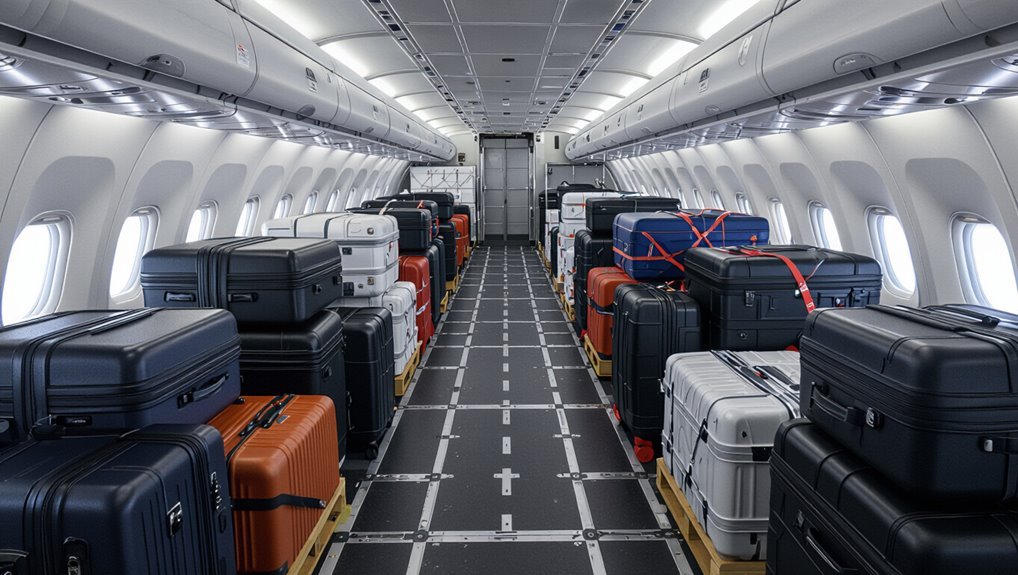
Because baggage gets moved, lifted, and shifted dozens of times before takeoff, how it’s stacked directly affects safety and whether flights leave on time.
You need stable, balanced loads to prevent shifting that could damage cargo, injure handlers, or alter weight distribution.
You’ll prioritize heavy items low, secure odd shapes, and follow load plans so doors close fast and crews meet departure windows without risking incidents.
Quick Overview: How Baggage Loading Actually Works
Loaders move quickly and follow precise plans to get baggage from the terminal into the aircraft hold.
You watch conveyors, sort by flight, and load by weight and balance instructions. Crews communicate constantly and secure loads to prevent shifting.
Watching conveyors, sorting by flight, loaders follow weight-and-balance instructions, communicating constantly and securing bags against shifting.
- Conveyor to belt transfer
- Wheelchair and priority items handled first
- Heavy items placed low and centered
- Final check before door close
Baggage Tags: How Crews Read and Use Them
When you scan a baggage tag, the crew instantly confirms the destination, flight number, and routing codes so each bag goes on the right plane; tags are read visually and electronically, and handlers use that data to sort, sequence, and prioritize loading according to transfer connections and weight-and-balance needs.
You’ll see barcode scanners, handheld devices, and color-coded tags guiding quick decisions, re-routing transfers and flagging special-handling items.
Cargo Manifests and Load Sheets for Ramp Agents
After confirming tags and routing, you’ll turn to the cargo manifest and load sheet to see the full picture of what’s on board and where it has to go.
You’ll use them to assign positions, verify weight and balance, track special items, and coordinate transfers.
- assign positions by zone
- verify weight/balance numbers
- note special handling (fragile, priority)
- coordinate offloads/transfers
RFID and Barcode Tech That Improves Accuracy
Because you need fast, precise tracking to keep flights on schedule, RFID and barcode systems give you real-time visibility into every piece of luggage and cargo. You scan tags, confirm locations, and resolve mismatches before loading. Sensors cut manual errors, speed sorting, and improve accountability.
| Tech | Benefit |
|---|---|
| RFID readers | Instant reads |
| Barcode scanners | Cheap, proven |
| Gate sensors | Location updates |
| Software | Exception alerts |
| Printers | Durable tags |
Grouping Bags by Destination and Flight Segment
If you’re handling dozens or hundreds of bags, grouping them by destination and flight segment keeps loading efficient and reduces misconnects.
You sort on carts or belts, tag segments visibly, and load in reverse travel order so transfers are accessible. Use clear labels and checkpoints to confirm stacks.
- Sort by final destination
- Mark intermediate stops
- Load last-stop first
- Verify with scanner
Hand-Stowed Items vs. Unit-Loaded Cargo
When you board, follow carry-on placement rules to keep aisles clear and heavier items under the seat or in overhead bins.
For checked bags, loaders will unitize cargo to balance weight and speed up handling, so tag accuracy matters.
Knowing the difference helps you pack for both cabin placement and efficient checked-bag loading.
Carry-On Placement Rules
Anyone handling carry-ons on a flight should know the difference between hand-stowed items and unit-loaded cargo, because each follows distinct placement rules that affect weight distribution, accessibility, and safety.
You’ll follow guidelines to balance, access, and secure items:
- Stow heavy hand-carried bags low and forward.
- Place fragile items overhead where seen.
- Keep aisles clear.
- Tag unit-loaded pallets clearly.
Checked Bags Loading
You’ve already seen how carry-ons and unit-loaded pallets follow different placement rules; checked bags follow their own set of procedures that further affect weight distribution and aircraft handling.
You watch ground crews sort by destination, weight, and balance needs, loading heavier bags near the center and forward compartments.
Hand-stowed items get tucked last; unit-loaded containers speed transfer but still tie into overall weight-and-balance planning.
ULDs and Containers: How They Change Stacking
When you look at ULDs, you’ll see different shapes and materials that dictate how bags stack and lock in place.
You’ll also need to understand container loading methods, since palletized versus kit-loaded approaches change weight distribution and access.
Together, ULD type and loading method determine how efficiently you can fill space and keep items secure.
ULD Types Explained
Think of ULDs—unit load devices—as the building blocks that change how luggage gets stacked and secured on widebody and narrowbody aircraft.
Because each container or pallet has its own shape, weight limits, and restraint points, you’ll arrange and stack freight and baggage differently to keep the center of gravity correct and meet floor-loading constraints.
- LD3s: common curved containers for widebodies
- LD7s: larger lower-deck units
- Pallets: flat, adaptable for odd cargo
- Containers: rigid, secure for fragile items
Container Loading Methods
Now that you understand how different ULD shapes and limits affect stacking, let’s look at how loading methods change the picture: stacking technique, tie-down use, and load sequencing all adapt to container geometry and floor-load restrictions.
You’ll arrange palletized bags by weight, secure odd-shaped pieces with nets or straps, and sequence loads to keep center of gravity balanced while easing unloading at each stop.
Bulk Holds on Narrowbody Aircraft: Organization Tips
1 practical approach to organizing bulk holds on narrowbody aircraft is to zone the space by destination and weight, so you can load efficiently and keep balance.
You’ll sort, label, and stack to minimize shifting and speed loading. Use clear zones and communicate with the ramp team:
- Group by destination
- Separate heavy items low
- Mark fragile bags
- Leave aisle access for balance
Widebody Holds: Zoning for Efficient Stacking
In widebody holds you’ll use designated forward cargo zones to prioritize time-sensitive or heavy items.
You’ll arrange bulkhead and bulk storage to keep fragile or irregularly shaped pieces secure and accessible.
Balance pockets must be filled with an eye on aircraft weight and center-of-gravity limits to keep the ship within limits.
Forward Cargo Zones
When you organize the forward cargo zones in a widebody hold, you’re prioritizing balance, accessibility, and weight distribution all at once.
You place heavier pallets near the centerline, reserve forward bays for priority bags, and keep aisles clear for loaders.
Consider:
- Centerline heavy placements
- Priority and fragile forward access
- Weight checks before sealing
- Clear loader pathways
Bulkhead And Bulk Storage
Although bulkheads mark structural limits and airflow zones, you’ll treat them as strategic anchors for bulk storage, placing bulky or irregular items against them to maximize usable space and prevent shifting during taxi, takeoff, and turbulence.
You’ll stack lighter, uniform bags outward, secure odd shapes with nets or straps, and keep aisles clear for access and quick inspection without compromising compartment integrity.
Weight And Balance Pockets
Because cargo distribution directly affects aircraft performance, you’ll treat widebody holds as a set of weight-and-balance pockets—distinct zones where you load to achieve the planned center of gravity, meet structural limits, and simplify trim calculations.
You’ll allocate bags and ULDs per pocket, monitor cumulative weights, and adjust loading sequences to keep balance within limits.
- fore pocket: lighter loads
- mid pocket: primary capacity
- aft pocket: trim adjustments
- ballast: final tweaks
Handling Fragile, Odd-Shaped, and Oversized Items
If you’re carrying fragile, odd-shaped, or oversized items, plan how they’ll be stowed before you board so they don’t get crushed, shifted, or lost in transit. You’ll tag, wrap, and request special handling; gate agents or loaders note placement. Use compartments or bulk cargo for bulky pieces and overhead bins for padded, asymmetric items when allowed.
| Item type | Preferred stowage |
|---|---|
| Fragile | Padded, visible |
| Oversized | Bulk/hold |
Dangerous Goods and Restricted Items: Segregation Rules
You need to separate luggage carrying dangerous goods by hazard class so incompatible materials don’t end up together.
Keep lithium batteries isolated and clearly labeled to prevent short circuits or heat buildup.
Know what’s prohibited versus what’s allowed and pack accordingly to avoid delays or fines.
Segregation By Hazard Class
When loading carry-on and checked luggage, keep items with different hazard classes separated to prevent dangerous interactions; incompatible materials can react, ignite, or release toxic gases if they’re stored together.
You should:
- Group corrosives, flammables, toxics separately.
- Label and stow per airline rules.
- Keep pressurized containers apart.
- Report unknowns to personnel so they’ll handle them correctly.
Isolation Of Lithium Batteries
Because lithium batteries can short, overheat, or vent under stress, you must isolate them from other luggage and incompatible materials during loading and stowage.
You’ll separate batteries by packaging, keep spares in original or protective cases, and avoid placing them near flammable goods.
Ground crews label and document battery locations, stow them in designated cargo zones, and maintain access for inspection and emergency response.
Prohibited Versus Permitted Items
Although some items may look harmless, you’ll need to treat dangerous goods and restricted items differently: prohibited items must never be accepted or loaded, while permitted items come with specific packing, labeling, and segregation requirements to prevent reactions, fires, or contamination.
- Keep batteries with terminals protected
- Separate oxidizers from combustibles
- Pack aerosols per limits
- Label corrosives clearly
Ramp Equipment: Moving Bags From Belt to Hold
Loaders and belt loaders, dollies, and conveyor systems form the backbone of ramp operations that move bags from the airport belt into the aircraft hold.
You’ll see crew use compact loaders to lift containers, secure dollies to shuttle loose bags, and operate mobile conveyors to hand luggage into the hold.
Each piece speeds workflow, reduces heavy lifting, and helps you meet tight turnaround times.
Belt Loaders and Conveyors That Speed Loading
You’ll notice high-speed belt systems shave minutes off turnarounds by moving bags quickly from the ramp to the cargo hold.
Pairing those belts with roller conveyor networks streamlines sorting and reduces manual handling.
Let’s look at how each system boosts throughput and cuts errors.
High-Speed Belt Systems
Speed up turnarounds with high-speed belt systems that shuttle baggage from tarmac to aircraft quickly and reliably.
You watch operators load, belts accelerate, and luggage flow smoothly into cargo holds. These systems cut manual handling and delays while protecting bags.
- Faster transfer rates
- Integrated safety sensors
- Adjustable incline and length
- Durable, weather-resistant belting
Roller Conveyor Networks
One or more interconnected roller conveyor runs let crews move luggage into and across aircraft holds with minimal lifting and steady control; they connect belt loaders, cargo doors, and in-cabin staging to create a continuous, ergonomic flow that cuts handling time and bag damage. You watch bags glide, sort, and queue precisely, reducing strain and delays.
| Function | Benefit | Metric |
|---|---|---|
| Transfer | Faster flow | Bags/min |
| Sorting | Fewer errors | Error rate |
| Staging | Ready loads | Dwell time |
Rollers, Nets, and Locks That Secure Luggage in the Hold
Beneath the cargo door, rollers, nets, and locks work together to keep your bags from shifting during flight.
You watch handlers guide baggage onto belts, then into restraints that grip and cradle loads.
Systems include:
- Low-friction rollers for smooth transfer
- Elastic nets to block movement
- Mechanical locks for pallets
- Quick-release panels for inspection
You trust these layers to protect luggage and balance.
Placing Heavy Items to Preserve Center of Gravity
When you load heavy items, follow strict weight-distribution rules so the aircraft stays balanced.
Place bulky loads near the bulkhead or specified bay to keep the center of gravity within limits.
Then secure those heavy pieces with nets or locks so they can’t shift in flight.
Weight Distribution Rules
Because the plane’s balance affects handling and fuel efficiency, you should place the heaviest bags near the aircraft’s centerline and as low as possible; this keeps the center of gravity within limits and reduces pitching moments.
- Keep heavy items centered and low
- Distribute weight evenly left to right
- Stack lighter bags toward the ends
- Secure loads to prevent shifting during taxi, takeoff, and turbulence
Bulkhead And Bay Placement
After centering heavy items low in the cargo area, you should place the bulkiest pieces against the bulkhead and in forward cargo bays to hold the center of gravity where it belongs.
You’ll then load medium loads toward mid bays and lighter bags aft, keeping balance fore-to-aft.
Follow load plans and weight charts so shifts won’t upset trim during taxi, takeoff, or turbulence.
Securing Heavy Loads
If you place heavy items low and forward in the cargo hold, you’ll keep the aircraft’s center of gravity where it belongs and reduce trim changes during taxi and takeoff.
You secure loads to maintain balance, prevent shifting, and meet weight-and-balance limits:
- Position dense bags near forward bulkheads
- Use nets and straps tightly
- Lock pallets in rails
- Verify cargo manifest and CG calculations
Prioritizing Early-Unload Bags Near the Door
When you’re stacking luggage, place bags for early deplaners closest to the door so agents can pull them quickly without reshuffling the entire load.
You’ll group by deplaning zone, tag visibility, and fragility. Load those items last so they sit at the top near the door.
Communicate with ramp crew, confirm priority tags, and keep aisles and access clear for fast, safe retrieval.
Tracking Reusable Containers and Pallets
You’ll want to assign clear tracking numbers and durable tags to each container and pallet so nothing gets lost between flights.
Use GPS-enabled pallet monitoring for real-time location and condition updates during transit.
Regular inventory scans and audits will confirm counts and catch discrepancies before they delay unloading.
Tracking Numbers And Tags
Although tags and tracking numbers can seem like administrative details, they’re the backbone of managing reusable containers and pallets—letting you locate assets, verify chain-of-custody, and schedule maintenance with confidence.
- You scan barcodes to confirm contents and routing.
- You log serials for accountability after each flight.
- You use color-coded tags to speed sorting.
- You replace worn tags to maintain data integrity.
GPS-Enabled Pallet Monitoring
Tags and tracking numbers tell you where a pallet has been and who handled it; GPS-enabled monitors tell you where it’s right now and how it’s moving.
You’ll attach rugged GPS units to reusable containers and pallets so you can watch real-time position, speed, and geofences.
Alerts notify you of deviations, unauthorized removals, or unexpected delays, improving recovery and operational decisions without manual checks.
Inventory Scans And Audits
When you run regular inventory scans and audits for reusable containers and pallets, you’ll catch missing or misallocated assets before they disrupt operations.
You’ll verify counts, condition, and location, then reconcile records fast. Use targeted checks and digital logs to reduce loss and downtime.
- Scan barcodes or RFID
- Record condition issues
- Update central database
- Schedule follow-up audits
Software Tools That Optimize Baggage Placement
As airlines handle more flights and tighter turnarounds, you’ll rely on software tools that quickly compute ideal baggage placement to save space, balance weight, and reduce loading time.
These systems use aircraft bay maps, weight limits, and real-time bag manifests to suggest stacking patterns and conveyor sequences.
You get faster, safer loading, clearer crew instructions, and reduced misloads without replacing trained human judgment.
When Software Fails: Human Decisions in Baggage Placement
Although software speeds decisions and reduces errors, it won’t cover every real-world twist—so you still need human judgment when baggage placement gets messy.
You assess odd shapes, prioritize fragile items, and adapt to last-minute weight shifts. Use teamwork, experience, and quick judgment to keep balance and efficiency.
- Inspect unusual bags
- Rebalance by hand
- Protect fragile items
- Communicate with crew
Preflight Loading Sequence: Who Plans What and Why
You’ll start with a load plan that maps where bags go and who’s responsible for each zone.
You’ll check weight and balance limits so the aircraft handles correctly.
You’ll also set priorities for urgent, fragile, or accessible items to make sure crews can reach what they need.
Load Planning Overview
When ground crew, load planners, and flight crews coordinate before boarding, they set the sequence that keeps the aircraft balanced and on schedule.
You’ll see collaborative steps:
- Planners assign cargo zones and prioritize bags.
- Ground crew stage containers for quick access.
- Supervisors verify manifests and loading maps.
- Teams communicate changes to avoid delays.
Weight And Balance
Because proper weight-and-balance planning keeps the aircraft safe and efficient, load planners, ground crew, and flight crews each take distinct roles in the preflight loading sequence: planners calculate load distribution and generate a loading map, ground crew stage and place containers and baggage to match that map, and flight crews verify final weights and limits before departure.
| Role | Task | Check |
|---|---|---|
| Planner | Calculate CG | Map |
| Ground crew | Place loads | Match |
| Flight crew | Verify totals | Approve |
Priority And Accessibility
1 key principle in preflight loading is prioritizing which items must be most accessible and which can be stowed out of the way; planners, ground crew, and flight crew each decide this based on safety, turnaround needs, and in-flight access.
You check manifests and watch loaders follow those rules, so essential items are reachable while bulky cargo stays tucked.
- catering
- emergency equipment
- passenger baggage
- mail and freight
How Load Sheets Become a Live Loading Plan
Once you’ve finalized the load sheet, you’ll turn it into a live loading plan that guides handlers, shows where each piece of luggage goes, and updates in real time as changes occur.
You’ll assign bags to specific zones, print or display barcodes, and monitor weight distribution. Handlers follow the map, scanners confirm placements, and supervisors adjust the plan instantly if bags shift or flights change.
Tight Turnarounds: Choices That Trade Speed for Safety
A live loading plan keeps handlers coordinated, but tight turnarounds force you to make trade-offs between speed and safety.
You prioritize critical bags, accept simplified sequencing, and monitor weight distribution quickly to avoid delays or risk.
- Prioritize checked bags by connecting flights
- Use pre-tagged containers when possible
- Limit heavy item swaps
- Assign experienced loaders to critical positions
Seasonal Peaks: How Loading Patterns Change
When peak season hits, your loading patterns shift markedly: higher volumes, tighter schedules, and predictability give way to surges that force different sequencing, heavier reliance on containerization, and more frequent reweighs to maintain balance and on-time departures.
You prioritize space efficiency, pre-plan load maps, rotate fragile and heavy bags deliberately, and accelerate inspections to prevent delays while preserving safe weight distribution.
Staffing Levels: Impact on Loading Speed and Safety
Think about how your crew-to-load ratio shapes both how fast bags go on board and how safely they’re handled.
If you’re relying on overtime, fatigue can slow operations and increase mistakes.
Make sure your team’s training and qualifications match peak demands to keep speed and safety balanced.
Crew-to-Load Ratio
Because the number of handlers affects both speed and safety, you’ll notice turnaround times and risk levels shift as crew-to-load ratios change.
You’ll see how staffing alters workflow efficiency and stacking consistency:
- Faster loading with proper staffing
- Improved weight distribution control
- Clearer communication among handlers
- Reduced equipment bottlenecks
You’ll adjust expectations based on aircraft size and baggage volume.
Overtime And Fatigue
Although extra hours can get you through a tight turnaround, overtime and fatigue quickly degrade loading speed and safety: tired handlers move slower, make more mistakes in stacking and weight placement, and communicate less clearly, increasing the chance of damaged baggage or balance issues that delay departures.
You’ll notice slower cycles, more inspections, and greater reliance on supervisors to catch errors before pushback.
Training And Qualifications
Mistakes from fatigue often trace back to gaps in training and unclear qualification standards, so staffing levels that prioritize well-trained crews pay off in speed and safety.
You’ll notice better throughput and fewer errors when teams are certified, cross-trained, and refreshed regularly.
- Clear certification criteria
- Regular practical drills
- Cross-training across roles
- Minimum staffing thresholds
Training Programs That Teach Proper Stacking Techniques
Sign up for a hands-on training program and you’ll learn proven stacking methods that cut damaged baggage and boarding delays.
You’ll practice weight distribution, secure strap use, and proper orientation for fragile items. Trainers give real-time feedback, simulate tight cargo holds, and teach quick problem-solving.
Regular refreshers keep your skills sharp and guarantee consistent, efficient loading across teams and shifts.
Checklists and SOPs That Reduce Ramp Mistakes
One clear, consistently followed checklist can cut ramp errors dramatically by guiding you through every critical step—vehicle positioning, weight checks, securement points, and final inspections—so nothing gets skipped under time pressure.
One clear, consistently followed checklist prevents ramp mistakes by guiding every critical step so nothing gets skipped.
- Verify load distribution and limits
- Confirm bag securement and straps
- Log exceptions and damages immediately
- Perform final walkaround and signoff
Crew, Pilot, and Ground Handler Communication During Loading
Checklists keep errors down, but effective communication between crew, pilot, and ground handlers makes sure those checklists get followed correctly during loading.
You’ll use standard phraseology, hand signals, and radios to confirm weight distribution, special items, and timing.
You’ll acknowledge calls, report discrepancies immediately, and coordinate final load confirmation so the flight can depart safely and on schedule.
Customs and Security Inspections That Interrupt Stacking
When customs or security flags a bag, you’ll have to pause stacking and follow the security hold procedures immediately.
You’ll document any inspected or opened bags and record who handled them before they go back into the load.
Keep communication clear with crew and ground staff so inspections don’t create safety or tracking gaps.
Security Hold Procedures
Because customs and security inspections can happen unexpectedly, you should plan luggage stacking with interruptions in mind.
You’ll need clear holds, tagged items, and simple access paths so agents can remove or reseal bags without disrupting loading flow.
- designate accessible hold spaces
- label inspected or pending bags
- keep fragile items separated
- maintain a quick reseal kit and checklist
Documented Bag Inspections
If an inspection team needs to open hold baggage during loading, you should document every action and maintain a clear chain of custody so stacking can resume without delays or lost items.
You log bag IDs, timestamps, inspector names, reasons, and seal numbers. You photograph contents and reseal with tamper-evident tags.
You communicate changes to the load plan and confirm placement before continuing.
Accommodating Late-Check and Transfer Bags
Although late-check and transfer bags can disrupt a planned loading sequence, you can handle them without slowing the whole operation by preparing flexible stacking strategies and clear communication.
You’ll reroute, tag, and prioritize quickly, then slot bags into reserved zones. Keep handlers synced and document changes.
- Reserve flexible bay spaces
- Use color-coded tags
- Communicate on headsets
- Log placement changes
Handling Priority and Premium Passenger Bags
When you slot late-check and transfer bags into reserved zones, keep in mind that priority and premium passenger luggage needs faster, more protected handling; set aside immediate-access stacks near the aircraft door and mark them clearly.
You prioritize fragile, valuable, and status-eligible bags for top placement, use dedicated carts and tags, and coordinate with loaders to load these pieces first and retrieve them quickly on arrival.
Tracking and Placing Unaccompanied Minors’ Items
Because unaccompanied minors rely on staff oversight, you should tag, track, and place their items for maximum visibility and quick access throughout handling.
Because unaccompanied minors rely on staff oversight, tag, track, and place their items for visibility and quick access.
Keep tags bright, scan at every transfer, and store near cabin doors for easy retrieval. Communicate handoff details clearly to receiving staff.
- Use distinctive tags
- Scan at each checkpoint
- Position near exit points
- Log handoff confirmations
Damage-Prevention Practices to Protect Luggage Integrity
If you want to keep passengers’ bags intact, adopt consistent handling habits that minimize drops, compressions, and impacts during every transfer.
You’ll cushion fragile items, secure loose straps, and use team lifts for bulky pieces.
Mark fragile tags visibly, route delicate bags away from heavy traffic, and inspect rollers and conveyor edges regularly to prevent snags and sudden jolts that cause damage.
Verifying Weight Distribution Before Departure
Alongside minimizing drops and snags, you should confirm weight distribution before departure to keep the aircraft balanced and prevent shifting during flight.
You check manifests, verify bulkhead and hold loads, and confirm center-of-gravity targets. Communicate adjustments promptly so ground crews can reposition pallets or bags.
- Check weight summaries
- Verify cargo placement
- Confirm CG limits
- Communicate changes
Detecting and Correcting Loading Errors on the Ramp
Scan the ramp methodically to catch loading errors before they become inflight problems: verify pallet and container orientation, confirm manifest tags match physical positions, and watch for misaligned locks or unsecured nets.
If you spot discrepancies, stop loading, recheck paperwork, reseat containers, and secure restraints.
Communicate clearly with handlers and the loadmaster, document corrections, and run a quick follow-up inspection before pushback.
How Airports Adapt Stacking for Different Aircraft Types
Different aircraft demand different stacking patterns, so you’ll adjust pallet, container, and loose-luggage placement to match each model’s cargo floor geometry, door positions, and weight-and-balance limits.
- Match container type to hold size and floor rails.
- Sequence heavy items near the aircraft center.
- Use specialized nets or locks for narrow aisles.
- Follow loadmaster or ops instructions for each aircraft variant.
Environmental Conditions That Affect Ramp Operations
When weather, temperature, and daylight change, they directly reshape how you load and move luggage on the ramp—rain and snow reduce traction and visibility, high winds shift loads and complicate staging, extreme heat affects equipment and tire pressure, and darkness forces slower, more deliberate handling.
You adjust schedules, increase inspections, use anti-skid measures, secure cargo more tightly, and communicate constantly to maintain safety and timeliness.
Labor Rules and Union Impacts on Stacking Workflows
You need to work within union work rules that define who can handle different stacking tasks and when.
Those rules often create specific shift scheduling constraints that affect how teams are formed and how overtime is used.
Consider how swap options, reporting times, and break requirements change your stacking workflows and throughput.
Union Work Rules
Because unions set specific duties and seniority rules, they shape how luggage stacking gets assigned and carried out on the tarmac.
You’ll see defined roles, allotted tasks, and negotiated safety limits that affect who lifts, signals, and loads.
Union contracts also determine overtime and equipment responsibilities, so supervisors coordinate within those boundaries.
- role assignments
- seniority-based task order
- safety and equipment rules
- overtime and pay terms
Shift Scheduling Constraints
Although unions and labor rules set the framework, shift scheduling still has to balance operational peaks, lift-team availability, and mandated rest periods so stacking workflows run safely and on time.
You’ll adjust rosters to cover morning check-ins, late arrivals, and quick turnarounds while respecting overtime caps and seniority bidding.
You’ll monitor fatigue, swap shifts when needed, and keep contingency crews ready.
Cost vs. Speed: Trade-Offs in Loading Decisions
When airlines favor faster loading, they often pay higher labor or equipment costs to shave minutes off turnaround times.
But if you’re managing operations, you’ll need to balance those expenses against the revenue gains from quicker departures.
Sometimes a modest slowdown that reduces overtime or avoids extra handlers is the smarter economic choice.
- You weigh crew overtime vs. on-time revenue.
- You consider equipment rental fees.
- You factor customer satisfaction impacts.
- You choose ideal loading cadence.
Metrics Airlines Use to Measure Baggage-Handling Performance
To judge how well baggage moves from check-in to carousel, airlines rely on a handful of clear, quantifiable metrics that tie handling performance to on-time departures and passenger experience. You track mishandled bags, transfer times, loading accuracy, throughput per hour, and on-time baggage delivery to spot delays and staffing gaps.
| Metric | Purpose |
|---|---|
| Mishandled rate | Reduce loss |
| Transfer time | Speed transfers |
| Loading accuracy | Prevent misloads |
| Throughput | Measure capacity |
| On-time delivery | Improve satisfaction |
Innovations: Robotic Loaders and Future Stacking Tech
The metrics you just reviewed show where baggage systems break down, and they’re also guiding the next wave of automation: robotic loaders and smarter stacking tech are already reshaping how bags move between conveyor, truck, and hold.
- You’ll see robots reduce manual lifts
- You’ll watch AI plan ideal stacks
- You’ll rely on sensors to prevent damage
- You can expect faster turnaround and fewer errors
How Passengers Can Help Ensure Their Bag Is Loaded Correctly
If you want your bag handled right, label it clearly, secure loose straps, and follow size and weight limits so ground crews and automated systems can stack it without extra handling. You can help by checking tags, arriving early, and choosing durable bags. Be present for gate checks and report damage promptly.
| Action | Why it helps |
|---|---|
| Label | Speeds ID |
| Secure | Prevents snags |
| Arrive early | Easier loading |
Frequently Asked Questions
Who’s Liable if a Bag Is Damaged During Loading or Unloading?
The airline’s liable for damage during loading/unloading in most cases, though you’ll need to file a claim promptly, keep receipts and tags, and may face limits under international or carrier-specific rules—check your ticket and insurance.
How Are Pets’ Carrier Locations Decided in the Hold?
Airlines decide pets’ carrier locations based on weight, size, and balance needs; you’ll usually have your pet placed near the aircraft’s center, away from extreme cold or heat, and accessible for crew monitoring during flight.
Can Crew Access Checked Bags During Flight if Needed?
No, you can’t access checked bags during flight; they’re in sealed cargo holds you’ll only enter on the ground. Crew can’t open them midair, so any needed items must travel in carry‑on or be retrieved after landing.
What Happens to Unclaimed or Orphaned Bags on the Ramp?
They get isolated, tagged as unclaimed, and stored in a secure area; you’ll wait through identification checks, then bags are routed to lost-and-found, retained for hold times, or processed for disposal or auction if never claimed.
Are Passengers Ever Allowed Into the Cargo Hold for Photos or Tours?
No, you can’t go into the cargo hold for photos or tours; it’s secured for safety, security, and operational reasons, and airlines plus regulators strictly restrict access, though some airports offer supervised behind-the-scenes tours elsewhere.
Conclusion
Now you know why careful stacking matters: it keeps flights safe, on time, and baggage intact. Behind the scenes, crews read tags, follow load sheets, and use barcodes/RFID to place bags where weight and balance won’t cause problems. Airlines balance speed and cost, track handling metrics, and test robotic helpers. You can help by tagging, packing securely, and checking tags at drop-off so your bag ends up where it should—on the plane and ready when you land.
