How Big Can a Carry On Bag Be Delta Airlines Policy
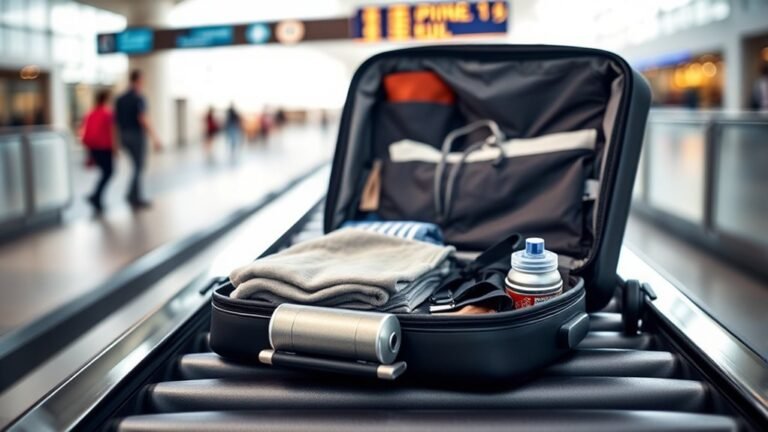
You can bring one carry-on on Delta that measures up to 22 x 14 x 9 inches, and that size must include wheels, handles, and any outward pockets, so measure the packed bag before you go. You’ll also get one personal item that must fit under the seat. Weight limits aren’t usually enforced on mainline flights but can vary on smaller aircraft and fare types. Keep your measurements and documentation handy and keep going for tips on avoiding gate-checks.
Who This Guide Is For and What It Answers
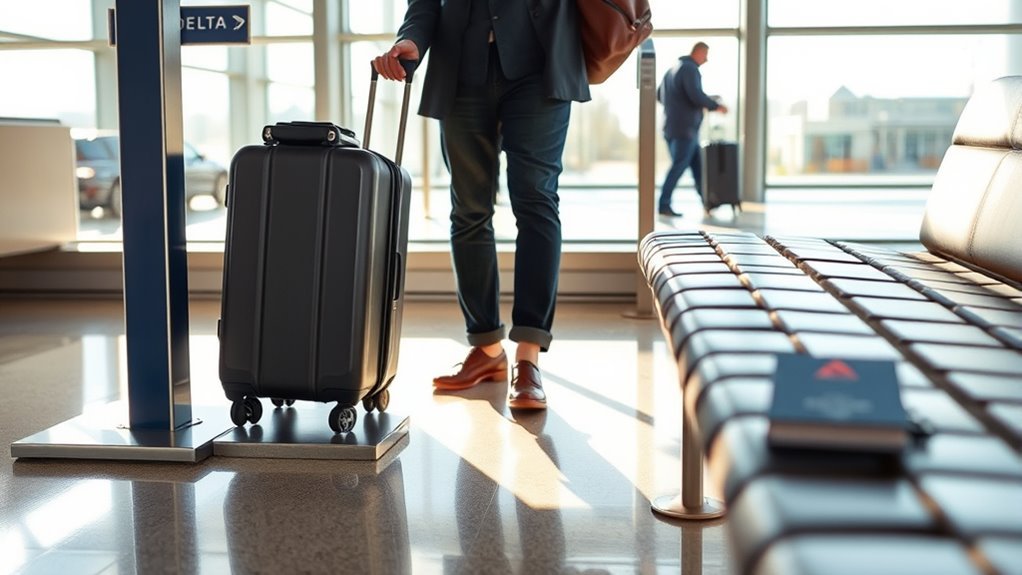
If you fly Delta and want to know exactly what carry-on size and item rules apply, this guide is for you. You’ll get clear answers if you’re a leisure traveler, business flyer, family packing for a trip, or someone connecting through multiple carriers.
You’ll learn which personal item counts, how Delta treats strollers and medical devices, and when overhead bin space matters. This guide helps you avoid surprises at the gate, prevents extra fees, and makes packing decisions straightforward.
You’ll also find practical tips for measuring bags and what to do if your item’s borderline, so you’re prepared.
Delta Carry-On Size: The Short Answer
You can bring one carry-on and one personal item on Delta, with the carry-on generally limited to 22 x 14 x 9 inches.
Weight limits aren’t usually enforced on main cabins, but some routes or aircraft might have restrictions, so check your flight details.
Make sure your personal item fits under the seat in front of you to avoid gate-checking.
Maximum Dimensions Allowed
When packing for a Delta flight, remember your carry-on must fit within 22 x 14 x 9 inches (56 x 35 x 23 cm), including wheels and handles, to qualify for the overhead bin. You’ll avoid gate checks if your bag measures at or below those limits.
Measure height with wheels and length including handles extended.
Consider compact designs that maximize internal space while staying within the frame.
- Measure exterior dimensions precisely before travel.
- Include wheels and handles in your measurement.
- Choose soft-sided bags for slight flexibility.
- Recheck dimensions after purchases or upgrades.
Weight And Restrictions
Although Delta doesn’t publish a strict weight limit for carry-ons on most domestic flights, airlines and gate agents expect you to handle your bag unassisted. If staff deem it too heavy for overhead storage, they can require gate check.
You should pack so you can lift your bag into the overhead bin without help, keeping heavier items low and balanced.
International routes or partner carriers may enforce weight limits, so check rules before flying.
Certain items—hazardous materials, oversized sporting gear, or loose batteries—are restricted and might need special packing or transport.
Always verify specific flight policies to avoid surprises.
Personal Item Rule
Gate agents expect carry-ons you can lift into the bin, and there’s a separate rule for the smaller bag you keep under the seat. You get one personal item plus one carry-on. Your personal item must fit under the seat in front of you—think briefcase, small backpack, or tote.
Delta’s guideline is compactness, not weight.
- Size: should slide under the seat comfortably.
- Examples: laptop bag, purse, small backpack.
- Accessibility: keep essentials you need during flight.
- Enforcement: gate agents may require gate check if it won’t fit.
Pack smart and prioritize fit over filling.
Delta Carry-On Dimensions (22 X 14 X 9 In)
Because Delta sets a clear standard, your carry-on needs to fit within 22 x 14 x 9 inches (including wheels and handles) to board as a cabin bag. Measure your bag fully packed to make sure it meets this limit so you won’t be asked to gate-check it.
You’ll want a bag that maximizes internal space while staying within those dimensions, so choose streamlined designs and pack smartly. Hard-shell and soft-sided options both work if they stay compact.
Check dimensions before purchase and before travel, since different models vary. Staying within Delta’s limit helps you avoid delays, extra fees, and last-minute repacking.
What Counts Toward Those Dimensions (Wheels, Handles, Pockets)
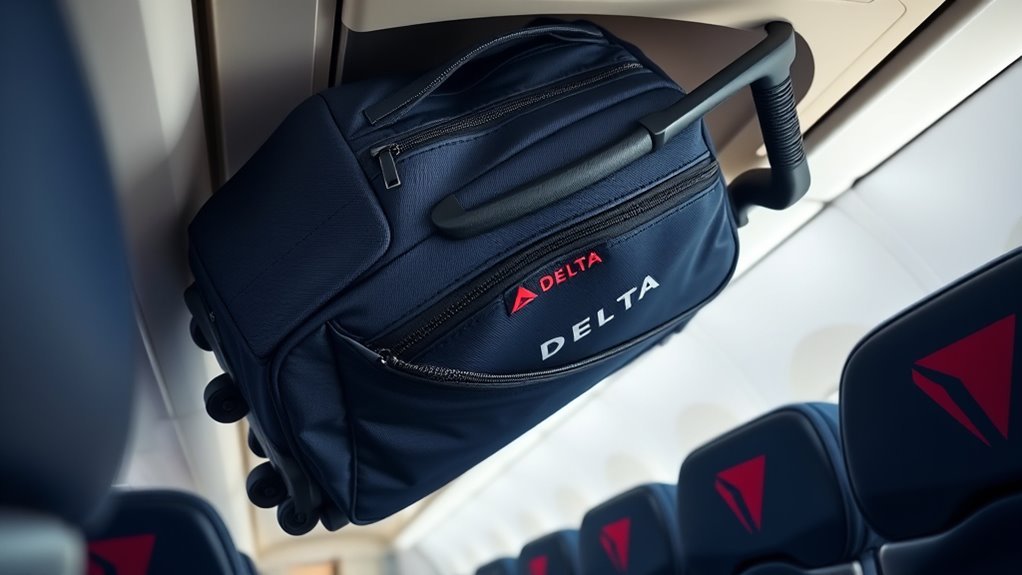
When you measure your carry-on for Delta, include wheels and handles in the total dimensions.
External pockets also count, so packed or protruding compartments can push you over the limit.
Check the bag fully expanded so you don’t get surprised at the gate.
Wheels And Handles Included
Although it may seem obvious, Delta counts wheels, handles, and external pockets as part of your carry-on’s overall dimensions, so you should measure from the outermost points when checking size limits. You’ll avoid surprises at the gate by including every protrusion. Measure with handles extended and wheels attached, then compare to the airline’s stated maximums.
Consider these practical checks:
- Measure height with telescoping handle fully extended.
- Measure width including side handles and wheel housings.
- Measure depth including any front bump or pocket bulge.
- Re-measure after packing to ensure you stay compliant.
External Pockets Count
Along with wheels and handles, external pockets factor into your carry-on’s measured size, so don’t assume soft pockets won’t push you over the limit.
Delta measures overall dimensions including any protrusions, so zippered, mesh, or slip pockets add to width and depth when full or bulging.
Pack thoughtfully: keep exterior pockets flat or store bulky items inside the main compartment.
Removable pouches still count if attached.
If you expect tighter fits in overhead bins, choose streamlined designs or compressible organizers.
At gate checks, agents will judge size by total profile, so err on the side of slimmer packing.
Carry-On Weight: Does Delta Have a Limit?
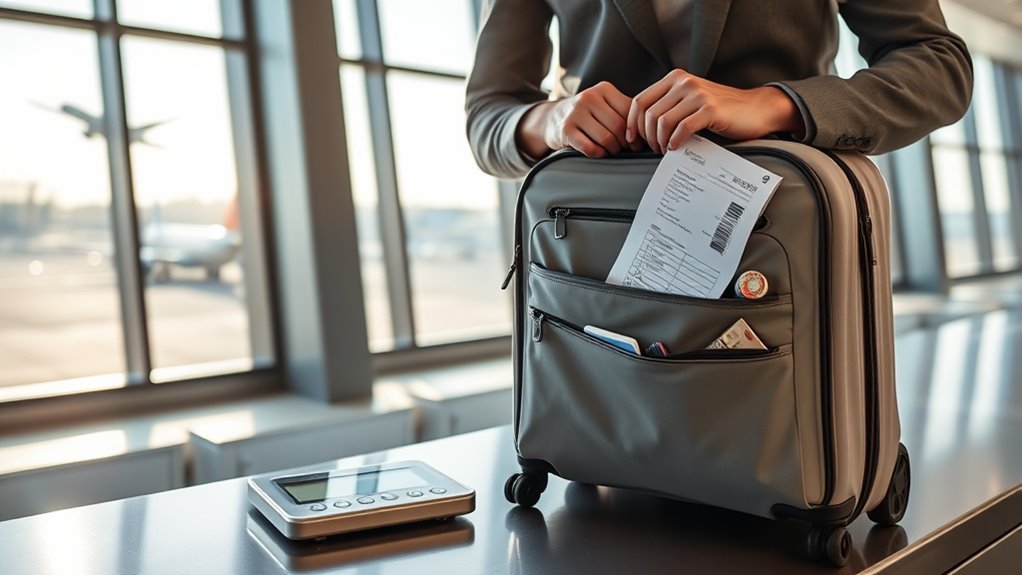
If you’re wondering whether Delta limits the weight of your carry-on, the short answer is no—Delta doesn’t set a specific weight cap for standard carry-on bags, though you still need to meet size limits and be able to lift the bag into the overhead bin unassisted.
You should still consider practical and safety factors:
- Pack so you can lift and stow the bag without help.
- Avoid overstuffing fragile items that could shift in flight.
- Check gate agents’ discretion—excessively heavy bags may be refused.
- For checked vs. carry decisions, prioritize weight-sensitive valuables and essentials.
Carry-On vs. Personal Item on Delta
You’ll want to know Delta’s carry-on size limits and how they differ from the definition of a personal item so you don’t get stopped at the gate.
Pack smart by reserving the overhead for larger items and fitting essentials—wallet, documents, a small laptop or bag—into your personal item.
We’ll cover exact dimensions, what counts as a personal item, and practical packing and placement tips.
Carry-On Size Limits
Wondering how Delta distinguishes a carry-on from a personal item? You’ll focus on carry-on size limits so you can pack confidently. Delta lets you bring one carry-on that fits overhead and one personal item under the seat.
- Maximum dimensions: 22 x 14 x 9 inches including handles and wheels.
- Weight: Delta doesn’t publish a strict limit for most U.S. flights, but international routes or smaller aircraft may enforce limits.
- Overhead bin: Bag must stow properly; bulky items can be gate-checked.
- Enforcement: Gate agents make final calls, so measure and test fit before travel.
Personal Item Definition
What counts as a personal item on Delta and how does it differ from your carry-on? You’re allowed one personal item plus one carry-on.
A personal item is smaller—think a purse, briefcase, laptop bag, or small backpack—that fits under the seat in front of you. It’s meant for essentials you’ll access during the flight: electronics, documents, medication, or a light sweater.
Your carry-on is larger and must fit in the overhead bin. Delta enforces size limits for both; if your personal item’s too big, it may need to go in the overhead and count as your carry-on, potentially incurring fees.
Packing Tips And Placement
When packing for a Delta flight, think strategically about what goes in your personal item versus your carry-on so you can access essentials and stay within size limits. You’ll want to balance weight, accessibility, and airline rules to avoid gate-checking.
Prioritize valuables and items you need during the flight in your personal item, and reserve bulkier gear for the overhead bin.
- Put documents, wallet, phone, and medications in your personal item for easy reach.
- Pack clothing and shoes in your carry-on to save space.
- Use compression cubes to maximize room.
- Keep chargers and a small toiletry kit accessible.
Typical Personal Item Sizes and Examples
Although airlines vary, most personal items fall within a predictable range, so you can usually plan around common dimensions: roughly 16 x 12 x 6 inches (40 x 30 x 15 cm) for tote bags, small backpacks, or briefcases.
You’ll find variations: slim laptop sleeves (13 x 9 x 2 inches) that slide under seats, compact messenger bags (15 x 11 x 4 inches), and compact camera bags (14 x 10 x 6 inches).
For parents, diaper bags often fit if they match those dimensions.
Measure your bag before travel so it consistently fits under the seat and avoids gate check surprises.
Carry-On Rules by Fare Class (Basic Economy vs Main)
Because fare class often dictates what you can bring on board, it’s important to check your ticket: Basic Economy usually restricts carry-on bags to a personal item only, while Main Cabin fares let you bring both a carry-on and a personal item.
- Basic Economy: You’ll generally be limited to one personal item that fits under the seat; larger carry-ons may be gate-checked.
- Main Cabin: You can bring a standard carry-on (up to Delta’s size limits) plus a personal item.
- Boarding priority: Main Cabin often boards earlier, protecting overhead space for your carry-on.
- Confirm policy: Rules can vary by route, aircraft, and promotions.
Carry-On Allowances for Comfort+ and First Class
If you’re traveling in Comfort+, you’ll want to know how its carry-on limits compare to Main and Basic Economy.
We’ll outline Comfort+ carry-on policy specifics and then show the exact allowance differences for First Class.
That way you can quickly see what extras, if any, you’re entitled to when booking up.
Comfort+ Carry-On Policy
When you fly Comfort+ or First Class on Delta, you’re allowed the same standard carry-on allowance as Main Cabin passengers: one carry-on bag plus one personal item, sized to fit in the overhead bin and under the seat respectively.
You’ll still need to follow size and weight guidelines and stow items safely during taxi, takeoff, and landing. Keep essentials accessible in your personal item. Gate agents may ask you to check oversized bags.
- Verify dimensions before you pack.
- Use soft-sided bags to squeeze into bins.
- Label items for quick ID.
- Know airline staff can reassign storage.
First Class Allowance Details
You get the same carry-on allowance in First Class as in Comfort+: one standard carry-on plus one personal item that must fit in the overhead bin and under the seat.
You can bring a briefcase, backpack, purse, or laptop bag as your personal item; the standard carry-on should meet Delta’s size limits (typically 22 x 14 x 9 inches) and be stowed overhead.
Priority boarding in First Class makes overhead space easier to access, but you’re still responsible for fitting items within limits.
If gate agents determine bags don’t comply, you may need to gate-check them without extra charge.
How Medallion Status Changes Carry-On Privileges
Delta adjusts carry-on privileges based on your Medallion tier, giving higher-status members earlier overhead bin access and more flexibility with carry-on counts and size exceptions.
You benefit from priority boarding, which secures bin space and reduces gate-check risk.
Elite tiers may also get informal leniency for slightly oversized items, though approval isn’t guaranteed.
Use your status to board earlier and store essentials overhead.
- Priority boarding improves bin access.
- Higher tiers see reduced gate-check chances.
- Agents may allow minor size exceptions.
- Always present Medallion ID to request leniency.
Delta Partner and Codeshare Carry-On Rules
Although partners and codeshare flights operate under different carriers, your carry-on allowance usually follows the rules of the airline actually operating the flight, so check the operating carrier’s policy before you pack.
When Delta sells a ticket on another carrier’s flight, that carrier’s size and quantity limits apply. Conversely, if another airline sells a seat on a Delta-operated flight, Delta’s carry-on rules govern.
Baggage fees, gate checks, and priority boarding tied to fare class or status may differ by operator. Confirm allowances on your itinerary, boarding pass, or the operating carrier’s website to avoid surprises at the gate.
International Delta Flight Carry-On Variations
When flying internationally, carry-on allowances can change based on route, country regulations, and the operating carrier, so check rules for both your origin and destination as well as any stopovers.
When flying internationally, check carry-on rules for origin, destination and any stopovers—they can vary by route and carrier.
You’ll often face variations in size, weight, and item counts depending on whether Delta or a partner operates the flight. Know differences ahead of time to avoid fees or gate checks.
Consider these points:
- Weight limits may apply on certain international routes.
- Size allowances can differ by partner carrier standards.
- Additional personal items might be restricted or counted separately.
- Local security rules can affect what you bring.
Regional/Delta Connection Smaller-Limit Expectations
Because regional and Delta Connection aircraft are smaller, you should expect tighter carry-on limits and more frequent gate checks than on mainline flights. You’ll often face restricted overhead bin space and narrower aisles, so pack lighter and prioritize essentials in a personal item.
Choose soft-sided bags that compress or stow under the seat. If you’re traveling during peak times, gate agents may ask you to gate-check larger carry-ons; attach a tag and keep valuables with you.
Consider checking oversized bags in advance or upgrading to mainline service for more consistent carry-on accommodations and less chance of last-minute hassles.
How Delta Enforces Sizes at the Gate
When you board, agents may ask you to place your carry-on in a sizing box to confirm dimensions.
If your bag doesn’t fit, staff will explain options like gate checking or paying an oversize fee.
Expect consistent, procedural enforcement to keep boarding on schedule.
Gate Size Checks
If a gate agent thinks your carry-on might be oversized, they’ll ask you to place it in a sizer or measure it against a marked frame before boarding. You’ll be told quickly whether it fits the allowed dimensions; if it does, you keep it with you.
If not, you may need to gate-check it or rearrange items into an approved personal item. Agents act consistently to keep boarding efficient and overhead space fair.
- Be ready to present the bag.
- Know Delta’s size limits beforehand.
- Don’t argue at the gate—ask politely.
- Pack essentials in your personal item.
Enforcement Procedures
After the gate agent checks your bag against the sizer, they’ll follow established enforcement procedures to keep boarding smooth and fair. If your bag fits, you board as usual.
If it’s oversized, the agent will offer options: gate-check it free, pay an oversize fee if applicable, or rearrange items into compliant bags when possible.
Agents apply rules consistently, prioritizing safety and overhead space. They’ll document exceptions and escalate disputes to a supervisor.
You should respond calmly, present any supporting information (like carry-on allowance for your fare), and comply with instructions to avoid delays for yourself and other passengers.
If Your Bag Fails the Sizer: What to Expect
Should your bag not fit the sizer, expect a quick inspection and a few possible outcomes: gate agents may ask you to check the item at the gate, pay an oversize carry-on fee, or consolidate belongings into a smaller bag. You’ll be informed politely and given options; stay calm and act promptly to avoid delays.
Typical steps include:
- Showing ID and boarding pass for verification.
- Removing items to comply with size limits.
- Transferring valuables to a personal item you keep with you.
- Following agent instructions for gate-checking if required.
Cooperate courteously to get through the process smoothly.
Fees and Penalties for Oversized Carry-Ons
When a bag fails the sizer, you’ll often face a few fee-related options: pay an oversize carry-on charge, gate-check the item for free or a reduced rate, or move contents into an approved personal item to avoid any fee.
If you pay, expect a one-time fee that varies by route and fare class; Sky Priority or certain tickets may waive it. Gate-checking usually avoids immediate charges but can risk delays or retrieval at baggage claim.
If staff require checked luggage due to size, standard checked-bag fees may apply. Always confirm charges before agreeing to minimize surprises at the gate.
How to Appeal a Carry-On Fee or Gate Decision
If you disagree with a carry-on fee or a gate agent’s decision, start by staying calm and asking for a clear explanation of the reason and how the size was measured.
Then document details: time, agent name, measurement, and any photos. You can appeal later with Delta customer service online or at the airport desk.
Follow these steps:
- Note flight number, boarding time, and agent ID.
- Take clear photos of your bag and the sizer used.
- Submit a complaint via Delta’s website or mobile app with attachments.
- Keep receipts and follow up politely until resolved.
When to Switch From Carry-On to Checked Bag on Delta
Wondering whether to gate-check or pop your bag on the belt? You’ll switch to a checked bag when overhead space is tight, your carry exceeds Delta’s limits, or fragile items need protection. Prioritize speed: tight connections favor gate-checking; long layovers favor checked bags. Consider fees versus convenience and risk of delays retrieving checked luggage. Use this quick emotional snapshot to decide:
| Feeling | Situation | Action |
|---|---|---|
| Frustrated | Overhead full | Gate-check for speed |
| Anxious | Fragile items | Check for safety |
| Rushed | Tight connection | Gate-check |
Packing Tips to Meet Delta’s Carry-On Size
Because Delta enforces strict carry-on dimensions, pack with measurement and weight in mind so your bag fits the overhead or under-seat space without surprises. You’ll want to optimize space, balance weight, and keep essentials accessible.
- Measure before you pack: confirm length, width, and height including wheels and handles.
- Roll clothes tightly, use compression cubes, and place heavier items at the base to stabilize the bag.
- Limit liquids to a clear quart-sized bag; consolidate toiletries and wear bulky shoes on board.
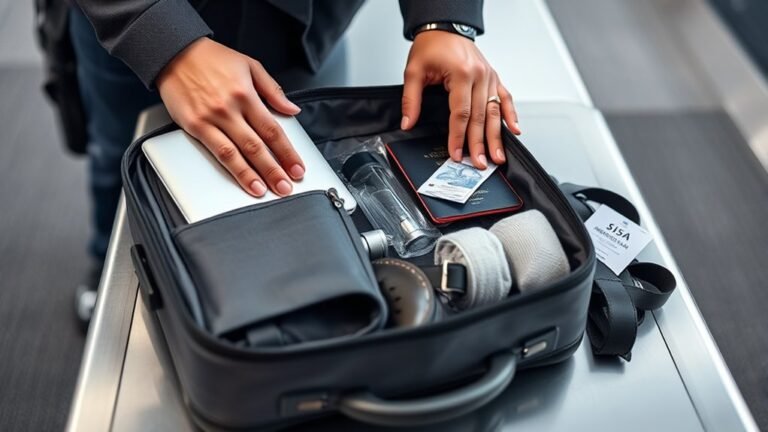
- Keep documents, electronics, and a change of clothes in an accessible compartment for quick retrieval.
Best Carry-On Bag Styles That Fit Delta’s Sizer
You’ll want to choose a style that slides easily into Delta’s sizer, and compact carry-on totes are great for quick trips.
Softside roller bags give you flexible packing room without bulking out past the allowed dimensions.
If you need organization and protection, structured backpack cases keep gear neat while still fitting the sizer.
Compact Carry-On Totes
When you need a bag that slips easily into Delta’s overhead sizer without sacrificing style, compact carry-on totes are the smartest choice; they combine slim profiles, structured shapes, and durable fabrics so you can board confidently and avoid gate checks.
You’ll appreciate totes that maximize organization while staying within dimensions. Look for reinforced bases, comfortable shoulder straps, and easy-access pockets for travel essentials. Consider materials that resist scuffs and stand upright in tight overhead bins.
- Slim structured tote — keeps shape, fits sizer
- Lightweight canvas — durable, packs light
- Leather commuter tote — polished, sturdy
- Convertible tote-backpack — versatile for busy travel
Softside Roller Bags
If you prefer rolling ease over shoulder strain, softside roller bags give you durable, flexible storage that slips into Delta’s overhead sizer with minimal fuss. You’ll like their expandability for souvenirs or bulking layers without exceeding size limits.
Look for reinforced corners, smooth wheels, and a telescoping handle that locks; these keep your bag maneuverable and accepted during gate checks. Choose fabrics that resist scuffs and moisture, and internal compartments that secure laptops and toiletries to avoid spills.
Measure dimensions before travel—soft sides compress, but Delta enforces cubic limits—so you’ll avoid surprises at boarding and transfer with confidence.
Structured Backpack Cases
Though they share the hands-free advantage of softside backpacks, structured backpack cases give you a rigid shell that slides into Delta’s overhead sizer with predictable fit and protection. You’ll appreciate organized compartments, padded laptop sleeves, and stable weight distribution that keep items secure during boarding.
Choose a case with lockable zippers and durable corners to avoid damage and speed inspections. Check dimensions before you buy so it meets Delta’s 22 x 14 x 9-inch guideline.
- Durable shell for impact resistance
- Padded laptop compartment for electronics
- Compression straps to stabilize contents
- Smooth wheels or trolley pass-through for flexibility
How to Measure Your Bag Correctly at Home
Before you pack, set your bag on a flat surface and remove any detachable items like straps or wheels covers so you measure the core dimensions accurately.
Measure height from base to top, width at the widest point, and depth from front to back, including pockets that can’t be removed.
Use a rigid tape measure for straight lines and hold it taut. Round up to the nearest half inch if unsure.
Note the total by adding the three dimensions, if an airline requires it, and record them for reference.
Reattach parts only after confirming the bag fits your carrier’s allowed size.
Maximize Space While Staying Within Size Limits
When you’re packing to a strict carry-on size, think vertically and compressively: roll clothes to save space, use packing cubes to keep items organized and compressed, and place heavier, less-collapsible items at the bottom near the wheels so you can fit bulkier layers without bulging the bag’s top.
Use these tactics to stay within Delta’s limits and move through security faster:
- Stuff shoes with socks and small items.
- Layer thin items around toiletry pouches.
- Use vacuum or compression bags for non-fragile clothing.
- Keep a lightweight foldable tote for extras or duty-free.
Check dimensions before locking the bag.
What You Can Pack in a Delta Carry-On (Liquids, Batteries)
Packing strategically helps you meet Delta’s size limits, and planning what goes inside matters just as much. You can carry liquids in containers 3.4 ounces (100 ml) or smaller in a single clear quart-sized bag; medications and baby food are exceptions but declare them at security.
Place spare lithium batteries and power banks in your carry-on, not checked baggage, with terminals protected or taped. Bring electronics like laptops and tablets easily accessible for screening.
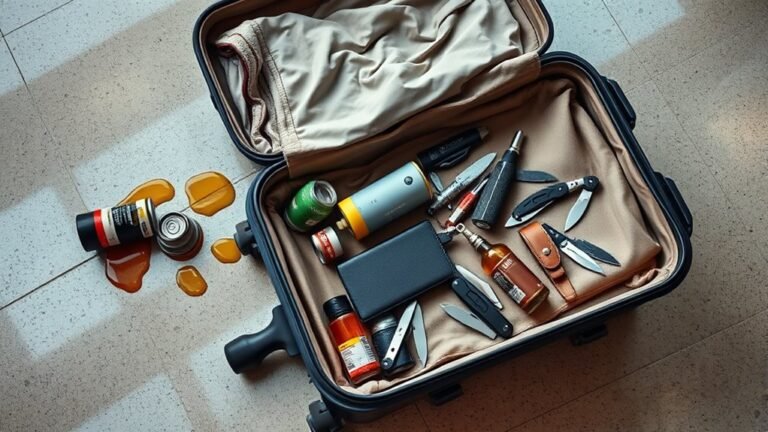
Pack aerosols and gels within allowed quantities. Keep sharp tools, sporting goods, and other items that might be restricted out of reach to avoid delays.
Prohibited Items That Can Force Your Bag to Be Checked
If you try to bring forbidden liquids or gels exceeding TSA limits, your bag could be pulled aside and forced into checked baggage.
The same goes for oversized items or articles that are restricted for safety—those won’t fit the carry-on rules and may have to go under the plane.
Know what’s banned before you pack so you won’t be surprised at the gate.
Forbidden Liquids And Gels
Wondering which liquids and gels might force you to check your carry-on? You need to follow Delta and TSA rules: containers over 3.4 ounces (100 ml) and loose large quantities can trigger inspection or require checking. Pack small travel-size bottles in a single clear quart bag, and declare prohibited items when asked.
- Large toiletries exceeding 3.4 oz (e.g., shampoo, lotion)
- Unapproved liquid medications without documentation
- Flammable gels or aerosols (hair spray, certain perfumes)
- Bulk liquids like sports drinks or large cosmetics
Follow limits, label meds, and you’ll avoid surprises.
Oversized Or Restricted Items
Because Delta and TSA enforce strict size and content limits, oversized or restricted items in your carry-on can get pulled for inspection or require you to check the bag. You should avoid items like large sporting equipment, musical instruments that exceed dimensions, lithium batteries beyond allowed watt-hours, and certain tools or sharp objects.
If an item appears hazardous or won’t fit in overhead bins, gate agents will ask you to gate-check or check it into the hold. Pack smart: measure and weigh items, know battery rules, and call Delta ahead for unusual gear.
Doing so prevents delays, fees, and denied boarding.
Packing Sports Gear and Musical Instruments for Delta
When you’re bringing sports equipment or a musical instrument on Delta, know the airline’s size, packing, and carriage rules before you arrive at the gate. You should check whether items qualify as carry‑on or require checked baggage; oversized gear often needs fees or gate check. Pack items in hard cases for protection and secure loose parts.
Declare specialty gear at check‑in if it exceeds dimensions or weight limits. Follow fragile handling instructions for instruments; consider purchasing a seat for valuable instruments if allowed.
- Measure cases accurately.
- Use protective hard cases.
- Declare oversized items.
- Consider buying an extra seat.
Baby Gear and Medical Device Exceptions
You can bring essential baby gear like a stroller or car seat and certain medical devices as exceptions to Delta’s carry-on size rules.
Make sure you know what’s allowed, what documentation (like prescriptions or device labels) you may need, and how screening may be handled at security.
Check Delta’s official guidance before you fly so you’re prepared and avoid surprises at the gate.
Baby Gear Exceptions
Need baby gear on board? You can bring essential items beyond your standard carry-on allowance to keep your little one comfortable. Delta lets you carry specific baby gear without counting it as your personal item in many cases. Follow these typical guidelines:
- Stroller: Gate-check or bring onboard when space permits.
- Car seat: Use it for your infant in a seat or gate-check if needed.
- Diaper bag: Carry one bag with supplies; it usually doesn’t count as your personal item.
- Breast pump and accessories: Bring them as part of your allowed baby items.
Confirm specifics with Delta before travel.
Medical Device Allowances
Alongside baby gear allowances, Delta also makes exceptions for medical devices so you can travel with necessary equipment without it counting toward your carry-on limit.
You can bring items like CPAP machines, portable oxygen concentrators, insulin pumps, mobility aids, and other essential medical devices in addition to your standard carry-on and personal item.
Pack accessories and batteries safely, and stow larger equipment in the cabin when space allows or gate-check if necessary.
Notify gate agents if you need assistance boarding or storing devices.
Treat devices as carry-on-sized when possible to keep them accessible throughout your flight.
Documentation And Screening
How should you prepare documentation and handle screening for baby gear or medical devices? You’ll need proof and patience at security checkpoints. Carry originals or clear digital copies of prescriptions, device manuals, or letters from your doctor. Declare items to TSA agents before screening; removable batteries may be inspected separately. Follow these steps:
- Bring prescriptions, physician letters, or warranty/service records.
- Keep device manuals or manufacturer specs handy for verification.
- Remove batteries and spare cells per TSA rules; show them when asked.
- Inform agents about pumps, monitors, or feeding equipment before X-ray or hand inspection.
Stay polite and cooperative to speed screening.
Real Traveler Scenarios: Common Gate-Check Situations
When flights fill and overhead bins get tight, you’ll often be asked to gate-check a carry-on—here are common situations that trigger it, what to expect at the jet bridge, and simple steps to keep your bag safe and avoid delays.
You might be asked to gate-check when the flight is full, your bag is oversized, or passengers with priority need space. At the jet bridge, attendants tag and place bags; you’ll get a claim check. Protect valuables, remove essentials, and attach a distinctive tag. Plan a little extra time for retrieval after landing to avoid stress.
| Trigger | Tip |
|---|---|
| Full flight | Remove valuables |
| Oversized bag | Use bright tag |
| Priority boarding | Keep essentials with you |
Choosing the Right Carry-On for Long vs Short Trips
Decide whether your trip length calls for a compact personal item or a full-size carry-on, since short hops let you pack light while longer stays may need more space.
Use packing-light strategies—versatile clothing, travel-sized toiletries, and compression cubes—to stretch whatever bag you choose.
Pick a multi-use carry-on with organized compartments and a flexible carry system so it works for both quick weekends and extended itineraries.
Trip Length Considerations
Heading out for a weekend or setting off on a two-week adventure? You’ll pick different carry-ons based on trip length and needs. Consider these factors to match size to duration:
- Trip duration: short trips fit a compact bag; longer stays need more capacity or a second piece.
- Access needs: carry essentials you’ll use inflight or immediately on arrival; keep them reachable.
- Mobility: shorter trips favor lighter, more maneuverable bags; long trips may justify slightly larger wheels.
- Airline rules: keep Delta’s size limits in mind so your chosen bag stays compliant and avoids gate checks.
Packing Light Strategies
Because longer trips demand flexibility while short ones reward minimalism, pick a carry-on that balances capacity with ease of use.
For short trips, choose a compact bag that forces you to limit outfits, toiletries, and shoes; roll clothes, use packing cubes, and rely on versatile layers.
For longer travel, opt for a slightly larger, well-organized carry-on that still fits Delta’s limits; prioritize lightweight fabrics, compression sacks, and a collapsible daypack for excursions.
Always list essentials, plan laundry stops, and digitize documents to save space.
Test-pack before departure to guarantee weight and organization meet your needs.
Multi-Use Carry-Ons
When you pick a multi-use carry-on, think about how trip length changes what you need. You’ll want versatility: compact for short hops, expandable for longer stays. Choose durable wheels, a light frame, and compartments that adapt. Consider a bag that fits Delta’s overhead and under-seat rules while giving you packing flexibility.
- Short trips: minimalist packing cubes, one outfit, electronics, toiletries.
- Long trips: expandable capacity, laundry kit, extra shoes.
- Business travel: garment section, laptop protection, quick-access pockets.
- Weekend adventures: daypack compatibility, weatherproofing, easy stowage.
Top-Rated Carry-Ons That Meet Delta Limits
Finding a carry-on that fits Delta’s 22 x 14 x 9-inch limit without sacrificing durability or organization makes traveling less stressful, and these top-rated models deliver—lightweight frames, reliable wheels, and smart interiors that help you breeze through boarding and overhead-bin Tetris.
Choose a hard-shell spinner if you want impact resistance and easy rolling; look for a USB charging port and lined compartments for cords and documents.
Soft-sided options expand slightly for souvenirs and often include external pockets for gate essentials.
Prioritize a comfortable telescoping handle, smooth zippers, and a TSA-approved lock.
Test weight empty to guarantee you stay within airline carry-on limits.
Strategies to Avoid Last-Minute Gate Repacking
If you want to skip frantic gate-side repacking, pack with a clear system. You’ll save time, avoid fees, and board calmer. Adopt consistent habits before every trip so you spot issues early.
- Weigh and measure your carry-on at home to confirm Delta limits.
- Use packing cubes for clothes, electronics, and toiletries so things slide in neatly.
- Keep a dedicated small bag for liquids and chargers for easy security checks.
- Do a final 10-minute gate checklist: essentials, documents, and loose items that might force last-minute shuffling.
How COVID-Era and Temporary Policy Changes Affect Carry-Ons
Because airlines adjusted procedures during the pandemic, you may still encounter temporary carry-on rules—like stricter gate checks, limits on soft-sided bags, or more frequent size enforcement—that can affect what you bring aboard.
You should check notices for specific routes since airport staffing, aircraft swaps, or cleaning protocols can prompt short-term limits. Expect occasional gate agents to require stowing larger items or using overhead space differently.
Pack essentials in a personal item you can guarantee fits under the seat. Keep prized items accessible and be ready to gate-check without compensation.
Staying flexible and informed minimizes surprises and keeps boarding smooth.
Use Delta’s App and Site to Confirm Baggage Rules
Given the possibility of short‑term gate rules or sudden enforcement changes, check Delta’s app and website before you head to the airport so you know the exact carry-on and personal item allowances for your flight. Use the tools to confirm dimensions, weight limits, and whether your fare or status affects allowance.
Save screenshots of the baggage page and your booking’s baggage summary. If policies differ by route or aircraft, the app shows specifics.
Finally, contact Delta via chat or phone from the app if you’re unsure.
- Verify size limits
- Check fare/status rules
- Screenshot confirmations
- Ask Delta directly
Quick Pre-Flight Checklist to Confirm Your Bag Meets Delta Rules
Before you leave for the airport, run through a quick checklist to make sure your carry-on and personal item meet Delta’s rules so you won’t face surprises at the gate.
Before you head to the airport, do a quick checklist to ensure carry-on and personal items meet Delta rules.
Measure length, width, and height, including wheels and handles, and confirm the carry-on is within 22 x 14 x 9 inches.
Weigh items if you expect limits on certain fares.
Verify your personal item fits under the seat and contains essentials like documents, medication, and electronics.
Zip pockets and secure loose straps.
Remove prohibited items and pack liquids in a clear, compliant bag.
Close and inspect before heading out.
When to Contact Delta Customer Service About Carry-On Questions
When should you contact Delta customer service about carry-on questions? You should reach out when rules aren’t clear or your situation’s unusual. Contact them if:
- Your bag dimensions are borderline and you need confirmation before travel.
- You’re carrying oversized items like musical instruments or medical equipment.
- You booked a special fare or have status and need clarification on allowances.
- You face inconsistencies between online guidelines and gate agents.
Call or use Delta’s chat for prompt answers, and keep booking and bag details handy. Doing this avoids surprises at the gate and helps you plan alternatives if needed.
Frequently Asked Questions
Can I Bring Duty-Free Liquids Onboard in Addition to My Liquids Bag?
Yes — you can bring duty-free liquids onboard in addition to your liquids bag, provided they’re sealed in the store’s tamper-evident bag with receipt, and you follow TSA and airline rules for carry-on and security screening.
Are Foldable Duffels Allowed as Personal Items if Packed Inside a Carry-On?
Yes — you can usually pack a foldable duffel inside your carry-on and use it as a personal item, as long as it fits within the airline’s personal-item size limits and you can stow both items properly onboard.
Do Delta Carry-On Rules Differ for Military Personnel With ID?
Yes — you’ll get exceptions: if you’re active duty with valid ID, Delta often allows extra baggage or waived fees and expanded carry-on allowances, but specifics vary by route and ticket, so check Delta’s military policy first.
Can Oversized Carry-Ons Be Accepted at Check-In Without Gate Fees?
Yes — you can often check an oversized carry-on at check-in without gate fees, but you’ll likely pay an oversized/checked baggage charge unless your fare, status, or military ID waives that fee; always confirm at counter.
Does Delta Ever Make Exceptions for Oversized Bags Due to Delays or Cancellations?
Yes — Delta can sometimes make exceptions for oversized bags after delays or cancellations, but you shouldn’t count on it; contact gate agents or customer service immediately, stay polite, and they’ll often try to accommodate you.
Conclusion
You’ve got the essentials: Delta’s carry-on limit is 22 x 14 x 9 inches (including wheels, handles and exterior pockets), and there’s generally no published weight limit—though some gates may enforce restrictions on tight flights. Check Delta’s site or app before you fly, watch for temporary COVID-era policy changes, and use the quick pre-flight checklist to avoid surprises. If you’re unsure, contact Delta customer service for a definitive answer. Safe travels!