Does Tsa Require ID for Minors Travel Rules Explained
You usually don’t need ID for kids under 18 at TSA checkpoints when they’re traveling with you, since the airline and TSA verify them via the boarding pass and parent or guardian. Airlines, borders, and other countries often have different rules, so you’ll still want a passport, birth certificate, or notarized consent for international trips or unaccompanied minors. Infants under two may need age proof. Keep documents handy and keep going to learn the details.
Quick Answer: Do Minors Need ID at TSA?
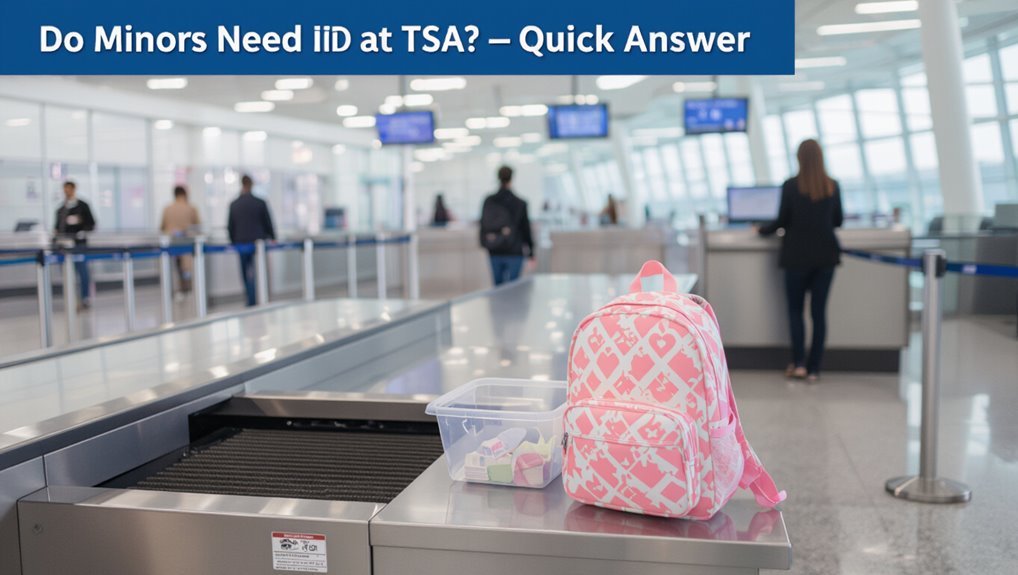
Wondering whether kids need ID to get through TSA? You usually won’t need ID for children under 18 when traveling with a companion, though airlines may have their own rules.
TSA relies on adult verification and boarding passes. Still, carry proof of age or guardian documents if you expect questions, international travel, or if an airline requires ID for minors.
Who Sets ID Rules: TSA vs. Airlines?
You’ll want to know who actually sets ID rules before you travel.
The TSA controls security screening procedures, but airlines can have their own ID policies for boarding.
That means federal requirements and carrier rules can both affect what you need to show for a minor.
TSA Screening Authority
Because the Transportation Security Administration sets the baseline rules for who needs ID at checkpoint screening, airlines can’t override TSA requirements but can have their own policies for boarding and ticketing.
Airline ID Policies
Airlines set many of the ID rules you’ll encounter at check-in and boarding, but they can’t override TSA’s baseline screening requirements at the checkpoint.
You should follow each carrier’s proof, consent, and age-verification policies for boarding passes and unaccompanied minors. Ask airlines ahead to avoid surprises.
- Check carrier ID and documentation lists.
- Confirm unaccompanied minor procedures.
- Bring supporting documents the airline requests.
Federal Versus Carrier
While the TSA sets baseline identification and screening requirements for passing through security checkpoints, carriers control boarding rules and can require extra documents for ticketing and on-board access.
Domestic TSA ID Policy for Children
For domestic flights within the United States, kids under 18 generally don’t need to show identification at TSA security checkpoints when traveling with a companion who’s acceptable ID;
you’ll just need to confirm their age and identity verbally or with available documents like a birth certificate if asked.
- Carry a companion’s valid ID.
- Bring a birth certificate if available.
- Expect verbal age confirmation at checkpoints.
International Travel: Passports and Visas for Kids
When you travel abroad with children, you’ll need valid passports for each kid and should check how long those passports must be valid for your destination.
Some countries also require visas or have special entry rules for minors, like parental consent letters or additional documentation.
Confirm passports, visa requirements, and any entry restrictions well before your trip to avoid surprises.
Passport Requirements For Minors
Need a passport for your child? You’ll need one for any international flights, including infants.
Apply early, submit proof of citizenship and parental consent, and include a photo meeting passport standards.
- Gather birth certificate, ID, and parental consent.
- Complete application (DS-11) in person for minors.
- Allow extra processing time and consider expedited service if needed.
Visas And Entry Rules
Although passports get you out of the country, visas and entry rules determine whether your child can get in—so check destination requirements early, confirm any visa type and duration needed, and note special rules for minors like parental consent letters, notarization, or separate travel documents.
You’ll also verify entry stamps, transit visas, and residency rules, arrange appointments early, and carry originals plus copies for smooth arrivals.
Infants Under 2: What ID You Really Need
Traveling with an infant under 2? You usually won’t need ID for TSA screening if they’re traveling with you domestically, but bring proof of age for boarding or airline policies.
Carry documentation in case of doubt.
- Birth certificate copy
- Passport for international travel
- Hospital record or physician note if needed
Children 2–17: TSA Expectations at Checkpoints
For children ages 2–17, you’ll usually need to show an ID that matches the airline’s policy and the age groups they use.
You should be prepared for standard security screening that may include separate screening of the child or additional checks, and follow any instructions from TSA officers.
Make sure the adult traveling with the child has proper ID and is ready to confirm guardianship if asked.
ID Expectations For Ages
Checkpoint screening for children ages 2–17 is straightforward: you generally won’t need an ID for kids under 18 when they travel with a ticketed adult, but be ready to show proof of age or guardianship if an airline or TSA agent asks.
Keep documents handy, follow airline policies, and cooperate with agents.
- Bring birth certificates if requested
- Carry custody papers when applicable
- Have digital copies ready
Screening Process For Minors
If your child is between 2 and 17, expect a straightforward but specific screening routine at the security lane: TSA officers will guide you through what needs to go through the X-ray, when to remove shoes or outerwear, and how to handle strollers, car seats, and carry-on items.
You’ll send pediatric bags separately, prepare electronics or formula for inspection, and comply with standard screening or additional checks as needed.
Accompanying Adult Requirements
When you bring a child aged 2–17 to the security lane, TSA expects an adult to stay with them, follow officer instructions, and manage items like carry‑ons, strollers, or car seats during screening.
You’ll assist with removing shoes or electronics, hold the child if needed, and present any documentation requested.
Follow these tips:
- Keep items organized.
- Communicate with officers.
- Prioritize child comfort.
Teens Turning 18: When Adult ID Is Required
As you approach your 18th birthday, know that TSA treats you as an adult for ID purposes the day you turn 18.
You’ll need a valid government-issued ID to clear security and board domestic flights once you’re 18.
Plan ahead: bring acceptable identification on travel day, confirm airline policies, and keep backups accessible to avoid delays or denied boarding at the checkpoint.
Acceptable IDs for Minors on U.S. Flights
You’ll want to know what ID is expected at different ages, which documents airlines and TSA accept, and what to bring if your child doesn’t have ID.
For younger kids you’ll usually rely on a birth certificate or passport, while teens may need state or federal photo ID once they’re 18.
If you can’t produce ID, carriers and TSA often accept alternate proofs like school IDs, medical records, or guardianship documents—check with your airline before you travel.
ID Requirements By Age
While infants and young children typically don’t need identification for domestic flights, the rules change as kids get older and may require specific documents; here’s a clear breakdown by age so you know what to carry for each minor.
- Under 2: You’ll usually only need proof of age like a birth certificate if requested.
- Ages 2–17: Airlines may ask for ID or proof of age—check carrier rules.
- 18+: You’ll need standard adult ID.
Acceptable ID Types
Wondering what counts as acceptable ID for kids on U.S. flights?
You can usually show a birth certificate, passport, or naturally issued state ID for children. Schools, medical records, or tribal IDs may also work for identity verification.
Airlines set their own proof rules for certain ages, so check your carrier’s policy before travel to confirm the document you plan to present is accepted.
What To Bring Without ID
If your child doesn’t have a standard ID, don’t panic—TSA and airlines accept several alternative documents to verify identity for minors on U.S. flights.
Bring what proves age, relationship, and residency when possible.
- Birth certificate or passport for age verification.
- School ID or immunization records for identity.
- Parent’s government ID plus custody or guardianship papers if applicable.
Acceptable IDs for International Travel With Kids
For international trips, you’ll need to present a passport for every child regardless of age.
In some cases, additional documents like a birth certificate or a notarized consent letter are required if one parent isn’t traveling.
Check destination entry rules for visas or health forms.
Carry certified copies of birth certificates, custody papers, and parental consent letters when applicable.
Verify airline-specific documentation requirements before travel.
Lap Infants: When Airlines Ask for Proof of Age
When you plan to bring an infant on your lap, airlines may ask for proof of the child’s age to confirm eligibility for lap seating and fare rules.
You should carry a birth certificate or passport, know airline-specific age limits, and be prepared for gate agent checks.
- Birth certificate or passport
- Check airline policy before travel
- Have a digital copy ready
Proof of Citizenship for Minors Abroad
Because countries and carriers each set their own rules, you should carry clear proof of a minor’s citizenship whenever you travel abroad — typically a passport, and sometimes a birth certificate or certificate of citizenship — so border officials and airline staff can verify identity and nationality quickly. Carry originals and copies; check destination rules before departure.
| Document | When needed | Tip |
|---|---|---|
| Passport | Always | Validity check |
| Birth certificate | Some countries | Certified copy |
| Citizenship cert. | Rare cases | Bring originals |
Travel Consent Letters: When You Need One
You may need a travel consent letter when a child is traveling without one or both parents, or when you’re crossing certain borders that require proof of permission.
Include the child’s and accompanying adult’s full names, travel dates, destinations, contact info for absent parents or guardians, and a notarized signature if the destination or carrier requires it.
Acceptable documentation can be a signed, dated letter with copies of parents’ IDs, custody papers, or a court order.
When Consent Is Needed
If a child’s travel involves another adult, international borders, or a long custody history, you’ll often need a travel consent letter to show parental permission.
You should get one when guardianship is shared, when the child leaves the country, or when carriers request proof.
Check airline and border rules ahead of travel to avoid delays.
- Shared custody
- International travel
- Carrier or border requests
What To Include
When guardianship, international travel, or carrier policies trigger the need for a consent letter, you’ll want to make sure the document contains specific details that prove permission and identity. Include names, contact info, travel dates, destinations, and signature. Use notarization if advised.
| Item | Example |
|---|---|
| Child info | Full name, DOB |
| Consent details | Dates, guardian name, signature |
Acceptable Documentation
Although rules vary by carrier and destination, most authorities accept a written, signed consent letter that clearly identifies the child, the traveling adult, travel dates and destinations, and contact information for the absent guardian.
You’ll also want photocopies of the child’s birth certificate or passport and the guardian’s ID to corroborate identity.
- Letter with signatures and contact info
- Child’s birth certificate or passport copy
- Guardian’s photo ID copy
Single Parents: Documents That Ease Screening
Because solo parenting can add extra steps at the airport, bringing a few specific documents helps smooth screening for you and your child.
Carry the child’s birth certificate or adoption papers, your photo ID, and any custody or guardianship papers if applicable. A signed travel consent from the other parent helps when needed.
Keep originals or clear photocopies accessible for TSA agents.
Traveling With a Child Who Has a Different Last Name
If your child has a different last name than yours, bring documentation that quickly links you two—like a birth certificate, adoption papers, or a court order—so TSA agents can verify your relationship without delay.
You’ll speed screening and avoid questions.
- Birth certificate or adoption papers
- Court order or guardianship papers
- School ID with guardian contact information
Noncustodial Parent Travel: Required Documentation
When you’re a noncustodial parent traveling with a child, carry clear documentation that proves you have permission to take them—this typically includes a notarized travel consent or a written statement from the custodial parent, plus the child’s birth certificate and your photo ID—so TSA and other authorities can quickly confirm your legal right to travel.
Also bring custody orders, court documents, and contact info for the custodial parent.
Guardians and Legal Caregivers: What to Carry
If you’re traveling with a child you don’t legally parent, carry proof of guardianship like a court order or adoption papers and a signed travel consent letter from the parents.
Make sure the consent letter includes dates, destinations, contact information, and copies of the parents’ IDs.
Keep originals and photocopies handy for TSA or airline staff.
Proof Of Guardianship
Because airports and airlines often ask for documentation beyond a boarding pass, you’ll want to carry clear proof of guardianship or legal caregiving whenever you’re traveling with a minor who isn’t your biological child.
Bring original or certified copies and keep digital scans accessible.
- Court order or custody decree
- Adoption or guardianship papers
- Power of attorney for child care
Travel Consent Letter
Alongside custody documents, you should carry a signed travel consent letter whenever you’re traveling with a child who isn’t your own.
Airlines and border agents often ask for it to confirm the non-parental adult has permission to take the child.
Include names, dates, destinations, parental signatures, contact numbers, and notarization if possible.
Keep an original and a photocopy accessible during travel.
Custody Orders and Traveling With Minors
When you travel with a minor who’s not accompanied by both parents, carrying a clear, signed custody order—or notarized written consent from the absent parent—helps TSA and airlines verify permission to travel and speeds up checkpoint processing.
- Bring the original or certified copy for verification.
- Include contact info for the nontraveling parent or guardian.
- Keep documents accessible and organized for quick inspection.
School Groups: TSA ID and Group Documentation Tips
If you’re organizing travel for a school group, plan and assemble IDs and paperwork ahead of time to keep checkpoints moving smoothly. Bring teacher lists, permission slips, and emergency contacts; label bags and keep children paired with chaperones. Present group documentation to TSA proactively to avoid delays.
| Item | Holder | Notes |
|---|---|---|
| Permission slips | Students | Originals preferred |
| ID list | Lead chaperone | Digital and print |
| Emergency contacts | All staff | Accessible |
Unaccompanied Minors: Airline Policies
Because airlines set their own rules for children traveling alone, you’ll need to check each carrier’s unaccompanied minor policy before booking—these policies cover age limits, required paperwork, fees, and how the airline escorts the child from check-in to arrival.
You should verify documentation, arrival/departure procedures, and any additional service fees.
- Age limits
- Required paperwork
- Pick-up/drop-off rules
TSA Screening Process for Unaccompanied Minors
When your child travels alone, you’ll need to know what ID they should carry and what documentation the airline and TSA may ask for.
You’ll also want to understand how escorts and supervision are handled from curb to gate so you know who’s responsible at each step.
Finally, learn the specific security screening steps unaccompanied minors go through so you can prepare them and avoid surprises.
Identification Requirements For Minors
While TSA doesn’t require children under 18 to carry ID for domestic flights, you’ll still face specific screening steps for unaccompanied minors.
Airlines typically notify TSA about these passengers and staff may ask for documentation like the child’s boarding pass, proof of age, or the guardian’s ID during screening.
- Bring the boarding pass and any age proof.
- Have the guardian’s ID available.
- Cooperate with officer questions and screening.
Escort And Supervision Procedures
If your child is traveling alone, expect TSA officers to coordinate closely with the airline and accompany the minor through screening to guarantee their safety and a smooth process.
You’ll provide guardian contact info and any required paperwork; officers will verify identity, supervise movement through the checkpoint, and hand the child to airline staff or designated guardian after screening.
Ask questions if you’re unsure.
Security Screening Steps
Proceed through screening with calm confidence: TSA officers will guide your unaccompanied minor step-by-step, verifying ID and travel documents.
They will direct them to place carry-ons and personal items on the X-ray belt, and instruct them on how to use the metal detector or body scanner.
Follow clear instructions, remove shoes or electronics if asked, and stay nearby for questions.
- Explain procedures calmly.
- Prepare documents.
- Reassure the child.
Electronic Boarding Passes and Kids: Any Differences?
When you use an electronic boarding pass for a child, the TSA treats the pass itself the same as it does for adults.
However, you’ll still need to be ready to show ID or documentation for certain minors at checkpoints.
Keep the child’s boarding pass accessible on your phone or printed copy, and bring any required birth certificates, passports, or custody documents when applicable to avoid delays.
TSA PreCheck and Children: Eligibility & Benefits
You can apply for TSA PreCheck for minors the same way you do for adults, but they must meet the program’s eligibility requirements and, in many cases, enroll in person.
If your child doesn’t have PreCheck but is 12 or younger and traveling with you, they can typically keep the PreCheck lane benefits when you do.
Check enrollment rules and whether your child’s Known Traveler Number is linked to the booking so you don’t run into surprises at the checkpoint.
TSA PreCheck Eligibility
If you travel with kids, TSA PreCheck can make airport security faster and less stressful by letting eligible passengers keep shoes, light jackets and laptops in bags while moving through a separate line.
Children 12 and under ride free with a PreCheck-approved adult, and older kids must have their own membership.
You apply online, complete an appointment, and get a Known Traveler Number.
- Apply online
- In-person enrollment
- Use KTN at booking
Accompanying Child Benefits
One key perk of TSA PreCheck is that children 12 and under can join a PreCheck-approved adult through the expedited lane, letting families move through security faster and with less hassle.
You don’t need separate PreCheck membership for those kids, but older children do.
Keep IDs handy if requested, follow lane rules, and remember guardians remain responsible for their children’s conduct and documentation.
How to Register Kids for Expedited Entry Programs
When you’re preparing to enroll a child in an expedited entry program—like TSA PreCheck, Global Entry, or similar trusted-traveler options—focus on eligibility, documentation, and parental consent requirements so the process goes smoothly.
- Check age limits and eligibility online, including citizenship and guardianship rules.
- Gather birth certificate, passport, and any custody papers; scan copies for the application.
- Schedule interviews if required, attend with the child, and sign consent forms as the parent or guardian.
REAL ID Rules for Teens and Minors
After you’ve sorted expedited-entry paperwork, check how REAL ID rules affect teens and younger children since boarding domestic flights and accessing certain federal facilities will soon require REAL ID-compliant identification for people 18 and older.
You’ll need to guarantee anyone 18 or older has a REAL ID or acceptable alternative; under-18 travelers generally don’t need it for flights but should carry school IDs or birth certificates when required.
Military Families: Dependent Travel and ID Rules
If you’re part of a military family, you’ll need to know which military IDs and dependent travel documents are accepted at TSA checkpoints.
Make sure you carry the correct dependent ID or travel authorization and understand base access rules and when escorts are required.
Check with your installation or airline ahead of travel to avoid surprises.
Military ID Requirements
Military families have specific ID rules for dependent travel, and knowing them keeps your plans smooth and compliant.
You’ll use military IDs for adult sponsors and common access cards for eligible dependents when required. Know age thresholds, sponsor verification, and alternative IDs if CACs aren’t issued.
- Confirm dependent eligibility with your command.
- Carry sponsor documentation.
- Check base or carrier rules.
Dependent Travel Documents
Those same ID rules for sponsors and CAC-eligible dependents also shape the documents you’ll need when a family member travels.
You’ll generally present military IDs, dependent ID cards, or authorized travel orders for minors. Bring birth certificates or passports for proof of relationship when required.
Always check carrier and base-specific rules ahead of travel to confirm acceptable documents and avoid last-minute issues.
Base Access And Escorts
When you need to access a base with dependents, plan ahead to confirm who can enter unescorted and when escorts are required; each installation sets its own rules and may require sponsors to escort non-CAC-holding family members.
You’ll verify IDs, bring proof of relationship, and arrange escorts as needed.
- Confirm base visitor policy.
- Carry dependent documents.
- Coordinate sponsor escort.
Dual-Citizen Children: Passports and Entry Rules
If your child holds citizenship in more than one country, you’ll need to understand how each nation’s passport and entry rules apply.
Since dual status can affect which travel documents are required and how border officials treat them, carry both passports when possible.
Use the passport of the destination for entry, and follow each country’s rules on minors, visas, and parental consent to avoid delays.
Special-Needs Minors: TSA Cares and Accommodations
If your child has special needs, you can contact TSA Cares before travel to request assistance and learn what to expect at screening.
The program can arrange a passenger support specialist and offer guidance on screening procedures for wheelchairs, medical devices, or behavioral needs.
You’ll also get tips on boarding accommodations and communicating your child’s needs to airline staff.
TSA Cares Assistance
Although traveling with a child who’s special needs can feel overwhelming, TSA Cares offers pre-screening support and on-the-spot assistance to help you navigate security smoothly.
You can request help before travel, get guidance during screening, and make certain screening accommodates medical devices and communication needs.
- Call to request assistance.
- Describe medical needs.
- Ask for alternate screening.
Boarding Accommodations Guidance
After arranging TSA Cares support for screening, turn your attention to boarding accommodations so your child boards comfortably and safely.
Contact your airline in advance to request pre-boarding, gate assistance, or wheelchair service. Explain behavioral or medical needs, bring comfort items, and confirm seating that accommodates caregivers.
Arrive early to coordinate with staff, ensuring a smooth, calm boarding process tailored to your child’s requirements.
Medical Documents and Prescriptions for Kids at Security
1 common question parents have at the security checkpoint is what medical documents and prescriptions they should carry for their child; TSA doesn’t require specific forms, but showing clear evidence—like a doctor’s note, prescription labels, or original medication containers—can speed screening and avoid misunderstandings.
- Bring prescription labels and original containers.
- Carry a brief doctor’s note for special needs or devices.
- Have dosing instructions and contact info handy.
Carry-On Items That Trigger Extra Screening for Children
When you’re preparing carry-ons for a child, certain items commonly prompt extra screening—things like large liquids, medical devices, batteries, and unfamiliar food or toy components—so packing with awareness can keep lines moving and reduce stress.
Separate medications, pack batteries and spare power banks in carry-on, label medical devices, and avoid obscure toy parts or unmarked homemade food to speed inspections.
Strollers, Car Seats, and Documents to Avoid Delays
When you bring a stroller to the checkpoint, be prepared to gate-check it or fold it for X-ray screening.
If you’re carrying a car seat, TSA may need to inspect it separately and you should have any relevant documents or manufacturer labels handy.
Having those papers and knowing the stroller procedures will speed up the process and reduce surprises.
Stroller Gate Procedures
If you’re traveling with a stroller or car seat, plan ahead to speed you through the security lane: collapsible strollers usually go through the X-ray, bulkier models and car seats may need visual inspection, and keeping ID and boarding passes readily accessible prevents unnecessary stops.
- Fold strollers when possible; hold infants during X-ray.
- Remove loose items and toys beforehand.
- Communicate with TSA agents about oversized gear.
Car Seat Screening Documents
Bring your car seat and stroller paperwork together before you reach the checkpoint so you can show TSA agents exactly what they need without slowing the line.
Have purchase receipts, FAA-approved labels, and any rental forms handy. Present documentation promptly, remove the car seat from the vehicle if instructed, and follow agent directions.
That keeps screening quick and avoids unnecessary confusion or delays.
Proving a Child’s Age If an Airline Asks
Because airlines sometimes need to verify a child’s age, you should be ready to show acceptable documents that match TSA and carrier rules.
Carry originals or certified copies and have digital backups on your phone. Present documents calmly at check-in or gate.
- Birth certificate or certified copy
- Passport (if available)
- Adoption decree or court order
What to Do If You Don’t Have a Child’s Passport
When you don’t have a child’s passport, rely on other accepted ID and documentation to meet both TSA and airline requirements—carry the child’s birth certificate or certified copy, a government-issued photo ID for older minors if available, and any court orders or adoption papers that establish identity and age.
Confirm airline-specific rules before travel, bring copies, and be prepared to explain relationships or custody if questioned.
Lost or Stolen Child ID While Traveling: Immediate Steps
If your child’s ID is lost or stolen while you’re traveling, stay calm and act quickly: secure any remaining documents, retrace your steps, and notify local authorities and the airline so you can get guidance on immediate next steps and temporary verification options.
- Contact local police and file a report for records.
- Inform the airline and TSA agent at the airport.
- Use alternative ID documents and a parent/guardian statement to expedite screening.
Digital Copies vs. Originals: What to Show at Security
After you’ve reported a lost or stolen ID and spoken with airline and TSA staff, you’ll likely face a choice between showing digital copies or producing original documents at security.
You should show whatever the airline or TSA requests. Digital photos or scans can help confirm identity, but carry originals or backup certified documents when possible.
Follow staff instructions and arrive early to resolve issues.
Packing Checklist: Essential Documents for Families
Pack these documents together in a single, easily accessible folder or travel wallet so you can grab them quickly at checkpoints or in an emergency.
Keep all travel documents in one easy-to-reach folder or travel wallet for quick access at checkpoints or emergencies
Carry originals when required and keep digital backups. Confirm any child-specific paperwork before travel.
- Passports/birth certificates and photocopies
- Parental IDs and consent letters (if applicable)
- Boarding passes, health insurance cards, vaccination records
Timing and Arrival Recommendations With Kids
When you travel with kids, plan to arrive earlier than you normally would.
Give yourself extra time for security checks, stroller handling, and last-minute needs. That buffer helps reduce stress and keeps your trip on schedule.
Arrive Earlier With Kids
Because traveling with kids adds extra steps—car seats, stroller checks, restroom breaks, snacks—you should arrive at the airport earlier than you usually would, giving yourself a buffer for lines, ID checks, and unexpected delays.
Plan, pack, and pace to reduce stress.
- Check airline boarding times and add 45–90 minutes.
- Pre-stage documents and essentials.
- Build in extra restroom and snack stops.
Allow Extra Security Time
If you’re traveling with children, allow extra time for security screening since strollers, car seats and additional carry-ons often mean more checks and slower lines; arrive earlier than usual and expect to spend extra minutes unloading gear, repacking items, and shepherding kids through checkpoints.
Factor in restroom breaks, snacks, and calming restless kids, and plan buffer time for unexpected delays to avoid stress.
How to Handle TSA Questions Politely and Quickly
Although security questions can feel intrusive, answer them directly and calmly so the screening stays smooth and quick.
Stay polite, make eye contact, and speak clearly. If traveling with children, keep explanations short and factual.
- State names and relationships concisely.
- Mention travel purpose only if asked.
- Ask for clarification if a question’s unclear.
Common Myths About Children’s ID Requirements
You might think kids under 18 never need ID for flights, but TSA and international rules can be different.
You’ll also want to know when passports or extra documentation are required for international trips.
And don’t assume parental consent always substitutes for formal ID — that’s a common misconception.
Under-18 ID Necessity
When traveling with children, many travelers assume minors need the same ID as adults, but that’s not the case for most domestic flights.
You usually won’t need ID for kids under 18, but carriers may ask for proof of age.
Keep these points in mind:
- Bring a birth certificate if asked.
- Carry photocopies or school ID.
- Check airline policies beforehand.
International Travel Exceptions
Domestic rules often don’t require ID for minors, but international travel brings different expectations and common myths about what kids need.
You’ll often need passports for all ages, and some countries demand visas, birth certificates, or notarized documents.
Don’t assume domestic laxness applies abroad; check destination and airline rules, verify documents are valid, and confirm entry requirements well before departure.
Parental Consent Misconceptions
Although parents often assume a signed note or verbal permission will suffice, airlines and border officials routinely require specific documentation to prove parental consent or custody. The rules vary widely by carrier and country. You should check requirements before travel and carry originals.
Common misconceptions include:
- A note always works.
- One parent’s verbal ok is enough.
- ID isn’t needed for domestic kids.
Sample Parental Consent Letter Template
If your child is traveling without both parents, a clear parental consent letter helps prevent delays and guarantees TSA and airline staff can verify permission quickly; include traveler and parent details, trip dates and destinations, and emergency contact info. Use the template below, sign and notarize if required.
| Field | Example |
|---|---|
| Child | Jane Doe |
| Parent | John Doe |
| Travel | 6/15–6/20, NYC |
| Contact | 555-1234 |
Sample Single-Parent Travel Letter Template
When you’re the sole parent traveling with a child, a concise single-parent travel letter shows authorities and airline staff you have legal authority and helps avoid delays.
Include your name, the child’s name, travel dates and destinations, custody documentation references, and emergency contacts.
Draft it signed and dated, attach ID and custody proof, and keep copies.
- Parent and child details
- Travel itinerary
- Custody proof and contacts
Preparing Teens to Show ID and Pass Security
Before you get to the airport, explain exactly what your teen will need to show and do at security: a government-issued photo ID (or acceptable alternate), boarding pass, and any required documents like a consent letter or passport; coach them on removing shoes, electronics, and liquids, practicing patience, answering TSA questions, and keeping IDs accessible.
| Item | Action | Tip |
|---|---|---|
| ID | Present | Keep handy |
| Boarding pass | Scan | Screenshot |
| Bags | Screen | Empty pockets |
Checklist for International Minors: Passport, Visa, Consent
Because international travel adds paperwork and rules, make a checklist that covers your minor’s passport, any required visas, and a notarized consent or travel letter from parents or guardians.
You’ll verify passport validity, confirm visa type and entry rules, and secure signed consent with contact details and copies of parent IDs.
- Passport validity and photocopies
- Visa or entry permission
- Notarized consent/travel letter with contact info
State-by-State ID Rules That Affect Child Travel
Many states set different ID standards for minors, so you’ll want to check the rules where your child lives and where you’re traveling. Verify state-issued IDs, school IDs, or birth certificates for domestic flights and state border checks. Carry originals and digital copies. Confirm age thresholds for reduced fares separately.
| Document type | Typical acceptance |
|---|---|
| Birth certificate | Common |
| State ID | Varies |
| School ID | Sometimes |
| Passport | Always valid |
When Airlines Require Extra Proof for Discounted Fares
If your child qualifies for a discounted fare, the airline may ask you to show specific proof—such as a birth certificate, passport, or a school document—so have originals and clear copies ready.
Carry documentation that matches booking names and ages. Be prepared to present both paper and digital files.
- Birth certificate
- Passport
- School ID or enrollment letter
Tips to Reduce Stress at Security With Multiple Kids
When you’re hauling multiple kids through TSA, plan and simplify so checkpoints run smoothly: organize each child’s documents and essentials in clear, labeled pouches, dress everyone in easy-to-remove shoes and minimal metal, and assign roles (older kids carry their own IDs or a small backpack) so you can move quickly through lines and keep stress low.
Bring snacks, a favorite toy, and calming breaths; stagger restroom trips.
Apps and Tools to Manage Kids’ Travel Documents
A few reliable apps and simple digital tools can keep every child’s travel documents organized and accessible so you don’t scramble at the checkpoint.
Use encrypted cloud folders, a family travel app, and photo backups to store passports, birth certificates, and consent letters.
Sync across devices and enable offline access.
- Encrypted cloud folder
- Family travel app
- Photo backup with offline access
When to Contact TSA, Airline, or Embassy Last-Minute
Three situations demand quick calls: missed documents at the checkpoint, sudden travel restrictions, or last-minute ID concerns for minors.
If you hit the checkpoint without paperwork, call TSA for guidance and the airline to confirm boarding options.
For changing entry rules, contact the airline and your destination’s embassy.
Keep records, ask about alternatives, and arrive early to resolve issues.
What Border Checkpoints Do Differently From TSA
Although both screen travelers, border checkpoints focus on immigration and customs enforcement rather than the security screening TSA handles at airports, so you’ll face different questions, document checks, and authority to detain or deny entry.
- You’ll present passports, visas, and proof of onward travel.
- Officers ask immigration and intent questions, not just carry-on contents.
- Border agents can search vehicles, seize goods, and refuse entry based on immigration rules.
Quick Troubleshooting: Frequent Airport ID Problems
When you move from questions about passports and immigration into routine airport screening, you’ll run into common ID hiccups that can slow or derail your trip.
Keep copies of any minor ID, check names and birthdates match tickets, bring backup documents (school ID, birth certificate photocopy), and keep originals accessible.
If agents request verification, stay calm and explain clearly.
Must-Have Documents Checklist for Every Minor Traveler
Pack these essentials for every minor traveler to keep security checks smooth and avoid last-minute stress:
- Valid photo ID (if available) or birth certificate plus parent/guardian photo ID.
- Signed consent letter from non-traveling parent(s) or custody documents when applicable.
- Boarding pass, travel itinerary, and any medical or allergy info; keep originals and copies handy.
Frequently Asked Questions
Can a Child Use a State Birth Certificate Photocopy at TSA Checkpoints?
Yes—you can use a state birth certificate photocopy for a child at TSA checkpoints; they’ll usually accept it, though original documents are preferred, so carry the original if possible and check airline requirements before travel.
Are Parental Court-Approved Name Changes Accepted Without Amended Passport?
Yes — you can use a court order showing a parental name change for travel, but TSA may still require matching ID or supporting documents; carry the amended passport when possible, plus original court order and any current IDs for backup.
Do Pediatric Vaccination Records Ever Substitute for Travel ID?
No — you can’t use pediatric vaccination records as travel ID; airlines and TSA require government-issued identification for applicable ages, and policies vary by carrier, so you’ll need accepted ID or follow the airline’s proof-of-age procedures.
Can Minors Travel Internationally on an Emergency Passport Application?
Yes — you can travel internationally using an emergency passport for a minor, provided the emergency passport is valid for the destination and issued with required parental consent and supporting documents; airlines and destination rules still apply, so check ahead.
Will TSA Accept Digital Consent Letters Shown on a Phone?
No, TSA generally won’t accept only a digital consent letter on a phone; you’ll need a physical or officially recognized document with accompanying ID. Always check your airline and destination requirements before travel to avoid problems.
Conclusion
In short, you usually won’t need ID for children under 18 when flying domestically with a companion, but airlines and international travel often demand passports, visas, or proof of age and consent. Check both TSA guidance and your airline’s rules well before departure, and contact embassies for foreign entry requirements. Keep copies of birth certificates, passports, and consent letters handy to avoid delays at checkpoints, border controls, or last-minute issues.