Does TSA Check Carry On Bags? Airport Security Explained
Yes — you’ll almost always have your carry-on screened before boarding. TSA uses X-ray machines, automated algorithms, swabs for trace detection and occasional manual searches when images are unclear or alarms sound. Expect electronics and liquids to be inspected separately, and know medications and baby supplies have exemptions. Officers should explain why they open bags and give receipts for removed items. Keep items organized to avoid delays, and keep going to learn how to pack and respond if issues arise.
Do TSA Officers Check Carry‑On Bags on Every Flight?
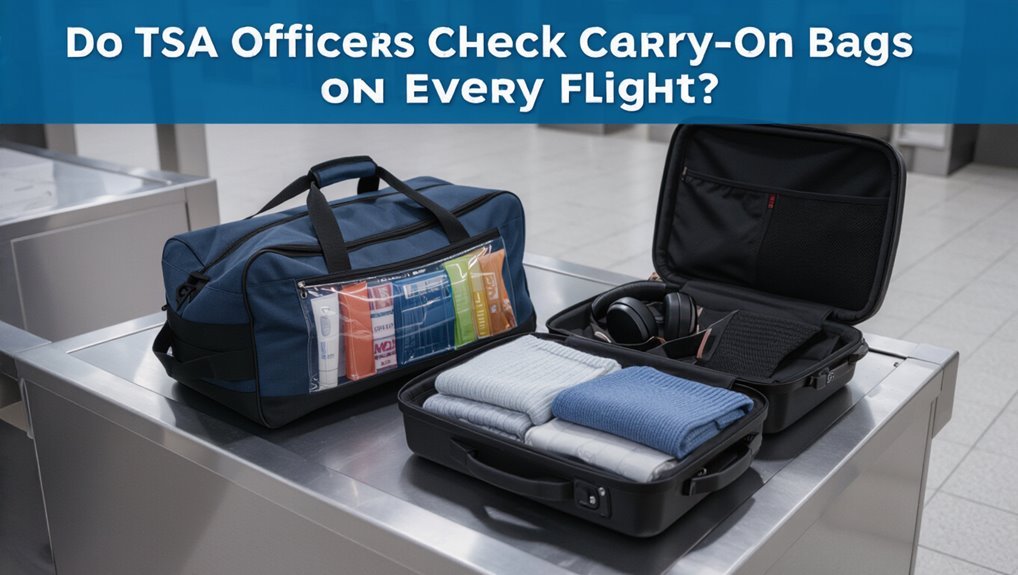
Do TSA officers inspect every carry‑on bag you bring to the checkpoint? Not necessarily.
You place your bag on the conveyor, and screening equipment — X‑ray machines and automated systems — initially examine its contents; officers review images and intervene when alarms, prohibited items, or unclear images appear.
Random checks and visible signs of risk can prompt manual inspection. You might get a quick pat‑down or a bag search if procedures or alarms require it.
Quick Answer: When and Why Carry‑Ons Are Screened
Usually, carry‑on bags are screened every time you pass through the security checkpoint, first by X‑ray machines and automated software and then by officers who step in if alarms, unclear images, or visible risks appear.
You’ll also see screening when flights have heightened security, suspicious items are observed, or random checks are selected. Screening protects passengers, crew, and aircraft by detecting prohibited items, threats, or policy violations.
Screening increases during heightened security, when suspicious items appear, or through random checks to detect threats and protect everyone.
You should expect consistent screening at U.S. airports, though frequency and depth can vary with threat levels, intelligence, or irregularities in your bag’s contents.
Cooperate with officers to speed the process.
How TSA Carry‑On Screening Works (X‑Ray, Swabs, Manual Checks)
Beyond when and why your bag gets checked, it helps to know what happens during screening so you’re not caught off guard.
TSA runs your carry‑on through an X‑ray conveyor; officers watch images for prohibited items and may request you shift or remove things for clearer views.
If the image flags a concern, they may swab the bag or its contents for traces of explosives; swabs go to a detector and rarely delay you long.
For unresolved alarms, an officer will open and inspect your bag in your presence, handle items carefully, and offer documentation if anything’s removed.
How Carry‑On Screening Differs From Checked‑Bag Screening
Because carry‑ons stay with you and checked bags don’t, screening procedures and priorities differ in key ways: you face quicker, more visual-focused checks aimed at immediate threats, while checked bags get more behind-the-scenes, throughput-oriented processing.
Carry‑ons are examined to spot prohibited items accessible during flight; agents may open, swab, or hand-inspect in front of you.
Checked baggage goes through bulk X‑ray, explosive detection systems, and random manual checks without your presence.
Chain-of-custody and tamper-evident handling matter more for checked bags.
How X‑Ray Machines Flag Suspicious Carry‑On Items
You’ll see X‑ray images that show item shapes and densities by how they absorb radiation, which helps operators distinguish harmless items from threats.
Machines flag objects with dense or unusual shapes, overlapping items, or materials that match profiles for explosives or weapons.
When an alarm goes off, agents will inspect the bag to resolve the specific trigger.
How X‑Rays Work
X‑ray machines shine high‑energy photons through your carry‑on and capture how different materials absorb or transmit that radiation, creating an image operators use to spot shapes, densities, and anomalies that don’t match expected items.
You see colorized or grayscale contrasts: metals block more photons and appear denser, organics transmit more and look lighter.
Automated software highlights suspicious density patterns and outlines; technicians interpret those cues, rotate images, and request manual checks if unclear.
The system measures thickness, composition proxies, and object geometry rapidly, letting security focus inspections on uncertain regions while keeping throughput steady and consistent.
Common Alarm Triggers
Many common items trigger alarms not because they’re dangerous but because their shape, density, or arrangement mimics prohibited objects; you’ll see false positives from packed electronics, dense toiletries, or oddly layered clothing. You should separate gadgets, liquids, and layered garments to reduce secondary checks. Metal parts, batteries, and dense gels often look like weapons or explosives on X‑ray contrast maps. If you pack smarter, you’ll move faster through lines and avoid embarrassing bag searches. Keep chargers visible, bottles capped and isolated, and shoes simple.
| Item | Why it alarms | How it feels |
|---|---|---|
| Laptop | Dense rectangular | Anxious |
| Toiletry | Gel opacity | Vulnerable |
| Battery | Metal core | Frightened |
| Layers | Hidden shapes | Exposed |
| Charger | Coiled metal | Irritated |
What Triggers a Manual Carry‑On Search?
What makes an inspector pull your carry-on aside? You’ll be pulled when X-ray images, alarms, or behavior raise questions. Inspectors follow protocols to confirm safety, not to invade privacy.
Common reasons include unclear images, prohibited items, inconsistent explanations, or random checks.
Examples:
- Dense or oddly shaped objects showing on the X-ray.
- Items that resemble weapons or disallowed materials.
- You give conflicting answers about contents or travel purpose.
- Random secondary screening selected by policy or risk-based protocols.
If stopped, cooperate, answer clearly, and you’ll usually be cleared quickly.
What TSA Looks for During a Physical Bag Search
When an inspector asks to search your carry-on, they’ll systematically look for anything that could threaten safety—explosive materials, sharp objects, or items that could conceal prohibited substances—while also checking for foreign objects that explain ambiguous images from screening.
You’ll be asked to open compartments and remove items as needed; they’ll inspect electronics, liquids, gels, and dense or oddly shaped objects. They’ll seek unauthorized batteries, tools, and improvised devices, and confirm prescription medication and medical supplies when necessary.
If they find questionable items, they may swab for explosives residue. Cooperate calmly to speed the process and resolve any misunderstandings.
Can TSA Open Your Carry‑On Without You Present?
Can the TSA open your carry-on if you’re not there to watch? Yes, agents may open it to inspect contents when you’re absent, especially if screening flagged something or you stepped away. You’ll usually be notified and given a receipt, but procedures vary.
- They’ll document the search and leave a notice.
- Photographs may be taken if items are sensitive.
- You won’t be present if safety or timing requires immediate inspection.
- Lost, damaged, or missing items should be reported promptly to the airport’s TSA office for follow-up and possible claims.
What Are Your Rights During a TSA Carry‑On Inspection?
How should you expect TSA to treat your carry‑on during an inspection?
You’ll have privacy, professionalism, and clear communication. Agents should explain why they’re opening your bag, ask to see contents in front of you when possible, and offer a private screening area for sensitive items.
You’ll receive professional, respectful screening: agents explain why they open bags, show contents to you, and offer private inspection.
You can request an officer of the same gender for a pat‑down or visual inspection if that’s available.
Don’t interfere with screening; follow instructions calmly. If an item’s removed, you should get a receipt listing taken items and reason.
If you believe your rights were violated, file a complaint with TSA promptly.
How TSA Finds and Handles Prohibited Items in Carry‑Ons
Expect TSA to use X-ray machines, explosives-detection devices, manual checks and behavior-observation to detect prohibited items in your carry-on.
Agents will flag unclear images, open bags when needed, and ask you to remove or identify items. If they find a banned object, they’ll:
- Document the item and reason for seizure.
- Secure the item and separate it from your bag.
- Offer you options: discard, return to vehicle, or legal forfeiture.
- Refer serious or illegal finds to law enforcement.
You’ll get a receipt for seized items and can appeal or request information about the disposition.
How Explosives Detection and Swabbing for Carry‑Ons Works
TSA uses a layered approach to spot explosives in carry-ons, combining X-ray imaging, trace-detection swabs, and explosive-detection machines so you get screened quickly and thoroughly.
You’ll place your bag on the conveyor; officers spot suspicious shapes or densities on the X-ray and may call for a closer look.
If needed, they’ll swab surfaces or items—wiping handles, seams, or suspicious containers—to collect trace particles. Swabs go to an analyzer that detects explosive residues in minutes.
If a test flags something, officers follow protocols: secondary inspection, possible item removal, and notification of law enforcement, keeping you and others safe.
How TSA Screens Laptops, Phones, and Other Electronics
After swabbing and X‑rays help catch traces and suspicious shapes in carry‑ons, officers also focus on larger electronics because they can hide components that mimic threat items.
You’ll be asked to remove laptops and some large tablets from bags for separate X‑ray screening; phones usually stay inside but may be inspected visually or swabbed.
If an image is unclear, officers may ask you to power devices on to confirm functionality. Expect occasional manual inspection if components overlap or look anomalous.
- Remove laptops/tablets into tray
- Keep phones accessible
- Power on when requested
- Follow officer instructions
Liquids, Gels, Aerosols: Packing Rules to Avoid Extra Screening
When packing liquids, gels, and aerosols, put travel-size containers (3.4 oz/100 mL or less) into a single, clear quart‑size plastic bag and place that bag where officers can easily remove it for screening; doing so speeds the X‑ray process and reduces the chance of manual checks. Be neat: seal lids, wipe spills, and keep liquids upright. Declutter your carry-on so the bag sits on top. Expect officers to ask you to remove the bag. Items over the limit or unbagged may be inspected or confiscated.
| Item example | Action |
|---|---|
| Shampoo | Bag |
| Spray | Seal |
| Lotion | Upright |
| Perfume | Check |
Carrying Medications, Baby Supplies, and Medical Devices
You can bring prescription and over-the-counter medications in carry-on bags, and they’re generally exempt from the 3.4-ounce liquid limit.
If you’re traveling with baby formula, breast milk, or extra supplies, tell the officer at the checkpoint and expect an inspection.
For medical devices like CPAPs or prosthetics, keep documentation handy and be prepared for additional screening or separate X-ray checks.
Carry-On Medication Rules
Need guidance on carrying meds and medical supplies through security? You can bring prescription and over-the-counter meds in carry-on bags; declare liquid meds over 3.4 ounces at screening.
Keep devices and supplies accessible for inspection and carry documentation if helpful.
- Pack meds in original containers or clearly labeled pill boxes.
- Separate liquid medications and inform the officer before screening.
- Carry a note or prescription for syringes, injectables, or controlled substances.
- Bring any medical devices (CPAP, glucose meters) accessible and ready for inspection.
Follow officer instructions, and you’ll move through screening smoothly.
Baby Supplies At Security
Besides medications and devices, travelers with infants also face specific screening questions and allowances for baby supplies.
You can bring formula, breast milk, juice, and baby food in quantities exceeding usual liquid limits; declare them for inspection at the checkpoint. Notify officers if you have frozen items or ice packs.
Strollers and car seats require separate screening; collapsible strollers may go through X-ray, larger items might be inspected by hand. Expect to open containers for testing if swabs are needed.
Keep supplies accessible and organized to speed screening, and carry documentation for any special feeding or medical needs.
Medical Device Screening
When traveling with medications, baby supplies, or medical devices, expect TSA to ask targeted screening questions and to inspect items more closely than typical carry-ons. You’ll want everything accessible, clearly labeled, and accompanied by any relevant prescriptions or device documentation to speed the process.
Keep items separate for X-ray or hand inspection, declare pumps or batteries, and know liquid limits don’t apply to essential meds.
Follow these steps:
- Pack prescriptions and doctor notes.
- Label devices and carry manuals if possible.
- Place medications in a clear, accessible pouch.
- Remove devices from bags for screening when asked.
How TSA PreCheck Changes Carry‑On Screening
If you’re enrolled in TSA PreCheck, your carry-on screening changes in a few clear ways: you keep shoes, belts, and light jackets on, and liquids and electronics usually stay packed. You move through a dedicated lane with shorter lines and faster processing. Agents still may pull bags for inspection, but PreCheck reduces the frequency. Expect consistent, predictable steps that save time and lower hassle.
| Visually | Imagine |
|---|---|
| Shoes on | Scan without removal |
| Laptop stays | Less unpacking |
| Liquids packed | Clear bags left closed |
| Faster lane | Shorter wait |
| Random checks | Less common but possible |
Why Some Passengers Get Random or Risk‑Based Checks
Because security can’t rely on enrollment status alone, TSA uses random and risk-based checks to catch threats that slip past standard screening, targeting factors like travel patterns, ticketing irregularities, behavior, or intelligence alerts.
You might be chosen because your itinerary matches a watchlist pattern, your purchase or ID details raised a flag, your behavior seemed nervous or evasive, or agents received timely tips.
These checks aim to balance efficiency and safety, so they’re brief but thorough. Examples include:
- Extra bag inspection
- Secondary document check
- Pat-down or hand search
- Additional questioning
Do Airlines Ever Ask TSA to Inspect a Passenger’s Carry‑On?
Yes — airlines can and do ask TSA to inspect a passenger’s carry-on when something seems off, like a suspicious item or a boarding issue.
You’ll usually see airline staff privately flag a bag and coordinate with nearby TSA agents to handle the check.
That coordination keeps the screening process smooth and helps resolve problems without delaying other travelers.
Airline Requests For Inspection
Airlines sometimes ask the TSA to inspect a passenger’s carry-on when they spot something unusual during check-in or at the gate, and that request usually stems from a concern about a prohibited item, suspicious packaging, or a security policy trigger.
You’ll be notified and asked to present the bag; the TSA handles the actual search.
Reasons you might see this include:
- Visible prohibited items during visual check.
- Bags with odd bulges or leaking containers.
- Inconsistent or unclear item descriptions.
- Randomized risk-based screening prompts.
You can decline an airline search request, but the carrier may deny boarding.
When Airlines Intervene
If a gate agent or check-in staff member spots something unusual in your carry-on, they’ll sometimes ask the TSA to take a closer look and will request that you present the bag for inspection. You’ll cooperate, open the bag, and answer brief questions. Airlines intervene to prevent delays, hazards, or policy violations. They won’t inspect themselves; they’ll involve TSA or security personnel. Expect polite, firm direction and a quick resolution if items are allowed, surrendered, or removed. Keep documentation handy and know your rights. Below is a quick reference table to summarize typical triggers and outcomes.
| Trigger | Action | Outcome |
|---|---|---|
| Prohibited item | Notify TSA | Item seized |
| Suspicious image | Manual check | Clarification |
| Overflowing bag | Request repack | Repack onsite |
| Damaged latch | Inspect | Permit or gate check |
Coordination With TSA Agents
Requesting a TSA inspection is a routine step when airline staff spot something that needs professional screening — gate agents will ask TSA officers to inspect your carry-on rather than handle it themselves.
You’ll stay nearby while officers examine contents, answer questions, and follow directions. Cooperation speeds resolution and keeps you informed.
- TSA evaluates suspected prohibited items and decides next steps.
- Agents maintain chain-of-custody for inspected belongings when needed.
- You may be asked to remove or power on devices to verify function.
- If problems arise, TSA can involve law enforcement or recommend checked baggage.
Follow instructions and remain calm for a swift outcome.
How Long TSA Screening Typically Takes : Time to Allow
A typical TSA screening of your carry-on usually takes between 2 and 10 minutes, though wait times can stretch longer during peak hours or heavy security events.
You should plan extra time for lines, random additional checks, or alarms that require manual inspection. Allow at least 30–60 minutes before domestic flights and 60–90 minutes for international departures to cover security plus unexpected delays.
If you have TSA PreCheck, expect shorter screening and fewer removals, but still account for crowds.
Check airport advisories and arrive early when security levels rise, special events occur, or staffing is reduced.
Pack Your Carry‑On to Speed Through Security
Pack smart to move through security faster: organize liquids, electronics, and any items that need separate screening near the top of your bag so you can pull them out quickly.
Use clear quart-sized bags for liquids, and consider a carry-on with easily accessible compartments to avoid fumbling at the conveyor.
Arrange items by screening priority, keep travel documents handy, and limit loose metal.
Before you arrive, verify restricted items to avoid surprises.
Use this quick checklist:
- Liquids in a single clear quart bag
- Laptop/tablet in an easy‑access sleeve
- Shoes and belt choices that remove quickly
- Small valuables secured and visible
Tips to Reduce TSA Manual Searches of Carry‑Ons
You can cut down on manual inspections by packing smartly and keeping items neat so TSA agents can spot what they need quickly.
Organize liquids in a clear quart bag and place electronics where they’re easy to remove for screening.
Review TSA rules beforehand so you’re not surprised and can present your bag confidently.
Pack Smartly And Neatly
1 simple habit cuts down on TSA manual inspections: organize your carry-on so agents can quickly see what’s inside. You’ll speed screening and reduce the chance an agent needs to dig.
Fold clothing flat, use packing cubes, and keep fragile items cushioned but visible. Place similar items together so a quick glance tells the story of the bag.
- Use clear packing cubes or pouches.
- Keep small items in one top compartment.
- Place shoes and bulky items at the bottom.
- Leave a small empty space for easy visual access.
Stay tidy, predictable, and cooperative to smooth the process.
Organize Liquids And Electronics
Most travelers find that clearly separating liquids and electronics in predictable spots cuts inspection time dramatically.
Place liquids in a clear quart‑size bag at the top or an external pocket so agents can spot them without digging.
Stow tablets and laptops in an easily accessible padded sleeve or the main compartment’s front panel for quick removal if asked.
Group chargers, power banks, and earbuds in a small pouch near electronics to avoid loose cables triggering checks.
Keep rules in mind but focus on consistent placement: predictable layout reduces handling, speeds screening, and lowers the chance of manual searches.
Know TSA Rules Beforehand
Because knowing TSA rules before you arrive can cut inspection time and headaches, review prohibited items, liquid limits, and battery policies ahead of packing.
You’ll reduce manual searches by preparing clear bags, separating electronics, and removing prohibited items. Follow signage and officer instructions, and keep receipts for special items.
Before you leave:
- Check the TSA website for updates and destination rules.
- Pack liquids in a single quart bag, 3.4 oz (100 ml) per container.
- Carry spare batteries in carry-on and protect terminals.
- Label medical supplies and bring supporting documentation.
These steps speed screening and lower the chance of extra inspection.
What to Do if TSA Seizes or Delays Items From Your Carry‑On
If TSA seizes or delays an item from your carry-on, stay calm and follow a few focused steps to resolve it quickly: contact the agent who screened your bag, ask for a receipt describing the item and reason, and request instructions for retrieval or appeal. Document names, times, and locations. If the item’s essential, ask about expedited return or temporary release. For disputes, file a complaint with TSA via their website and follow up with airline or airport property office.
| Agent | Item | Action |
|---|---|---|
| Screener | Identified | Receipt |
| Supervisor | Reviewed | Appeal |
International Differences: How Foreign Security Checks Compare
When you fly internationally, security checks can vary widely—some countries use more thorough manual inspections while others rely on advanced scanners.
Rules for liquids and how you pack electronics also change, so you’ll want to check destination-specific guidelines before you pack. Knowing those differences helps you avoid delays and confiscations at foreign checkpoints.
Screening Procedure Variations
Although airports worldwide follow the same basic goal of keeping flights safe, screening procedures can look very different from country to country, and you’ll notice variations in technology, staffing, and passenger expectations.
You’ll find systems that prioritize speed, others that emphasize thorough inspection, and some blending both.
Consider these common variations you might encounter:
- Automated vs. manual X-ray interpretation.
- Use of full-body scanners versus targeted pat-downs.
- Separate lanes for precheck/priority passengers.
- Random canine or manual secondary screening frequency.
Knowing local norms helps you prepare, avoid delays, and respond calmly if screened differently.
Liquids And Electronics
Across countries you’ll find clear differences in how liquids and electronics are treated at security checkpoints, so check the rules before you pack.
You’ll see the familiar 100ml/1L bag rule in many places, but some nations enforce stricter limits or require all liquids declared.
Electronics screening varies: some airports want laptops and tablets removed, others use carry-on X-rays that let you keep devices inside.
You should charge devices—some countries may request powered-on verification.
Always separate liquids and larger electronics for faster inspection, follow signage, and consult your airline or authority website to avoid delays or confiscation.
Frequently Asked Questions
Can TSA View the Contents of My Carry‑On Remotely via Camera Feeds?
No, TSA can’t remotely view your carry‑on contents via camera feeds; you’re only monitored for security screening and checkpoint behavior, and baggage images come from X‑ray/CT scanners operated by technicians onsite, not live remote camera inspection.
Do TSA Officers Keep a Record of My Bag’s Detailed Contents?
No, TSA doesn’t routinely keep a detailed, itemized record of your carry‑on contents; they may log incidents or take images for security or evidence, and you’ll be notified if records are retained or released under law.
Can TSA Force Me to Delete Photos or Files on My Electronic Devices?
Yes, they can. If TSA or other law enforcement suspect a threat or have legal authority, they may inspect or ask you to open devices and delete files; you should know your rights and comply with lawful orders.
Are Food Items in Carry‑Ons Subject to Different Rules Domestically Vs Internationally?
Yes — you’ll face different rules: domestic flights let most solid foods through, while international travel adds customs and agricultural bans, plus country-specific restrictions, so you’ll need to declare or discard prohibited items at arrival or during screening.
Can TSA Confiscate Cash Found in My Carry‑On Without Reporting It?
Yes — TSA can seize cash if they suspect criminal activity, but they’ll usually report it to law enforcement; you’ll be informed and can challenge the seizure in court or through administrative procedures afterward.
Conclusion
In most cases you can expect your carry‑on to be screened before you board, but not every bag gets a manual inspection. TSA relies on X‑rays, swabs and random checks to spot issues, and certain items or images will trigger additional scrutiny. Pack logically, follow the rules and arrive early to minimize delays. If something’s seized or held, ask politely for an explanation and follow the dispute procedures to resolve it.