Does Makeup Have to Be in a Clear Bag on a Plane?
You don’t have to put all your makeup in a clear bag on a plane, but any liquids, gels, creams, aerosols, and similar products must fit into one quart-sized, resealable clear bag and meet the TSA 3-1-1 rule (containers 3.4 oz/100 ml or less). Solid sticks and powders can go elsewhere in your carry-on. Keep liquid items accessible for inspection to avoid delays, and keep going to learn practical packing tips and examples.
Quick Answer: Do You Need a Clear Bag for Makeup?
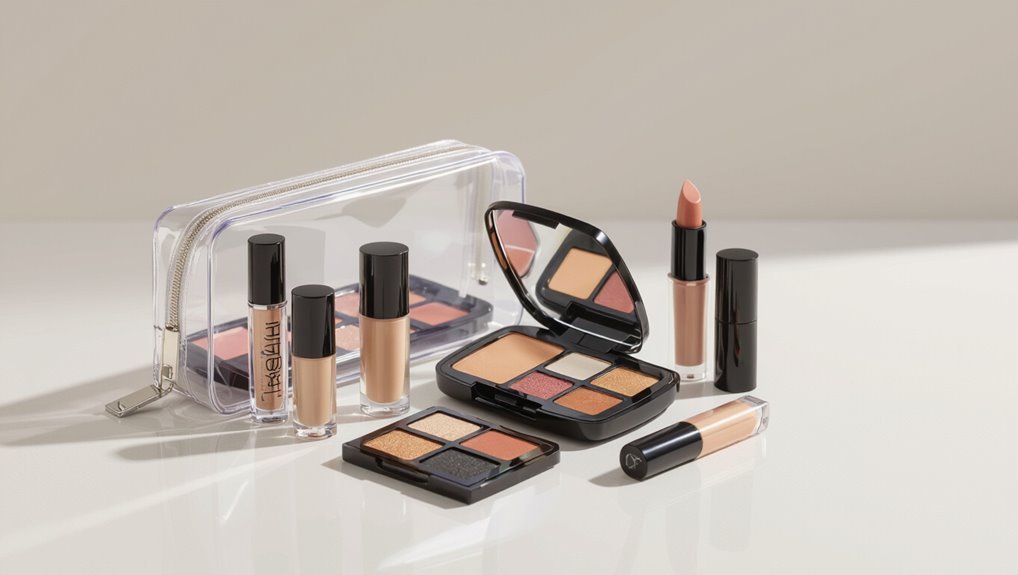
Wondering whether you need a clear bag for your makeup? You generally don’t for solid cosmetics—powders, brushes, and lipstick travel fine in carry-on.
Liquids, gels, creams, and aerosols must follow the TSA 3-1-1 rule: containers 3.4 ounces (100 ml) or less, all fitting inside one clear, quart-sized resealable bag per passenger.
If your foundation, mascara, or setting spray exceeds that, check it or transfer to smaller containers.
Airport security may ask you to remove the clear bag for screening.
When in doubt, pack liquids in a clear bag to speed inspection and avoid surprises.
Who Needs a Clear Bag: Quick Scenarios
If you carry any liquids, gels, creams, or aerosols in your carry-on, you’ll need a clear quart-sized bag to comply with TSA’s 3-1-1 rule; solid items like powder compacts, brushes, and lipstick usually don’t require one.
You’ll want the bag when traveling with foundation, mascara, or setting spray. If you pack travel-size skincare or hair products, stow them together to speed screening. You won’t need the bag for dry items or tools.
- Short trips: travel-size liquids fit the quart bag.
- Long trips: checked liquids avoid the bag.
- Carry-on-only: consolidate liquids in one bag.
How TSA 3-1-1 Rules Apply to Cosmetics
You’ll need to follow TSA’s 3-1-1 rule for liquid makeup, keeping containers 3.4 ounces (100 ml) or smaller in a single quart-sized bag.
Remember that solid products like stick foundation or powder aren’t subject to the same limits, so pack those for easy access.
When you approach security, have your clear bag ready and place creams and liquids on top so you can quickly show them if asked.
Liquid Makeup Limits
Because airports treat many liquid cosmetics the same as other toiletries, you’ll need to follow the TSA 3-1-1 rule when packing makeup for carry-on:
- Keep each liquid, gel, cream, or aerosol in containers 3.4 ounces (100 ml) or less.
- Fit all containers into a single clear, quart-sized resealable bag, accessible for screening.
- Present the bag separately at security; larger items must go in checked luggage or risk confiscation.
Plan ahead: transfer products into travel-sized jars, consolidate similar items, and avoid overpacking.
Knowing limits prevents delays and keeps your essentials with you.
Solid vs. Liquid
Now that you know how the 3-1-1 rule handles liquids, look at how solid cosmetics get treated differently: powders, solid deodorants, stick concealers, and pressed foundations generally don’t count as liquids and can be carried outside the quart bag.
However, items that look or behave like liquids (cream-to-powder, balm stains, or moisturizing sticks that can smear) may still be screened as liquids.
You should pack true solids—pressed powders, powder blushes, solid perfumes—loosely in your carry-on.
Keep semi-solids in clear containers or the quart bag to avoid questions. If unsure, expect TSA to inspect and decide.
Accessible Security Tips
When you’re packing makeup for a flight, think accessibility first: organize liquids into the clear quart bag, place solid sticks and powders where you can grab them quickly, and keep items that might be questioned—balms, creams, and gel liners—in clearly labeled containers or the bag itself to speed screening.
You’ll move faster through checkpoints if you separate items by type and keep the quart bag near the top of your carry-on. Inform security if you have medical creams or aerosol sunscreens. Follow TSA 3-1-1 and be ready to remove the bag promptly.
- Pack liquids ≤100ml
- Use clear pouch
- Label medicinals
Which Makeup Items Count as Liquids, Gels, or Aerosols
Although travel rules can feel confusing, you can usually tell which makeup counts as a liquid, gel, or aerosol by checking texture and packaging: products that flow, smear, or spray—like foundations, tinted moisturizers, liquid concealers, mascara, lip gloss, cream blushes, liquid eyeliners, setting sprays, and aerosol hairsprays—are treated as liquids/gels/aerosols, while powders, solid balms, and dry compacts generally aren’t.
Beyond that, think about dispensers: squeeze tubes, pump bottles, jars with creamy contents, and aerosol cans fall under liquid restrictions.
Small travel tubes must fit your quart-sized bag and follow the 3.4 oz (100 ml) rule to pass through security.
How Solid and Stick Makeup Are Screened
Because solid and stick makeup—think lipsticks, solid deodorants, powder compacts, and stick foundations—don’t flow or spray, TSA and most international security agencies usually treat them differently from liquids and gels, letting you carry them in your carry-on without placing them in a quart-sized bag.
However, officers may still inspect or test suspicious items, so keep them accessible in a clear pouch and be prepared to remove them for screening.
When you approach screening, expect visual inspection and possible swabbing for residues.
Know what to do:
- Place solids where officers can see them.
- Answer questions clearly and hand items over promptly.
- Offer to unwrap or open sealed products on request.
Are Mascara, Liquid Eyeliner, and Brow Gels Liquids?
Solid cosmetics are treated differently from liquids, but some eye products blur the line—mascara, liquid eyeliner, and brow gels usually behave like liquids or gels at security checkpoints because they can flow, smear, or be dispensed through a wand or applicator.
You should treat them as liquids for packing: small tubes, vials, and pots with applicators often fall under the TSA 3-1-1 rule or equivalent.
Waterproof formulas can still be seen as gels; clear, solid dry mascaras are exceptions.
When in doubt, place these items in your quart-sized bag and declare them if an agent asks to inspect them.
Foundation Types: Liquid, Cream, Powder Rules
When you pack foundation for a flight, remember liquid formulas are subject to the usual 100 ml/3.4 oz carry-on limits.
Cream foundations can be carried in larger quantities if checked, but keep them handy in travel-sized containers for carry-on compliance.
Powder foundations are generally exempt from liquid rules, though security may ask to inspect them.
Liquid Foundation Limits
If you’re packing liquid foundation for a flight, know that TSA and most international equivalents treat it like any other liquid: containers must be 100 mL (3.4 oz) or smaller and fit inside a single clear resealable bag per passenger.
You’ll want to choose travel-size bottles or decant into compliant containers, seal lids to prevent leaks, and place the bag where security can easily access it.
Remember heavier or multiple full-size bottles may be confiscated. Consider powder or solid alternatives for checked bags.
Follow these quick tips:
- Use 100 mL travel bottles.
- Double-seal caps and tape.
- Keep the bag accessible.
Cream Foundation Packing
Cream foundations sit between liquids and powders, so you’ll treat them slightly differently at security and in your luggage: jarred creams usually count as liquids, meaning small tubs under 100 mL belong in your clear bag, while stick or balm formats can often go in carry-on without the liquid bag—check local rules. You should label jars, seal lids, and place fragile containers inside a padded pouch. If you pack creams in checked baggage, secure lids to avoid leaks. At screening, present your clear bag promptly and answer questions succinctly to speed the process.
| Type | Tip |
|---|---|
| Jar | Clear bag if ≤100 mL |
| Stick | Often exempt from liquid bag |
| Balm | Seal and pad containers |
| Checked | Tighten lids, pad items |
Powder Foundation Exceptions
Although powder foundations generally sail through security with fewer restrictions, you should still watch for a few exceptions: you’ll face rules when quantity, packaging, or special materials change the classification.
Consider these situations:
- Large tubs or bulk containers that look like creams may be treated as lotions and questioned.
- Finely milled powders mixture with metallic shimmer or glitter can trigger separate screening or be prohibited in some countries.
- Pressed powders containing liquid-infused beads or creams might be inspected as hybrids and need to meet liquid limits.
Pack powders in original containers and place them accessibly to ease inspection and avoid delays.
Lip Balm, Gloss, and Lipstick: Carry-On Rules
When you’re packing for a flight, remember that most lip balms, glosses, and lipsticks follow the same carry-on rules as other liquids and gels: containers larger than 3.4 ounces (100 mL) must go in checked baggage, while smaller items need to fit inside your single quart-sized clear bag for screening.
Solid stick lip balms and traditional lipstick tubes generally count as solids and can go through screening without the liquids bag, but glossy or liquid formulas are treated as liquids.
Put each small tube or sample in your quart bag, declare any unusual items if asked, and keep receipts or labels handy.
Perfume and Cologne: Limits and Packing Options
You’ll need to follow the 3.4-ounce/100ml carry-on liquid rule for perfume and cologne, so pack travel-size bottles or decant into compliant vials.
If you’re checking a larger bottle, cushion it well and seal it in a plastic bag to prevent leaks and pressure-related breakage.
For strong scents, consider leak-proof sample sprayers or keeping the bottle in its original box to protect both the fragrance and your luggage.
Carry-On Liquid Limits
Since perfumes and colognes count as liquids under TSA rules, you’ll need to follow the 3-1-1 carry-on limit: containers 3.4 ounces (100 ml) or smaller, all fitting inside one clear quart-sized bag per passenger.
Pack strategically so your favorite scent travels with you without slowing security. Consider decanting into travel atomizers, choosing solid perfumes, or buying travel-size bottles.
Keep the quart bag accessible for screening and avoid overstuffing it.
- Use leakproof travel atomizers and label them.
- Opt for solid or cream fragrances to save space.
- Place the quart bag on top of your carry-on for inspection.
Checked Luggage Rules
Although checked bags generally allow larger bottles, you still need to pack perfumes and colognes carefully to prevent leaks and comply with airline rules.
You can stow larger quantities in checked luggage, but some countries restrict alcohol content or total volume, so check your airline and destination.
Seal caps tightly, place bottles in sealed plastic bags, and cushion them among clothes to limit breakage.
Consider shipping high-value or fragile fragrances ahead if concerned about loss.
Remember prohibited items like aerosol sprays over certain sizes.
Declare any unusual or commercial quantities to avoid fines or confiscation.
Scent Packaging Tips
1 smart packing strategy is to separate small, carry-on-safe fragrance bottles from larger ones and prepare each for the trip—seal caps tightly, wrap bottles in soft clothing or bubble wrap, and place them in zip-top bags to contain leaks and make security checks quicker.
You’ll follow TSA liquid rules: under 3.4 ounces (100 ml) in a quart-sized bag for carry-on; larger bottles go checked.
Consider decanting favorites into travel atomizers, labeling them, and cushioning checked bottles. Keep receipts for expensive scents in case of loss.
- Carry-on: travel sprays or decants
- Checked: full bottles, well wrapped
- Documentation: receipts and labels
Packing Aerosols: Hairspray, Setting Spray, Dry Shampoo
When you’re packing aerosols like hairspray, setting spray, or dry shampoo for a flight, remember that the same TSA rules that govern liquids also apply to pressurized cans—containers must be 3.4 oz (100 ml) or smaller and fit inside a single quart-sized clear bag.
Larger cans need to go in checked baggage or be left behind. Check labels for size and pressure warnings, and cap nozzles to prevent accidental discharge.
Consider travel-size pump or solid alternatives to avoid restrictions. Pack aerosols upright and cushion them to reduce puncture risk.
Declare damaged or leaking cans to airline staff immediately.
Do Makeup Tools and Brushes Go in the Clear Bag?
Want to bring your brushes and tools in carry-on? You can usually pack clean, dry brushes in your bag without putting them in the clear TSA liquids pouch, but any liquid-based or aerosol products attached to tools (like mascara wands or setting-spray bottles) must follow the 3-1-1 rule.
Check TSA guidance before flying so you know what inspectors expect.
Carry-On Makeup Tools
Travelers often wonder where to stash makeup tools and brushes to pass security smoothly. You can carry solid items like sponges, tweezers, and metal or wooden brushes in your main carry-on or a small pouch; they’re not liquids so they don’t need the clear bag.
Keep them organized and accessible in case TSA asks to inspect. For anything cream-based on a stick, include it in your quart-size bag if it’s over the liquid limit.
Store sharp tools safely to avoid inspection delays.
- Sponges and wood/metal brushes
- Plastic applicators and non-liquid tools
- Sharps in protective cases
TSA Rules For Brushes
Regarding brushes and makeup tools, you don’t have to put most of them in the quart-size clear bag—only liquid, gel, cream, or paste products count toward that limit.
Solid brushes, sponges, tweezers, and metal or plastic tools can go in your carry-on or personal bag loose or in a case.
If a brush has a liquid-cleaner reservoir or wet cleansing pad, treat it as a liquid and place it in the clear bag.
Wrap or cap sharp tools to avoid injury during screening.
At security, be ready to remove bulky tool cases for inspection if asked.
Makeup Wipes, Creams, and Balms: TSA Rules
Because TSA treats liquids and gels differently, you’ll want to know where wipes, creams, and balms fall so you can pack them correctly.
You can usually carry individually wrapped makeup wipes in either carry-on or checked bags.
Creams and balms that are in tubs or tubes count as gels/creams under TSA rules and must follow carry-on restrictions. If they’re in your carry-on, place them in your quart-sized clear bag if the container exceeds allowed single-item volume exceptions.
In checked luggage, you’re freer but seal containers to prevent leaks.
- Wipes: solid/packaged — OK in carry-on.
- Creams: gel rules apply.
- Balms: treat as gels for carry-on.
Measuring Container Size to Meet 3-1-1
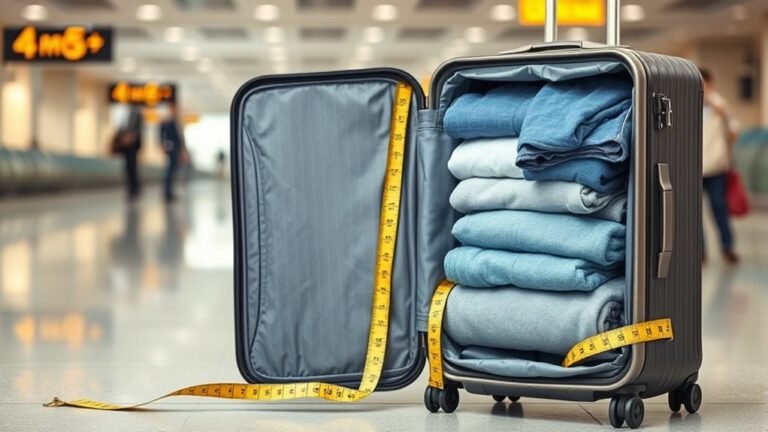
Start by checking the label — the 3-1-1 rule lets you carry containers of liquids, gels, and creams that are 3.4 ounces (100 milliliters) or less, and you’ll need to fit them all into a single clear quart-sized bag. Measure bottles with a ruler or check printed volume. If it’s 100 ml or less, it’s fine; if not, transfer product into travel-sized containers. Arrange items to avoid wasted space and seal leaks with tape. Keep receipts for replacements. Small, careful choices save time and stress at security.
| Item | Emotion |
|---|---|
| Tiny bottle | Relief |
| Leakproof lid | Confidence |
| Organized bag | Calm |
| Measured tube | Control |
| Travel jar | Readiness |
Choosing the Right TSA-Approved Clear Quart Bag
When you pick a TSA-approved quart bag, aim for clear, durable plastic with a secure zip closure so agents can quickly inspect your toiletries and you won’t worry about spills.
Choose a size that fits your essentials without overstuffing; a little extra room prevents ruptures. Look for reinforced seams and a reliable zipper to withstand travel handling.
Prefer a reusable, easy-to-clean material that stays transparent after use. Consider a slightly rectangular shape for efficient packing in carry-ons.
- Visibility: clear panel for quick screening
- Durability: reinforced seams and strong zipper
- Capacity: fits 3-1-1 items without bulging
Alternatives to the Quart Bag That Still Work
You can use TSA-approved clear pouches for quick security checks without sacrificing organization.
If you prefer more discreet options, solid-color travel cases keep your routine private while still meeting carry-on rules.
Both choices let you pack smartly and move through security faster.
TSA-Approved Clear Pouches
One simple swap that keeps your liquids accessible—and TSA-compliant—is a clear pouch you can lock or zip closed.
You’ll find rigid, resealable, and hanging designs that fit screening rules while protecting pumps, sprays, and creams.
Pick a pouch sized for your routine so you don’t overpack and slow security. Use transparent material so agents can inspect without unpacking.
Label liquids if you carry multiples and place the pouch atop carry-on items for quick removal.
- Rigid clear cases for fragile bottles
- Zip-seal pouches for flexible packing
- Hanging pouches for hotel convenience
Solid-Color Travel Cases
Pick a case with internal compartments, waterproof lining, and a visible volume tag or removable clear sleeve to show agents if asked. Roll or upright-pack bottles to prevent leaks, and place gels or creams in labeled containers under 3.4 ounces.
Use a consistent case for carry-on inspections; it’ll streamline screening and protect your makeup without drawing extra attention.
Packing Liquids to Save Carry-On Space and Weight
When packing liquids to save carry-on space and weight, focus on consolidating, decanting, and prioritizing essentials.
You’ll cut bulk by transferring products into travel-size containers, labeling each to avoid spills and confusion. Stick to multi-use items—tinted moisturizer, lip-and-cheek tint, and a compact setting spray—to reduce count.
Arrange bottles in a small, padded pouch that fits the clear bag requirement and compress with soft items around them.
- Decant into 30–100 ml reusable bottles and label.
- Choose multi-purpose formulas to replace single-use items.
- Pack only what you’ll realistically use during the trip.
Checked Baggage vs Carry-On for Makeup: Pros and Cons
Having trimmed liquids and chosen multi-use products, you’ll next decide whether to tuck your makeup into checked baggage or keep it with you in the cabin.
In carry-on, you control fragile palettes, prevent temperature damage, and access touch-ups; you just follow TSA liquid limits and pack strategically in a clear quart bag.
Checked baggage lets you bring bulkier items, full-size foundations, and backup kits without liquid restrictions, but risks breakage, loss, and temperature extremes.
Checked luggage allows full-size products and backups but brings risks of breakage, loss, and temperature damage.
Consider value, fragility, and timing: keep essentials and irreplaceables with you, and place durable, inexpensive extras in checked luggage to balance convenience and safety.
International Flights: Where Rules Differ
When you fly internationally, remember that liquid limits and allowed cosmetic items can change by country, so check the rules before you pack.
Security procedures abroad may require removing makeup from carry-ons or placing items in separate bins, and staff can enforce stricter screening.
Planning for those differences keeps you from losing products or facing delays.
Liquid Limits Vary
Curious how your favorite travel-sized foundation or facial mist will be treated abroad? Rules change by country: some stick to the 100 ml (3.4 oz) limit, others set smaller caps or allow larger-sized duty-free buys.
You’ll want to check destination-specific regulations before packing. Consider these quick pointers:
- Confirm local liquid limits online or via the airline — limits can differ for carry-on vs. transit.
- Use travel-sized containers that clearly display volume; opaque products still count toward the allowance.
- Buy sealed duty-free cosmetics after security if you need larger bottles, and keep receipts to avoid confiscation.
Security Procedures Abroad
Because airports and security agencies set their own screening practices, you should expect procedures to change from country to country and even between terminals.
Check local rules before you travel: some countries enforce stricter liquid limits, require transparent bags, or ban certain cosmetics outright.
Leave suspicious items at home and pack essentials in carry-on for easy access.
At foreign checkpoints, follow staff instructions, present toiletries separately if asked, and be ready for additional screening.
If you’re connecting, confirm rules for each airport.
When in doubt, consult the airline or airport website to avoid delays or confiscations.
EU & UK Liquid Limits vs US TSA
While flying with cosmetics might feel straightforward, the EU/UK and US TSA enforce different liquid rules you should know before packing.
You’ll follow a 100ml (3.4oz) per-container limit in both regions for carry-on, but presentation and bag rules vary. In the EU/UK, liquids go in a clear resealable bag, often 1L capacity; officials expect it readily accessible.
The US requires liquids in quart-sized clear bags and strict removal at screening. Know that some airports enforce stricter checks; duty-free purchases have separate allowances.
Pack strategically to speed security and avoid discarded products.
- Pack 100ml containers.
- Use clear resealable bag (1L EU/UK).
- Keep bag accessible for screening.
Airline-Specific Cosmetic Rules to Check
After you’ve sorted liquids for security, check your airline’s own cosmetic rules—carriers can add size limits, ban certain aerosol or pressurized items, or restrict items like nail polish and batteries in carry-on or checked baggage. You should review baggage guides, frequent-flyer emails, or call customer service so you won’t be surprised at the gate. Note regional carriers sometimes forbid salon sprays or serum cartridges. Pack prohibited items in checked baggage if allowed, or leave them at home. Quick checklist table:
| Item | Carry-on? | Checked? |
|---|---|---|
| Nail polish | Often no | Often yes |
| Aerosol spray | Sometimes no | Sometimes yes |
| Batteries | Limited | Often allowed |
What Happens If Your Makeup Exceeds Liquid Limits?
If your makeup exceeds the TSA liquid limits, expect a few possible outcomes at security:
- An officer may ask you to remove the item for inspection; if it’s allowed but oversized, they’ll often confiscate it.
- You might be offered to transfer product into your checked baggage or a compliant container if you can do so quickly and safely.
- If the item appears suspicious or violates rules (pressurized aerosols, flammables), they’ll deny it and dispose of it.
Stay calm, cooperate, and ask politely about options; proactive packing avoids delays and lost products.
What to Tell TSA If an Item’s Status Is Unclear
When an officer pauses to inspect an unfamiliar item, tell them exactly what it is, how you plan to use it, and what it’s made of—brief, specific answers help them make a quick ruling.
Stay calm, hand the item or its packaging over, and state the brand and product type (for example, “solid perfume balm, beeswax and oil”).
If it’s homemade, say so and describe ingredients. If it’s for medical or child care use, mention that and show documentation if you have it.
Answer only the questions asked, avoid speculation, and accept their decision or ask politely for clarification.
Minimize Items: Strategies to Breeze Through Security
Pack only the essentials so your bag stays slim and easy to scan.
Consolidate toiletries into a single clear pouch and use travel-size containers to avoid spills and extra screening.
Doing both speeds up security and keeps your makeup routine simple on the go.
Pack Only Essentials
A few smart choices will make getting through security faster and keep your carry-on light: limit yourself to multi-use products, transfer liquids into travel-size containers, and only bring tools you’ll actually use mid-flight.
You’ll feel less stressed and spend less time unpacking at the gate when every item serves a purpose. Choose compact items, skip duplicates, and prioritize essentials like tinted moisturizer, mascara, and a versatile lip color.
Keep fragile or bulky tools in checked luggage. Pack backups only if absolutely necessary.
- Tinted moisturizer (with SPF)
- Mascara
- Dual-ended brow/eyeliner brush
Consolidate Toiletries
You’ve pared down your makeup to the basics—now apply the same philosophy to toiletries so security lines move faster and your bag stays light.
Swap full-size bottles for travel containers, label them, and tuck them into one clear quart bag to meet TSA rules. Choose multi-use products—tinted balm, 2-in-1 cleanser, solid shampoo bars—to cut volume and liquid count.
Replace bulky sprays with roll-ons or wipes. Lay items flat and visible so agents can inspect without unpacking. Keep prescriptions and essential liquids easily accessible.
When you consolidate, you’ll streamline security, save space, and avoid last-minute bag rummaging.
Travel-Size and Decanting Tips for Makeup Liquids
Anyone who’s tried to squeeze full-sized foundation and hair oil into a carry-on knows it’s easier to decant smartly than to overpack.
You’ll want to transfer only what you’ll use, label containers, and keep textures separated to avoid contamination. Follow TSA rules for liquids and pack heavier glass in checked baggage when possible.
Be realistic about touch-ups: bring tinted moisturizer, a small concealer, and a travel mascara rather than full kits. Store everything in a clear, resealable bag for inspection.
Pack minimalist touch-ups — tinted moisturizer, a tiny concealer, and travel mascara in a clear resealable bag for easy inspection.
- Decant essentials into 100ml-or-less bottles.
- Label product name and date.
- Keep creams away from oils.
Best Reusable Travel Bottles and Cosmetic Containers
When you pack makeup for a flight, pick TSA-friendly travel containers that fit the 3-1-1 rule so security lines stay smooth.
Choose leakproof pump bottles for foundations and serums to avoid spills, and test them before you leave.
For creams and liquids, consider compact solid alternatives like balm sticks and cream-to-powder sticks to save space and skip liquid limits.
TSA-Friendly Travel Containers
Traveling light and staying fresh starts with the right containers: TSA allows liquids in 3.4-ounce (100 mL) bottles inside a single quart-size clear bag, so pick reusable travel bottles and cosmetic containers that match those limits, seal reliably, and resist leaks.
You’ll want durable materials, clear labeling, and compact shapes to maximize space and pass security smoothly. Consider multiuse options that hold lotion, foundation, or toner without cross-contamination.
Clean them between trips and fill them to the recommended level to avoid pressure issues.
- Silicone squeeze bottles
- Small pump dispensers
- Mini jars with secure lids
Leakproof Pump Bottles
Because pump bottles cut down on spills and control portions, they’re a top pick for carry-on toiletries—you’ll get clean dispensers for lotions, serums, and cleansers without risking a mess in your bag.
Choose bottles with locking pumps and silicone seals so pressure changes won’t leak. Prefer clear, labeled containers that meet the 3-1-1 liquid rule and fit your quart bag easily.
Pump heads that click closed and wide bases that resist tipping make packing simpler. Rinse between refills to avoid cross-contamination, and refill only approved amounts before screening to keep security checks smooth and painless.
Compact Solid Alternatives
If you want to cut spills and save space even more, solid alternatives are a smart next step after pump bottles. You’ll find shampoo bars, solid cleansers, and balm foundations that replace liquids and shrink your clear bag footprint.
They’re TSA-friendly since they’re not subject to the 3.4-ounce rule, and they won’t leak on fabric or electronics. Pack a small tin or silicone case to keep edges intact and stay hygienic.
Choose unscented or travel-sized bars to avoid airport security questions and save weight for souvenirs.
- Shampoo bar in a ventilated tin
- Solid cleanser puck
- Balm foundation in a compact
How to Label Decanted Products for Faster Screening
Labeling decanted products clearly lets you move through airport security faster and avoids delays or discarded items.
Use waterproof labels or masking tape plus permanent marker to note product name and volume (e.g., “Moisturizer — 50ml”). Write legibly and affix labels on the flat side so scanners read them easily. Include allergy or ingredient notes if relevant.
Use waterproof labels or masking tape plus permanent marker—note product and volume, write legibly, and add allergy/ingredient notes if needed.
For multi-use containers, add date filled. Keep labels simple—no extra stickers that obscure transparency. Replace worn labels before travel.
If you carry multiple similar bottles, use numbered labels and a matching list to speed officer checks and prevent confusion.
Organize Your Clear Bag for Quick Visibility
Keep only the essentials in your clear bag so screening and touch-ups stay quick and simple.
Arrange items by usage—skincare, base products, and finishing touches—so you can grab what you need without rifling.
That tidy setup speeds screening and keeps your routine stress-free.
Streamline Essentials Only
Only pack the essentials in your clear bag so security checks are faster and you can find items at a glance.
You’ll reduce clutter and avoid digging through products mid-line. Choose multi-use items and travel-sized liquids under 100ml.
Place flat, visible items at the front and heavier items at the back to keep the bag upright.
- Tinted moisturizer (multi-use: SPF, coverage)
- Lip balm or stick (hydration and color)
- Small translucent powder or blotting sheets (shine control)
Keep receipts or medication separate but visible.
Reassess before each trip to keep contents minimal.
Group By Usage
After paring down to the basics, group items by how you use them so you can grab what you need without rifling through the bag. Place daily face items together, touch-up color in a separate pocket, and tools like brushes and tweezers in another. Label or orient items with caps up so you see shades and sizes at a glance. Keep liquids together to spot spills. When you board, reach for one zone instead of dumping contents.
| Zone | Items | Purpose |
|---|---|---|
| Face | SPF, moisturizer, concealer | Prep/hydrate |
| Color | Lip tint, compact, mascara | Touch-ups |
Storing Fragile Makeup in a Carry-On (No Bag)
If you’re planning to carry fragile makeup without a separate bag, think about layering and protection from the start: you’ll need smart placement to prevent breakage and spills.
Wrap compacts and glass in soft clothing, place creams upright, and use lids that seal tightly. Keep items you’ll use inflight near the top for easy access.
- Cushion: nestle palettes between folded garments for shock absorption.
- Seal: use tape or cling wrap on jars to avoid leaks.
- Organize: group similar items together so you can retrieve them quickly and reduce handling.
Bringing Full-Size Tools (Straighteners, Dryers)
If you plan to bring full-size tools like straighteners or dryers, check your airline’s carry-on power limits and whether lithium batteries or heating elements are restricted.
You might prefer to pack heavy or high-wattage items in checked baggage, but confirm the airline’s rules and any damage protections first.
Also consider that not all airports have convenient outlets, so weigh whether you’ll rely on airport charging or local hotel power instead.
Carry-On Power Limits
When you pack full-size styling tools like flat irons or hair dryers in your carry-on, know that airlines and security enforce strict power and battery rules you’ll need to follow. You can bring corded devices, but battery-powered or rechargeable units may face limits.
Check wattage and lithium battery capacity (Wh) before travel so you don’t exceed airline thresholds. Store removable batteries in carry-on, terminally protected from short-circuiting, and declare any oversized units to the airline.
- Confirm wattage and Wh ratings.
- Carry spare batteries in protective cases.
- Follow airline-specific rules and declare exceptions.
Checked Baggage Considerations
Because checked bags move through different handling and temperature conditions than your carry-on, you should pack full-size styling tools like straighteners and hair dryers with extra care: unplug and cool devices, wipe away any product residue, and cushion them to prevent damage from rough handling.
Place tools in padded cases or between clothing to absorb shocks, and secure cords to avoid tangles. Remove detachable batteries if applicable and store them per airline rules.
Check weight limits to avoid fees and consider insurance or valuables coverage for expensive items. Take photos of condition before travel in case you need to file a claim.
Airport Outlet Availability
Some airports offer plenty of outlets in gates and lounges, but don’t count on universal access for running full-size straighteners or hair dryers; voltage, outlet type, and spare space vary widely.
You’ll want to check your airline and terminal amenities ahead of time, pack dual-voltage tools or converters, and keep devices in your carry-on where staff can inspect them.
Use heat-resistant pouches and let hot tools cool before stowing. If outlets aren’t available, consider compact travel tools or ask lounge staff about borrowing.
Plan for limited space and differing international plug standards to avoid delays.
- Check amenities
- Bring converters
- Use heat pouches
Rules for Medications and Prescription Topical Makeup
If you need to bring medications or prescription topical makeup on a plane, know the rules and pack accordingly to avoid delays or confiscation.
Carry prescription labels or a doctor’s note for creams, gels, or liquid-based ointments; TSA agents may inspect them. Solid cosmetics aren’t restricted by size, but liquids over 3.4 ounces should be declared at security.
Bring prescription labels or a doctor’s note for creams and gels; declare liquids over 3.4 oz—solids aren’t size-restricted.
Pack medications and prescription topical makeup in your carry-on so you can access them and show documentation quickly. Keep items separate from your quart-sized bag and inform officers proactively to speed screening.
Check airline and destination regulations for any additional requirements.
TSA Exceptions for Infant and Medical Liquids
Wondering how the 3.4-ounce rule applies when you’re traveling with a baby or medical needs? You can carry larger amounts of formula, breast milk, baby food, and medically necessary liquids.
Declare them at screening; they may be inspected separately. Don’t worry about the clear quart bag limit for these items.
- Bring adequate quantities for the trip; security allows reasonable amounts beyond 3.4 ounces.
- Keep items accessible and inform the TSA officer before screening to speed inspection.
- For medications or medical creams, carry prescriptions or documentation to verify necessity.
If Security Confiscates Makeup: What to Expect
If TSA pulls your makeup, it’s usually because an item exceeded liquid limits, looked suspicious on X‑ray, or violated local rules.
You’ll be told why it’s being taken and whether you can dispose of it, place it in checked baggage, or retrieve it later from lost and found.
If you want your product back, ask about the agency’s reclaim policy and where to follow up after your flight.
Why Items Are Taken
Because airport security has to follow strict safety rules, officers may take makeup items that don’t meet size, composition, or packaging standards.
You’ll be told the specific reason: volume limits, prohibited ingredients, or unclear containment. Knowing why helps you pack smarter and avoid delays.
- Liquids over carry-on limits — gels, creams, and aerosols that exceed the allowed milliliters.
- Restricted chemicals — items containing flammable, oxidizing, or otherwise banned substances.
- Improper packaging — opaque, unlabeled, or leaking containers that raise safety or screening concerns.
Follow guidelines to reduce the chance your products are seized.
What Happens Next
After an officer removes a makeup item, you’ll get a clear explanation of why it was confiscated and what’s going to happen next.
They’ll tell you whether it’s being held temporarily, destroyed, or retained due to a prohibited component. You can ask brief questions about the reason and any paperwork.
Expect an incident receipt for some airports; keep it safe for reference. If the item’s status allows, you might be directed to an evidence or lost-and-found desk before or after screening.
Follow the officer’s instructions calmly, present ID if asked, and accept that final disposition often follows local TSA or airport policy.
Recovering Confiscated Makeup
When security takes your makeup, stay calm and ask what the next steps are so you know whether you can retrieve it later, get documentation, or need to accept permanent disposal.
You’ll likely be told the reason, given a receipt, and directed to lost-and-found or an appeals desk. Follow instructions promptly and keep contact information.
- Keep the receipt and take photos of items and tags.
- Check the airport’s lost-and-found procedures online and note timelines for claims.
- If denied retrieval, file a formal complaint with the TSA or airline and request written confirmation.
How to Speed Up TSA Screening With Cosmetics
If you streamline your carry-on cosmetics and know the TSA rules, you’ll move through security much faster—think travel-sized liquids in a clear quart bag, solid alternatives that don’t count toward your 3-1-1 limit, and easy-to-access items for quick inspection. Pack liquids flat, zip the bag shut, and place it atop other items for bin placement. Keep receipts or labels for unfamiliar products. Use solids like balm foundation and powder to skip liquid screening. Present electronics separately only if requested.
| Item | Type | Tip |
|---|---|---|
| Foundation | Solid | Store in front |
| Serum | Liquid | Travel size |
| Lip balm | Solid | Pocket access |
Makeup Touch-Up Kits to Keep After Security
Now that you’ve moved through screening with a pared-down cosmetics kit, keep a compact touch-up set in your carry-on or personal item so you can freshen up before deplaning or during connections.
Choose multiuse sticks and solid balms to avoid liquid limits, plus small tools for quick fixes. Store items in an easy-access pouch so you won’t rummage.
- Cream concealer stick, tinted balm, mini powder compact
- Travel-sized mascara (if reapplying), disposable brow brush, compact mirror
- Solid perfume balm, blotting papers, resealable mini brush for blending
Pack strategically and refresh confidently.
Best Airports & Lounges for Reapplication
Because long layovers and tight connections can wreck even the best makeup job, pick airports and lounges that make reapplication easy: seek terminals with roomy, well-lit restrooms or dedicated grooming rooms, lounges that offer full-service powder rooms and vanities, and airport retailers where you can grab a last-minute product or quick touch-up service.
Prioritize hubs like Singapore Changi, Seoul Incheon, Amsterdam Schiphol, and major U.S. lounges known for amenities. Check terminal maps and lounge reviews ahead of time, plan arrival to allow a short refresh, and use airline lounges when possible for privacy, better lighting, and complimentary toiletries.
Rebuilding Your Kit After Checked-Bag Loss
When your checked bag doesn’t arrive, focus on recreating a pared-down essentials kit that gets you through the next 24–48 hours: prioritize cleanser, sunscreen, a multitasking tinted moisturizer or lightweight foundation, a small concealer, a travel-size mascara, blotting papers or powder, a versatile lip product, and a compact brush or sponge.
Head to airport shops or a nearby drugstore, choose travel sizes, and pick dual-purpose items to save space. Replace fragile or expensive tools later. Keep receipts for reimbursement.
Stay calm, adapt quickly, and aim for products that restore confidence without overpacking.
- Buy multitaskers
- Opt for travel sizes
- Save receipts
Minimalist Makeup Lists: Short vs Long Trips
If you’re packing for a quick overnight or a weeklong trip, trim your kit to what actually gets used:
For one night, pack tinted moisturizer, concealer, a multipurpose stick (cheek/lip), mascara, brow gel, and one neutral shadow.
For three days, add a cream bronzer and small eyeliner.
For a week, bring a compact palette, foundation or powder, an extra lip color, and a travel-size setting spray.
Prioritize multipurpose products, solid formats to avoid spills, and a slim brush set.
Lay items out before zipping your bag to confirm everything will fit and you’ll actually wear it.
Travel-Friendly Makeup Brands and Why They Work
Suitcases full of jumbo compacts aren’t practical, so pick brands that make smart, travel-minded formulas and packaging. You want lightweight multitaskers, long-wear pigments, and TSA-friendly sizes that survive jostled luggage.
Favor palettes with mirrors, cream-to-powder textures, and spillproof tubes. Look for reliable primers and setting sprays that extend wear without bulk.
- Smashbox — known for compact palettes and long-wear primers that reduce touch-ups.
- Glossier — minimalist, multiuse sticks and balm-tints in small tubes.
- NARS — pigmented mini products and sturdy compacts that deliver high payoff with little space.
Eco-Friendly and Refillable Travel Beauty Options
Because you’ll likely travel light, choosing refillable and eco-friendly beauty options cuts waste without sacrificing performance.
Pack concentrated solids—shampoo bars, solid cleansers, and balm sticks—to skip liquids and reduce leaks. Use refillable travel pods for foundation or moisturizer; decant from larger bottles into labeled, TSA-compliant containers before your trip.
Opt for recyclable or compostable packaging and brands that offer take-back refill programs. Bring multi-use products like tinted moisturizers and cream blushes to minimize items.
Clean and dry containers between uses to prevent contamination. These swaps keep your kit compact, sustainable, and fully functional on the go.
Security-Friendly Cosmetic Shopping Checklist
While you streamline your kit with refillable, solid products, you’ll also want to shop with airport security rules in mind so you don’t get stuck repacking at the checkpoint.
Buy travel-sized liquids (≤100 ml) and transfer creams into clear, labeled containers so you can show them quickly.
Choose solid alternatives—balms, sticks, powder compacts—that bypass the liquid limits.
Pack fragile glass in padded cases and secure lids with tape or safety seals to prevent leaks.
- Prioritize 100 ml or smaller bottles.
- Opt for solids where possible.
- Label and protect containers for inspection.
Common Myths About Makeup and Airport Security
If you’ve ever worried that your mascara or liquid foundation will get you singled out at security, relax — a lot of common beliefs about makeup and airport screening are exaggerated or flat-out wrong.
You won’t be targeted for wearing makeup, and applying cosmetics in the terminal is usually allowed so long as you follow local rules.
Liquids, gels, and creams follow the 3-1-1 rule for carry-on; solids like powder compacts rarely cause issues but may be inspected.
TSA officers might ask you to remove face makeup during screening, but that’s for imaging clarity, not punishment.
Stay calm and cooperative.
Sample Packing Layouts for Different Traveler Types
When planning your carry-on makeup, think about how you travel—commuting light needs a minimalist kit, business trips demand wrinkle-fixing and quick touch-ups, and long-haul or special-event travel calls for a fuller set.
- Commuter: Pack a tinted moisturizer, stick concealer, compact powder, multitool brush, small lip balm, and a resealable clear bag for liquids and gels.
- Business traveler: Include travel-size foundation, cream blush, neutral eyeshadow palette, mascara, setting spray (within limits), blotting papers, and a compact mirror.
- Event/long-haul: Bring palettes with mirrors, travel brushes, liquid eyeliner, backup lipstick, primer, and a small skincare kit.
How to Prepare for Unexpected Security Rule Changes
Packing your kit with the right items helps, but security rules can change without notice, so be ready to adapt quickly.
Keep essentials accessible: small liquids in a resealable clear bag, a compact brush set, and multipurpose sticks you can use as concealer and balm.
Check airline and TSA updates before leaving and subscribe to alerts for your departure airport. If a rule shifts, stay calm and cooperate—agents may ask you to remove items for inspection.
Pack duplicates of critical items in checked luggage when possible.
Finally, carry receipts or ingredient lists for specialty products to speed up screenings.
Final Checklist for Flying With Makeup
Before you head to the airport, run through a short, practical checklist so nothing essential gets left behind or confiscated at security.
Pack liquids in a clear quart bag, limit containers to 3.4 ounces, and stash makeup wipes and mini tools in carry-on for quick touchups. Keep fragile compacts cushioned and label any prescription cosmetic products.
- Verify sizes and place liquids in a clear bag.
- Consolidate daily essentials into a small pouch for easy access.
- Carry a tiny emergency kit with wipes, blotting papers, and a travel-safe lipstick.
Double-check airline rules before you leave.
Frequently Asked Questions
Can I Bring Alcohol-Based Hand Sanitizers With Makeup in Carry-On?
Yes — you can bring alcohol-based hand sanitizers with makeup in carry-on, but you’ll need containers 3.4 ounces (100 mL) or less in your quart-sized clear bag; larger sanitizer gels may be restricted or queried.
Are Solid Perfume Samples Allowed Outside the Quart Bag?
Yes — you can carry solid perfume samples outside the quart bag; TSA treats solids differently, so they’re allowed in carry-on without counting toward liquid limits, but keep them accessible for inspection and follow any airline or foreign security rules.
Do Travel-Size Makeup Sets Sold at Airport Shops Follow 3-1-1 Rules?
Yes — if the travel-size makeup contains liquids, gels, creams or aerosols you’ll follow 3-1-1: each container ≤100 mL, all fit into one quart clear bag, and you’ll present it separately at security.
Can I Bring Makeup Aerosols in Checked Baggage Without Limits?
No — you can’t bring unlimited makeup aerosols in checked baggage; airlines and international dangerous-goods rules cap quantity, size and total aerosol content per package. Check your carrier’s and IATA limits before packing.
Are Battery-Powered Makeup Devices Screened Differently?
Yes — battery-powered makeup devices are screened differently; you’ll usually need to remove them from carry-on for X-ray, spare batteries must be in carry-on with terminals taped, and airlines may restrict lithium battery capacity or quantity.
Conclusion
You don’t always need a clear bag for makeup, but knowing the TSA 3-1-1 rules will save you time and stress. Stick liquids, gels, and aerosols under 3.4 oz (100 ml) in a single quart-sized clear bag; keep solids and sticks loose or in your carry-on. Prep a small layout for different trips, and check rules before travel. With a quick checklist and smart packing, you’ll breeze through security and look fresh on arrival.