
Does a Backpack Count as Hand Luggage on Flights?
Yes — your backpack counts as hand luggage if it fits the airline’s size and weight limits and can go in the overhead bin or under the seat. Carriers distinguish between a larger “carry‑on” and a smaller “personal item,” so check dimensions (usually about 22x14x9 in for carry‑on, 18x14x8 in for personal items) and any basic economy restrictions. Measure and weigh your bag before you fly, and keep reading for tips on avoiding gate checks and fees.
Does a Backpack Count as Hand Luggage?
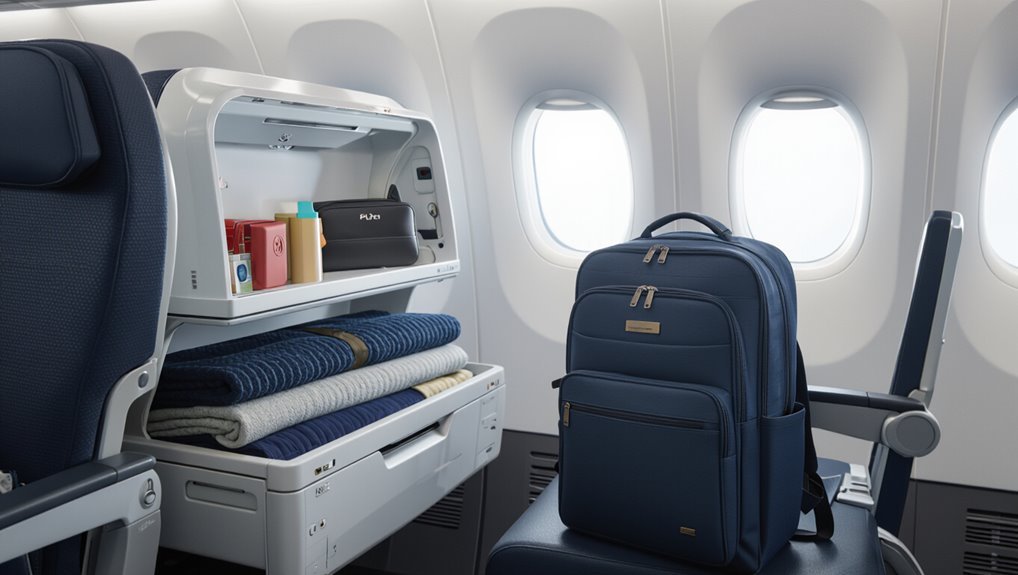
Wondering whether your backpack qualifies as hand luggage? You’ll usually be fine if it meets the airline’s size and weight limits and fits in the overhead or under-seat space.
Pack smartly, use measurements before travel, and keep essentials accessible.
For budget carriers, check stricter carry-on rules—some treat larger backpacks as carry-on requiring a fee—so verify before you fly.
How Airlines Define “Hand Luggage” vs “Personal Item
If your backpack meets size and weight limits, you’ve likely satisfied the suitcase-style carry-on rule — but airlines often make a clear distinction between a standard carry-on (hand luggage) and a personal item.
You should treat hand luggage as larger, stowed in overhead bins, while personal items fit under the seat and hold essentials like laptops, documents, and small bags.
Common Size Limits That Decide If a Backpack Flies
When you’re sizing up a backpack for a flight, the key measurements are overall dimensions (height + width + depth) and sometimes weight, since airlines use those to determine whether it’s a cabin carry-on or a personal item; most carriers cap carry-on dimensions around 22 x 14 x 9 inches (56 x 36 x 23 cm) while personal items are typically closer to 18 x 14 x 8 inches (45 x 35 x 20 cm), though exact limits vary by airline and aircraft.
Know that low-cost carriers often enforce stricter sizes and weight limits, while international and premium airlines may allow larger or heavier personal items, so check your carrier’s published limits before travel.
How to Measure Your Backpack to Avoid Gate Checks
Measure your backpack’s height, width, and depth with a tape measure and include straps or pockets that stick out.
Compare those exact dimensions to your airline’s stated carry-on limits before you get to the gate.
If your bag’s over the limit, swap items to a smaller pack or the checked luggage to avoid a gate check.
Measure Backpack Dimensions
Start by checking your airline’s carry-on size limits and then compare those numbers to your backpack’s actual dimensions so you won’t be surprised at the gate.
Measure height from base to top (include straps if fixed), width at the widest point, and depth when packed.
Use a tape measure, record numbers, and round up.
Compare totals to allowed limits before travel.
Check Airline Size Limits
Wondering if your bag will fit in the overhead bin? Check your airline’s size limits—carry-on and personal item dimensions vary.
Measure height, width, depth including pockets and wheels. Compare against both carry-on and personal item allowances for your carrier and fare class.
If it exceeds limits, compress or re-pack to avoid gate checks and extra fees.
Backpack Weight Limits: What Matters
You’ll need to know your airline’s carry-on weight limits so your backpack won’t get flagged at the gate.
Use a portable scale to weigh your bag and any personal item before you leave for the airport. That way you can quickly shift items between bag and personal item to meet the rules.
Airline Carry-On Limits
Airlines set carry-on weight limits to keep planes safe and boarding efficient, and knowing those limits can save you fees and headaches at the gate.
Check your carrier’s published allowance before packing, since limits vary by airline, route, and fare class.
Measure your packed backpack and redistribute heavy items into checked luggage if necessary to avoid overweight surcharges and denied boarding.
Weighing Personal Items
Because personal-item rules vary so much, you should weigh your backpack before you head to the airport to avoid surprises at the gate. Use a scale, compare airline limits, and remove nonessentials if needed. Check dimensions too; some carriers enforce both.
| Airline type | Typical personal-item limit |
|---|---|
| Low-cost | 7–10 kg |
| Full-service | 5–10 kg |
When Your Backpack Counts as a Personal Item
One key thing to know is that whether your backpack counts as a personal item depends on its size, how you carry it, and the airline’s specific rules.
If it fits under the seat in front, you’ll usually be fine. Keep electronics, documents, and essentials inside.
If you wear it on board or stow it under the seat, airlines often accept it as your personal item.
When a Backpack Is Treated as a Carry-On
When your backpack’s too large to fit under the seat or you gate-check it at boarding, it’ll generally be treated as your carry-on and must meet the airline’s overhead bin size limits; check those dimensions before you pack. You’ll need to measure height, width, depth and stowability to avoid gate checks or fees.
| Size | Effect |
|---|---|
| Fits | Overhead |
| Slightly big | Squeezed |
| Too big | Gate-checked |
| Compliant | No fee |
How Fares and Ticket Class Affect Backpack Allowances
Size alone isn’t the only factor that determines whether your backpack flies free or racks up a fee; your fare type and ticket class often set different baggage rules.
You should check your ticket, because:
- Basic economy may restrict or charge for a personal bag.
- Standard fares often include one personal item.
- Premium classes usually allow larger or extra bags.
- Elite status can grant additional allowances.
Low-Cost Carriers: Backpack Rules & Fees
On low-cost carriers you’ll often find a strict split between a free personal item and paid carry-on allowance, so check whether your backpack qualifies as the free bag or needs a fee.
Pay attention to the carrier’s size and weight limits—small differences can mean your bag gets gate-checked.
If your backpack exceeds limits or you need an extra bag, expect additional fees and prepaying online will usually be cheaper than at the airport.
Carry-On vs Free Bag
Airlines vary widely on whether your backpack counts as a free carry-on or as a paid checked/priority item, so you should always check the specific low-cost carrier’s rules before you pack.
You’ll often face choices:
- Pack as your one free personal item
- Pay for carry-on allowance
- Gate-checked for free or fee
- Buy priority boarding to guarantee cabin space
Size And Weight Limits
Most low-cost carriers set strict size and weight limits for backpacks, so check dimensions and kilos before you pack to avoid surprises at the gate.
You’ll usually get one personal item within compact dimensions; anything larger must meet carry-on size and weight caps.
Measure your pack fully loaded, weigh it, and adjust contents to match the airline’s rules to prevent delays or required repacking.
Extra Bag Fees
When you fly with a low-cost carrier, expect strict extra-bag fees if your backpack doesn’t meet the free personal-item rules — and those fees can be steep at the gate.
You should check rules, pay online early, and pack smart to avoid surprises.
- Check dimensions
- Weigh before travel
- Prepay fees online
- Consolidate items to fit
Major Airlines: Quick Backpack Policy Examples
Because you’re likely juggling size limits and carry-on counts, here’s a rapid look at how major carriers treat backpacks as personal items or carry-ons. You’ll usually find varied rules: some airlines count small backpacks as personal, others as carry-on. Check dimensions and ticket class before boarding.
| Airline | Typical Rule | Tip |
|---|---|---|
| Delta | Personal or carry-on | Verify size |
| Ryanair | Often carry-on | Buy priority |
Packing to Make a Backpack Fit Under the Seat
1 simple strategy will make it easier to get your backpack under the seat: streamline what you pack and organize by size and shape.
Pack essentials first, flatten bulky items, and use soft-sided containers. Consider rolling clothes and placing heavier items near the back.
- Essentials
- Bulky-to-flat
- Roll clothing
- Heavier rear placement
What to Do at Check-In and the Gate to Avoid Fees
Now that you’ve streamlined and packed your backpack to fit under the seat, focus on actions at check-in and the gate that keep you from paying extra. Stay polite, present boarding pass, and ask about cabin bag size. Move bulky items into your personal item if needed.
| Action | Why |
|---|---|
| Ask gate agent | Confirm allowance |
| Rearrange bag | Fit rules |
| Show pass | Fast check |
| Volunteer carry-on | Avoid charge |
Exceptions for Baby, Medical, Tech, and Sports Backpacks
You’ll often get special allowances for certain backpacks, like those carrying baby supplies, essential medical devices, or bulky tech and sports gear.
Check each airline’s rules so you know what counts as an exception and whether you need documentation or gate approval.
Knowing these differences can save you time, fees, and confusion at the airport.
Baby Carry-On Exceptions
When traveling with an infant, airlines generally make exceptions that let you bring extra items beyond your standard backpack allowance—think diaper bags, a small stroller, or a car seat—so you can keep essentials close and your hands free.
You should:
- Pack newborn supplies in a dedicated bag.
- Gate-check bulky items when possible.
- Keep feeding items accessible.
- Know airline infant item limits.
Medical Device Exemptions
If you rely on medical devices, airlines generally exempt them from standard carry-on size or item limits so you can bring what you need for health and safety.
Notify the airline ahead, pack documentation and prescriptions, and declare devices at security.
Expect additional screening; batteries or oxygen concentrators may have specific rules.
Carry spares and contacts for medical support to avoid surprises during travel.
Tech And Sports Gear
Pack smart: airlines often treat backpacks carrying tech or sports gear differently from standard hand luggage, letting you bring specific items—like laptops, camera bags, helmets, or small sporting equipment—without counting them against your carry-on allowance.
You should:
- Check airline policy before packing.
- Secure and pad fragile gear.
- Measure and weigh items if unsure.
- Declare unusual equipment at check-in.
How Gate Agents Decide Who Gets Their Backpack Onboard
Because overhead space is limited, gate agents have to decide quickly who can bring a backpack onboard and who must gate-check it, using clear rules and real-time judgment. You’ll be evaluated on size, boarding group, carry-on count, and special needs. Follow staff instructions, measure if asked, and stow compactly to increase chances.
| Size | Priority | Outcome |
|---|---|---|
| Small | Early | Allowed |
| Large | Late | Checked |
If Your Backpack Is Denied: Fees, Gate Check & Retrieval
When a gate agent denies your backpack as cabin baggage, you’ll usually be told whether it must be gate-checked, whether a fee applies, and how to reclaim it at your destination.
Pay attention to the agent’s instructions, keep your claim stub (if given), and remove any valuables or documents before handing the bag over.
- Note fee amount and payment method.
- Verify tag details.
- Retain claim stub.
- Retrieve promptly at baggage claim.
Pre-Flight Checklist to Make Sure Your Backpack Flies Free
Before you leave for the airport, run through a concise checklist to make sure your backpack meets airline size, weight, and security rules so it stays with you in the cabin.
Check dimensions against the carrier’s limits, weigh it packed, redistribute items if needed, remove prohibited or liquid items, keep chargers and documents accessible, and confirm bag closure and sturdy handles for easy stowing.
Frequently Asked Questions
Can Backpacks With Wheels Be Considered Carry-On or Personal Items?
Yes, you can usually bring wheeled backpacks as carry-on or personal items, but airline size and gate agent discretion matter; check dimensions and pack strategically so your wheeled backpack conforms to the carrier’s permitted carry-on rules.
Are Insulated Lunch Compartments Treated Differently by Airlines?
No, airlines usually don’t treat insulated lunch compartments differently; you’ll be judged by overall size and carry-on rules, not insulation. If it fits and meets security rules, you’ll be allowed, though exceptions might apply for specific carriers.
Do Backpacks With External Frames Count as Oversized Baggage?
Usually no — airlines treat external-frame backpacks as carry-on if they meet size/weight limits, but they’ll flag oversized frames or bulky packs for gate check or checked baggage; check your carrier’s specific dimensions beforehand.
Will Onboard Storage Space Be Reserved if I Gate-Check My Backpack?
No, onboard storage won’t be reserved if you gate-check your backpack; airlines may hold space but they don’t guarantee dedicated overhead room, so you’ll usually surrender it and retrieve it at baggage claim after landing.
Can Frequent Flyer Status Change Backpack Allowance Rules?
Generally, no — frequent flyer status rarely changes backpack size limits, but it can let you bring extra carry-ons or priority boarding, so you’ll often be allowed more bags or relaxed enforcement depending on the airline and elite tier.
Conclusion
Yes — a backpack can count as hand luggage, but whether it boards depends on size, weight and airline rules. Measure it against carry-on and personal-item limits, pack strategically, and know exceptions for baby, medical, tech or sports gear. At the gate, be polite, ready to gate-check oversized packs, and keep valuables in an accessible small bag. Do this and you’ll avoid surprise fees and retrieval headaches when traveling.
