
Do You Have to Take Out Portable Chargers for Tsa Rules Explained
You usually don’t have to take small portable chargers out at TSA, but keep them in your carry-on and accessible in case an officer asks. Larger power banks may be removed or powered off for inspection, and anything over 100 Wh needs airline approval while units over 160 Wh are generally banned. Protect terminals and pack spares only in carry-on. Follow officer instructions, stay calm if they ask to inspect, and keep going to learn the finer details.
Who This Guide Is For and How to Use It
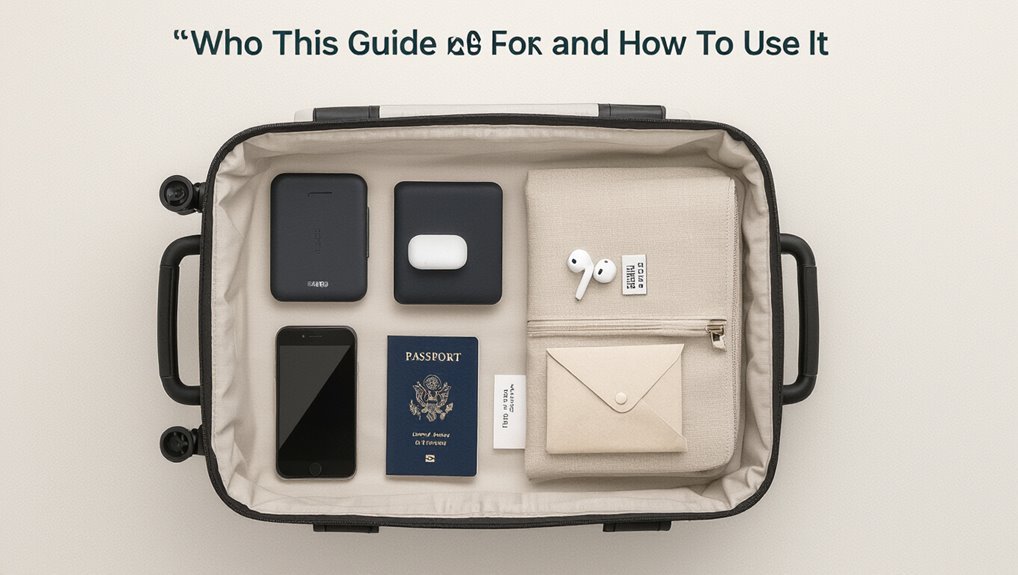
Whether you’re a frequent flyer, a business traveler, or someone preparing for a single trip, this guide helps you understand TSA rules for carrying portable chargers so you can pack confidently and avoid delays.
You’ll get concise guidance on which power banks are allowed, how to store them, and practical packing tips.
Use it to check limits and prepare your carry-on efficiently.
Quick Answer: Do You Remove Chargers at TSA?
Quick answer: you usually need to remove larger electronics and place them in a bin for TSA screening, but small portable chargers can often stay in carry-on bags unless an officer asks otherwise.
Check the battery size—power banks over 100 Wh have stricter rules and may require airline approval or must go in carry-on only.
When in doubt, be ready to take the charger out at the checkpoint to show its rating.
TSA Screening Rules
Although TSA doesn’t require you to remove most portable chargers from your carry-on, you should take them out if an officer asks or if they’re stored with other electronics that need screening separately.
You’ll place power banks in carry-on baggage only, declare large battery capacities when asked, and follow officer instructions.
Pack chargers accessibly to speed screening and avoid delays or additional inspection.
Removing Electronics Devices
If an officer doesn’t specifically ask, you usually don’t have to remove small portable chargers from your carry-on—just keep them accessible and be ready to take them out if told to.
Place larger electronics, like laptops and tablets, in their own bin unless signage or an officer instructs otherwise.
Always follow officer directions promptly to keep the line moving and avoid delays.
Battery Size Limits
When you’re packing portable chargers, know that the TSA follows FAA battery-size rules: batteries under 100 watt-hours (Wh) are allowed in carry-on without airline approval, 100–160 Wh need airline approval, and over 160 Wh are generally prohibited.
You should keep power banks in your carry-on, label capacity if possible, and avoid checked baggage to prevent safety issues and delays.
Which Devices Count as Spare Lithium Batteries?
You’ll need to recognize common portable battery types like power banks, camera spares, and external laptop batteries as potential spare lithium batteries.
Check the capacity printed on the label (Wh or mAh) to see if they fall under TSA limits.
If labels are missing or unclear, treat them as spares and pack them in carry-on where they’re accessible for inspection.
Common Portable Battery Types
Batteries come in many shapes, but for TSA purposes “spare lithium batteries” means removable lithium-ion or lithium metal cells that aren’t installed in a device—think loose power banks, extra camera or drone batteries, and individual AA/AAA lithium cells you carry as backups. You should pack them in carry‑on, protect terminals, and declare large packs if asked.
| Power bank | Camera cell | Drone pack |
|---|---|---|
| Spare | Backup | Critical |
Battery Capacity And Labels
Capacity labels matter: they tell TSA whether a power bank, camera pack, or loose cell counts as a spare lithium battery and what rules apply.
Check mAh or Wh on the device or packaging. Under 100 Wh you can carry spares in carry-on; 100–160 Wh needs airline approval. Over 160 Wh is typically prohibited.
Labeling proves capacity and avoids delays or confiscation.
TSA Portable Charger Rules: Carry‑On vs Checked
When you travel with portable chargers, the TSA requires you to keep most lithium batteries in your carry-on rather than checked baggage, because they pose a fire risk in the cargo hold.
Pack chargers in your carry-on, protect terminals from shorting, and follow airline rules.
If an exception is allowed, declare the device during check‑in and carry airline documentation to avoid delays.
Watt‑Hour Limits Explained: When Screening Increases
If your power bank exceeds certain watt‑hour (Wh) thresholds, TSA and airlines will subject it to extra screening and paperwork; you’ll usually face stricter checks once a device goes over 100 Wh and new restrictions kick in above 160 Wh.
You should expect limits, possible carrier approval, or denial for checked bags.
Consider these steps:
- Notify airline if between 100–160 Wh
- Carry documentation
- Pack in carry‑on only
How to Find mAh or Wh on a Power Bank
Wondering how to check the mAh or Wh printed on your power bank?
Look for small molded or printed text on the case—near the ports or on the label. It’ll show capacity as mAh (milliamp hours) or Wh (watt‑hours).
If only mAh is listed, convert to Wh: Wh = (mAh ÷ 1000) × V (usually 3.7V).
Keep that info handy for travel.
When TSA May Ask You to Remove a Charger
You might be asked to remove a charger if it’s clearly visible in your carry-on during X-ray screening.
TSA can also request removal during random checks or if agents spot a charger that looks overheated or damaged.
Follow their instructions and keep batteries accessible to speed things up.
Visible In Carry-On Bags
When a portable charger sits where the X-ray operator can clearly see it, TSA agents may ask you to remove it from your carry-on so it can be screened separately; this usually happens when the device’s size, shape, or multiple batteries could obscure other items on the belt.
You should comply and place it in a bin for clear inspection.
- Keep chargers accessible
- Avoid crowded packing
- Label external battery capacity
During Random Screening
If TSA officers pull you aside for a random screening, they may ask you to remove your portable charger so it can be inspected separately—this helps them quickly check for hidden wiring, tampering, or multiple batteries that could be obscured in an X-ray. Cooperate, place the charger on the tray, and answer questions. Inspection is brief and routine.
| Item | Action |
|---|---|
| Charger | Remove |
| Tray | Place |
| Questions | Answer |
| Bag | Re-scan |
| Follow-up | Comply |
If Overheating Or Damaged
Should a portable charger show signs of overheating, swelling, melting, sparks, or visible damage, TSA officers will ask you to remove it so they can inspect and isolate it for safety; follow their instructions, keep a safe distance, and avoid handling a visibly compromised battery.
You’ll cooperate, declare its condition if asked, and accept disposal or secondary screening.
- Cooperate promptly
- Stand back for safety
- Let officers handle disposal
How to Prepare Chargers Before Security Screening
Because security officers need quick access to electronics, pack and present power banks so they’re easy to inspect. Keep them reachable, remove cases if bulky, and place them on the belt or bin when asked. Label capacity if possible and carry them in cabin baggage only.
| Item | Action |
|---|---|
| Power bank | Accessible |
| Case | Removed |
| Label | Visible |
| Location | Carry-on only |
Quick Prep Checklist for Your Power Bank
Check the airline power bank limits before you pack so you don’t bring batteries that exceed allowed watt-hours.
Place your power bank in carry-on, not checked luggage, and keep it accessible for screening.
Have cables organized and the device switched off to speed up the process.
Airline Power Bank Limits
When you’re packing a power bank for a flight, know the airline and TSA limits so you don’t get it confiscated or delayed at security.
Check your power bank’s watt-hours (Wh); most airlines allow up to 100Wh in carry-on, 100–160Wh with approval, and prohibit over 160Wh.
Keep documentation handy and follow airline-specific rules.
- Verify Wh rating
- Note airline approval steps
- Carry documentation
Packing And Screening Tips
If you’re flying with a power bank, pack it in your carry-on, label or note its watt-hour (Wh) rating, and keep any airline approval paperwork handy so screening goes smoothly.
Before security, power off the unit, remove cable bundles, and place it where officers can easily inspect. Inform TSA if asked, and don’t check the battery or pack multiple high-capacity units without airline OK.
Why Portable Chargers Are Banned in Checked Bags
Because lithium-ion batteries can short-circuit and catch fire under pressure or impact, the TSA and airlines prohibit most portable chargers in checked baggage to reduce the risk of an in-flight cargo fire.
You should pack them in carry-on, where fires can be detected and fought quickly.
Follow these quick tips:
- Keep chargers in original or insulated packaging
- Protect terminals from contact
- Carry chargers on your person or in cabin luggage
What to Do With Power Banks Over 100 Wh
Smaller power banks are fine in your carry-on, but larger units—those rated over 100 watt-hours (Wh)—come with stricter rules and often need airline approval before you fly.
Contact the airline in advance, declare the device at check‑in, and carry documentation showing the Wh rating.
If approved, pack it in your carry‑on, protected from short circuits and separated from other electronics.
Rules for Traveling With Multiple Spare Batteries
When you travel with multiple spare batteries, know that airlines and the TSA treat them differently than installed batteries.
You’ll need to carry them in your carry-on, protect terminals, and may face quantity or watt-hour limits. Check airline policies beforehand.
- Keep each battery in its original packaging or a protective pouch
- Tape terminals or use terminal covers
- Pack spares in carry-on only
How Airlines’ Rules Differ From TSA Rules
Although the TSA sets baseline safety standards for batteries and portable chargers, airlines can impose stricter limits and additional procedures that you’ll need to follow.
Always check your carrier’s policy before flying. Airlines may limit capacity, number of spares, require carry‑on only, or mandate approval for high‑watt‑hour packs.
You’ll also face varied packaging, labeling, and documentation requirements per carrier.
What to Expect if Asked to Power On the Charger?
If a TSA officer asks you to power on your portable charger, they’ll want a quick functional check to verify the battery isn’t damaged or malfunctioning.
You should be prepared to turn it on and show it working, but you can decline if doing so risks data exposure or device safety.
You’ll be asked politely and shown where to test.
- Turn it on briefly.
- Explain data concerns.
- Ask for alternative inspection.
Cleaning and Taping Terminals for Safe Screening
Before screening, wipe your charger’s battery terminals with a dry cloth to remove dust and grime.
If any connectors are exposed, cover them with non-conductive tape so they can’t short during handling.
Doing these simple steps helps speed up inspection and keeps your device safe.
Clean Battery Terminals
Cleaning battery terminals keeps your portable charger safe for screening and helps prevent false alarms during TSA checks.
You should inspect, clean, and protect terminals so devices scan clearly and agents don’t need extra inspection.
- Wipe corrosion with a soft brush and isopropyl alcohol
- Make certain terminals are dry before packing
- Check for loose debris that could short contacts
Tape Exposed Connectors
| Item | Action |
|---|---|
| Clean | Lint-free cloth |
| Tape | Non-conductive tape |
| Label | Visible note for TSA |
Best Carry‑On Placement for Easy Access
A compact, designated pocket near the top of your carry‑on makes retrieving your portable charger quick and hassle‑free; keep it in an easy‑open zip or exterior pouch so you can show it or remove it without unpacking.
Position the charger where security staff can inspect it without digging through clothes, and secure cables to prevent tangles.
- Top exterior zip
- Front quick‑access pocket
- Dedicated tech pouch
Traveling Internationally: Common Rule Variations
When you travel internationally, remember that rules for portable chargers can differ by country and airline, so check both before you go; some carriers limit size or require the battery to be in carry‑on only, while others may ask you to carry it in its original packaging or with terminals taped.
Confirm watt‑hours allowed, declare high‑capacity units, and follow airline instructions to avoid delays or confiscation.
Common Mistakes That Slow You at TSA
Many travelers get slowed at TSA because they bring batteries the wrong way, forget to remove electronics, or pack liquids and chargers together—simple oversights that create hold-ups and extra screening.
Avoid TSA slowdowns: organize carry-ons, separate electronics and batteries, and keep liquids away from chargers.
You can avoid delays by organizing, knowing rules, and prepping carry-ons. Follow these quick tips:
- Remove large electronics and place them separately.
- Keep spare batteries accessible.
- Pack liquids and chargers in separate compartments.
How to Handle a Denied or Confiscated Charger
If TSA denies or confiscates your charger, stay calm and cooperate—arguing rarely helps and can make the situation worse.
Ask politely for the reason and whether you can retrieve it before leaving.
Request written documentation or a receipt for confiscation.
If you disagree, note agent names and file a complaint later with TSA through their website; preserve any evidence and timelines.
Choosing Travel‑Friendly Portable Chargers
Because you’ll want power that gets you through security and a long travel day, pick chargers that balance capacity, portability, and airline rules.
Choose units under 100Wh to avoid extra approvals, prefer compact models you can stash in carry‑on, and check weight limits so you’re comfortable carrying them.
- Check Wh rating and airline policies
- Favor lightweight, high-density cells
- Keep chargers in carry‑on bag
Special Cases: Built‑In Cables and Wireless Pads
When you pick a power bank with built‑in cables or a wireless charging pad, think about how those features affect airport screening and in‑flight use. You should pack them in carry‑on, label capacity, and remove if requested. Wireless pads are treated like batteries; built‑in cables can tangle in bins. Check airline limits and present items proactively.
| Item | Screening note | In‑flight use |
|---|---|---|
| Built‑in cable | May stay attached | Allowed if under limit |
| Wireless pad | Remove if asked | Use if airline permits |
| Combo | Inspect closely | Follow crew guidance |
Frequently Asked Questions
Can I Leave a Fully Discharged Power Bank in Checked Luggage?
No, you shouldn’t leave a fully discharged power bank in checked luggage; airlines and TSA require spare lithium batteries in carry-on only, so pack it with your hand luggage and keep it accessible during travel.
Are USB-C Laptop Chargers Treated Differently Than Phone Power Banks?
Yes — you’ll treat USB‑C laptop chargers differently: built‑in laptop batteries stay in devices, but removable USB‑C power banks must go in carry‑on. You can’t stow most portable chargers in checked luggage.
Do TSA Rules Apply to Portable Chargers in Carry-On Backpacks?
Yes, TSA rules apply to portable chargers in carry-on backpacks; you’ll need to carry them in carry-on, not checked baggage, and follow lithium battery capacity limits and airline-specific policies to avoid removal or restrictions.
Can Power Banks Be Used During the Flight for Charging Devices?
Yes — you can use power banks during flight if the airline allows device charging and the power bank stays within permitted capacity (usually under 100Wh). You’ll need to keep it in carry-on and follow crew instructions.
Do Rules Change for Power Banks Carried in Gate-Checked Baggage?
No, rules don’t change: you can’t put power banks in gate-checked or checked baggage; you must carry them in your carry-on, follow airline capacity limits, and declare very large batteries to the airline before boarding.
Conclusion
You’ve now got the essentials, so you’ll breeze through security: keep portable chargers and spare lithium batteries in your carry‑on, not checked baggage, and remove them only if TSA asks — most agents won’t require it. Know the watt‑hour limits (usually 100 Wh standard, 100–160 Wh with airline approval) and pack cables or wireless pads neatly to avoid delays. If an item’s denied, remain calm and ask for clarification or options to retrieve it later.
