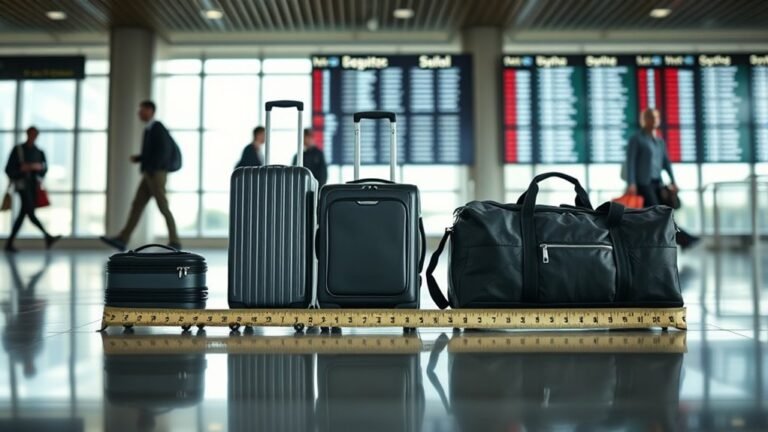
Do Airlines Really Measure Luggage Size?
Yes — airlines will measure your carry-on if it looks oversized, during busy boardings, or on budget carriers that enforce strict rules. You’ll often get a quick visual check at the gate, but rigid sizers or taped gauges are used when staff suspect a problem. If it doesn’t fit the overhead or under-seat limits, it may be gate-checked or incur fees, so measure and pack smart. Keep going to see practical tips and specific airline limits.
Quick Answer: Do Airlines Really Measure Carry-On Bags?
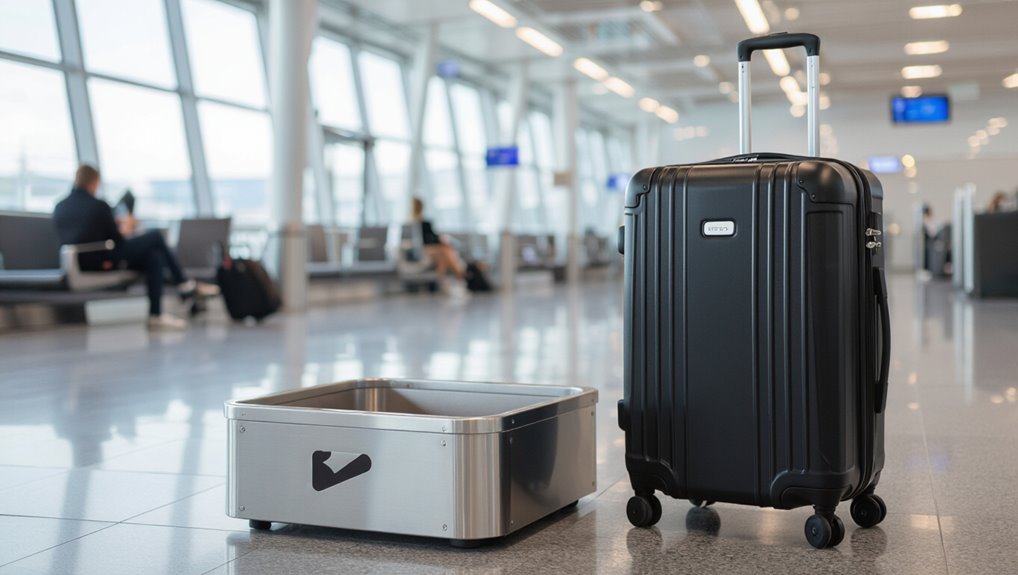
Wondering whether airlines actually measure carry-on bags? You’ll usually see staff eyeballing sizes or using a sizing frame at the gate.
Budget carriers and packed flights prompt stricter checks; full-service airlines often only enforce limits at boarding.
If your bag clearly fits overhead and meets airline dimensions, it’s rarely measured—yet be ready for inspection and potential gate-checking.
What This Guide Covers (What You’ll Learn)
What will you learn from this guide? You’ll get clear steps to measure bags, spot-check practices airlines use, packing tips to avoid gate checks, and how to handle disputes efficiently.
| Topic | Takeaway |
|---|---|
| Measuring method | Use rigid gauge or tape |
| Enforcement | When they measure |
| Packing tips | Maximize allowed space |
| Disputes | Evidence to present |
| Exceptions | Special cases and fees |
Why Airlines Set Carry-On Size Limits
You’ll see airlines set carry-on size limits mainly for safety and to make sure bags fit overhead bins.
They’re also trying to optimize limited cabin space so passengers and crew can move easily.
And by keeping sizes consistent, boarding stays faster and more efficient for everyone.
Safety And Overhead Limits
Because cabin space is limited and passenger safety comes first, airlines set carry-on size limits to keep aisles clear, overhead bins usable, and weight distributed properly.
You’ll find rules prevent heavy, oversized bags from shifting during turbulence or blocking evacuation routes. By limiting dimensions and sometimes weight, carriers reduce injury risk, guarantee safe stowage, and help staff manage loading consistently and predictably.
Cabin Space Optimization
Alongside safety, airlines tailor carry-on size limits to get the most out of limited cabin space and make boarding and deplaning smoother for everyone.
You’ll fit more bags into overhead bins when dimensions are consistent, reducing wasted gaps and awkward stuffing.
Standardized sizes also help ground staff predict bin capacity, balance aisles, and keep personal items stowed without blocking exits or impeding movement.
Boarding Speed And Efficiency
Faster boarding keeps flights on time, so airlines limit carry-on size to minimize delays caused by oversized bags blocking aisles or taking extra time to stow.
You’ll board faster when passengers can lift and slide luggage into overhead bins quickly. Limits reduce gate checks, speed deplaning, and lower crew intervention.
Follow size rules and you’ll help departures stay punctual and stress-free.
How Carry-On Size Is Defined (Dimensions, Wheels, Handles)
When airlines set carry-on limits, they define size by a strict combination of length, width and depth that usually includes wheels and handles, so you need to measure the whole bag as presented for boarding.
You should measure from wheel edge to handle tip and include protrusions like external pockets.
Soft bags compress; rigid shells don’t.
Check packed dimensions, not just empty case size.
Official Airline Carry-On Rules : Key Points From Major Carriers
When you check major carriers’ rules, you’ll see clear size and weight limits that vary by airline and fare class.
Pay attention to how each airline measures—some include wheels and handles while others don’t—and what measurement method they use at the gate.
Also note common exceptions for items like medical devices, strollers, and personal items that can affect your allowed carry-on.
Size And Weight Limits
Although airlines vary, most set clear size and weight caps for carry-ons to keep boarding smooth and overhead bins usable.
You’ll usually see dimension limits (typically around 22x14x9 inches) and weight caps ranging from 7 to 23 kg depending on carrier and fare class.
If your bag exceeds limits, you’ll pay a gate fee or be asked to check it, so measure and weigh beforehand.
Measurement Methods Used
Because airlines want consistent, enforceable rules, they use a few straightforward measurement methods to check carry-ons: rigid sizers (metal or plastic frames you slide your bag into), tape or ruler checks for dimensions, and scales for weight.
You’ll see agents use sizers at gates, measure oddly shaped items with tape, and weigh bags at check-in to guarantee compliance with carrier limits.
Exceptions And Special Items
If you’re carrying anything beyond a standard carry-on, airlines typically treat those items as exceptions and apply specific rules — things like strollers, medical devices, musical instruments, duty-free purchases, and mobility aids often get special allowances.
But you’ll still need to follow size, weight, or gate-check procedures set by each carrier. Check each airline’s policy, declare items at check-in, and pack protective cases or documentation.
Which Airlines Are Strict : And Which Are Lax
Curious which carriers will measure your bag at the gate and which will glance and let it pass?
You’ll find low-cost carriers like Spirit and Ryanair are strict, enforcing size rules and charging for oversize.
Major legacy airlines—Delta, American, United—are often more lenient, especially on domestic flights, though stricter on full flights.
Regional and international carriers vary; assume enforcement during busy periods.
When Do Gate Agents Actually Measure Carry-Ons?
You’ll most often see gate agents measure carry-ons when boarding gets tight, a flight is full, or when a bag looks oversized.
They’re checking both to enforce size rules and to make sure items fit in the overhead bins without blocking safety pathways.
Knowing when and why they measure helps you decide whether to gate-check or repack before you board.
When Measurements Happen
Gate agents usually measure carry-ons at two main moments: during boarding when overhead bin space is tight, and at the gate check desk when staff suspect an item won’t fit in the cabin.
You’ll also see occasional spot checks during boarding for crowd control or weight balance. If your bag looks oversized or blocks aisles, expect a quick fit test or request to gate check it.
Why Agents Measure
Those quick checks at boarding and the gate don’t happen just to be picky — agents measure carry-ons to enforce rules, keep everyone safe, and make boarding move.
You’ll see measurements when overhead space is tight, a bag looks oversized, or boarding is delayed. They act fast to prevent delays, guarantee weight limits aren’t exceeded, and keep aisles clear.
- Overhead limits
- Visual suspicion
- Boarding flow
How Agents Measure: Frames, Templates, and Visual Checks
Agents check bag dimensions with simple, practical tools and quick visual cues: a metal frame or slot—often called a sizer—lets them slide a suitcase through to confirm length and height.
A flat template or tray verifies depth, and trained staff use sightlines to flag oddly shaped pieces before measuring.
You’ll see agents insert, rest, or trace bags against these tools, note protrusions, and quickly record measurements.
What Happens If Your Bag Fails the Check
If your bag fails the size check at the gate, you’ll usually be asked to gate-check it and it’ll travel in the hold.
In some cases the airline will treat it as oversize and charge an extra fee on the spot.
Ask the agent how the bag will be handled and what the fee will cover so you can decide your next step.
Gate Check Required
When your carry-on doesn’t fit the overhead bin, staff will ask you to gate-check it—you’ll hand the bag over at the jet bridge or gate, get a claim tag, and the airline will load it in the aircraft’s hold for retrieval at baggage claim or, occasionally, at the jet bridge after landing.
You’ll then:
- Keep essentials with you.
- Protect fragile items.
- Note the claim tag number for tracking.
Oversize Fees Applied
Occasionally your bag won’t meet the airline’s size limits and you’ll be asked to pay an oversize fee before it’s accepted; staff will either measure it there or refuse it for transport. You can choose to redistribute items, check it as oversized, or leave items behind. Officials may tag it, note dimensions, and charge accordingly.
| Action | Result |
|---|---|
| Redistribute | Avoid fee |
| Pay fee | Bag accepted |
| Refuse | Delay or return |
| Tagging | Record dimensions |
Gate Check vs Checked Bag: Cost and Process
Although gate-checking and checking a bag both put your luggage on the plane, they involve different costs and steps you should know:
- Gate-check: usually free or small fee, drop at door, retrieve at jetbridge or curb.
- Checked bag: pay online or at counter, tagged and loaded in cargo, claim at baggage claim.
- Timing: gate-check is last-minute; checked bag requires earlier drop.
How Aircraft Type and Flight Load Affect Enforcement
On smaller regional jets you’ll notice tighter overhead bins, so you’ll need to be more careful about bag dimensions.
When flights are full, agents are likelier to enforce size limits to free up space.
Ultimately gate agents use discretion based on aircraft constraints and load factors, so be prepared for on-the-spot decisions.
Aircraft Cabin Constraints
Because cabin layouts and seat configurations vary widely, the type of aircraft on your flight strongly shapes how strictly airlines enforce carry-on size rules.
You’ll notice differences by model, overhead bin size, and boarding procedures.
Consider these factors:
- Regional jets have smaller bins, so staff check more.
- Widebodies offer room but gate checks still happen.
- Retrofits can change enforcement suddenly.
Load Factor Impacts
The aircraft type and cabin layout set the stage, but how full the flight is will determine how strictly staff enforce carry-on size rules.
If flights are near capacity, you’ll face tighter checks and more gate stowage requests. On lighter flights, attendants often relax enforcement, letting marginal bags ride in overheads.
You should plan accordingly to avoid surprises.
Gate Agent Discretion
Even when rules look strict on paper, gate agents have a lot of discretion and will tailor enforcement to the aircraft type and how full the flight is.
You’ll notice policies vary by plane and load, so you should check early.
Consider:
- Smaller aircraft = stricter overhead limits.
- Full flights = more enforcement.
- Light loads = more leniency and gate flexibility.
Does Your Boarding Group or Status Help?
Having elite status or an early boarding group can help, but it doesn’t exempt your bag from size checks—airlines still expect carry-ons to meet their limits. You might get priority boarding or softer enforcement, but agents can still measure. Know dimensions, avoid surprises, and don’t assume privilege guarantees allowance.
| Benefit | Reality |
|---|---|
| Priority boarding | Not immune to checks |
| Perks | Rules still apply |
Common Passenger Excuses : And Typical Agent Responses
If you try to slip a slightly oversized bag onboard by saying you “just ran out of time,” agents will usually give a quick, practiced response:
- “Gate check it or pay fee.”
- “Measure it—doesn’t fit, sorry.”
- “We can’t make exceptions.”
You’ll hear calm, firm lines.
Don’t argue; offer to gate-check, repack, or pay. Agents follow rules, not moods.
Real Traveler Stories: Measured, Waved Through, or Charged
When you roll up to the gate with a bag that’s borderline, the outcome often comes down to timing, staffing, and a little luck; some travelers say agents measured and charged, others got a quick wink and were waved through.
You might be inspected, asked to gate-check, or let go free. Reports vary by agent, airline, time of day, and how busy things are.
Personal Item vs Carry-On: Official Policy Differences
Although both items go into the cabin, airlines define a personal item and a carry-on differently: a personal item (like a backpack, purse, or laptop bag) must fit under the seat in front of you and meet smaller size limits, while a carry-on is larger, goes in the overhead bin, and often has stricter weight or fee rules.
A personal item fits under the seat (smaller, usually free); a carry-on is larger, goes overhead, and may incur limits.
- Size: personal < carry-on
- Placement: underseat vs overhead
- Fees/limits: personal usually free
Oversized Soft Bags vs Hard Carry-On Cases: What Agents Notice
You’ll notice soft bags compress more when an agent gives them a look, so they often slide into sizers easier.
Hard carry-on cases don’t compress, they stick out and make size violations obvious. That difference is usually what gets an agent’s attention.
Soft Bags Compress More
Because soft-sided bags compress, gate agents and gate-check crews often judge their size differently than rigid cases, and that affects what they notice at boarding.
You’ll notice agents:
- Squeeze and eyeball fullness to decide fit.
- Spotlight bulging pockets that expand under stress.
- Prefer flexible bags to be stowed if soft volume seems reducible.
You should pack to minimize apparent bulk.
Hard Cases Stick Out
Soft bags squeeze down, but hard-sided cases don’t play along, so agents spot them more easily at the gate.
You’ll draw attention with rigid edges and fixed dimensions; staff can tell at a glance if a hard case exceeds limits.
That makes you likelier to be measured, gate-checked, or asked to gate-check, so choose rigid carry-ons cautiously and know your airline’s rules.
How to Measure Your Bag Accurately at Home
Start by clearing a flat area and laying your bag down so it sits naturally—handles and wheels in their usual positions—then measure the height, width, and depth at the bag’s widest points with a rigid tape measure or a straight ruler.
Record measurements, include wheels/handles, and round up.
- Measure height
- Measure width
- Measure depth
Packing Techniques to Avoid Gate Checks
With accurate dimensions in hand, you can pack strategically to keep your bag within carry-on limits and avoid being asked to gate check.
Prioritize essentials, compress clothing with packing cubes, and place heavier items low and centered.
Use soft-sided bags that flex into overhead bins, avoid bulky shoes, and stash small items in personal item pockets to maximize usable space.
What to Say and Do at the Gate If Told Your Bag Is Too Big
If an agent tells you your bag is too big, stay calm and act quickly:
- Politely ask for the exact size or measurement they’re using.
- Offer to reposition or remove items to meet limits, showing you’ll comply.
- If gate check is suggested, ask about cost and handling, then decide whether to accept or hand it over.
How to Dispute a Gate-Check Fee or Decision
When you believe a gate-check fee or decision is unfair, stay calm and gather facts: note the agent’s explanation, the size measurements used, and any posted or printed policy nearby.
Ask to speak with a supervisor, photograph the bag and measuring device, and retain boarding passes and receipts.
File a formal complaint with the airline promptly, citing evidence and requesting a fee refund or policy review.
Tools and Products That Help Meet Carry-On Limits
After you’ve documented a gate-check dispute, you can reduce future headaches by using tools and products that help you meet carry-on size limits.
Use gear that keeps you compliant and organized:
- A rigid tote or checked-measure approved suitcase for consistent dimensions.
- A luggage sizer or measuring template to precheck fit.
- Compression cubes and weighable straps to maximize allowed space and avoid surprises.
Are Carry-On Rules Getting Stricter : Trends Travelers Should Know?
Curious whether airlines are tightening carry-on rules? You’ll notice sharper enforcement, stricter size limits on many low-cost carriers, and more gate checks to cut boarding delays.
Expect clearer published dimensions, random bag sizers, and occasional weight checks. Policies vary by airline and route, so you should verify limits before flying, pack smartly, and have contingency plans if your bag’s flagged at the gate.
Travel-Ready Checklist to Avoid Last-Minute Surprises
Stricter carry-on enforcement makes planning ahead more important than ever, so use a short checklist to avoid surprises at the gate.
Pack essentials, measure bags, and check limits. Follow this simple list:
- Measure and weigh bags; adjust to airline limits.
- Place liquids and documents in easy-to-reach spots.
- Confirm gate, boarding time, and carry-on policy before leaving.
Final Takeaways and Fast Action Steps
When you’re rushing to the gate, keep these fast, practical steps in mind so you won’t be slowed by oversized or overweight luggage:
weigh and measure bags at home, pack soft items to squeeze, keep essentials in a personal item, know airline limits, prepay excess when cheaper, and carry a compact luggage scale.
Act early to avoid delays and fees.
Frequently Asked Questions
Do International Airlines Use Different Measuring Tools at Foreign Airports?
Yes — you’ll find variations: airlines and airports worldwide use different sizers, carts, or tape measures, but they’ll enforce that airline’s limits. You’ll need to comply with the specific carrier’s rules at each airport.
Can Cabin Crew Measure Bags After Boarding Begins?
Yes — cabin crew can measure bags after boarding begins if overhead space is tight or rules require enforcement; they’ll ask you to check, gate-check, or rearrange items, and you’ll need to comply for safety and efficiency.
Are Medical or Mobility Bags Exempt From Size Checks?
Yes — airlines usually exempt medical or mobility bags from strict size checks, but you should declare them, carry documentation, and coordinate with staff; policies vary, so check your carrier beforehand to avoid surprises and guarantee assistance.
Do Low-Cost Partner Airlines Follow the Primary Carrier’s Carry-On Rules?
Yes — but not always. If you’re flying codeshare or with a partner, you’ll usually follow the operating carrier’s carry-on rules; still check both airlines’ policies before travel because low-cost partners can enforce different size or fee rules.
Will Pre-Boarding Notification Prevent a Gate Measurement?
No, pre-boarding notification won’t guarantee avoiding a gate measurement; you’ll often still face checks if staff suspect oversized bags. You should pack to rules, be ready for measurement, or gate agents may enforce limits regardless.
Conclusion
Yes — airlines do measure carry-on bags, and while enforcement varies, you shouldn’t count on leniency. Stick to published dimensions (including wheels and handles), use a compliant bag or sizing cube, and weigh checked luggage at home. Expect more scrutiny on busy flights and low-cost carriers. Before you fly, review your carrier’s rules, pack smart, and keep must-haves in a personal item. Do this and you’ll avoid delays, fees, and gate-check hassles.