Do Airlines Pay for Damaged Luggage? Claim Guide
Yes — airlines will often reimburse you for luggage they damage, but you’ve got to act fast and prove they’re at fault. Inspect bags at the carousel, photograph damage, get a Property Irregularity Report, and keep tags and receipts. File a written claim within the carrier’s deadline and include repair estimates or proof of value. If denied, appeal, contact regulators, or use small claims. Continue for step‑by‑step guidance on claims, limits, and prevention.
Do Airlines Pay for Damaged Luggage? Quick Answer and Checklist
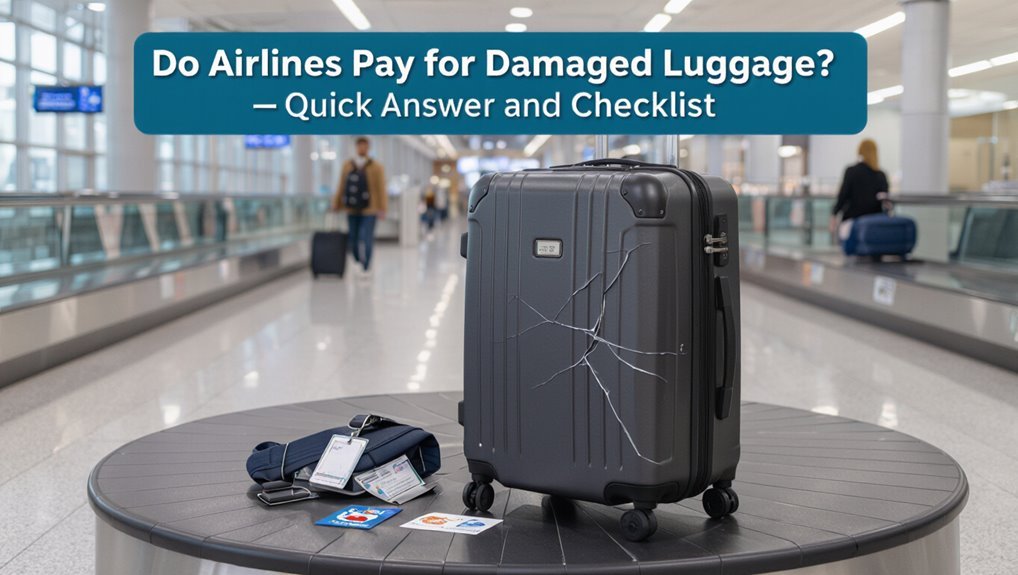
Wondering if airlines cover damaged luggage?
Generally, they’ll reimburse for airline-caused damage up to limits and with rules.
You should inspect bags immediately, document damage with photos, keep receipts, file a written report with the airline (PIR) before leaving the airport, and submit a claim within the carrier’s deadline.
Expect inspected limits, depreciation, and varying compensation procedures.
What Makes an Airline Legally Liable for Damaged Baggage
When an airline is legally responsible for damaged baggage, it’s because you can show the carrier’s actions or failures directly caused the harm and you met the notice and filing requirements set by law or the ticket contract.
You must prove the carrier handled your bag negligently, report damage promptly per policy, preserve evidence (photos, tags, receipts), and submit a timely claim with required documentation.
Domestic vs. International Rules for Baggage Damage
If you’re traveling within a single country, your baggage rights will usually be governed by that nation’s consumer protections and the airline’s contract of carriage.
Cross-border trips, however, fall under international treaties like the Montreal Convention or the Warsaw Convention, which set different liability limits and procedures.
You should check applicable rules, keep receipts, report damage promptly, and follow the airline’s claim steps for faster resolution.
How Much Airlines Can Legally Reimburse for Baggage Damage
Because liability rules vary by route and carrier, you should expect different reimbursement limits depending on whether your trip is domestic or international and on the airline’s published contract of carriage. You’ll often see statutory caps for international flights (Montreal Convention) and lower domestic limits; check your ticket and receipts to prove value and claim promptly.
| Flight Type | Typical Cap | Proof Needed |
|---|---|---|
| Domestic | Lower | Receipt |
| International | Higher | Itemized bill |
When Airlines Aren’t Responsible for Damaged Luggage
Although airlines handle millions of bags safely, they won’t cover damage in every situation; you’re usually not entitled to reimbursement for wear-and-tear, preexisting defects, items packed loosely, or valuables left in checked luggage.
- Normal deterioration or cosmetic scuffs
- Broken items from improper packing
- Damage from prohibited or unstable contents
- Preexisting cracks or prior repairs
Immediate Airport Steps After You Spot Damage
Even when damage stems from wear, poor packing, or preexisting flaws, you should inspect your bag as soon as you collect it at the carousel.
Photograph all visible damage and note time, flight number, and carousel. Keep broken parts and packing intact.
Ask airline staff where to report the issue and get a contact name. Save receipts for emergency repairs or replacements.
How to File a PIR (Property Irregularity Report) at the Airport
Start at the airline’s baggage service desk as soon as you find damage and ask to file a PIR (Property Irregularity Report). The agent will document the damage, record your flight and bag details, and give you a copy or reference number you’ll need for any claim.
Start at the airline’s baggage desk immediately to file a PIR; get the reference number for your claim.
- Provide ID and boarding pass.
- Describe the damage succinctly.
- Get the PIR number and agent name.
- Ask about next steps and timelines.
Evidence to Gather Before Leaving the Airport
Before you leave the airport, gather clear, time-stamped evidence of the damage: take several photos from different angles of the suitcase and any broken contents, photograph the luggage tag and PIR form (or note its reference number), and keep your boarding pass and ID handy.
Also note the carousel number, time, staff names, and any witness contact info; save receipts for immediate repairs or replacements.
Documents and Photos to Include With Your Written Claim
Now that you’ve collected on-site evidence, assemble the paperwork and photos that will make your written claim persuasive and complete.
Include clear, labeled items that prove damage, ownership, and value, and make your timeline obvious. Provide copies, not originals, unless requested.
Include clear, labeled evidence of damage, ownership, and value — with dates visible and copies, not originals.
- Photos of damage and baggage tag
- Boarding pass and claim report
- Receipts for item repairs/replacement
- Proof of ownership or purchase date
Claim Deadlines: How Long to Report and File for Damaged Luggage
You should report damage to the airline staff at the airport right away so there’s an official record.
Then file a written claim promptly and include the photos and documents you gathered.
Check your carrier’s specific time limits, since missing their deadline can forfeit your right to compensation.
Report Immediately At Airport
If your bag’s been damaged, report it to the airline staff at the airport right away—most carriers require you to file a damage report before you leave the terminal.
Do this promptly, document damage, and get a written report or reference number.
- Take photos of damage and tag receipt.
- Locate the baggage service desk.
- Insist on a Property Irregularity Report (PIR).
- Note staff names and time.
File Written Claim Promptly
After filing the Property Irregularity Report at the airport, follow up with a written claim as soon as possible—airlines set strict deadlines for submitting formal claims for damaged baggage.
Include your PIR number, flight details, itemized damage list, photos, receipts, and contact info.
Send via the carrier’s specified channel, keep copies, and note the date you mailed it to preserve your right to compensation.
Know Carrier Time Limits
When should you act? Know each airline’s deadline—domestic, international, and for checked versus carry-on claims differ.
Missed windows often void compensation. Check the carrier’s contract of carriage and keep receipts, photos, and baggage tags ready.
- Report damage at the airport immediately.
- File written claim within carrier’s stated days.
- Submit evidence promptly.
- Follow up before the deadline.
How to Describe Damage and Value Items for a Stronger Claim
Start by listing each damaged item clearly and briefly, naming the make, model, and specific defect (for example: “Samsonite carry-on — cracked hard shell, broken zipper pull”). Then note purchase date, original cost, current condition, and repair estimates. Use photos and receipts.
| Item | Damage | Value |
|---|---|---|
| Suitcase | Cracked shell | $120 |
| Laptop bag | Torn seam | $45 |
| Camera | Scratched lens | $200 |
Airline Investigation: Timeline, Review Process, and Likely Outcomes
If you file a damage claim, the airline will open an investigation and usually gives you a clear timeline and steps to follow.
You’ll track progress, supply documents, and await assessment. Outcomes range from repair offers to reimbursement or denial.
- Initial acknowledgement and claim number
- Evidence review (photos, receipts)
- Inspection or repair estimate
- Decision and settlement offer
What to Do If Your Claim Is Denied (Appeal and Escalation)
If your claim is denied, you should file a formal appeal with the airline and provide any additional evidence or clarification they request.
If the airline still rejects your case, escalate the matter to the relevant aviation regulator or consumer protection agency.
Keep clear records of every communication and deadline to strengthen your appeal.
Appeal The Denial
When an airline turns down your damaged-luggage claim, don’t accept the denial without challenging it—you’ve got options and deadlines to meet.
Review the denial, gather photos, receipts, and repair estimates, then submit a formal written appeal to the airline’s claims department. Be clear, cite policy language, and request reassessment.
- State facts and attach evidence
- Quote policy or ticket terms
- Request specific remedy
- Note appeal deadline
Escalate To Regulators
After you exhaust the airline’s appeal process and still get a denial, escalate the matter to the appropriate regulator to keep the pressure on and pursue a final decision.
Identify the national aviation authority or consumer protection agency, file a formal complaint with evidence, cite applicable rules, and request investigation.
Regulators can mediate, fine carriers, or issue binding decisions—follow their timelines and respond promptly.
Using Small Claims Court and Consumer Protection for Baggage Disputes
Wondering whether you can take an airline to small claims court over damaged luggage?
You’ll gather evidence, file within the statute of limitations, and calculate your damages precisely. Consider contacting your state consumer protection agency first.
Gather evidence, calculate damages, file before the statute of limitations, and consider contacting your state consumer protection agency.
- Collect photos, receipts, and baggage reports
- Get repair or replacement estimates
- File a demand letter, then suit if needed
- Prepare concise court evidence and testimony
How Travel Insurance and Credit Cards Cover Damaged Luggage
If your checked bag arrives damaged, travel insurance and many credit cards can step in to cover repairs or replacements—often supplementing or exceeding what the airline offers—so you should check policy limits, exclusions, and claim deadlines before filing with the carrier. You should file claims promptly, document damage, and compare reimbursements to airline payouts.
| Provider | Typical Coverage | Claim Tip |
|---|---|---|
| Travel insurance | Repairs/replacement | Submit photos |
| Card benefits | Secondary/primary | Keep receipts |
| Airline | Limited compensation | File ASAP |
Preventing Baggage Damage: Packing, Tags, and Protective Gear
Choose a sturdy, impact-resistant suitcase you can rely on and add soft or hard padding inside to protect fragile items.
Use durable external tags and secure them so they don’t tear off in transit.
These simple choices cut the chance of damage and make claims less likely.
Choose Durable Luggage
Because your bag takes the brunt of handling, picking sturdy luggage is the simplest way to prevent damage before you even pack, tag, or wrap it.
Choose hard-shell or high-denier fabric, reinforced corners, strong zippers, sturdy handles, and smooth wheels.
Inspect seams and warranty. Consider weight-to-strength balance for airline limits.
- Hard-shell vs fabric
- Reinforced corners
- Reliable hardware
- Warranty and repairs
Use Protective Padding
1 simple layer of padding can keep fragile items from becoming shattered souvenirs. Wrap breakables in bubble wrap, clothing, or foam rolls, and tuck them centrally away from zippers and seams.
Use dividers or smaller pouches to stop shifting, and seal gaps with soft materials. You’ll reduce impact damage and make claims easier to justify if the carrier mishandles your bag.
Secure External Tags
Padding keeps fragile items from breaking, but external tags play a big role in preventing other types of damage and loss. You should secure tags so they don’t tear off, hide personal info, and use durable materials.
Check airline requirements and attach tags to sturdy handles.
- Reinforce with clear tape
- Use covered ID sleeves
- Add a secondary tag
- Photograph tags and suitcase
Frequently Asked Questions
Can Airlines Refuse Liability for Damaged Luggage Handled by a Partner Airline?
Yes — you can be denied if the partner airline handled your bag and their contract limits liability; you should check ticketing carrier rules, file claims promptly with the responsible carrier, and keep receipts, photos, and documentation for appeal.
Do Airlines Compensate for Sentimental or Irreplaceable Items?
Generally, airlines won’t compensate for sentimental or irreplaceable items; they’ll limit recovery to repair or declared monetary value. You should document losses, file claims promptly, and consider travel insurance for irreplaceable belongings.
Will Repairs Be Covered if Carried Out by My Local Repair Shop?
Usually not — airlines often require repairs through their approved vendors or reimburse you for documented reasonable repair costs. You’ll need receipts, prior approval or a claim check; check your carrier’s policy and get pre-authorization when possible.
How Does Delayed Baggage Affect a Damage Claim?
Delayed baggage can weaken your damage claim because airlines expect you to inspect luggage upon delivery; if you delay reporting, they may argue damage occurred later. File complaints promptly, document condition, and keep receipts to strengthen your case.
Are Damages Discovered Days After Travel Still Compensable?
Yes — you still can file a claim if you discover damage days later, but you’ll need to report it promptly per the airline’s deadline, provide photos and receipts, and show the damage likely occurred during their handling.
Conclusion
In many cases, airlines will reimburse you for damaged luggage if you file quickly and meet their rules, but limits and exclusions mean you won’t always get full value. Act fast: report damage at the airport, keep receipts and photos, and submit a written claim. If denied, appeal, use consumer protections, or take small claims court. Consider travel insurance or card benefits for better coverage, and prevent damage with smart packing and protective gear.