
Can You Ship Luggage? Best Shipping Options
Yes — you can ship your luggage door‑to‑door to skip airport lines, avoid overweight fees, and protect fragile items with better packing and insurance. Compare airline checked‑bag costs, transfers, and the value of your time before choosing shipping. Major carriers (USPS, UPS, FedEx, DHL) and luggage‑forwarding services offer ground, express, and international options with tracking and insurance. Measure, pad, and declare contents accurately to avoid customs or surcharges, and keep reading for practical booking and packing steps.
Quick Decision Framework: When to Ship vs. Check
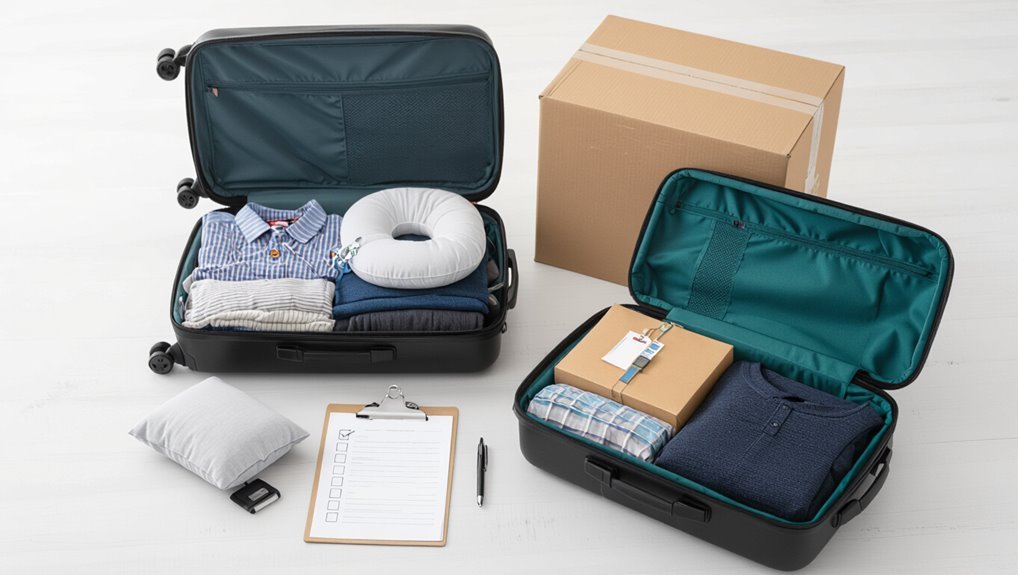
When you’re deciding whether to ship your luggage or check it at the airport, weigh time, cost, and risk: shipping can save you time and hassle if you need door-to-door delivery or want to avoid long baggage lines, while checking is usually cheaper and simpler for last-minute travel.
Consider trip length, baggage size, connection complexity, and how much you value speed versus expense and peace of mind.
When Shipping Luggage Is Smarter Than Checking Bags
You’ll want to ship when the total cost and hassle of checking bags outweighs the convenience of bringing them on your flight.
Consider door-to-door transit times and whether a scheduled courier drop-off and delivery fits your travel window.
If items are fragile or need careful handling, shipping often gives you better protection and tracking than airline baggage.
Cost Versus Convenience
Although checking a bag might seem cheaper at first glance, shipping luggage often saves you time, hassle, and unexpected fees—especially for multi-leg trips, oversized items, or low-cost carriers with stingy baggage policies.
You should compare total costs: airline fees, transfers, overweight charges, and your time value.
For bulky or fragile items, shipping can be cheaper and less stressful than juggling fees and tight connections.
Door‑to‑Door Times
Besides cost and convenience, total door‑to‑door time often decides whether shipping luggage makes sense.
You’ll weigh pickup, transit, and delivery against airport queues and layovers. Shipping can save time when schedules align, but overnight or expedited fees matter.
Use carriers’ transit estimates to plan and avoid tight connections.
| Stage | Typical time |
|---|---|
| Pickup | Same day–2 days |
| Transit | 1–5 days |
| Delivery | 1 day |
| Total | 1–8 days |
Fragility And Handling
When your suitcase holds fragile gear—glass, electronics, musical instruments, or delicate souvenirs—shipping can cut the jostling, mishandling, and rough transfers that often happen at airports.
This way, you get better control over packaging, insurance, and handling instructions. You can pack snugly, label clearly, buy tailored coverage, and request special handling so fragile items arrive intact.
- Custom padding choices
- Fragile labeling
- Declared value insurance
- White-glove service options
Decision Checklist: Cost, Speed, Convenience
Because shipping choices affect both your wallet and schedule, start by weighing three things: cost, speed, and convenience.
Compare carrier rates, insurance, and pickup/drop-off fees. Match delivery speed to your travel timeline.
Compare carriers, insurance, and fees, and choose a delivery speed that fits your travel timeline.
Factor door-to-door vs. terminal options, tracking, and flexibility for delays.
Prioritize what matters most—saving money, arriving fast, or minimizing effort—to pick the right shipping method.
Airline Excess-Baggage vs. Shipping Tradeoffs
When you compare airline excess-baggage fees to shipping rates, think first about total cost versus predictability.
You’ll weigh whether the convenience of dropping extra bags at check-in is worth potentially higher fees or whether shipping ahead saves money but adds transit time.
Also consider timing—how fast you need the items and how flexible your travel schedule is.
Cost Comparison
Compare the out-the-door price of paying an airline’s excess-baggage fee to the total cost of shipping — including packing, pickup, insurance, and delivery — to decide which route saves you money and hassle.
Calculate fees, weight limits, delivery windows, and replacement value before choosing.
Consider hidden charges and discounts.
- Excess-baggage fee per bag
- Shipping base rate
- Insurance and packing costs
- Doorstep pickup/delivery fees
Convenience And Timing
How long can you wait for your bags — and how much hassle do you want to avoid?
You’ll choose airlines for instant access at the airport despite potential overweight fees.
Shipping lets you skip check-in lines and bypass airline limits but adds transit time and tracking.
Weigh speed against convenience: immediate but costly versus delayed yet door-to-door simplicity and often lower overall stress.
Major Couriers for Shipping Luggage: USPS, UPS, FedEx, DHL
Four major couriers—USPS, UPS, FedEx, and DHL—dominate luggage shipping, and you’ll find each offers distinct trade-offs in price, speed, tracking, and international reach.
Four major couriers—USPS, UPS, FedEx, and DHL—each balance price, speed, tracking, and international reach differently.
- USPS: affordable domestic options, limited international express.
- UPS: reliable ground and express, strong tracking.
- FedEx: fast transit, good international coverage.
- DHL: best for international door-to-door, higher cost and customs support.
Specialist Luggage Services (Luggage Forward, Send My Bag)
If you want door-to-door convenience, specialist services like Luggage Forward and Send My Bag handle pickup and delivery so you don’t have to haul bags to a depot.
They often charge higher rates than standard couriers, but their pricing can include features—like guaranteed delivery windows—that matter if timing’s critical.
Check insurance limits and optional coverage carefully so you know what’s covered and whether you need to buy extra protection.
Door-To-Door Delivery
When you want your bags waiting at your destination without the hassle of airport check-ins or excess baggage fees, specialist door-to-door services like Luggage Forward and Send My Bag pick up at your home and deliver straight to your hotel or residence.
You’ll schedule online, track shipments, avoid airport queues, and skip lugging heavy bags.
- Home pickup
- Direct delivery
- Online scheduling
- Real-time tracking
Pricing And Insurance
You’ll pay base fees plus surcharges for oversized items, fast delivery, and pick-up or drop-off choices.
Check each provider’s liability limits, optional insurance, and claim process.
Factor coverage costs into your total and choose the best balance of price and protection.
International Shipping: Customs, Duties, and Timing
Crossing borders with shipped luggage means you’ll face customs inspections, possible duties or taxes, and transit delays tied to clearance processes.
Crossing borders with shipped luggage invites customs inspections, potential duties, and clearance-related transit delays.
You should declare contents accurately, keep receipts, and check prohibited items. Prepare documentation and expect variable inspection times.
- Declare contents and value correctly
- Research destination duties and exemptions
- Include invoices and ID copies
- Track clearance status and respond promptly
Costs and Delivery Times (Domestic vs. International)
Although delivery times and costs vary widely, you’ll usually pay less and get faster service for domestic shipments than for international ones. Compare carriers, transit speed, and tracking. International shipping adds customs, taxes, and longer transit; expect higher fees. Balance speed and price based on your schedule and baggage value.
| Type | Typical Time | Typical Cost |
|---|---|---|
| Domestic economy | 2–7 days | Low |
| Domestic express | 1–2 days | Medium |
| International | 5–14+ days | High |
Best Options for Short Trips and Weekend Travel
For short trips and weekend getaways, you can ship your bag overnight to arrive the same day you do, so you travel light and save time at the airport.
Consider using luggage forwarding services that pick up and deliver door-to-door to avoid hauling bags through terminals.
Compare costs and delivery windows to pick the fastest, most convenient option for your schedule.
Ship Overnight For Convenience
If you’re heading out for a short trip or a weekend getaway, shipping a small bag overnight can save you time, reduce stress at the airport, and let you travel lighter.
You’ll get items delivered to your hotel or a nearby pickup point, avoid checked-bag fees, and stick to carry-on only.
- Fast door-to-door delivery
- Trackable shipments
- Minimal packing hassle
- Ideal for essentials-only trips
Use Luggage Forwarding Services
When you want to skip airport lines and still have your bag meet you at your destination, luggage forwarding services handle pickup, transport, and delivery so you can travel light and stress-free.
For short trips and weekends, choose door-to-door providers with reliable tracking, flexible delivery windows, and affordable flat rates.
Pack essentials, confirm arrival times, and enjoy hassle-free mobility without checked-bag fees.
Best Options for Long Trips, Relocations, and Extended Stays
Long trips and relocations demand luggage that balances capacity, durability, and ease of transport, so you’ll want pieces that carry a lot without becoming a burden.
For long moves and extended travel, choose roomy, durable luggage that’s easy to maneuver and won’t weigh you down
Choose rollaboard suitcases, sturdy duffels, or wardrobe boxes depending on duration. Consider weight limits and lockability.
- Large hardside spinner
- Compression-friendly duffel with straps
- Wheeled garment bag
- Collapsible storage boxes
Oversized Items and Sports Equipment: Rules and Pricing
You’ll need to check size and weight limits before booking, since oversized items and sports gear often trigger extra fees.
Pack and secure equipment properly—hard cases or padding can prevent damage and may be required by carriers.
Also confirm handling rules and any special pick-up/drop-off procedures to avoid surprises.
Size And Weight Limits
Many carriers set strict size and weight caps for oversized items and sports equipment, and you’ll usually pay extra when a package exceeds their standard limits.
Know limits, measure carefully, and compare carrier surcharges to avoid surprises.
- Check linear dimensions and max weight per carrier
- Note per-item vs. per-shipment rules
- Expect oversized and overweight fees
- Get rate quotes before booking
Packing And Handling Rules
A few simple packing and handling choices can cut damage risk and extra fees when you ship oversized items or sports gear.
Use sturdy, appropriately sized boxes or hard cases, pad fragile parts, and immobilize contents.
Label items as oversized or sport equipment when required.
Check carriers’ specific rules and surcharges for bats, bikes, skis, and golf clubs to avoid surprises at drop-off.
Packaging Tips to Prevent Damage and Cut Costs
When you pack thoughtfully, you’ll cut damage and shipping costs by using less filler, choosing the right-sized container, and protecting fragile items where it matters most.
Wrap breakables in soft clothing, cushion corners, and seal gaps. Use sturdy suitcases or corrugated boxes, and distribute weight evenly.
Wrap fragile items in clothes, cushion corners, seal gaps, and use sturdy containers with even weight distribution.
- Use clothing as padding
- Reinforce corners
- Fill voids, not entire space
- Choose snug container
Labeling, Forms, and Customs Documentation
Because customs and carriers rely on clear paperwork, you’ll want to label every piece accurately and complete required forms before you ship.
Include full names, addresses, phone numbers, and a duplicate inside. Declare contents and value truthfully on customs forms, add any licenses or permits for restricted items, and keep copies for tracking and pickup.
Confirm carrier-specific paperwork and signature requirements.
Insurance for Shipped Luggage: Carrier vs. Third‑Party
If you want real protection for your shipped luggage, don’t assume the carrier’s basic coverage will cover loss, damage, or high-value items — compare what the carrier offers with third‑party policies and pick the one that fills gaps like limited liability, valuation caps, and excluded causes of loss.
You should verify limits, deductibles, claim ease, and excluded items before booking.
- Check valuation caps
- Note deductibles
- Confirm claim process
- Verify exclusions
Door‑to‑Door vs. Airport Drop‑Off: Which Saves Time/Money
After you’ve decided on the right insurance, the next cost-and-time decision is whether to use door-to-door pickup or drop your luggage at the airport.
Door-to-door saves transit time and hassle but costs more. Airport drop-off is cheaper if you can spare time and handle baggage requirements.
Balance pickup fees against parking, taxi, and waiting to choose the smarter option.
Tracking, Delivery Guarantees, and Filing Claims
When you ship luggage, you’ll want clear tracking, firm delivery windows, and a simple claims process so you can monitor progress and act fast if something goes wrong.
Check tracking updates, confirm guaranteed delivery times, photograph contents at drop‑off, and understand liability limits.
File claims promptly with proof. Communicate with customer service for status and reimbursement.
- Real‑time tracking
- Delivery guarantees
- Photo evidence
- Timely claims
Eco and Security Tips for Shipping Luggage
Good tracking and a clear claims process protect your luggage on paper, but you also want to minimize environmental impact and keep your belongings secure in transit.
Good tracking and clear claims help — but choose eco-friendly packing, secure locks, and document valuables for safe, sustainable travel.
Choose reusable or recyclable packing materials, avoid single-use plastics, and consolidate items to reduce shipments.
Use TSA-approved locks, tamper-evident tape, and discreet labeling.
Insure valuable items and document contents with photos for fast claims.
Step‑by‑Step Checklist to Prepare and Book Your Shipment
Start by gathering everything you’ll ship and checking airline or courier size, weight, and prohibited‑item rules so you won’t face surprises at drop‑off or delivery.
Then follow these steps to prepare, label, insure, and book confidently.
- Weigh and measure each bag accurately
- Protect contents with padding and lockable cases
- Photograph items and receipts
- Compare quotes, book pickup or drop‑off
Frequently Asked Questions
Can I Ship Hand Luggage or Carry‑On Only Items Instead of Checking Them?
Yes — you can ship hand luggage or carry‑on only items instead of checking them. You’ll pack, label, insure, and choose courier pickup or drop‑off; just verify size, restrictions, and delivery timing before sending.
Are There Size/Weight Rules for Shipping Musical Instruments Versus Regular Luggage?
Yes — shipping rules differ: you’ll face carrier-specific size/weight limits and extra handling for instruments; you’ll often need protective cases, declared value, and possibly crating or “fragile” services, which can raise costs and require special labeling.
How Do Loyalty Program Miles or Status Affect Shipping Costs or Options?
Loyalty miles or status can lower or waive shipping fees and access complimentary baggage handling, priority pickup, or discounted carrier rates. You’ll need to redeem miles or show status during booking, and benefits vary by program and partner.
Can I Ship Prohibited or Restricted Items Packed Inside My Suitcase?
No, you can’t ship prohibited or restricted items inside your suitcase; carriers and customs will seize them, fines or criminal charges can follow, and your insurance won’t cover violations, so always check lists and remove forbidden contents.
What Happens to Perishable Items I Include in Shipped Luggage?
Perishable items will likely spoil, leak, or be refused; carriers often won’t accept them. You’ll need proper refrigeration, expedited service, and clear labeling if allowed, or they’ll discard or return the shipment at your expense.
Conclusion
Shipping your luggage can save time, money, and hassle when flights, fees, or connections make checking impractical. Choose shipping when speed and convenience beat cost, compare carriers (USPS, UPS, FedEx, DHL), and weigh door‑to‑door vs. airport drop‑off. Pack and label securely, insure valuables, and track deliveries closely. Know claims procedures and eco options. Use the quick checklist to decide: factor price, speed, and convenience, then book and monitor your shipment.
