Can You Put Electronics in Checked Luggage?
You can put many electronics in checked luggage, but you should keep high‑value, fragile, or lithium‑battery devices with you to avoid damage, theft, and battery restrictions. Airlines and international rules often require lithium cells in carry‑on and may limit spare batteries, so check carrier policies before you pack. Cushion gear in sturdy cases, photograph and record serials, and use TSA‑approved locks to reduce tampering. Keep essentials with you — continue for tips on packing, insurance, and rules.
Quick Decision: Carry-On or Checked?
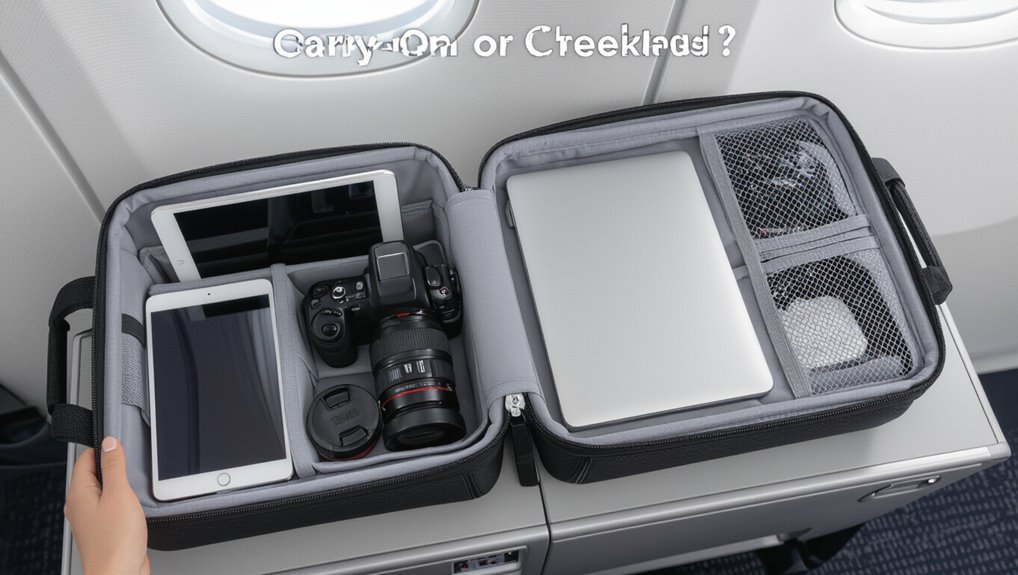
Wondering whether to stash your laptop in the overhead or check it with your suitcase?
You’ll usually want to keep electronics with you: they’re valuable, sensitive, and easier to monitor. Carrying devices prevents physical damage from rough handling and avoids battery restrictions in cargo.
If space’s tight, prioritize smaller items in your bag and place fragile gear in protective cases within your carry-on.
How to Decide: 4 Criteria (Value, Fragility, Battery, Rules)
If you’re deciding whether to carry or check electronics, weigh four clear criteria: value, fragility, battery type and charge, and airline rules—each affects risk and compliance differently.
Consider keeping high-value and delicate items with you.
Remove or protect batteries, keep lithium cells in carry-on if possible, and leave devices uncharged or partially charged.
Check airline restrictions before packing.
Airline and International Rules for Checked Electronics
Beyond the four criteria, you also need to follow airline and international rules that can override personal judgment—what you decide about value, fragility, batteries, and charge still must fit legal and carrier limits.
Check your airline’s policy and IATA/ICAO guidance: some carriers ban lithium batteries in checked bags, limit capacity, or require terminals taped.
Confirm destination rules, declare items if required, and get written approvals when needed.
How TSA & ICAO Screening Affects Checked Devices
When you check electronics, know that TSA and ICAO screening tech has limits and may miss internal damage that raises battery fire risks.
You’ll need to follow rules for lithium batteries and sometimes provide documentation for high-capacity or spare cells.
Check carrier and regulatory guidance before packing so you’re not stopped or delayed.
Screening Technology Limits
Although airports use powerful X-ray and CT scanners, those machines weren’t designed to reliably identify every type of electronic device or its batteries inside checked baggage, and that affects what you can safely pack.
You should expect screening to miss small removable parts, obscure devices beneath dense items, or misclassify components, so label gear, separate accessories if possible, and follow carrier rules to reduce inspection delays.
Battery Fire Risks
Because batteries can short, overheat, or get damaged during rough handling, the TSA and ICAO treat them as one of the biggest fire risks in checked baggage and subject devices to specific screening and packing rules.
You should remove spare lithium batteries from checked bags, protect terminals, keep devices powered off, and follow airline limits on watt-hours and quantity to reduce ignition and screening complications.
Regulatory Documentation Requirements
How will screening rules and paperwork affect the electronics you check?
You’ll need to follow TSA and ICAO rules: declare spare lithium batteries, carry required documentation for large-capacity cells, and accept possible inspection or removal.
Airlines may demand advance approval for certain devices. Always verify airline and destination regulations, pack devices to allow X-ray inspection, and keep records of battery capacity and model.
Why Lithium Batteries Are Dangerous in Checked Luggage
You should be careful because lithium batteries can spark fires if they’re damaged or shorted in baggage.
They can enter thermal runaway, a chain reaction that makes them burn hotter and harder.
That risk is why many airlines restrict or require special packing for spare and installed lithium cells.
Fire Risk
When a lithium battery fails, it can overheat and ignite rapidly, and in the confined, pressurized hold of an airplane that can turn a single cell into a cargo fire. You should never bury spare cells in checked bags; you’ll risk hidden ignition, limited detection, and suppressed suppression options.
| Risk | Impact |
|---|---|
| Hidden fire | Spreads unseen |
| Limited detection | Delayed response |
| Suppression limits | Ineffective |
| Cargo density | Fuels fire |
| Evacuation risk | Passenger danger |
Thermal Runaway
Because lithium cells can go from normal to violently failing in seconds, thermal runaway is a uniquely dangerous hazard for checked luggage.
You should never store spare batteries unchecked because overheating can ignite nearby materials and spread through packed suitcases.
Follow simple precautions:
- Keep batteries in carry-on.
- Protect terminals from shorting.
- Limit charge and capacity per airline rules.
Which Devices Can Go in Checked Luggage?
Although many everyday gadgets can go in checked luggage, airlines and regulators set clear limits you’ll need to follow.
You can usually pack non-rechargeable electronics like hair dryers, cameras without lithium batteries installed, and basic accessories.
For rechargeable items, check battery type and capacity; devices with removable batteries should have cells carried in cabin when required.
Always verify airline rules before packing.
Devices You Should Never Check
1 thing to remember: never check items that can catch fire, explode, or leave you stranded.
You should keep critical gear with you and avoid checked baggage for hazardous or essential electronics.
- Lithium batteries and power banks — fire risk, carry-on only.
- Spare phone or laptop you need — don’t get stranded.
- Portable chargers with exposed cells or damage — dispose or carry safely.
Airline Rules to Check Before You Fly
Before you pack, check the airline’s rules on battery types—lithium-ion and lithium-metal often have strict limits.
You’ll also want to confirm any airline-specific size, quantity, or carry-on requirements for spare batteries and devices.
If the airline’s policies aren’t clear online, call customer service so you’re not surprised at the gate.
Battery Type Restrictions
When you pack electronics, check the battery types first because airlines and regulators set different rules for lithium, alkaline, and other cells that affect whether items can go in checked baggage, carry-on, or need special handling.
Know limits and packing needs:
- Lithium-ion: usually carry-on, protected terminals.
- Spare batteries: typically forbidden in checked bags.
- Alkaline: generally allowed, but confirm device power state.
Airline-Specific Limits
After checking battery types, you should review the specific rules your airline enforces because limits can vary widely by carrier and route. Check size, watt-hours, and allowance for spare batteries; call the carrier if unclear. Use this quick reference:
| Airline | Typical Limit |
|---|---|
| Carrier A | 100 Wh |
| Carrier B | 160 Wh |
| Carrier C | No spares in checked bags |
How to Pack Fragile Electronics for the Cargo Hold
Packing fragile electronics for the cargo hold takes care and the right materials, because rough handling and temperature changes can damage sensitive components.
You should cushion, protect, and label items clearly. Use sturdy cases, bubble wrap, and hard-shell luggage.
Follow this simple checklist:
- Wrap each item individually in foam or bubble wrap.
- Place in a hard-sided case with padding.
- Fill gaps to prevent movement.
How to Carry Spare Lithium Batteries Safely
You should always carry spare lithium batteries in the cabin rather than checked luggage to reduce fire risk and allow crew to respond quickly.
Pack each battery so its terminals are protected — use original packaging, terminal covers, or tape over contacts.
Keep batteries in your carry-on and separate from metal objects to prevent short-circuits.
Carry Spare Batteries In Cabin
If you’re flying with spare lithium batteries, keep them in your carry-on so airline staff can spot and manage any problems quickly; checked baggage isn’t safe for loose cells.
You should:
- Pack batteries in original packaging or a protective pouch.
- Limit quantity per airline rules and declare if required.
- Turn devices off and separate batteries from devices when possible.
Protect Battery Terminals
When carrying spare lithium batteries, make sure their terminals can’t touch metal or other batteries so you avoid short circuits and fire risk.
Cover terminals with tape or use original packaging or individual plastic sleeves.
Store each battery separately in a clear, rigid container inside your carry-on.
Label higher-capacity cells and keep capacity under airline limits; declare if required.
What to Do With Non-Removable Batteries
Although you can’t remove the battery from devices like many e-readers, tablets, or some cameras, airlines treat non-removable lithium-ion batteries as sensitive and expect you to follow carry-on rules or get approval for checked carriage.
Follow these steps:
- Pack device in carry-on whenever possible.
- Keep it powered off and protected from pressure.
- Check airline rules and declare if required.
Risks of Checked Luggage Electronics: Damage, Loss, and Data Exposure
Because checked bags pass through crowded sorting systems and face rough handling, putting electronics in them raises real risks: physical damage from impact or crushing, complete loss if luggage goes missing, and exposure of sensitive data if someone accesses your device or storage. You should pack securely, encrypt data, and keep serials handy.
| Risk | Impact | Mitigation |
|---|---|---|
| Damage | Broken screens | Hard case |
| Loss | Missing device | Tracking |
| Data exposure | Stolen info | Encryption |
Insuring and Documenting Valuables Before Checking
If you plan to check electronics, document and insure them beforehand to protect yourself from loss, damage, or theft.
Take photos, note serial numbers, and confirm coverage limits. File claims promptly if needed.
- Photograph items and packaging.
- Record serial numbers and receipts.
- Check insurer and airline liability, buy extra coverage if gaps exist.
How to Reduce Theft and Tampering in Checked Bags
Having documented and insured your electronics, take practical steps to deter theft and tampering when you check your bag.
Use TSA‑approved locks, wrap devices in clothing to cushion and obscure them, place valuables in hard cases, and avoid labeling bags with obvious electronics tags.
Remove batteries if possible and report any suspicious damage immediately upon retrieval to airport authorities and your airline.
Quick Checklist: Decide Carry-On or Checked
When deciding whether to carry electronics onboard or check them, weigh size, value, battery type, and how fragile the item is; prioritize carry-on for expensive, fragile, or lithium-battery devices.
Follow this quick checklist:
- Carry if valuable, fragile, or has lithium batteries.
- Check if bulky, well-protected, and non-lithium.
- Insure and label checked devices; pad and power down before travel.
Frequently Asked Questions
Can Checked Electronics Trigger Airport Sensors or Alarms?
Yes — checked electronics can trigger sensors or alarms during screenings. You’ll need to power them off, remove batteries if requested, and follow security instructions; cooperating reduces delays and helps officers determine if further inspection’s necessary.
Will Airlines Charge Extra for Checking Electronics?
Sometimes. You’ll usually avoid extra fees for carrying electronics in checked bags, but airlines may charge for overweight, oversized, or additional checked items, and some carriers impose special handling fees for high-value or lithium-battery devices.
How Do Customs Officers Handle Checked Electronic Devices?
Customs officers may inspect your checked electronics, open them, power them on, or seize items if prohibited; you’ll be asked questions, provide documentation, and sometimes pay duties or face delays, so cooperate and declare accurately.
Are Refurbished or Used Electronics Allowed in Checked Luggage?
Yes — you can pack refurbished or used electronics in checked luggage, but you should remove batteries when required, protect devices from damage, declare items if asked, and follow airline and country-specific restrictions to avoid delays or confiscation.
Can Checked Electronics Be Damaged by Extreme Temperatures?
Yes — they can be damaged by extreme temperatures; you’ll risk battery swelling, reduced capacity, and component failure at very low or high temps, so you should pack sensitive electronics with insulation, remove batteries, or carry them onboard.
Conclusion
Deciding whether to check electronics comes down to value, fragility, battery type and rules—so don’t gamble. If it’s expensive, delicate, or has lithium batteries, keep it with you in carry-on. Follow airline and international regulations, document and photograph items, back up data, and remove or protect batteries. Use tamper-evident locks and discreet packing to reduce theft. When in doubt, carry it on; it’s the safest, simplest choice for protecting your devices.