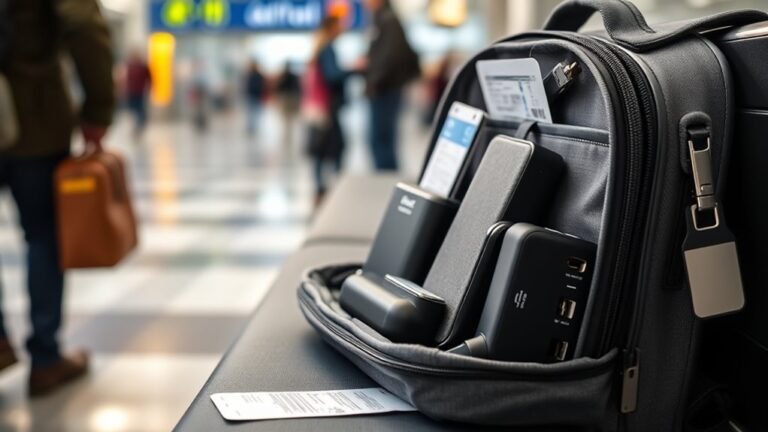
Can You Put a Tablet in Checked Luggage?
You can put a tablet in checked luggage, but you shouldn’t do it unless you’re comfortable with higher risk of damage, theft, and battery restrictions. Power it off, remove heat-trapping cases, and pack it in a padded or hard-sided container surrounded by clothes to cushion jolts. Carry spare lithium cells in carry‑on only, note the tablet’s serial number, and consider insurance. If you want guidance on packing techniques, airline rules, and a decision checklist, keep going.
Can You Put a Tablet in Checked Luggage?
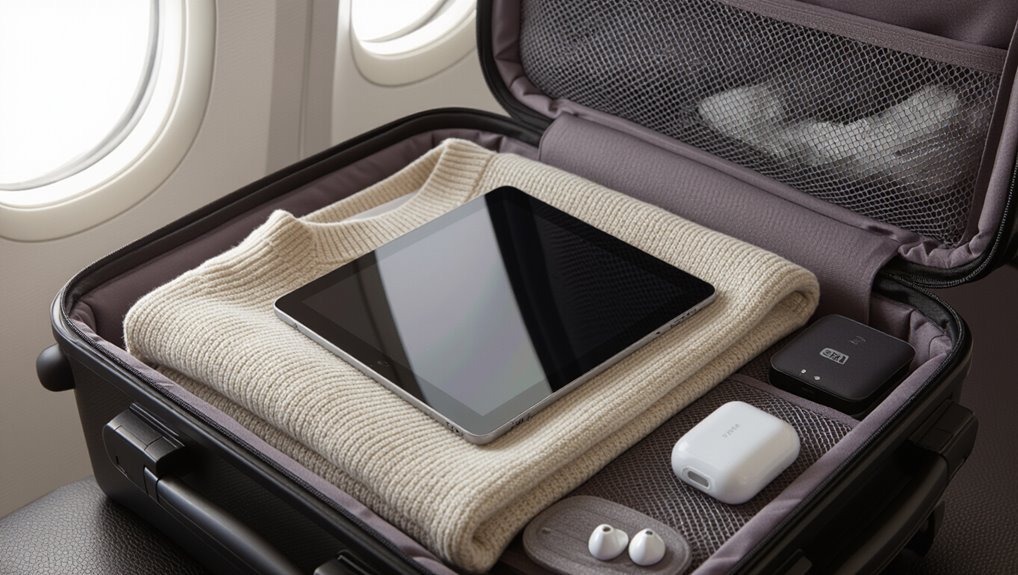
Wondering whether you can pack a tablet in checked luggage? You can, but it’s risky.
Checked bags face rough handling, temperature shifts, and theft. Remove the battery if airline policy demands or if it’s removable, and power off.
Pack the tablet in a padded case and center it among clothes to cushion impacts. Declare if required by carrier rules.
Should You Check a Tablet or Carry It On?
Which is smarter: checking your tablet or carrying it on?
You’ll usually want to carry it to avoid damage, theft, and battery restrictions. Keep it in a padded bag, remove it for security scans when asked, and stash it under the seat for easy access and protection.
Check it only if you can’t fit it in carry-on and accept the risks.
Decision Matrix: Check, Carry, or Leave It Home
You’ll weigh the trade-offs between check luggage risks and carry-on benefits to decide what to do with your tablet.
Checking can expose it to temperature changes, rough handling, and theft, while carrying it keeps it protected and accessible.
Use those factors to choose whether to check it, keep it with you, or leave it at home.
Check Luggage Risks
If you’re deciding whether to check a tablet, weigh three practical risks: damage from rough handling, potential theft or loss, and the inability to use it during travel. You should consider packing, insurance, and replacement cost. Use hard cases, document serial numbers, and avoid checked luggage when the tablet is irreplaceable.
| Risk | Impact | Mitigation |
|---|---|---|
| Damage | High | Hard case |
| Theft | Medium | Record serial |
Carry-On Benefits
Because carrying a tablet in your carry-on keeps it accessible and protected, you’ll cut the risks of rough handling and theft while staying able to use it during delays or inflight—making carry-on the best option for valuable or fragile devices.
You’ll control temperature, prevent crushing, and access chargers or backups. Stow it in a padded sleeve or dedicated pocket to minimize jolts and scratches.
Quick Checklist Before You Decide to Check a Tablet
Before you decide to check a tablet, run through a short checklist to weigh risks, rules, and alternatives.
Check airline policy on electronics and battery restrictions, assess theft and damage risk, confirm warranty and insurance coverage, consider data security and backups, decide if you’ll need it during travel, and explore checked-bag safeguards or mailing options.
Make a clear, informed choice.
How to Pack a Tablet for Checked Luggage
1 smart way to protect a tablet in checked luggage is to treat it like fragile gear: power it down, remove any case that could trap pressure or moisture, and pack it inside a hard-sided container or padded compartment so it won’t shift.
Wrap it in a soft cloth, surround with clothing for cushioning, secure with straps or tape, and place near the suitcase center away from heavy items.
Best Protective Cases for Checking a Tablet
When you’re checking a tablet, pick a case that combines hard-shell impact protection with internal padding and a snug fit to prevent movement; those three features cut the biggest risks from drops, crushing, and jostling in transit.
Choose military-grade or polycarbonate shells, foam or TPU interiors, reinforced corners, and secure closures.
Lightweight designs with water resistance and warranty coverage offer added peace of mind.
How to Cushion a Tablet Inside Checked Luggage
If you’re packing a tablet in checked luggage, layer soft, impact‑absorbing materials around it and lock it into place so it can’t shift or take a direct hit.
Wrap the tablet in microfiber or bubble wrap, sandwich it between clothes or foam, and position it in the suitcase’s center away from edges.
Fill gaps to prevent movement and label the bag as fragile for extra care.
Hard-Shell vs. Soft Cases: Which to Choose?
You’ll choose between hard-shell cases that give rigid impact protection and soft cases that bend to fit into tight packing spaces.
Hard shells add bulk and weight but shield against crushing, while soft cases save space and may slot into clothing for extra cushioning.
Think about whether you need maximum protection or lighter, more flexible packing when you decide.
Hard-Shell Protection Benefits
Hard shells give your tablet rigid, consistent protection against drops, crushing, and the rough handling baggage often sees, so you’ll reduce the risk of screen cracks and internal damage compared with soft cases.
You’ll also benefit from impact-dispersing structures, corner reinforcement, and sealed edges that resist punctures and pressure. They’re easier to stack and less likely to deform under heavy loads.
Soft Case Flexibility
While hard shells offer rigid defense against shocks and crushing, soft cases give you flexibility that can be better for travel with varied packing needs.
You can squeeze a padded sleeve into tight spaces, layer clothing around it, and access pockets quickly. Choose water-resistant fabrics and decent padding; avoid thin neoprene alone.
Soft cases balance convenience and basic protection when you can’t carry rigid luggage.
Weight And Packing Tradeoffs
Because weight limits and space restrictions shape most packing decisions, choosing between a hard-shell and a soft case comes down to how you prioritize protection versus capacity.
You’ll pick hard-shell for maximum impact resistance but lose compressible space and add weight.
Choose soft if you need lighter gear, flexible squeezing into tight bags, and modest protection.
Balance weight allowance with how fragile your tablet is.
Protecting Detachable Keyboards and Accessories
If your tablet has a detachable keyboard or you’re packing spare accessories, disconnect and pack them separately to prevent scratches and strain on connectors.
Wrap keyboards, chargers, pens, and cables in soft sleeves or microfiber pouches, and place them in a hard-sided compartment or padded pocket.
Use cable ties to keep cords neat, and avoid overstuffing to prevent crushing during handling.
Power Down, Sleep, or Leave On: What’s Safest?
When packing your tablet in checked luggage, you’ll want to decide whether to power it off completely, put it in sleep mode, or leave it on.
Powering off prevents accidental wake-ups and is safest for battery pressure changes, while sleep mode can conserve battery but might allow background activity.
Leaving it on is the riskiest option due to potential overheating, accidental screen activation, or battery drain.
Power Off Completely
Although airlines and security agencies set varied guidelines, the safest option for checked luggage is to power your tablet off completely; shutting it down eliminates battery drain, reduces risk of accidental activation, and lowers the chance of heat buildup compared with sleep mode or leaving it on. You should pack it padded, avoid pressing buttons, and check battery percentage before boarding.
| Step | Benefit | Tip |
|---|---|---|
| Power off | No drain | Hold power button |
| Pack padded | Protection | Use sleeve |
| Check battery | Compliance | ~50% ideal |
Put In Sleep Mode
Powering your tablet down is usually safest, but you might prefer sleep mode for short trips or quick access; sleep keeps apps and background tasks paused while conserving most battery life.
If you choose sleep, enable a strong lock, disable wireless radios if possible, and stash the device in a protective, cushioned pocket to reduce shock.
Check battery level before checking luggage.
Leave Device On
Curious whether you should leave your tablet on in checked luggage? You shouldn’t. Leaving it powered risks accidental activation, overheating, or battery drain.
Power it down or at least sleep it, remove external cases that trap heat, and enable Find My Device.
Pack in cushioned compartment away from heavy items to prevent impact.
- Powered on risks
- Heat buildup
- Battery drain
- Protection steps
How Non-Removable Batteries Affect Checked Tablets
When you pack a tablet with a non-removable battery in checked luggage, airlines and regulators treat it differently than devices with removable cells, so you need to know the rules before you fly.
You should keep it powered off, protect it from damage, and ideally carry it in your cabin.
Notify the airline if battery capacity is unusually high to avoid surprises at check-in.
IATA Rules on Lithium Batteries for Tablets
You need to follow IATA rules that generally require lithium batteries in tablets to be carried in your hand baggage, not checked.
Also, spare lithium cells or batteries are almost always prohibited from check-in and must stay with you in the cabin.
Check airline-specific limits on watt-hours and quantity before you travel.
Battery Carry-On Requirements
How should you pack a tablet’s battery for air travel? You must carry installed lithium-ion batteries in carry-on, not checked baggage.
Follow airline rules on watt-hour limits and quantity, keep terminals protected, and carry original packaging or insulation to prevent short circuits.
- Check watt-hour (Wh) rating
- Limit quantity per airline
- Protect terminals
- Carry proof of compliance
Spare Cells Prohibited Check-In
Although airlines allow devices with installed lithium batteries in the cabin, they strictly prohibit spare lithium cells in checked baggage under IATA rules.
You’ll need to pack any loose or replacement cells in your carry-on only, properly protected against short circuits and within the airline’s watt-hour and quantity limits.
Check airline specifics beforehand, store cells in original packaging or terminal covers, and never tape terminals together.
TSA Rules for Tablets in Checked Baggage
Wondering if the TSA allows tablets in checked bags? You can pack a tablet in checked luggage, but carry-on is safer.
Secure it in padded clothing or a hard case, power it off, and declare any issues if asked.
- Protect with padding
- Power down completely
- Keep receipts/serial handy
- Insure against loss or damage
Airline Battery Restrictions to Watch For
When packing a tablet, watch airline rules on batteries because airlines and regulators tightly restrict lithium cells: you should remove spare batteries from checked luggage, carry them in cabin baggage, and keep terminals protected.
Know watt-hour (Wh) limits — most airlines allow up to 100 Wh without approval and 100–160 Wh with airline consent.
Check carrier policies before flying to avoid confiscation.
Which Major Airlines Allow Tablets in Checked Bags?
Most major carriers let you pack a tablet in checked luggage, but rules and recommendations differ enough that you should check each airline before you fly.
Generally, U.S. and many international airlines permit tablets but advise carrying batteries in carry-on.
Check specific carrier policies for sizing, battery limits, and liability.
- American Airlines
- Delta Air Lines
- United Airlines
- Southwest Airlines
International Rules for Tablets in Checked Baggage
Although rules vary by country and carrier, many international aviation authorities follow similar safety guidance: you should keep tablets with lithium-ion batteries in your carry-on rather than checked baggage.
You’ll find regulations stress protecting devices from crushing, extreme temperatures, and fire risk.
Check the specific airline and departure/arrival country rules before travel, and declare damaged or recalled batteries to staff when required.
Carry-On Rules for Spare Batteries and Power Banks
When you travel with spare batteries or a power bank, you’ll need to follow strict carry-on limits on watt-hours and quantity.
Airlines generally require you to keep these items in your carry-on, not checked baggage, and you may need to protect terminals or use original packaging.
Check your airline’s specific watt-hour rules and packing requirements before you fly.
Carry-On Battery Limits
Curious about how many spare batteries or power banks you can bring on a flight? You can carry multiple spares, but airlines and regulators limit capacity.
Pack them in carry-on, protect terminals, and follow airline-specific rules.
Typical limits:
- Under 100 Wh — generally allowed freely.
- 100–160 Wh — airline approval required.
- Over 160 Wh — usually prohibited.
- Count per airline may vary.
Power Bank Packing Rules
If you plan to bring spare batteries or a power bank, know that rules treat them differently than installed batteries in devices.
You must carry them in your cabin baggage, not checked luggage. Airlines limit capacity—usually under 100Wh without approval—and require terminals protected or taped.
Declare oversized units and follow airline-specific rules to avoid confiscation, delays, or safety risks.
How to Pack Spare Lithium Batteries for Checked Luggage
Because airlines and regulators treat spare lithium batteries as a fire risk, you should never pack loose or unprotected cells in checked luggage; instead, carry them in your carry-on whenever possible.
Because spare lithium batteries are a fire risk, never pack loose cells in checked luggage—carry them in your carry-on.
If you must check them, keep them installed in devices or follow strict packaging rules to minimize short circuits and heat buildup.
- Insulate terminals with tape.
- Use original packaging.
- Place each battery in a separate pouch.
- Keep power ratings visible.
When Airlines May Force You to Check a Tablet
Even though you should keep spare lithium batteries with you whenever possible, there are a few situations where an airline might insist you check the tablet itself.
If security flags it during screening, if gate or cabin space is severely limited, or if airline policy prohibits certain devices onboard for specific routes, crew may require checked handling.
You should cooperate and secure the device.
What to Do If Airline Staff Insist You Check It
If airline staff insist you check your tablet, stay calm and know your rights about electronics in carry-on bags.
Ask to speak with a supervisor if the agent won’t budge, and clearly state your concerns.
Document the interaction by noting names, times, and taking a photo of any written notices or tags.
Know Your Rights
When airline staff insist you check your tablet, stay calm and assert your right to carry-on electronic devices: federal rules and most airlines allow you to keep personal electronics in the cabin unless there’s a specific safety or space issue.
Know your options and document interactions:
- Ask for the specific rule being cited.
- Request written policy or a citation.
- Photograph staff badge/time.
- Note flight number and gate.
Ask For A Supervisor
If the front-line agent won’t budge, ask to speak with a supervisor and remain polite but firm.
Explain calmly that your tablet is a personal electronic device, cite the airline’s carry-on policy if known, and request clarification of the safety concern.
Ask whether a manager can authorize an exception or provide written justification.
If they refuse, note next steps you’ll take, such as contacting customer service.
Document The Interaction
What should you do if airline staff insist you check your tablet? Document the interaction calmly: note names, times, and exact instructions.
Record photos and audio if allowed. Ask for written confirmation.
- Write staff names and badge numbers.
- Timestamp the conversation.
- Photograph signage and boarding pass.
- Request an official note or email explaining the requirement.
Theft Risk: Why Checked Luggage Is Less Secure
Because checked bags pass through many hands and automated systems, they’re simply easier for thieves to target than items you keep with you.
Your tablet can be exposed during transfers, loading, baggage sorting, or inside crowded storage areas where screening is limited.
You can’t monitor access, and opportunistic theft or deliberate tampering is more likely, so checked luggage presents a higher theft vulnerability.
How to Reduce Theft Risk When Checking a Tablet
Wondering how to lower the chance your tablet gets pilfered when you check it? Pack it inside a locked, hard-sided case, leave it powered off, and hide it within clothing or shoes.
When checking a tablet, lock it in a hard case, power it off, and conceal it among clothing.
Remove visible accessories and serial-number stickers. Consider travel insurance and tagging.
- Use a lockable hard case
- Power off and disable connectivity
- Conceal among soft items
- Record serial and insure
Damage Risk From Rough Handling in the Hold
If you toss a tablet into checked luggage, expect it to face heavy knocks, drops, and pressure from other bags and handling equipment—cargo holds and conveyor systems aren’t gentle.
You should cushion the device with dense padding, place it amid soft clothing, remove accessories that can pry at ports, and lock the bag.
Consider a hard-shell case to reduce bending or crushing during rough handling.
Temperature and Pressure Effects on Tablets in Cargo
When you check a tablet, don’t assume the cargo hold’s environment will be the same as the cabin’s — temperature swings and pressure changes in the hold can harm batteries, screens, and internal components.
- Cold can reduce battery capacity and cause shutdowns.
- Heat can warp plastics and degrade battery cells.
- Rapid pressure shifts may stress seals and screens.
- Condensation can corrode circuits after temperature changes.
How Baggage Scanners and Inspections Can Affect Tablets
Temperature, pressure, and moisture aren’t the only threats to a tablet in checked luggage — security screening and physical inspections can also cause damage.
X‑ray scanners generally won’t harm electronics, but manual rummaging, drops, or crushing during inspection can crack screens, dislodge components, or damage ports.
Pack tablets padded and boxed to minimize jostling and prevent inspectors from directly handling the device.
Securing a Tablet With Tamper-Evident Seals and Locks
When you pack a tablet in checked luggage, choose tamper-evident seals rated for luggage so any interference is obvious.
Apply the seals correctly across zippers or case openings and press firmly to guarantee they can’t peel off unnoticed.
Use TSA-approved locks on hard cases so agents can open them without breaking your security measures.
Choose Tamper-Evident Seals
Want extra peace of mind? You’ll pick seals that show tampering, fit luggage straps, and resist casual removal.
Choose durable materials and clear void messages so anyone inspecting can’t reseal unnoticed.
- Plastic tamper-evident strap seals
- VOID adhesive labels
- Cable seals for hard cases
- Sequentially numbered seals
Apply Seals Correctly
Now that you’ve picked tamper-evident seals that suit your luggage and device, apply them so they actually work.
Clean surfaces, align seals over zippers or openings, press firmly to guarantee adhesion, and trim excess if allowed.
Record serial numbers and take photos before you close the bag.
Check seals after handling and replace any that show damage or gaps to maintain visible tamper evidence.
Use TSA-Approved Locks
Choose TSA-approved locks to keep your tablet accessible for security inspections while preventing casual tampering.
You’ll use approved padlocks or cable locks, attach them to a hard case or luggage zipper, and pair with tamper-evident seals.
Inspect after screening and keep keys or combination notes separate.
- Lock type: TSA-recognized
- Attachment: case or zipper
- Seal: tamper-evident
- Inspect post-screening
Disguising Electronics in Checked Bags: Pros and Cons
If you’re thinking about masking a tablet inside clothing or a toiletry case to keep it out of sight, weigh the practical benefits against the risks: hiding may deter casual theft and reduce visible damage, but it can complicate security inspections, increase breakage risk from poor padding, and raise suspicion if discovered.
You should balance concealment with proper protection and follow airline rules.
Using a Tracking Device With a Checked Tablet: Rules
While you can add a small GPS or Bluetooth tracker to a tablet in checked luggage to help locate it, you must follow airline and regulatory rules about tracking devices and batteries.
- Check airline policy on active transmitters and required notifications.
- Confirm tracker battery type and watt‑hours meet FAA/ICAO limits.
- Disable active transmitting functions if required.
- Pack batteries per airline rules and declare if necessary.
Document Serial Numbers and Photographing Your Tablet
Start by recording your tablet’s make, model, and serial number in a secure note or cloud document.
Start by noting your tablet’s make, model, and serial number in a secure digital note.
Take clear photos of the front, back, and any identifying stickers or damage.
Also note purchase date, proof of ownership, and any unique marks.
Store files encrypted if possible, share copies with a trusted contact, and keep originals accessible for reporting loss or theft.
How to Photograph a Tablet for Insurance and Claims
Before you pack, take clear shots that show the tablet’s overall condition so you can prove how it looked pre-travel.
Get close, well-lit photos of any serial numbers or IMEI so they’re easily readable.
If damage occurs, photograph every damaged area from multiple angles to document extent and help your claim.
Device Condition Before Packing
If you want a smooth insurance claim, photograph your tablet thoroughly before packing it: capture the screen, back, ports, serial number or IMEI, and any existing scratches or dents from multiple clear angles and in good light.
Then note condition, power on, remove cases, and secure accessories.
- Whole device photos
- Close-ups of damage
- Powered-on screen shot
- Accessories and cables
Capture Serial Numbers Clearly
After you’ve documented the tablet’s overall condition and accessories, focus on capturing the serial number or IMEI with equal care—insurers often rely on that exact identifier. Hold steady, use bright light, and photograph any label twice: one close-up and one showing tablet context. Verify legibility before you move on.
| Shot | Distance | Note |
|---|---|---|
| Close-up | 4–6 in | Sharp focus |
| Context | 1–2 ft | Shows placement |
| Backup | Any | Extra clarity |
| Screenshot | N/A | Digital copy |
Photograph Damage From Multiple Angles
When documenting damage, photograph each affected area from several angles so you capture depth, extent, and any hairline fractures.
Take tight close-ups for detail, medium shots to show surrounding bezels or ports, and one wider view that places the damage in context with the whole device.
- Close-up of cracks and pixels.
- Side-angle to show depth.
- Medium shot including ports and serial label.
- Wide frame showing entire tablet for scale.
Travel Insurance Options for Checked Electronics
Curious about protecting a tablet you check? You can buy trip or gadget-specific insurance that covers theft, accidental damage, and sometimes loss during transit.
Check policy limits, deductibles, and whether checked baggage is excluded. Keep receipts and serial numbers for claims.
Consider adding a rider to your homeowners/renters policy if it offers broader coverage for electronics while traveling.
Airline Liability Limits for Lost or Damaged Electronics
Because airlines set strict limits on how much they’ll pay, you shouldn’t assume they’ll cover the full value of a lost or damaged tablet in checked baggage.
Check carrier rules and international conventions; limits vary.
Consider these typical scenarios:
- Domestic short-haul statutory cap.
- International Montreal Convention allowances.
- Airline contract of carriage specifics.
- Excess value declarations or required receipts.
Filing a Damage Claim After Airline Mishandling
If your tablet is damaged by an airline, act quickly: document the damage with photos, keep the tablet and all packaging, and report the issue to the carrier before you leave the airport or within the carrier’s stated time limit.
Then file a written claim with supporting evidence, include purchase receipts or serial numbers, follow up persistently, and escalate to regulatory authorities or small claims court if the airline denies reasonable compensation.
Filing a Theft Claim If a Checked Tablet Goes Missing
While damage claims focus on documenting physical harm, theft claims require a different set of steps and evidence once a checked tablet goes missing.
When a checked tablet disappears, theft claims need different steps and evidence than damage reports.
You should act fast: report immediately, get a police report, and notify the airline.
- File an onsite report with baggage claim.
- Obtain a police report with item details.
- Keep receipts and serial numbers.
- Follow airline claim procedures and deadlines.
When Manufacturers’ Warranties Cover Travel Damage
When you travel with a tablet, your manufacturer’s warranty may or may not cover damage that happens in transit; you’ll need to check the specific terms and exclusions. You should read warranty limits, excluded causes (like drops or checked-baggage claims), and required proof of purchase. If covered, follow claim steps quickly.
| Hope | Fear |
|---|---|
| Repair | Loss |
| Coverage | Denial |
| Repair time | Delay |
Protecting Sensitive Data When Checking a Tablet
Because checked bags can be handled by many people and screened by third parties, you should assume your tablet’s data might be exposed and take steps to secure it before handing it over.
You’ll minimize risk by removing accounts, reducing stored data, and preparing for loss.
- Remove unnecessary accounts and syncs
- Back up important files offline
- Disable auto-login and biometric access
- Note serial numbers and passwords stored elsewhere
How to Wipe, Encrypt, or Lock a Tablet Before Travel
If you want to protect your data before checking a tablet, wipe unnecessary files, enable full-disk encryption, and set strong locks so someone who finds or opens the device can’t access your information.
Back up essentials to secure cloud or offline storage, perform a factory reset if needed, confirm encryption is active, create a complex passcode or biometric fallback, and disable smart access features.
How to Disconnect SIM and Removable Storage Before Checking
Before you check your tablet, remove the SIM card to prevent carrier charges or roaming issues and to protect your account.
Also take out any microSD or other memory cards so photos and files aren’t lost if the device is damaged or accessed.
Keep those small cards in a labeled, padded case in your carry-on.
Remove The SIM
When you’re preparing a tablet for checked luggage, remove the SIM card and any removable storage to protect your data and prevent damage.
Pop out the SIM tray with the tool, store the SIM in a labeled case, power down the device, and keep the SIM with your carry-on.
Follow these steps:
- Eject SIM tray carefully.
- Use SIM tool.
- Label the SIM.
- Store in carry-on.
Take Out Memory Card
After you’ve removed the SIM, pull any microSD or other removable storage from the tablet to protect your files and prevent card loss during handling.
Store cards in a labeled, padded case or envelope inside your carry-on.
Back up important data beforehand, power the tablet down, and keep adapters and SIM eject tools with your travel documents so you won’t misplace them.
Quick Checks at Baggage Drop to Reduce Risk
Wondering what to glance over at baggage drop to cut the chances of damage or loss? Check your bag’s exterior, tag accuracy, and seal before handing it over.
Confirm fragile labeling and get a receipt.
- Inspect shell for cracks or weak zippers
- Verify destination tag matches your boarding pass
- Ask for a fragile/sticker if needed
- Keep the baggage claim receipt
Packing Tablets for International Layovers and Transfers
When you have an international layover or transfer, check battery power regulations for both departure and arrival countries so your tablet meets airline and local rules.
You’ll also need to expect additional security screening that may require you to remove the tablet or present it separately.
Plan to carry the tablet in your carry-on if rules or screenings make checked carriage risky.
Battery Power Regulations
Because airlines and international security agencies treat batteries differently than the devices that hold them, you should know how capacity limits and carriage rules affect tablets during layovers and transfers.
You must carry spare lithium batteries in carry-on, keep tablet batteries under 100 Wh when possible, declare larger cells, and follow airline-specific rules to avoid confiscation or delays.
- Carry-on for spares
- <100 Wh preferred
- Declare >100 Wh
- Check airline policies
Security Screening Procedures
After checking battery limits and airline rules, you’ll also need to plan for security screening at international layovers and transfers.
Expect additional X‑ray or manual checks; security officers may ask you to power on the tablet to verify functionality.
Keep the device accessible in carry-on if possible, or label and document it in checked bags.
Follow local screening staff instructions promptly to avoid delays.
Strategies for Traveling With Multiple Tablets
Planning to travel with multiple tablets requires a clear system: you’ll want to prioritize which devices stay in carry-on, organize chargers and accessories, and protect each tablet against theft, damage, and battery-related restrictions.
- Label each tablet and case.
- Pack chargers in a single pouch.
- Use padded sleeves and a lockable bag.
- Keep batteries with you and note airline limits.
Advice for Business Travelers Checking Work Tablets
If you must check work tablets, treat them like high-value company equipment: document serial numbers, remove sensitive data or enable full-disk encryption, and record who’s authorized to handle them while in transit. Pack in a hard case, use tracking tags, insure devices, and log chain-of-custody. Stay contactable for recovery.
| Item | Action | Responsibility |
|---|---|---|
| Tablet | Encrypt | You |
| Case | Hard shell | Security |
| Tag | Track | Logistics |
| Policy | Sign-off | Manager |
| Insurance | File claim | Finance |
Alternatives to Bringing Your Tablet
If you’re unsure about checking a tablet, you can just leave it at home and rely on other options.
Bringing a backup phone or ensuring important files sync to the cloud gives you access without the tablet.
You can also rent or borrow a device locally if you need a larger screen.
Leave It At Home
When you want to travel lighter, leaving your tablet at home can make sense—especially if you can rely on alternatives like a smartphone, lightweight e-reader, or cloud-based apps for documents and media.
You’ll avoid theft, damage, and battery worries while packing less.
- Use phone for quick browsing and apps
- Carry a compact e-reader for books
- Stream media via cloud services
- Download essential files to cloud-access apps
Carry A Backup Phone
Why not bring a backup phone instead of a tablet? You’ll stay connected, back up contacts, and use hotspot or apps if your tablet’s lost. Keep it charged, synced, and locked with a PIN. Lightweight, durable, and usually cheaper to replace than a tablet.
| Feature | Benefit | Tip |
|---|---|---|
| Size | Portable | Pocketable |
| Cost | Lower | Insure |
| Connectivity | Hotspot | Preload maps |
Rent Or Borrow Locally
Because you don’t always need to haul a tablet across borders, consider renting or borrowing one locally to save space, avoid theft or damage risk, and still get the functionality you need.
You can find short-term rentals, use hotel business centers, borrow from friends, or rent from electronics shops—pick what fits your trip and budget.
- Short-term rental services
- Hotel/business center tablets
- Friend or colleague loan
- Local electronics rental shops
Remote Access, Rentals, and Cloud Workarounds
If you can’t or don’t want to bring your tablet on a trip, remote access, short-term rentals, and cloud-based workarounds let you keep working without lugging extra gear.
Use remote desktop apps to control your home machine, rent a tablet or laptop at your destination, and store documents in cloud drives.
Test connections, enable two-factor authentication, and sync files before you leave.
Cost‑Benefit: Risk of Checking Vs. Travel Convenience
You’ll need to weigh the risk of damage or theft against the convenience of not carrying your tablet onboard.
Think about whether your insurance covers checked electronics and how costly a replacement would be if the device is lost or broken.
That cost comparison will help you decide if checking the tablet is worth it for this trip.
Risk Versus Convenience
When weighing whether to check your tablet, balance the small convenience of packing it away against the tangible risks of damage, theft, or loss; you’ll want easy access, peace of mind, and control over fragile tech.
Consider these factors:
- Handling impacts—drops and pressure.
- Theft risk at baggage claim.
- Delayed or lost luggage inconveniences.
- Need for battery access during travel.
Insurance And Replacements
Beyond handling and theft concerns, think about how insurance and replacement costs shift the risk equation. You’ll weigh checked convenience against deductible amounts, repair delays, and total loss. If your policy covers damage or loss, checking may be acceptable; if not, carry it. Review carrier and travel insurance limits before deciding.
| Factor | Impact |
|---|---|
| Deductible | Out‑of‑pocket |
| Coverage limit | Replacement feasibility |
| Claim time | Repair delay |
Real-World Examples of Checked-Tablet Problems
Although most flights handle baggage without incident, plenty of travelers have found their tablets damaged, lost, or confiscated after checking them. Those stories highlight specific risks you should consider.
- Cracked screens from rough loading.
- Water damage after exposure in cargo.
- Lost luggage with no tablet recovery.
- Security confiscation for batteries or prohibited items.
Common Myths About Tablets and Checked Baggage
Those cautionary tales sound alarming, but they’ve also spawned a lot of myths about tablets in checked bags that can mislead you. You should question common claims and weigh risks.
| Myth | Reality |
|---|---|
| Airlines ban all tablets | Usually allowed, not recommended |
| Damage always happens | Rare if packed well |
| Insurance covers everything | Often limited; check policy |
Final Checklist: Decide, Pack, and Protect Your Tablet
Ready to decide? You’ll weigh risk, battery rules, and access needs.
Choose carry-on if possible; pack smart if checked. Use a protective sleeve, remove accessories, and power down. Follow airline rules and insure valuables.
Prefer carry-on for easy access; if checked, use a padded sleeve, remove accessories, power down, and follow airline rules.
- Carry-on when you need it nearby
- Sleeve and padding for checked
- Remove SIM/memory cards
- Power off and document serial numbers
Frequently Asked Questions
Can Checking a Tablet Affect Warranty Coverage?
Yes, checking a tablet can affect warranty coverage if damage results from airline handling and the warranty excludes transit damage or requires manufacturer-authorized repair; you’ll need proof and may rely on travel insurance or airline liability instead.
Can I Claim Depreciation When Filing an Airline Damage Claim?
Yes — you can usually claim depreciation when filing an airline damage claim, but carriers and insurers often apply devaluation schedules, so you’ll need receipts, proof of age, and documentation to support the reduced payout amount.
Are Refurbished Tablets Riskier to Check Than New Ones?
Yes — refurbished tablets can be riskier to check because they might have weakened batteries, previous repairs, or looser components. You’ll want to pack them securely, remove batteries if possible, and carry them in your carry-on instead.
Do Smart Covers or Folios Count as Acceptable Protection?
Yes — smart covers or folios count as acceptable protection if they fit snugly and cushion the tablet; you’ll want added padding or a hard case inside checked luggage, and avoid pressure or heavy items on top.
Can TSA Open My Checked Bag Without My Presence?
Yes — TSA can open your checked bag without you present. They’ll inspect if needed for security, may reseal it with a notice, and won’t purposely damage items, though fragile electronics could still get harmed during handling.
Conclusion
You can put a tablet in checked luggage, but you probably shouldn’t unless you have no choice. Checked bags face rough handling, temperature shifts, and theft risk, so carry it on for security and damage prevention. If you must check it, power it down, use a hard case and plenty of padding, and lock or conceal the bag. Weigh the convenience and cost of replacement before you decide — carry on when possible.