Can You Put a GPS Tracker in Your Luggage?
Yes — you can usually put a GPS tracker in your luggage, but you’ll need to follow airline rules, battery limits, and local privacy laws. Use carry‑on for spare lithium batteries and active transmitters when required, and prefer rugged LTE/GPS units for checked bags or Bluetooth/UWB for carry‑ons. Test placement, charge and activate the device before departure, and report losses immediately; keep SIM, roaming and update settings in mind if you want more details on best practices.
Can I Legally Put a GPS Tracker in My Luggage?
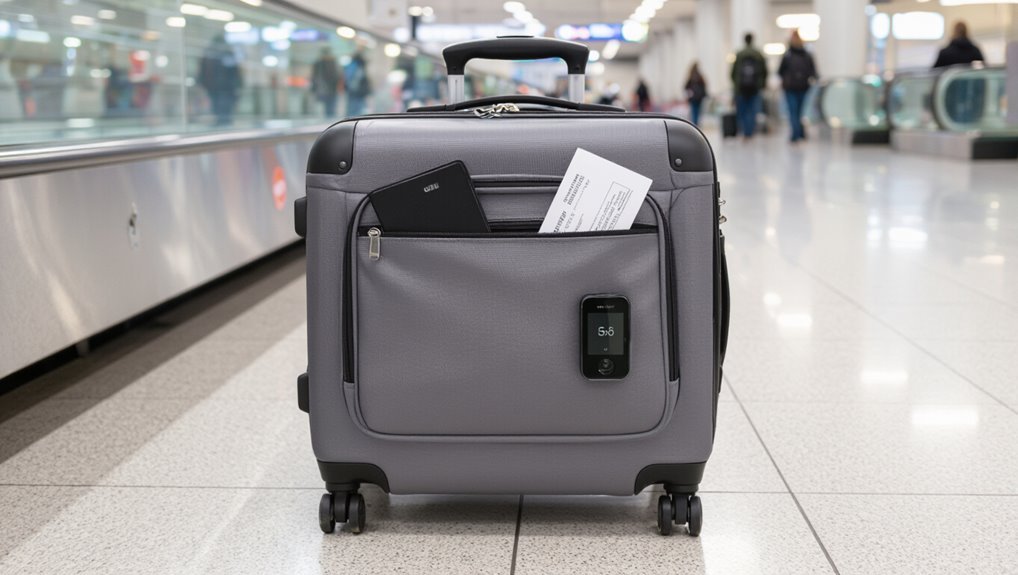
Can you legally put a GPS tracker in your checked or carry-on luggage? Yes, generally you can, but rules vary by country and airline.
You shouldn’t hide trackers to invade others’ privacy or breach laws. Avoid devices with large batteries that airlines restrict.
Check local privacy statutes and airline policies before traveling so you stay compliant and avoid confiscation or fines.
Best Tracker Types for Checked vs. Carry‑On Luggage (GPS, Bluetooth, LTE, UWB)
Choosing the right tracker depends on where you plan to stow your bag: checked baggage faces long periods out of cellular range and rough handling, while carry-on stays near you but may be tucked under seats or in overhead bins.
For checked bags, LTE or GPS units with rugged casings work best.
For carry-on, Bluetooth and UWB offer precise, low‑power proximity tracking.
Battery, SIM, and Connectivity Trade‑Offs to Consider
You’ll need to weigh battery life against update frequency, since frequent GPS pings burn power fast and can leave you blind mid‑trip.
Decide whether a local or global SIM makes sense for your routes, because roaming charges or lack of coverage can block tracking.
Plan for a balance: lower reporting rates and power‑saving modes extend uptime, but they reduce real‑time visibility.
Battery Life Limits
Although a compact GPS tracker seems simple, its battery life hinges on trade‑offs between battery capacity, SIM type, and how often it connects to networks. You’ll balance location update frequency, sleep modes, and signal searches to stretch runtime. Consider power draw patterns and charging options before travel.
| Mode | Draw | Expected Runtime |
|---|---|---|
| Active | High | Short |
| Sleep | Low | Long |
| Search | Medium | Variable |
SIM And Roaming
Battery choices and update schedules affect more than runtime — they shape what SIM and roaming options will work for your trip.
Choose between local, international, or global SIMs based on duration, coverage, and cost. Lower reporting frequency saves battery and reduces data use.
Confirm roaming fees, network compatibility, and eSIM support. Preload credit or a pay‑as‑you‑go plan to avoid surprise charges.
Airline Rules: Batteries, Packing, and What Carriers Allow
When you pack a GPS tracker for air travel, know that airlines treat the device mainly as an electronic item with rules driven by its battery type and charge level.
You should carry devices with lithium batteries in carry-on when possible, keep spare batteries in original packaging or insulated sleeves, limit charge to recommended percentages, and check carrier policies—some require notification or forbid active transmitting devices in checked baggage.
Is It Legal to Track Someone Else’s Luggage?
Before you slip a GPS into someone else’s bag, consider whether you have their clear consent — many places require it.
You’ll also want to check privacy and surveillance laws where you’re traveling, since unauthorized tracking can breach protections.
Ignoring these rules can expose you to civil claims or criminal charges, so don’t assume it’s harmless.
Legal Consent Requirements
If you put a GPS tracker in someone else’s luggage without their clear permission, you could be violating privacy and criminal laws in many places.
So you’d want explicit consent or a legal justification before doing so. Get written consent specifying purpose, duration, and data handling.
For minors or employees, follow guardianship or workplace policies.
Remove the device when consent ends.
Privacy And Surveillance Laws
Because laws around privacy and surveillance vary widely by country, state, and context, you need to check local statutes before putting a GPS tracker in someone else’s luggage.
Even with consent, wiretapping, stalking, or surveillance laws may restrict monitoring. You should confirm whether location tracking is lawful, whether notice is required, and whether data handling or sharing triggers additional legal obligations in the relevant jurisdiction.
Criminal Liability Risks
Laws about privacy and surveillance will shape whether tracking luggage crosses into criminal conduct.
But you also need to evaluate specific crimes that could apply: unauthorized monitoring can trigger charges like stalking, harassment, trespass, or interception of communications depending on how the device operates and who owns the bag.
You could face criminal liability if you track someone else without consent, so get legal advice first.
Where to Hide or Place a Tracker So It Actually Works
Choosing the right spot for a luggage tracker is about balancing concealment with signal access: you want it hidden from casual thieves but not blocked by metal or thick padding. Place it in interior pockets, under lining, or near zippers; avoid dense metal frames. Test placement visually.
| Spot | Concealment | Signal |
|---|---|---|
| Interior pocket | High | Good |
| Under lining | High | Fair |
| Near zipper | Medium | Good |
| Outside pocket | Low | Excellent |
How to Set Up and Test a Tracker Before Your Trip
Before you pack, make sure you fully charge and configure the tracker—set up the app, update firmware, and enter any required account or alert settings.
Then run a real-world test by placing the tracker in your luggage, taking a short drive or walk, and confirming location updates and geofencing work as expected.
If tracking is spotty, try different placements or check the SIM/data settings until you get reliable signals.
Charge And Configure Device
Start by fully charging the tracker and installing its SIM or battery so it’s ready to power on; then connect it to the companion app or web portal and complete the initial configuration (APN, reporting interval, and geofence settings) so the device reports location as you expect.
Update firmware, set power-saving modes, enable notifications, and verify timezone and units to guarantee accurate, reliable tracking.
Test Real-World Tracking
One simple way to confirm your tracker works in real conditions is to run a short, deliberate field test that mimics your trip: pack the tracker in the luggage, enable tracking, and take a route with similar transit modes and durations.
Verify live location updates, geofencing alerts, battery drain, and signal handoffs.
Repeat variations (checked, carry-on, different airports) until performance is reliable.
What to Do If Your Luggage Is Lost, Delayed, or Stolen
If your luggage goes missing, delayed, or stolen, act quickly to increase the chances of recovery and minimize disruption to your trip.
Report it to the airline or transport provider immediately, file a written property irregularity report, and get claim reference numbers.
Use photos and inventory lists, contact your insurer and credit card protections, and check tracking apps frequently.
Keep receipts for replacement items.
Top Features to Prioritize When Buying a Luggage Tracker
When choosing a luggage tracker, focus on accuracy, battery life, coverage, and durability so you get reliable location info when it matters most.
Prioritize real-time GPS accuracy, long-lasting or replaceable batteries, global cellular or multi-network coverage, and a rugged, compact design.
Look for waterproofing, tamper alerts, easy setup, clear app notifications, and reasonable subscription costs to keep tracking practical and dependable.
Common Problems Travelers Face : Quick Fixes and Troubleshooting
Because travel throws curveballs, you’ll want quick fixes for the most common luggage-tracker headaches—dead batteries, weak signals, app sync errors, and misplaced tags.
Keep spare batteries or a power bank, restart the tracker and app, toggle Bluetooth/GPS, move luggage to an open area for signal, relabel tags with contact info, and set geofence alerts.
Test devices before departure.
Frequently Asked Questions
Can a GPS Tracker Survive Extreme Temperature Changes in Checked Luggage?
Yes — some GPS trackers can survive extreme temperature changes, but you’ll need one rated for aviation and wide temperature ranges, keep it insulated from direct heat or cold, and expect battery performance to drop in extremes.
Will Airport X‑Ray Machines Damage My Tracker?
No, airport x‑ray machines typically won’t damage consumer GPS trackers; they’ll pass through baggage scanners fine. Still, you should remove batteries if airline rules require it, and keep receipts in case security inspects your device.
Do Trackers Interfere With Airplane Instruments During Flight?
No, they won’t interfere with airplane instruments during flight; certified commercial trackers use low-power transmissions that comply with aviation rules, and you shouldn’t use unauthorized transmitters—always follow airline and TSA guidelines to avoid problems.
Can I Use a Tracker With International Travel and Roaming Data?
Yes — you can use a tracker for international travel, but it depends on the device and plan; verify it supports roaming or multi-country SIMs, check airline and destination rules, and expect extra data or subscription charges.
How Long Do Trackers Last in Storage Between Trips?
It depends on your tracker: battery life in storage ranges from weeks to years depending on battery type, standby mode, and manufacturer. You’ll usually get months for active units, while coin-cell devices can last one to three years.
Conclusion
You can legally put a GPS tracker in your own luggage, and doing so often saves stress when bags go missing. Pick a tracker type that matches checked versus carry‑on needs, check battery and airline rules, and never track someone else without consent. Test the device before travel, know steps to take if bags are lost, and prioritize battery life, connectivity, and geofencing. Troubleshoot common issues so your tracker works when you need it most.