
Can You Pack Body Spray in Checked Luggage Rules Explained
Yes — you can pack body spray in checked luggage, but you’ll need to follow TSA and airline aerosol rules and quantity limits. Most carriers allow larger aerosol cans in checked bags if they’re properly labeled, capped, and protected from accidental discharge, though some airlines or countries ban flammable items. Cushion bottles, seal caps with tape, and keep cans upright away from heavy items. Check your airline’s and destination’s rules for specific limits to avoid surprises and learn practical packing tips.
Can You Pack Body Spray in Checked Luggage?
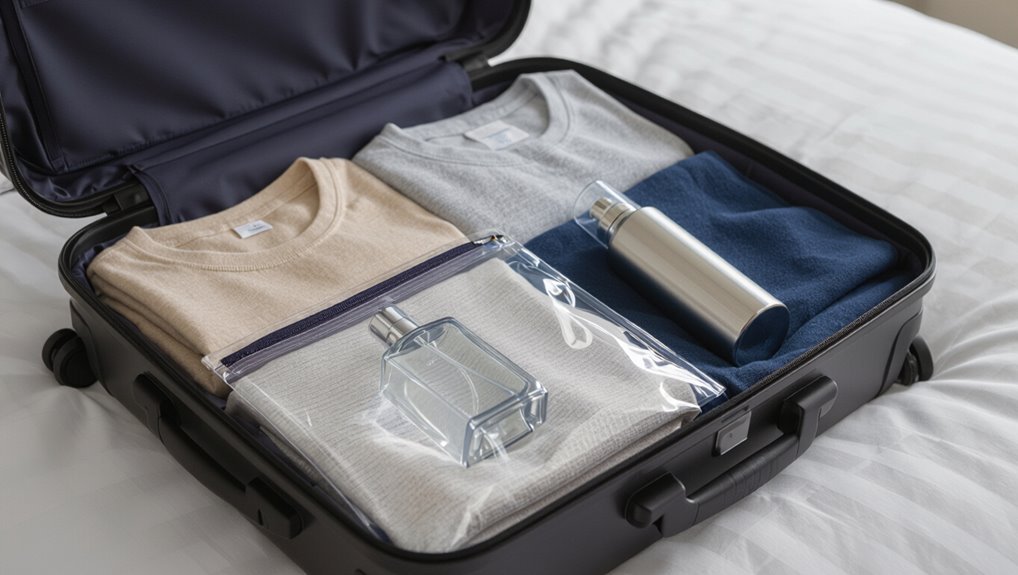
Wondering if you can pack body spray in checked luggage? You can, but there are limits: aerosols often face quantity and packaging rules and some airlines or countries ban flammables.
Check airline policies and hazardous materials guidelines before packing. Secure caps, place cans upright in your checked bag, and consider carrying small non-aerosol alternatives in carry-on if you’re unsure about restrictions.
How TSA Classifies Body Spray and Aerosols
Since you can pack body spray in checked bags but must follow limits, it helps to know how the TSA actually classifies these products.
The TSA treats many body sprays as aerosols or flammable liquids depending on propellant and alcohol content.
You should label items correctly, keep containers within allowed size and quantity limits, and guarantee they’re protected against accidental discharge to meet safety screening requirements.
Airline Rules for Pressurized Containers
When you fly with pressurized containers like body sprays, airlines enforce specific limits on size, quantity, and packaging to reduce risk and comply with safety regulations.
You’ll need to secure caps, prevent accidental discharge, and pack aerosols in checked baggage per carrier policies.
Check your airline’s rules and declare hazardous items if required, since noncompliance can lead to confiscation or fines.
Quantity Limits for Body Spray Containers
After checking your airline’s rules for pressurized containers, you’ll also need to watch how many body spray cans you pack: most carriers and international regulations limit the total number of aerosol toiletries per passenger and cap the individual container size (commonly 100–500 ml depending on the airline and whether the cans are compressed gas).
Count cans, check cumulative volume limits, and confirm per-flight exceptions.
How to Pack Body Spray to Prevent Leaks
When packing body spray in checked luggage, choose containers designed to be leakproof and sturdy so you’re starting with reliable gear.
Cushion each bottle with soft materials like clothing or bubble wrap to absorb shocks during transit.
Finally, seal the cap with tape to add an extra barrier against accidental spills.
Choose Leakproof Containers
Because sprays can leak under pressure and rough handling, pick containers that seal tightly and are built to withstand travel.
Use sturdy metal or high‑quality plastic aerosol cans, or transfer contents into travel‑rated spray bottles with locking caps.
Check lids for snug fit and test by inverting before packing.
Consider protective screw caps or plastic wraps around the nozzle to prevent accidental discharge.
Cushion With Soft Materials
Pack each body spray in its own soft barrier so impacts won’t transfer to the bottle or nozzle.
Wrap sprays individually in clean socks, microfiber cloths, or bubble wrap, then nest them among clothing.
Place heavier items away from sprays to avoid pressure.
Use multiple layers for fragile bottles and check positioning so no sharp seams press against caps during handling.
Seal Cap With Tape
After cushioning each bottle, you’ll want to stop leaks at the source by sealing the cap with tape. Press a small piece of waterproof tape over the nozzle and around the cap; smooth edges. Wrap once more for extra security. Place taped bottles upright in a sealed plastic bag.
| Tape Type | Purpose |
|---|---|
| Waterproof | Prevents seepage |
| Masking | Temporary seal |
| Cloth | Strong wrap |
Labeling and Stowing Body Spray for Travel
When you’re preparing body spray for checked luggage, label clarity and secure stowage matter most to keep airport security and baggage handlers informed and to prevent leaks or damage.
You should clearly mark contents, include contact info, seal bottles, cushion with clothing, and place them upright in a leakproof bag so handlers see and avoid mishandling.
Clearly label contents, add contact info, tightly seal and cushion bottles, then place upright in a leakproof bag.
- Clear content label
- Owner contact info
- Tight cap seal
- Padded positioning
- Leakproof bag
Checked vs. Carry-On Rules for Body Spray
You’ll need to follow TSA rules for carry-on body sprays, which generally limit containers to 3.4 ounces (100 ml) in a clear quart-sized bag.
Checked luggage often allows larger aerosol cans but still caps total quantities and requires proper labeling for hazardous materials.
Also check state laws and individual airline policies, since limits and enforcement can vary.
TSA Carry-On Limits
Curious about whether you can carry body spray onto a plane? You can, but follow TSA carry-on limits: containers must be 3.4 ounces (100 ml) or less and fit in a single quart-sized clear bag.
Don’t exceed quantity, and declare if required. Packables should be sealed to prevent leaks.
- 3.4 oz max
- Quart bag
- One bag total
- Leak-proof
- Know exceptions
Checked Luggage Allowance
If you prefer not to worry about the 3.4 oz limit for carry-ons, packing body spray in checked luggage gives you more flexibility: airlines and the DOT allow larger aerosol containers in checked bags so long as they meet size and safety rules.
You should secure caps, prevent leaks by placing sprays in sealed plastic, and follow per-item quantity limits to avoid rejection at check-in.
State And Airline Variations
Because rules can vary by state and airline, you’ll want to check both before packing body spray—some carriers impose stricter quantity or packaging limits than the federal DOT, and individual airports or state transport authorities may have additional security or hazardous-materials policies.
- Verify airline limits and allowed container sizes
- Check state or airport hazmat advisories
- Prefer checked if limits exceed carry-on rules
- Declare if required during check-in
- Pack upright, sealed, in protective pouch
When Body Spray Is Considered Hazardous
When body spray contains pressurized flammable propellants or exceeds airline limits for aerosol volume, it’s treated as a hazardous item and you can’t pack it like regular toiletries.
You’ll face restrictions: some carriers ban large aerosols, others require special packaging or declaration.
Check label hazard symbols, volume caps (often 100 ml/3.4 oz for carry-on), and airline policies before you pack.
International Differences and Common Exceptions
Although many countries follow ICAO and IATA guidelines, rules for packing body spray in checked luggage still vary by jurisdiction and airline.
Although many countries follow ICAO and IATA guidelines, checked-luggage rules for body spray still vary by jurisdiction and airline.
You should always confirm regulations for both your departure and destination. You’ll encounter limits on volume, aerosol classification, declaration requirements, prohibited ingredients, and differing container rules.
- Volume caps per container
- Aerosol vs non‑aerosol
- Required labeling
- Declaration procedures
- Country bans
Airline-Specific Exceptions to Know Before Flying
Check each airline’s policy before you pack, because allowances for aerosols and liquid volumes can vary even when national rules apply.
Some international carriers offer specific exceptions or stricter limits, so don’t assume your usual airline’s rules will match a foreign carrier’s.
Verify limits and labeling requirements on the airline’s website or by calling customer service to avoid surprises at check-in.
Airline Policy Variations
Airlines set their own rules for carrying body spray in checked bags, so you’ll want to confirm your carrier’s limits before you pack.
Check policies online, note quantity limits, and follow packing or container restrictions. Contact customer service if unclear.
- weight versus volume caps
- aerosol classifications differ
- required labeling
- permit or declaration needs
- carrier-specific exceptions
International Carrier Exceptions
When you fly internationally, each carrier can apply its own exceptions for packing body spray—so don’t assume rules that apply on one route will hold on another.
Check your airline’s website and contact customer service before packing. Some carriers allow larger aerosol cans in checked baggage, others forbid them entirely or require special packing/declared hazardous materials procedures.
Confirm limits, labeling, and declaration rules to avoid confiscation.
Connecting Flights and Transfer Baggage Rules
If you have connecting flights, pay close attention to transfer baggage rules because they determine whether your packed body spray stays in checked luggage or needs to be removed.
You should check airline policies, transit country rules, transfer times, whether bags are rechecked, and container limits to avoid surprises.
- Check airline policy
- Verify transit country rules
- Confirm recheck process
- Note connection time
- Inspect container limits
What to Do If Security Flags Your Body Spray
1 clear step is to stay calm and cooperate if security flags your body spray: follow the officer’s instructions, answer questions briefly, and be ready to present the item and any purchase receipts or documentation.
Ask politely about next steps, accept inspection or disposal, and request a supervisor if needed.
Keep copies of receipts and note officer names for follow-up complaints or reimbursement requests.
Packing Body Spray: Cushioning, Sealing, Placement
Because aerosols can dent or leak under pressure, cushion and seal each can before you tuck it into your checked bag: wrap sprays in bubble wrap or clothing, put them in a zip-top plastic bag to contain spills, and place them upright in the center of your suitcase surrounded by soft items to prevent shifting.
Follow these quick tips:
- Wrap individually
- Use leak-proof bags
- Keep upright
- Surround with soft items
- Limit quantity
Travel-Safe Alternatives to Regular Body Spray
When you want to avoid aerosol restrictions, try compact, non-pressurized options that give similar scent and freshness without the risk of leaks or confiscation: solid colognes, roll-ons, travel-size pump sprays (in approved volumes), scent sticks, and fragrant body wipes all pack easily in carry-on or checked bags and meet most airline rules.
You can layer scented lotions with deodorant for longer-lasting fragrance.
Where to Check Rules (TSA, Airline, Customs Links)
Before you pack body spray, check TSA rules for aerosols and quantity limits so you know what’s allowed in checked baggage.
Also review your airline’s specific policies and any country customs regulations that might restrict fragrances or alcohol-based products.
Save links to the TSA, airline, and customs pages for quick reference before travel.
TSA Rules & Limits
Where do you find the definitive rules on packing body spray in checked luggage? You should follow TSA guidelines: aerosols are allowed if properly secured, volume limits apply, combustible contents matter, and packaging must prevent leaks.
Check the TSA site before travel. Quick pointers:
- Confirm aerosol allowance
- Note per-container size limits
- Pack in checked, not carry-on
- Use original caps
- Declare if required
Airline And Customs Links
Because rules can vary by carrier and country, you should always check three sources before packing body spray: the TSA for U.S. security and hazardous materials guidance, your airline for carrier-specific limits and stowage policies, and the destination country’s customs authority for import restrictions.
Visit official TSA, airline, and customs websites; contact customer service if unclear; save links or screenshots to avoid surprises at check-in or arrival.
Quick Checklist Before You Pack Body Spray
Grab your body spray and run through a short checklist to make sure it’s allowed, safe, and packed correctly in your checked bag:
- Confirm airline and destination limits.
- Keep under allowed aerosol size and pressure.
- Seal caps and use a plastic bag for leaks.
- Pack between clothes to cushion impact.
- Declare if required and follow hazardous materials rules.
Frequently Asked Questions
Can I Mix Different Body Sprays in One Bottle for Travel?
You shouldn’t mix different body sprays in one bottle for travel because scents can clash and chemical reactions might occur; instead, stick to originals, use small travel-sized containers, and label them so you don’t confuse fragrances or cause issues.
Do Duty-Free Aerosols Follow the Same Rules?
Yes, duty-free aerosols still follow airline and TSA rules, but they’ll often be allowed in carry-on if unopened and within limits; you’ll need to check specific airline and country restrictions before boarding to avoid confiscation.
Are Refillable Spray Bottles Allowed in Checked Luggage?
Yes, you can pack refillable spray bottles in checked luggage, but you’ll need to make sure they’re empty or meet airline and TSA rules for pressurized containers, and you should protect against leaks with seals and padding.
Will Scent Residue in Clothes Trigger Security Alarms?
It’s unlikely scent residue in clothes will trigger security alarms; detectors target explosives or prohibited chemicals, not fragrances. You’ll rarely set off sensors with deodorant or body spray, though strong odors might prompt questioning or inspection.
Can Body Spray Be Shipped Separately via Mail?
Yes — you can usually ship body spray via mail, but you’ll need to follow carrier rules for aerosols, label flammability, and pack securely; check USPS, FedEx, or UPS restrictions and hazardous materials policies before sending.
Conclusion
You can pack body spray in checked luggage, but you’ve got to follow rules. TSA and most airlines treat aerosol body sprays as limited pressurized containers, so keep each can under quantity limits (usually 70 oz/2 kg total per person for hazardous materials rules) and guarantee caps are secure. Cushion cans to prevent punctures, seal them in plastic bags, and place them amid soft clothes. Check TSA, your airline, and destination customs rules before packing.
