Can You Go Through TSA Without a Ticket
You can sometimes get through TSA without a ticket, but only in limited, preauthorized situations like escorting a traveler, using airline or airport credentials, or holding a gate pass; policies vary by airport and often require prior coordination with airline or TSA staff. You’ll still need a government photo ID or authorized credential, and staff can deny access. If you’re unsure, follow the steps below to avoid surprises and learn when exceptions apply.
What Users Ask: Can You Go Through TSA Without a Ticket?
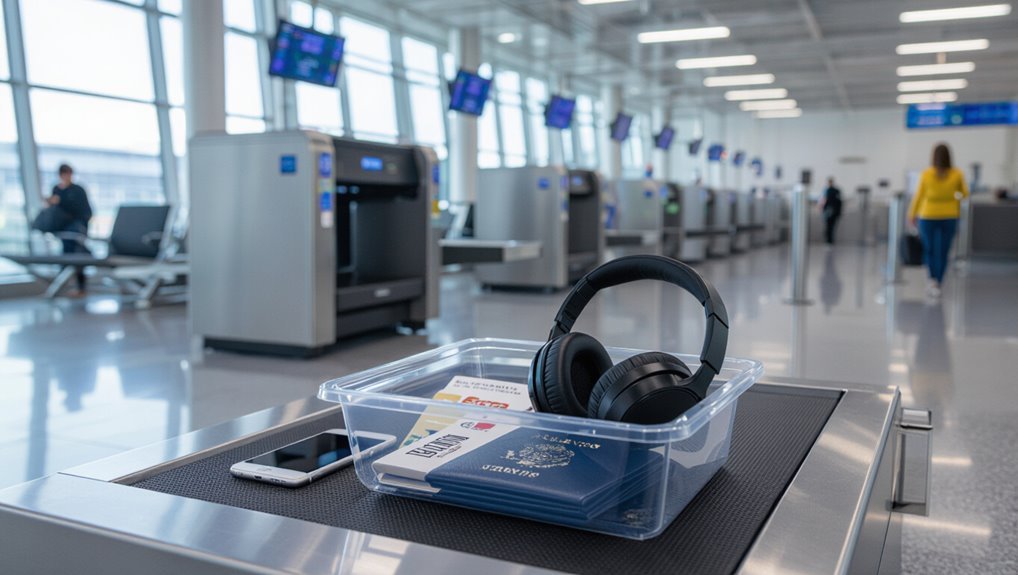
Wondering if you can pass through TSA without a ticket? You’ll usually need boarding proof to access secure areas, but people often ask about exceptions: escorting travelers, airline-issued documents, or medical needs.
You’ll also ask about ID, appointment lanes, and TSA PreCheck status. Know that rules vary by airport and carrier, so check policies before you arrive to avoid surprises.
Short Answer: When Ticketless Entry Is Allowed
When can you get past TSA without a boarding pass? You can in narrow cases: escorting a traveler with special needs, accessing airport gates for non-ticketed events, or with airline/airport-issued credentials (crew, volunteers).
Policies vary by airport and require prior authorization or a gate pass. Always check the specific airport’s rules and coordinate with airline or TSA staff beforehand.
TSA’s ID and Boarding-Pass Policy Explained
Although TSA primarily requires both a government-issued photo ID and a matching boarding pass to clear security, there are specific procedures and exceptions you should know so you can plan accordingly.
If you lack a printed ticket, show your mobile boarding pass; if ID is temporarily unavailable, TSA may verify identity with secondary documents and additional screening.
Follow officer instructions to avoid delays.
What ID Does TSA Accept?
Which forms of ID will get you through TSA?
You’ll need a government-issued photo ID: a U.S. passport, passport card, DHS Trusted Traveler card, state driver’s license or ID compliant with REAL ID, or military ID.
For noncitizens, bring a valid foreign passport with appropriate visa or ESTA.
IDs must be unexpired and reasonably clear for identity verification at the checkpoint.
Do Mobile Boarding Passes Count as Tickets?
You’ve covered acceptable IDs, and now you’ll want to know whether a mobile boarding pass will get you through the TSA checkpoint.
Yes—TSA accepts digital boarding passes on your phone for screening.
Make sure your device is charged, the barcode is legible, and you can pull it up quickly. Agents may ask for ID and to scan the pass at the podium.
Screenshots, PDFs, and Electronic Boarding Passes: TSA Stance
Curious whether a screenshot or saved PDF will pass muster at the checkpoint?
You can usually use electronic boarding passes—screenshots, PDFs, and airline apps are accepted if the barcode and name are clear.
TSA agents verify identity and the boarding pass; boarding status must match.
Keep your phone charged and the image accessible.
Be ready to show a government ID when asked.
Can Companions Enter Security Without a Ticket?
Wondering if your friend or family member can come all the way through security with you?
Policies vary by airport. You should check the specific terminal’s visitor policy and TSA signage. Some airports allow one companion for assistance or courtesy lanes; others restrict access to ticketed passengers only.
Carry valid ID for your companion if required, and be prepared to explain their purpose to security staff.
Rules for Minors and Infants at Checkpoints
If you’re traveling with minors or infants, you should know the checkpoint rules that apply to them.
You’ll want to understand how unaccompanied minors are handled, what special procedures infants go through at security, and what IDs or paperwork you need for children.
Knowing these details helps you move through screening smoothly and avoid delays.
Minors Traveling Alone
When you’re traveling with children, TSA and airport security focus less on tickets and more on identity, supervision, and safe screening procedures.
Minors don’t need a boarding pass to go through the public checkpoint area, but rules tighten when they’re unaccompanied or infants are involved.
If a child’s flying alone, check airline age limits, required ID, unaccompanied minor services, guardian drop-off/pickup rules, and escort procedures.
Infant Security Procedures
Traveling with an infant means you’ll face a few special screening steps at the TSA checkpoint: You’ll carry the baby through metal detectors or a pat-down if needed, remove shoes for older children only, and present baby items for inspection. Follow officer instructions, keep the infant secure, and expect screening of strollers and carriers.
| Item | Action |
|---|---|
| Stroller | Inspect |
| Carrier | Inspect |
| Baby items | X-ray or hand-check |
Identification Requirements For Children
After the screening of strollers and baby items, you’ll need to know what ID to bring for minors: TSA doesn’t require children under 18 to show identification at security checkpoints in the U.S., but airlines and international travel often do.
Pack documents accordingly and confirm carrier rules.
- Bring passports for international trips
- Carry birth certificates when needed
- Use school IDs for teens
- Keep copies handy
- Check airline policies
Do Airline Employees and Crew Need Tickets?
If you work for an airline or are crew, you usually won’t need a boarding pass to get through security for duty—you’re subject to specific employee security procedures instead.
You’ll still have to show proper airline-issued ID and any required credentials at the checkpoint.
We’ll also explain how crew access lanes and sterile-area badges let active crew move to the gate without a ticket.
Employee Security Procedures
Although airline staff and crew have special access, they still need proper credentials rather than a boarding pass to get through TSA checkpoints; you’ll show ID and airline-issued badge, follow employee-specific screening, and use designated lanes when available.
Procedures vary by airline and airport, but security remains strict.
- Display badge and photo ID
- Use employee checkpoint or gate
- Undergo same screening
- Follow airline escort rules
- Comply with random checks
ID Requirements Only
The procedures for airline staff set the stage for understanding whether they need a boarding pass: you won’t typically use a ticket to get through TSA, but you’ll need proper ID and an airline-issued badge.
Present government ID and your company ID when prompted. TSA and airline policies require identity verification; without those credentials, you won’t gain access to secure areas or bypass standard screening procedures.
Access For Crew Members
1 clear rule applies to airline crew: you generally don’t need a ticket to get through TSA checkpoints if you’re traveling on duty and carry proper airline credentials and government ID.
You’ll still follow screening, can use crew lanes, and must show credentials on request. Keep credentials accessible and updated.
- carry airline ID
- bring government ID
- use crew lane
- be on duty
- follow screening instructions
Can Airport Staff, Contractors, or Vendors Access Sterile Areas?
If you work for an airline, handle baggage, or provide services on the airfield, you’ll often need vetted access to sterile areas so flights can turn on schedule and safety checks can be completed.
You’ll undergo background checks, ID verification, and badge issuance tied to specific duties and time frames.
Escorts, training, and restricted privileges limit movement; violations can revoke access and incur penalties.
TSA PreCheck, CLEAR, and Ticketless Exceptions
Curious how programs like TSA PreCheck and CLEAR change the usual ticket-and-ID dance? They speed ID checks, let you use dedicated lanes, and sometimes simplify boarding steps, but you still generally need proof of flight.
Some airports allow limited ticketless exceptions for escorts or emergencies; rules vary.
Certain airports may permit ticketless access for escorts or emergencies, but availability and rules differ.
- Faster identity verification
- Dedicated security lanes
- Biometric ID via CLEAR
- Reduced screening items
- Exceptions are rare and local
Special-Assistance Passengers: Escorts and Procedures
If you need to escort someone with special assistance, you’ll want to know who qualifies and what documentation is required.
You’ll go through a specific screening process for escorts that can include ID checks, bag inspections, and escorted-entry procedures.
Airports also offer accommodations and protocols—like wheelchair assistance, preboarding, and designated waiting areas—to make the process smoother.
Eligibility For Escorts
Who can bring an escort through security, and under what conditions?
You can escort or be escorted if the traveler needs assistance (medical, cognitive, mobility), the airline authorizes it, and you’re on the passenger’s manifest.
Bring ID and any required documentation.
- Medical necessity confirmed
- Airline approval obtained
- Passenger consent given
- Escort listed on manifest
- Valid government ID presented
Escort Screening Process
Now that you know who can escort a passenger through security and what documentation is needed, here’s how screening itself works. You’ll present ID, accompany the passenger, and follow TSA instructions. Screening may include walk-through or hand-wand checks and bag inspection. Stay cooperative and patient to speed the process.
| Step | Action |
|---|---|
| 1 | ID check |
| 2 | Escort sign-in |
| 3 | Passenger screening |
| 4 | Bag inspection |
Accommodations And Protocols
When a traveler needs special assistance, TSA and airport staff work with you and the airline to provide tailored accommodations and clear protocols so screening is safe, dignified, and efficient.
You’ll get escorts, alternative screening, privacy options, and communication support. Staff follow procedures and document needs so future trips go smoother.
- Assigned escort
- Private screening room
- Assistive-device handling
- Clear verbal guidance
- Documentation of needs
Does “Carry-On Only” Affect Checkpoint Access?
If you’re flying with only carry-on luggage, airlines’ “carry-on only” labels don’t change TSA checkpoint rules — you still need a boarding pass or other proof of travel to get past security.
TSA officers will verify your identity and flight details before letting you through. Carry-on status affects baggage allowances, not access; bring ID and your boarding pass to avoid delays.
Visiting Someone Airside: Allowed Options
Want to see someone past security? You usually can’t unless the airport offers these official options — each has rules, IDs, and possible background checks.
Want to accompany someone past security? Only official options apply — each with rules, ID checks, and limits.
Consider:
- Visitor passes or escort programs
- Airport-sponsored meet-and-greet services
- Airline-issued gate passes for certain situations
- TSA or airport special accommodations for assistance
- Military or law enforcement escorts when applicable
How Airports Enforce Ticketless Entry Rules
Although airports vary, they actively enforce ticketless entry through layered ID checks, credential verification, and staff or law enforcement patrols.
So you’ll need proper authorization or an approved escort to get past the security checkpoint. You’ll present ID, visitor passes, or escort credentials; staff monitor access points and reject unauthorized attempts.
Noncompliance can mean denial, escort removal, or law enforcement involvement.
Major U.S. Airports With Visitor-Pass Programs
If you need to visit the secure side without a ticket, start by checking which airports offer visitor-pass programs and who’s eligible.
Major hubs like Atlanta, Boston, and Los Angeles often list eligibility criteria and application steps on their websites.
You’ll usually fill out an application, undergo ID and background screening, and receive a time-limited pass if approved.
Visitor Pass Eligibility
Curious whether you can get past security without a boarding pass? You usually need an approved visitor pass, government ID, and a sponsor airline or employee.
Eligibility varies by airport and purpose.
- Valid government ID
- Pre-authorization from an airport sponsor
- Purpose: escort, caregiving, or business
- Age or background checks may apply
- Time-limited access only
Participating Airports List
Now that you know the basic visitor-pass requirements, here’s where those programs are actually available: several major U.S. airports run formal visitor-pass systems with defined rules, sponsor procedures, and limited hours. You’ll find programs at these hubs:
| Airport | Notes |
|---|---|
| Atlanta (ATL) | Visitor pass desk |
| Los Angeles (LAX) | Limited terminals |
| Chicago O’Hare (ORD) | Sponsor needed |
| Dallas (DFW) | Restricted hours |
| Denver (DEN) | Advance approval recommended |
Application And Screening
When you apply for a visitor pass at major U.S. airports, you’ll fill out sponsor information, ID details, and the purpose and timing of your visit so security can verify your access quickly.
You’ll undergo background checks, ID verification, and a badge interview; follow escort rules and display your pass visibly.
- Bring valid photo ID
- Know your sponsor
- Arrive early
- Follow screening rules
- Keep badge visible
Smaller Airports and Stricter Access Rules
Because smaller airports often have fewer staff and tighter layouts, they usually enforce stricter access rules than larger hubs.
So you can’t assume leniency if you show up without a ticket. You’ll likely face limited public areas, clearer ID and purpose checks, and fewer exemptions for escorts.
Plan ahead: contact the airport, confirm visitor policies, and expect escorts or denial of access if you can’t meet requirements.
How International Airports Handle Ticketless Visitors
At international airports, you’ll usually need valid ID and sometimes a boarding pass or visa to get past non-public checkpoints.
If you don’t have a ticket, expect extra questions and possible verification of your travel intent before any screening.
Some airports offer alternative screening or escorted access for visitors, but rules vary by country so check ahead.
Entry Requirements And Documents
Wondering what documents you need if you don’t have a ticket? You’ll still need valid ID and proof for travel purpose; requirements vary by country and airport.
Present originals and copies when asked, and cooperate with staff.
- Passport or government ID
- Visa or entry permit
- Proof of onward travel or appointment
- Boarding pass confirmation (if digital)
- Immigration or customs forms
Security Screening Alternatives
If you don’t have a ticket but still need to get through security—for example to meet someone at the gate, reach an international transfer desk, or attend an airline appointment—airports use several alternative procedures to handle you.
You’ll usually need ID, a reason, and staff escort or a visitor pass. Some hubs offer appointment slots, supervised access, or transit-only lanes; rules vary by country and airport.
Common Myths About Skipping the Ticket Line
How likely is it that you can breeze past the ticket counter and still make your flight? You’ll hear myths that gate staff won’t notice, that TSA lets anyone through, or that mobile boarding passes aren’t checked.
Don’t assume leniency—airports have procedures. Consider common misconceptions:
- Gate staff ignore you
- TSA skips ID checks
- Mobile pass always works
- Same-day standby is free
- Purported “shortcuts” exist
Risks of Trying to Enter Security Without Documents
If you try to get through TSA without a ticket or ID, you’ll likely be denied access at the security checkpoint.
Attempting to bypass the rules can also lead to legal trouble, including fines or criminal charges depending on the situation.
Think twice before risking enforcement action and the delays it will cause you and other travelers.
Denied Security Access
Although you might hope to slip through without a boarding pass, trying to enter TSA security without proper documents can get you turned away, delayed, or even banned from the checkpoint.
- You’ll be stopped at the entrance.
- You might miss your flight waiting for resolution.
- Security personnel can deny access immediately.
- Repeated attempts could flag you in systems.
- You’ll face public embarrassment and extra screening.
Legal And Criminal Consequences
Getting stopped at the checkpoint can lead to more than embarrassment and delays—you can face legal consequences for trying to enter security without proper documents.
You risk misdemeanor charges, fines, and possible detention if agents suspect intent to bypass protocols.
Repeat or aggressive attempts can trigger federal investigations.
You’ll likely be banned from the airport or placed on no-fly lists, impacting future travel.
How Gate Agents Affect Checkpoint Entry Decisions
When gate agents spot problems with a passenger’s boarding pass or ID, they can stop you at the jet bridge or deny you checkpoint entry altogether. This is because they’re responsible for ensuring everyone at the gate is authorized to fly.
You should stay calm, cooperate, and present valid ID or boarding proof. Agents consult airline rules and TSA and make final decisions.
- Stay calm
- Show ID promptly
- Explain issues briefly
- Follow instructions
- Ask for supervisor
Airline Visitor and Escort Passes: How They Work
Ever wondered how non-ticketed visitors or escorts get past the public side of the terminal? You request an escort or visitor pass through the airline or airport; they verify identity, purpose, and sometimes require a background check.
Passes are time-limited, restricted to specific gates or areas, and accompanied by an employee escort. Always carry ID and follow security instructions while airside.
Handling Invited Guests for Special Events Airside
If you’ve arranged an escort or visitor pass, planning for invited guests at a special airside event builds on that same process but with added logistics and permissions.
You’ll coordinate IDs, arrival windows, sponsor briefings, restricted-area badges, and escort assignments. Follow airport rules, confirm clearances, and keep communication tight to avoid delays.
- IDs ready
- Arrival times staggered
- Sponsor briefings
- Badge collection
- Assigned escorts
What to Expect in Secondary Screening If Ticketless
If you’re pulled into secondary screening without a ticket, expect a more thorough check of your ID, carry-on items, and personal electronics.
Officers will explain why you’re there and the possible outcomes — clearance, further inspection, or being escorted out of secure areas.
Know that next steps could include temporary detention for questioning, confiscation of prohibited items, or being released with instructions.
Secondary Screening Process
When you’re pulled for secondary screening without a ticket, TSA officers will explain why they need to inspect you or your belongings and outline the steps they’ll take next.
You’ll cooperate, answer concise questions, and follow instructions; searches stay professional and documented.
- Show ID if available
- Remove electronics and liquids
- Step aside for a pat-down if needed
- Let officers handle bags
- Stay calm and polite
Possible Outcomes & Next Steps
Although being pulled into secondary without a ticket can feel unsettling, you’ll typically face a limited set of clear outcomes: a brief additional screening and release, temporary detention for questioning, referral to law enforcement, or—rarely—denial of entry to the checkpoint area.
Expect officers to verify ID, ask why you’re there, inspect belongings, and decide next steps; comply, stay calm, ask for clarification, and contact your airline or a lawyer if needed.
Alternatives If You Can’t Get Through Security
Can’t get through TSA? You still have options: change plans, access public terminal areas, or wait for someone with a valid boarding pass.
Stay calm, talk to airline or TSA staff, and secure belongings. Consider refunds or rebooking.
- Ask airline about alternatives
- Use airport lounges (if eligible)
- Meeters/greeters with passes
- Reschedule flight
- Request refund or credit
How to Get a Same-Day Boarding Pass Fast
If you need a same-day boarding pass fast, check same-day check-in options like standby lists, airport kiosks, and airline apps first.
If those don’t work, head straight to the airline ticketing counters — agents can rebook you or issue a pass more quickly than waiting online.
Have your ID and flight details ready to speed things up.
Same-Day Check-In Options
When plans change and you need to fly out the same day, several fast check-in options can get you a boarding pass quickly—use your airline’s mobile app for immediate electronic check-in, visit a self-service kiosk at the airport to print a pass in minutes, or head to the airline counter for assistance with standby or rebooked flights.
- Use the mobile app for instant boarding passes
- Try a kiosk to skip lines
- Join standby lists quickly
- Ask gate agents about rebooking
- Use online check-in reminders and alerts
Airport Ticketing Counters
Although the lines can look long, airline ticketing counters are often the fastest way to get a same-day boarding pass if you need personal help.
Go to the carrier’s counter, explain your situation, and present ID. Agents can rebook, clear upgrades, or issue standby passes faster than kiosks.
Ask politely for priority processing and confirm gate and boarding time before you leave.
Meeting Travelers Without Entering Secure Areas
Wondering how to meet someone without going through TSA checkpoints? You can wait landside, use designated meeting points, or coordinate curbside pick-up.
Stay aware of flight delays and terminal changes, and confirm cell reception.
- Use airport arrivals hall
- Choose a clear landmark
- Schedule a meet time
- Share live flight status
- Park at short-term lots
Essential Documents to Carry If You Might Be Ticketless
If you might be ticketless, carry a valid government photo ID so TSA can confirm who you are.
Also bring proof of travel—like a boarding pass screenshot, reservation email, or airline confirmation—so staff can verify your reason for being near screening areas.
These two items will cover the basics and speed up any questions.
Valid Government ID
When you might go through TSA without a printed boarding pass, a valid government-issued photo ID becomes your single most important document.
TSA agents use it to verify your identity for screening and any alternate boarding process. Carry one that’s current and matches your reservation name. Keep it accessible and protected.
- Driver’s license
- Passport
- State ID card
- Military ID
- DHS Trusted Traveler card
Proof Of Travel
Beyond your ID, you’ll want proof that you’re actually booked to fly—especially if you don’t have a printed boarding pass.
Carry your mobile boarding pass, confirmation email, or screenshot of the reservation reference. Include the passenger name, flight number, and departure time.
If someone else booked it, bring their confirmation plus ID linking you to the reservation.
Have a clear, accessible backup.
How to Politely Ask for Entry as a Non-Traveling Companion
Wondering how to request access to the sterile area as a non-traveling companion? You should be brief, respectful, and prepared with ID and reason.
Approach staff calmly, explain your connection, and accept their decision.
- Speak politely and directly
- Have photo ID ready
- State your relationship to the traveler
- Offer a brief reason
- Respect staff authority and outcome
Sample Scripts for Gate Agents and TSA Officers
Need a quick, polite way to ask?
Say to the gate agent: “Hi, I’m accompanying [name]. I’ve ID and a printed confirmation. Could you please let me through to the gate?”
For TSA, use: “Hello, I’m a non-traveling companion for [name]. I’ve ID and any required documentation. Could you advise next steps?”
Be concise, calm, and cooperative.
Legal and Privacy Issues When Requesting Access
How will your request affect others’ privacy and your legal exposure? You should be clear, truthful, and respectful when asking access.
Sharing unnecessary personal details can invade others’ privacy and create liability. Know relevant laws and TSA policies, and document interactions.
Avoid sharing unnecessary personal details; it risks others’ privacy and legal liability—know the laws, TSA rules, and document interactions.
- State purpose briefly
- Offer minimal personal info
- Ask about data handling
- Record names and times
- Request written denial if refused
What to Do If TSA Denies You Checkpoint Entry
If TSA refuses your checkpoint entry, stay calm and ask for a clear reason on the record.
Request the supervisor politely, note names and badge numbers, and document the interaction with your phone if allowed.
Ask how to appeal or file a complaint, get any written denial, and contact the airline or airport authority immediately for clarification and next steps.
Checklist to Avoid Surprise Denials at TSA
Before you get to the airport, take a few practical steps to reduce the chance TSA will deny you at the checkpoint.
You should confirm ID status, remove prohibited items, check carry-on contents, know travel authorizations, and arrive with time to resolve issues.
Follow this quick checklist:
- Carry compliant government ID
- Remove liquids/gel rules
- Empty pockets beforehand
- Disable alarms on devices
- Allow extra screening time
Final Checklist and Recommendations
You’ve checked your ID, cleared pockets, and prepped carry-ons—now make one last pass through a short final checklist so nothing catches you off guard at the checkpoint.
Confirm boarding information or printed proof if required, remove electronics and liquids, wear easily removable shoes, keep documents handy, and follow agent instructions.
Stay calm, polite, and cooperative to speed screening and resolve issues quickly.
Frequently Asked Questions
Can I Bring Prohibited Items Through Security if I’M Not Flying?
No, you can’t bring prohibited items through TSA security even if you’re not flying; checkpoints enforce rules for everyone, they’ll stop or confiscate forbidden objects, and you may face delays, fines, or law enforcement involvement.
Can I Use a Business Card or Employee Badge as Proof to Enter?
No, you typically can’t use a business card or employee badge alone; TSA and airport security usually require government-issued photo ID and boarding pass, though airlines or airport authorities might grant limited access with additional verification.
Are Emotional Support Animals Allowed Through Security Without a Ticket?
Yes — you can bring emotional support animals through TSA security without a ticket, but you’ll need proper documentation, keep the animal controlled, and follow TSA screening procedures; airlines may have different in-cabin rules you’ll still need to follow.
Can I Access the Gate Area for Lounge Pickup Without Boarding Pass?
No, you usually can’t access the gate area without a boarding pass; airlines and TSA require a valid boarding pass and ID to pass security. Some exceptions (authorized pickups) vary, so check the airport’s policy first.
Will TSA Log My Entry if I’M Denied Access at the Checkpoint?
Yes — TSA can record your denied entry; they’ll note your name or ID and log the incident in their system. You’ll be asked to leave, and law enforcement may be notified if needed.
Conclusion
You usually need proof of your flight to get through TSA, but ticketless entry can be allowed in specific situations — like with a cleared mobile boarding pass, a verified reservation linked to your ID, or airline staff escorting you. Have a government ID, your confirmation code, or a mobile/electronic boarding pass ready. If TSA denies entry, stay calm, ask for a supervisor, and contact your airline. Always check TSA and airline policies before heading to the airport.