Can You Get Through TSA Without an ID
Yes — you can often get through TSA for a domestic flight without a government photo ID, but it’s not guaranteed and takes patience. You’ll need to cooperate, provide multiple alternate documents (like boarding pass, credit card, utility bills, student or work ID, or a birth certificate), and submit to extra identity checks and possible secondary screening. Arrive early, stay calm, and be ready to answer questions; keep going and you’ll find practical steps to improve your chances.
Quick Answer: Can You Fly Without ID?
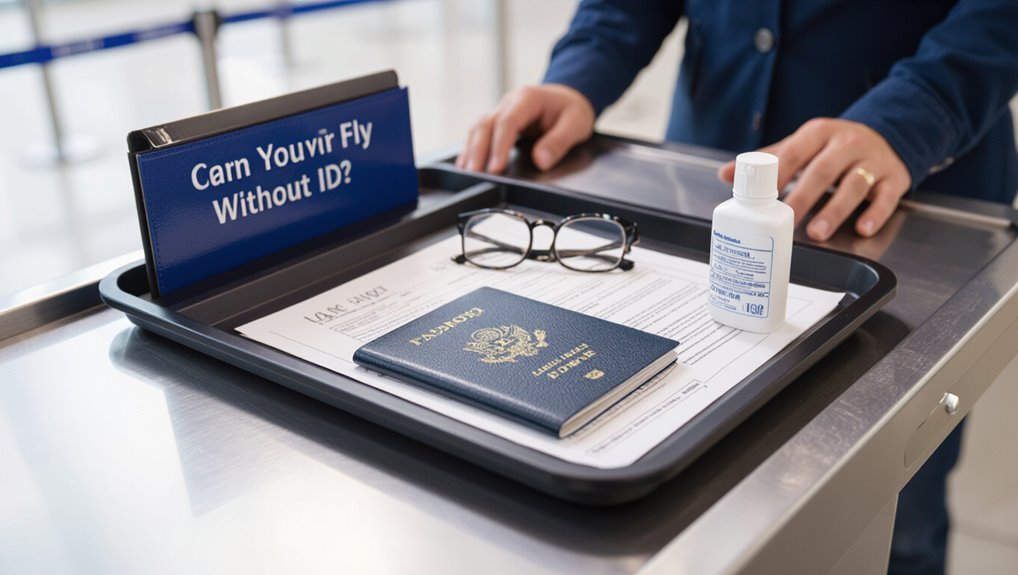
If you don’t have a government-issued photo ID, you can still fly domestically in the U.S., but expect extra steps:
TSA lets you proceed with identity screening if other documents or information confirm who you are. You’ll answer questions, provide supporting IDs or records, and may undergo additional screening.
Cooperation, patience, and arriving early improve your chances of boarding without a traditional photo ID.
Why This Guide Helps If You Forgot Your ID
Because forgetting your ID can be stressful, this guide gives clear, practical steps you can follow at the airport to avoid delays and increase the chance you’ll board.
It walks you through necessary documentation alternatives, how to work with TSA officers, what verification processes to expect, and quick actions—like contacting your airline and gathering supporting evidence—so you can move through security with as little downtime and uncertainty as possible.
Who Commonly Travels Without ID : Top Scenarios
Many travelers find themselves at the checkpoint without ID for predictable reasons: you might’ve left your wallet at home, had a bag stolen, misplaced documents during a move, or be traveling with a child whose ID isn’t required yet.
You’ll often see:
- Students traveling for break without updated IDs.
- Tourists who lost passports.
- Seniors who forgot wallets during errands.
TSA ID Policy Explained Simply
Those common ID mix-ups help explain how TSA handles identification at checkpoints.
You should know TSA accepts various IDs — state IDs, passports, military IDs — and sometimes lets you fly without one after identity verification.
TSA accepts state IDs, passports, and military IDs — and may let you fly without one after identity checks.
You’ll answer questions, provide personal info, and may undergo extra screening.
Carry accepted ID when possible to avoid delays and simplify your travel experience.
At the Checkpoint Without ID: What to Expect
When you show up at the checkpoint without ID, officers will try to verify your identity through questions and whatever documents or data you can provide.
You may be sent to secondary screening for a more thorough ID check and additional security measures.
Be ready to present alternative documentation like a digital ID, expired ID, or other forms of ID and to cooperate with the process.
TSA ID Verification Process
If you arrive at the security checkpoint without a government-issued ID, expect TSA officers to verify your identity through questioning, document inspection, and corroborating information rather than simply letting you pass.
You’ll cooperate, answer questions, and provide any available documents or electronic confirmations.
Expect these steps:
- Verbal identity confirmation.
- Review of alternate documents or digital records.
- Verification against travel manifests and supporting details.
Secondary Screening Procedures
Expect to be led aside for a brief but thorough secondary screening where TSA officers will interview you, review any alternate documents or electronic confirmations you can provide, and possibly run additional identity checks against airline manifests and watchlists. You’ll answer questions, consent to bag or device checks, and wait while officers verify your status.
| Step | Action | Outcome |
|---|---|---|
| 1 | Interview | Clarify identity |
| 2 | Search | Inspect belongings |
| 3 | Verify | Cross-check records |
Alternative Documentation Options
Wondering what you can show at the checkpoint without a government ID? You’ll present alternative documents, explain circumstances, and cooperate.
TSA may accept limited items:
- Digital boarding pass plus a name-matching credit card.
- Recent utility bill or rental agreement with your name and address.
- Student or employee ID alongside other corroborating info.
Be prepared to answer questions and undergo extra screening.
Secondary IDs TSA Accepts When Flying Without ID
If you show up without your primary ID, TSA may accept secondary documents like a passport card, birth certificate, or social security card to help confirm your identity.
You can also use alternative IDs such as employer or school IDs, credit cards with your name, or even mailed bills and correspondence that match your reservation.
Be ready to provide multiple supporting documents and answer questions so the officer can verify you.
Supporting Documents Accepted
When you show up at the checkpoint without your primary photo ID, TSA will look for secondary documents that help confirm your identity—things like a passport card, a U.S. military ID, a state-issued voter registration card, a birth certificate, or a Social Security card paired with a photo document.
You should bring originals and any supporting items:
- Proof of citizenship
- Photo-bearing documents
- Government correspondence
Alternative ID Options
Beyond those supporting documents, TSA lets you use several alternative or secondary IDs to establish identity at the checkpoint.
You can present expired driver’s licenses, social security cards, student IDs, work badges, utility bills, or membership cards.
Bring multiple forms to corroborate your name and photo.
TSA officers combine these with interviews and travel records to verify identity when primary ID is missing.
Mobile Boarding Passes, Digital IDs, and TSA
As airports and airlines push toward paperless travel, mobile boarding passes and digital IDs are increasingly accepted at TSA checkpoints, but you still need to follow specific verification steps to breeze through security.
You should:
- Present the digital pass and any supported ID app on your accessible phone.
- Cooperate with officer requests for facial match or secondary screening.
- Keep backups like screenshots or printed confirmations.
How Your Boarding Pass and PNR Help Verify Identity
Your boarding pass and PNR (passenger name record) act as practical identity anchors at the checkpoint: they show who’s on the reservation, the flight details, and a record that links you to the airline’s database.
TSA officers use them to corroborate your name, itinerary, and travel history; providing matching information speeds processing, helps resolve minor discrepancies, and supports secondary identity checks when standard ID isn’t immediately available.
Lost or Stolen ID Before Travel: Immediate Steps
If your ID is lost or stolen, report it to local police right away to create an official record.
Contact your airline as soon as possible so they can note your file and advise on documentation or flight options.
Gather any alternate ID you have—like a passport card, credit card with photo, or digital ID—and be ready to present proof of identity and travel details.
Report To Authorities
When you realize your ID is lost or stolen before a trip, report it right away to limit fraud and speed replacement.
Notify authorities and agencies promptly, keep records, and act decisively.
- File a police report for identity theft documentation.
- Alert your DMV to start a replacement.
- Freeze or monitor credit with the major bureaus and document confirmations.
Contact Your Airline
Wondering what to do next? Contact your airline immediately—call the reservations line, explain the lost or stolen ID, and ask about verification options, document checks, and potential rebooking. Stay calm and follow instructions. Use the airline’s app or counter if needed.
| Step | Who to call | What to ask |
|---|---|---|
| 1 | Reservations | Verification options |
| 2 | Airport | Counter procedures |
| 3 | Gate | Reboarding rules |
| 4 | App | Document upload |
| 5 | Support | Rebooking fees |
Use Alternate ID
What can you use instead of your primary ID? You should gather alternate documents and proof to speed TSA processing. Consider these options:
- Expired driver’s license plus passport copy.
- Credit cards, boarding pass, and mail with your name/address.
- Birth certificate or Social Security card plus secondary photo ID.
Present originals when possible, stay calm, and arrive early for secondary screening.
How to Report a Lost or Stolen ID Before Your Flight
If you realize your ID is lost or stolen before you leave for the airport, act quickly: contact the issuing agency to report it, start a replacement, and notify your airline so they can advise on documentation and boarding options.
Also file a police report if theft’s involved, gather backup documents (copies, passport, birth certificate), and check for expedited replacement services so you’re prepared before arrival.
How TSA Verifies Travelers Without ID
When you arrive at the checkpoint without ID, TSA officers use a multi-step process to verify your identity and assess risk:
- Ask for biographical details and flight info while checking databases.
- Compare your appearance to provided info and may request secondary documents or corroboration.
- Conduct identity-resolution screening and risk assessment; if satisfied, they clear you to proceed with additional screening as needed.
Typical Extra Screening When You Have No ID
If you show up without ID, TSA will walk you through an identity verification process that includes questioning and document checks.
You’ll likely be escorted to secondary physical screening where officers may inspect your carry-on and ask you to empty pockets or undergo a pat-down.
Stay cooperative and patient, since following their procedures speeds things up.
Identity Verification Process
Expect a focused identity verification process at the TSA checkpoint if you don’t have ID. You’ll cooperate, answer questions, and provide whatever supplemental documents you carry.
Officers will verify your identity through records and observation.
- Explain travel details clearly
- Present any alternative documents or digital records
- Be patient and concise during verification
Secondary Physical Screening
Because you didn’t present ID, TSA will likely direct you to a secondary physical screening area where officers will perform additional checks to confirm you’re not carrying prohibited items. You’ll undergo pat-downs, hand inspections, and bag searches; follow instructions, stay calm, and ask questions. The process’s goal is safety and verification; cooperation speeds things up.
| Step | What happens | Tip |
|---|---|---|
| 1 | Pat-down | Keep hands visible |
| 2 | Bag search | Open compartments |
| 3 | Hand inspection | Remove items |
| 4 | Questioning | Answer clearly |
How Long Extra Screening Usually Takes : Timelines
Extra screening usually adds 10–45 minutes to your airport process, though times can swing shorter or longer depending on checkpoint volume and staffing.
You’ll wait, answer questions, and undergo additional checks; prepare documents and patience.
Typical timelines:
- Immediate resolution: 10–20 minutes
- Standard secondary: 20–45 minutes
- Complex cases: 45+ minutes
Will Extra Screening Make You Miss Your Flight?
If you hit secondary screening, you might still make your flight, but it depends on timing, airport traffic, and how quickly agents resolve your case; short checks often finish in 10–20 minutes, while complex reviews can run 45 minutes or more, increasing the risk of a missed departure. You should notify gate staff, move quickly, and expect variable outcomes.
| Factor | Typical Time | Impact |
|---|---|---|
| Quick check | 10–20 min | Low |
| Detailed review | 30–60+ min | High |
| Peak hours | Varies | Higher risk |
Documents That Speed Up TSA Verification
If you forget your primary ID, have a backup photo ID like a passport card or a government-issued work badge ready to show.
You should also bring supporting travel documents—boarding passes, itinerary emails, or recent utility bills—to confirm your identity and travel plans.
Presenting these items proactively can speed up TSA verification and reduce extra screening.
Alternate Photo IDs
Wondering what counts when your primary ID’s missing? You can present alternate photo IDs to speed verification.
TSA accepts various government and institutional pictures when combined with other info. Consider these useful options:
- State-issued ID card
- Passport card or foreign passport photo page
- Military or federal employee ID
Carry originals; photocopies may not suffice.
Supporting Travel Documents
Although you mightn’t have your primary ID, bringing supporting documents can speed TSA’s identity verification and reduce hassle at the checkpoint.
Carry boarding passes, printed itinerary, credit cards with your name, a business card, and any government or school correspondence showing your name and photo.
These won’t guarantee entry, but they help agents confirm your identity and often expedite the secondary screening process.
How TSA Uses Public Records and Databases
When you arrive without a standard ID, TSA can tap into public records and government databases to corroborate your identity and travel history. These sources—like motor vehicle records, passport and visa databases, and watchlists—help officers verify who you’re and whether you pose a security concern.
- Motor vehicle and licensing databases confirm names and addresses.
- Watchlists flag known risks.
- Travel and immigration records show movement patterns.
Using Foreign IDs for U.S. Domestic Travel
If you don’t have a U.S. driver’s license, you can usually use a foreign government ID at TSA checkpoints, though acceptance varies. Bring secondary documents and be ready for extra screening. Expect questions about identity and travel plans; officers may verify via databases. Stay calm, cooperative, and patient to improve chances of boarding.
| Document | Tip |
|---|---|
| Passport card | Best evidence |
| Foreign ID | Often accepted |
| Boarding pass | Required |
| Secondary proof | Helpful |
| Patience | Essential |
Passport Rules for International Travel Without ID
If you’ve lost your passport before an international trip, you’ll usually need alternative proof like copies of the passport, boarding pass, or other ID and may have to show additional documents at the airport.
Contact your country’s embassy or consulate right away to get emergency travel documents or guidance.
Expect a secondary screening process at the airport where officials verify your identity and travel authorization before you can board.
Proof Alternatives Accepted
Want to travel internationally without a state-issued ID? You can use alternative proof when boarding or at immigration. Carry and present:
- Passport book or card (primary travel document).
- Valid foreign government ID plus recent passport-style photo and travel itinerary.
- Supporting documents like visas, return tickets, and proof of residency.
Airlines and border agents decide acceptability, so call ahead and confirm.
Embassy And Consulate
When you lose your passport or have no state-issued ID before international travel, contact your country’s embassy or consulate right away; they can issue emergency travel documents, verify your identity, and advise on entry requirements the destination country may accept. They’ll calm panic, confirm your citizenship, and help arrange return travel.
| Fear | Relief |
|---|---|
| Stranded | Documented |
| Anxious | Guided |
Secondary Screening Process
Because TSA and airline staff must balance security with getting you on your flight, you’ll go through a secondary screening that focuses on verifying identity and travel eligibility rather than routine ID checks.
You’ll provide documents, answer questions, and possibly undergo extra inspections.
Typical steps include:
- Document review and database checks.
- Interview and identity corroboration.
- Boarding eligibility confirmation and escort.
Flying Domestically vs Internationally: Key ID Differences
How do ID rules change depending on whether you’re flying within the U.S. or heading abroad? You’ll face looser verification for domestic travel—TSA can use alternative ID methods—while international flights require passports and often visas. Plan ahead: replace lost documents before abroad travel, contact your airline, and expect stricter border checks.
| Domestic | International |
|---|---|
| Alternative ID accepted | Passport required |
| TSA discretion | Visa checks possible |
| Short notice options | Replacement critical |
| Domestic ID backups | Embassy help needed |
Traveling With a Child Who Has No Government ID
If you’re traveling with a child who’s no government ID, TSA generally lets children under 18 board domestic flights when accompanied by an adult.
However, you should be prepared to show proof of relationship and the child’s identity.
Bring alternative documents like a birth certificate, school ID, or medical records.
Know that agents can ask additional questions or perform extra screening.
Being ready with these documents and cooperating with the screening process will speed things up and reduce hassle.
TSA Rules For Minors
When you’re traveling with a child who doesn’t have a government ID, TSA still lets them fly domestically; you’ll just need to be prepared to confirm their identity and relationship to the child through other means like a birth certificate, school ID, or copies of medical records, and by answering basic questions at the checkpoint.
You’ll also:
- Stay calm and cooperative.
- Provide supporting documents.
- Expect extra screening.
Acceptable Alternative Documents
Beyond answering questions and showing basic documents at the checkpoint, you’ll want to bring specific alternative IDs that TSA and airlines accept for a child without a government-issued ID.
Carry a birth certificate, school ID, vaccination records, or a notarized letter from a parent/guardian.
Also pack custody papers if relevant.
Check your airline’s policy beforehand so you’ll meet their documentation requirements and avoid surprises.
Screening Process With Child
Although a child without a government ID can still pass through TSA, you’ll need to be prepared for extra questions and document checks at the checkpoint.
You should bring proof of relationship and travel details, stay calm, and answer clearly.
- Bring birth certificate or custody papers.
- Carry boarding pass and reservation info.
- Expect additional screening and possible secondary inspection.
Seniors and Passengers With Disabilities: Special Rules
If you’re a senior or have a disability, TSA has specific accommodations to help you get through security even if your ID situation is imperfect. They’ll work with you and the airline to verify identity and guarantee a smooth screening process.
You can request assistance, alternative screening methods, private screening, or a passenger support specialist. Notify the airline beforehand and bring any medical documentation to speed verification.
Military IDs, Tribal IDs, and Other Alternative Photo IDs
When you don’t have a state-issued driver’s license or passport, certain alternative photo IDs—like military IDs, tribal IDs, and other government-issued credentials—can help verify your identity at TSA checkpoints.
If you lack a license or passport, alternative government photo IDs — military, tribal, or similar — can verify you at TSA.
Bring the original card and any supporting documents the airline or TSA might request. You should:
- Present the original photo ID immediately.
- Carry proof of travel (boarding pass).
- Expect additional verification steps from TSA.
How TSA PreCheck and CLEAR Change the Process
Because TSA PreCheck and CLEAR both streamline your airport experience, they change how identity and screening steps play out: with PreCheck you keep shoes and laptops in place, reducing screening fuss when your known-traveler status links to your ID.
CLEAR speeds identity verification via biometrics so you skip document lineups.
Neither eliminates ID requirements for boarding; they just shorten security steps.
Airline Policies vs TSA Rules: Who Decides Boarding?
Although TSA sets the security rules for screening, airlines decide who gets on the plane and enforce ID and boarding requirements at check-in and the gate.
You must follow carrier policies even when TSA allows flexibility.
Consider these practical points:
- Check airline ID and documentation rules.
- Confirm boarding flexibility and exceptions.
- Prepare alternate verification and arrival times.
How Gate Agents Verify Identity When TSA Permits
If TSA lets you proceed without a standard ID, the gate agent will ask for whatever verification documents you can provide, like boarding passes, credit cards, or digital IDs.
They’ll also run secondary identity checks by comparing your photo, travel history, and answers to questions about your itinerary.
Be ready to cooperate and provide any additional info they request so they can confirm you’re the ticketed passenger.
Verification Documents Accepted
How do gate agents confirm your identity when TSA allows you to fly without a photo ID? You’ll present alternate paperwork and answer questions. Agents accept specific documents and compare details to your reservation.
- Government documents (birth certificate, Social Security card)
- Official mail or bills showing your name and address
- Digital IDs or boarding history tied to your account
Secondary Identity Checks
When you arrive without a photo ID, gate agents run secondary identity checks by matching the alternate documents and the answers you give against reservation records and known biographical details.
They’ll ask targeted questions about your travel history, address, and personal identifiers, compare names and birthdates on any presented paperwork, and may pull up your past bookings or ID photos stored in airline accounts to confirm you’re the same person.
You should answer clearly, provide any supporting documents or digital records, and consent to agents checking airline profiles.
If doubts persist, they can deny boarding or require further verification through TSA procedures.
Risks and Consequences of Attempting to Fly Without ID
Trying to board a flight without ID can carry serious legal, financial, and travel consequences, and you should weigh them before attempting it.
You’ll face delays, possible denial of boarding, fines, or reporting to authorities.
Consider these risks:
- Denied boarding and missed connections.
- Fines or law enforcement involvement.
- Extra costs for rebooking, hotels, or replacement documentation.
Emergency or Temporary IDs: How to Get One Fast
If you find yourself facing delays or denied boarding because you left your ID at home or it was lost, you can often get an emergency or temporary ID quickly to keep your trip on track.
Contact your issuing agency for expedited replacement, bring supporting documents (birth certificate, social security), request a temporary paper ID or digital proof, and ask the airline about acceptable alternatives.
What to Do at Home If You Might Forget Your ID
Before you leave, check your wallet and any coat pockets so you don’t discover a missing ID at the airport.
If you spot it’s not there, grab a clear photo or a photocopy and put a backup ID—like a passport card or work badge—in your phone case or bag.
Having those ready will make explaining the situation to TSA much smoother.
Check Documents Now
Wondering whether you’ve packed the right ID? Check now—don’t wait.
Pull out your wallet, phone, and travel docs. Confirm expiration, photo match, and booking name. If something’s off, pause and fix it.
- Expiration: valid?
- Name: exact match?
- Photo: clearly you?
Act fast so you won’t scramble at the airport.
Prep Backup ID
You’ve checked your main ID, so now plan a backup at home to save time and stress later.
Make a clear photocopy or high-resolution photo of your ID, store it in cloud storage and email it to yourself.
Print an extra copy and place it with travel essentials.
If you have digital wallet credentials, verify they’re accessible offline and note issuer contact info.
Checklist: What to Bring If You Arrive Without ID
Arriving at the airport without ID? Keep calm and bring items that speed verification:
- Recent, photo-bearing credential (expired driver’s license, passport photocopy)
- Supporting documents showing identity/address (credit card, mail, boarding pass)
- Contact info for someone who can verify you and any additional records (mobile phone with cloud IDs)
These prioritize proof, corroboration, and contactability for TSA screening.
How to Prepare Documentation After ID Theft
If your ID was stolen, act quickly to rebuild the documentation you’ll need for travel and daily life: report the theft to local police, place fraud alerts with the major credit bureaus, and contact agencies that issued key IDs (DMV, passport office, Social Security).
Then request replacements, gather secondary ID copies (birth certificate, marriage certificate), print police and fraud confirmations, and monitor accounts for unauthorized activity.
Tips to Minimize Delays at the Checkpoint
When you get to the airport, move quickly and stay organized to cut down on checkpoint delays:
- Have boarding pass and backup documents ready in an easy-to-access pocket.
- Wear shoes and minimal jewelry for faster screening; put electronics and liquids in a single bin.
- Follow TSA instructions promptly, keep personal items contained, and stay patient to help lines move efficiently.
What to Say and How to Behave to Help Verification
Keeping your documents organized at the checkpoint helps, but how you speak and act during ID verification can make the process go faster.
Stay calm, answer questions clearly and briefly, and use polite, respectful language.
Follow officer instructions promptly, keep hands visible, and avoid sudden movements.
If you need time, ask for it politely; don’t argue or raise your voice.
When to Cancel or Postpone Instead of Flying ID-Less
Wondering whether you should still travel without ID? Decide based on safety, timing, and cost.
Consider postponing or cancelling when:
Consider postponing or cancelling when travel without proper ID risks missed flights, denied boarding, or excessive rebooking costs
- You’re running late and can’t complete identity verification.
- The flight is essential but security denies boarding without documents.
- Rebooking costs exceed the trip’s value or you risk missing critical connections.
Choose the option that minimizes stress and financial loss.
Habits to Prevent Future ID-Related Travel Disruptions
If you want to avoid future ID-related hassles at the airport, make a few simple habits part of your routine:
always store your ID in the same secure spot, photograph essential documents and keep encrypted cloud copies, check expiration dates months ahead, carry a secondary ID when possible, and set reminders for renewals.
These small steps cut stress and prevent last-minute travel disruptions.
Frequently Asked Questions
Can I Use a Photocopy of My ID at TSA Checkpoints?
You can’t rely on a photocopy alone at TSA checkpoints; you’ll need to present a valid physical ID or go through identity verification and additional screening, so bring original documents whenever possible to avoid delays or denial.
Can Ride-Sharing or Delivery Receipts Help Verify Identity?
Yes — they can help, but they’re not primary. You’ll want official photo ID, but ride-share or delivery receipts showing your name, trip details, and timestamps can support identity verification during additional screening with TSA officers.
Will TSA Keep My Boarding Pass or Personal Documents After Verification?
No, TSA usually won’t keep your boarding pass or personal documents after verification; they’ll inspect, scan, or photocopy them as needed but will return originals unless law enforcement requests retention or there’s a security/legal issue.
Can I Travel if My ID Is Expired but Looks Current?
You probably won’t be allowed to fly with an expired ID even if it looks current. You should contact the airline and TSA, bring secondary ID and documents, and be prepared for extra screening or denied boarding if verification fails.
Are There Penalties for Providing False ID Information to TSA?
Yes — you can face criminal charges, fines, and travel bans for providing false ID information to TSA; you’ll be detained, possibly prosecuted, and denied boarding, so don’t lie — cooperate and present valid identification.
Conclusion
You can still often get through TSA without your ID, but it’ll take extra time and patience. Expect secondary screening, ID verification through questions and documents, and possible delays or denied boarding. Be calm, cooperative, and provide whatever proof you have. If you’re short on time, consider rescheduling. Afterward, build simple habits—store backups, photograph IDs, and keep essential documents together—so future travel goes smoothly and stress-free.