Can You Check Vapes in Luggage Guidelines
You generally can’t check vapes or spare lithium batteries in hold luggage—you’ll need to carry devices, removable cells, and e‑liquids in your carry‑on and follow airline and country rules. Power off devices, remove batteries if possible, insulate terminals, and keep e‑liquids within 100 ml limits in sealed bags to avoid confiscation or fines. Some countries and carriers are stricter, so follow specific policies at both ends and keep your items accessible for inspection if you want more guidance.
Quick Decision Flowchart: Can I Pack This Vape?
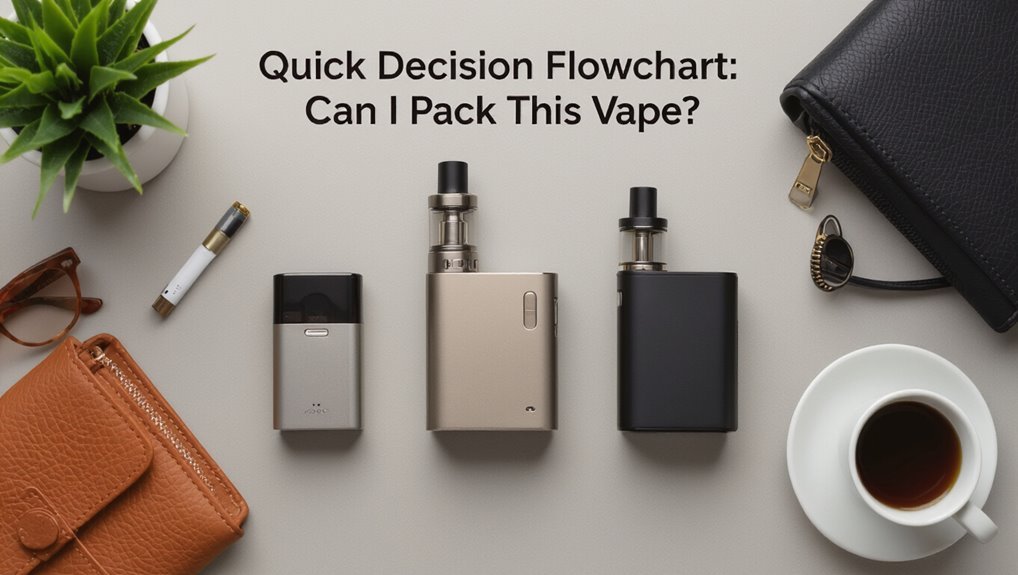
Wondering whether that vape goes in your bag or your carry-on? Use a simple checklist:
powered device—carry-on;
batteries removable—pack spares in carry-on with terminal protection;
e-liquids—follow liquid limits in carry-on;
empty or disposable devices—carry-on preferred.
If unsure, contact your airline.
Don’t check devices with batteries or e-liquids; doing so risks fire and confiscation.
Quick Answer: Can You Check Vapes in Luggage?
Can you check a vape in your luggage? Generally, no — most airlines require vapes and spare lithium batteries in carry-on only.
You should pack the device in your carry-on, remove spare batteries and carry them in protective cases, and follow airline-specific rules.
Always check your carrier’s policy before travel to avoid confiscation or delays.
Why Airlines Restrict Vapes: Fire Risk, Regulation, Liability
Since most carriers force vapes into the cabin rather than checked bags, it’s helpful to know why they do it: airlines worry about fire risk, regulatory compliance, and legal liability. You should follow cabin-only rules, keep devices accessible, and heed crew instructions to avoid incidents and fines.
| Concern | Why it matters |
|---|---|
| Fire | In-flight hazard |
| Rules | Compliance required |
| Liability | Legal exposure |
| Safety | Protect passengers |
Batteries First: Why Lithium-Ion Rules Dominate
Because lithium‑ion cells can short, overheat, and ignite without warning, airlines treat batteries as the primary safety concern for any vape in your luggage.
You should prioritize battery safety when packing. Consider these points:
- Carry-on recommended for devices with batteries.
- Protect terminals to prevent shorting.
- Keep devices off and insulated.
- Follow airline and manufacturer limits for capacity and quantity.
Rules for Spare Batteries in Checked Bags
Although checked baggage seems convenient, airlines and regulators generally forbid spare lithium‑ion batteries in checked bags for safety reasons.
You shouldn’t pack loose spare cells or power banks in checked luggage. Violations can lead to confiscation, fines, or travel delays.
Check airline and national rules before flying, and declare any large batteries when required to avoid penalties and safety incidents.
How to Pack Batteries Safely in Carry-On
1 clear rule: carry spare lithium batteries only in your carry-on, not checked luggage, and keep them protected so they can’t short-circuit, get crushed, or power on accidentally.
- Insulate terminals with tape.
- Use original cases or battery sleeves.
- Keep batteries separated to avoid contact.
- Pack them where you can access and inspect during security.
Battery Charge Levels and Storage Tips
When you store vape batteries for travel, keep them at a partial charge—around 30–50%—and in a cool, dry place so they stay stable and less likely to degrade or vent. You should insulate terminals, use original or dedicated cases, check manufacturer guidance, and avoid extreme temperatures.
| Tip | Action |
|---|---|
| Charge level | 30–50% |
| Storage | Cool, dry |
| Terminals | Insulate |
| Inspection | Regularly check |
Carry-On vs Checked Baggage: Core Differences for Vapes
Because airlines and regulators treat batteries and e-liquid differently, you’ll need to choose carry-on over checked baggage for most vaping devices and spare lithium cells.
Carry-on allows immediate oversight, prevents heat and pressure risks in the cargo hold, and makes it easier to comply with rules like terminal insulation and partial-charge requirements.
- Accessibility for inspections
- Reduced fire risk
- Easier compliance with limits
- Quick battery removal if needed
Packing Rechargeable Pod Systems and Mods Safely
When you pack rechargeable pod systems and mods, plan to carry them only in your carry-on so batteries stay under your control.
Remove or switch off tanks and secure battery contacts with tape or a dedicated case to prevent short circuits.
Check that spare lithium batteries are in your carry-on, protected, and within airline capacity limits.
Carry-On Only Devices
Most airlines require you to carry rechargeable pod systems and box mods in carry-on baggage, so pack them to prevent damage, accidental activation, and battery shorting.
You should:
- Turn devices off and lock settings.
- Remove pods/tanks and secure caps.
- Store devices in a protective case.
- Keep spare batteries in original packaging and separate from metal objects.
Battery Safety Steps
To pack rechargeable pod systems and mods safely, take a few simple battery precautions that prevent fires and device damage:
remove batteries when possible, cap terminals or use battery cases, set mods to lock mode, keep spare batteries in original or insulated cases, avoid loose metal objects, and carry devices in cabin baggage.
Declare high-capacity batteries to the airline if required.
Packing Disposable E‑Cigarettes and Single‑Use Vapes
Disposable e‑cigarettes and single‑use vapes you pack need special handling because they contain non-removable batteries and prefilled e‑liquid that airlines and security screeners treat differently from refillable devices.
You should:
- Keep them in carry‑on when possible.
- Protect devices from activation.
- Follow airline quantity limits.
- Declare if required.
Check carrier rules before travel.
How to Store E‑Liquids and Nicotine Salts
Storing e‑liquids and nicotine salts properly will keep their flavor and strength stable and reduce spill or safety risks during travel.
Pack bottles upright in sealed plastic bags, cushion them against impact, and keep them in carry-on when possible.
Label containers clearly, avoid extreme heat or freezing, and secure caps tightly.
Dispose of damaged bottles before packing to prevent leaks.
Wattage and Device Power Limits That Affect Travel
You’ve already taken steps to prevent leaks and protect bottles, but power settings and device wattage can also affect whether your vape is allowed in luggage and how it behaves during a trip.
Lower wattage reduces heat and battery strain. Check airline and regional rules.
Lower wattage reduces heat and battery strain—always verify specific airline and regional regulations before traveling with your device
Consider:
- Max device wattage limits
- Battery capacity (mAh/Wh)
- Recommended travel settings
- Device protections enabled
When a Vape Becomes Hazardous Cargo
If a vape has damaged cells, exposed wiring, a swollen battery, or illegal modifications, airlines and shippers will treat it as hazardous cargo and refuse transport. You’ll need to declare, remove batteries, or get professional disposal. Don’t try to hide defects.
| Issue | Action |
|---|---|
| Damaged cells | Declare/refuse |
| Exposed wiring | Dispose safely |
| Swollen battery | Professional help |
| Modified device | No transport |
International vs Domestic Airline Policies Compared
Although many airlines follow ICAO and IATA guidelines, international carriers often have stricter rules and more paperwork than domestic ones.
So you should check both your departure and arrival airlines before packing a vape. You’ll face varying limits, storage rules, and documentation.
Check these quickly:
- Battery removal requirements
- Carry-on vs checked rules
- Documentation needed
- Country-specific bans
How ICAO & IATA Guidance Affects Vape Travel
You should follow ICAO and IATA guidance when packing your vape to avoid surprises at the gate.
They make clear you must carry devices in carry-on baggage and comply with battery watt-hour limits plus spare battery rules.
They also reinforce liquid limits for e-liquids in cabin luggage.
Knowing these standards helps you plan storage and avoid confiscation or fines.
Carry-On Rules
Wondering what rules apply when you bring a vape in your carry-on? You must follow ICAO/IATA guidance and airline policies to avoid confiscation.
Consider:
- Pack device in carry-on, not checked baggage.
- Remove batteries if required by airline.
- Keep e-liquids within allowed limits and accessible for screening.
- Declare if asked and follow crew instructions to prevent safety issues.
Battery And Liquid Limits
ICAO and IATA set clear limits that directly affect how you pack vape batteries and e-liquids for air travel: spare lithium batteries generally must go in your carry-on and may be individually limited by watt-hour rating, while e-liquids follow the usual 100 ml/3-1-1 rules unless airline or country rules differ.
Check airline policies, pack batteries in terminals or original packaging, and seal liquids.
How National Aviation Authorities Set Local Rules
Because national aviation authorities interpret international standards to fit local risks and infrastructure, they’ll set specific rules on vaping devices, batteries, and e-liquids that can vary by country.
National aviation authorities adapt international rules to local risks, setting country-specific limits on vapes, batteries, and e-liquids.
You should check local guidance before travel.
Consider these factors:
- battery capacity limits
- allowed storage (carry‑on vs checked)
- e‑liquid volume caps
- transport packaging and declaration requirements
Which Countries Ban Vapes in Checked Luggage
Local aviation rules determine many details, but several countries go further and outright ban vapes in checked luggage to reduce fire risk from lithium batteries or leaking e‑liquids.
You’ll find outright bans in some nations across Asia, the Middle East and parts of Africa. Always check the specific airline and country regulations before packing—penalties and confiscation are common if you ignore local prohibitions.
Countries That Allow Vapes in Checked Luggage With Limits
While many countries restrict vapes in checked bags, several let you pack them there under specific conditions—so always confirm the limits before you travel.
You’ll find nations that allow checked devices if batteries are removed, tanks are empty, and devices are in protective cases.
Check examples and comply with airline rules:
- Remove batteries
- Empty tanks
- Use protective case
- Follow airline limits
How to Tell if Destination Laws Restrict Vaping Devices
Before you pack, check local vape laws at your destination to see if devices or e-liquids are banned or restricted.
Confirm airport rules too, since some terminals prohibit carrying vapes even where local law allows them.
If you’re unsure, contact the airline or the destination’s civil aviation authority for a definitive answer.
Check Local Vape Laws
Wondering whether you can use or carry a vape where you’re headed? Check local vape laws before travel:
- Search official government or tourism sites for vaping rules.
- Verify device, liquid nicotine limits, and age restrictions.
- Note public-place and hotel bans.
- Check penalties—fines or confiscation—to avoid surprises and legal trouble at your destination.
Confirm Airport Restrictions
After you check local vaping laws, you should confirm airport-specific rules since many airports and airlines impose stricter limits than city or national regulations. You’ll check airport websites, contact customer service, and review airline policies. Note signage and security officer instructions on arrival to avoid confiscation or fines.
| Source | What to check |
|---|---|
| Airport site | Device rules |
| Airline | Carry/checked policy |
| TSA/CA | Battery rules |
| Local authority | Fines |
Where to Find Your Airline’s Vape Policy Fast
Looking for your airline’s vape rules? You’ll want quick, reliable sources so you don’t guess. Check these:
- Visit the airline’s official website regulatory or baggage page.
- Use the airline’s search bar with “vape” or “battery.”
- Call customer service for confirmation and written reference.
- Check recent policy updates or travel alerts before packing.
Airline Vape Policies: Major U.S. Carriers
When you fly within or from the U.S., each major carrier sets clear rules on carrying vapes, usually allowing them in carry-on but banning them in checked bags; check specifics for battery limits, spare batteries, and e-liquid restrictions before you pack. You should verify airline sites for Delta, American, United, Southwest, and Alaska to confirm limits and packaging.
| Airline | Tip |
|---|---|
| Delta | Carry-on only |
| American | Battery rules |
| United | Seal e-liquid |
| Southwest | Label spares |
| Alaska | Ask ahead |
Airline Vape Policies: Major European Carriers
Because rules can vary by carrier and country, check each airline’s site before you pack: You’ll find most European carriers allow e-cigarettes and batteries in carry-on only, forbid lithium batteries in checked bags, and require spare batteries in protective cases.
Confirm battery limits and device storage. Common policies:
- Carry-on only
- Batteries protected
- No checked batteries
- Follow airport rules
Airline Vape Policies: Major Asian Carriers
If you’re flying with an e-cigarette in Asia, expect similar core rules across most major carriers: you’ll carry devices in cabin baggage, remove batteries if removable, and follow voltage/quantity limits for spare batteries and e-liquid.
| Airline | Cabin | Spare Batteries |
|---|---|---|
| ANA | Allowed | Yes, limited |
| Cathay | Allowed | Yes, limited |
| Singapore | Allowed | Yes, limited |
| China Southern | Allowed | Yes, limited |
Low‑Cost Carriers: Stricter Vape Rules to Expect
Though low-cost carriers aim to keep fares down, they often enforce tighter rules on vapes than full-service airlines.
You’ll face stricter limits and fines if you don’t comply. Check policies before travel.
- Carry-on only for devices
- Batteries must be protected
- Empty tanks may be required
- No in-flight use or charging
Cruise Ships and Trains: Vape Rules to Know
On ships and trains you’ll find rules that differ from airlines, so check each operator’s policy before you pack your device.
Cruise lines often ban vaping in cabins and limit batteries; they may allow sealed e-cigarettes in checked luggage with restrictions.
Trains vary by country and carrier—some permit vaping only in designated areas, others forbid it.
Always declare batteries and follow crew instructions.
Airport Security: What Triggers Inspection
Airport security inspects luggage when screening equipment or behavior raises safety concerns, and knowing the common triggers can help you avoid delays.
You should watch for items or actions that prompt checks and prepare accordingly.
- Unfamiliar electronics or dense packing
- Batteries or loose cells
- Suspicious liquids or containers
- Nervous or evasive behavior
How to Handle Secondary Inspections or Confiscation
If you’re pulled aside for a secondary inspection or an item like a vape is confiscated, stay calm and cooperate—doing so speeds things up and reduces stress for you and the staff.
Ask clearly which rule was violated, present ID and travel documents, and answer questions briefly.
Accept any confiscation politely, request a receipt if available, and note the officer’s name for follow-up.
What to Do If Your Vape Is Seized at Security
If security seizes your vape, ask the officer exactly what the next steps are and whether you can retrieve it later.
Find out the procedures for filing an appeal or a claim if you believe the seizure was mistaken.
If recovery isn’t possible, ask about safe disposal or replacement options so you can make an informed choice.
Ask Security Officer Next Steps
Wondering what to do next when a security officer seizes your vape? Ask calmly, document details, and follow instructions.
Then consider:
- Ask why it was seized and which rule applies.
- Request written receipt or item tag.
- Note officer name, time, and location.
- Ask where to inquire later for status or retrieval.
Stay polite, cooperative, and clear about next steps.
Retrieve Or Appeal Procedures
After you’ve asked the officer for details and recorded names and times, you’ll want to know how to get your vape back or appeal the seizure. Keep receipts, take photos, and request a written notice. Follow airport or agency appeal steps—deadlines matter. Contact customer service and file a formal complaint if needed.
| Item | Action |
|---|---|
| Receipt | Keep |
| Photo | Take |
| Notice | Request |
| Deadline | Note |
| Appeal | File |
Replace Or Dispose Options
When your vape is seized at security, you’ll need to decide quickly whether to replace it before your trip or let it be disposed of; weigh the cost, how essential it’s for your travel, and any airline or local regulations that might affect recovery.
- Buy a cheap replacement locally.
- Ask security about retrieval windows.
- Check airline and local laws for returns.
- Dispose if recovery costs exceed value.
Declaring Vapes at Customs and Immigration
If you’re carrying a vape or e-liquids across a border, you need to declare them according to the entry country’s customs rules; failing to do so can lead to fines, confiscation, or delays.
Check customs forms and local regulations before arrival, list device(s) and liquid quantities truthfully, keep receipts, and be ready to present them.
Follow officer instructions to speed processing.
Legal Risks Abroad: Fines, Arrests, Confiscation
When you travel with vapes, you can face hefty fines or other penalties if they’re restricted where you land.
In some countries you risk arrest or having devices and e-liquids confiscated on the spot.
Know local laws and carry proof of compliance to reduce those risks.
Fines And Penalties
Although you might think bringing a vape through customs is a minor issue, many countries treat it as a serious offense and impose steep fines, confiscation, or even arrest for possession or use.
You should know penalties vary by place and can hit your wallet hard.
- Heavy monetary fines
- Travel bans or entry refusal
- Mandatory court appearances
- Seizure of device
Arrests And Confiscation
Because laws on vaping differ widely, carrying a vape can lead to immediate arrest and device seizure in some countries, especially where e-cigarettes are banned or strictly regulated.
You could face detention, fines, or criminal charges; authorities may confiscate devices and liquids without refund.
Check local rules before travel, declare items if required, and pack alternatives to avoid legal trouble and delays.
Traveling With Medical Nicotine Devices
If you rely on medical nicotine devices while traveling, plan ahead to guarantee uninterrupted access and smooth security checks.
Carry prescriptions and doctor’s note, keep devices and cartridges in carry-on, declare at security if asked, and know local laws.
Pack prescriptions and doctor notes, keep devices and cartridges in carry-on, declare at security, and check local laws.
- Prescription copy
- Device in protective case
- Original packaging for cartridges
- Research destination rules
How to Minimize Fire Risk in Checked Luggage
When packing vapes for checked luggage, separate spare batteries from devices and carry them in your carry-on when allowed.
Put devices and batteries in a fire-resistant container or pouch to contain any thermal events.
Make sure every device is fully powered off or has its batteries removed to prevent accidental activation.
Pack Batteries Separately
Although it might seem convenient to leave batteries installed, you should remove and pack spare lithium batteries separately from your checked luggage to cut the risk of short circuits and fires.
Store them in carry-on if allowed; insulate terminals; keep originals or plastic caps; and limit quantity.
- Insulate terminals
- Use original cases
- Keep in carry-on
- Limit quantity
Use Fire-Resistant Containers
Because checked bags can trap heat and limit access, use a certified fire-resistant container to reduce the chance of a battery or device fire spreading through your luggage.
Place devices and spare batteries inside the container, seal it per manufacturer instructions, and secure it within your suitcase.
These containers contain flames and smoke longer, giving crew and responders more time to address incidents and limiting luggage damage.
Power Off Devices
If you’re packing vapes in checked luggage, power them off completely to cut the chance of accidental activation and overheating; flip any removable battery switches, lock any fire buttons, and remove pods or cartridges if the device design recommends it.
- Store batteries separately in protective cases.
- Use original packaging when possible.
- Tape over fire buttons.
- Keep devices cool and cushioned.
Protective Packing: Cases, Insulation, and Tape
When you pack a vape, use a dedicated hard case or a padded pouch to prevent impacts and protect delicate parts; soft-lined compartments and molded foam keep devices from shifting and reduce the risk of accidental activation.
Remove tanks, store e‑liquid separately in sealed containers, insulate batteries in original sleeves, tape terminals or use battery cases, and place items centrally to avoid crushing.
Labeling and Documentation to Help at Security
Clear labeling and concise documentation can speed you through security checks and reduce the chance your vape gets flagged or confiscated.
Clear labeling and handy documentation help speed security checks and lower the risk your vape is flagged or seized.
You should clearly tag cases, carry receipts, and place liquid cartridges in sealed bags. Provide accessible documentation if asked and cooperate with officers.
- Label device and accessories
- Include purchase receipt
- List contents briefly
- Keep documents accessible
Battery Charge Level and Storage Recommendations
Because batteries pose the biggest safety risk, keep your vape battery partially charged—around 30–50%—and store spare batteries in a protective case away from metal objects.
You should turn devices off, use original or approved chargers, and insulate battery terminals.
Check batteries for damage; don’t pack swollen or dented cells.
Follow airline and TSA rules to avoid delays or confiscation.
Carry‑On Packing Checklist for Vapes and Accessories
If you’re flying with a vape, pack it in your carry‑on so you can keep batteries and devices under immediate control and comply with airline rules.
Pack smart:
- Device in a protective case.
- Spare batteries in a manufacturer or plastic case with terminals covered.
- E‑liquid bottles sealed in a clear quart bag, following liquid limits.
- Charger and tools organized and accessible for inspection.
Checked‑Bag Packing Checklist When Allowed
If you’re allowed to pack a vape in checked baggage, follow strict battery safety measures like removing batteries and insulating terminals.
Prepare the device by emptying tanks or securing removable parts to prevent leaks or activation.
Keep liquids and e‑liquid within airline limits and in sealed containers to avoid spills and rule violations.
Battery Safety Measures
When you’re allowed to pack vapes with batteries in checked luggage, take strict steps to prevent short circuits, accidental activation, and heat buildup; secure cells and limit risks.
- Insulate terminals with tape.
- Remove batteries from devices when possible.
- Use original or certified battery cases.
- Keep batteries cool and separate from metal objects.
Vape Device Preparation
1 clear checklist helps you get your vape ready for checked baggage by preventing discharge, damage, and regulatory issues.
Remove batteries if removable and pack them in carry-on; otherwise guarantee device is fully powered down.
Empty tanks and secure caps to avoid leaks.
Wrap device in protective padding, place in a sturdy case, and label clearly for easy inspection.
Liquids And E‑Liquid Limits
After you’ve secured the device itself, handle liquids and e‑liquid limits with care to prevent leaks, damage, or regulatory trouble in checked baggage.
Pack bottles upright in sealed plastic, label nicotine strength, and note airline limits. Follow these steps:
- Use leak‑proof caps and double‑bagging.
- Keep originals with child‑resistant caps.
- Limit total nicotine e‑liquid per airline rules.
- Declare if required.
How to Travel With Spare Coils, Tanks, and Chargers
Packing spare coils, tanks, and chargers neatly keeps your vape usable and avoids damage or airline headaches. Pack parts in labeled, padded pouches; remove batteries from devices; carry chargers in hand luggage; keep tanks empty and sealed. Bring receipts for unfamiliar parts. Follow airline battery rules to avoid confiscation.
| Item | Storage | Tip |
|---|---|---|
| Coils | Padded case | Label |
| Tanks | Empty, sealed | Protect |
| Chargers | Carry-on | Wrap |
| Batteries | Isolated | Terminal caps |
Airline Crew Tips for Smooth Travel With a Vape
When packing your vape, choose carry-on over checked luggage to keep batteries and devices accessible and compliant with airline rules.
Follow battery safety rules by keeping spare batteries in protective cases, avoiding loose cells, and installing batteries in the device when possible.
Expect strict airport screening—declare if required, remove devices for inspection, and have chargers and tanks organized for quick access.
Carry-On Vs Checked
If you fly with a vape, keep it in your carry-on rather than checked baggage—airline crews and regulators generally require batteries and devices with batteries to stay in the cabin for safety and quick access.
You should:
- Store device in protective case.
- Remove loose batteries into a separate pouch.
- Power devices off and prevent activation.
- Follow airline policies and declare when asked.
Battery Safety Rules
Because lithium batteries can overheat or short out, airline crew want you to handle them cautiously and predictably to avoid delays or safety risks.
Carry spare batteries in your carry‑on, individually protected from contact and damage. Keep devices powered off, cover exposed terminals, and avoid loose batteries in checked baggage.
Follow airline limits on quantity and watt‑hour ratings to prevent confiscation.
Airport Screening Tips
1 clear habit will speed you through security: keep your vape and batteries accessible, powered off, and separately packed so you can show them quickly when asked.
When screening, stay calm, follow agents’ instructions, and declare devices if required.
- Remove vape and batteries
- Power off device
- Place items in bin
- Answer questions concisely
Handling Layovers and Transfers With Vapes
When you have a layover or need to transfer between flights, keep your vape and batteries accessible and compliant with each carrier’s rules so you can respond quickly to staff requests or security checks.
Store batteries in protective cases, carry your device in cabin baggage, and know transit country regulations.
Don’t use or charge vapes in terminals where prohibited, and declare items if asked.
Renting or Buying Vapes at Your Destination
If you plan to rent or buy a vape at your destination, check local laws, age limits, and vape shop policies first so you don’t end up with an illegal or incompatible device.
You should:
- Verify device compatibility with local chargers and batteries.
- Ask about refill availability and restrictions.
- Confirm nicotine strength limits.
- Keep receipts and registration in case authorities request proof.
Warranty & Insurance When Flying With Vapes
Check your vape’s warranty limits before you fly so you know if damage or loss during transit is covered.
Remember that airline insurance usually won’t cover personal electronics like vapes, so you may need travel or homeowners’ insurance for broader protection.
Keep receipts, photos, and any airline reports handy to support a claim.
Warranty Coverage Limits
Anyone who travels with a vape should know that manufacturers’ warranties and travel insurance often limit or exclude coverage for damage or loss that occurs in transit, especially when batteries are involved.
You should check specifics and keep receipts. Consider:
- Warranty exclusions for battery damage
- Proof-of-purchase requirements
- Domestic vs. international policy limits
- Claim timelines and documentation
Airline Insurance Implications
Beyond warranty limits, you’ll also want to understand how airlines and insurers treat vapes during flights, since coverage can change dramatically when devices are in checked or carry-on baggage.
Check your travel insurance and airline policies: some deny loss or damage for lithium batteries in checked luggage, while others require declaration.
You should document value before travel and follow packing rules to preserve potential coverage.
Claim Documentation Needed
When you need to file a warranty or insurance claim for a vape damaged or lost during travel, gather clear, dated evidence: photos of the item and packaging, your purchase receipt or serial number, boarding pass and baggage tags, and any airline incident reports.
Follow these steps:
- Photo documentation
- Proof of purchase/serial
- Travel documentation
- Airline reports and timelines
Recent Enforcement Trends and Policy Changes to Watch
As regulators tighten inspections and carriers update their policies, you’ll see more consistent enforcement of rules around vapes in checked and carry-on luggage.
Expect clearer labeling requirements, stricter battery handling protocols, and targeted screening for illicit or modified devices.
Airlines and airports will publish guidance more frequently, and compliance checks will increase, so stay informed and follow carrier-specific instructions to avoid delays or device seizure.
Common Traveler Mistakes That Lead to Confiscation
You can get your vape confiscated by packing batteries loose or unprotected, which airlines and security treat as a fire risk.
Bringing prohibited vape liquids—like high-nicotine or banned flavors—also invites seizure and possible fines.
Check battery rules and liquid restrictions before you pack to avoid surprises.
Batteries Packed Incorrectly
If you toss spare lithium batteries into checked bags or leave device cells loose in your luggage, security officers will often seize them for safety reasons.
You should pack batteries properly to avoid confiscation. Follow these steps:
- Remove batteries from devices.
- Insulate terminals with tape.
- Carry spares in carry-on only.
- Use original or protective cases.
Prohibited Vape Liquids
Wondering which vape liquids get flagged at security? You’ll get items confiscated if liquids exceed limits, contain alcohol or illegal THC, or lack proper labeling. Pack only compliant, clearly labeled e-liquids in carry-on 100ml containers, or leave them home.
| Issue | Example |
|---|---|
| Overlimit | Large bottles |
| Illegal content | THC oils |
| Unlabeled | Homemade mixes |
| Alcohol-based | High-proof e-liquid |
Quick Packing Checklist: Final Decision Guide
1 clear checklist helps you make the final call on what goes in your carry-on and checked bags. You’ll confirm legality, battery status, liquid limits, and packing method before you leave.
Follow this quick list to decide confidently:
- Verify device legality and airline rules
- Remove or protect batteries
- Pack e-liquids within limits in carry-on
- Store device in protective case
Resources and Links to Current Airline and Authority Rules
Because rules change frequently, check official airline and government sources before you pack so you’re following the latest guidance on carrying vapes, batteries, and e-liquids.
Because rules change, always check your airline and government sites before packing vapes, batteries, or e-liquids.
Visit your airline’s website, the national aviation authority, and TSA or equivalent pages for rules and limits.
Save links, note battery rules, and confirm liquid allowances.
Contact customer service if anything’s unclear to avoid surprises at the airport.
Frequently Asked Questions
Can I Store a Vape in Checked Luggage Inside a Checked Battery-Safe Hard Case?
You can’t; airlines usually prohibit lithium-ion batteries and vaping devices in checked luggage. You’ll need to pack the vape and batteries in your carry-on, keep batteries protected, and follow airline and TSA rules to avoid confiscation.
Are Vape Cartridges or Thc/Cbd Liquids Restricted Differently Than Nicotine E-Liquid?
Yes — they’re treated differently: you’ll face stricter rules for THC/CBD liquids depending on local laws and airline policies, while nicotine e-liquid mainly follows standard battery and liquid limits, so check destination and carrier rules.
Do Vape Pens With Built-In Non-Removable Batteries Count as Spare Batteries?
No, vape pens with built-in non-removable batteries aren’t considered spare batteries; you’ll need to carry them in your carry-on following airline and TSA rules, guarantee they’re powered off, and protect any exposed terminals.
Will Travel Insurance Cover Damage or Fire Caused by My Vape During a Flight?
Usually not—insurers often exclude damage from prohibited items or negligence, and airlines limit liability for fires from devices. You should check your policy, declare the vape, and consider specialized coverage or rider options.
Can I Ship a Vape or Spare Batteries to My Destination Instead of Carrying Them?
Yes — you can ship a vape and spare batteries, but you should check carrier rules. Many shippers restrict lithium batteries or require special packaging and declarations, so confirm regulations, insurance, and destination laws before sending them.
Conclusion
You should avoid checking vape devices and spare lithium-ion batteries—airlines and regulators usually require you to carry them in the cabin because of fire risk and stricter battery rules. If you must check a device, remove the battery, tape terminals, and follow your airline’s specific policy; still expect possible confiscation. Double-check rules before travel, pack cartridges and e-liquid in carry-on within airline limits, and keep documentation handy to reduce surprises at security.