
Can TSA See Everything in Your Bag
TSA can see most items in your bag using X‑ray and CT scanners, which show shapes, densities and layered views; small or well‑obscured objects sometimes need manual checks. Agents follow safety‑focused protocols, may open compartments, swab for explosives, or ask you to remove electronics, and they’ll offer private screening if needed. Pack neatly and separate liquids and devices to avoid extra scrutiny. Keep devices powered down and encrypted, and keep going to learn what to expect next.
Can TSA See What’s Inside My Bag?
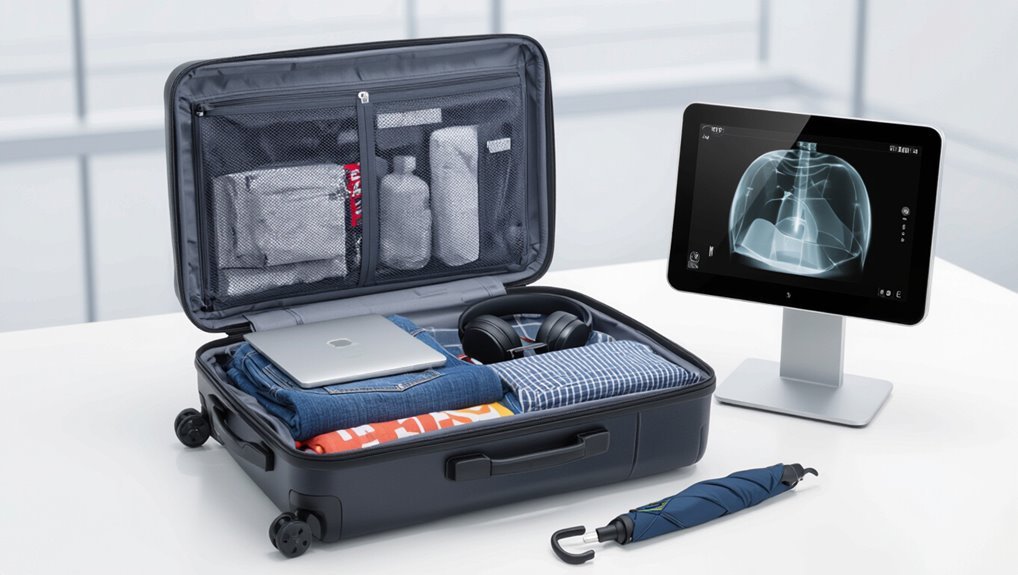
Curious whether TSA agents can look inside your bag? You should know agents can inspect contents during screening or if alarms trigger.
They’ll view images on scanners and may open bags for physical checks. You’re allowed to request a private screening.
Keep prohibited items out and pack clearly so agents can verify contents quickly, reducing delays and minimizing intrusive searches.
How TSA Screening Actually Works
You’ll first encounter machines like X‑rays and CT scanners that flag unusual shapes. Then officers may open your bag for a manual inspection if something’s unclear.
You can expect procedures designed to balance thoroughness with your privacy and safety, including rules about what officers can view and how they handle belongings.
Ask questions if you’re unsure about a step so you know why your bag was screened or opened.
Screening Technology Types
Although the process can seem opaque, TSA uses a range of screening technologies—X-ray imaging, computed tomography (CT), millimeter-wave scanners, explosive trace detection (ETD), and canine teams—to spot threats in bags and on passengers.
You’ll encounter layered tools: X-ray/CT reveal shapes and densities, millimeter-wave checks bodies, ETD swabs detect residues, and dogs catch odors. Each complements the others to reduce risk.
Manual Bag Inspections
The machines do a lot of the heavy lifting, but sometimes officers need to handle a bag to be certain nothing dangerous is missed.
You’ll be asked to open compartments, remove items, or repack while an officer inspects suspicious shapes, liquids, or electronics.
Manual checks follow strict procedures and are routine; cooperating speeds resolution and helps guarantee safe, timely screening for everyone.
Privacy And Safety
Because TSA screenings balance safety with personal privacy, officers follow clear rules about what they can look at and touch during checks.
You’ll see transparent procedures: searches focus on threats, not snooping. You can request a private screening or observer. Officers document unusual incidents and respect sensitive items.
- Limits: threat-focused search
- Options: private room, companion
- Records: incident logs and explanations
What X-Ray Machines Detect and Miss
When your bag goes through the X-ray, the machine highlights shapes and densities so agents can spot electronics, liquids in containers, and dense metals.
It won’t clearly show most plastics, powders, or the exact contents of opaque pouches, so some items can be ambiguous.
Knowing what X-rays reveal and what they miss helps you pack smarter and be ready for possible inspections.
What X-Rays Reveal
Although X-ray machines can quickly show shapes and densities inside your bag, they don’t always tell the whole story.
You’ll see outlines, contrasts, and packed layouts that help officers spot potential threats. They reveal metal, dense electronics, and layered items.
You can expect:
- Clear metal and batteries visible.
- Electronics and circuit shapes.
- Dense organic versus inorganic contrasts.
What X-Rays Miss
Curious what X-rays can’t show you? You won’t see certain plastics, thin organic materials, or nuanced chemical compositions clearly; density and shape matter.
X-rays miss low-contrast items, hidden compartments lined with similar materials, and trace residues. They also can’t read text or identify scents.
Agents rely on experience, manual inspection, swabs, and complementary tech to catch what images don’t reveal.
What Advanced Imaging and CT Scanners Reveal
If you’re flying soon, it helps to know what advanced imaging and CT scanners actually show inside your bag: they create detailed, layered images that distinguish shapes, densities, and certain materials so TSA officers can spot potential threats without opening every item.
They’ll reveal:
- Compact shapes and concealed compartments.
- Organic versus inorganic material density.
- Unusual object arrangements that trigger further inspection.
Can TSA See My Phone, Laptop, and Screens?
Can TSA see the screens and electronics in your bag? You’re scanned by X-ray and CT; devices show shapes and densities, not detailed screen content. Officers can identify phones, laptops, tablets, and batteries, but they don’t view pixel-level images.
| Device | Visible Features | Privacy Level |
|---|---|---|
| Phone | Outline, battery | Moderate |
| Laptop | Chassis, drive | Moderate |
| Tablet | Shape, accessory | Moderate |
Do Officers Ever Ask You to Power On Devices?
Ever been asked to power on a device at security? You might be. Officers sometimes request a simple boot to verify a device is functional and not a threat.
Cooperate, keep batteries charged, and know limits.
- Phone powers on quickly — usually enough.
- Laptop may need full boot.
- If it won’t start, expect additional screening.
How TSA Distinguishes Prohibited From Legal Personal Items
Knowing how officers may ask you to power on a device helps explain the next step: how TSA separates items that are clearly legal from those that aren’t allowed.
You’ll see screens and sensors highlight shapes and densities; officers compare those images to prohibited item profiles. If something’s ambiguous, they’ll ask questions, request removal, or further inspection to confirm legality before you proceed.
When and Why TSA Opens Carry-On or Checked Bags
When a screening image, an alarm, or a random check raises concern, TSA officers will open your carry-on or checked bag to inspect its contents more closely; they do this to verify that nothing prohibited, dangerous, or improperly packed is being transported.
You’ll usually be present, and officers will document findings.
Typical reasons include:
- X-ray anomaly suggesting prohibited items.
- Alarm from screening equipment.
- Random security check.
How TSA Treats Opaque Containers, Wraps, and Liners
If TSA opens your bag and finds items in opaque containers, wrapped, or lined, officers will treat those coverings as part of the inspection and may ask you to remove or unwrap them so they can view the contents directly.
You should comply; refusal can delay you or lead to a secondary inspection.
TSA may also open sealed liners to verify prohibited items, then reseal or document.
What Privacy Policies Limit TSA Searches
Although TSA has broad authority to screen baggage for safety, several privacy policies and procedures limit how officers conduct searches and handle your personal information.
Although TSA can screen baggage broadly, privacy policies and procedures limit searches and protect your personal information.
You can expect restrictions on access, retention, and disclosure of images and data.
These safeguards guide officer conduct and your privacy protections:
- Limited image access and review protocols.
- Short retention and secure storage rules.
- Restricted sharing and audit trails.
Key Laws Travelers Should Know About TSA Searches
Because TSA searches involve both security and personal rights, you should know the key federal laws that define what officers can and can’t do.
You’re governed by statutes like the Aviation and Transportation Security Act, Fourth Amendment protections against unreasonable searches, and Privacy Act limitations on data collection.
Administrative regulations and agency policies set procedures, complaint processes, and boundaries for screening conduct.
How to Pack to Reduce Invasive Inspections and Delays
When you pack with screening in mind, you’ll speed up the process and cut the chance of invasive searches.
Organize items so bins and trays show clear outlines, separate liquids and electronics, and label medications. Follow carry-on rules and remove prohibited items before reaching security.
- Neat pouches for cables and chargers
- Clear quart bag for liquids
- Easy-access pouch for documents
How to Protect Sensitive Items and Digital Data
When you pack electronics, put them in padded sleeves and carry the most important devices in your carry-on so they’re never out of sight.
Stash passports, boarding passes, and any sensitive documents in RFID-blocking wallets or hidden compartments to prevent skimming and casual exposure.
If an officer needs to inspect a device, ask for privacy or a remote inspection and keep backups of important data in encrypted cloud storage or a separate physical drive.
Protect Electronic Devices
1 simple step to protect your electronics is to think of them as both fragile and confidential: pack devices in padded compartments, remove or lock external storage, and power them down to reduce data-collection risks and battery-swelling incidents.
- Wrap laptops and tablets in sleeves, separate from heavy items.
- Store chargers and cables neatly to avoid pressure points.
- Use encrypted drives and strong passwords before travel.
Conceal Sensitive Documents
Because sensitive documents can expose your identity or financial information, pack them so they’re both hidden and protected: use slim, lockable pouches or RFID-blocking sleeves, keep originals and copies separated, and store digital backups on encrypted drives or password-protected cloud accounts you can access only after reaching a secure location.
When traveling, scan essential papers, encrypt files, and never leave documents unattended in transit.
What to Expect During Secondary Screening and Pat-Downs
Secondary screening can feel intrusive, but it’s a routine security step that helps resolve alarms or unclear items in your carry-on.
Secondary screening may seem intrusive, but it’s a routine step to clarify alarms and unclear carry-on items.
You’ll be guided to a private area, asked questions, and possibly shown images. Officers use gloves and explain each action. You can request a witness.
- Bag inspection and hand search
- Body pat-down or wand scan
- Item clarification and return decisions
How to Challenge or Report an Improper TSA Search
If you think your bag was searched improperly, start by documenting what happened—note the time, location, officers’ names or badge numbers, and take photos if you can.
Keep any receipts or papers from the screening and write down witness contact info.
Then file a complaint with TSA’s Traveler Redress Inquiry Program (TRIP) or speak to the local TSA manager to guarantee your report is recorded.
Document The Search
When a TSA search feels improper, document what happened right away so you preserve accurate details and strengthen any complaint you file.
Note who searched you, time, location, and officer badge numbers. Record what was opened, taken, or photographed, and gather witness names.
- Write a clear timeline.
- Take photos if allowed.
- Save receipts and boarding pass.
File A Complaint
After you document the search, file a complaint promptly to preserve your account and push for review. You’ll contact TSA via their website, call, or mail, state facts, attach photos, and request investigation. Keep copies and follow up if needed.
| Step | Action | Timeline |
|---|---|---|
| 1 | Gather evidence | Immediately |
| 2 | Submit complaint | 48 hours |
| 3 | Follow up | 2 weeks |
| 4 | Escalate | If unresolved |
Frequently Asked Questions
Can TSA Search Checked Baggage After I File a Lost-Item Claim?
Yes — if you file a lost-item claim, TSA or airport authorities can still inspect your checked bag during routine screening or security follow-up. You’ll be notified per policy, and you can request to be present.
Can I Request a Female Officer for a Body Search at All Airports?
Yes — you can request a female officer for a body search, and TSA will accommodate when reasonably possible; availability depends on staffing and airport size, so you might need to wait or accept alternative screening options.
Do TSA Officers Retain Images of My Electronic Device Screens?
No, TSA generally doesn’t retain images of your electronic device screens; they may view them during inspections but typically won’t save or photograph screen contents unless needed for a specific security or law enforcement reason.
Can TSA Inspect Items Mailed Through Airport Freight or Courier Services?
Yes — TSA can inspect items mailed through airport freight or courier services when they screen cargo; you’ll usually have notices, and they’ll open or X-ray shipments if required for security, following agency and carrier procedures.
Are There Penalties for Photographing TSA Screening Processes?
You can photograph most TSA screening areas, but you shouldn’t interfere; federal rules ban obstructing operations. If you disrupt, refuse instructions, or capture sensitive security info, you could face fines, seizure of images, or arrest.
Conclusion
In short, TSA can see many items in your bag—shapes, densities, electronics, and some organic materials—but not every detail. You can reduce invasive checks by packing neatly, using clear cases for liquids, and removing electronics when prompted. Protect sensitive data with encryption and keep valuables in carry-on pockets. If you think a search crossed the line, ask for an explanation, request a supervisor, or file a complaint. Stay calm and know your rights.
