Can Powerbank Be Carried in Hand Luggage
Yes—you can bring a powerbank in your hand luggage, but its watt‑hour rating, condition, and airline rules matter. Keep it in your carry‑on (not checked), protect terminals from short circuits, and avoid swollen or damaged units. Under 100 Wh is generally fine; 100–160 Wh needs airline approval and is limited; over 160 Wh is usually banned. Carry proof of capacity and be ready for inspection, and keep going to learn practical packing and approval tips.
Quick Answer & What To Do Now
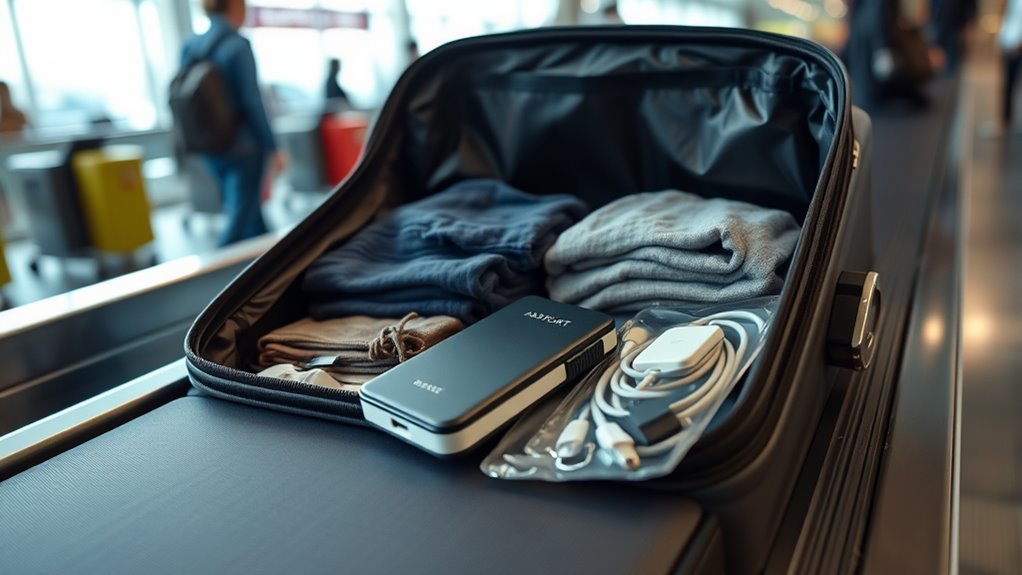
If you’re carrying a powerbank, keep it in your hand luggage and not in checked baggage—airlines and aviation authorities require that so the battery stays accessible and can be handled safely.
Quick answer: yes, you can take it onboard if it meets capacity limits and is switched off. Check the mAh or Wh rating, follow airline rules, and declare it if required.
Quick answer: you can bring a powerbank onboard if it meets capacity limits, is switched off, and declared when required.
Pack it where you can reach it for inspections, protect terminals from shorting, and avoid stashing it in checked bags or external pockets where it might be crushed.
If unsure, contact your airline before you travel.
Quick Checklist: Pack Your Powerbank Correctly
When packing your powerbank, follow a short checklist to make sure it’s allowed, accessible, and safe. Keep it in your carry-on, not checked baggage, and place it where staff can inspect if needed. Protect terminals with tape or original cover to prevent short circuits. Carry proof of capacity if asked.
- Stow it upfront: easy to reach, reduces stress.
- Shield terminals: small action, big peace of mind.
- Label or document capacity: avoids delays and helps you feel confident.
Stick to rules, stay calm, and your device won’t cause problems.
Why Lithium Powerbanks Are Restricted on Planes
You should know airlines limit lithium powerbanks because they can pose a fire risk if damaged or defective. Regulators also set energy-density limits to prevent high-capacity units from causing larger incidents.
And you’ll want to avoid short-circuit hazards by keeping powerbanks in carry-on, protected from metal objects and rough handling.
Fire Risk Concerns
Because lithium-ion cells can short, overheat, or suffer internal damage, they pose a real fire hazard aboard aircraft. Regulators limit powerbanks to reduce the chance of a battery fire that crew can’t easily control. You should know a single failing cell can ignite surrounding luggage, spread toxic smoke, and resist extinguishing.
That’s why you’re asked to carry them in the cabin, not checked bags, and why airlines inspect damaged or swollen units. Treat powerbanks with care: avoid drops, heat, and counterfeit products.
Consider these risks:
- Panic when smoke fills a confined cabin
- Loss of personal possessions and devices
- Threat to passenger safety and flight continuity
Energy Density Limits
Those fire risks are why regulators set strict energy-density limits for lithium powerbanks carried in the cabin. You’ll see capacities listed in watt-hours (Wh); airlines restrict items above about 100 Wh and often allow 100–160 Wh with airline approval.
That rating tells you how much energy the pack stores, which correlates to potential heat and fire severity if damaged. You should check each powerbank’s Wh printed on the device or calculate it from mAh and voltage.
Carry only allowed sizes in your hand luggage, declare larger units when required, and get airline permission for borderline capacities to avoid confiscation.
Short-Circuit Hazards
How can a seemingly harmless powerbank turn into a major hazard on a plane? You mightn’t notice damage, frayed cables, or loose contacts until a short circuit ignites thermal runaway. Lithium cells can overheat, emit smoke, or explode, endangering everyone aboard.
You should inspect devices, keep terminals protected, and never pack loose batteries with metal objects.
- Imagine smoke in the cabin—panic spreads fast.
- Think of a tiny spark starting a fire you can’t fight at altitude.
- Picture emergency diversion and injured passengers—preventable with simple care.
How To Read Your Powerbank’s Capacity (Wh)
To know if your powerbank is allowed on a plane, you’ll need its capacity in watt-hours (Wh).
If the label only shows milliamp-hours (mAh), convert it to Wh by multiplying mAh by voltage (usually 3.7V) and dividing by 1000 (Wh = mAh × V / 1000).
Always check the manufacturer label first—it may already list Wh or provide the information you need for the calculation.
Convert mAh To Wh
Since battery labels usually show capacity in mAh but airlines and regulations care about Wh, you’ll want to convert milliamp-hours to watt-hours to know if your powerbank’s allowed in carry-on.
Use this simple formula: Wh = (mAh ÷ 1000) × V. Most powerbanks use 3.7V (battery cell voltage), so a 20,000mAh pack is about 74Wh (20 × 3.7).
That matters because limits often sit at 100Wh. Convert before travel to avoid surprises and keep devices safe.
- Calculate precisely — don’t guess.
- Feel calm when numbers check out.
- Act fast if you exceed limits.
Check Manufacturer Label
Although manufacturers sometimes print only mAh, you should look for the watt-hour (Wh) rating on the label or in the spec sheet to confirm your powerbank’s legal carry-on status.
Check the sticker, molded text, or packaging for “Wh” or a value like “14.8V 26.8Wh.” If only mAh appears, note the nominal voltage (usually 3.7V) and convert mAh to Wh: (mAh/1000) × V = Wh.
Verify the model number and consult the manufacturer’s website or manual for official Wh. Keep screenshots or a PDF of specs on your phone to show security staff if asked.
Convert mAh and Volts to Watt‑Hours Fast
When you see a powerbank’s capacity listed in mAh and its voltage, you can quickly convert those numbers to watt‑hours (Wh) to check airline limits; simply multiply milliamp‑hours by volts and divide by 1000.
Do the math: 10,000 mAh at 3.7V equals 37 Wh (10000 × 3.7 ÷ 1000). That number tells you if the device fits common carry rules.
Keep a small note or calculator app so you won’t panic at security.
Here’s how that conversion feels:
A quick calculation brings relief, confidence, and calm — no more scrambling at security.
- Relief when the Wh fits your flight.
- Confidence knowing you did the math.
- Calm avoiding last‑minute disposal.
ICAO & IATA Limits Every Traveler Should Know
Now that you can convert mAh and volts to watt‑hours, you’ll want to compare that Wh number to the rules set by ICAO and IATA before packing your powerbank.
You must carry powerbanks in cabin baggage only; checked luggage is generally prohibited.
Powerbanks up to 100 Wh are allowed without airline approval.
Between 100 Wh and 160 Wh you need airline approval and usually a limit of two spare batteries.
Above 160 Wh they’re forbidden for passenger aircraft.
Labeling with Wh is required or airlines will calculate it.
Always check your carrier’s policy too — some impose stricter limits or additional documentation.
How Airline Rules Map to Regulator Limits
When you check an airline’s rules, you’ll notice they often mirror ICAO/IATA standards but can add restrictions or require approvals.
Pay attention to watt-hour (Wh) limits—most airlines let batteries under 100 Wh in carry-on, while 100–160 Wh need airline permission and over 160 Wh are usually banned.
Know both the regulator limits and the carrier’s policy so you can comply without surprises.
Airline Policies Vs. Regulations
Curious how a powerbank that’s perfectly legal by aviation regulators can still get you turned away at check-in? You’ll find airlines add layers: they interpret regulator watt-hour guidance differently, impose carrier-specific limits, and enforce packaging or declaration requirements.
That mismatch can surprise you, especially on budget or international carriers. Know both regulator rules and your airline’s policy before travel. Check the airline website and call if unclear; don’t assume compliance equals acceptance.
Emotional checklist:
- Frustration — unexpected refusal at the gate.
- Relief — advance confirmation avoids hassle.
- Confidence — you’ll travel prepared and compliant.
Watt-Hour Limits Explained
Because regulators set watt-hour thresholds but airlines interpret and enforce them differently, you should understand both the numeric limits and how carriers apply them.
You’ll see common regulator cutoffs: under 100 Wh is broadly allowed in carry-on without approval; 100–160 Wh needs airline approval and is limited in quantity; over 160 Wh is generally prohibited.
Airlines may be stricter, limit quantity per passenger, or ban certain brands.
Check your battery label for Wh (or calculate Wh = Ah × V).
Always declare batteries if required, pack them in carry-on, protect terminals, and confirm the carrier’s policy before flying.
Typical Carry‑On Rules for Powerbanks (By Airline)
If you’re packing a powerbank for a flight, know that airlines share common limits but differ on exact watt‑hour (Wh) thresholds, documentation, and whether spare batteries must be carried in your carry‑on.
You’ll find most carriers allow up to 100Wh without approval, 100–160Wh with airline consent, and forbid >160Wh. Some require terminals taped or devices in protective cases.
Check your airline’s website before you fly so you’re not stopped at the gate.
- Relief — knowing allowed Wh prevents surprise refusals.
- Frustration — varying rules cause last‑minute anxiety.
- Confidence — confirming rules keeps your trip smooth.
Which Airlines Allow Powerbanks in Checked Baggage?
You’ll want to check each airline’s checked baggage policy because some carriers prohibit powerbanks in checked luggage while others allow them with restrictions.
Pay attention to battery capacity limits—many airlines ban devices over 100 Wh or require airline approval for 100–160 Wh.
Also note whether you must declare the powerbank at check‑in, since undeclared batteries can lead to fines or confiscation.
Airline Checked Baggage Policies
When you’re packing for a flight, know that most airlines prohibit powerbanks in checked baggage and require you to carry them in your hand luggage instead. A few carriers make narrow exceptions for very low-capacity units, but policies vary by airline and country, so check the specific carrier rules and the watt-hour (Wh) rating on your device before you travel.
You should review your airline’s website or contact customer service to confirm rules, declare batteries if required, and follow packaging guidance to prevent short circuits. Noncompliance can lead to confiscation or denied boarding.
- You’ll feel relieved.
- You’ll avoid fines.
- You’ll travel safer.
Battery Capacity Restrictions
Different airlines set specific watt-hour (Wh) limits for carrying powerbanks, so after checking that you must keep them in hand luggage, check each carrier’s capacity rules next.
You’ll find most allow up to 100 Wh without approval, and many permit 100–160 Wh with airline consent and usually a limit of two devices. Anything above 160 Wh is typically prohibited.
Low-cost carriers sometimes impose stricter caps, while international carriers usually follow ICAO/IATA guidance.
Always calculate Wh (mAh × V / 1000). Keep original labeling or documentation ready, and contact the airline if your powerbank’s rating is unclear.
Declared Versus Undeclared Items
Although most airlines require you to carry powerbanks in your hand luggage, some passengers still ask whether they can declare them for checked baggage.
In practice, nearly all major carriers and aviation authorities prohibit lithium battery powerbanks from checked luggage because of fire risk, so you shouldn’t expect to be allowed to stow them in your hold.
You must pack them in carry-on, switched off, and protected from short circuits. If an agent asks, don’t argue — declare them if required by airline policy.
Violations can lead to confiscation or fines, and more importantly, serious safety hazards.
- Fear
- Frustration
- Relief
How To Check Your Airline’s Battery Policy Quickly
Because airlines set their own rules, checking a carrier’s battery policy before you pack will save time and headaches at the airport. First, visit the airline website’s baggage or safety section; use their search box for “battery” or “powerbank.” If unclear, call customer service or DM the airline on social media for confirmation. Keep a screenshot or email of any guidance. At check-in, declare batteries if required and carry them in hand luggage. Use this quick reference table to note what to confirm:
| Question | Where to find | Action |
|---|---|---|
| Allowance | Airline site | Screenshot |
| Capacity limit | Safety rules | Note value |
| Declaration | Check-in info | Tell agent |
Powerbank Capacity Categories and What They Mean
When you’re packing a powerbank, its watt-hour rating determines what you can bring. Under 100Wh is generally allowed.
100–160Wh usually needs airline approval.
Over 160Wh is typically prohibited.
Check the label or convert mAh to Wh so you know which category you’re in before you fly.
Under 100Wh : Generally Allowed
If your powerbank is rated under 100 watt-hours (Wh), you can usually carry it in your hand luggage without special approval; airlines and regulators generally permit these smaller batteries in the cabin because their energy and risk levels are low.
You should still keep it in your carry-on, protect terminals from shorting, and carry original packaging or a label showing capacity when possible. Security may ask to inspect it. Don’t stow it in checked baggage.
Traveling with a compact powerbank keeps your devices alive and peace of mind intact.
- Relief: you’ll stay powered.
- Confidence: rules are simple.
- Safety: risks are minimal.
100Wh To 160Wh : Airline Approval
You can usually bring powerbanks under 100Wh in your carry-on, but larger spare batteries between 100Wh and 160Wh need airline approval before you board.
For these devices, you’ll have to check airline policies and sometimes seek written permission or a special label. Carry the original packaging or a clear label showing watt-hours and model number to speed checks.
Approval isn’t automatic; airlines consider battery condition, purpose, and quantity. Even with permission, you must keep the powerbank in carry-on, protect terminals, and follow crew instructions.
Contact the airline well before travel to avoid surprises at the gate.
Over 160Wh : Typically Prohibited
Batteries over 160Wh are generally not allowed in carry-on or checked baggage, and airlines usually prohibit them outright because of the high fire and thermal runaway risk they pose; you can’t bring large powerbanks on board, so plan alternatives.
If you own one, expect refusal at check-in, confiscation, or shipping restrictions. Don’t assume exceptions — most carriers and security agencies ban these cells.
- Frustration: you’ll feel stuck if you relied on that big unit.
- Urgency: you must arrange backups or rent gear.
- Relief: rules protect everyone from severe fire hazards.
Rules for Powerbanks Under 100 Wh
When traveling with powerbanks under 100 Wh, follow airline and security rules closely. You can usually carry them in hand luggage without airline approval, but you should keep them on your person or in carry-on bags, not checked baggage.
Check the device’s Wh rating (or convert from mAh) and confirm it’s below 100 Wh. Labeling helps security checks. Carry spare units protected from short circuits—use original packaging or insulated terminals.
Don’t attempt to bypass limits by disassembling or taping multiple cells together. Always verify specific airline and country policies before your flight to avoid confiscation or delays.
Rules for Powerbanks 100–160 Wh
If your powerbank is between 100 and 160 Wh, you can only carry it in your hand luggage.
You’ll need airline approval before boarding, so check and get written permission if required.
Make sure the battery is clearly labeled with its Wh rating to speed security checks.
Carry-On Only Allowed
Because powerbanks between 100 and 160 Wh present a higher risk, you can only carry them in your carry-on baggage—never in checked luggage—and airlines typically require approval before boarding.
You’ll need to keep them accessible, protect terminals from shorting, and accept that cabin storage is mandatory. Security may inspect them; don’t hide them in sealed bags.
Handling them responsibly keeps everyone safer and avoids delays.
- You’ll feel anxious if they’re tucked away and inaccessible.
- You’ll breathe easier knowing they’re within reach.
- You’ll respect fellow passengers by following rules and preventing hazards.
Airline Approval Required
Since carry-on storage is mandatory for 100–160 Wh powerbanks, most airlines also require you to get approval before boarding. You should contact the airline ahead of travel—via website form, phone, or ticket office—to declare the battery capacity and quantity.
Airlines verify limits, may ask for documentation, and can refuse carriage without prior consent. Keep approval confirmation (email or reference number) accessible at check-in and security.
If you change flights or carriers, seek fresh approval. Failure to declare can lead to denied boarding or confiscation.
Follow each airline’s instructions precisely to avoid delays and complications.
Powerbank Labeling Rules
When you travel with a 100–160 Wh powerbank, airlines and regulators expect clear, durable labeling that shows the Watt-hour rating and, where applicable, the lithium content; this lets security and crew quickly verify compliance.
You’ll need a visible label with Wh (or mAh plus voltage) and may be asked for manufacturer documentation. Markings must resist wear and stay legible.
If your device lacks proper labeling, expect delays or denial. Keep paperwork handy and affix a durable sticker if allowed.
Proper labeling reduces stress and speeds checks, protecting both your device and everyone aboard.
- Fear eased by clear proof
- Confidence when inspected
- Safety for all
What To Do If a Powerbank Exceeds 160 Wh
If your powerbank is over 160 Wh, you can’t carry it in your carry-on without airline approval and usually need a special permit from the airline and possibly the civil aviation authority. Contact the airline well before travel to explain capacity, model, and planned use.
Expect written permission or a restricted cargo procedure. You may need documentation like a CE/UN number and manufacturer specs.
Pack it per the airline’s instructions—often in checked cargo with protective packaging and terminals insulated.
Be prepared for fees, additional paperwork, and possible denial if the device poses safety concerns or regulations prohibit transport on that route.
How Many Spare Powerbanks and Batteries You Can Bring
Although airlines and regulators vary, most let you carry multiple spare powerbanks and lithium batteries in your carry-on as long as each stays within the allowed watt-hour (Wh) or lithium content limits and you follow quantity rules—typically up to two spares between 100–160 Wh with airline approval and unlimited spares under 100 Wh for many carriers.
You should check your airline’s specific caps, pack spares in carry-on only, tape exposed terminals, and keep documentation if asked.
Overpacking risks confiscation and travel delays, so plan realistically and prioritize essential batteries for devices you’ll actually use.
- Relief: pack what you need.
- Anxiety: avoid surprises.
- Confidence: follow rules.
When and How To Declare a Large Powerbank to the Airline
Because large powerbanks can exceed standard carry-on limits, you should declare them to the airline before check-in or at the gate so staff can confirm approval and any paperwork or battery capacity checks.
When preparing, contact the airline in advance—phone or email—to state capacity (Wh) and quantity; get written confirmation if possible.
At the airport, present the powerbank separately during security screening and follow staff instructions.
If approval changes, accept gate agent directions, which might include moving the device to checked baggage (rare) or refusing carriage.
Keep receipts and correspondence until after your trip in case questions arise.
Required Labeling and Documents for Big Powerbanks
When you’re carrying a large powerbank (typically over 100 Wh), make sure it shows a clear manufacturer label with the watt‑hour rating and model number and that you have any airline or regulator documentation on hand; staff will rely on those details to verify capacity and approve carriage.
You’ll want copies of purchase receipts, safety datasheets, and any airline approval emails or forms. Keep originals accessible in your carry-on and digital scans on your phone.
Clear labels and paperwork reduce stress, speed inspections, and prevent refusals.
- A labeled unit that proves capacity
- Receipts or invoices for ownership proof
- Manufacturer safety datasheets
Packing Powerbanks for Security Screening
When you pack a powerbank for screening, check that its capacity stays within airline limits to avoid surprises at security.
Place it where you can easily remove it for the screening tray and keep terminals covered or insulated to prevent shorting.
Be ready to show any required labels or documentation if officers ask.
Powerbank Capacity Limits
If you’re packing a powerbank in your hand luggage, know the capacity limits upfront so security screening goes smoothly. You’ll usually find limits measured in watt-hours (Wh) or milliamp-hours (mAh); convert mAh to Wh (Wh = mAh × V ÷ 1000) if needed.
Most airlines allow devices up to 100 Wh in carry-on without approval; 100–160 Wh often needs airline approval and quantity limits. Don’t stow powerbanks in checked baggage.
- 100 Wh or less — safe, reassuring, no hassle.
- 100–160 Wh — requires approval, creates anxiety.
- Over 160 Wh — typically banned, risky.
Screening Tray Procedures
Because security staff need a clear view of electronics, place powerbanks on top of or beside your bag in the screening tray so they’re visible and easy to inspect. You should remove any covering pouch and separate the powerbank from dense items like laptops or books that can obscure X-ray images.
Lay it flat with labels facing up if possible, and keep cords nearby but not wrapped around the unit. Follow officer instructions promptly; they may ask you to lift or rotate the powerbank for a better view.
Being cooperative speeds screening and reduces the chance your bag will be manually searched.
Battery Terminals Protection
Although small, exposed terminals can cause sparks or trigger heightened inspection, so you should always cover them before screening. You’ll prevent short circuits and speed security checks by insulating contacts with tape, original caps, or a protective pouch. Treat each powerbank like a fragile claim: protect terminals, label capacity if asked, and keep it accessible for inspection.
- Use non-conductive tape to block contacts—simple, cheap, reassuring.
- Keep original terminal covers or stash a soft pouch—protects gear and nerves.
- Place powerbanks on top of your bag for quick access—avoid delay and stress.
Safety Checks Before Travel: Damage and Swelling
Before you pack your powerbank, give it a quick visual and tactile inspection to spot cracks, dents, leakage, or any swelling—signs that the battery’s integrity is compromised and it shouldn’t fly with you.
Check the casing seams and ports for warping or discoloration. Gently press the shell; a bulge or soft spot means internal damage.
Smell for chemical odors indicating leakage. If you see any punctures, exposed cells, or corrosion, don’t attempt repairs—dispose of it safely per local rules.
Carrying a damaged or swollen powerbank risks fire and will likely be refused by airline security.
How To Prevent Short Circuits in Your Powerbank
To prevent short circuits, keep your powerbank’s exposed contacts and ports insulated and clean—cover terminals with tape or a dedicated cap when not in use, and avoid tossing it loose in a bag with keys or coins. You should store it in a separate pouch, check cables for frays, and never force a connector.
Switch it off if possible and keep it away from liquids and extreme heat. Treat dents or bulges as warnings and stop using the device. Simple habits protect you and others from fire risk and stress.
- Secure terminals — peace of mind.
- Inspect cables — avoid panic.
- Separate storage — calm travel.
Built‑In vs Removable Battery Powerbanks: Travel Rules
When you’re packing for a flight, know that powerbanks fall into two clear categories—built‑in (fixed) batteries and removable (swappable) cells—and each follows different airline and security rules.
You must carry powerbanks in hand luggage; checked baggage is usually prohibited.
For built‑in units, airlines treat the device as a single battery: check its watt‑hour (Wh) rating and follow airline limits (typically under 100Wh allowed, 100–160Wh may need approval).
For removable cells, carry them individually in your cabin bag with terminals protected and carry spares in original packaging or tape terminals.
Always declare oversized batteries and follow crew instructions.
Traveling With Devices That Have Large Batteries (Laptops, E‑Bikes)
Smaller powerbanks have clear cabin rules, but larger battery-powered items like laptops, electric scooters, and e-bikes follow stricter regulations because of their higher energy and fire risk. You’ll need to check watt-hour ratings, airline policies, and whether batteries are removable.
Pack laptops in carry-on and protect terminals; airlines often limit installed battery sizes. For e-bikes and scooters, disassembly or shipping as cargo is usually required—don’t assume you can gate-check them. Failure to comply can mean confiscation or fines, and you risk delaying your trip.
Be proactive: contact your airline before travel to avoid surprises.
Country Quirks: US, EU, UK, China, Australia
Although rules share common safety goals, each region treats powerbanks differently, so you should check country-specific limits before you travel.
In the US and EU, consumer powerbanks under 100Wh are allowed in carry-on; between 100–160Wh require airline approval.
The UK follows EU limits but enforces them strictly.
China permits portable chargers but may limit capacity and require certification for large units.
Australia aligns with ICAO rules; restrictions on checked baggage apply.
Always carry devices in your cabin, keep terminals protected, and have capacity info handy.
Confirm with your airline and local aviation authority for any recent changes.
Transit and Connecting Flights: What To Watch For
If your journey includes a layover or plane change, plan for how different airports and airlines handle powerbanks — you’ll want to keep them in your carry-on, accessible for security checks, and clearly labeled with capacity.
When connecting, check each carrier’s rules and the transit country’s limits; some restrict capacity or require approval.
Pack your powerbank to avoid alarms and delays, keep receipts or specs handy, and never stow it in checked baggage.
Keep your powerbank in carry-on, have specs or receipts ready, and never pack it in checked baggage.
Expect extra screening at busy hubs and allow time to resolve queries so you don’t miss connections.
- Anxiety when rules differ
- Relief with clear labeling
- Confidence from preparation
What Airport Security Officers Look For With Powerbanks
When you pass through security with a powerbank, officers will check the battery capacity to make sure it meets airline and regulatory limits.
They’ll also inspect the device’s physical condition for damage, swelling, or exposed cells that could pose a fire risk.
Be ready to declare the powerbank and show any documentation or labeling that verifies its capacity and compliance.
Battery Capacity Limits
Because safety rules hinge on watt-hours, airport security officers focus on a powerbank’s Wh rating rather than its milliamp-hours, and you should know how that number determines whether your device’s allowed, restricted, or requires airline approval.
You check the Wh printed or calculate it (Wh = mAh × V / 1000).
Under 100 Wh you’re usually fine in carry-on.
Between 100–160 Wh you need airline approval and limits apply.
Over 160 Wh is typically banned from passenger aircraft.
- Relief — under 100 Wh, travel’s easy.
- Caution — 100–160 Wh needs paperwork.
- Alarm — over 160 Wh gets denied.
Physical Condition Checks
Although you’ve already checked capacity, officers will also inspect the powerbank’s physical condition: they’ll look for dents, swelling, punctures, exposed wiring, scorch marks, or any signs of overheating or tampering that could indicate a safety risk.
You should present a clean, intact unit; cracked casings or bulging sides raise immediate concerns. They’ll check battery terminals for corrosion or loose components and may test whether the device powers on or shows odd heat.
If they suspect damage, they can confiscate the item or refuse carriage. Keep damaged powerbanks out of your bag and replace faulty units before travel.
Declaration And Documentation
If you’re carrying a powerbank, declare it proactively and have its documentation ready. Security officers want to confirm capacity, authenticity, and safe transport.
Present the original packaging, specification label, or purchase receipt when asked. Speak clearly, answer questions directly, and stay calm—cooperation speeds screening and prevents delays.
If your powerbank exceeds limits, expect denial or special procedures.
- Show capacity labels (mAh/Wh) to prove compliance.
- Produce receipts or manuals to verify origin and specs.
- Explain usage calmly to ease officer concerns and move through security faster.
What Happens If a Powerbank Is Confiscated?
When airport security decides a powerbank isn’t allowed, they’ll usually take it from you and explain the reason—typically because its capacity or condition breaches airline or TSA rules. You’ll be asked to surrender it; officers may offer disposal, confiscation, or return after screening.
If confiscated, get a receipt when possible and note the officer’s name or badge. Refunds or replacements aren’t guaranteed, so check purchase records and file a claim with the airline or airport authority promptly if you think rules were misapplied.
Learn the allowed watt-hour limits to prevent future losses and pack compliant chargers next time.
Pack Multiple Devices and Powerbanks Efficiently
Having a powerbank confiscated is annoying, but you can reduce the risk and stay powered by packing multiple devices and chargers smartly. Pack each powerbank in carry-on, separated and protected in padded pouches so screens and ports stay intact. Keep chargers and cables organized with labeled zip bags to avoid frantic searching at security. Carry essentials—phone, tablet, and one spare battery—so you’re never without a critical device.
- Route: put powerbanks near the top of your bag for easy inspection.
- Prioritize: charge the most important device first.
- Backup: bring one extra cable for emergencies.
Best Travel Powerbanks That Comply With Airline Rules
Because airlines limit lithium capacity, you’ll want a powerbank that meets watt-hour rules while still delivering enough juice for your devices. Choose models labeled under 100Wh to avoid airline approvals; many 10,000–20,000mAh banks fall in that range.
Because airlines cap lithium capacity, pick powerbanks under 100Wh—10,000–20,000mAh models usually comply.
Look for reputable brands with clear Wh or mAh-to-Wh conversions, built-in safety features, and USB-C PD for faster charging.
Lightweight aluminum or polycarbonate cases reduce weight.
Prefer units with pass-through charging disabled if required by carriers.
Carry it in your cabin bag with accessible ports and original labeling.
Keep receipts or manuals handy in case staff ask for specifications.
How To Verify a Powerbank’s Claimed Wh Rating
To confirm a powerbank’s stated watt-hour (Wh) rating, start by checking the label and documentation for a clear Wh value or the battery’s voltage and mAh so you can calculate it yourself.
If Wh isn’t printed, convert mAh to Wh: (mAh ÷ 1000) × voltage = Wh.
Inspect the case for certification marks and manufacturer info; unfamiliar brands may exaggerate capacity.
Use a portable USB power meter to measure real output over a full discharge for verification.
If numbers don’t match, contact the seller or avoid carrying the unit.
- Shocked by false claims?
- Relieved when verified.
- Angry if deceived.
Can You Charge or Use a Powerbank On Board?
Curious whether you can charge or use a powerbank on a flight? You usually can, but rules vary by airline. Most carriers permit using powerbanks in the cabin and charging devices from them, provided the bank is carried in hand luggage, not checked.
Some crews may ask you to stop if charging creates obstruction or distracts crew. Avoid plugging powerbanks into aircraft outlets unless crew permits; some planes lack compatible sockets.
Keep cables tidy, don’t block aisles, and watch for overheating or unusual smells. If crew or airline policy forbids use, comply immediately to guarantee safety and a smooth flight.
Legal Liabilities and Passenger Responsibilities for Batteries
When you bring batteries or powerbanks on a flight, you’re responsible for following airline and international regulations and for any consequences if you don’t. You must declare large-capacity cells, carry them in hand luggage, protect terminals, and obey quantity limits. Failure can mean fines, confiscation, delays, or liability for damages.
You’re expected to know watt-hour ratings and airline policies, so check before travel. If a device appears damaged or recalls apply, don’t pack it.
Remain cooperative with crew and security to reduce risk.
- Fear: imagine delays or fines.
- Relief: compliance avoids trouble.
- Duty: protect others’ safety.
Real Traveler Scenarios and How To Handle Them
If you run into a battery-related issue at the checkpoint or gate, knowing a few practical scenarios and how to respond will keep you calm and moving.
If your powerbank exceeds limits, tell security it’s in your bag, show its label, and accept possible confiscation or shipping options.
If staff question a device’s condition, switch it off, disconnect cables, and explain usage; offer to power it down fully.
If a battery leaks or smokes, move away, alert staff, and follow crew instructions immediately.
For denied boarding due to battery rules, ask about checked alternatives or courier services before rebooking.
Official Resources and Links for Airline Battery Rules
Because airline and aviation authorities update battery rules often, you should rely on official sources—airlines, civil aviation authorities, and IATA—for the most current guidance. Check airline websites before you pack, search your national aviation authority for legal limits, and consult IATA’s Dangerous Goods Regulations for technical details. Bookmark pages, screenshot key rules, and save contact info so you can show proof at the airport. Use official links to avoid surprises and fines; they’re the only reliable way to confirm watt-hour limits, carry-on requirements, and approval processes.
- Airline pages — reassurance when you book.
- Civil aviation — legal certainty.
- IATA — technical authority.
Frequently Asked Questions
Can Powerbanks Be Transported in Checked Luggage for Cargo-Only Flights?
No, you generally can’t pack powerbanks in checked luggage for cargo-only flights; airlines and regulators require them in carry-on due to fire risk, so you should declare and carry them in the cabin following airline-specific limits and rules.
Do Airline Crew Members Have Different Allowances for Carrying Powerbanks?
Yes, you generally get the same limits as passengers: crew must carry spare batteries and powerbanks in carry-on only, follow airline and country-specific watt-hour rules, and declare oversized units before boarding.
Are Rental Car Companies Okay With Powerbanks Left Inside Vehicles?
Generally, yes — rental companies don’t forbid powerbanks left in vehicles, but you shouldn’t assume safety. You’ll want to remove them after use, avoid exposure to heat, and check the rental agreement or insurer for any liability limits.
Do International Mail or Courier Services Restrict Shipping of Powerbanks?
Yes — many international couriers restrict or prohibit shipping powerbanks because they’re lithium-ion batteries; you’ll usually have to follow special packaging, labeling, capacity limits, and often ship them as dangerous goods or via approved air/ground services only.
Will Travel Insurance Cover Incidents Caused by a Powerbank on a Flight?
Usually no — you’ll find standard travel insurance excludes losses from hazardous items like lithium batteries unless you bought specific accidental-damage or gadget policies that explicitly cover battery-caused incidents, so check your policy’s exclusions and wording closely.
Conclusion
You can carry most powerbanks in your hand luggage, but you’ve got to follow rules: keep them in carry‑on, check the watt‑hour rating, and get airline approval for anything over 100 Wh (or 100–160 Wh with permission). Pack them safely, don’t check them in, and never ship spare lithium batteries in checked baggage. If in doubt, check your airline’s policy before you fly so you avoid delays, confiscation, or fines.