Can I Zip Tie My Checked Luggage and Is It Allowed
You can zip-tie your checked luggage to keep zipper pulls closed and deter casual tampering, but expect TSA or airline staff to cut ties during inspections. Use inexpensive, replaceable ties or releasable models and avoid non‑TSA locks that block access. Zip ties help for short trips and added visibility but aren’t strong security; layer with straps or TSA‑approved locks for better protection. Keep spares and documentation, and continue below to learn practical tips and airline nuances.
Quick Answer: Can You Zip-Tie Checked Luggage?
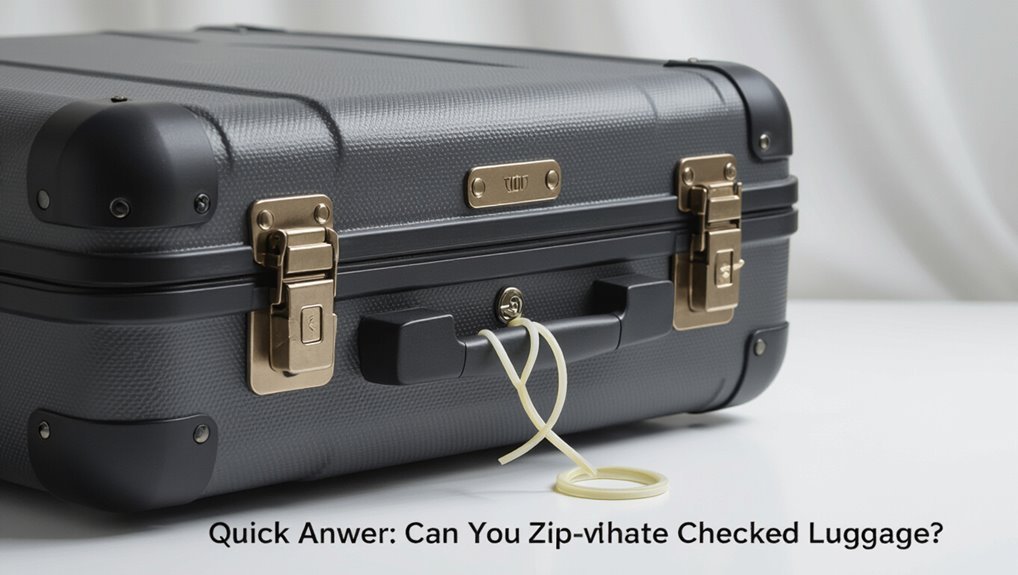
Can you zip-tie checked luggage? Yes—you can secure most checked bags with plastic zip ties, and many travelers do.
Keep in mind TSA can cut ties for inspections, so use inexpensive, replaceable ties. Avoid locking compartments that require non-TSA keys, and don’t rely on zip ties as theft-proof seals.
They’ll deter casual tampering but won’t stop determined thieves.
Quick Decision Guide: When to Zip-Tie – And When Not To
Decide to zip-tie your checked bag when you want a cheap, visible deterrent for casual tampering—use ties for short trips, budget airlines, or when you’re checking fragile but not high-value items.
Don’t rely on ties for strong security or valuables; use TSA-approved locks or hard-sided luggage.
Remove ties before inspection if asked, and replace them afterward for continued deterrence.
Who This Guide Is For and What It Covers
This guide is for travelers who check bags and want a quick, practical way to add security without breaking rules or the lock.
It covers when zip ties help, what types to use, limits and TSA considerations, and simple step-by-step methods.
Use it as a checklist you can skim before packing and again at the airport.
Who Should Read
If you travel with checked bags, pack fragile items, or worry about tampering and lost zippers, you’ll find this guide useful. You’ll learn practical, legal, and safety info to decide whether zip ties suit your trips.
| Who | Why | Benefit |
|---|---|---|
| Casual flyers | Quick protection | Simple fix |
| Frequent travelers | Repeated handling | Durable option |
| Families | Kids’ gear | Peace of mind |
| Gear owners | Valuable items | Extra security |
What This Covers
When you read on, you’ll get clear guidance on who benefits from zip tying checked luggage and exactly what topics we’ll cover so you can pick the right approach for your trips.
You’ll see legal and airline rules, pros and cons, security and inspection implications, suitable tie types, durability concerns, alternatives, and when to avoid zip ties so you can decide quickly and confidently.
How To Use Guide
Now that you know the scope and topics we’ll cover, you’ll find this how-to section geared to specific travelers and situations so you can pick the right zip-tie approach.
You’ll learn when to use disposable ties, reusable locks, or TSA-approved options, how to apply and remove ties safely, and which scenarios to avoid them.
Follow step-by-step tips to protect baggage without risking delays.
How Airlines Treat Zip-Tied Suitcases
Although zip ties can signal you’ve secured your suitcase, airlines treat them differently than locks and other fasteners. You should expect varied responses: some staff ignore them, others cut them if baggage needs inspection. Check airline policy before flying and prepare to replace ties after screening.
| Airline type | Typical action |
|---|---|
| Major carrier | May cut |
| Low-cost | Often cut |
| Charter | Varies |
| International | Stricter |
What TSA Says About Zip Ties and Checked Bags
If you choose to secure your checked bag with zip ties, know that the TSA allows them but can cut them during inspections without notice; they recommend using TSA-approved locks instead because those let screeners re-secure your luggage after a search.
You should expect possible cutting, no prior warning, and no liability for damaged ties; TSA won’t block zip-tied bags.
How International Security Agencies Handle Zip-Tied Luggage
When you travel internationally, you’ll find airport security procedures vary widely and can affect whether zip ties are allowed or removed.
You should expect some agencies to cut ties for inspections and reseal bags with their own tamper-evident methods.
Understanding common international inspection protocols helps you prepare and choose the best way to secure your checked luggage.
Airport Security Procedures
Because airports balance security with passenger flow, international agencies have clear, standardized approaches to zip-tied checked bags that you should know: they accept tamper-evident seals as useful indicators, but reserve the right to cut seals for inspections, document any openings, and reseal or replace seals afterward according to local regulations and airline policies.
| Action | Outcome |
|---|---|
| Seal accepted | Noted |
| Cut for check | Documented |
| Replaced | Resecured |
| Refused | Notified |
| Complied | Cleared |
International Inspection Protocols
Although procedures vary by country, international security agencies treat zip-tied checked luggage as a useful tamper-evident measure but still reserve the right to open it for inspection, document any intervention, and reseal or replace seals according to local rules and airline policies.
You should expect inspections, follow destination and carrier guidance, declare restricted items, and use TSA‑approved locks where applicable to minimize complications.
What Happens If TSA Needs to Inspect a Zip-Tied Bag?
If TSA needs to inspect your zip-tied bag, an agent will typically cut the zip tie to open it, examine the contents, and then either re-seal the bag with a new TSA-approved lock, place a notice inside, or re-secure it with another tie depending on the situation.
You’ll be notified via a tamper-evident notice; inspect items on arrival and report any damage or missing property promptly.
Signs Airline Staff Will Cut a Zip Tie During Handling
You’ll spot signs that airline staff cut a zip tie if your bag has visible inspection markings like stickers or tags noting a search.
You may also find the fastener itself is broken or hastily trimmed, with frayed edges or pieces left behind.
If you see either, assume staff opened your bag during handling.
Visible Luggage Inspection Marks
When airport security or baggage handlers need to inspect your checked bag, they’ll often leave clear signs that a zip tie was cut—things like a partially zip-tied strap, a torn or missing seal, a dated inspection tag threaded through a broken tie, or visible tape and resealing materials around the zipper.
You’ll also spot staple holes, inspection stickers, or inked agent initials near the opening, indicating an official search.
Broken Or Cut Fasteners
Those visible inspection marks often go hand in hand with broken or cut fasteners, and they’re a clear sign airline staff have opened your bag.
You’ll notice:
- Frayed zip tie ends or snapped plastic near the seal.
- Misaligned or forced zippers and torn fabric at closure points.
- Fresh tool marks or clean cuts where ties once secured the luggage.
How to Prepare for Inspections at International Airports
Because international inspections vary by country and agent, take a few proactive steps so your checked bag moves through screening smoothly: label contents clearly, pack liquids and electronics accessibly, avoid prohibited items, and secure loose straps.
Use a TSA-accepted lock if returning to a U.S. flight, leave a note with contact info inside, and keep receipts for valuable items to expedite any questions.
When Zip Ties Help Prevent Theft and When They Don’t
You’ve already taken steps to make inspections easier; now consider whether zip ties add real protection.
You’ll deter casual tampering but won’t stop determined thieves or baggage handlers with tools.
Think about benefits vs limits:
- Visible tamper indicator for opportunistic theft.
- Low cost, disposable barrier.
- No resistance to cutting tools or inspection-driven removal.
Traveler Scenarios Where Zip Ties Make Sense
If you need a quick, low-cost way to discourage casual tampering, zip ties give you a short-term security boost you can rely on.
They’re also handy for keeping zipper pulls closed so your bag won’t spill if it’s handled roughly.
Use them when you want simple protection without changing your luggage.
Short-Term Security Boost
Think of zip ties as a quick, low-profile layer of theft deterrence you can add when you need it most: overnight stays in budget hotels, leaving bags briefly in a car at a rest stop, or staging luggage outside a venue while you grab a ticket.
You’ll use them when you want temporary, visible protection.
Examples:
- Dorm-room overnight.
- Short roadside break.
- Event drop-off.
Preventing Zipper Spills
When you’re hauling toiletries, tech, or souvenirs that could spill out if a zipper snags, a zip tie gives quick, reliable closure that keeps contents contained and prevents a mess at baggage claim or during transit. Use ties for weak zippers, overpacked bags, checked items, loose pouches, and souvenir bottles.
| Scenario | Benefit | Tip |
|---|---|---|
| Toiletries | Leak containment | Double-bag |
| Tech | Cable security | Wrap cords |
| Souvenirs | Prevent loss | Cushion items |
| Overpacked | Hold seam | Don’t overfill |
| Old zipper | Reinforce | Replace later |
When Zip Ties Are a Waste of Time: Common Misuse Examples
Although zip ties can add a sense of security, they’re often wasted on situations where they don’t help—like using them instead of a TSA-approved lock, fastening weak zippers that will still be pried open, or wrapping them around exterior straps that get cut off in seconds.
- Replacing a TSA lock
- Securing flimsy zipper fabric
- Tying exterior straps that are easily removed
Types of Zip Ties Suitable for Luggage
Materials and strength matter more than size when you choose zip ties for luggage, so pick ones that match your needs: nylon ties for general use, stainless-steel or coated metal ties for higher cut resistance, and releasable or tamper-evident models when you want reuse or visible tampering.
Also consider UV and temperature resistance, smooth edges to protect fabric, and appropriate length and tensile strength for secure fastening.
Temporary vs Heavy-Duty Zip Ties: Which to Use
Wondering whether to grab a temporary zip tie or a heavy-duty one for your checked luggage? You’ll choose based on duration and deterrence.
Consider these scenarios:
- Short trips: temporary ties—easy removal, visible tamper signs.
- Long or rough transit: heavy-duty—stronger hold, withstands strain.
- Security checks: heavy-duty may be cut; inspectability matters.
Reusable Zip-Tie Options and When to Choose Them
If you travel frequently or care about cutting waste, reusable zip ties give you a smarter way to secure checked luggage—they lock and release without being damaged, so you can reuse them trip after trip. Choose based on strength, ease, and TSA visibility.
| Type | Strength | Best use |
|---|---|---|
| Nylon release | Medium | Frequent flyers |
| Metal clasp | High | Valuable gear |
| Colored loop | Low | Quick ID |
How to Apply a Zip Tie to a Suitcase Zipper Correctly
Thread the zip tie through both zipper pulls, align the loop around the zipper track, and pull snugly so the sliders can’t separate but the tie doesn’t strain the fabric.
- Trim excess tail close to the lock to avoid snags.
- Test movement to confirm access is restricted yet undamaged.
- Keep receipt or label nearby so you can cut tie for inspection if needed.
How Many Zip Ties to Use and Where to Place Them
Decide how many zip ties you need based on suitcase size and how many zipper pulls or compartments you want secured.
Place ties through the zipper pulls and anchor points like built-in loops or lock holes, and add extras at stress points or secondary compartments.
You’ll want enough ties to deter casual tampering without overdoing it and making access awkward.
Number Of Zip Ties
A couple of well-placed zip ties will secure your checked bag without overdoing it: aim for two to three ties—one across the main zipper and one on each side zipper or secondary compartment—to deter casual tampering while still letting TSA cut a single tie if inspection’s needed.
- Two ties for basic security.
- Three for extra coverage.
- Avoid excess ties that impede inspection.
Placement On Luggage
Place two to three zip ties where they’ll actually block access: loop one through the main zipper pulls and add one on each side or over any external compartment zippers so casual tampering is deterred while still allowing TSA to cut a single tie if needed.
Place ties where zippers meet, around handles, or across seam gaps; avoid obscuring ID tags and keep ties short to prevent snagging.
Using Zip Ties on Soft-Sided vs Hard-Shell Luggage
When you’re choosing zip ties for luggage, remember soft-sided bags flex and hard-shell cases don’t, so each needs a different approach to attachment and stress management.
- Soft-sided: loop ties through fabric-reinforced seams, avoid overtightening to prevent tearing.
- Hard-shell: secure around handles or zippers, not shell edges, to prevent cracking.
- Inspect ties after transit and replace any stretched or damaged ones.
How to Remove a Zip Tie Without Damaging Your Suitcase
Before you cut, inspect the zip tie junction to see how it’s fastened and where the tail sits.
When you use cutting tools, work slowly and angle the blade away from the suitcase to avoid slips.
Protect the surface by slipping a thin barrier like cardboard or a butter knife between the tie and the shell while you trim it.
Inspect The Tie Junction
Start by closely inspecting the tie junction—the small, raised area where the zip tie’s tail feeds into the head—to see how it’s seated against your suitcase.
Check for:
- Gaps where the head meets fabric or shell.
- Stress marks, indentations, or melted plastic.
- Nearby seams, zippers, or hardware that could catch when you work the tie loose.
Use Cutting Tools Carefully
If you’re going to use a blade or scissors, work deliberately and position the tool so the cutting edge is angled away from your suitcase’s fabric or shell; keep the tie taut and snip the narrowest part of the tail close to the head to minimize the risk of slipping and gouging nearby material. You’ll steady the tie, cut cleanly, and inspect for stray fragments.
| Tool | Tip |
|---|---|
| Scissors | Angle away |
| Blade | Small snip |
| Nail clipper | Tight cut |
| File | Remove burrs |
Protect Suitcase Surfaces
When you need to remove a zip tie without scratching or denting your suitcase, work slowly and keep the tension on the tie so it doesn’t slip while you cut or pry; steadying the area and supporting the surrounding surface with a finger or a small flat tool helps prevent gouges.
Follow these steps:
- Slide a thin blade under the head, protecting shell with tape.
- Snip the tie close to the head, not the shell.
- Gently lift remnants away, checking for rough edges.
Tools to Carry for Safe Zip-Tie Removal and Bag Access
A small kit with the right tools makes removing zip ties and accessing your checked luggage quick and safe.
Pack a compact scissors or travel snips, a small flat-head screwdriver, and a sturdy pair of tweezers. Include a penknife where permitted and a backup zip tie cutter.
Store them in your carry-on to comply with airline rules and avoid checked baggage surprises.
Combining Zip Ties With Straps and Wraps for Extra Security
You can boost protection by layering zip ties with straps or luggage wraps to create multiple barriers against tampering.
Use proper attachment techniques—secure straps through sturdy points and cinch ties so they’re tight but inspectable—to keep everything effective and neat.
Always check accessibility and inspect seals before and after travel so you can spot breaches quickly and still open your bag when needed.
Layered Security Benefits
If you want stronger protection than a single zip tie offers, layering ties with luggage straps and plastic wraps creates multiple hurdles for tampering—each layer adds time, noise, and visibility that deter opportunistic thieves and alert you to interference.
You’ll benefit from staggered barriers:
- Zip ties for sealed closures.
- Straps to hold seams tight.
- Plastic wrap to show punctures.
Proper Attachment Techniques
Start by positioning your straps and wrap so they reinforce seams and contact points before you apply zip ties; that way each layer supports the others and you won’t trap slack that weakens restraint.
Tighten straps evenly, secure wraps around bulky areas, then thread zip ties through strap loops or luggage handles to lock layers together.
Trim ties flush and test tension without overcompressing contents.
Inspection And Accessibility
While keeping straps and wraps in place for strength, make sure you leave access points for quick inspections and avoid sealing compartments so tightly that routine checks become a hassle.
You should balance security with accessibility, using tamper-evident ties plus removable straps.
- Leave a small zipper or flap exposed.
- Use reusable straps where needed.
- Mark sealed sections clearly.
Zip Ties vs Luggage Locks: Pros and Cons
Although both zip ties and luggage locks aim to deter tampering, they do so in very different ways and suit different traveler priorities.
Zip ties are cheap, disposable, and show if someone opened your bag, but they offer minimal real security.
Locks provide reusable physical resistance and convenience for frequent travelers, though they can be cut or picked and may complicate inspections.
Why TSA-Approved Locks Are Often a Better Choice
Zip ties can flag tampering, but if you travel often or want real convenience, TSA-approved locks usually make more sense. They let you secure gear while allowing inspections without damage.
Consider benefits:
- Officers can open and relock without cutting.
- Durable, reusable protection for repeated trips.
- Recognized standard reduces risk of luggage being forcibly opened.
How to Use a TSA-Approved Lock With a Zip Tie
When choosing a TSA‑approved lock, pick one that’s sturdy, clearly labeled “TSA,” and the right size for your zipper pulls.
Thread a zip tie through the zipper pulls and the lock’s hasp or shackle to keep the bag sealed until you arrive. That way you get the added deterrent of a lock plus the tamper-evident benefit of a zip tie.
Choosing A TSA-Approved Lock
Curious how a TSA-approved lock works with a zip tie? You’ll pick one that TSA can open, is durable, and fits your luggage.
Consider these quick points:
- Look for the Travel Sentry or Safe Skies logo.
- Choose a solid metal or reinforced nylon body.
- Match the lock size to your zipper pulls and carry handle.
Use it so inspections don’t damage your bag.
Securing Lock With Zip Tie
If you want to add a zip tie for extra peace of mind, thread it through the zipper pulls and the lock’s hasp before tightening so the tie holds the pulls securely against the lock.
This makes tampering more obvious while still allowing TSA to open the lock if needed. Use a weak, inexpensive tie so agents can cut it; replace ties after inspection and keep a spare.
Zip Ties vs Cable Ties, Zip Loops, and Tamper-Evident Seals
Against a backdrop of similar-looking fasteners, you’ll want to know how zip ties, cable ties, zip loops, and tamper-evident seals differ in strength, reusability, and security.
Against a backdrop of similar fasteners, know how zip ties, cable ties, zip loops, and tamper seals differ in strength, reuse, and security.
- Zip ties: cheap, single-use, moderate strength.
- Cable ties: heavy-duty, often reusable with release tab.
- Tamper-evident seals/zip loops: designed to show interference, low reusability, great for audit visibility.
Using Luggage Straps With Lockable Buckles Instead of Zip Ties
When you want stronger, reusable protection for checked bags, choose a luggage strap with a lockable buckle instead of a zip tie. You’ll get quick release, adjustable fit, and TSA-accepted keyed or combination locks for inspection. Use straps to deter casual tampering and keep contents secure without damaging handles or zippers.
| Benefit | Note |
|---|---|
| Reusable | Cuts waste |
| Adjustable | Fits many sizes |
| TSA-lock | Allows inspection |
| Protective | Prevents scuffs |
Smart Luggage Features That Reduce the Need for Zip Ties
If your suitcase has a built-in TSA lock, you can secure zippers without resorting to zip ties and still let agents inspect contents.
Choosing a durable hardshell case further lowers the risk of punctures or tampering during transit.
Together, those features cut the need for aftermarket restraints and simplify checked-luggage security.
Built-In TSA Locks
Many modern suitcases come with built-in TSA-approved locks, so you don’t need to rely on zip ties to keep your bag secure; these locks let Transportation Security Administration agents open and relock your luggage without cutting closures, preserving both security and your packing.
- You set a code for quick access.
- TSA uses a master key when needed.
- Locks reduce damage and speed inspections.
Durable Hardshell Construction
While built-in TSA locks protect zippers during inspections, choosing a suitcase with a durable hardshell will further reduce the need for zip ties by preventing punctures and crushing that force you to reinforce closures.
You’ll benefit from impact-resistant polycarbonate or ABS shells, snug-fitting lids, and reinforced corners that keep contents secure, so you won’t have to add external restraints for routine handling.
How to Choose a Good Luggage Lock for Checked Bags
Why settle for a flimsy zipper pull when you can pick a lock that actually protects your checked bag? You should choose TSA-approved models, sturdy materials, and simple operation.
Consider:
- TSA logo and key access for inspections.
- Hardened steel shackles or braided cable for cut resistance.
- Clear combination or keyed mechanism you can reset and test before travel.
Alternatives to Zip Ties for Low-Cost Security
You can use TSA-approved padlocks for basic, airline-friendly protection that agents can open without damaging your lock.
Another option is reusable cable-style ties, which give more flexibility and strength than single-use zip ties.
Both choices keep costs low while offering clearer control over access to your checked bag.
TSA-Approved Padlocks
Although zip ties are cheap and simple, TSA-approved padlocks give you a step up in security without breaking the bank. You can lock zippers while allowing agents to inspect your bag.
Consider:
- Small combination locks — no key to lose.
- Lightweight keyed locks — sturdy feel.
- Cable-compatible TSA locks — flexible for odd zippers.
They’re legal, reusable, and practical for checked luggage.
Cable Zip Tie Alternatives
When you want low-cost security for checked luggage but prefer something reusable or more tamper-evident than zip ties, several simple alternatives fit the bill. You can use cable locks, luggage straps, tamper-evident seals, cloth ties, or numbered seals to deter casual tampering and aid inspection.
| Option | Reusable? | Tamper-evident? |
|---|---|---|
| Cable lock | Yes | Limited |
| Luggage strap | Yes | No |
| Tamper seal | No | Yes |
| Cloth tie | Yes | No |
| Numbered seal | No | Yes |
Packing Checklist If You Plan to Zip-Tie Your Luggage
If you’re planning to secure checked luggage with zip ties, pack strategically so you can access essentials quickly and comply with airport security.
Stow items you’ll need during delays near the top, keep valuables in carry-on, and label bags clearly.
- Pack an easily removable toiletry kit.
- Place important documents in a zip pouch.
- Use packing cubes for quick inspection.
How Baggage Handling Affects Zip-Tied Bags
Once you’ve packed with zip ties in mind, remember that airport baggage systems are rougher than they look and they’ll test how well your ties hold up.
Expect drops, conveyor snags, and tight stacking. Use sturdy ties, secure loose straps, and avoid overstuffing.
Inspect ties after arrival; replace any damaged ones before reclaiming fragile contents or continuing travel to prevent mid-trip failures.
How Long Zip Ties Should Stay On During Multi-Leg Trips
You should leave zip ties on your checked bag until it goes through security at your next stop, since inspectors may need to open it.
If officials inspect your luggage, replace the ties afterward so you know it was resealed.
On multi-leg trips, plan to carry a few extra ties so you can quickly reseal after each inspection.
Leave Ties On Until Security
When you’re flying multiple legs, leave zip ties on until a security officer instructs you to remove them so you don’t risk having your bag resealed without your knowledge; this keeps your contents accessible for inspection while still deterring casual tampering during transfers.
- Keep ties intact through checkpoints.
- Show ties if asked for inspection.
- Remove only when an officer directs you.
Replace After Each Inspection
If a checkpoint officer inspects your bag and removes the zip tie, put on a fresh one before the next leg so you keep a visible tamper deterrent during transfers.
If the tie stays intact after screening, you can leave it on until you reach your final destination.
Replace ties whenever an inspection breaks them, after any rough transfer, or if they look weakened.
Country Notes: Places With Strict Baggage Inspection Rules
Because some countries enforce strict baggage inspections, travelers should expect more than a routine glance at checked luggage and plan accordingly.
You’ll face varied practices; research destinations and follow local rules.
Typical situations include:
- Random physical searches and item checks.
- Mandatory customs opening and resealing.
- Extended inspection times and documentation requests.
Are Zip Ties Illegal or Considered Tampering Abroad?
Wondering whether using zip ties on your checked bag will cause trouble abroad?
It depends on the country: some airports or security agencies discourage or remove non-approved seals, and in rare jurisdictions tampering rules could apply if ties conceal inspection.
You should check destination and airline rules, use TSA-accepted seals where available, and expect security to cut unauthorized ties without penalty.
How Zip Ties Affect Insurance Claims After Theft or Damage
When you file a claim after theft or damage, insurers will look at how your bag was secured and whether zip ties affected loss or access; using nonstandard or brittle ties can sometimes weaken your case if they suggest you obscured damage or prevented inspection.
Insurers will inspect how your bag was secured; brittle or nonstandard zip ties can harm a theft or damage claim.
You should note:
- Document tie type and condition immediately.
- Explain why you used them.
- Provide receipts or photos of intact contents.
Steps to Take If You Find Your Zip Tie Cut or Bag Tampered With
If you discover a cut zip tie or signs your bag’s been tampered with, act quickly and stay calm:
Inspect contents without rearranging items, note missing or damaged property, and retain the broken tie.
Notify airline staff immediately and request a written irregularity report.
Take photos of damage and the seal area, keep boarding pass and claim tags, and follow airline directions for next steps.
Tips for Documenting Tampering for Airlines or Police
Because clear, contemporaneous evidence makes investigations and claims far easier, document tampering methodically: photograph the seal area and any damage from multiple angles with scale (a coin or boarding pass), note the time and location, list missing or altered items, and keep the broken tie and luggage tags untouched in a sealed plastic bag for airline or police review.
- Photograph with scale and timestamps.
- Inventory missing/altered items.
- Preserve physical evidence sealed.
How to Label and Identify Zip-Tied Bags Safely
Labeling zip-tied bags clearly helps you spot tampering quickly and proves ownership without compromising security.
Use a durable, discreet tag with your name and contact info; avoid full home addresses.
Use a sturdy, low-profile tag with your name and contact details—skip full home addresses for privacy.
Attach tags away from zips to prevent accidental removal.
Add a unique, non-sensitive identifier (color code or short code) written on the tag and take a photo of the sealed bag before checking it.
How to Conceal Valuables So Zip Ties Are Unnecessary
When you want to skip zip ties, hide valuables where they’d be least expected and hardest to access without unpacking everything; think inside sewn compartments, hollow items, or between layers of clothing in tightly packed rolls.
- Tuck cash or cards into shoe cavities.
- Stash jewelry in pill bottles or empty deodorant containers.
- Slip passports or electronics into interior seams or zippered laundry bags.
Real Traveler Stories: When Zip Ties Helped or Failed
You’ve probably heard stories where a simple zip tie stopped someone from coming back to a rifled suitcase.
You’ll also find accounts where zip ties caused delays, damaged zippers, or drew extra scrutiny from baggage handlers.
Tell your own experience so others can weigh the real pros and cons.
Zip Ties Stopped Theft
Countless travelers swear that a simple zip tie once saved them from losing valuables, and their brief, practical stories show when this cheap trick actually works—and when it doesn’t.
You’ll read three quick examples that prove the point:
- Perimeter zipper tucked, tamper evident—owner reclaimed missing camera after airport staff opened bag.
- Stranger deterred from quick grab at bus station.
- Short-term theft prevented during busy hotel turnover.
Zip Ties Created Problems
Those same zip ties that stopped petty thieves have also caused headaches for travelers.
You’ve had bags delayed when agents cut ties and rechecked contents without notice. You’ve broken a zipper trying to force a sealed case open. You’ve missed tight connections while staff dismantled stubborn ties.
Learn alternatives and mark fragile contents to avoid surprises and damage.
Cost Comparison: Zip Ties, Straps, and Locks
Although zip ties cost just cents apiece, comparing them to straps and locks means weighing upfront price against durability and security.
You’ll consider repair frequency, replacement cost, and theft risk.
Evaluate options:
- Zip ties: very cheap, single-use, low security.
- Straps: moderate cost, reusable, good compression.
- Locks: higher cost, reusable, best deterrent.
How to Communicate With Airline Staff About a Zip-Tied Bag
After weighing zip ties against straps and locks, you should also plan how to explain a zip-tied bag to airline staff if it’s inspected or damaged.
Calmly point out the tie, show any documentation or photos, and describe why you used it.
Ask politely about inspection procedures and any recommended next steps.
Keep receipts for replacement ties or repairs.
What Gate Agents and Check-In Staff Can and Cannot Refuse
When you check a zip-tied bag, gate agents and check-in staff can refuse items that violate safety or airline policy, but they can’t arbitrarily deny a properly packed, legal piece of luggage.
You should expect clear reasons and a chance to resolve issues.
- Hazardous materials (batteries, aerosols)
- Overweight or oversized bags
- Prohibited items per carrier policy
How to Carry On If a Zip Tie Is Cut at Check-In or in Transit
If a gate agent or TSA officer cuts your zip tie, stay calm and ask why they opened your bag and whether they inspected anything inside.
You can then request to reseal the bag with a new zip tie or lock, or to travel with the item as carry-on if it meets carry-on rules.
If you choose carry-on, verify size and prohibited item rules, repack quickly, and keep receipts.
Best Practices for Multi-Leg or International Trips
Because multi-leg and international trips expose your checked bags to extra handling, plan for transfers, customs inspections, and varying security rules by using clear labeling, durable zip ties or TSA-approved locks, and an itemized packing list kept with your receipts.
On multi-leg or international trips, label and secure checked bags, keep an itemized list with receipts, and expect inspections.
Pack valuables and any medications in your carry-on, note airline and country-specific restrictions, and allow extra transfer time to resecure luggage if an inspection occurs.
- Photograph baggage and contents.
- Keep copies of permits/documents.
- Use color-coded tags for quick ID.
Quick Checklist: Securing Checked Luggage With or Without Zip Ties
Start with a quick scan of your bag and straps, then decide whether you’ll use zip ties, a TSA-approved lock, or no external restraint at all; pick the option that matches your route, valuables, and local rules.
Check zippers for weakness, stash valuables in carry-on, label luggage, keep tools for cutting ties, note airline policies, and secure loose straps to prevent snagging.
Final Summary: Key Airline and TSA Rules to Remember
When you prepare to zip-tie checked luggage, remember that airlines set baggage handling rules while TSA controls security access and inspection — you’re responsible for following both.
- Check airline rules for closures, damage claims, and approved lock types.
- Use TSA-recognized locks or zip ties knowing TSA may cut them for inspection.
- Label inside and outside, document condition, and remove ties only when allowed.
Frequently Asked Questions
Can Zip Ties Trigger Secondary Screening or Delays at Security Checkpoints?
Yes, they can. You might trigger secondary screening if security thinks the ties conceal tampering or make inspection harder; TSA and other agencies may cut them, open bags, or delay you for manual inspection and questioning.
Do Zip Ties Void My Luggage Manufacturer’s Warranty?
Usually they won’t automatically void your luggage warranty, but you should check the manufacturer’s terms; some warranties exclude user-applied modifications or damage, so if a tie causes harm they might deny a claim.
Will Zip Ties Interfere With Airline Baggage Scanners or X-Ray Machines?
No, zip ties won’t interfere with airline x-ray or baggage scanners; they’ll show up as simple plastic items. You shouldn’t expect screening issues, but security may cut ties if they need to inspect your bag further.
Can Zip-Tied Luggage Cause Issues for Passengers With Medical Devices or Implants?
Yes — zip-tied luggage generally won’t affect medical devices or implants. You should still check with your device manufacturer or clinician, avoid tight metal ties near sensors, and declare concerns at security to prevent delays.
Are Zip Ties Allowed in Checked Bags When Traveling With Pets or Animal Carriers?
Yes — you can use zip ties on checked bags and pet carriers, but airlines and TSA may cut them for inspection. You’ll want quick-release ties or locks approved for travel, and check your carrier and airline rules first.
Conclusion
You can use zip ties on checked luggage for extra security, but don’t expect them to stop determined tampering or replace TSA-approved locks. Airlines may cut ties for inspections, and TSA recommends using TSA-recognized locks for U.S. flights. If a tie’s cut at check-in or during transit, carry documentation, take photos, and report lost items immediately. For multi-leg or international trips, use TSA locks where accepted and keep valuables in your carry-on to stay safer.