Can I Take Bluetooth Speaker in Hand Luggage Tsa Rules Explained
Yes — you can bring a Bluetooth speaker in your carry‑on, but keep it powered off and easy to access for TSA screening. Speakers go through X‑ray; officers may ask you to power them on or remove batteries for inspection. Follow lithium‑battery rules: under 100 Wh is fine, 100–160 Wh needs airline approval, and >160 Wh is prohibited. Pack spare batteries safely, protect terminals, and check airline or country rules — continue for practical tips and exceptions.
Quick Answer: Can You Take a Bluetooth Speaker in Hand Luggage?
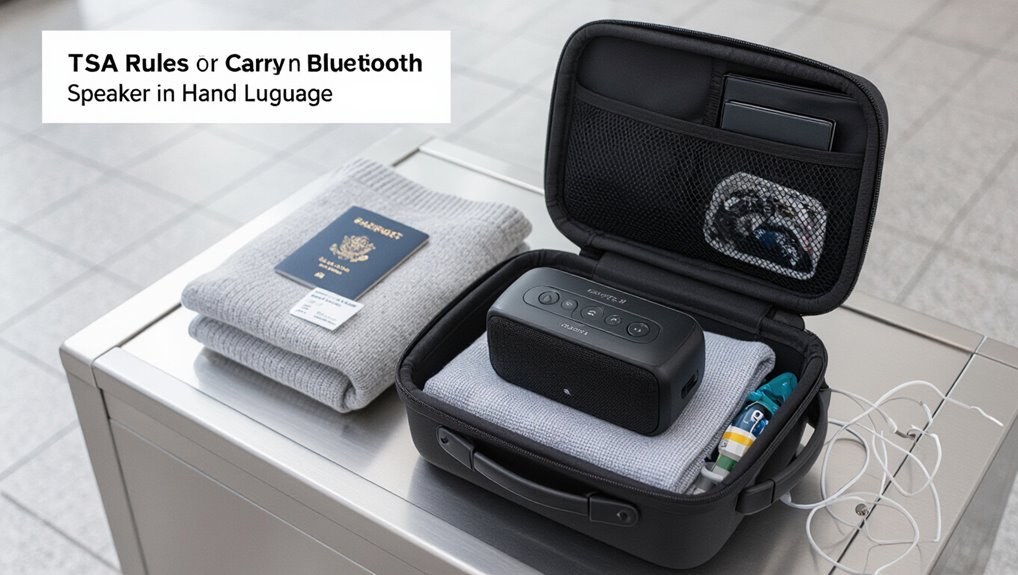
Wondering if you can bring a Bluetooth speaker in your hand luggage? Yes — you can usually carry one in your carry-on.
Make sure it’s powered off or in accordance with airline rules, and remove any large lithium battery if required.
Keep it accessible for inspection, avoid tampering, and confirm specific carrier or country restrictions before travel to prevent surprises at security.
How TSA Screens Bluetooth Speakers in Carry‑Ons
When you go through security, your Bluetooth speaker will usually pass through the X‑ray machine first so officers can check its internal components.
If something looks unclear, they may pull it aside for a closer inspection and may test or power it on to verify it’s not a threat.
They’ll also check batteries and power sources to make sure they meet TSA rules for carry‑ons.
Screening Process Steps
Although the TSA follows standard X‑ray and manual inspection steps, you’ll usually see a consistent sequence when a Bluetooth speaker in your carry‑on is screened: an officer notes electronics on the belt, you may be asked to remove it or power it on, staff verify battery status and look for modifications, then they clear, request further inspection, or refer to secondary screening if needed.
X‑Ray And Inspection
After an officer flags your speaker during the screening sequence, it usually goes through standard X‑ray imaging so agents can inspect its internal structure and battery placement.
You’ll be asked to remove it from bags if unclear on the image. Officers may open protective cases to view components; you should cooperate, answer questions, and present purchase info or manuals if available to speed resolution.
Battery And Power Checks
Because batteries are the main safety concern, TSA officers often ask you to power on or otherwise demonstrate a Bluetooth speaker to confirm its battery type and charge level.
You should remove the speaker from your bag, turn it on when requested, and show any removable batteries or documentation.
If the device won’t power up, explain its condition and follow officer instructions to avoid delays.
Lithium Battery Limits That Affect Bluetooth Speakers
When you pack a Bluetooth speaker in your carry-on, the battery’s watt-hour rating and whether it’s removable will determine what airlines allow, how you must protect it, and if you can bring spare batteries.
Check limits: typically under 100 Wh is fine in cabin, 100–160 Wh needs airline approval, over 160 Wh is banned.
Pack terminals protected and avoid damage or short circuits.
Built‑In vs. Removable Batteries: What’s Allowed
You’ll need to know the different rules for speakers with built‑in batteries versus those with removable cells.
Built‑in batteries are usually allowed in hand luggage if they meet airline watt‑hour limits, while removable batteries often have stricter carriage and packaging requirements.
Check your airline’s policy and the battery’s watt‑hour rating before you pack.
Built-In Battery Rules
If your Bluetooth speaker has a built‑in battery, airlines treat it differently than a device with a removable cell, so you should know the limits: most carriers allow lithium‑ion batteries up to 100 Wh in carry‑on, require the device to be switched off and protected from accidental activation, and prohibit damaged or recalled batteries.
You should pack it in carry‑on, not checked luggage, and inspect for damage.
Removable Battery Limits
Because removable batteries can be swapped or carried separately, airlines apply different rules than for built‑in cells, and you should know those limits before packing.
You’ll usually need to:
- Keep spare batteries in carry‑on only.
- Protect terminals with tape or cases.
- Follow watt‑hour (Wh) limits, typically ≤100Wh without approval.
- Get airline approval for 100–160Wh spares.
Traveling With Spare Batteries and Power Banks Safely
When packing spare batteries and power banks, follow airline rules and practical safety steps so your devices stay allowed and won’t spark problems in transit. Pack them in carry-on, protect terminals, and keep power banks under airline watt-hour limits. Declare oversized units. Store batteries in original packaging or insulating tape to prevent short circuits.
| Item | Action |
|---|---|
| AA/AAA | Tape terminals |
| Power bank | Carry-on |
| Lithium | Check Wh |
| Pack | Protect terminals |
Packing a Bluetooth Speaker for Security Screening
1 clear rule: pack your Bluetooth speaker where TSA and airline staff can easily access it during screening.
Place it on top of your carry-on or in an outer pocket, clearly visible for X-ray checks. Keep cords and cases separate to avoid confusion.
- Remove covers
- Avoid bulky padding
- Label if possible
- Stow batteries safely
What to Do If TSA Asks You to Power On the Speaker
If TSA asks you to power on your Bluetooth speaker, hand it to the agent and follow their instructions promptly—most agents will simply want to confirm the device is functional and not a threat.
Stay calm, turn it on if asked, show any active indicators, and answer questions briefly.
If it won’t power, explain battery status and offer to remove batteries or show the device’s model information.
Airline Restrictions and Oversized Speaker Concerns
Because airlines set size and weight limits for carry-on and checked baggage, your oversized Bluetooth speaker can trigger extra fees or require special handling—so check airline policies before you pack.
You should measure, weigh, and plan; contact the carrier if unsure.
Consider alternatives:
- Measure speaker dimensions and weight
- Compare with airline carry-on limits
- Pay advance oversize fees if needed
- Use checked baggage rules
International Airport Rules for Bluetooth Speakers
After checking your airline’s carry-on and checked-bag rules, you’ll also need to follow international airport regulations that can vary by country and security zone.
You should declare batteries if required, keep spare lithium cells in carry-on, and expect extra screening. Some airports restrict Bluetooth transmission during checks or in lounges.
Confirm rules at departure and arrival airports to avoid confiscation or delays.
Transit, Layovers, and Checked‑Bag Risks
When you transit or face long layovers, keep your Bluetooth speaker with you whenever possible to avoid battery-related issues, damage, or loss in checked baggage.
Airlines and handlers sometimes mishandle electronics, and lithium batteries in checked bags can be prohibited or removed during security checks.
- Keep it in carry-on to avoid loss
- Check battery rules for each airline
- Remove batteries if required by carrier
- Pack in original or protective case
Protecting Your Speaker From Damage and Theft
Start by treating your speaker like any other valuable tech: keep it cushioned, out of sight, and under your control whenever possible. Pack it in padded compartment, use a removable strap, and stash cords separately. Lock your bag and keep it with you.
| Cushioning | Visibility | Control |
|---|---|---|
| Padded sleeve | Inside bag | Carry-on |
| Zip pocket | Covered | Keep close |
Common Exceptions and Real Enforcement Examples
Keeping your speaker safe is smart, but you should also know the rules aren’t always uniform: some airlines and security agencies allow small Bluetooth speakers in carry-on with no extra checks, while others may restrict devices with non-removable batteries or larger form factors.
You’ll encounter varied enforcement and occasional confiscations; know common exceptions:
- Non-removable lithium batteries flagged
- Oversized speakers checked
- Country-specific bans enforced
- TSA officer discretion applies
Quick Checklist: Bringing a Bluetooth Speaker on a Plane
Before you pack your Bluetooth speaker, check its battery capacity so it meets airline limits and won’t get flagged.
Expect to remove it from your bag at security for separate screening if requested.
Keep the device easily accessible and carry spare batteries in your carry-on following airline rules.
Battery Power Limits
Although most airlines let you carry small Bluetooth speakers, they often restrict the battery capacity you can bring in carry-on luggage; check the speaker’s battery rating (in watt-hours or mAh) and airline limits so you don’t get stopped at security.
You’ll need to:
- Verify watt-hour (Wh) or mAh rating on the device.
- Keep batteries under airline Wh limits.
- Carry spare batteries in carry-on only.
- Protect terminals from short circuits.
Security Screening Rules
Now that you’ve checked battery ratings and packed spares properly, you’ll also need to know what to expect at security checkpoints so your speaker doesn’t slow you down.
Remove the speaker from your bag if asked, place it in a bin like other electronics, and be ready to power it on.
Keep batteries accessible and comply with TSA officer instructions to speed screening.
Additional Resources and Airline Contacts
If you want quick answers or need to confirm a policy, check the airline’s official website and the relevant aviation authority pages first; they’ll have the most current rules on carrying Bluetooth speakers and batteries.
For quick answers on carrying Bluetooth speakers and batteries, check your airline’s website and aviation authority pages first.
You should also contact carriers directly for unique cases and keep handy links.
Useful resources:
- Airline customer service/contact page
- TSA or national aviation authority guidance
- Manufacturer battery info
- Airport security FAQs
Frequently Asked Questions
Can I Use My Bluetooth Speaker During Boarding or Taxiing?
Yes — you can use your Bluetooth speaker during boarding or taxiing if the airline allows portable audio devices. You’ll need to follow crew instructions, keep volume low, and avoid disturbing other passengers or interfering with safety announcements.
Do Noise-Cancelling or Smart Speakers Have Different Rules?
They don’t have different TSA rules; you’ll treat noise-cancelling or smart speakers like other portable electronics, keep them in carry‑on, power them off if asked, and declare batteries if removable or damaged.
Are Decorative or Vintage Battery Types Allowed in Carry‑On?
Yes — you can usually carry decorative or vintage batteries in carry-on, but you’ll need to guarantee they’re secured against short circuits and meet airline/TSA lithium rules; check watt-hour limits and consult your airline for specific restrictions.
Will TSA Confiscate a Speaker With Unknown Battery Capacity?
They might seize it if the battery’s capacity’s unknown and it’s suspected unsafe; you should declare it, provide documentation if possible, and expect security to inspect or remove it—follow their instructions to avoid delays or confiscation.
Can I Bring Multiple Small Speakers in One Carry‑On?
Yes — you can bring multiple small speakers in one carry-on, but you’ll need to verify their batteries comply with TSA and airline limits, carry spare lithium batteries in carry-on only, and be ready to show them at security.
Conclusion
Yes, you can bring a Bluetooth speaker in your carry-on. TSA allows small electronic devices, but batteries matter. Speakers with built-in lithium-ion batteries under 100 Wh are fine; removable batteries should go in carry-on and be protected. Spare batteries and power banks must be in your bag and insulated against short circuits. Expect screening and possible additional inspection; pack the speaker where it’s easy to access. Check your airline for extra rules before you fly.