Can I Take a Backpack With a USB Charger on Plane
Yes — you can bring a backpack with a USB charging port, but airlines and TSA care about the battery inside, not the pocket or cable. If the battery’s removable treat it like a spare lithium cell: carry it in your cabin, protect the terminals, and check watt‑hours (Wh). Built‑in packs are allowed with the bag but may be limited by capacity. Batteries over 100 Wh often need approval and over 160 Wh are usually forbidden without airline consent. Keep documentation handy to learn more.
Quick Answer: Can You Fly With a USB‑Charger Backpack?
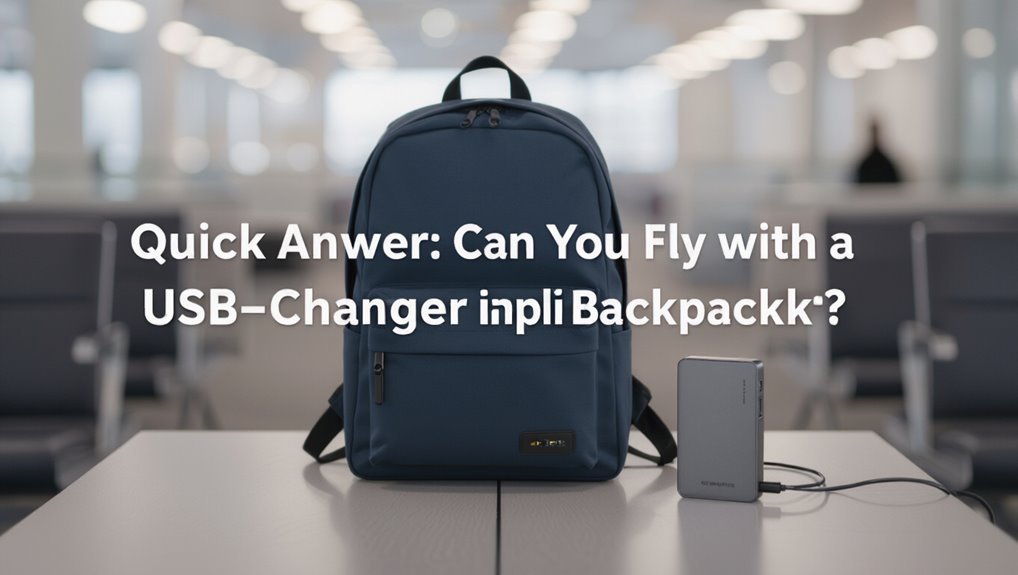
Want a short answer? Yes — you can usually fly with a backpack that has a USB charging port, since the port itself is just wiring.
What matters is the removable power bank inside. You’ll need to follow airline and TSA rules: remove and carry on lithium batteries within allowed capacity, keep terminals protected, and declare when required.
Check your carrier’s specific limits before travel.
Why the Battery: Not the Backpack: Matters
Because the USB port is just a passive connector, what regulators care about is the lithium battery tucked inside your backpack. You need to know capacity, charge state, and placement rules. Airlines inspect watt‑hours and whether the battery is carry‑on. Follow limits, declare if required, and pack it so it’s accessible for inspection.
| Item | Why it matters | Action |
|---|---|---|
| Capacity | Safety risk | Check Wh |
| Placement | Fire access | Carry-on |
| Charge | Short-circuit | Partial charge |
Removable vs. Built‑In Batteries: The Difference
Now that you know regulators focus on the battery rather than the backpack, the next question is whether that battery can be removed.
You should check if the power bank is built‑in or detachable: removable batteries are usually treated like spare lithium cells and may need carry‑on only; built‑in packs are often accepted with the device but still subject to capacity limits and airline policies.
How to Calculate Wh From mAh and Voltage
To figure out watt‑hours for your backpack’s charger, you’ll convert the battery’s mAh into Ah and multiply by its voltage.
So take mAh ÷ 1000 to get Ah, then multiply by the battery voltage to get Wh.
That Wh value is what airlines use to determine if your pack can fly in-cabin.
Converting mAh To Wh
Wondering how to convert your power bank’s capacity from mAh to Wh so you can check airline limits?
Multiply mAh by voltage (V), then divide by 1000:
Wh = (mAh × V) / 1000.
For example, 10,000 mAh at 3.7V equals 37 Wh.
Use the battery’s nominal voltage label; that result tells you if the device meets airline watt‑hour restrictions.
Adjusting For Voltage
You already know the basic formula (Wh = mAh × V ÷ 1000), but getting the voltage right matters because manufacturers sometimes quote capacity at different voltages.
Check the battery’s nominal voltage (often 3.7V for lithium cells, 5V for power banks).
Multiply mAh by that voltage, divide by 1000, and you’ll have Wh to compare with airline limits.
What Wh Limits Mean for Your Trip
Knowing the Wh limits helps you plan how much power-packed gear you can bring without surprises.
Check weight limits for carry-on items, since airlines often cap batteries and power banks by Wh and total carry weight.
Also confirm checked baggage caps, because some carriers restrict or forbid higher-Wh batteries in checked luggage.
Weight Limits Overview
Airlines set watt-hour (Wh) limits for lithium batteries to protect the cabin, and those caps determine whether your backpack’s rechargeable power bank can fly in carry-on, go in checked baggage, or be outright banned.
Check your power bank’s Wh rating and airline policy before travel. Staying within limits avoids confiscation, delays, or fines.
Carry documentation if capacity approaches allowable thresholds.
Carry-On Weight Rules
Wondering how watt-hour limits affect what you can bring onboard?
You’ll need to check each device’s Wh rating—most airlines allow batteries up to 100 Wh in carry-on without approval.
Between 100–160 Wh you’ll need airline approval and usually a limit on quantity.
Keep power banks and spare batteries in your carry-on, avoid checked baggage, and declare anything near the threshold.
Checked Baggage Caps
You’ve already learned how Wh limits shape what you can carry onboard; now look at how they restrict checked baggage.
Airlines often ban high-capacity power banks from checked luggage entirely, and some set strict Wh ceilings for batteries inside devices.
You’ll need to declare large batteries, pack them properly, and possibly move them to carry-on or leave them at home to meet airline and safety rules.
TSA Rules for Lithium Batteries in Carry‑On vs Checked
Because lithium batteries can pose fire risks, TSA limits how you carry them on planes: spare (loose) lithium-ion and lithium-metal batteries must go in carry-on baggage, not checked, while devices with installed batteries are generally allowed in either, subject to airline and international restrictions.
You should protect terminals, keep power banks in carry-on, and follow watt-hour and quantity limits to avoid confiscation.
ICAO & IATA: What International Rules Mean for You
When you travel internationally, ICAO and IATA set the battery classification rules that determine what size and type of power bank you can carry.
You’ll also need to check individual airline carrier policies since some carriers impose stricter limits or require you to pack batteries in carry-on only.
Finally, know whether any dangerous goods documentation or prior approval is required for higher-capacity batteries to avoid delays or confiscation.
Battery Classification Rules
If you’re traveling with a backpack that has a USB charger, you’ll need to understand how the International Civil Aviation Organization (ICAO) and International Air Transport Association (IATA) classify batteries.
This is important because those rules determine whether you can carry them in your cabin, checked baggage, or not at all.
They sort batteries by chemistry and watt-hours: lithium-ion, lithium metal, and spare batteries have limits, labeling, and packaging requirements you must follow.
Airline Carrier Policies
How do ICAO and IATA rules actually affect what you can bring on a flight? You must follow their battery size and carriage guidelines, but individual airlines set final permissions and packing rules. Check carrier policy before travel.
- Pack in carry-on when allowed
- Label battery capacity clearly
- Follow airline limits on spares
- Expect gate check or refusal if noncompliant
Dangerous Goods Documentation
Because international air safety depends on clear paperwork, you’ll need to know what ICAO and IATA require for documenting batteries and other potentially hazardous items in your luggage.
You must declare large lithium batteries, spare power banks, and damaged cells; follow packing, labeling, and declaration rules; and provide dangerous goods paperwork if required by the carrier or destination authority to avoid delays or penalties.
Major U.S. Airlines: Delta, American, United Policies
While policies vary slightly between airlines, Delta, American, and United generally allow backpacks with built-in USB charging ports in carry-on and checked baggage as long as the power bank is removable and carried in the cabin; you’ll want to remove any lithium-ion battery packs and stow them in your carry-on with terminals protected or taped.
- Keep power banks in cabin
- Check capacity limits (Wh)
- Protect terminals
- Follow crew instructions
Low‑Cost and Regional Carriers: Common Requirements
If you fly with a budget or regional carrier, expect stricter enforcement and slightly different rules than the major U.S. airlines you just read about.
You’ll need batteries accessible for inspection, removable power banks carried in carry‑on only, and terminals protected from shorting.
Some carriers cap watt‑hours lower or require airline approval; check the specific carrier’s policy before packing to avoid gate refusals.
When a Removable Battery Makes Travel Easier
A removable battery can make your trip smoother by letting you swap in a charged pack without hunting for outlets.
You’ll still need to follow TSA and airline rules about capacity, labeling, and carrying batteries in carry‑on only.
Keep charging safe by using the manufacturer’s cable, avoiding overstuffing pockets, and checking for damage before you board.
Removable Battery Benefits
When you can detach your backpack’s battery, packing and security become much simpler: you can stash the cell in your carry-on or a separate pouch for easy access at screening, swap in a charged unit between long legs of travel, and avoid gate-checking restrictions that apply to installed batteries.
You’ll enjoy flexibility, safer handling, and easier troubleshooting:
- Faster security checks
- Easier battery swaps
- Reduced damage risk
- Better carry-on organization
TSA And Airline Rules
Because removable batteries can be separated from the pack, you’ll breeze through TSA screening and meet most airlines’ carry-on rules more easily: you can present the cell for inspection, keep it in your carry-on to avoid gate-checking, and comply with capacity limits that otherwise restrict built-in power banks.
Check airline policies for watt-hour limits, carry-on vs checked rules, and packing guidelines to avoid delays.
Charging Safety Tips
If you keep the battery removable, you’ll find it much easier to follow safe charging practices on the go: remove the cell for inspection, charge it only with the manufacturer’s approved charger, and avoid charging it unattended or while it’s stored in a packed bag.
Keep these quick tips in mind:
- Inspect for damage before travel
- Use approved cables and adapters
- Charge in open, ventilated areas
- Monitor temperature and stop if hot
What to Do If Your Battery Is Non‑Removable
Should your backpack have a built‑in, non‑removable battery, check the manufacturer’s specifications and the airline’s policy before you head to the airport: you’ll usually need to know the battery’s watt‑hour (Wh) rating or voltage and amp‑hours so you can determine whether it’s allowed in carry‑on, requires airline approval, or must be powered off.
| Item | Action | Notes |
|---|---|---|
| Wh ≤100 | Carry on | No approval |
| 100–160 Wh | Ask airline | Approval needed |
| >160 Wh | Restricted | Usually prohibited |
| Damaged | Don’t fly | Replace or dispose properly |
How to Check Battery Labels and Documentation
Check the backpack and power bank for the battery label so you can confirm capacity (Wh) and any special markings.
If the label’s missing or unclear, grab the manufacturer’s specifications or user manual to verify the battery type and rating.
Keep those documents handy for airline or security checks.
Locate Battery Label
When you inspect a USB-charger backpack, start by finding the battery label—it’s usually on the battery pack itself, inside a zipper pocket, or on a removable module.
Check the label for capacity, voltage, watt-hours (Wh), and safety marks. Keep a photo for reference when traveling.
- Capacity (mAh)
- Voltage (V)
- Watt-hours (Wh)
- Certification marks
Gather Manufacturer Documentation
After you’ve photographed the battery label, gather the manufacturer’s documentation to confirm specifications and any travel restrictions.
Check the user manual, product page, and support FAQs for watt-hour (Wh) ratings, battery chemistry, and airline guidance.
If details are missing, contact the manufacturer for written confirmation.
Keep digital or printed proof with your carry-on to resolve questions during security or boarding.
Packing Tips for Backpacks With USB Batteries
If your backpack has a USB battery pack, pack it so airline rules, safety, and quick access are all satisfied: keep the battery in your carry-on, remove or secure exposed cables, and place the power bank where you can reach it for security screening.
Pack smart:
- Stash battery in an exterior pocket for easy removal
- Tape exposed terminals or cover ports
- Keep original labels or specs visible
- Avoid crowding batteries with heavy items
Why You Should Never Pack Lithium Batteries in Checked Bags
You shouldn’t pack lithium batteries in checked bags because they can short or overheat and start a fire that goes unnoticed in the cargo hold.
Airlines and aviation authorities ban or strictly limit them for safety, so checked storage can violate regulations.
Always carry spare batteries and power banks in your carry-on where they can be monitored.
Fire Risk Unchecked
Because lithium batteries can ignite without warning and smolder for hours, airlines and regulators strongly prohibit packing them in checked bags.
You should keep batteries in carry-on so you can spot heat, smoke, or damage quickly.
Consider these risks and precautions:
- Hidden damage can trigger thermal runaway.
- Fire suppression in cargo is limited.
- Smoldering can spread before detection.
- You’re responsible for safety.
Regulatory Prohibitions
Those safety concerns are why regulators and airlines strictly ban most lithium batteries from checked baggage: rules are designed to minimize fire risk where detection and firefighting are limited.
You must pack spare batteries and power banks in carry-on, keep terminals protected, and follow airline capacity limits.
Violating rules can lead to fines, confiscation, or denied boarding, so always check carrier and TSA/ICAO guidance.
Charging On Board: Gate and In‑Flight Rules
Curious how and where you can charge your devices while traveling? You can usually use gate outlets and airline seat power when offered, but follow crew instructions and airline policies.
Keep batteries in carry‑on and protect ports. Consider these tips:
- Confirm outlet availability before boarding
- Use low‑risk, certified chargers
- Avoid charging during turbulence
- Keep cords tidy and accessible
Security Screening: What Inspectors Will Check and Ask
While gate and in‑flight charging options are handy, you’ll still need to get through security with any backpack that has a built‑in USB charger.
Security will ask you to remove the bag for X‑ray, may request you power on the charger or battery, and could inspect compartments.
Be prepared to show battery capacity labels and answer simple questions about removable packs or external power banks.
If Your Backpack Is Flagged at Screening: Next Steps
If your backpack is flagged at screening, stay calm and cooperate—security agents will guide you through a short inspection to verify the charger and battery are safe to fly.
You should:
- Show the charger and any removable battery promptly.
- Answer questions clearly and briefly.
- Remove items if requested for separate screening.
- Accept instructions; follow-up disputes go through airline or regulatory channels later.
Batteries 100–160 Wh: Airline Approval Explained
Need airline approval? You’ll need airline permission for batteries 100–160 Wh; airlines may limit quantity and require carry-on placement. Pack batteries where staff can inspect and keep them in protective cases. Check airline policy before flying to avoid confiscation or delays.
| Item | Limit | Notes |
|---|---|---|
| Battery | 100–160 Wh | Approval required |
| Quantity | Varies | Check airline |
| Location | Carry-on | Inspection possible |
How to Request Airline Approval for 100–160 Wh Batteries
Now that you know batteries between 100–160 Wh require airline approval, here’s how to request it:
- Contact the airline well before travel with battery specs and device model.
- Ask about required forms, documentation, and carry-on restrictions.
- Get written or email confirmation of approval and any limits.
- Pack batteries in original packaging, protect terminals, and carry them in cabin as instructed.
Options If Your Battery Exceeds 160 Wh
If your battery exceeds 160 Wh, contact the airline ahead to see if they’ll allow it or recommend alternatives.
You can often ship the battery as cargo following dangerous-goods rules.
For high-capacity packs, consider a professional shipping or battery-handling service to guarantee compliance and safety.
Contact Airline Ahead
What should you do when your backpack’s battery exceeds 160 Wh? Contact the airline well before your flight to discuss options, documentation, and possible approvals.
Provide specs and model info, and ask about carriage rules or special handling.
- Ask about required paperwork
- Request approval process
- Confirm carry-on vs. restriction
- Verify any fees or limits
Ship As Cargo
When your backpack’s battery tops 160 Wh and the airline won’t allow it in cabin or checked baggage, consider shipping it as cargo.
You’ll need to follow stricter hazardous goods rules, use a carrier that accepts lithium batteries, and prepare proper documentation and packaging to meet IATA and carrier-specific requirements.
Check state and destination regulations, declare the battery accurately, label the package, and insure the shipment for loss or damage.
Use Professional Service
Although shipping a backpack with a battery over 160 Wh can be complicated, you can hire professional services that specialize in transporting large lithium batteries safely and legally.
They’ll handle permits, packaging, and carrier rules so you don’t.
Consider these service benefits:
- Certified hazardous materials handling
- Proper UN-approved packaging
- Documentation and permits
- Door-to-door tracking and insurance
International Travel Nuances and Differing National Rules
Because countries set their own aviation and battery rules, you’ll need to check regulations for each place you’ll pass through, not just your origin and destination.
Confirm allowed battery sizes, whether power banks must be in carry‑on, and any documentation or labeling requirements.
Check permitted battery capacities, if power banks must be carried onboard, and any required labels or paperwork.
Also verify transit airport policies and airline variances.
When in doubt, contact the airline and relevant civil aviation authority before you travel.
EU, UK, Canada, Australia: Quick Country Highlights
If you’re traveling to or through the EU, UK, Canada, or Australia, note that each jurisdiction follows broadly similar rules—power banks and battery packs must go in carry‑on luggage and loose lithium batteries are generally restricted—but they differ on capacity limits, labeling, and documentation requirements.
So check the specific limits (usually expressed in watt‑hours), airline policies, and any transit rules before you fly.
- Check watt‑hour limits per device
- Confirm airline allowances
- Verify clear labeling
- Pack batteries in carry‑on only
Documentation for Business and Transit Flights
After checking country and airline limits, you’ll also need the right paperwork for business trips and transit flights that involve batteries or USB chargers.
Carry invoices, manufacturer specs, and SDS for nonstandard batteries. For corporate travel, bring company authorization and declaration letters.
If transiting, confirm documentation meets each airport’s rules and keep digital copies accessible for security or customs inspections.
Choosing a Travel‑Friendly USB‑Charger Backpack
Wondering which USB‑charger backpack will make travel simpler?
You want durable, lightweight gear that fits airline carry rules and keeps devices accessible. Choose a pack that matches your routine and charging needs:
- Compact external USB port for quick access
- Dedicated device sleeves for organization
- TSA‑friendly layout for easy inspection
- Water‑resistant material for weather protection
Safety Tips for Carrying and Charging the Battery
Because batteries can pose fire risks when mishandled, you should follow clear rules for carrying and charging them on a flight:
keep power banks in carry‑on, protect terminals, cap damaged cells, and avoid loose metal that could short.
Don’t charge unattended during boarding, abide by airline capacity limits (usually 100 Wh without approval), and store batteries where crew can access them in an emergency.
Troubleshooting Common Gate and Boarding Problems
If you run into gate or boarding issues with a USB‑charged backpack, stay calm and act quickly: check the airline’s carry‑on and battery rules, show your bag and power bank to gate agents if asked, and be ready to remove or disconnect the battery for inspection.
Follow these steps:
- Cooperate politely with staff
- Have battery specs handy
- Move to a private inspection area if offered
- Ask about rechecking or gate-check options
Alternatives If Your Battery Is Restricted by an Airline
What can you do when an airline restricts your backpack’s battery? First, move the power bank to your carry-on if allowed or remove it and leave it at home.
You can ship batteries separately, buy an approved replacement at your destination, or use devices’ internal batteries only.
Inform gate agents politely and follow airline instructions to avoid delays or confiscation.
Quick Checklist to Avoid Surprises at the Airport
When you’re packing, run through a quick checklist so airport staff won’t surprise you:
- Verify power bank capacity is labeled and under airline limits.
- Carry batteries in cabin, not checked luggage.
- Keep charging cables accessible for inspection.
- Remove damaged or swollen cells before travel.
Follow these points, and you’ll cut delays and keep your backpack compliant and travel-ready.
Further Resources: Official Rules and Airline Links
Wondering where to find the official rules for carrying a backpack with a USB charger?
Check TSA, Civil Aviation Authority sites, and your airline’s baggage policy pages.
Look for terms like lithium battery, power bank, and carry-on limits.
Bookmark links, save PDFs, and call customer service if unclear.
Regulations change, so verify before each trip to avoid delays or confiscation.
Frequently Asked Questions
Can Airport Lounges Refuse Use of My Backpack’s USB Battery?
Yes — lounges can refuse your backpack’s USB battery if their policy or staff deem it unsafe. You’ll be asked to stow, remove, or not use it; follow staff instructions or provide documentation to contest the decision.
Can I Bring Spare USB Charging Cables With Sharp Connectors?
Yes — you can bring spare USB charging cables with sharp connectors in your carry-on or checked bag, but pack them safely to avoid injury, and be prepared for security staff to inspect or request removal during screening.
Do Power Banks Degrade Under TSA X-Ray Machines?
No, power banks don’t degrade from TSA X-ray machines; you’ll be fine. You should carry them in your carry-on, keep capacity under airline limits, and avoid extreme temperatures or physical damage to preserve battery life and safety.
Are Usb‑Charger Backpacks Allowed on Private and Charter Flights?
Yes — you can bring USB‑charger backpacks on most private and charter flights, but you’ll need to follow operator rules about batteries, carry‑on placement, and power limits; check the specific charter/operator policy before flying.
Can a USB Battery Trigger Insurance or Liability Issues During Travel?
Yes, it can: if your USB battery causes a fire or damage, you’re potentially liable and insurers may deny claims if you broke rules, misused the battery, or concealed risks—so follow airline and safety regulations carefully.
Conclusion
Yes — you can usually bring a backpack with a USB charger on a plane, but it’s the battery that matters, not the pack itself. If the power bank is removable, carry it in your carry-on and make certain its watt‑hours (Wh) stay within airline limits (typically under 100 Wh freely, 100–160 Wh with approval). Built‑in non‑removable batteries are checked per airline rules. Calculate Wh from mAh×V/1000. Have documentation, charge it to 30–50% if asked, and know alternatives if restricted.