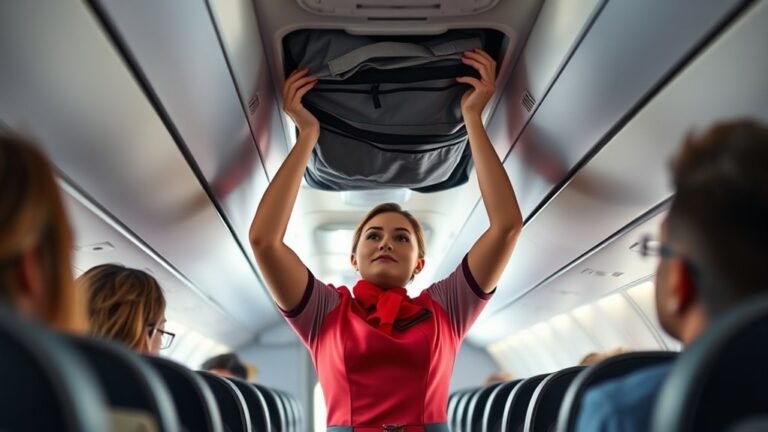
Can I Take 2 Carry on Bags Airline Rules Explained
You can usually bring one full-size carry-on plus one personal item, but two full-size carry-ons are only allowed on some airlines or with upgraded fares, while low-cost carriers often charge for a second bag. Personal items must fit under the seat and carry-ons go in the overhead bin, with size and weight limits varying by airline. Pack strategically, check policies and fees before you travel, and keep going to learn which airlines and fares allow two bags.
Quick Answer: Can You Bring Two Carry-Ons?
Can you bring two carry-ons?
Generally, airlines allow one standard carry-on plus one personal item. You shouldn’t expect to board with two full-size carry-ons unless you’ve purchased extra allowance or elite status grants it.
Check your carrier’s specific dimensions, weight limits, and fees before travel. If in doubt, consolidate items into one bag and a small personal item to avoid surprises.
Carry-On vs. Personal Item: The Core Difference
You’ll notice the main difference between a carry-on and a personal item is size and weight limits—carry-ons are larger and often have stricter dimensions.
You’ll also find allowed-item rules vary: personal items usually hold essentials like laptops and purses while carry-ons can carry bulkier items and checked-bag overflow.
Knowing both limits helps you pack efficiently and avoid gate-checking.
Size And Weight Limits
Many travelers mix up carry-on and personal item rules, but the core difference comes down to size and weight: carry-ons must meet the airline’s cabin-luggage dimensions and usually a strict weight limit, while personal items are smaller, meant to fit under the seat, and often allowed with looser or no weight restrictions.
Check your airline’s specific size and weight caps to avoid fees or gate checks.
Allowed Items Differences
Beyond size and weight, what you can pack in each bag is where rules really differ: airlines generally let you stash liquids, electronics, and small valuables in either item, but they expect bulkier or potentially hazardous things—like full-size toiletries, lithium batteries above certain capacities, and some sporting gear—to stay in your carry-on or checked baggage per regulations.
- Small liquids
- Laptop/tablet
- Valuables
- Large batteries
Typical Carry-On Size and Weight Limits
Airlines usually cap carry-on dimensions around 22 x 14 x 9 inches (including handles and wheels) and set weight limits that commonly range from 7 to 15 kilograms (15–33 pounds).
You should check your carrier’s specific rules—some international and low-cost airlines enforce stricter size or weight caps, and oversize or overweight items may incur fees or require gate checking.
Typical Personal Item Dimensions
A personal item is usually smaller than your carry-on and must fit under the seat in front of you—typical maximum dimensions run about 18 x 14 x 8 inches (45 x 35 x 20 cm), though some carriers allow slightly larger or smaller sizes.
You’ll typically bring items like:
- Laptop bag
- Small backpack
- Briefcase
- Tote or handbag
How Airlines Define “One Carry-On Plus One Personal Item
You should know the clear difference between a carry-on and a personal item so you don’t get surprised at the gate.
Check each airline’s size and weight limits because what fits as one carrier for one airline might be a personal item for another.
Also remember personal items usually need to fit under the seat in front of you for easy access, while carry-ons go in the overhead bin.
Carry-On Versus Personal Item
Because carriers count items differently, knowing what qualifies as your one carry-on plus one personal item keeps you from gate-checking bags or paying surprise fees.
You’ll usually bring:
- A wheeled bag for overhead
- A backpack or tote underseat
- A laptop sleeve inside the personal item
- A small duty-free or coat as an extra
Check airline policy before boarding.
Size And Weight Limits
When airlines say “one carry-on plus one personal item,” they’re defining size and weight limits that determine what actually fits in the overhead bin versus under the seat — so check dimensions and weight allowances before you pack.
You’ll need to measure bags, weigh them if limits exist, and prioritize items. Exceeding limits can mean gate fees, forced gate checking, or denied boarding for that extra piece.
Placement And Accessibility
1 clear rule airlines enforce: one carry-on goes in the overhead bin and one personal item fits under the seat in front of you, and they expect both to be accessible during boarding and deplaning.
You should pack and place items so staff can reach them quickly.
- Overhead: larger bag
- Underseat: briefcase or backpack
- Keep aisle clear
- Liquids accessible
When Two Carry-Ons Are Explicitly Allowed
If an airline explicitly lets you bring two carry-ons, you can usually check both at the gate or stow one under the seat and the other in the overhead bin, depending on size and crew instructions.
Follow the airline’s size and weight limits, tag items if required, and obey crew directions during boarding.
Verify policy before travel to avoid surprises.
When Two Carry-Ons Are Usually Not Allowed
Most airlines only allow one carry-on plus a personal item, so you’ll usually be asked to fit both items into the overhead bin and under-seat space or gate-check one of them.
- Full flights with limited bin space
- Low-cost carriers with strict policies
- Small regional jets with no overhead bins
- Boarding last or during peak times, when overhead space’s gone
Who Gets Two Bags: Ticket Class, Upgrades, and Bundles
Because airlines sell different fare bundles and upgrades, you can often get a second carry-on by choosing a higher ticket class, buying a carry-on add-on, or accepting an elite status or credit-card perk.
Check fare rules: basic economy usually forbids extras, main/plus fares may include two items, and pay-for bundles often list carry-on allowance.
Buy or upgrade if you need both.
How Elite Status and Loyalty Programs Affect Allowances
Beyond fare bundles and upgrades, your frequent-flier status and loyalty program perks can change what you can bring onboard.
Beyond fare bundles and upgrades, elite status and loyalty perks can expand your carry-on privileges and boarding priority.
You’ll often get extra carry-ons, priority boarding, or relaxed size rules. Typical benefits include:
- Additional personal item allowance.
- Extra carry-on bag for elite tiers.
- Priority boarding to secure overhead space.
- Waived fees or flexible enforcement on size/weight.
Low-Cost Carriers vs. Legacy Airlines: Two-Bag Differences
When you compare low-cost carriers and legacy airlines, you’ll see fare class limits often determine whether you can bring one or two bags.
Low-cost carriers commonly charge extra for a second carry-on or restrict free carry-ons to higher fare tiers, while legacy airlines usually include more generous allowances for higher classes.
Keep an eye on carry-on fee differences before you book so you won’t get surprised at the gate.
Fare Class Limits
Although both types of airlines let you bring a carry-on, the rules you’ll face depend on whether you’re flying a low-cost carrier or a legacy airline:
- Basic fares often allow only one small personal item.
- Premium or business fares usually permit a full-size carry-on plus a personal item.
- Loyalty status can add a second bag.
- Restrictions vary by route and ticket class—check before you pack.
Carry-On Fee Differences
Because low-cost carriers build revenue around ancillaries, you’ll usually pay to bring a second bag while legacy airlines often include two carry-ons on higher fares or for status holders.
Check fare rules: basic or sale fares rarely include a second bag, but premium tickets and elite status often do.
Compare total cost before booking and factor loyalty benefits, carry-on size limits, and enforcement strictness.
U.S. Domestic Airlines: Quick Policy Snapshot
If you’re flying within the U.S., most major carriers let you bring one carry-on bag and a personal item, but exact size, weight, and boarding rules vary by airline and fare class.
You’ll usually get one free personal item; carry-on may be free or fee-based depending on fare. Check gate/boarding group limits.
- Size limits differ
- Weight rules vary
- Fare affects allowance
- Gate checks possible
Major International Airlines: Two-Bag Rules
When you fly with many major international carriers, you’re often allowed two carry-on items—a larger cabin bag plus a personal item like a backpack or laptop case—though exact size and weight limits differ by airline and fare class.
Check each carrier’s published dimensions and weight allowances, and note stricter low-cost or basic economy fares.
Pack strategically to avoid gate checks and excess fees.
Airport Security: TSA Rules for Two Carry-Ons
Airlines set limits on how many bags you can bring, but TSA focuses on what can pass through security and how you should pack those two carry-ons.
You’ll need to follow screening, remove prohibited items, and cooperate with officers.
Consider packing to streamline checks:
- Place ID and boarding pass accessible
- Keep shoes and belts easy to remove
- Pack prohibited items out
- Stow large items for x-ray
Liquids, Electronics, and Two-Bag Screening
Because liquids and electronics get extra scrutiny at security, you should pack them with screening in mind: place liquids in a clear quart bag and keep it accessible, and stow laptops and larger electronics in an easily removable case.
If you carry two bags, split items logically so one bag contains the quart bag and the electronics for quick, separate inspection without delaying you.
Medical and Mobility Exceptions to Carry-On Limits
Security checks often focus on liquids and electronics, but you should also know about exceptions for medical supplies and mobility aids that don’t count toward carry-on limits.
- Prescription meds and syringes you need during flight.
- Portable oxygen concentrators with approval.
- Collapsible canes, walkers, and folded wheelchairs.
- Insulin pumps and continuous glucose monitors stored on you.
Ask airlines ahead and carry documentation.
How Families and Infants Change Carry-On Counts
When you travel with infants or young children, carriers typically let you bring extra essential items—like a diaper bag, a collapsible stroller, or a small car seat—without counting them against your carry-on allowance; however, policies vary by carrier and fare class, so check before you pack.
You can usually bring the child’s bag plus your carry-on and personal item, but airlines differ on sizes and age limits.
Gate-Checking: When It Happens and Why
If your stroller or extra bag is allowed onboard but the flight fills up, staff may ask you to gate-check those items so the cabin stays clear for other passengers and carry-ons.
If the flight fills, staff may ask you to gate-check strollers or extra bags to keep the cabin clear.
You’ll hand items at the gate and retrieve them at the jet bridge or baggage claim.
Typical scenarios:
- Overfull overhead bins
- Priority boarding conflicts
- Safety or aisle obstruction
- Aircraft type limits
Fees for a Second Carry-On: What to Expect
You’ll want to check each airline’s second-bag policy before you fly, since rules and size limits vary.
Expect typical second-bag fees to range from about $30 to $75, with some low-cost carriers charging more.
To avoid charges, consider consolidating items, using a personal item, or prepaying baggage online.
Airline Second-Bag Policies
Although many carriers let a personal item and a small carry-on ride free, adding a second carry-on can quickly change the rulebook and your wallet. Airlines vary wildly on whether they allow it at all, whether they’ll gate-check it, and what fees they’ll charge.
- Some carriers ban extra carry-ons.
- Others permit with fee.
- Frequent flyers may get exemptions.
- Gate agents decide final handling.
Typical Second-Bag Fees
Expect to pay anywhere from $25 to $150 when you try to bring a second carry-on.
Airlines set fees based on route, class, and loyalty status, and budget carriers typically charge at the higher end while full-service airlines may waive or reduce the cost for premium passengers.
Fees often vary by booking channel, peak travel dates, and whether you pay at check-in or at the gate.
Ways To Avoid Charges
Anyone can cut the chance of being charged for a second carry-on by planning ahead and using a few simple tactics:
- Pack smartly: combine items into one bag and use compression cubes.
- Wear bulky items to cabin.
- Join frequent‑flyer or carry‑on priority programs for free second bag allowance.
- Gate-check or prepay baggage online to avoid higher airport fees.
How to Avoid Surprise Carry-On Fees
To avoid surprise carry-on fees, check the airline’s exact size and weight limits, confirm your ticket includes a carry-on, and weigh your bag before you leave so you can repack if needed.
Also print or screenshot the airline’s policy, arrive early to resolve gate issues, ask staff about freebies (personal item vs. carry-on), and use a reliable luggage scale at the airport.
Packing Strategies to Stay Within Rules
When you pack with the airline’s limits in mind, you’ll make fewer last-minute changes and avoid fees; prioritize versatile clothing, compressible items, and smart organization so every inch of your bag counts.
You’ll pack deliberately: roll clothes, use packing cubes, and limit shoes.
Follow this checklist:
- Roll garments tightly
- Use compression cubes
- Wear bulkiest items
- Limit toiletries to essentials
How to Turn a Personal Item Into a Valid Second Bag
You’ve already slimmed down your packing, so now make that personal item work harder: many travelers can legally carry a second bag by adjusting size, strap placement, and what they call it at the gate.
Shift contents into a compact tote or slim backpack, keep it under airline dimensions, use a short strap to show it fits under the seat, and declare it as your personal item.
Best Bag Types to Maximize Allowance
Although style matters, pick bags that play to airline rules: slim totes, foldable backpacks, and soft-sided duffels give you the most usable space while meeting size limits.
You’ll want lightweight, compressible options that fit stowage and personal-item slots.
Consider:
- Slim tote with exterior pockets
- Roll-up daypack
- Soft duffel with compression straps
- Garment-friendly foldable bag
How to Measure and Weigh Bags at Home
Picking a compressible bag is smart, but you’ll still want to confirm its actual dimensions and weight before you get to the airport.
Choosing a compressible bag helps, but always measure and weigh it flat and packed before heading to the airport.
Lay the bag flat, extend any wheels or handles, and measure length, width, height with a tape.
Use a luggage scale or a bathroom scale to weigh it packed; subtract any platform or hand weight.
Record measurements for quick checks.
If a Gate Agent Says Your Bag Is Too Big: Steps to Take
If a gate agent says your bag is too big, stay calm and ask for specifics—whether it’s the dimensions, weight, or both—so you know exactly what’s wrong.
- Measure quickly against the sizer or ask to use theirs.
- Offer to gate-check if available.
- Redistribute items into a personal item or smaller bag.
- Ask about fees and appeal politely if measurements seem off.
Connecting Flights With Different Carry-On Rules
When you book connecting flights, you can run into conflicting carry-on rules between airlines that affect what you can bring on board.
Check the transfer airport’s allowances and each carrier’s size and weight limits before you fly so you don’t get surprised.
If policies clash, be prepared for stricter enforcement at the gate or the transfer point and know your options (recheck, gate-check, or pay a fee).
Airline Carry-On Conflicts
Because airlines set their own carry-on limits, traveling on connecting flights can leave you juggling different size, weight, and item rules that don’t line up.
You should check each carrier, prioritize stricter limits, and pack smart.
Consider:
- Smaller bag for stricter airline
- Weigh luggage before travel
- Keep essential items accessible
- Expect gate baggage checks
Transfer Airport Allowances
Although connecting through different airports can mean facing varied carry-on allowances, you can manage transfers by planning ahead and sticking to the strictest rules you’ll encounter.
Check each carrier’s size, weight, and item limits before booking. Consolidate items to meet the smallest allowance, gate-check extras if needed, and keep receipts.
Pack essentials in a compliant personal item to avoid surprises.
Baggage Policy Enforcement
If you pass through carriers with different carry-on rules, expect staff at each checkpoint and gate to enforce the policy of the flight you’re boarding, not the one you left. You’ll need to adjust on the spot:
- Check final carrier limits.
- Redistribute items between bags.
- Gate agents may gate-check oversized bags.
- Pay fees or repack before boarding.
What Carry-On Rules Mean for International Itineraries
When you plan international travel, carry-on rules do more than dictate what fits in the overhead bin — they affect connection times, customs procedures, and what you can bring through security and into another country.
Check airline and destination restrictions for liquids, batteries, and prohibited items, factor in transfer airports’ rules, and pack essentials for delays or inspections to avoid fines or denied boarding.
How Seat Selection Affects Overhead Space
Picking your seat can directly change how much overhead space you get: exit-row and bulkhead seats often leave you with less accessible overhead bin room for personal items because other passengers tend to crowd the nearest bins.
Meanwhile, window and rear-cabin seats sometimes give you priority to nearby bins or more available space as people board from front to back.
- Window seat: local bin access
- Aisle: quicker boarding
- Bulkhead: limited nearby bins
- Rear cabin: more leftover space
When to Buy Priority Boarding to Keep Two Bags Onboard
Because overhead bins fill fast, buying priority boarding can be the simplest way to make sure both your carry-on and personal item stay with you, not gate-checked.
Buy it when flights are full, during peak travel, or if you carry fragile or needed items.
Compare cost versus risk: a small fee often beats losing access to essentials or waiting at baggage claim.
Prioritizing Items Between Two Bags
Think of your personal item as the go‑to for essentials like meds, documents, and a phone charger so you can access them during the flight.
Put valuables—laptop, camera, jewelry—in your carry‑on to keep them secure and easy to spot at the gate.
Balance weight by placing heavier items in the bag you’ll check into the overhead or carry last onto the plane to avoid awkward lifting.
Essentials In Personal Item
When you’re deciding what goes in your personal item versus your carry-on, focus on access and necessity: keep essentials you might need during the flight or between gates—documents, wallet, phone, medications, a charger, and a small hygiene kit—in your personal item so they’re within reach, while stowable, bulkier items like extra clothes or larger toiletries can live in the rollaboard.
- Passport and boarding pass
- Phone and charger
- Medication and small first-aid
- Wallet and keys
Valuables In Carry‑On
Although you’re already carrying a personal item, prioritize irreplaceable and high-value items in your carry‑on so they’re always with you and not left in overhead bins or checked luggage.
Keep passports, wallets, electronics, medications, and jewelry in the main carry‑on.
Use the personal item for quick‑access documents and small comforts.
Lock or secure valuables and keep receipts or serial numbers handy.
Distribute Weight Strategically
Balance matters: distribute heavy items between your carry‑on and personal item so neither bag gets overloaded and you stay within airline limits.
You should:
- Put dense items (laptop, shoes) in the sturdiest bag.
- Reserve your personal item for essentials and lighter valuables.
- Split toiletries and chargers evenly.
- Keep weight near wheels or straps for easier lifting and balance.
Strategies for Business Travelers With Two Carry-Ons
If you travel for work with two carry-ons, plan their roles so each serves a clear purpose—one for essentials you need during the flight and one for items you’ll access after landing.
Keep your personal bag with laptop, chargers, documents, medications, and a change of clothes.
Keep a personal carry-on stocked with your laptop, chargers, documents, meds, and a spare outfit for flights.
Use the second bag for presentation materials, samples, and client gifts.
Know airline size rules and gate-check if needed.
Tips for Families Traveling With Multiple Carry-Ons
When you travel with kids, rotate carry-ons so not everyone tries to stow a bag at once and you can grab essentials quickly.
Use shared packing—one bag for snacks and medicine, another for electronics and chargers—to cut duplicates and save space.
At the gate, be ready to consolidate or gate-check items to speed boarding and avoid overhead bin battles.
Staggered Carry-On Rotation
- Parent A holds bag
- Child 1 holds bag
- Parent B holds bag
- Child 2 holds bag
Shared Packing Strategies
Although everyone packs their own bag, coordinating contents makes security lines and tight overhead bins much easier to manage.
Agree which essentials go in each carry-on: medications, chargers, snacks, and spare clothes. Use packing cubes and label pockets so you can grab items fast.
Balance weight to meet limits and keep fragile items together. Communicate roles before boarding to avoid last-minute shuffling.
Gate-Check And Consolidation
Coordinating who carries what at the gate makes deciding whether to gate-check or consolidate bags much simpler.
You’ll save time and avoid surprises by assigning roles and combining items when possible.
- Put bulky items in one suitcase.
- Keep valuables on person.
- Use a stroller or car seat tag.
- Gate-check extra tote to skip overhead crowd.
Documenting Airline Policies Before You Fly
Because airline rules change often, you should document the carrier’s carry-on size, weight, and item restrictions before you go to the airport. Check the airline site, save screenshots, note confirmation numbers, and record exceptions for kids or premium seats. Use this quick reference:
| Item | Action |
|---|---|
| Size limits | Screenshot |
| Weight limits | Note |
| Prohibited items | Copy list |
| Exceptions | Record |
| Contact | Save info |
Using Airline Apps, Chat, and Customer Service Efficiently
After you save the carrier’s rules, turn to the airline’s digital tools to make enforcement and changes easier.
After saving the carrier’s rules, use the airline’s digital tools to simplify enforcement and handle changes quickly.
Use apps and chat to confirm allowances, upload photos, and speed check-in. Call when needed for complex cases.
- Open app for real-time size/weight limits
- Use chat to confirm bag count
- Upload photos of your bags
- Call customer service for exceptions
Appealing a Gate-Check or Fee Decision
If an agent gate-checks your carry-on or charges an unexpected fee, don’t accept it as final — you can appeal.
Ask calmly for the reason, request a supervisor, and cite the airline’s published carry-on policy or your boarding class.
Document names, times, and photos.
If unresolved, file a formal complaint with customer service and, if necessary, escalate to regulatory authorities for review.
Common Carry-On Problems and Exact Fixes
You’ll often face an overpacked carry-on that won’t fit the sizer or a last-minute gate-check request.
I’ll show exact fixes like smart re-packing, swapping items to a personal item, and quick outfit choices to lighten the load.
If gate-checking is unavoidable, we’ll compare alternatives and how to protect valuable or fragile items.
Overpacked Carry-On Solutions
When your carry-on bulges at the zipper, it doesn’t just slow you down—it risks gate-checks, damaged items, and stressed travel companions.
You can fix it fast:
- Remove nonessentials and stash in personal bag.
- Use compression cubes to shrink clothing.
- Wear heavy layers aboard.
- Redistribute toiletries into checked or compliant pouch.
Gate-Check And Alternatives
Gate-checking can feel like a setback, but it’s often the simplest fix for an overstuffed carry-on—especially after you’ve redistributed items or worn bulky layers.
If an agent asks, hand over the bag and grab it at the gate or baggage claim.
Alternatives: ship items ahead, use a compact personal item, or wear heavy pieces.
Know airline policies to avoid fees and delays.
Checklist to Confirm You Can Carry Two Bags Today
Want to bring both your personal item and a carry-on today? Use this quick checklist to confirm eligibility and avoid surprises.
- Check your airline’s carry-on and personal item size limits.
- Verify fare class or loyalty status for extra allowances.
- Confirm gate agent enforcement trends for that route.
- Ascertain combined weight and item count meet policy before boarding.
Real-World Examples: Rules From 10 Popular Airlines
Now we’ll look at real-world examples from 10 popular airlines so you can compare their carry-on policies side by side.
You’ll see how each carrier treats personal item allowances and what size and weight limits they enforce.
Use these examples to quickly spot which airlines let you bring two items and which ones will charge or gate-check extras.
Airline Carry-On Policies
When you compare carry-on rules across 10 popular airlines, you’ll see big differences in size limits, bag counts, and fees that affect what you can bring onboard.
You should check each carrier’s published dimensions, weight rules, and boarding group exceptions.
Typical variations include:
- Strict size enforcement
- Fee-for-second-bag policies
- Weight limits on some carriers
- Priority boarding exceptions
Personal Item Allowances
Although airlines all let you bring a personal item onboard, what qualifies as one—and how strict carriers are about its size, placement, and contents—varies widely; check each airline’s rules so you don’t get stuck gate-checking a bag or paying an unexpected fee.
You should verify allowed examples (purses, laptop bags, briefcases), policy differences for carry-ons plus personal items, and enforcement at boarding gates.
Size And Weight Limits
Because airlines set different size and weight limits for carry-ons, you should check each carrier before you pack: some measure linear inches, others use exact dimensions or weight limits, and enforcement ranges from strict gate checks to lenient eyeballing.
- Bag dimensions: 22x14x9 common.
- Linear inches: sum of sides.
- Weight caps: 7–22 kg varies.
- Gate checks applied if oversized.
Quick Reference Cheat Sheet for Two-Bag Travel
Packing light makes two-bag travel simple and stress-free: pick a carry-on and a personal item that complement each other, stash essentials and valuables in the personal item, and use the carry-on for clothes and gear you’ll need on longer legs of the trip.
Quick cheat sheet: confirm airline dimensions, weigh bags, pack a toiletry pouch, include chargers, layer outfits, keep important documents handy.
Top Mistakes That Trigger Gate-Checking
You’ll often get gate-checked when your carry-on is jam-packed beyond the size or weight limits.
Bringing a bulky personal item that won’t fit under the seat makes it worse, and showing up in the last boarding group leaves you with fewer options.
Watch those three mistakes and you’ll avoid an unexpected check at the gate.
Overpacked Carry-On
When your carry-on bulges beyond the airline’s size or weight limits, gate agents will often insist on checking it — and that usually means delays, extra fees, and rummaging through your things at the jet bridge.
You can avoid that by packing smarter:
- Remove nonessentials
- Redistribute weight to your personal item
- Compress clothing with packing cubes
- Weigh and measure before arriving at the airport
Bulky Personal Item
If your “personal item” looks more like a second carry-on, gate agents will flag it fast and you’ll be asked to check it at the gate—often at extra cost and with the hassle of digging through your things.
Keep personal items compact: laptop bags, slim backpacks, or small totes.
Don’t cram bulky duffels or full-size backpacks; they’ll trigger gate-checking and delays.
Late Boarding Lines
Because flights board on tight schedules, cutting it close at the gate is one of the fastest ways to get your carry-on gate-checked; arrive late and agents often won’t have space or time to stow larger bags, so they’ll ask you to check it to avoid delaying departure.
- You rush through security.
- You’re running from a connecting flight.
- You linger buying snacks.
- You miss zone calls and scramble.
How to Pack Liquids and Electronics Across Two Bags
Although you’ll often juggle two carry-ons, packing liquids and electronics between them is simpler with a clear plan:
| Item | Bag A (personal) | Bag B (rollaboard) |
|---|---|---|
| Liquids (3-1-1) | TSA pouch, accessible | spare full-size |
| Electronics | Laptop, tablet | chargers, power bank |
Keep essentials reachable, comply with screening, and balance weight for easy access.
Final Checklist: Travel Confidently With Two Bags
When you’re heading to the gate with two bags, run through a short, practical checklist so nothing slows you down:
- Confirm both bags meet airline size and weight limits.
- Keep passport, boarding pass, and phone in an easy-access pocket.
- Place liquids and electronics where security expects them.
- Stow heavier items in the wheelie and lighter essentials in your personal bag for balance.
Frequently Asked Questions
Can Two Carry-Ons Be Placed in Overhead Bins for International Long-Haul Flights?
Yes — you usually can place two carry-ons in overhead bins on international long-haul flights if both fit and the airline allows it, but you’ll need to check size, weight limits and gate agents’ decisions to avoid surprises.
Are Souvenired or Duty-Free Bags Counted as Second Carry-Ons?
Generally, yes — souvenir or duty-free bags usually count as your second carry-on unless the airline exempts them. You should check the carrier’s specific policy at boarding to avoid gate-checking or extra fees on international flights.
Do Airline Partnerships Allow a Second Carry-On Across Codeshare Flights?
Usually no — you’ll follow the operating carrier’s carry-on rules on codeshares, so a partner’s allowance won’t automatically grant a second bag; always check the operating airline’s policy beforehand to avoid surprises at boarding.
Can Oversized Personal Items Be Accepted if Checked at Boarding Gate?
Yes — airlines will sometimes accept oversized personal items at the gate for checking, but policies vary by carrier and flight; you should ask gate agents early, expect possible fees, and confirm items meet checked-baggage size and weight limits.
Will Carry-On Allowances Differ for Pet Carriers or Service Animal Carriers?
Yes — airlines often treat pet carriers and service animal carriers differently; you’ll usually be allowed one carrier plus your carry-on, though sizes, fees, and documentation rules vary, so check the specific airline’s pet and ADA policies.
Conclusion
You can usually bring two bags—a carry-on and a personal item—though rules vary by airline and fare type. Always check size and weight limits before you pack to avoid surprises at the gate. Put heavier items in your carry-on, keep docs and valuables in your personal item, and distribute liquids and electronics to speed security checks. If in doubt, measure and weigh your bags at home and be ready to gate-check if needed. Safe travels!