
Can I Pack Coffee in My Checked Luggage Airline Rules
Yes — you can pack roasted whole beans, ground coffee, and instant coffee in checked luggage, but keep them sealed to avoid spills, odors, and crushing. Use sturdy tins, vacuum-sealed bags, or resealable Mylar and cushion containers to protect them. Follow airline weight limits, declare unusually large commercial quantities if asked, and check destination customs rules (some countries restrict unroasted coffee). Keep receipts and photos for claims, and continue for practical packing tips and country specifics.
Quick Answer: Can You Pack Coffee in Checked Luggage?
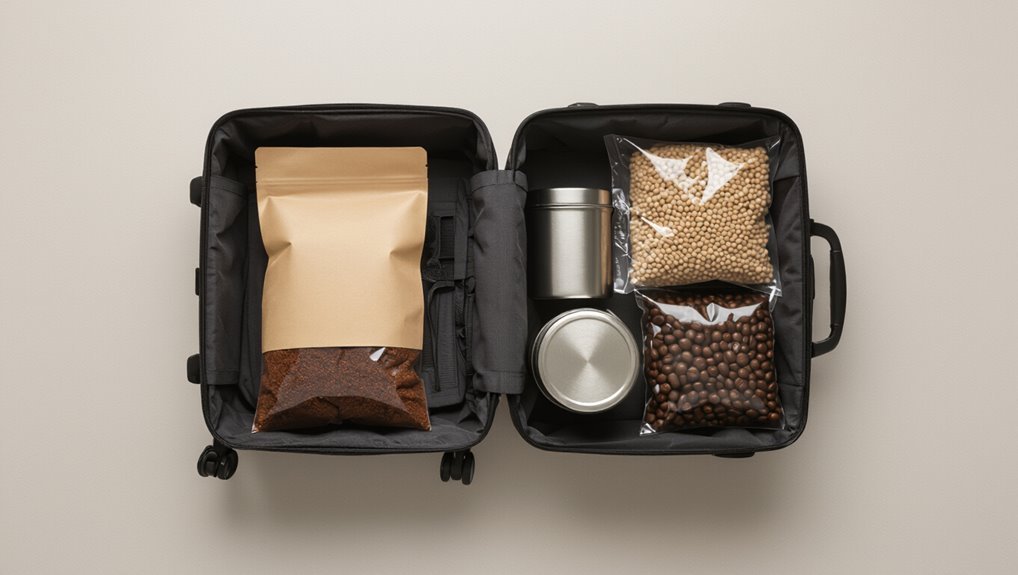
Want to bring coffee in your checked bag? Yes — you can pack roasted whole beans or ground coffee in checked luggage.
Keep it sealed and packed to prevent crushing and odor transfer. Instant coffee and sealed commercial tins are fine.
Avoid loose grounds that can spill. Note customs rules for transporting large amounts or rare/regulated coffee across borders.
Who This Guide Is For and How to Use It
Anyone traveling with coffee—whether you’re a casual drinker, a home brewer, a barista heading to a competition, or gifting a bag to friends—will find this guide useful.
You’ll get clear, practical steps for packing, declarations, and labeling, plus tips for protecting quality and avoiding delays.
Use it to prepare belongings, follow airline regulations, and streamline security checks before travel.
Which Coffee Forms Are Allowed in Checked Bags (Beans, Ground, Instant)
Curious which coffee forms you can pack in checked luggage? You can bring whole beans, ground coffee, and instant granules or packets.
Beans are sturdy and less messy; ground coffee should be sealed to avoid spills and odors. Instant coffee is travel-friendly and compact.
Pack all forms in airtight, durable containers inside your checked bag to minimize leakage and preserve freshness.
TSA Rules for Coffee in Checked Bags
While the TSA doesn’t prohibit coffee in checked luggage, you should follow a few practical rules to avoid problems: Pack sealed, labeled containers to prevent spills and inspections; declare unusual quantities if asked; comply with airline weight limits.
| Tip | Reason |
|---|---|
| Seal jars/bags | Prevent leaks |
| Label clearly | Speeds inspection |
| Limit quantity | Avoid weight/inspection issues |
EU & UK Rules for Coffee in Checked Luggage
Thinking of taking coffee in checked luggage to the EU or UK? You can generally pack roasted whole beans or ground coffee without issue, but check customs limits and declare large quantities.
Avoid fresh or unprocessed coffee cherries and respect biosecurity rules. Vacuum-sealed or commercially packaged coffee is best.
Rules vary by country, so verify limits before travel to prevent fines or confiscation.
Major Airline Rules: Delta, American, British Airways
You’ll want to check each carrier’s rules before packing coffee, since Delta, American, and British Airways have slightly different limits and handling practices.
Delta generally treats coffee like other dry goods in checked bags, while American and British policies may vary on quantity and declaration for commercial amounts.
Compare their baggage pages so you can pack within allowances and avoid surprises at the airport.
Delta Baggage Coffee Rules
Because Delta treats dry coffee and sealed canned or vacuum-packed grounds like other dry goods, you can pack them in checked bags without special paperwork; just make sure loose beans or grounds are contained to avoid spills and odor. You should label packages, use airtight containers, and consider cushioning to prevent crushing.
| Item | Packaging | Tip |
|---|---|---|
| Beans | Airtight | Cushion |
| Grounds | Sealed bag | Label |
American & British Policies
After covering Delta’s approach, let’s look at how American Airlines and British Airways handle coffee in checked baggage.
You can pack sealed, dry coffee—whole bean or ground—in checked bags with both carriers.
Avoid loose or wet coffee and secure containers against crushing.
Declare nothing unless it’s a large commercial quantity; follow customs rules for international flights and local restrictions.
Vacuum-Sealed & Commercial Coffee Packaging
If your coffee comes in vacuum-sealed bags or commercial retail packaging, you’ll usually face fewer inspection issues than loose grounds.
Check that vacuum seals are intact and note any airline or country limits on the amount of coffee you can carry in checked baggage.
If you exceed commercial packaging limits, declare it and be prepared for possible inspection or confiscation.
Vacuum-Sealed Coffee Rules
When you’re packing vacuum-sealed or commercially packaged coffee in checked luggage, remember that most airlines and security agencies accept it so long as the seal is intact and the packaging meets labeling standards.
The airtight barrier helps prevent odor escape and contamination, but you should still check carrier-specific rules and any country import restrictions before travel.
Pack sealed bags inside a sturdy container, label contents, and declare if required.
Commercial Packaging Limits
Most airlines let you pack several commercially sealed bags of coffee in checked luggage, but carriers and countries often set quantity limits or require specific labeling, so you should verify rules before you go.
You should:
- Check baggage limits and customs allowances.
- Keep original sealed packaging and receipts.
- Declare large quantities to avoid confiscation or fines.
Personal vs Commercial Quantities: Limits and Allowances
A few practical rules will help you tell personal coffee amounts from commercial quantities for checked luggage: airlines and customs typically treat up to a couple of kilograms as personal use, but larger volumes—especially vacuum-sealed, bulk-packed, or clearly destined for resale—can trigger commercial import rules, duties, or confiscation. You’ll declare larger amounts and provide proof of personal use.
| Item | Guideline |
|---|---|
| ≤2 kg | Personal |
| >2 kg | Review rules |
| Bulk | Likely commercial |
| Duty | Possible fees |
Best Containers for Loose Beans and Ground Coffee
Now that you know how quantities affect documentation and risk, choose containers that protect aroma, prevent spills, and meet airline rules.
You’ll want sturdy, sealed options:
- Vacuum-sealed canisters for beans — compact, odor-proof.
- Tin or metal screw-top jars for ground coffee — durable, crush-resistant.
- Resealable Mylar bags with valve — flexible, lightweight, airline-friendly.
Preventing Spills, Moisture, and Damage in Checked Bags
Because checked bags take a beating, pack your coffee to survive drops, pressure changes, and rough handling: use rigid containers, double-seal closures, and cushioning to prevent spills, and place moisture barriers between the coffee and the rest of your luggage.
Wrap jars in bubble wrap, tuck packets in sealed plastic bags, cushion with clothing, and keep cans upright to minimize shifting and potential damage.
How to Stop Your Suitcase From Smelling Like Coffee
If you want to keep your suitcase from smelling like coffee, seal every coffee item, isolate it from clothes, and add odor absorbers to the bag’s compartments.
Follow these quick steps to stay fresh:
- Double-bag grounds/beans in vacuum or zip-lock bags.
- Put coffee in a hard container or wrapped box.
- Use charcoal sachets or baking soda in pockets.
Packing Coffee in Soft vs Hard Suitcases
When deciding whether to pack coffee in a soft or hard suitcase, consider protection, odor control, and how you’ll handle the bag—soft cases flex and can crush containers, while hard shells resist impacts and contain smells better. Choose hard shells for sealed cans; use padded wraps in soft bags. Check airline weight limits.
| Suitcase Type | Protection | Odor Control |
|---|---|---|
| Soft | Low | Poor |
| Hard | High | Better |
| Hybrid | Medium | Moderate |
Declaring Coffee at Customs: When and How to Report It
When you travel with coffee, know the quantity limits so you can declare any amounts that exceed personal-use allowances.
Check the customs form and the destination country’s rules to see where and how to report packaged or bulk coffee.
If you’re unsure, declare it on arrival and answer questions truthfully to avoid fines or confiscation.
Declaring Coffee Amounts
Most travelers need to tell customs about coffee only when they exceed personal-use limits or enter a country with strict agricultural rules, so check the destination’s allowances before you pack.
You should:
- Count packages and note net weight.
- Verify permitted weight or quantity per person.
- Declare excess, show receipts, and answer officer questions honestly.
Filling Customs Forms
If you’ve counted and declared the amount of coffee you’re carrying, the next step is completing the customs form accurately so officials can process your entry quickly. You’ll list origin, quantity, and value; check prohibited item boxes. Be honest to avoid fines. Below is a quick reference:
| Field | Example | Action |
|---|---|---|
| Origin | Brazil | Declare |
| Quantity | 5 kg | List |
Agricultural Restrictions and Country-Specific Coffee Bans
Because countries aim to protect local ecosystems and agriculture, you’ll often face strict rules about bringing coffee across borders—especially unroasted beans, grounds, and anything with plant matter.
Countries protect ecosystems, so expect strict rules on bringing coffee—especially unroasted beans, grounds, or any plant material.
Check rules before travel and declare items when required.
Examples:
- Australia: tight bans on raw plant material.
- New Zealand: strict biosecurity inspections.
- EU nations: variable rules, often allow roasted sealed coffee.
International Food Import Rules for Traveling With Coffee
When you travel with coffee, check the customs declaration rules for each country you enter and leave.
You’ll need to declare packaged or bulk coffee where required and follow any agricultural import restrictions that apply.
Knowing these rules ahead of time will help you avoid fines, delays, or confiscation.
Customs Declaration Requirements
Although rules vary by country, you must declare coffee and other food items on arrival forms and to officers if required, since failing to do so can lead to fines, seizure, or quarantine.
You should:
- List quantity and type (ground, beans, instant).
- Keep receipts and packaging accessible.
- Answer questions honestly and follow officer instructions to avoid delays or penalties.
Agricultural Import Restrictions
If you’re bringing coffee into another country, know that agricultural authorities often restrict or prohibit certain types to protect local ecosystems and crops.
You should check destination rules for green beans, soil-contaminated beans, and unroasted samples.
Declare coffee when required, keep receipts and packaging handy, and be prepared for inspection or confiscation.
Failing to comply can mean fines or shipment refusal.
Shipping Large or Commercial Coffee via Airline Cargo
Shipping large or commercial quantities of coffee via airline cargo requires planning for weight, packaging, and customs compliance.
Shipping large quantities of coffee by air demands careful planning for weight, packaging, and customs compliance.
You’ll need permits, clear documentation, and reliable pallets or crates. Consider temperature and pest controls to meet import rules.
- Confirm airline cargo limits and rates.
- Use sealed, pest-resistant packaging.
- Prepare commercial invoices and phytosanitary certificates.
Transporting Espresso Machines, Grinders, and Accessories
If you’re packing an espresso machine in checked luggage, secure loose parts and pad it well to prevent damage.
Check grinder rules—remove batteries or comply with airline restrictions for battery-powered models.
Pack accessories and grounds in sealed containers and label them to speed inspections.
Espresso Machines In Checked Bags
When you pack an espresso machine, grinder, or delicate accessories in checked luggage, protect them as if they’re fragile electronics: drain water reservoirs, remove batteries, and cushion all components to prevent impact and vibration damage.
- Wrap machine body in bubble wrap and secure in center of suitcase.
- Pad removable parts separately in sealed bags.
- Lock case and label fragile; consider airline fragile-tag requests.
Grinders And Battery Rules
Because grinders often contain sharp burrs and some portable units include lithium batteries, you should treat them like both fragile and hazardous items: pack grinders in sturdy, padded cases to prevent burr damage and short circuits.
Remove or secure batteries per airline rules, carry spare lithium cells in carry-on with terminals taped, and declare any built-in batteries at check-in to avoid delays.
Packing Accessories And Grounds
Although espresso machines, grinders, and accessories vary widely in size and fragility, you can pack them efficiently by prioritizing protection, accessibility, and compliance with airline rules.
Wrap fragile parts, remove batteries, and stow grounds to avoid spills. Pack strategically:
- Cushion machines with clothing and bubble wrap.
- Seal grounds in sturdy, leakproof bags.
- Keep small accessories in labeled, padded cases.
What Happens if Security or Customs Inspects Your Coffee?
If TSA or customs agents need to inspect your checked coffee, they’ll usually open the bag, examine the packaging, and may swab the contents for traces of prohibited substances.
You’ll be notified if they do, and agents may reseal the bag with a notice.
If they deem the item problematic, they can confiscate it or require documentation; cooperate and ask for instructions.
Tips for Frequent Coffee Travelers to Save Space and Money
If you travel with coffee often, pack whole beans to keep flavor longer and crush less in transit.
Use vacuum-seal bags to cut bulk and protect beans from moisture.
Also, tap loyalty programs at roasters and airlines to score discounts and extra baggage perks.
Pack Whole Beans
When you travel often, packing whole beans saves space and money by letting you buy in bulk, avoid baggage fees for branded retail tins, and grind only what you need at your destination.
You’ll keep beans fresher, control grind size, and cut costs.
Consider:
- Lightweight resealable pouch
- Small manual grinder
- Portioned 250g bags for trips
Use Vacuum Seals
Because vacuum-sealing slashes volume and locks in freshness, you can pack more coffee without adding weight or risking staleness. Use a compact vacuum pump or pre-sealed bags to compress beans, then label clearly for customs. Store the heaviest bags near the suitcase frame to balance weight.
| Item | Benefit | Tip |
|---|---|---|
| Vacuum bag | Space saved | Remove air |
| Beans | Freshness | Grind later |
| Pump | Reusable | Carry small |
Leverage Loyalty Programs
After packing your beans efficiently, you can cut costs and carry less by tapping into loyalty programs that reward frequent coffee purchases and travel.
You’ll earn points, get priority shipping, and access partner discounts. Use programs to replace bulk packing with local pick-ups or subscriptions.
- Track points for free bags or shipping
- Link airline and retailer perks
- Redeem for hotel/coffee credits
Quick Checklist Before You Check a Bag With Coffee
Pack smart: double-check airline rules, packaging, and local regulations before you hand over a bag that contains coffee. Inspect seals, use sturdy containers, declare if required, and note weight limits. Keep receipts and contact info. Consider customs rules for roasted vs. green beans.
| Item | Action | Tip |
|---|---|---|
| Seals | Inspect | Tape edges |
| Container | Sturdy | Hard-sided |
| Declaration | Check | Paperwork |
| Weight | Weigh | Avoid overage |
| Receipts | Keep | Proof of purchase |
Troubleshooting: Damaged, Opened, or Confiscated Coffee
If your coffee arrives damaged, opened, or gets confiscated, act quickly to document the situation and contact the airline or customs office — you’ll need clear evidence to file a claim or appeal.
Follow these steps:
- Photograph packaging, contents, and baggage tag immediately.
- File a written report with airline or customs before leaving the terminal.
- Keep receipts, declarations, and contact info for follow-up claims.
Sources and Where to Check Current Airline and Country Rules
Regulations change often, so check official sources before you travel: start with the airline’s baggage policy page, the departure and arrival countries’ customs and agriculture websites, and the transportation-security agency for your airport. Use official pages, contact customer service, and confirm limits, declarations, and quarantine rules.
| Source | Purpose |
|---|---|
| Airline baggage page | Limits, fees |
| Customs/agriculture | Prohibited items |
| Airport TSA/security | Screening rules |
| Embassy/consulate | Country-specific advice |
Frequently Asked Questions
Can I Pack Coffee-Infused Snacks or Baked Goods in Checked Luggage?
Yes — you can pack coffee-infused snacks or baked goods in checked luggage, but pack them airtight, label per customs rules, avoid excessive liquids or gels, and be prepared for inspection or disposal if authorities deem them restricted.
Are Liquid Coffee Concentrates or Cold Brew Bottles Allowed in Checked Bags?
Yes — you can pack liquid coffee concentrates or sealed cold brew bottles in checked bags, but airlines and countries may restrict quantity or require declaration; you should secure, cushion, and check airline and customs rules before flying.
Do Biodegradable or Compostable Coffee Pods Have Special Restrictions?
No, they generally don’t have special restrictions; you can pack biodegradable or compostable coffee pods in checked luggage, but you should still follow customs rules, declare agricultural items if required, and secure them against crushing or moisture.
Can I Pack Rare or Protected-Origin Coffee Varieties Without Permits?
No, you generally can’t; many rare or protected-origin coffees require permits or phytosanitary certificates, and you’ll need to declare them. Check destination import rules and CITES restrictions before packing to avoid fines or confiscation.
Are Powdered Coffee Creamers Treated the Same as Coffee for Customs?
No, powdered coffee creamers aren’t treated the same as coffee for customs; you’ll often face different rules because creamers can contain dairy or oils, so declare them and check destination rules to avoid confiscation or fines.
Conclusion
Yes — you can pack coffee in checked luggage, but check rules first. Whole beans, ground coffee, and instant coffee are generally allowed by the TSA and most airlines, though liquids like cold-brew concentrate may be restricted. Wrap bags or tins to prevent tearing, use airtight containers for aroma and spills, and declare large quantities if required. For international trips, confirm EU/UK and specific airline rules to avoid surprises at security or customs.
