Can I Bring Snacks in My Purse on a Plane?
Yes — you can bring solid, non‑liquid snacks in your purse on a plane, but avoid messy, leaky, or strongly scented items that might bother others or spill. Liquids, gels, yogurt, peanut butter and similar spreads must follow the 3.4 oz rule or go in checked baggage. Keep snacks accessible for screening, use sealable containers, and declare fresh produce when required. Follow airline and destination rules for meats and dairy, and keep a small stash for the trip if you want more tips.
Quick Answer: Can You Bring Snacks in Your Purse?
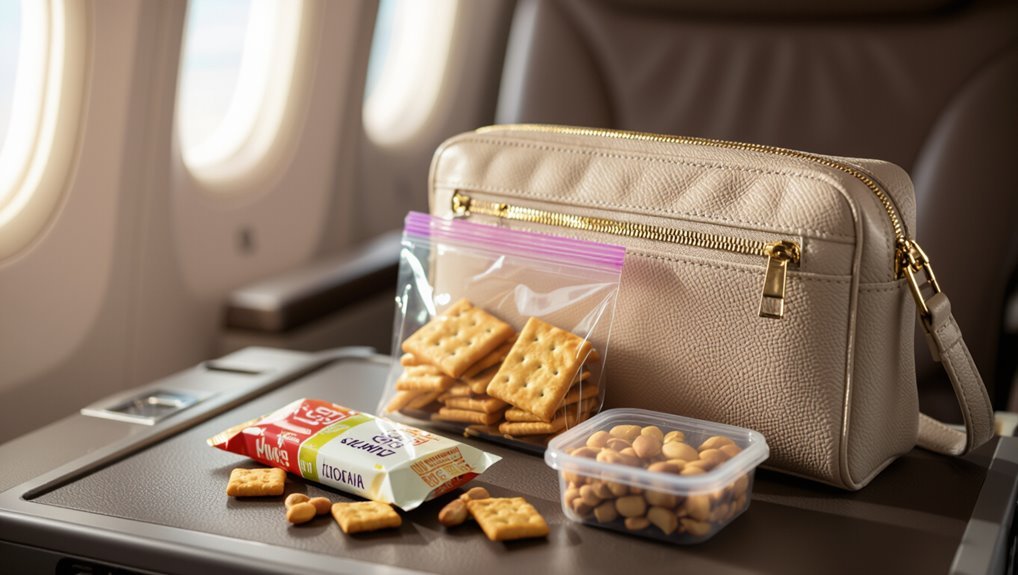
Yes — you can bring snacks in your purse. You’re allowed solid, non-liquid foods through airport security and onto the plane.
Pack items that won’t spoil, leak, or smell strong. Keep them accessible for screening and choose resealable containers to avoid crumbs.
Remember local or international agricultural rules may restrict fresh produce, so check your destination’s regulations before you fly.
What TSA Says About Snacks in Purses
Now let’s look at what the TSA specifically says about carrying snacks in your purse.
The TSA allows most solid snacks in carry-ons and purses; you’ll need to remove any liquids, gels, or creams (like yogurt, pudding, or sauces) that exceed the 3.4-ounce rule.
Packables should be screened separately if requested.
Keep receipts for recent purchases and declare items if traveling internationally to avoid issues.
Which Solid Foods Are Allowed Through Security
Wondering which solid foods you can bring through security? You can pack dry, non-liquid items like sandwiches, whole fruit, granola bars, chips, nuts, cookies, and pre-packaged snack cakes.
Solid cheeses and cured meats are usually fine. Keep items accessible for inspection and avoid anything messy or odorous that could be flagged.
Check international rules for country-specific restrictions on fresh produce.
Which Liquids, Gels, and Spreads Are Restricted
Solid snacks are usually straightforward, but liquids, gels, and spreads get treated differently by airport security.
You’ll need to follow the 3-1-1 rule: containers hold 3.4 ounces (100 mL) or less, fit one quart-size bag per passenger.
Items like yogurt, peanut butter, sauces, honey, salad dressing, and jam count as liquids/gels and must meet those limits or be packed in checked baggage.
Do Factory‑Sealed Snacks Need Inspection?
Usually, you won’t face extra scrutiny if packaging is intact and labels show solid contents. Security may still open bags for X-ray verification or if an officer suspects prohibited items.
Pack sealed snacks separately for quick screening, declare any unusual items when asked, and follow the checkpoint officer’s instructions to avoid delays.
Homemade and Fresh Foods (Fruits, Sandwiches, Baked Goods)
If you’re bringing homemade or fresh foods like fruit, sandwiches, or baked goods, expect them to be inspected and possibly opened at security—rules vary by airport and destination, and agricultural restrictions can apply for international travel.
Pack airtight containers, label contents, and be ready to dispose of prohibited items. Consider chilled coolers for perishables.
- sliced apple and berries
- wrapped sandwich with lettuce
- warm muffin in a paper bag
How Much Baby Food and Breast Milk You Can Carry
When you’re traveling with an infant, TSA and many international authorities let you carry reasonable amounts of baby food, formula, and breast milk beyond the usual liquid limits.
But be prepared for extra screening; declare these items at security, separate them from your other carry-ons, and anticipate that officers may open or test containers.
You can bring enough for the trip and delays; label, pack ice packs, and carry utensils.
Snacks for Medical or Dietary Needs
If you need snacks for medical or dietary reasons, bring any supporting documentation like a doctor’s note or prescription to speed things at security.
Solid foods, certain refrigerated items, and commercially packaged allergy-safe snacks are generally allowed, but check specific airline or country rules for exceptions.
Expect TSA screening and be prepared to explain or separate items for inspection to avoid delays.
Medical Documentation Needed
Need proof of a dietary or medical condition? You might need documentation for special snacks at security or on board.
Carry concise, official proof to avoid delays and questions.
- A doctor’s note on letterhead stating your condition and required foods
- A prescription or medical card indicating dietary needs
- A brief printed care plan or allergy action form
Allowed Food Types
You can bring a wide range of snacks to meet medical or dietary needs, but they should be non-perishable, safe to eat in-flight, and clearly tied to your condition.
Pack individually wrapped items like protein bars, dry crackers, nuts, dried fruit, or sealed gluten‑free or allergen‑free options.
Avoid messy, strong‑smelling, or perishable foods that could spoil or bother fellow passengers.
TSA Screening Tips
Anyone traveling with snacks for medical or dietary needs should declare them at security and keep them accessible for inspection.
Tell the agent about liquids like breast milk, insulin supplies, or special formula to avoid delays.
Pack clear labels and doctor’s notes if you can. Present items separately when asked to speed screening.
- a labeled cooler with ice packs
- sealed formula cans
- insulin pens in a clear pouch
Declaring Food at Customs When Flying Internationally
When you fly internationally, you’ll need to declare fresh produce like fruits, vegetables, and plants to customs.
Check the list of restricted items before you pack, since many countries ban certain meats, dairy, and raw produce.
Follow each country’s entry regulations and fill out any required forms to avoid fines or having food confiscated.
Declare Fresh Produce
Arriving with fresh fruit, vegetables, or other plant-based items? You must declare them on your customs form and tell the officer; failing to do so can cause fines or confiscation.
Be honest, pack produce separately, and expect inspection.
- A crisp apple in a clear bag
- A bunch of basil with roots exposed
- A ripe mango wrapped in paper
Know Restricted Items
Although you can bring many snacks, some foods are strictly off-limits or need special permits, so check rules before you pack. You must declare meats, dairy, plants, and seeds; failure risks fines or confiscation. Use the table to see common categories:
| Category | Examples | Action |
|---|---|---|
| Meat | Jerky, sausages | Declare/avoid |
| Dairy | Cheese, milk | Permit/declare |
| Plants | Fruit, herbs | Declare |
| Seeds | Nuts, legumes | Check rules |
Follow Entry Regulations
If you’re flying internationally, declare any food items on your customs form and tell the officer at the checkpoint—failure to do so can lead to fines, confiscation, or delays.
You’ll avoid surprises by checking destination rules, keeping packaging intact, and having receipts ready.
Be honest, cooperate, and expect scrutiny for perishables or meats.
- A sealed jar of jam
- A container of fresh fruit
- A wrapped sandwich
Countries That Commonly Ban Specific Foods
When you travel internationally, remember that several countries strictly ban certain foods to protect local agriculture and ecosystems. Common examples include fresh fruits, vegetables, meat, dairy, and even some seeds or nuts.
You should check destination rules—Australia, New Zealand, Hawaii (US), parts of Asia and Africa often forbid fresh produce and animal products.
Declare or discard restricted items to avoid fines.
Packing Snacks for Multi‑Country Connections
Because you’ll pass through different customs zones and security rules, pack snacks with both local regulations and flight logistics in mind.
Choose sealed, labeled items and know which borders forbid fresh produce or meat. Keep receipts for purchased food and separate liquids to meet carry‑on limits.
- A clear zip bag of sealed crackers
- A labeled vacuum‑sealed cheese wedge
- A small jar of honey with purchase receipt
Snack Ideas That Travel Well in a Purse
When you’re carrying snacks in a purse, pick compact, non-perishable items that won’t crush or spoil.
Choose easy-to-eat finger foods like nuts, granola bars, or dried fruit so you can munch without a tray table.
Keep portions small and in resealable bags to save space and avoid crumbs.
Compact, Non-Perishable Snacks
If you’re packing snacks that need to survive being jostled in a purse or carry-on, choose compact, non-perishable items that won’t leak, crush, or require refrigeration.
You’ll want long-lasting, tidy options that give energy without mess. Pack portions in resealable bags to keep things neat and save space.
- Nuts or trail mix
- Granola or protein bars
- Dried fruit packs
Easy-To-Eat Finger Foods
You’ve covered sturdy staples; now let’s look at bite-sized, mess-free finger foods that make snacking on a plane simple. Pack individually wrapped cheese cubes, nuts, dried fruit, or whole-grain crackers for quick, tidy bites. Choose resealable pouches to control portions and crumbs.
| Item | Portion | Notes |
|---|---|---|
| Cheese cubes | 4–6 | Keep chilled |
| Nuts | 1/4 cup | High protein |
| Dried fruit | 1/4 cup | No mess |
| Crackers | 6–8 | Pair with cheese |
Best Shelf‑Stable Options for Long Flights
Because cabin space and unpredictable schedules can limit food options, choosing shelf-stable snacks that stay fresh, compact, and satisfying is key for long flights.
Pack a mix that won’t crush, melt, or need refrigeration. Think hearty, portable choices that curb hunger and travel well.
- Roasted nuts and seeds in a small pouch
- Hard cheese and whole-grain crackers
- Dried fruit and dark chocolate squares
Healthy Snack Swaps for Airports and Planes
When you’re choosing snacks for the airport or plane, pick protein-packed choices like jerky or Greek yogurt to keep hunger at bay.
Opt for low-sugar options—nuts, cheese sticks, or plain popcorn—to avoid energy crashes.
Bring easy-to-eat produce such as apple slices, grapes, or baby carrots for a fresh, mess-free boost.
Protein-Packed Choices
If you’re looking to stay full and avoid sugary airport traps, choose protein-packed snacks that travel well and clear security easily.
Pack single-serve Greek yogurt alternatives, roasted chickpeas, or jerky for steady energy. Keep portions small and sealed to satisfy hunger without mess.
- Creamy single-serve Greek yogurt cup
- Crunchy seasoned roasted chickpeas
- Savory turkey or beef jerky
Low-Sugar Options
Protein-packed snacks curb hunger, but you might still want to cut sugar to avoid energy crashes and bloating at security or in the cabin.
Choose unsweetened Greek yogurt cups, plain nut butter packets with rice cakes, roasted chickpeas, mixed nuts, or jerkies without added sugar.
Pack small portions in resealable bags to control intake and skip sugary bars, drinks, and candies.
Easy-to-Eat Produce
Because fresh produce can be messy, choose varieties that travel well and don’t need peeling or slicing: grapes, cherry tomatoes, snap peas, baby carrots, clementines (peeled ahead), and pre-sliced apples sprinkled with lemon juice.
You’ll avoid spills, stay refreshed, and skip heavy airport treats. Pack in resealable bags and a small cooler pack for longer trips.
- A crisp apple wedge
- A handful of grapes
- Bright cherry tomatoes
Packing Perishable Snacks Safely in a Purse
Packing perishable snacks in your purse takes a bit of planning but isn’t hard—keep items chilled, wrapped, and separate from other contents to avoid leaks and spoilage.
Use sturdy containers, sealable bags, and absorbent tissues. Pack small portions you’ll eat within a few hours, check for travel-friendly expiration, and place fragile items where they won’t get squashed or contaminate other things.
Using Ice Packs and Insulated Pouches on Planes
When you want to keep perishables cold on a flight, ice packs and insulated pouches are your best bets—they slow warming and protect food from spills.
You can use soft gel packs, frozen water bottles, or commercial cold packs in a sealed pouch.
Pack them with sturdy containers, drain melted water into a bag, and place in an easily accessible compartment.
- soft gel pack
- frozen water bottle
- insulated zip pouch
Tips to Avoid Spills and Crumbs Mid‑Flight
Pick spill‑proof containers for liquids and saucy snacks so you won’t have to worry about messy accidents.
Choose low‑crumble options like bars, cheese sticks, or peeled fruit to keep your seat and tray tidy.
Stow snacks where you can reach them easily to avoid juggling and accidental spills.
Choose Spill‑Proof Containers
If you want to keep your snack stash intact and your tray table clean, choose containers with tight lids and secure clasps that won’t pop open during turbulence or a jostled overhead bin.
You’ll also prefer leakproof silicone pouches, snap-seal tubs for cut fruit, and rigid tins for cookies to prevent crushed treats and sticky messes.
- silicone snack pouch
- snap-seal tub
- hard-sided tin
Pack Low‑Crumble Snacks
Besides using secure containers, you’ll want snacks that don’t shed crumbs or spill oils all over your tray and your neighbor.
Pack whole fruits like grapes or apple slices, cheese sticks, yogurt pouches, or protein bars.
Avoid flaky pastries, chips, and greasy nuts.
Choose dense, tidy bites that you can eat without napkins flying or showering the row in debris.
Stow for Easy Access
When you want to eat without a mess, keep your snacks within easy reach—stow them in an outer pocket of your carry-on, a small zip pouch, or a seatback organizer so you don’t have to fumble through bags and risk spills.
Put single‑serve packs in clear pouches, seal crumbly items in resealable bags, and keep napkins handy to catch stray crumbs.
- zipped pouch with granola bars
- resealable bag of crackers
- small napkin pack
How to Pass Security With Snacks: Step‑by‑Step
Start by checking what’s allowed and how it must be packed so you don’t hit delays at the checkpoint: remove liquids or gels over 3.4 ounces, place compliant items in a clear quart bag, and separate bulky snacks for X‑ray.
Keep wrappers sealed, present snacks quickly, and follow agent directions. If in doubt, declare unusual items before scanning to save time.
What to Expect If TSA Inspects Your Snacks
If an agent pulls your snacks for inspection, stay calm and cooperate—you’ll usually be asked to unwrap items, show packaging, or place them in a separate bin for X‑ray or hand inspection.
Answer questions briefly and follow directions; you’ll get items back if allowed.
- A granola bar unwrapped on the conveyor belt
- A sealed yogurt cup held up for inspection
- Crumbs on a napkin examined by hand
Domestic vs. International Snack Rules
When you fly within the U.S., you’ll mostly follow TSA carry rules about liquids and packaging, but some states have specific limits on things like fresh produce.
For international trips, customs rules and quarantine restrictions can ban or limit meats, dairy, fruits, and plants, so you’ll need to check both your destination and any countries you transit through.
Always declare restricted items to customs to avoid fines or confiscation.
Domestic Carry Restrictions
Although US domestic flights generally allow you to bring most solid snacks aboard, rules differ when you cross international borders, so it helps to know the limits before you pack.
You can carry packaged chips, nuts, and sandwiches, but liquids, gels, and fresh produce face stricter screening.
Pack smartly, label items, and be ready to separate snacks for TSA inspection.
- a sealed bag of almonds
- a wrapped granola bar
- a plastic container with sliced apple
International Customs Limits
Crossing a border changes what snacks you can bring, so check customs rules for your destination before you pack.
You’ll face different bans, limits, and declaration requirements for meats, dairy, fruits, and plants. Some countries forbid bringing animal products or require permits.
Declare items honestly to avoid fines or confiscation, and consider buying approved snacks after arrival to simplify travel.
Airline Rules That Affect In‑Flight Snacking
Because airlines set rules that vary by carrier and route, you should check policies before packing snacks for a flight.
Carry-on limits, allergen zones, and service interruptions can affect what you eat. Pack sealed, nonperishable items and avoid strong odors. Consider gate checkpoints and cabin space when choosing portions.
- A sealed granola bar beside your boarding pass
- A compact fruit cup tucked into a purse pocket
- A small bag of almonds under your seat
Sharing Snacks and In‑Flight Etiquette
When you offer snacks on a plane, think about space, allergies, and your fellow passengers’ comfort—ask before sharing, keep portions small, and hand items directly rather than tossing them across the aisle. Be mindful of scents, noisy wrappers, and trash. Offer only sealed or easily portioned items and accept refusals politely.
| Do | Don’t |
|---|---|
| Ask first | Assume yes |
| Use small portions | Spread crumbs |
| Offer sealed items | Open messy foods |
| Respect refusals | Pressure others |
Quick Checklist: Pack Snacks in Your Purse Before You Leave
Pack three small, varied snacks in your purse before you leave so you’re ready for delays, long security lines, or a hungry layover.
Choose nonperishable, spill‑proof options that clear TSA and suit your tastes. Tuck them where you can reach them fast, and keep napkins or wet wipes handy for quick cleanups.
Pick nonperishable, spill‑proof snacks that meet TSA rules; stash them for quick access and keep wipes for cleanups.
- Almonds in a small resealable bag
- Granola bar wrapped tight
- Dried fruit pouch
Frequently Asked Questions
Can I Bring Pet Treats for Animals in the Cabin?
Yes, you can usually bring pet treats in the cabin, but you’ll need to follow airline and destination rules, keep them sealed and limited, declare anything required, and avoid messy or odorous items that might upset other passengers.
Are There Limits on Powdered Supplements or Protein Powders?
Yes — you can bring powdered supplements or protein powders, but TSA and airlines may screen them; carry containers under 12 ounces (350 mL) in carry-on if requested, label them, and pack larger amounts in checked baggage.
Can I Carry Alcoholic Snacks or Liqueur-Filled Chocolates?
Yes — you can carry alcoholic snacks and liqueur-filled chocolates in checked or carry-on bags, but TSA and airline rules limit liquids over 3.4 oz; declare if required, and beware destination customs and age restrictions.
Do Duty-Free Snacks Bought Post-Security Need Declaration Abroad?
Yes — duty-free snacks bought after security usually don’t need declaring when leaving the departure country, but you’ll have to follow customs rules at your destination; if they contain alcohol or exceed allowances, you might need to declare them.
Will Food Smell Complaints Get Me Removed From a Flight?
You probably won’t be removed just for food smells, but you could be asked to stop eating, move, or dispose of the food; if complaints escalate or it interferes with safety, the crew can deny boarding or remove you.
Conclusion
You can usually bring snacks in your purse, but follow TSA and airline rules. Solid foods like sandwiches, chips, and candy generally pass security; liquids, gels, and spreads over 3.4 oz/100 ml need to go in checked bags or follow the 3-1-1 rule. Factory-sealed items rarely need extra screening. For international flights, check destination rules. Be mindful of seatmates, allergies, and airline policies. Pack easy-to-eat, non-perishable snacks and stash napkins and hand sanitizer.