Can I Bring Cookies Through Tsa Rules Explained
Yes — you can bring solid cookies in your carry-on or checked bag, but be careful with fillings, frostings, dough, and spreads because TSA treats runny or spreadable fillings as liquids/gels. Thick, set fillings are usually fine; anything over 3.4 ounces in carry-on must go in checked luggage or in compliant containers inside a quart bag. Pack cookies in sturdy containers, keep them accessible for inspection, and follow airline or customs rules — keep going to get practical packing tips and examples.
Quick Answer: Can You Bring Cookies Through TSA?
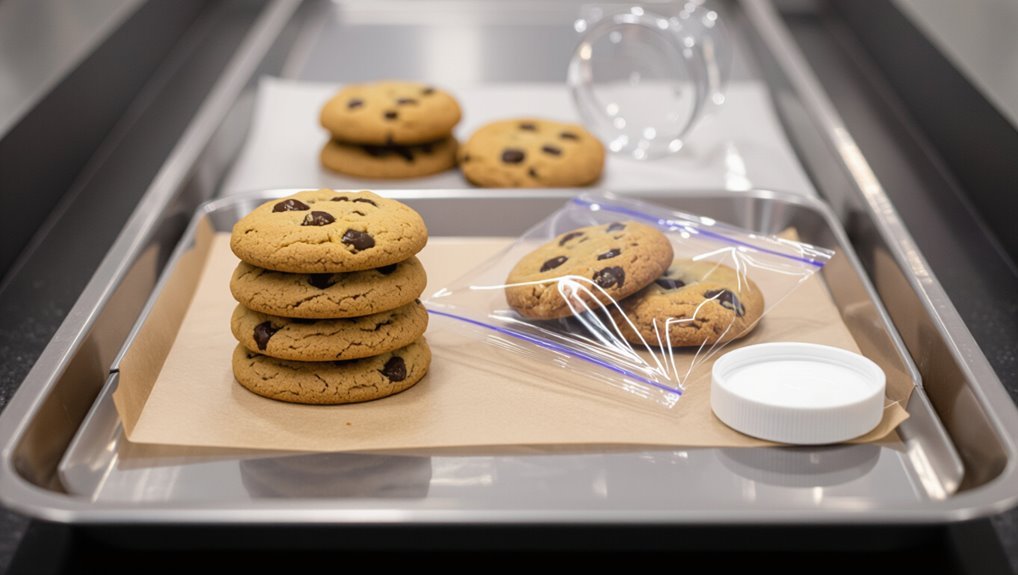
Wondering if you can bring cookies through TSA? You can carry solid cookies in your carry-on or checked bag.
Avoid creamy fillings, gels, or large quantities of liquid-like frostings that might trigger screening.
Pack them in a clear container or resealable bag for easy inspection.
Declare any unusual or bulk food items if asked to speed up the security process.
Why Solid Cookies Are Allowed in Carry-Ons
Because solid cookies don’t meet the TSA’s definition of liquids, gels, or aerosols, you can bring them in your carry-on without worrying about the 3.4-ounce rule.
You should still pack them cleanly and securely to avoid crumbs or breakage. Keep them accessible for inspection, and declare any doubt to security officers so screening goes smoothly and you don’t risk delays.
When Cookie Fillings or Frostings Count as Liquids?
Check the texture of your cookie filling — if it’s runny or spreads, TSA may treat it like a liquid.
Keep an eye on how much frosting you pack, since larger quantities could trigger the 3.4-ounce/100-milliliter rule.
And always stash creamy fillings in clear, sealed containers so security can quickly see they meet size and packaging limits.
Filling Texture And Flow
Texture matters when you’re deciding if a cookie filling or frosting counts as a liquid under TSA rules.
If it flows, spreads, oozes, or can be piped, inspectors will likely treat it as a liquid or gel.
Thick, set fillings that hold shape and won’t seep are usually solid.
Pack those in checked baggage or stabilize them to avoid scrutiny at security.
Frosting Quantity Limits
When frosting or a creamy filling behaves like a spreadable substance, TSA’s 3-1-1 liquid rule can apply: you should treat sizeable soft fillings as gels if they can be squeezed or spread. Small sealed portions under 3.4 oz are fine in carry-ons; larger amounts may need checked baggage.
| Type | Size | Carry-on? |
|---|---|---|
| Thin glaze | <3.4 oz | Yes |
| Thick buttercream | >3.4 oz | No |
| Sealed single-serve | Any | Yes |
Container And Packaging
You’ve already seen how frosting amount affects whether it’s treated like a liquid; now look at how packaging changes that classification.
If fillings or frostings are sealed inside solid cookies, they’re usually fine.
But loose, gooey fillings in squeeze tubes, jars, or plastic bags follow liquid/gel rules and need to meet 3-1-1 size limits and fit in your quart bag for carry-on.
How to Tell If a Cookie Is a Liquid, Gel, or Cream
You can usually tell by feeling the texture and how the filling or topping spreads when you press it—runny or oozing means liquid, sticky and holdable suggests gel, and thick, scoopable stuff is a cream.
Check the packaging and ingredient list too: words like “syrup,” “frosting,” or “custard” hint at liquids or creams, while “gel” or “jam” point to gels.
If it’s in a squeezable or leaky container, treat it like a liquid for TSA purposes.
Texture And Spread
Although cookies often look solid, TSA treats anything that spreads, squeezes, or flows as a liquid/gel/cream — so check texture and how it behaves at room temperature.
Press gently: if filling oozes, frosting smears, or chips crumble into paste, it’s treated as a spread.
Firm cookies that retain shape and don’t smear are usually okay in carry-on, but remember TSA discretion.
Packaging And Ingredients
Packaging matters: check seals, containers, and labels to judge whether a cookie—or its components—count as a liquid, gel, or cream under TSA rules. If frosting, fillings, or sauces are scoopable or spreadable, treat them as liquids. Pack solid cookies separately. Use clear containers and label homemade items.
| Component | State | Tip |
|---|---|---|
| Frosting | Gel/cream | 3-1-1 rule |
| Jam | Liquid | Container limits |
| Dough | Solid/soft | Refrigerate |
| Sauce | Liquid | Carry-on only |
TSA Limits: The 3.4-Ounce Rule and Cookie Fillings
When bringing cookies through airport security, remember that the TSA’s 3.4-ounce (100 ml) rule applies to any liquid or gel fillings—so jams, curds, custards, and runny frostings count and must fit inside a single quart-sized, clear plastic bag if you’re carrying them in carry-on luggage.
If fillings exceed limits, pack them in checked baggage or carry dry cookies only to avoid confiscation.
Packing Homemade Cookies for Carry-On: Step-by-Step
Pack your homemade cookies for carry-on by choosing sturdy containers, separating layers, and keeping any soft or filled cookies within TSA liquid limits or in checked baggage.
Wrap cookies individually, use airtight containers, and label fragile items. Consider cushioning to prevent breakage and place containers on top of carry-on contents.
- Use rigid plastic or metal tins
- Layer with parchment or bubble wrap
- Keep sauces/spreads ≤3.4 oz
Packing Store-Bought Cookies for Carry-On: Quick Tips
If you’re bringing store-bought cookies in your carry-on, keep them in their original sealed packaging or transfer them to a rigid container to prevent crushing and to make TSA screening easier. Pack them near the top for quick access, label any gift boxes, and avoid sticky or gooey fillings that may leak.
| Tip | Reason |
|---|---|
| Sealed package | Easier screening |
| Rigid container | Prevents crushing |
| Top of bag | Quick access |
| Labeling | Speeds inspection |
Packing Cookies in Checked Luggage Safely
Checked luggage can handle more bulk, but you’ll still want to protect cookies from crushing, moisture, and spills—use sturdy containers, cushion them with soft clothing or bubble wrap, and seal any fragile or sticky varieties in zip-top bags to prevent leaks.
- Pack heavier items around cookie containers for stability.
- Label containers for quick inspection.
- Place airtight desiccant packs to absorb moisture.
Best Containers for Cookies to Prevent Crushing and Leaks
A rigid, airtight container will give your cookies the best protection against crushing and leaks—choose one with a snug-fitting lid and a flat interior to keep cookies from shifting.
Line it with parchment or bubble wrap, stack single layers separated by paper, and avoid overfilling.
Use shallow, sturdy tins or hard plastic boxes; seal edges and place in a cushioned spot in your bag.
How to Pack Frosted or Filled Cookies for Air Travel
Now that you’ve secured your cookies against crushing and leaks, you’ll need a different approach for frosted or filled cookies because their decorations and fillings can shift or smoosh.
Pack individually in parchment or wax paper, use rigid containers with dividers, and keep chilled until departure.
Stack layers with cardboard sheets and avoid heavy items above fragile cookies.
- Individual wrapping
- Rigid dividers
- Chill before travel
Traveling With Cookie Dough: What TSA Allows and Forbids
Traveling with cookie dough gets tricky because the TSA treats many doughs as a gel-like substance. This means you’ll usually have to pack them in checked baggage or follow the 3-1-1 rule for carry-ons (containers of 3.4 ounces/100 milliliters or less, all fitting in one quart-sized bag).
If dough exceeds limits, check it or declare refrigerated/frozen items; solid dough balls generally travel better.
Bringing Cookie Butter, Spreads, and Jams Through Security
Because spreads and jams act like liquids or gels, TSA treats them differently than solid baked goods, so you’ll need to pack them carefully to avoid delays.
You can bring small amounts in 3.4 oz containers inside a quart bag in carry-on; larger jars belong in checked luggage.
Label homemade jars and secure lids to prevent leaks.
- Use 3.4 oz travel jars
- Seal in a clear quart bag
- Consider checked baggage for bulk
Transporting Refrigerated or Perishable Cookies on a Plane
If you’re bringing refrigerated or otherwise perishable cookies, plan for temperature control and quick transport through the airport.
Pack them in an insulated cooler with gel packs, and keep them accessible for screening. Check airline carry-on size limits and declare any ice packs if partially melted.
Move straight to your gate, avoid long layovers, and refrigerate promptly after landing to maintain freshness.
Traveling With Cookies When You Have Kids
When you’re traveling with kids, pack cookies in clear, resealable bags so little hands can grab one without a mess.
Keep a separate, easily accessible snack bag for security checks so you can pull out treats quickly.
Also check TSA rules for any fillings or spreads that might be considered liquids before you pack.
Packing Tips For Kids
Though traveling with kids can feel chaotic, planning how you pack their cookies makes snacks one less worry. You’ll keep cookies fresh, avoid crumbs, and soothe meltdowns with simple prep.
Use portioned containers, choose sturdy varieties, and involve kids in picking favorites so they feel invested.
- Use small airtight boxes
- Pick non-crumbly cookies
- Let kids choose portions
Snack Time Security
Because security lines move fast and kids get impatient, plan your cookie strategy before you reach TSA: pack clear, portioned bags or containers for easy inspection, place a few ready-to-eat servings in an accessible spot for quick show-and-go, and keep a small crumb-free backup (like mini sandwich cookies or rice cakes) to calm any sudden snack-time crises.
Then label allergen info, avoid liquids, and stay calm.
How to Declare Food Items at TSA Checkpoints
If you’re carrying snacks, baked goods, or packaged meals through a TSA checkpoint, tell the officer where your food is and be ready to remove it from your bag if asked.
You should declare liquids, gels, and large quantities that might need screening. Pack items accessibly and label homemade goods to speed checks.
- Point out food proactively
- Separate items for screening
- Keep receipts or ingredient notes
If TSA Flags Your Cookies: What to Do
When an officer flags your cookies, stay calm and cooperate—you’ll usually just be asked to remove the container and set it on the conveyor for inspection or open it for a quick look. Answer questions, accept additional screening, and politely request repacking if needed. If denied, consider disposal or mailing.
| Action | Tip |
|---|---|
| Inspection | Open container |
| Denial | Dispose or mail |
Bringing Cookie Gifts Through Airport Security
If you’re bringing cookie gifts, decide whether to pack them in your carry-on or checked bag based on fragility and liquid fillings.
Use sturdy, sealable containers and compressible padding to keep cookies intact and visible for screening.
Also check both TSA rules and your destination’s import limits so you don’t run into trouble on international trips.
Carry-On vs Checked
Although both carry-on and checked luggage can transport cookie gifts, choosing which to use affects freshness, safety, and TSA screening.
You’ll usually keep delicate cookies fresher in carry-on, avoid crushing, and guarantee you can remove them if asked. Checked bags risk damage and delays.
- Carry-on: better control and freshness
- Checked: larger capacity, more handling
- TSA: declare if inspected
Packaging And Containers
Since carry-on gives you more control over delicate cookies, packaging becomes your next priority to keep them intact and TSA-compliant. Use sturdy tins, resealable bags, or clamshell containers and label any fillings. Place padding between layers and keep liquids (glazes) within 3.4 oz containers in a clear bag for screening.
| Container | Benefit |
|---|---|
| Tin | Crush protection |
| Zip bag | Sealable, visible |
International And TSA Rules
When you’re traveling internationally with cookie gifts, know that both TSA rules and your destination’s customs regulations will shape what you can bring and how you pack it.
You’ll need to declare certain baked goods, follow liquid/gel limits for fillings, and consider quarantine rules.
- Declare perishable or meat-containing cookies
- Pack commercially sealed containers when possible
- Carry receipts and ingredient lists
Commercially Sealed Cookies vs. Loose Homemade Cookies
If you’re packing cookies for a trip, you’ll find commercially sealed packages usually move through TSA with fewer questions than loose homemade batches.
You should keep sealed cookies in original packaging with labels showing ingredients and manufacturer.
Homemade cookies are allowed but may draw extra inspection; pack them in clear containers, declare if asked, and expect possible opening or disposal if officers suspect prohibited ingredients.
Customs Rules for Taking Cookies Abroad
You’ll need to declare any cookies you bring when entering another country, especially if they contain meat, dairy, or fresh fruit.
Check country-specific restrictions before you pack, since some places ban certain ingredients or require inspection.
When in doubt, declare the items and be prepared to discard them or provide documentation.
Declaring Edible Items
Because customs rules vary by country, you’ll need to declare cookies and other edible items at your destination in many cases.
Declare packaged, homemade, or bulk food on arrival forms and answer officer questions honestly. Failure can mean fines or confiscation.
- Pack labels and ingredient lists
- Keep receipts or origin info
- Be ready for inspection
Country-Specific Restrictions
What you declare at arrival forms only starts the process; each country then applies its own rules about bringing cookies across the border.
You should check destination regulations—some ban fresh ingredients, dairy, or nuts; others allow commercially packaged, sealed goods.
Look up limits, required declarations, and possible inspections.
When unsure, contact the embassy or customs website to avoid fines or confiscation.
Returning to the U.S.: Which Cookies Must Clear Customs?
Wondering which cookies need to be declared when you return to the U.S? You should declare any homemade, perishable, or meat/fat-containing cookies and those from countries with agricultural risks.
Customs decides based on ingredients and origin; undeclared prohibited items can mean fines.
- Homemade or unprocessed
- Containing meat, dairy, seeds, or nuts
- From countries with plant/animal disease concerns
Common Country Restrictions That Affect Cookies
When you travel with cookies, remember that individual countries set different rules about ingredients, packaging, and heat-treatment—so a batch that’s fine in one place may be banned in another.
Check if nuts, dairy, seeds, or fresh fruit are restricted. Verify commercial labels, sealed packaging, and required certificates.
Declare items on forms; undeclared or prohibited cookies can be confiscated or fined.
Carrying Cookies on Long Flights and Layovers
After checking country restrictions and labeling, think about how long flights and layovers affect your cookies’ freshness, safety, and carry-on rules.
You’ll want durable packaging, clear declaration at customs if required, and awareness of perishability limits. Pack smart to prevent crushing and avoid liquids that exceed TSA rules.
Consider time zones and storage during connections.
- Durable, crush-proof packaging
- Declare perishable fillings
- Plan for connection delays
How to Keep Cookies Fresh and Intact During Travel
Choose sturdy, airtight containers so your cookies don’t get crushed or go stale.
Keep them away from extreme heat or cold to preserve texture and flavor.
Cushion them with paper or bubble wrap to prevent movement and breakage during transit.
Choose Sturdy Containers
Because fragile cookies can crumble the moment they’re jostled, pick containers that are rigid, snug, and well-sealed to keep them fresh and intact.
You’ll layer cookies with parchment, avoid overfilling, and cushion edges. Choose tins or hard plastic with tight lids, and pack them upright in your carry-on to minimize shifting.
- Rigid tin or plastic
- Parchment separators
- Edge cushioning
Control Temperature Exposure
Packing cookies in sturdy containers helps prevent crushing, but temperature changes can still ruin texture and flavor during travel.
Keep cookies cool in insulated bags or with slim frozen gel packs wrapped in cloth to avoid condensation. Avoid leaving them in hot cars or direct sun.
For long trips, choose cookies that tolerate temperature shifts, and check periodically to swap out warmed packs.
Cushion Against Movement
Anyone can keep cookies from becoming crumbs by giving them a soft, snug layer of protection that prevents jostling and impact.
Pack cookies in a rigid container, line with bubble wrap or soft cloth, and separate layers with parchment. Cushioning absorbs shocks and keeps shapes intact, so you’ll arrive with fresh, whole treats.
- Rigid container with padding
- Individual wraps or parchment
- Stabilize layers to prevent sliding
Recommended Packaging for Fragile Cookies
When you’re transporting fragile cookies through airport security, choose sturdy, crush-resistant containers and layer them to absorb shocks. Pack cookies flat, separate layers with parchment or bubble wrap, and fill gaps to prevent shifting. Label fragile and handle with care.
| Layer | Material | Purpose |
|---|---|---|
| 1 | Box | Structure |
| 2 | Bubble | Cushion |
| 3 | Parchment | Prevent sticking |
| 4 | Filler | Stop movement |
Can You Bring Cookie Cutters and Baking Pans Through TSA?
You can usually bring metal or plastic cookie cutters in your carry-on or checked bag, but sharper specialty cutters might get extra scrutiny.
Baking pans are allowed too, though they’ll be inspected and could trigger additional screening if they’re bulky or oddly shaped.
Pack them accessibly and expect TSA agents to open bags or run items through X-ray for a quick check.
Cookie Cutters Allowed?
Curious whether cookie cutters or baking pans will survive TSA screening? You’re allowed to bring most cookie cutters in carry-on or checked bags, especially plastic or small metal ones.
Larger sharp cutters might be flagged. Pack them properly and be ready to explain their purpose.
- Plastic cutters are usually fine
- Small metal cutters typically pass
- Sharp or novelty cutters may require inspection
Baking Pans Screening
If cookie cutters usually clear TSA, baking pans often follow suit but bring a few extra considerations.
You can pack pans in checked or carry-on luggage, though rigid or heavy metal pans might trigger inspection. Wrap pans to prevent sharp edges and hide food residue.
Expect TSA to open baggage for sniffing; declare any large or unusual bakeware to speed screening and avoid surprises.
Bringing Cookie Gift Boxes Through Security and to the Gate
Bringing cookie gift boxes through airport security and to the gate takes a bit of planning but it’s simple once you know the rules:
You can carry boxed cookies in hand luggage or checked bags, keep fragile tins cushioned, and be ready for inspection.
Pack snacks accessibly to remove if asked and avoid liquids or gels exceeding limits in decorative fillings.
- Pack sturdy boxes
- Cushion fragile tins
- Keep inspection-ready
Labeling for Allergies and Ingredient Disclosure When Traveling
Wondering how to make your homemade cookies safe for fellow travelers? Label each container with clear ingredient lists, highlight common allergens (nuts, milk, eggs, soy, wheat), and add “may contain” notes if cross-contact’s possible. Inform gate agents if needed. Use simple tags and keep copies of recipes handy.
| Item | Allergen | Note |
|---|---|---|
| Chocolate chip | Milk, Egg | Contains nuts? |
| Oatmeal | Wheat | Gluten-free? |
Traveling With Cookies on International Connecting Flights
When you’re connecting internationally, check whether your cookies are considered solid or liquid—think spreadable fillings or gels that might be treated like liquids.
You’ll also need to research customs and duty rules for each country you’re passing through, since some places restrict or tax food imports.
Keep packaging clear and be ready to declare anything if an officer asks.
Solid vs. Liquid Cookies
If you’re passing through international connections, you’ll want to know whether your cookies count as solids or liquids, because that classification can change what you can carry and where.
Generally solid cookies are fine in carry‑ons; spreadable fillings or gooey sauces may be treated as liquids. Check airline and transit country rules.
- Solid cookies: dry, firm
- Semi‑soft: may be questioned
- Fillings/sauces: liquid limits apply
Customs And Duty Rules
Because customs treat food items differently across borders, you’ll need to declare cookies and be prepared for duties or confiscation on international connections.
Check destination and transit country rules before travel, keep original packaging and ingredient lists, and separate homemade items.
If unsure, declare them at arrival; inspectors decide. Paying duties or surrendering goods is common, so plan alternatives to avoid surprises.
How to Avoid Frosting Spills in Carry-Ons
Though frosting looks harmless, it can turn your carry-on into a sticky mess during travel, so pack it smartly to prevent leaks and crushed decorations.
Seal each cookie in individual airtight bags, cushion with soft layers, and place upright in a rigid container.
- Use freezer bags and squeeze out air
- Layer with bubble wrap or clean cloths
- Keep container in a stable spot
Managing Powdered Sugar and Loose Toppings on the Go
You’ll want to keep powdered sugar sealed in small, airtight containers or resealable bags to prevent clouds in your bag and issues at security.
Pack loose toppings like sprinkles or nuts in labeled, leakproof containers and place them in a clear plastic pouch for easy inspection.
If a spill happens, have a small brush, damp wipes, and extra bags on hand so you can clean up quickly and contain the mess.
Powdered Sugar Containment
One simple trick keeps powdered sugar and loose toppings from turning your bag into a white mess: contain them before you go.
Use sealed containers, double-bag fragile cookies, and wipe edges after packing. That stops dusting and TSA curiosity while keeping treats intact.
- Use small airtight jars
- Wrap cookies individually
- Clean container rims before sealing
Transporting Loose Toppings
When you’re bringing cookies with powdered sugar or loose toppings, pack them so the mess stays put and TSA sees nothing suspicious: use sealed, spill-proof containers, add padding between layers, and keep a small wipe or brush handy for quick touch-ups before inspection.
Label containers if needed, separate heavily topped cookies, and avoid overfilling bags. Secure lids and place them in an easy-to-access spot.
Cleaning Up Spills
Keep a small cleanup kit within reach so powdered sugar or loose toppings don’t turn into a bigger mess—a folded napkin, a dry brush or pastry brush, and a resealable bag for debris handle most situations quickly.
You’ll act fast, contain crumbs, and avoid sticky fingers or bag contamination.
- Pat excess gently with the napkin
- Brush crumbs into the bag
- Seal and discard later
How Airlines May Restrict Cookies Beyond TSA Rules
Although TSA sets the baseline for what you can carry through security, individual airlines can add layers of restrictions about food items — including cookies — based on safety, cleanliness, or international regulations.
Check airline policies before packing; some routes ban certain ingredients, limit carry-on food during boarding, or require sealed packaging.
If in doubt, contact the carrier to confirm rules and avoid confiscation.
Does TSA PreCheck or CLEAR Change Cookie Screening?
If you’ve checked with your airline about cookie rules, you might wonder whether expedited security programs like TSA PreCheck or CLEAR will change how your treats are screened.
Even with TSA PreCheck or CLEAR, food still faces X-ray inspection — expect similar screening and possible package checks.
They can speed identity and belt/shoe screening, but food inspection still depends on officers and X-ray images. Expect similar scrutiny; declare suspicious tins or large quantities.
- Faster ID checks
- Same X-ray scrutiny
- Officers may open packages
TSA-Friendly Cookie Packing Checklist
When packing cookies for a flight, organize them so TSA officers can quickly inspect without having to open every tin or container.
Use clear, sealable bags or transparent containers, label contents and any fillings, place delicate cookies between layers of parchment, keep sauces or spreads in compliant small containers, and pack them near the top of your carry-on for easy access during screening.
Troubleshooting Common Security Problems With Cookies
Because TSA officers move quickly and machines can misread dense or layered packages, you should be ready to troubleshoot a few common issues when carrying cookies through security.
Stay calm, explain contents, and follow instructions. Pack visibly and separate sticky items.
- Remove dense containers for separate screening
- Offer a quick description if asked
- Repack neatly after inspection
Real Examples: Allowed vs. Prohibited Cookie Scenarios
To make these rules concrete, here are clear, real-world examples showing when cookies sail through security and when they trigger extra screening — so you’ll know how to pack and what to expect.
You can bring dry, wrapped cookies in carry-on.
Cream-filled or gooey cookies may be inspected as liquids/gel.
Large baked goods that mask prohibited items will draw attention.
Pack transparently and expect possible screening.
One-Page Cookie Rules Cheat Sheet
Keep this one-page cheat sheet handy and you’ll breeze through TSA checks with your cookies: it lists what’s allowed in carry-on, what might be treated as a liquid/gel, packaging tips, and quick steps to avoid extra screening.
Keep this one-page cheat sheet to breeze through TSA with your cookies—what’s allowed, packaging tips, and screening shortcuts
Use it to pack smart, declare fillings, and speed screening.
- Pack solid cookies separately
- Seal creamy or spread-filled items
- Label homemade treats clearly
Frequently Asked Questions
Can I Bring Cookies Through Airport Security With Medical Dietary Supplements?
Yes — you can bring cookies and medical dietary supplements through TSA security; just pack solid cookies in carry‑ons, keep supplements in original labeled containers, declare any powders if over 12 oz, and follow TSA officer instructions.
Are There Rules for Bringing Cookies on Private Jets or Charter Flights?
Yes — you can bring cookies on private jets or charters, but rules vary by operator, country, and customs; you’ll need to follow airline/charter policies, declare restricted ingredients, and respect international import and biosecurity regulations.
Can I Bring Cookies Through TSA on a Domestic Flight With a Layover in the EU?
Yes — you can bring cookies on a domestic flight with an EU layover, but carry them in checked or carry‑on; solid cookies are fine, but avoid large quantities of spreads or creams that might be treated as liquids or restricted by the EU.
Do TSA Rules Differ for Cookies Carried by Diplomatic or Military Travelers?
Yes — TSA screening still applies, but diplomatic or military status can change procedures; you’ll often get expedited processing, special lanes, or coordination with security officials, though prohibited item rules and inspections generally remain enforced.
Can I Bring Cookies Through Checkpoint if They Contain CBD or Hemp Ingredients?
Yes — you can usually bring cookies with CBD or hemp, but you’ll need to guarantee they comply with federal law (≤0.3% THC) and destination/state rules; TSA focuses on safety, but local laws can still block them.
Conclusion
Yes — you can bring most solid cookies through TSA in your carry-on, but watch fillings and frostings. If a cookie’s filling is runny, creamy, or gel-like (think gooey caramel, custard, or thick frosting), it counts toward the 3.4-ounce/100-milliliter liquid rule. Pack solid cookies in a sealed container or your checked bag, and put creamy ones in your checked luggage or in compliant travel-sized containers. When in doubt, declare items at screening to avoid delays.