
Can I Bring a Carry on Luggage and a Backpack Airline Rules Explained
Yes — in most cases you can bring both a carry‑on suitcase and a backpack, as long as the backpack fits under the seat and counts as your personal item. Airlines typically allow one carry‑on plus one personal item, but low‑cost carriers may only include a small personal item for free. Check size limits and gate‑check rules before you fly to avoid fees and last‑minute hassles, and keep essentials accessible to speed through TSA and boarding if you want more tips.
Quick Answer: Can You Bring a Carry‑On and a Backpack?
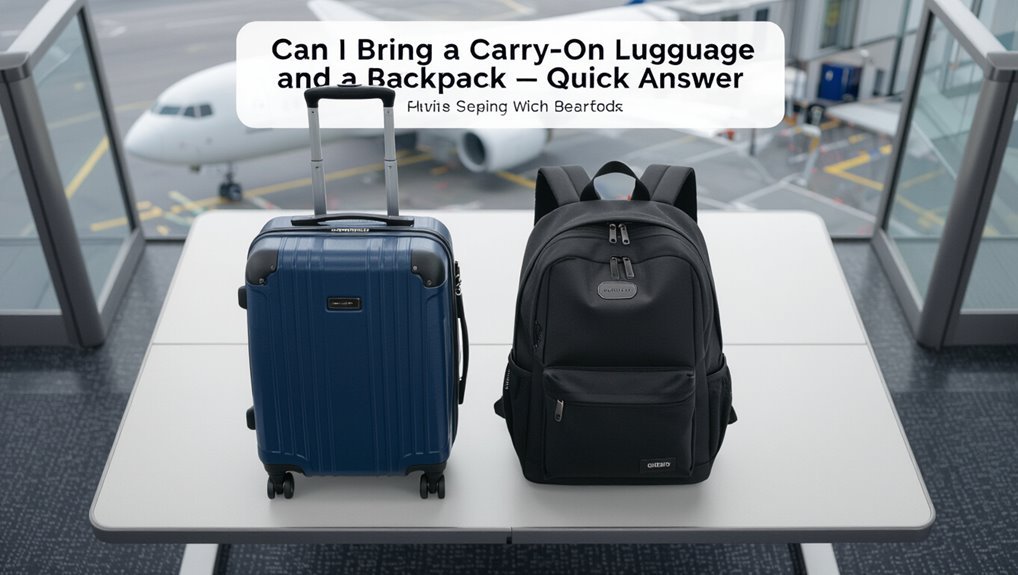
Wondering if you can bring both a carry‑on and a backpack?
Generally, yes—you’re usually allowed one carry‑on suitcase plus a personal item like a backpack.
Policies vary by airline and fare, so check size and weight limits before you pack.
If space’s tight at boarding, gate agents may gate‑check items that exceed limits, so be prepared to adjust.
Who This Guide Is For and What It Answers
Who’s this guide for and what’ll it tell you?
You’re a traveler wanting clear, practical answers about bringing a carry-on plus a backpack.
You’ll learn which passengers typically qualify, common airline policies, fee risks to avoid, packing tips to fit limits, and how to handle exceptions.
This guide focuses on actionable guidance so you can plan and avoid surprises at the gate.
Carry‑On vs Personal Item: The Key Difference
You’ll want to know that carry-ons are larger and must meet strict size limits while personal items are smaller and tuck under the seat.
Contents rules differ too — personal items often hold valuables and essentials, while carry-ons can carry bulkier items and liquids within airline limits.
Boarding priority and gate policies can also change depending on which item you bring, so check your carrier’s rules before you pack.
Size And Dimensions
While both carry-ons and personal items go in the cabin, their size and dimensional limits are what really set them apart: carry-ons usually max at about 22 x 14 x 9 inches to fit overhead bins, while personal items must tuck under the seat and are smaller, often around 18 x 14 x 8 inches.
Measure your bags and check airline specs before you pack.
Allowed Contents
Size and dimensions tell you where each bag goes, but allowed contents define what you can actually bring aboard.
You’ll fit essentials—documents, electronics, a light jacket—in your personal item, while larger carry‑ons hold toiletries, shoes, and duty‑free.
Prohibited items like aerosols, sharp objects, and certain batteries remain banned or restricted; always check airline and TSA rules before packing.
Boarding Priority Rules
Because airlines limit how many bags can go in the cabin, boarding priority determines whether your personal item or carry‑on gets stowed overhead or under the seat — and that can change how quickly you board and settle in. Know your boarding group, gate-check if needed, and pack essentials in the personal item so you’ll be ready when it’s your turn.
| Priority | Where to Stow |
|---|---|
| Early | Overhead |
| Later | Under seat / gate-check |
Standard Airline Rule: One Carry‑On + One Personal Item
Most airlines let you bring one carry‑on and one personal item, but size limits for the carry‑on can vary so you should check dimensions before you pack.
Your personal item is usually a smaller bag like a purse, laptop case, or small backpack that fits under the seat.
Keep in mind some carriers and fare types have exceptions or stricter rules, so confirm policies for your specific airline.
Carry‑On Size Limits
When you board a flight, airlines generally let you bring one carry‑on bag plus one personal item—like a purse, laptop bag, or small backpack—but each airline sets its own maximum dimensions and weight limits, so you should check those before you pack.
Typical carry‑on size caps hover around 22 x 14 x 9 inches, though low‑cost carriers may be smaller; weigh and measure to avoid fees.
Personal Item Definition
Along with your carry‑on, airlines usually allow one personal item—think of it as the smaller bag you keep under the seat in front of you.
You’ll use it for essentials and items you want quick access to. Typical personal items include:
- Small backpack
- Purse or tote
- Briefcase or laptop bag
- Camera bag
Check airline size limits before boarding.
Airline Policy Exceptions
Although airlines generally stick to the one carry‑on plus one personal item rule, you’ll often encounter exceptions based on fare class, loyalty status, or special circumstances like military travel or disability accommodations.
Check your ticket and frequent‑flyer level: premium fares and elite members often get extra bags.
Inform airlines in advance for medical equipment or service animals to avoid surprises and guarantee smooth boarding.
Which Major Airlines Allow Two Free Carry‑On‑Sized Bags
Curious which major airlines let you bring two carry-on–sized bags for free?
You’ll find a few legacy carriers and international airlines that allow both a larger carry-on plus a personal item without charge.
Check size limits and fare classes before flying.
- Delta (main cabin sizes apply)
- American Airlines (standard carry-on + personal)
- United (carry-on + personal permitted)
- Most international legacy carriers
Low‑Cost Carriers: When Your Backpack Is Your Only Free Bag
On low‑cost carriers you’ll often only get a small personal item like a backpack for free, not a full carry‑on.
Know the size limits so your bag counts as a personal item rather than getting gate‑checked.
To board with confidence, pack smart, streamline what you bring, and consider paying for priority boarding if you want to bring a larger bag.
Carry‑On Versus Personal Item
When you book with a low-cost carrier, expect stricter baggage rules: many airlines only include a small personal item—like a backpack—in the base fare, while anything larger counts as a paid carry-on.
You should:
- Measure your bag before arriving at the airport
- Pack essentials in your personal item
- Check airline dimensions and weight limits
- Consider paying for a carry-on only if needed
Tips For Boarding Priority
If your backpack is the only free bag, boarding order suddenly matters more because overhead space fills fast and you don’t want to gate-check your pack.
Aim for early boarding: buy priority or join loyalty tiers, gate-check only if necessary, and arrive early to claim space.
Pack compressible items, use a slim daypack that fits under the seat, and ask politely for help stowing.
Domestic vs International Rules That Change Allowances
Because airlines follow different regulations and security practices across countries, your carry-on allowances can change considerably between domestic and international travel.
Because airlines follow different rules worldwide, expect carry-on allowances to vary significantly between domestic and international travel.
You should check rules before flying and expect variations in fees, item limits, security screening, and airline-specific policies.
- Domestic often has looser item counts
- International may restrict liquids more strictly
- Fees can differ by route
- Codeshare rules vary by carrier
Size Limits: What Makes a Carry‑On vs a Personal Item
How big does a bag have to be before it counts as a carry-on instead of a personal item?
Airlines set dimensions: typically around 22 x 14 x 9 inches for a carry-on and smaller for a personal item like a backpack or briefcase that fits under the seat.
Measure including handles and wheels, check your carrier’s specific limits, and test fit in overhead and under-seat spaces.
Weight Limits to Check by Carrier
Check the carry-on weight limits for your airline before you pack, since some carriers cap carry-on weight while others only enforce size.
Don’t forget that personal item weight limits can differ or sometimes aren’t specified, so confirm what’s allowed for your ticket class.
If you’re close to the limit, weigh your bags at home to avoid surprises at the gate.
Airline Carry-On Weight
When you’re packing, remember that carry-on weight limits vary widely by airline and fare class, so it pays to confirm the specific allowance before you head to the airport.
Check limits online, weigh your bag at home, and adjust contents to avoid fees.
- Visit the carrier’s website
- Weigh your packed bag
- Know fare-class differences
- Pack smart to prevent charges
Personal Item Weight Limits
After confirming your carry-on allowance, turn attention to personal item weight limits—these smaller bags often have stricter rules and can vary by carrier and fare class.
Check each airline’s website for exact weight caps, which might be 7–10 kg or unlimited but size-restricted.
Weigh your packed item before heading to the airport to avoid gate fees or forced repacking.
Do Airlines Classify Backpacks as Personal Items or Carry‑Ons?
Wondering whether your backpack counts as a personal item or a carry‑on? Airlines differ: size, airline policy, and fare class matter. Check dimensions and pack accordingly.
Consider these quick rules:
- Small daypack fits under seat → personal item
- Larger backpack fits overhead → carry‑on
- Business class often allows both
- Budget carriers enforce stricter sizing
When Gate Agents Can Refuse Your Second Bag
If your second bag threatens to slow boarding or exceed limited overhead space, gate agents can step in and refuse it.
They’ll judge size, quantity, and blocking aisles during boarding. If overhead bins are full or safety/evacuation concerns arise, you may be asked to gate-check or pay to check the item.
Cooperate promptly to avoid delays or denied boarding.
How to Measure Your Luggage Quickly at Home or the Airport
Keep a tape measure handy so you can quickly check length, width, and height.
Measure your bag when it’s packed to account for bulging clothes or shoes.
Then compare those dimensions to your airline’s carry-on limits before you head to the airport.
Use a Tape Measure
A tape measure is the quickest way to confirm your bag fits airline size limits, whether you’re at home or standing by the gate.
Use it to check height, width, and depth fast. Keep measurements handy and compare to airline rules.
- Measure outer edges and handles
- Include wheels and protrusions
- Note airline dimension limits
- Record measurements for reference
Measure Packed Dimensions
Now that you’ve measured the empty bag’s outer dimensions, focus on how it performs when packed—airlines care about the packed size, not just the shell.
Stuff it as you normally would, zip or fasten fully, then measure height, width, depth including wheels and handles.
Use a flat surface and a straight edge or ruler for accurate readings, noting bulges or soft-sided expansion.
Check Airline Limits
Because airlines set different size and weight limits, check your carrier’s rules before you travel so you’re not surprised at the gate.
Measure your packed bag quickly: use a tape measure or a string and ruler, weigh it on a scale, and compare to limits. Consider cabin bin fit and enforcement strictness.
- Measure length, width, height
- Weigh packed bag
- Test fit in overhead or under-seat
- Note airline allowances
Make Your Backpack Count as a Personal Item (Packing Tips)
If you want your backpack to qualify as a personal item, pack it deliberately: choose a slim, soft-sided pack that fits under the airline seat, keep heavier items low and close to the spine, and reserve exterior pockets for small essentials you’ll need during the flight.
Use packing cubes, compress clothing, limit shoes, stow electronics flat, and keep travel documents accessible to speed security and boarding.
What to Do If Your Backpack Is Slightly Oversize
Spot the problem early and act: if your backpack nudges past the airline’s personal-item dimensions, you’ve got a few simple options to avoid last-minute fees.
- Compress or remove items to fit
- Shift it under the seat, sideways
- Wear bulky items or a jacket with pockets
- Gate-check the bag to avoid advance fees
How Fare Class and Elite Status Affect Bag Allowance
While base fares often come with the strictest carry-on rules, your ticket type and loyalty status can expand what you’re allowed to bring aboard.
Higher fare classes often permit an extra bag or larger dimensions. Elite members frequently get priority boarding and additional carry-on or checked allowances.
Always check your airline’s published benefits before packing to avoid surprises at the gate.
Credit Cards and Memberships That Give Extra Carry‑On Benefits
When you pick the right travel credit card or loyalty membership, you can bring more onboard without paying extra. Many cards waive baggage fees, grant an additional carry-on or personal item, or offer priority boarding that helps you secure overhead space.
Pick the right travel card or loyalty tier to skip baggage fees, get extra carry‑ons, and board earlier.
You should compare benefits, enrollment rules, and airline partnerships to maximize perks.
- Airline co‑brand credit cards
- Premium travel cards
- Elite frequent‑flyer tiers
- Lounge memberships
Carry‑On and Backpack Rules When Traveling With Kids
When you travel with kids, you’ll want to know whether you can bring a carry-on plus a personal item for each child and what counts as a stroller or gate‑checked item.
Check airline rules on gate checking and strollers so you’re not surprised at boarding.
Pack kid essentials—snacks, a change of clothes, and entertainment—in an easily accessible backpack.
Carry‑On Plus Personal Item
If you’re traveling with kids, packing smart means knowing each airline’s carry-on and personal item rules so you can keep essentials within reach and avoid gate hassles.
You can usually bring one carry-on plus a personal item; confirm size limits and stack items for kids.
Pack snacks, diapers, a change of clothes, and entertainment.
- Snacks
- Diapers/wipes
- Spare clothes
- Small toys/electronics
Gate Check And Strollers
Because strollers and bulky gear can slow you down at the gate, know your airline’s gate-check policy and pack accordingly so you’re ready to hand items over without fuss. You can gate-check strollers and car seats, keep essentials with you, and label items. Check size rules and retrieval procedures to avoid delays.
| Item | Tip |
|---|---|
| Stroller | Fold or collapse |
| Car seat | Label clearly |
| Diaper bag | Keep onboard |
| Retrieval | Ask staff |
| Fees | Confirm ahead |
Packing Essentials For Kids
Pack smart: grab a small backpack for each child and stock it with snacks, a change of clothes, entertainment, and any meds or comfort items you’ll need during the flight.
Keep bags accessible, follow liquid rules for baby food, and label items. Consider gate-checking bulky gear to save space.
- Snacks and spill-proof bottles
- Change of clothes
- Quiet toys and headphones
- Meds and comfort item
How Connecting Flights and Partner Carriers Affect Allowance
When your itinerary includes connections or flights operated by partner airlines, your carry-on allowance can change, so check each carrier’s rules before you arrive at the airport.
You’ll need to follow the allowance of the operating carrier for each flight segment. Verify size, weight, and item limits, note fee differences, and confirm whether a personal item is separate or counted toward your carry-on.
TSA Rules for Carry‑Ons and Backpacks
When you’re packing, know the TSA’s size limits for carry‑ons and how those rules affect backpacks.
You’ll also want to check which items are allowed in the cabin versus what needs to be checked or screened.
Follow these guidelines to avoid surprises at security checkpoints.
Carry‑On Size Limits
TSA sets specific carry-on size limits you should follow to avoid gate-checking or delays, and those limits focus on the bag’s exterior dimensions—length, width, and height including wheels and handles.
- Check airline-specific maximum dimensions before packing.
- Measure bags with wheels and extended handles.
- Avoid overstuffing; soft sides can still exceed limits.
- Gate agents may require sizing in airport sizers, so be prepared.
Allowed Carry‑On Items
Although airlines and security screeners each have their own nuances, you can generally bring a single carry‑on bag and a personal item—like a backpack, purse, or laptop case—so long as you follow size limits and prohibited-item rules.
Pack essentials, medications, travel documents, electronics, and a small toiletry bag (adhere to 3.4 oz liquids).
Check airline rules for exceptions, sporting gear, and duty‑free purchases.
Pack Smart for Faster TSA Screening With Two Bags
If you split your carry-ons into a small personal item and a larger roll-on, you’ll move through security faster and with less hassle; keep liquids and electronics in the personal bag so you can pull them out quickly for screening.
Pack intentionally, label pockets, and avoid surprises at the checkpoint.
- Place liquids in a clear bag
- Keep electronics accessible
- Wear easy shoes
- Consolidate chargers and cords
What to Expect at Boarding: Overhead Space and Priority
Expect a scramble for overhead space when boarding starts, so get to the gate early and have your bag ready to stow.
Know boarding groups and airline priorities—status, premium cabins, and families usually board first.
If overhead bins fill, gate agents may ask to gate-check your carry-on.
Stay calm, follow crew instructions, and be ready to lift smaller items under the seat in front of you.
Fees: When Carriers Charge for an Extra Bag
Airlines charge for extra bags when your carry-on or checked luggage exceeds the allowance included with your fare or status, and those fees can vary by route, fare class, and whether you booked basic economy.
You’ll usually pay at booking, online check-in, or at the airport.
Consider these common fee triggers:
- Second checked bag charges
- Oversize or overweight fees
- Extra carry-on beyond allowance
- Premium cabin exempted or reduced fees
Best Apps and Tools to Check Airline Baggage Rules Quickly
When you need a quick answer about size, weight, or fees, several apps and websites give instant, reliable baggage rules so you can avoid surprises at the gate.
Use airline apps for official limits, Kayak and Hopper for comparisons, and SeatGuru for aircraft carry-on tips.
Check Google Flights for fare class baggage info, and store screenshots of rules in your phone for easy access.
How to Handle Disputes With Gate Agents Calmly
If a gate agent questions your carry-on, stay calm and speak clearly—keeping your tone polite but firm helps de-escalate the situation and gets you heard.
You should assert facts, show documentation, and request clarification without arguing. Follow instructions, ask for a supervisor if necessary, and document the exchange afterward.
- State facts calmly
- Show booking or size info
- Request clarification
- Ask for supervisor
Packing Checklist to Maximize Space in Both Bags
After you’ve calmly resolved questions at the gate, focus on packing smart so both your carry-on and personal item hold everything you need without wasted space. Prioritize essentials, roll clothes, use packing cubes, and place heavy items low in the carry-on. Keep toiletries and documents in the personal item for easy access.
| Item type | Pack in | Tip |
|---|---|---|
| Clothes | Carry-on | Roll/cubes |
| Electronics | Personal item | Padded sleeve |
| Toiletries | Personal item | Clear pouch |
| Shoes | Carry-on | Stuff with socks |
Best Backpack Types That Pass as Personal Items Every Time
Because airlines vary in size limits and gate agents can be strict, choosing the right backpack that reliably qualifies as a personal item saves you time and stress.
Pick slim, soft-sided designs that slide under seats and have minimal external frames. Consider these options:
- Compact laptop sleeve backpacks
- Foldable nylon daypacks
- Slim tote-backpack hybrids
- Underseat travel backpacks
When to Gate‑Check Your Backpack and How to Protect It
When gate agents call for gate-checked items, you’ll want to decide quickly whether your backpack should go with them or stay under the seat; choose gate check when the bag won’t fit, you’re worried about overhead bin space, or its contents could be damaged in a cramped cabin.
Pad fragile items, remove valuables, use a durable cover or tag, and note any airline liability limits.
Final Pre‑Flight Checklist for Carry‑On + Backpack
1 quick sweep through your carry‑on and backpack before you head to the gate will save time and stress later: confirm essential documents, zip valuables into an inner pocket, stow electronics and cords in easy‑access compartments, remove prohibited items, and weigh the bag if the airline enforces limits.
Check these final steps before boarding:
- ID, boarding pass, and wallet accessible
- Electronics charged, cords organized
- Liquids under limit, packed upright
- Bag fits size and weight rules
Frequently Asked Questions
Can Duty‑Free or Airport Purchases Count as My Carry‑On or Personal Item?
Yes — most airlines count duty‑free or airport purchases as your carry‑on or personal item. You’ll need to fit them within allowed dimensions/weight or place them inside your allowed bag; policies and security limits can vary.
Are Medical Devices and Supplies Exempt From Carry‑On Size/Weight Limits?
Yes — airlines and TSA generally exempt medically necessary devices and supplies from carry‑on size/weight limits, but you should notify the airline, carry documentation, and confirm specific airline policies to avoid issues at boarding or security.
How Do Emotional Support or Service Animals Affect Bag Allowances?
Emotional support animals no longer grant extra baggage; airlines usually allow one small service animal plus a personal item for its carrier. You’ll need documentation for service animals and must follow airline-specific rules and size/weight limits.
Does Boarding Group or Seat Location Impact Overhead Bin Access?
Yes — boarding group and seat location affect overhead bin access. If you’re in an earlier boarding group or seated toward the front, you’ll grab prime bin space; later boarders or rear-seat passengers often face limited overhead options.
Can Special Needs or Mobility Equipment Be Carried Free Beyond Allowances?
Yes — airlines generally let you bring necessary mobility or special-needs equipment free, beyond standard allowances; you should notify the airline in advance, provide documentation if asked, and confirm size, weight, and boarding procedures with them.
Conclusion
Yes — most airlines let you bring one carry-on bag plus one personal item, like a backpack. Stick to size limits, pack strategically (heavier items in the carry-on, essentials in the backpack), and use compression cubes to maximize space. Choose a slim, structured backpack that fits under the seat, and gate‑check only when necessary, protecting it with a cover. Do a final size-and-weight check before boarding to avoid surprises and extra fees.
